Michelle Zatlyn, of Cloudflare "Yes-We-Can" chat with Zimkhitha Buwa CEO Quintica South Africa.
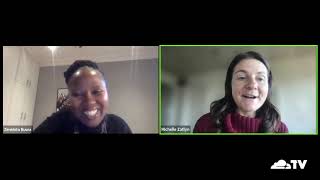
This content was created by Michelle Zatlyn. This content was uploaded by Michelle Zatlyn. This is a YouTube episode (Yes We Can) titled "Michelle Zatlyn, of Cloudflare 'Yes-We-Can' chat with Zimkhitha Buwa CEO Quintica South Africa" (posted 2026-01-28). It is an English interview-style conversation hosted by Michelle Zatlyn (Cloudflare) with guest Zimkhitha Buwa, CEO of Quintica based in Cape Town. They discuss Buwa's experience in the TechWomen program, her career path (pivot from SAP/BI consultant to CEO), practical lessons on sales, leadership and resilience, Quintica's digital services and partner ecosystem, the tech landscape in South Africa (cloud provider investments, vibrant startup scene, startup act and job creation), and advice for women and new graduates in tech (mentorship, networking, “do it afraid”).
Questions this video answers
2013
One of five participants from South Africa
About 1,800 applicants (as stated)
1st of September (year not specified in the chunk)
About 60 days (two months)
Chapters
Hi everyone. Welcome back for this week's episode of yes We Can. I'm just super excited to have Zimkita Bua here today. Hi Zimkita, how are you?
Hi Michelle. I'm good, how are you? Good.
It's Friday, it's been a super productive week and so very excited for the weekend and very excited for this conversation. How about you, how are you?
Also very busy. We're closing out our Q4, so as you can imagine, really busy but otherwise all good and looking forward to the weekend.
Excellent. Good, Great. Well, look, so I love when stars align and connection points are made. But you and I were introduced through another yes. Weekend alumni alumnus, Anar Simpson, who was on a few months ago talking about the Tech Women's program. And the way that you and Anar had met was through the Tech Woman program. And so maybe you can start by telling the audience, reminding the audience more about what this Tech Woman program is. And when you, you said you were a participant, what does that mean?
The TechWomen program is an initiative that's run by the US State Department and the objective is really to bring women from the Middle East, Africa. I think they've also added Asia now to the US to San Francisco for an eight week program. And really it's just about immersing ourselves as the participants in the Silicon Valley world of technology and also by providing support and ensuring that there's mentorship, professional mentorship as well as cultural mentorship and also the exposure to a particular project. So it's an extremely well run program and I had the honour of participating in 2013. I was selected as five, one of five participants from South Africa and at the time I think there were about 1,800 applicants. So you know, it was a massive achievement to be selected amongst five women. And the focus is around science, technology, engineering and maths.
I love this, I love this program and actually that's how I know Anar because I kind of was involved. I think you came, some of the classes came to our office or I spoke as part of it. So it's an amazing initiative and program that TechWoman has put together and that's amazing that you are a part of it. And so as you said, it was back in 2013 and so we're, we're in 2021. So a few years later, which actually it's always helpful to kind of reflect back as you reflect back on that experience, you know, what are some of your reflection? Was it, was it a good experience? Did you make some friends There what were some things that have ended up being helpful to you in your career?
Oh, man. I mean, the. That program, I feel like it changed my life. So when I joined the program, I was very much a technical consultant in the business intelligence space. And I had an opportunity of spending time with Tanya Kobilek, who was actually at Autodesk and literally spent six weeks just talking to C level execs and sorry, my son is here. And I actually realized that I'm not and didn't want to be technical anymore. And so that made me change course and actually choose a different career for myself, which was incredible. And then also just the connections that you make, the relationships that you form, and also just realizing the amazing opportunities within technology. So I would say that it was definitely a life changing experience for myself.
That's great. I love hearing that. I'm sure all the people behind the scenes who make that program happen are smiling and very proud to hear you speak about that all these years later so fondly about your experience, which is great. So it sounds like you would recommend it to other women in technology.
No, absolutely. I mean, if you at a crossroads in your career, you're thinking of what should be your next, I would definitely recommend it, especially if you're in the STEM fields and also if you're looking to just connect with women from all over the world and just get a perspective on how things are in their different countries. And also just to see what's actually happening in the technology landscape in the US it would be a great opportunity for anyone.
That's great. Great. Well, I'm glad you had such a great experience. All right, so today you're sitting in Cape Town of South Africa, and I'm sitting in San Francisco in the United States. And I love. I haven't been to South Africa. I'm hoping to plan a trip for next year, but I was hoping you can share with me and the audience a little bit of your perspective of what's going on in the technology industry in South Africa. Kind of give us a bit of a perspective as a woman there. How are things going there and what's the state of affairs of technology in South Africa?
Well, I mean, to be honest with you, Michelle, I don't think there's ever been a better time to be in technology in South Africa. For me, it's such a dynamic and exciting space. And I know that all around the globe people have experienced difficulty because of COVID 19. But in my view, one of the positive aspects of COVID 19 was that it's actually accelerated and changed how organization view the importance and the value of technology. So when we were under a complete lockdown last year, companies had to pivot. They had to think about different ways of work, they had to think about business continuity, how to service their clients in a different way. And all of that was enabled through technology. I mean, we saw businesses pivoting, developing new revenue streams, and then also on the sales front, in terms of technology, what took years to convince CIOs and organization about digital transformation and cloud platforms was completely accelerated. And we're really seeing the effects of that right now. I think the other thing that I can mention is that there's actually a cloud war taking place with investments coming into the region. So Microsoft has invested in a local Azure instance AWS as well as Oracle. I think they're about to launch in the next month. I also think I can't talk about technology in South Africa without mentioning the incredible innovation that's coming out of the startup ecosystem, which by the way, is extremely vibrant. So just this week alone, some of the ecosystem players were actually discussing a South African startup act with our president. I mean, that's never happened before. And also the importance of just supporting our startup ecosystem in order to create economic growth. And you might know that unemployment is rife in South Africa and one of the things that the Startup act is advocating for is that through the support we can create job opportunities. So I hope, I mean, that's very high level, but I hope that it gives you a sense of the incredible activity, the shift that's currently happening, and also just the incredible dynamic way that the technology industry is operating.
Oh, it is. That's amazing. I feel like I'm there. I can feel, I can feel your enthusiasm through my computer screen and it does feel like there's a shift and an acceleration and.
Absolutely, yeah.
That's great. It's so interesting. You said that some of the larger cloud providers are starting to build presences locally in South Africa. I look back on cloudflare, so we run this global network and we've had points of presence within South Africa for several years and it's always been a very popular, lot of traffic because it's a country with people connecting online, trying to do business, share hobbies. And so we have a lot of local customers and so it's great to know that others are also building their presences. That's great. I think as somebody who had to move to pursue opportunity, I'm from Canada and I now live in the US in pursuit of Opportunity. I do think it's interesting how this next chapter of the Technology Rise is going to play out where I think it's going to be a lot more empowered locally, so much more local empowerment. And we want success stories in every single country around the world, including South Africa. So it sounds like you're well on your way.
Definitely.
That's terrific. You said that when you did Tech Women, that it totally changed the directory of your career and what you've been doing. So maybe you can share with the audience, tell us a little bit about your career today, what you're doing today and how that program kind of changed your directory from this consultant to what you're doing today.
So I mean, if I think of the journey, it hasn't really been planned. It's been a matter of reacting to what I feel the opportunity is. So when I left Tech Women, I was actually an SAP business intelligence consultant and I decided to pivot and join a consulting company. And they had very little presence in Cape Town, which is where I'm based. And I realized that I actually needed to go out and find the clients myself. And so I ended up being in quite a few customer facing roles in terms of sales and then moving on to regional leadership and ultimately being a COO for that company. And fast forward to today where I'm the CEO of Quintica.
Yes. Yeah, no. And I want to hear more about these experience of having to go find clients and customers. So maybe we'll start there and then I want to talk about Quintica. But before we get to Quintica, I love this is it grit. I mean, I kind of described that proactive grit of I was in a job, we didn't have a lot of local customers. I had to go find customers to adopt our service. And as you look back, what was that like? What was the good parts of that? And do you think it has made you a better leader today, this customer experience?
So, I mean, it was hard, it was nerve wracking. There would be days where I would wake up in a sweat because I'd have to follow up with the client on a deal that I wanted to land. And most of the time it was a no until clients actually gave you and opened the door and gave you an opportunity. But for me, what it taught me is about being resilient. So you might lose a few deals along the way, but I think what's important is your ability to dust yourself off and move on to the next one. And I mean, I use that as a leader Every day. Now, I think the other skill and something else that it taught me was the importance of communication. When you're dealing with clients, you have to be able to articulate your value proposition quite quickly and not have fluff. And people always talk about sales being fluff. But I think what sets you apart from the race is that ability to articulate the value quite quickly. I think another skill that I learned was around listening. So, you know, a lot of people talk more than they listen, but there's so much value that comes out of listening, because I think that's where and how you pick up the opportunity. And then also just listening to what your clients are telling you, because, you know, you either have to pivot and change your approach based on what your client is articulating to you. I also think the ability to build relationships. I mean, everybody talks about how people buy from people. So you have to nurture your relationships with your clients. And don't only show up when there's an opportunity, but show up and be relevant even when there isn't an opportunity, because that's how you build the relationship. And I think, you know, leadership is like that as well.
So many things you said resonate. And I think back to kind of the last 10 years of my career, that point about listening is so important. I think that I didn't appreciate that when I was coming out of college that listening turns out to be a really important skill in your career. So thanks for pointing that out. That's great. It feels like this idea of building relationships, people genuine, that I only know you a little bit, but it feels like you really believe that, which is. I agree. That people like to do business with people that they know and like.
Yeah, absolutely. And, I mean, even in my role today as a CEO, I mean, relationships matter. So I've just come into Quintica. I literally started on the 1st of September. But that ability to connect with people quickly and be able to form a rapport with them, understand how they operate, understand how they want to be treated, how they want to be supported, that only comes through being empathetic, being able to listen, being able to ask questions, and also being able to engage authentically. And I don't think you can do that if you don't understand how to form those meaningful relationships.
That's good. That's great. Okay, so you've mentioned Quintica, where you've recently joined as CEO and as a board member. So maybe you can share with the audience, tell us more about Quintica.
So, I mean, we are a 20 year old business. We a digital first business and we're really about combining technology with our human capability. And really the objective of doing that is to help our clients reduce their cost and also deliver a great service experience across the enterprise. So how do we do this? We do this by stitching together digital platforms in the cloud that unlock company wide productivity as well as ensure that they gain a competitive advantage. So we partner with some of the large technology providers like ServiceNow, Snow4me, Mimecast Scale, just to name a few. And you know, these partnerships with these technology providers ensure accelerated business outcomes and it's really, I think, what set us apart in the industry.
That's great. That's great. And so I love that you're the CEO. I love that. Congratulations. It's incredible. How did you find this opportunity? Like I met there's so many women who want to be CEO and they should, you should, you should go and be a CEO, which is wonderful. I'm just curious if you can tell us more about how did you find this opportunity at Quintica? What was that interview process like?
So I think, you know, with COVID hitting, everybody started reflecting on their next and what they wanted to do. And I was at that crossroads last year, just turned 40, Covid hit. And I was just thinking about, you know, what, what do the next five years look like for me? And I had spent seven years with my previous company and I just felt that I had added a lot of value. I had achieved what I wanted to achieve and now I wanted my next opportunity. And through relationships again, one of my contacts connected me with the chairman of Quintica and we started having discussions probably about 10 lunches before he said, okay, I feel like our purpose is aligned, our values are aligned. And I think the fact that you want to add value to people's lives and do something significant in the next five years speaks to our ethos. Because our ethos is big things. Great people. So then you introduced me to the rest of the board and obviously then I went through a rigorous interview process and then I met the leadership team, the current leadership team as well, actually my team now who also, you know, just shared their thoughts about where the company was going and some of the clients that we were working with currently, what the challenges were and where they felt I could add value. And that was even before the offer. And then we went through negotiations and the rest is history.
Exactly. That's great. Well, that's great. I mean, it's amazing how you met many people in this relationship. And it sounds like you were connecting to people kind of along the way. And, I mean, you didn't say these words, but my sense is like, it's almost like. It was almost like if you got more and more excited about this opportunity as you went on, and same with the organization, about you being like, oh, my God, there's something here. There's a great fit. That's such a great story. Were there any times along the way where you doubted yourself of, like, were you ready for that role? Because that's something that I feel like gets said a lot of like, oh, women CEOs, like, people. Women doubt themselves. Did that ever cross your mind?
It did, and it still does. And somehow I feel like I have to live with that because I think people tend to doubt whether, are you competent enough, do you have the right qualifications? But what gives me comfort is the fact that the entire board supports me. So I have a weekly check in with our chairman, actually, and hearing him say, I love the fact that you brought this idea and you're doing this differently. And so I think as much as I might have my own internal doubts, the fact that there are people who are extremely experienced out there who are saying, gozim, you're doing the right thing, kind of alleviates all that doubt. And I just think it's something that I'm going to grow out of. But for now, I'm just happy with the support that I have. The industry has been absolutely amazing in terms of support, and I just have to back myself and be confident in what I'm doing.
Amazing. I love this. Yes, for sure. That's great. So now, I mean, I know you're new in the role. I know it's been a couple months, but when you. But even in two months, like, what are your favorite parts of your job so far?
I actually think there are quite a few that I've picked up already. I'm only 60 days into the role, but I'm super proud of the talent that we have. We have amazing people, people that go beyond the call of duty. And one of the things that I've introduced is a weekly newsletter just celebrating every success, no matter how small. And by success, it's not just the sales deals that we win through the week, but also, you know, the amazing things that our delivery team is doing. You know, whether it's projects going live, whether it's demos that we're doing for prospective clients, or it's just us supporting each other or resolving a massive issue to. So I just think the Kind of people that we have. And what keeps me up at night is how do we retain those people? How do we give them meaningful work and purpose that they can really feel and relate to? But definitely one is our people. And then the other favorite part is the conversations that we're having with our clients. People think that if you're in the technology industry, most of the conversations that you'll have are with it. And what I'm finding is that there's such a shift to. In the industry, where the business units are actually the ones that we're engaging with. Around how do you add value to my HR service delivery processes or my procure to pay process? So it's not just conversations with it, but conversations that impact the entire enterprise, which is really exciting. And then obviously, the relationships that we have with our partners. ServiceNow is one of our key partners. And just the way Bill McDermott is building up and growing the ServiceNow play and just building an enterprise wide platform is really exciting.
That's great. I feel like you exude big things, great people. So much of your answer, the favorite parts of your job, so much of it is people. And it's interesting. I say the same thing where it's like, best part of my job are the people I get to work with. You said it in a much more eloquent way. But, yeah, great, big things, great people seems like a good mantra for Quinta Quintica.
Thank you.
It's great. So, you know, I. One of the things that I like to say is, just as I've gone through my career is life is a collection of experiences. And you've collected so many, you've kind of shared some of those insights here. And I think for the audience, like, collecting a lot of experiences can also be a stressful idea of like, wait, I got to leave my job where I've done well for seven years to go try something else. I don't even know where I'm going yet. Like that. It's amazing when it works out. But I think that there's a little bit of us that always thinks, what if something better doesn't come along? So as you reflect back to your collection of experiences, all the different things you've done, are there any kind of reflections you can share with the experience, whether that was a good path or you wish it had gone differently?
I think I've been lucky in the sense that whatever decision I've made always backed myself, and I've always made sure that it's somehow a success. Even if some people Might view it as a failure or as a step back. For me, it was always about progress and moving forward. And one of the things that I picked up from my mentor, my cultural mentor, Barbara Williams, during my Tech Women program was that you need to do it afraid. Be afraid and do it anyway. So don't let fear or risk or worry about what other people are going to say cripple you because then you're not going to progress. So I think as I reflect on my career, that's one of the things I've always held on to. One, does this opportunity scare me? Yes. So I should do it. So do it afraid.
Two.
If I write a book, at the end of the day, am I going to write about things that scared me, risks that I didn't take? What if you take the risk and it actually pans out? So yeah, I've always just had that motto in life through my mentor, that you need to do it. And yes, you're going to be afraid. You're going to worry and wonder whether you're making the right decision. But flip, make a decision, you know, so that's what I can definitely reflect on in my career. And every single decision that I've made, even going to the US was a risk for me. I mean, it was something that had never been done in my family in terms of being away for so long. I had a three year old son, I was married and my mom was asking, are you still going to have a husband by the time you come back? But for me it was about securing the future, doing something different, seeing what's out there, experiencing what, you know, what other women are doing and seeing the art of the possible in San Francisco. And so I just think you've got to take risks.
I love that.
That's good. Well, that.
I feel like we need to bottle what you just said up, Zunkita, and like share it loud and wide. Because you said it so eloquently and just, I mean, huge congratulations to you for, for, for, for doing it. Like you said, someone wasn't telling you to do it. You figured it out and did it and believed in yourself. And I've never, I've never heard this kind of saying of do it afraid. But as you explain it, there's actually a lot of, I think, brilliance in that saying. It's a good, it's something I might start to share with others and attribute to you because that's a good, that's a good one. Do it afraid.
Thank you. But my mentor, Barbara Williams actually coined that Phrase.
All right, good. Well, there we go. Barbara Williams, through as told through you. So now it's just. Now it's. Now we're all. That's great. That's great. It's great when you think about other people listening. And I think you've shared so many great insights today so far. We're coming to the end of our conversation and there's somebody saying, some really smart student graduating in South Africa who's hungry and smart, what kind of other advice do you have for them? Like other, you know, the next generation. What would you say to yourself if you're graduating from college today or university, or to the current people graduating, especially in South Africa, what advice do you have for them?
I just think the tech industry is so vast. There are so many opportunities, so much so that you might not even know what direction to take. So I think things are so different now compared to when I graduated. I mean, before, there were hardly any women that were running businesses. There were hardly any women that had leadership roles. But, you know, the game has changed. And a lot of the women that I engage with, especially on the C level network, they want to give back, they want to mentor, they want to provide that guidance to help you as a grad navigate. But the onus is on you to reach out and ask for help. And this is one of the things that people always ask me, you know, how do I find a mentor? You find a mentor by asking, and if people don't have time, they will normally refer you to someone else who has time. So I would say, yeah, you need to reach out and ask for help because it's not an easy industry to navigate if you don't have someone helping you and guiding you. So mentorship is absolutely critical. And that mentorship could be structured, it could be unstructured. And now you have access to LinkedIn. We didn't have that before. And so you could find CIOs, you could find, you know, CEOs very easily, people that you can tap into and people that can help guide you.
Yes. Yeah, you know, it's. I was smiling when you said, you know, as a student, reach out. People, people want to be helpful, but they have to know that you are interested in hearing what they have to say. And I, you know, I think back to when I did my master's degree, my mba, and when like that, we had a Edu email address. We were students, was the Edu education. And you can reach out on LinkedIn, which is wonderful, but just saying I'm a student or I recently graduated as a student. I want to talk to you about this. So many people replied because people do want to give back to the next generation. And so it is a little bit like, be bold, reach out. Especially if you have a specific ask. I want to learn more about this or want to learn more about your career or this or I have thinking about getting into this. I'd love to get your perspective. And I find that you'd be surprised at how many people want to lean in and help and go above and beyond. I was very surprised when I was my me. I was like, oh, I don't want to bother people. But that was totally the wrong inclinations. They want to hear from you.
They do, Absolutely. Absolutely. And people want to help, you know, and there's a lot of women in tech circles and they encourage that. But like I said, you know, the onus is on you to step up and actually say, I need help. I need guidance.
That's great. Okay, good. Well, the one. This has been amazing and I feel so inspired, which is exactly why this is always the highlight of my week and feel so honored to have gotten to know you a little bit better today and shared that with the world. So the one question I like to ask everyone who comes on yes, we can is as a woman in technology, where has the industry lived up to your expectations and where has it fallen short?
That's such a tough one. It's lived up to my expectations in terms of the elevation of women in tech. I mean, there's so many women in tech events and women in tech webinars and thought leadership pieces, research being done, and I've been part of that movement for years now. And I think it's great that there is that platform to share, to connect, to engage. But I do think that where the industry has let us down is the fact that there are still very few women leadership roles available or being made available or the opportunities being presented to women. Yes, the landscape is changing, but I don't feel it's changing fast enough. And I think where we need to move the needle is for our male counterparts who are still very much part of, you know, the boards. They have to be the ones to move the needle and actually open the doors for women. And when we have these women in tech events, we've got to have our male counterparts actually advocating for diversity. They need to be the ones throwing out and dishing out the stats about why it's good for business to have women at the top. I think we've done our part as much as we can as women in terms of articulating why we need to have it. But it's time that we change the narrative and we shift how we approach things. And I think that's the only way that we're going to get proper results.
Love that. Have some of our counterparts make room for. Make room for all the incredible women who are doing their work to get to this next level. That's great. Well, you are an inspiration, Sankita. We are. On behalf of myself and every other person listening. We're just so rooting for your success. Quintica sound very lucky to have you. Can't wait to see everything you've accomplished. Can't wait to come visit you in South Africa. We need a delegation to come visit in South Africa. Maybe that's something you can sort out for all of us who are going to come see the tech scene on the ground there. I think that'd be really cool.
Absolutely. You must start in Cape Town. Cape Town's positioning itself as the tech capital of Africa, so we'd be happy to host you here.
Amazing. I'm going to probably take you up on that. For the viewers listening will stay tuned for more information. This is wonderful. Have a wonderful weekend. Thank you to everyone for tuning in to yes we can, everyone. Sukita Bua. Thank you so much. It was amazing.
You. Thank you, Michelle. Thank you, everyone. Bye. Thank you.
Thank you. We'll see everyone next week on this. We're coming up to two segments a week for yes We Can. So look forward to seeing all the viewers multiple times in November and December. Thanks, everyone. See you soon. Bye.
Bye. Bye.
More from Michelle






SF Conference 2013 CASE STUDY: Michelle Zatlyn - Scaling a Company To A Billion Views A Day




