Building Mindset Muscle: Elan Gelfand on Passion, Pressure, and Progress | Mick Unplugged Podcast
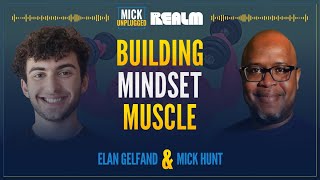
Elan Gelfand, 20, talks about his mother as his driving force, his Abundant Thinking framework, and the habits that build progress: consistency, discipline, exploration. He shares what modern employees actually want from work and how leaders can hire and lead better.
Chapters
What were you doing with your life at 20 years old? What promises were you making? What decisions were you living out? I promise you were doing nothing. Like my guy, Elon G. If you're an employer, what is the modern employee really want out of your company? I promise it's not the traditional things that you're thinking, which is probably why you're struggling to recruit young talent. Ladies and gentlemen, this has been an amazing conversation, and I can't wait for you to listen to it. So here we go. My guy, Elon G, ladies and gentlemen. Welcome back to another exciting episode of MC Unplugged. And today, I've got a gem. We're talking about the host who has taken over a hundred episodes and counting to turn ordinary mindsets into breakthroughs. He builds environments, breaks judgments, and ignites passion in all who listen. He is the voice behind abundant thinking. He is the thriving, the inspiring, the relentless. My guy, Mr. Elon G. Elon, how you doing today, brother?
I'm doing good. Thank you for asking. And thank you for the amazing intro. I really appreciate it.
No, always, man. Always. So we were literally just chatting, and you were talking about how wild, crazy, cool, and insane it is to like, to meet someone with a similar passion, a similar story, a similar purpose. So now I kind of want to open that floor and open that door. Let's talk about Elon G, man. Like, for those that don't know, like, what's your because? What's your purpose? What's your drive? What's your mission?
I would say my because is my mom. So when I was about, I say eight years old, my parents got divorced. And, you know, my dad, he had a good job. He was working very hard, working person, and he always. He went after what he wanted, right? My parents got divorced. My mom was kind of left on her own. Obviously, she was never really the one with the job. So she took care of my brother and I. She worked minimum wage. And, you know, I have memories of, you know, waking up for middle school and, you know, she would have to wake up my brother. She, like, feed him. She'd get him to school. Then she would come back just to let me sleep for, like, 20 extra minutes. She would take care of us, get us to school. Then she'd have to work her job, or she was earning minimum wage, pay for all the stuff, pay for food. I have no clue, Mick. I have no clue how she did it, but that is 100% my. Because I think a lot of my life revolves around the idea that I want to make sure that my mom a never has to go through that again. But also in the future with my kids, my wife, my family, that I can be the person there for them to be able to get them out of financial burden. I saw I was very hard on my mom, and I had to make a hard choice, especially the last couple of years, with the idea that, you know, I have the power, in my opinion, to help her, you know, have the conversations on the podcast, learn new things. You know, I'm young. I think it's. It puts me in a good spot for people to want to teach me things, right? To mentor me. So just being able to learn from people, get as much as I can, you know, squeeze the sponge of information out of people. Yeah, I think that I am able to dictate the results of my life. And although I have zero proof, Mick, it's. It's funny because I was thinking about this. I got some coffee today, and I was thinking about it. You know, you and I are very similar in our upbringings and our background of wanting to help our mom. Right? But unlike you, you know, you've done the thing. But right now, I'm in the progress. I'm trying to do it, the process. My apologies. I'm trying to do the thing. And although I have no evidence that this thing will work out, I think it's my obligation to help my mom.
Wow, brother. One, that's touching. Two, you say I've done the thing, but for those that don't know, Elon, tell everybody how old you are first, bro.
I'm 20. I'm 20 years old.
Yeah, so at 20, dude, I hadn't done the thing either. At 20, I was in college at the University of North Carolina, and I was trying to do everything in my power to. To make sure that I was the blueprint for my mom, my sister, and my brother. Right? My brother was 2 years old at the time. My sister was 16. So a junior in high school. And so I was working jobs to make sure that they had. Right. I was making sure that I was creating a standard that everyone could be proud of, but I hadn't done the thing or figured the thing out. I mean, I'm 47 now, and I probably still haven't figured the thing out. It's just working towards fulfilling that promise that I made to. To everyone. And so now that promise has evolved to my wife and kids and my tight circle. So I don't want you to feel like you have to have the thing figured out because you are doing much more at 20 than I was. You've got a hard reaching, far reaching podcast. You've created a mindset framework. Dude, I was, I was just trying to make sure I was surviving at 20. So kudos to you for, for continuing to do that. And I think folks that are listening to this that are my age will tell you, dang, Eli, you're doing it, brother. So, so pat yourself on the back. Accept these small victories because you are doing it. So kudos to you, man.
Oh, dude, I appreciate the words. Thank you so much. And I know, I think you can attest to the idea that, you know, sometimes it's very tough and it feels lonely because you don't see the results right away, right? They're not. I've been doing this thing for a couple years. I think even when I was like junior in high school, same sophomore, like, I always knew that this is going to be the thing, but it was a little bit hard for me to accept because I knew how hard the road would be, if that makes sense. Like, I wanted to do it the ethical way and I wanted to make sure that I learned from the right people as well. So it was like I had to make a choice. And it sounds kind of like cliche and dramatic, but I really had to make a choice between me. Just, you know, I'm in college right now. I can just go get a normal job, get my degree, whatever, and it's good. And you know, my mom, like, she's got her thing and she's gonna be fine or I just dig my heels in and literally every single day work towards something every single day. Just work as hard as I can. So the decision, you know, I made it, I'm going forward and one step at a time. And I think over the long term, I can do it. I really do. Mick.
No, not, not can. You're going to do it. It's all about one foot in front of the other, one day at a time, focused on the right thing. Not the most popular thing, right? Not the low hanging fruit thing.
100.
Oh, yeah, right thing. Life is never going to be easy. Now, I tell folks all the time, as business leaders, we create, you know, these business plans and these business strategies, and if they were all perfect, everybody in the world would be billionaires, right? But life happens. And it's all about how do you adjust, right? How do you fight through, how do you reorganize, how do you create new momentum? And that's what life is all about. So. So keep doing that because you're doing amazing. So, Elon, I want to go to Abundant thinking. And when you decided that this was the message that you wanted to send out and share with the world because you felt like you had something to offer, dude, one, I'm proud of you for doing that. Two, when did you know that that's what you were called to do?
Yeah, great question. I would say kind of like I mentioned earlier, you know, in middle high school years, I kind of made a decision that I wanted to do more. And I, I tried out a lot of different things. There are a lot of, like, small little side hustles I was doing. And I was like, you know, maybe this is gonna work, maybe this is gonna be the thing. But I had a realization that a lot of times people pitch an idea that's not true. You know, a lot of times you see people like, get rich quick schemes, all these things. And like, you might be able to make some money in the short term. That's not my goal at all. So after trying, and I wouldn't say failing, but just trying a bunch of different things out, I was like, okay, what is something that I can do that will be very worthwhile in the long term? You know, maybe even I've had deep rooted belief in my life that no matter, like, like the people that get the good results in life do it for a reason. Like I used to look at, you know, Elon Musk, Jeff Bezos, I'm like, okay, there's no way they just got lucky, right? I mean, maybe some people, you know, they were born into a good family, but there's just no way that every single person who's ever done something amazing just got a good hand dealt. So I started looking into it and I really established the belief that, you know what, there has to be some good insights out there on how I can be the person to know, achieve these high level things. And that's what I set out to do. And I thought about it. I had some different ideas, but I was okay. One, I like talking, as you can tell. Two, I always value wisdom from people. I mean, every single time my grandpa would sit me down, he'd tell me something. My dad, I always keep it in the back of my head. Like a lot of people, they'll hear something and it's like, oh, yeah. I mean, that's a cool integrity. They don't really take it to heart. For me, I was always listening to people, always trying because, listen, especially like I started when I was a freshman in college. What do I know? I Don't know anything. And there's people who've had careers that are like four times longer than my entire life at that time, you know what I mean? So I wanted some really good wisdom from people, and it gave me a good excuse to reach out to people. I think that I was thinking what I would want it to be like, you know, if I had a podcast, what would I talk about? And the idea of a podcast that is kind of more like, you know, Joe Rogan style, where you kind of just talk about your life, you make some different touch points, never really appealed to me too much because I wanted to know very certain things. It's like, okay, listen, you train, you're a UFC fighter. How did you get there? What's your mindset? How do you do that? That's insane. You're a top level coach. What does it take to do this? Like, I wanted those very specific questions because I think those are the silver nuggets that kind of, you know, process more in my brain and make me think, oh, wait a second, you know, I had this one UFC fighter on my podcast who said that you should always bet on yourself. And then I actually had a coach who said that she finds out that, you know, you should bet on yourself. So I'm like, wait a minute, there's some overlap there. And once, you know, that kind of started happening, I was like, you know what? I think mindset would be a really good idea because I believe mindset is where everything starts. You know, I can have the most skills, and actually, I will say I did. So I played soccer for 13 years. I mean, that's a lot. That's a long time, right? But I didn't have a good mindset. And I even, you know, I did not perform to the best of my abilities because there were so many things hindering my performance. So I thought about it and I'm like, listen, you can have so much experience in a field, but if your mindset isn't good enough, it's going to be hard for you to thrive, in my personal opinion. However, on the contrary, if you have a really good mindset, you're just doing amazing things, but your skill level is low. I believe that mindset can allow you to increase your skill level and open up new opportunities for yourself. And also, you know, just different, I guess, small, because mindset's a big word, right? But different, small increments of mindset is so important. Like, for example, self doubt. It's like, listen, you can. I played soccer for 13 years, but I always doubted my abilities. Whenever I'd see all the opponents in front of me, I'd be like, oh, my God, this guy's faster than me. And even my teammates, I remember every single game, I know the captains, like, the teammates would be like, oh, dude, like that guy, number 41, he's really quick. Watch out for him. And that would automatically make me feel like, okay, I'm not quick enough. You know, he's quicker than me. So all of these different things. But now that I'm doing this podcast, I started it with a high mindset, kind of like we're talking about, but low skill. And I feel like over time it's gotten better. And, you know, I feel like I have such a ruthless mindset towards the things that I do that it's allowed me to create opportunities that myself five years ago would never believe. I mean, even doing this mech, like, this is such an honor to be on your show, and I never would have imagined that I can do this.
I like it. You know, Elon, one of the things that I admire about you just, you know, being a follower of you and seeing you on social and YouTube is your consistency. And I always tell people, consistency breeds discipline. So talk about the consistency that's needed, not even for content creation, but. But just in life. Talk to people about that a little.
Yeah. Oh, man. I think consistency is everything. And I've had a mentor of mine. He tells me, I might butcher this a little bit, but he tells me that consistency creates discipline, and discipline is like what makes you successful. Right? Especially over the long term. I think for me, this is also another good thing. I forgot to mention. But when I first started my podcast, I set a contract with myself. I said, okay, I'm going to do this thing for two years. It was December 2023 at the time, so I got a couple months left of my contract. But I said, okay, listen, if whatever I do, because I was thinking, you know, I did all those side hustle, I did those things, and I wanted to do something that was going to be years and take me a while, and it was hard work. So I said, okay, I want to do something that I'm going to do every single week for two years, non negotiable. And then only after two years can I decide if it's for me or not. You know, obviously there's a lot of push and pull with that, because at any time, like, it is me, I could just be like, yeah, whatever, I'm done. But I don't do that. To myself, right? Doing it every single week. I mean, it is. It's one of the hardest things that I found, but the most worthwhile successes, when you can be consistent in your craft, it doesn't seem like much at the time, right? It's like, okay, this week I'll upload, and the next week comes around, you're like, oh, man, gotta knock out this episode. So you get the other episode done, and then you look back after a year and you're like, wow, I've got a lot of episodes. And even right now, I'm at like 111 episodes. And it's like, it's crazy. You know, you start at zero. You build this thing over time and time, and it gets bigger and bigger. And I think one of my biggest inspirations for staying consistent is how many of my guests tell me it's like, hey, if you want to be good at this thing, the world's best. They do it consistently. They do it every week, they do it every day, et cetera.
Elon, brother, you know, you don't have. You don't have the vocabulary, you don't have the mindset, you don't have the complacency of a lot of people your age. And so I want to talk to our listeners and viewers personally right now. You're 20 years old, right? For the parents that are listening or watching this episode, what are some things that they can be doing with their children that are in that. I'm going to call it 13 to 20, 21 year old stage? What are the conversations that they should be having? What does it look like? What can they be doing?
That's a great question, Mick. I would say, and I read a really good book about this. It wasn't about this, but it was included. It was just this idea that I think a lot of times, especially people my age, you know, they're going into, like, corporate jobs and they're doing all these things and they're just dragging. And actually, this episode's really good timing because yesterday, I'll say surveyed, for those of you guys not watching a video, I'm kind of like putting my hands up. Like, I. I surveyed 40 of my friends and I asked them, like, what's their biggest mindset struggle? And a lot of them said that they just feel misaligned, that, you know, they don't know their why, they don't know why they're here. They don't know, like, what their purpose is on this earth. And, you know, it. It hurts a lot to hear that because it's people you care about. Right. And it's especially from someone like me, I feel like I did find my purpose. I love talking about mindset. I. I totally think I can teach this. Right. It's tough to see it. I would say the thing that's allowed me to find the passion is having the opportunity to explore. I asked my friends that said, hey, I never found my passion. I don't know what I'm here for. I said, do you try new things or do you kind of just like, you know, stay stuck? Not like in a accusatory manner, but I'm like, hey, like, out of all the things you do, like, how many things are you trying? Are you ever, like, talking to people, etc. And they're like, no, not really. And I think for the parents that have kids, you said 13 to 20 years old, I think it's a. Allowing them freedom to discover themselves. And, you know, this is very, like, I'm 20 years old. I have a lot of wisdom and a lot of time to come, like in the next years. Right. So it's hard for me to say an exact answer, but I would say the thing that's worked for me, so I'll just attest to myself is just having the freedom to find the thing that I liked. And also I will say, in a way, the situation that I was put in with my mom has allowed me to excel. And I understand that not everybody has the pressure behind them. And you know, our mutual friend Dr. Haley Perla, she says pressure is a privilege with which is just, oh, my God. I mean, I tell all my friends about it and I totally agree, but it's kind of thinking about, honestly, the worst case scenario helps me. It's like when I'm not feeling like I can do the thing, it's like, okay, well, if I'm not going to do the thing, that means I'm not going to get my end goal. And then my mom's going to remain in the same situation then. Same thing with my kids, right? It's extrapolating it. That's the thing that works for me. So I would say maybe even creating a situation and where you feel a little bit pressured to do the thing, because a lot of people nowadays, I don't want to use the word robot, but a lot of them are just going through the motions. And it's hard to see because it's hard to get to a certain point in your life if you never really, you know, dig your heels in and work as hard as you can. But I think people don't understand it. But the tldr, I would say, sorry for talking so much, Mickey, is just allow them to find their passion. A. I mean, that's huge. And also maybe even understanding how their passion can lead to bigger things. Like, one of my friends, I'm an overly optimistic guy, I'll admit, right? But one of my friends, he's like, you know, I'm doing. I'm doing finance as a major, but if he asked me the question, he's like, what would you do if money didn't matter? And I answered the question, and then he said, he's like, yeah, you know, honestly, I'd be like an artist or a writer, and I'm overly optimistic. So in my brain, I think to myself, I'm like, well, why can't you do that? Right? And, boom, you can list a thousand reasons why you can't. But I totally. I totally believe that it's. It is possible, no matter the person you are. So, you know, going after your dreams. And the thing is, you don't have to go all in. You don't have to drop out of school and become an artist, but you can do both at the same time. You know, I'm a student, but I also run the podcast, and I have my community. So it's like, you know, a lot of the people that I spoke to, my podcast, they mentioned that, you know, I was doing the thing for a while, and then once it caught up to how much I was making for my job or when I thought it was the right time to, like, leave the other place, that's what I did. And then it kind of went up.
I dig that, man. Are there any. What's, like, one or two questions that can spark a conversation between parent and child? What are a couple of questions that, you know, Elon wishes his mom would have asked, or, you know, you've had friends and they've said, you know, if we could just have a conversation about X, like, what would that look like?
I think it's harder the younger you are. It's harder. But especially people around my age, I'd be like, what's the thing that kind of makes you excited to get up? Which sounds very cliche, you know?
No, I get it, though.
Yeah, that's what I'm saying. You know, a lot of the things that are cliche, people will say it's cliche. I just said it's cliche. But it's cliche because it applies. Like, a lot of people, they find out they have the same insights on things, right? And for me, it's like, you know, A, asking what's the thing that makes them tick? And then B, is how can you get that? How can you do the thing? You know, like, a lot of people can be like, oh, yeah, I like my friend, he said, I want to be an artist. I want to be a writer. Then my second question would be like, okay, well, how can you do it in a manner that can make you semi successful to where I understand, like, he's not. He might not be a Vincent van Gogh. He's not going to, you know, have all these amazing art pieces. But, like, how. How can you know that? You know, you can't. It's tough because I think people give up on themselves faster than I give up on them, right? Like, they're like, no, like, I don't want to be an artist. And I'm like, yeah, but why? And they're like, because it's not worth it, the time. And I'm like, I understand, but what if you do this? Like, I'm always trying to find solutions for people, right? And, you know, for better or for worse. But I really believe that people can chase and go after the things they really want. And it's going to take a lot and a lot of work and it's going to be super hard. But I mean, there have been people in worse situations than you who've done better for themselves. So why can't you be that person?
I love that man. I love that so much, Elon. So now I want to go next level. So we just talked to the parents, but at some point, Elon, maybe not you, because you're an entrepreneur at heart, but for most 20 to 25 to 27 year olds, you're going to go work for someone else.
Sure.
And the. The modern employee is much different than when I was coming into the workplace. And I don't necessarily mean younger, I just mean modern. We have much more information at our hands. We have different visions because society is different. You know, when I was coming up, Elon, and I was getting ready to apply for jobs, one of the first three questions when it was my turn to ask questions was always going to be about the benefits package in retirement. What does that look like? I'm going to gander, Elon, and you can tell me if I'm wrong, but I don't think a 401k or a pension is in your top three questions when you're looking at employment, right? Am I wrong or am I right?
When you ask, are you saying for me or for people my age?
For people your age. Like, I don't think because my kids are in, in your age group, they don't think about 401k or. Right. Like, it might be something they care about, but it's not top three. Right. Like, my kids care more about. Talk to me about the culture, talk to me about, you know, how do you promote. Talk to me about what my goals are. Like, be very clear about what you want me to do and how I succeed. I think as modern employees, those become the things that are more important because at the end of the day, benefits packages are going to be roughly the same. Right. At most places. I know that there's people listening and watching and yes, I know that there are different tiers of benefits. That's not what I'm saying. I'm just saying to the modern employee, that's not as important as we think. So, Elon, I'd love for you to elaborate.
Yeah, I would agree with you. I'd say a lot of people my age definitely don't think about retirement packages and 401ks, especially, like, once they graduate college, because it seems like it's so far in the future. I think that's another thing as well is people, they're living in the now and they don't account for what's going to matter in like, you know, 40 years or 30 years, especially when they're trying to retire. But that's just from what I observed. Yeah.
And I also think, again, the modern employee cares more about the work environment, the team collaboration. Right. What do you do from. They're not going to say emotional intelligence, but how can I make sure my voice is heard within?
What have you found to be the number one thing for that? Like, if somebody asks, you know, for me, like, I would, I think I would love to be in a leadership position. Right. Have my own company, be an entrepreneur. What is one thing that you've noticed to be like a big differentiator between leaders? Like, how can I be the best leader possible? I know it's a very broad question, but I want to ask.
No. To be the best leader possible, you have to be present, meaning you have to be available proactively. Every good leader that I know, Elon, is always present. Right. Meaning they're not, they're not waiting for people to walk into their door. Because here's what happens, right? If Elon, if I work for Elon and Elon tells me he's got an open door policy and Mick, you can come in anytime you want to. Well, I need Elon to come see me, right? I need to make sure Elon's present. I don't care if it's virtual. I don't care if it's in person, whatever. Because when I go see Elon, if I have to walk into his door, I'm coming with a problem or a resignation letter. Right? So for you, Elon, I will tell you the best thing you can do as a leader is be present. I have this saying that if your presence doesn't make a difference, your absence won't either.
I really like that. Wow.
Yeah. So. So always be present proactively. That, to me, that. That's a key of leadership. Another thing for you as a leader is to. To understand your data. This is also you as a leader and an entrepreneur. You have to understand the data that. That supports or influences your decision. Don't let data tell the story you want to hear or see. Let data tell the story that it's supposed to tell you. Right. I love that a lot of leaders, they. They want to hear or see certain things so they'll. They'll find the answer that they're trying to receive versus letting the story tell them the story. And so I think that's going to be. That's going to be really key. And then just another piece of advice for you, Elon, as you continue to grow and develop, is hire people that fit your values. Don't necessarily worry about trying to find the right seats for them.
Know if.
If you have certain core values, hire the talent that aligns with those core values, and everything is going to work itself out.
Thank you so much for the insight. I really appreciate it.
I felt like I was being interviewed just now, man, so. So let's get out of here. I'm going to do your. I call it my top five, my quick five. So I know you're a sports nut. I know you're in the Illinois Chicago area. Who's your favorite sport team? And I don't care the sport. Who's your favorite team?
I am not a big, like, sport team guy. I'm a huge UFC fan. But if anything, I would say I used to be a big Steelers fan when I was little, but I don't watch football too much anymore, apparently, if.
You'Re a Steelers fan. Apparently not. Apparently not. All right, what's your favorite daily morning routine?
I would definitely say waking up early is huge for me. So waking up early, if I can go. Going out for a run and then Taking a cold shower after, that's like the simple. Like, it gets me up and it gets me rolling. Also, some sometime not morning routine, but sometime throughout the day, reading a little bit of my book. I try to read 10 pages a day, so I've been doing that, and it's been huge for me.
All right, that leads to the question number three. You're on a deserted island. What's one book you are definitely taking with you?
Do I have to get out or I'm just stuck there?
Oh, you're stuck there.
Okay. I would say probably Meditations by Marcus Aurelius. It's my favorite book. I've read it probably seven times. I have it all highlighted.
You're not 20, you're really 60. I'm 20 going, what's been the biggest lesson that you've learned in life so far at 20 years old, the people.
That go out and look for the answers end up finding them. What about you? What's your biggest lesson? You spoken to some amazing people, man.
My. So my biggest lesson, honestly, I'm going to go to the business side versus the personal side. My. My biggest business lesson came from Damon John, and he said, no matter what you do from a perspective, build it like you're gonna sell it, even if you're never gonna sell it, but let that shape the decisions that you. That was my. My biggest.
I love that.
Yep. All right, last one. What are the three podcasts that Elon listens?
Oh, okay. So my favorite podcast, Modern Wisdom. I've been listening to it forever. Chris Williamson's podcast. Then I will say Real af and then the Game by Alex Hormozi and then honorable mention, Mick Unplugged. Obviously.
There we go. But no, no, I want your three. Like, I'm good. I don't have to be in the top three. It looks suspicious if I'm in your. I like it. I like it, brother. I appreciate you so much, man. Tell the viewers and listeners where we can find and follow you.
Yeah, you can find me on Instagram, Elan, e, l, a, n.gelfan, g, e, L, F A, N, D. You can listen to my podcast called Abundant Thinking on all the major platforms. You know, Spotify, Apple, Podcasts, Audible, all those stuff. Just go to my Instagram. A lot of things are on there. And, you know, all those things are always gonna be free for you guys. So if you're interested in that, always reach out to me as well. And yeah, Mick, dude, thank you for being an amazing host. You're awesome. You're doing amazing things, and I just. I appreciate your time more than you can imagine. From the bottom of my heart, brother.
I appreciate you more. We're gonna have to make this, like, a recurring theme where quarterly Elon and Mick get together. Break it down, bro.
That's the dream. That's the dream.
Let's do it. Well, to all the viewers and listeners, remember your because is your superpower. Go unleash it. You've been plugged into Mick Unplugged. Don't just listen. Take action, rate and subscribe. Follow me on social and get the full experience@mchuntofficial.com. keep building, keep leading, and most importantly, keep dominating.
More from Mick


How My Supportive Parents Shaped My Life: Patric Young on Gratitude and Faith



Transform Your Leadership with Ken Coleman: Discover Your Sweet Spot | Mick Unplugged





The Power of Character: Building Stronger Relationships - Mick Unplugged | Bela Gandhi
