Cooking, Combat, and Cause: Andre Rush’s Passion for Helping Veterans and Youth
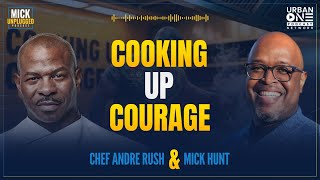
Chef Andre Rush, a former Army combat veteran and White House chef, talks about the 22 push-ups campaign for veteran mental health, his military service, and why he dedicates his life to helping other veterans and young people.
Chapters
And so instead of saying survivors remorse, it's survivors strive. You know, it's remembrance of. To remind everyone that life is short. You never know. Check on each other, be with each other. Never take it for granted.
Ladies and gentlemen, welcome to another exciting episode of Mick Unplugged. And today, not only is a bucket list moment, but we're about to have a conversation with the guy that really sparked me into understanding mental health awareness and how I can contribute to make sure that mental health awareness stays on the forefront of everyone. We're talking about the White House chef who turned into a viral sensation. He was a US army combat veteran and mental health advocate with biceps as big as his heart. From the battlefield to the kitchen, from discipline to inspiration. He is fearless, he is passionate, he is unstoppable, and he is someone that I call a mentor. We are talking to none other than Chef Andre Rush. Chef, how are you doing today, brother?
Brother? I'm doing absolutely blessed. And thank you so much for that amazing introductory. I'll say the same thing right back at you. Your inspiration to me, and thank things for everything that you do and being here, man.
Chef, you know, I was telling you before, huge fan of yours, but where I became a fan, man, was when you were talking and promoting 22 push ups a day, what that meant to veterans and the suicide rate. And it really touched me, man. Like, I wasn't someone who served, but I have a lot of friends and family who did. And I understand everything that you were saying in those messages, and that truly inspired me, man. Like, you don't have to be the person going through it to help. You can be the person that can check in on your friends, as I like to say, doing a checkup from the head up, right? Like, just asking people how they're doing, just talking goes such a long way. But I didn't get that until you, bro. So I just wanted to tell you thank you for that and what that means to me and the people that I'm in connection with as well.
No, thank you. Thank you for that. And, you know, it's crazy because I didn't know how much I needed, you know, my. My. What I do in giving back is helping me even more. So people say thank you, Chef, and I say thank you back. They have no idea how much and hard, how heartfelt when I say it back to them, because they're actually literally helping me, you know, and it's funny because a lot of people started at 22. You know, I was doing it the 22 a day. And then I started doing the 222, and I started doing it 2222. As a logistician, strategically, because I wanted that number to mean something, you know, say 22 a day. Like, okay, you kind of blow it off. But even when I was started doing those high numbers, people would always say, wow. And they're like, what. What's the. Is the significance for it behind it, you know? You know, that's the hook, line, and sinker. And then you bring some money into your world, and then you realize that you're both sharing the same world already, and they didn't even know it. And so when they started doing it, you know, I've had so many people to come and just said, you know, from, you know, from the, you know, neck up, head up. How not only did it change their lives in a physical aspect, in a mental aspect, in a health aspect, and a social aspect as well.
Yeah, man, like, you inspire so many. I guess I got to get mine up to 2,222 a day so I can one day look like you. But speaking of looking like you, man, like, there's so many places I want to go. A lot of people don't know this. Looking at you, you would think, oh, shelf was a linebacker or whatever in football, but. But you had some sweet feet back in the day in high school, huh, Mr. Running Back Chef, huh?
I was, you know, I did a couple of things. Track star, running back. Football was my passion, you know, art, I want to try to be as whimsical, but I worked my butt off and had a few scholarships, but I chose the military route. Even the Olympics, I had the trials for that. I actually decided to go to the military and skip it all, you know, because I wanted to do something at the time as a young kid, you know, that wasn't important to me. My dad, kind of from the south was like, you know, the men go to work, the girls go to school, you know, so my mindset was service to servitude. What can I do? How can I help my family? So forth, even not myself, you know, So I was like, I sacrificed myself. Meaning that I didn't do any of that school stuff, but I did it later on in my career. And it's crazy because every rank I ever put on, I put it on myself. Every degree I never walked, it was just a check for me because I had so many more things to do. And even now from getting so many accolades, which I'm humbled by, they're all still in their boxes, because I'm not done yet. You know, from the key to the city of Mississippi to, you know, recognitions from California for suicide awareness to this to that. It doesn't. It means everything to me. But right now, as a matter of fact, I'm here ready to get inducted to Veterans hall of fame coming up. You know, that's important to me. It, it shows thing, but at the same time is I'll never become complacent. That's why I tell people all the time, never become complacent.
Yeah, I love it, man. Like, I always tell people you're different, right? Like in a good way, right? Like, like you're a role model again. I know you're humble. You're not gonna, you're not gonna see it, but you're a role model. You're inspiration, and you're different. And you allow others to say, hey, it's okay to, to forge my path. Because how many of you in high school would have taken the college scholarship? How many of you in high school or, you know, in your early 20s would have said, I want the glory of the Olympics, right? Like, you were never a look at me kind of individual. You always had that spirit of, what can I do to help others, man? Like, you just talked about your dad a little bit. Is that where it started? Was, was that. That mentorship and leadership and guidance from your dad?
Well, the, the. It's true. My dad was that person. He was tough as nails and he taught me the value of hard work. You know, he told me two things in my life is as a young age that I didn't understand at the time. He said, always be the hardest work in the room, and no matter where you go, someone is. Wants you to fail. Doesn't matter who it is, they're going to want you to fail. You know, because people going to see you go through your paths, they can look at you and be intimidated. They can look at you just want to be. It could be any monetary, clothes, whatever it is they want you to fail. It could be family members. It be somebody as you step up in the ladders and go through success or your failures. And believe me, I had many, many failures, you know, and I still go through those. And you know, it's talking about the Olympics and all that. People say, what if, you know, you had taken that path? I, I didn't. So there's no what if. There's only right now I go forward. I don't go backwards. Right? Those things that happened back then, I Can't even imagine it because it never happened. I think about what I'm doing because even if I had done that, I wouldn't be here helping millions. You wouldn't be here talking to me, we wouldn't be talking together. I wouldn't get to meet my brother, you know, so those are the things you think about when you say what if it's what should I be doing right now?
I love it, man, I love it. So talking about the right now, you know, I love to ask people about their. Because that thing that's deeper than your why like that passion, that personal mission that you have. So for you today, the giver that you are, the leader that you are, the inspiration that you are, what's your. Because what's your purpose today?
Wow. You know, as soon as you said that word, something popped in my head. You know, you go through trials and tribulations in your life and the one thing, I'm a faith based person and I've been open about that and I always will be. I'll never. And I tell people, don't waver on who you are and what you believe in. That's your right, your privilege on any part, race, color, monetary, anything. What you say, believe always. Don't ever, especially with the kids. Don't ever kiss especially. Don't get stigmatized. Say you think because you believe in something. I believe in something. And, and that's him above. But it's been times in my life, lots of them, where I thought that, I thought, okay, this is going to settle down. You know, I've had some really bad things happen. I've lost a lot of people and I, I think, you know, about my daughter and about her brother and her two brothers and, you know, I lost my mother, my, I lost my best friend and it was all along the same routes. And after my daughter, which was just two years ago on the anniversary, it was at the highlight of my career. I was going to New York City with Gordon Ramsay with my TV show, everything going. When I got that phone call it at 4 o' clock in the morning and I was just like, I've done all this work constantly. I've given back, I've given back. I've done everything you asked me to do and so forth and so on. And it just hit me and I'm like, you know, because I almost gave up when my mother went away and my father went away right back to back and I'm just like, I can't keep doing it. But she reminded me, you know, from above, that this is what I was meant to do. And then that happened, and I had to catch myself because I said, he makes no mistakes. He makes no mistakes. You know, you can get tested and whatever. And you said, because. Because I have no choice. There's no. There's no choice. I have no choice, brother. I. I have to do this. Everything that I do is for this. It's for every cause, for the kids, for the veterans. It's for all the people that I know that can take my place. The ones who can't believe, do believe, want to believe. The ones that need it as much as I need it.
So.
Because is. Because I have no choice, man.
I'm sitting here trying not to get emotional, bro, because you have a story, and I resonate with it, and I kind of told you why I connected with you. But one of the things, I don't live life in regret, right? Like, ever, because I live in the moment like, we're all here for a purpose, for a reason. But I do have one, you know, like my best friend from high school. Years after high school, I got a call that he had committed suicide. Literally five days before that. I had reached out to his uncle to ask how he was doing. I could have called him directly, and I always wonder if I would have called him instead of calling his uncle to ask how he was doing, could, would, if anything. And I don't know the answer. I never really tried to go back there, but I never know the answer. But part of why I do what I do is because you always reminded me of him and of the things that I could do. So, bro, like, you just mean so much to me. I just want you to know that.
You know, we do this all the time. We talk all the time. And I talk to so many, and it's. It's not everyone I can talk to where the energy is extremely, perfectly aligned and alike. You know, as you say things, I'm living through you like you live through me. And when you said that. And it's crazy, because my first one, years ago with Sword and Durden, he called me, and I was helping a bunch of soldiers, and I talked to him every day. And that one day I said, I'll call him back. I'm with the guys. And that day turned at night, that night turned into three in the morning. And I got a phone call, and it was someone, one of my soldiers from Iraq, and saying, hey, it's about so. And I'm like, yeah, I'll call him back today. And he was like, he's gone. I'm like, what are you talking about? You know, and that same question that you asked, this is. This is crazy, because the same thing you said is back then, I was like, what if? What if? Why? What? What? We know this. This kid, he's, you know, 25 years old and, you know, has a wife and two kids. And, you know, it was the smiles, and I don't get it. I don't understand. What if I had picked up that phone, you know, and then all these years later, he became part of the story and the reason. You get it. He became part of my cause. And so instead of saying survivors remorse is. Survivors thrive. You know, it's remembrance of. To remind everyone that life is short. You never know, check on each other, be with each other, never take it for granted, never become complacent and grateful. All those things that we kind of do in the US that we become so humanized, too. But we have to take a moment back and step. And that's why I have so many calls and people say, chef, you do so many different things. Why? Because I have no choice. Because if it's important to someone, even if it's one person, it's important to me because there's a reason why. So if I'm going from suicide awareness to mental health to the military to veterans to sexual assault, sexual trafficking, Alzheimer's, this. This cancer society, which I'm speaking next month, everything's a reason, everything's a choice.
Yeah.
And you have to be that person that has that empathy, compassion, to understand that everybody's human because you want them to treat you exactly like you want to treat them.
Yes, sir. Yes, sir. Again, man, just such an inspiration, such a big Brother figure, you know? I want to go back to a moment for you. September 11th. We all remember the day, right? It all touches all of us, but for you, it was much different, right? Like, you were at the Pentagon. You were working out in the gym, right? And then you made a decision again, going back to that person that you are, right? It's almost like when you talk about your. Because you have no choice, you don't even think right? You're just like, I have no choice. I'm gonna step up and do what I do. Take us back to that moment, brother.
Honestly, it's reflex, you know? It's like, you know, and I, I. I have to say, you know, the military in embedded installed so many different tenures, enemies that I never knew I had, especially leadership tenure at a very young age. And which fortunately for my mom and my dad, because I got up every morning and helped and was on a farm and did this and, you know, had jobs, and I didn't have a normal childhood. And it. At one point in time, I used to think, man, this sucks. I don't have a normal childhood. And now I think, man, I had the best childhood I could ever possibly have. It taught me everything that's doing. There's nobody that can outwork me out, beat me out, run me out, task me, nothing of the sword. And when that day happened, I'll be honest with you, I. I said when that day happened, but it's. When that day happens. It happens every day in my head. As soon as you say it, it resonates right away. It's flashbacks. Those were triggers and things that come back where people don't understand when they say, I have triggers. No, we have triggers. They're all different, but they're all meaningful for each person. But for me, when that happened, I didn't know what was happening. All I know is that people needed help, and we need some guidance, whatever. No matter who I am or where I am. And to put myself in a situation where I hurt myself, which I did. And then also in another situation where it was part of behind the scenes, where I want to do more and do sweeps and find out how I can help. And that was a part, I think, after the fact. When I'm. I'm a young kid, I'm young, you know, yeah, I'm a driver. But all my guys, I lost some guys that I worked out in the gym. It was a DOD guys, the Pentagon, the cops, the squats, all those. Those are my big brothers, you know, and it was crazy because I didn't know what was going on. You know, back then, PTSD was kind of stigmatized.
Yeah.
Even though they say it wasn't, it was very stigmatized. You know, it was one of those, hey, don't talk about this. You know, that normalcy was. No, not there. And when some of my guys, who are much older said to me, because I was there with them, they said, hey, Chef, we're gonna go get some help. They have somebody here. And they actually said, we have some people here you can talk to. They didn't say who the people were, but we have people that you can talk to. If you feel in a certain way, that's to kind of dumb it down. You know what I mean? I don't say we have therapists here on site just because you may have trauma or this and that. It's just people to talk to. And they said this to me. And I went back to my chain and I said, hey, I think I may want to talk to someone. And they said, do you like your job? That's English to me. I understand. And for the next 20 years, there was as soon as. I think, no, I don't think as soon as that happened, it was a timer. It's a ticking timer. It's a time bomb. I was that time bomb. I had no idea how I would internalize that, how I would deal with that, how volatile, how I. How dangerous. I. I had no idea what was happening or what could happen. You know, you think you're especially men and this go out to all my men, you know, big, strong, you know, I can live 4, 5, 600 pounds and, and do all the run forever. And. And us being our mind is. Nothing can touch us. Nothing can touch us. And that's a lie. We get touched even quicker than anybody else because we try to criminalize and say that I'm invisible, you know, And I was one of those guys that were partly like that and to the point where I. I started snapping and I was a big guy and I did a lot of stuff and. And it was one of my general who actually called me out because he saw it and, And I got really upset. And that was the first time I had to go to therapy. When I walked out of his office, slammed out his office, got a call. So he go into therapy. And the in this right here was, you know, he works in. In so many ways. I was in West Point because I was coming from. Back from Iraq the last trip, and I went there to see the therapist. And it's on his West Point over the council. And going through is the top floor and that's the only build, the only, the only office there. So if you go there, everybody knows you're going there. And I go there, I hear he talks to me and I just. Nothing in one ear and out the other. And I'm walking out. I'm like, I get out, get out of here. And I'm walking to the elevator, which is down probably like 25, 30 meters, about 40 meters or so. And this green hat comes out and passes each other and I kind of glance over and kind of put my head down a little bit. Don't look at him. And he did the same. He got to the desk. I'm pushing the elevator button, and all of a sudden he runs back down to me and he see me and he looks at me and we just stopped and he said, brother, if you're here, I know I need to be here. And then we embraced, and it just gave me even. Just still gives me chill bumps. Because that said everything I needed to know. Yeah, that said everything I need to know. And from there, there was there no ever looking down. There was only determination and let's move forward.
Man. Like, I got goosebumps from that, man. Like, that's so inspiring. And that's a part of who you are, you know? Like, one of my mentors is Les Brown, and we talk about the power to keep going, right? Like that. And when I think of you, that's what I think of, right? Like, no matter what, keep going. Like, one foot in front of the other, right? I'm gonna say this for you. This is how I feel. Your mentality is, if your heart is beating, you have more to give, you have more to do. And so talk to the viewers and listeners about that, man. Just like that mentality that you have, that no matter what, just keep going, keep moving, keep doing something.
It's right here. Keep going. Never give up. You can do anything. That's the first three words of keep going, Never give up, you can do anything. Keep going. Never give up. You can do anything. I'll say it to myself and I tell everybody to say it to your kids. Say it to your kids, keep going. Never give up. You can do anything. I'm telling you, it's reinforcement. It's a. It's a. It's an internal thought. You know, if you say something long enough, they'll know it to be true, you know? But if you say somebody, you're not worth anything. You're garbage. Then they think that way. My part of it was with my family, even living in a project with not a lot of money or anything to have. We had each other. And believe me, I wore the same shoes every day, all the time. People laughed at the kids, laughed at me. I didn't have a normal lifestyle. Trust me, I. That was perfectly fine with me. My dad, my mom, everybody worked hard.
Yeah.
Everything happens for a reason. On this part, to this, for this very day. The same part of it is I stay the same way I was back then. This is the reason why I do everything I can do. I can have 3,000 people in a room. 3,001 take a picture, the first one I take a picture with, and the last one I take a picture with. They get the exact same treatment each and every time. I want them to know they worth it, right? I'm not going to wait and say, oh my God, this is long, whatever, so forth, so on. And you think about what you're doing and what you reason why. You know, everybody needs a reason. You know, people say, oh, those are your workouts. No, push ups are not my workout. They're my cause. There's a reason. You know, I tell people, people ask my workout or who pass about food. I said it needs to be associated with a reason, a cause. Don't just say I need to do it. I need to do it. Do it for something that's detrimental your kids. It's a reason why I want to breathe, the reason I want to live. You know, you are what you eat. You know, you have to have that mindset. So it is, you know, doing this for the.
More from Mick


How My Supportive Parents Shaped My Life: Patric Young on Gratitude and Faith



Transform Your Leadership with Ken Coleman: Discover Your Sweet Spot | Mick Unplugged





The Power of Character: Building Stronger Relationships - Mick Unplugged | Bela Gandhi
