Daniel Kang’s Path: From Scholarships to Fintech Innovation and Scalable Impact
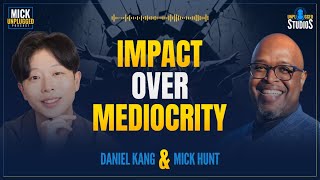
Daniel Kang, co-founder of fintech firm Flobo, talks about building financial products for freelancers and creators. He explains asymmetric bets: budget for failure, position for big wins, and create feedback loops. Start with savings and index funds, then optimize taxes and compound small consistent actions into outsized results.
Chapters
Or one of my biggest fears is living in mediocrity. I would rather live on the edge of possibility, trying to do what I think would be extraordinary rather than be mediocre.
Ladies and gentlemen, welcome to another exciting episode of MC Unplugged. And today we've got a banger for you. Our guest is the co founder of Flobo, a Finance. I'm sorry, let me start that over. He is the co founder of Flobo, a fintech trailblazer reshaping how creators and entrepreneurs access capital, empowering the next generation to grow on their own terms. From idea to execution, from hustle to scale. He is the innovative, the driven, the game changing my guy, Mr. Daniel Cain. Daniel, how are you doing today, brother?
I'm doing very well. Thanks for having me in for that flattering introduction.
I appreciate you my guy. I appreciate you so much. So Daniel, on Mick Unplugged we like to talk about your because that thing that drives you, that thing that's deeper than your why. You know, I love Simon Sinek and I love start with why, but I like to go a little bit deeper. So if I were to say Daniel today, what's your because. What's your purpose, brother?
Mm, that's, that's a great question. I think the because that I'm going through right now is how do I think about having the greatest amount of impact related to making opportunities fairly accessible to everybody as possible. And I think it goes back to sort of how I grew up, right? So I grew up in a low income immigrant family and money was a big problem. And one of the ways that I was able to get an education was actually through the generosity of many scholarship foundations. So throughout high school I applied to about 120 different scholarships and was lucky enough to win, you know, a few of them so I could get an education. And that became the platform for me to do many, many other things. So you know, from then I did everything from microfinance to crowdfunding all the way to, you know, things I'm doing with technology and finance today and, and obviously with, with the book. I'm also trying to share some of my mental models and thinking so that hopefully at least a few people who are in my scenario can, can think about breaking through without risking everything and get to where they want to go.
I love that dude and I want to get into to all of that. You know, we've, we've heard a lot. A big trend lately has been biohacking and that's been phenomenal. But I think what you're doing and reading your book a little bit, I'd almost call it financial hacking. Right? Like it's how do we, how do we take the good parts and really understand what I like to say is financial literacy? How do you understand what's going on in the world of finance and money? And I think you do a really good job of that. So let's go into that piece, man, like the super upside factor. Talk to us about, you know, why the journey of writing this book, who the audience is and what are some things people are going to get out of it.
Yeah, that makes a lot of sense. So the book is centraled around this theme of asymmetric bets. It's how a unique breed of investors like to think about investing money. And that's the world of venture capital. So venture capital is a trillion dollar industry, but they make money despite being wrong 90% of the time. And the way they're able to do this is because the few wins that they have have extraordinary outsized outcomes and all of their losses are captain floored. So an example of this is, you know, I used to work for a venture capital firm called Softbank Vision Fund and the founder Masayoshi San became the richest man in the world for a brief moment using this, which is he invested $20 million in a company called, you know, Alibaba. It's a relatively well known company. And that 20 million became 100 billion. Right. That's a 5000x return. And even if he was wrong on, you know, 90% plus of his bets, that one would be sufficient to make up for everything.
Covered it all.
Exactly. So that's the whole premise of the book. And this has been proven out in the trillion dollar industry. This has been proved out for, you know, for founders, for investors. The, the premise is, can I bring this and allow other people, like to make good career decisions using these asymmetric principles and what are some of the conditions that must happen for this to sort of play out in your life? And that's sort of the premise of the book. And I think it'll be really, really helpful for people who want to have a breakout in their career who feel stuck after following all of these signposts. Right. You already went to the Ivy leagues, you already did in the investment banking, consulting or law or whatever. But you're like, you know, there must be more, there must be something more than just following directions. How do I think about making those big outsized bets?
I love it. I love it. So going a little bit Deeper you talk about the principles. What are a couple of these principles that I'm going to say the everyday person can put into their lives, right? Like that maybe that person that's considering investing or you know, you could be someone like me who has been an investor for a while. And while I'm not 90% wrong, I'm also not 100% right either, right?
Yes. So I think what you need to be really careful about is little bit of knowledge is almost too dangerous. So when I talk about this, sometimes people immediately think about the lottery, right? So if you win the lottery, you get, you know, millions of dollars and if you lose, you lost to 10 bucks or whatever. But that's not how the asymmetric principles work is we know the lottery doesn't really work for most people. I'll talk about like three most important ones. The first one is to budget for a 90% fund failure rate. What that means is it doesn't matter where you're starting. You need to budget that you will fail most of the time. So a single failure shouldn't knock you out and you can start anywhere. So if you have a dollar, you need to start betting in pennies, not in quarters, right. So that you can continue to play the game. And you need to give luck enough chance to catch up. The second thing that's really important is about positioning the bets for 100x outcomes. And that usually involves using other people's infrastructure that's scalable. I'll give you an example of this. So I talked about how I was able to win scholarships and go to school. This was my first asymmetric bet. Minimum wage in my province in Canada at the time was $10 an hour. While a single scholarship could be worth over $10,000. Meaning if I want just one scholarship, it's the equivalent of me working 1,000 hours part time. Right? So that's why I said I'll spend 400. I ended up spending 400 hours applying to 120 different scholarships. My hit rate was like 10, 15%, but that got me close to $80,000. If I had spent the same 400 hours working a part time job, that would have gotten me $4,000, right? That's like a 20x difference in outcome. And that's what I mean by position. Every single bet needs to be positioned for these large outcomes so that even if you win 10% of the time, you still outperform much of else, like of what you could have done. And then the final principle I'll talk about is this idea of creating a positive feedback loop. So every single one of your bets should be informing the other 99 bets. So these aren't happening in vacuums and silos. And the probability of success isn't independent from each other like a lottery ticket, right? So you buy one, same probability, they should all feed into each other. And what you find is a non linear progression of getting better and tilting the luck in your favor so that you get those really big outsized returns. And an example of this is, you know, how my book came about. So I started writing one Saturday a month, about six hours or something. If I translate that, that's like 15 minutes a day. And when I first started writing, no one was reading my stuff. But in the back of all of that, I got a little bit better every time I started writing. You know, every one of these, even this conversation would become fuel to talk about my next piece of writing. Or I'll see what people commented or what they highlighted or what they liked and I'll try to get better and better and better. And you know, after about a year of doing this, I was able to, you know, get a couple thousand followers. Medium.com reached out and asked me to give a talk. And then in that talk was an acquisition editor from Wiley and Sons. And that's how I got my book, the Super Upside Factor published. Right. And all of this wasn't, you know, this extraordinary amount of work. It was like 15 minutes a day of just writing. Right. But it was just positioned in a really, really good way so that it's scalable, you know, through the Internet, through like Medium and writing blogs. And I just got a little bit better. And you can see how, you know, this led to a book. I recently, this book led me to speak at TEDx Stanford. And I'm sure that will lead to many other things. And you can see how by making these sort of bets, even in the everyday context, it can lead to really, really good outcomes.
No, I love that. I love all the principles. I even love the theory from a personal development and even a leadership perspective, right? Like you're talking about the time you understood what it was going to take, but you said, hey, I'm going to do 15 minutes a day. And then I'm sure at some point that 15 went to 20 and then that 20 went to 25 or 30 and then before you knew it, right. Like you had a book. And I think that same principle in life is really relevant to, to everyday people, is sometimes you just got to get started with what you're Doing and understanding that. It's a journey. And I think where most people go wrong, I'd say even in financial literacy, is they want big results really fast. And the truth of the matter is, in almost everything that we do in life is there's a journey. It takes time. Right. Like Michael Jordan, my greatest, my favorite basketball player of all times, it was a journey before he was Michael Jordan, the six time world champion.
Yep. Right.
And I think, you know, tying this back to you and the financial literacy piece, it's just understanding that things take time. You've got to look at historical performance to see what to do next. But no matter what, don't give up. Right?
Yep. And I think just to add to that, I call this intellectual obesity, where people try to understand the most optimal way of doing things, whether it's related to financial literacy or leadership or whatever. But really it boils down to how well you execute on a very simple set of principles. Right. And I think the reason people are looking for the answer is they're looking for shortcuts. How do we think, how do I get the best thing and get the best workout or get the best financial investment or get whatever. But you know, if you've worked out at all, you know, it's a very boring process of like a pretty set, training set, and you just keep doing it. Same thing with finance, same thing with really everything. And I think, you know, just taking a few of these principles and really going deep on execution is what really matters.
Yep, absolutely, man. Absolutely. What's one piece of financial advice that you'd give to, again, the everyday person that's really looking to start investing, like, what are some things that people can do? What are some things that they should look at or look for?
I see. I'm just going to qualify this shouldn't be taking this financial advice because I'm not authorized to give out financial advice. But I think it starts with the boring stuff. Right. In the startup, in the venture world, angel investing is very common. People are like, oh, I'm going to angel invest in this company. It's going to be Uber or Stripe or Airbnb. My view is that angel investment should be a very small piece of your portfolio, if anything at all. It just really goes down to can you do the biggest bare minimum? And the basics of can you put away, you know, like 20, 30, 40% in savings? Can that go into, you know, low cost index fund? Can you optimize for taxes so that you're not paying all of these taxes? Can you look at qsbs. There's all of these things that are out there that's very, very boring. But I think that's sort of how you build the foundation and then after that you can be a little bit more creative. Right. And I was actually recently at the last shareholders conference for Berkshire Hathaway. It's, it's the last one where Warren Buffett will be leading, presumably. I mean, definitely leading Berkshire. I don't know if he'll be leading the shareholder meeting anymore, but that's sort of what he was saying. He's like, hey, you don't need to be invested all of the time. You don't need to be very, you know, creative. It's, it's, it's about time. Can you just do the right things over and over and over and over again until these actions start to compound over time?
Yeah, yeah. Really good stuff, man, really good stuff. So talk to us about Flobo, man, like the fintech product software that you have. Tell us a little bit about that.
Yeah, so fintech was an extension of what I wanted to do. And you started with the why. And my big why was can I make access to opportunities a little bit fairer than what it is today? And I thought one of them was going to be around financial access. And I think whether it's finance or knowledge or mental models, it'll continue for the rest of my life. But Flowbo was about providing financial access and services to non salaried employees. So think freelancers, think creators. So we were able to enable a bunch of these creators, for example, to launch their own business or provide funding to, you know, creators actually who started their own venture capital businesses. Right. So the way we thought about it at the time was banks generally don't like freelance income for two reasons. The first is it's very volatile, right? It's like $1,000 today, $10,000 tomorrow, and then it moves up and down the second.
More from Mick


How My Supportive Parents Shaped My Life: Patric Young on Gratitude and Faith



Transform Your Leadership with Ken Coleman: Discover Your Sweet Spot | Mick Unplugged





The Power of Character: Building Stronger Relationships - Mick Unplugged | Bela Gandhi
