Finding Purpose, Resilience, and Leading with Vision
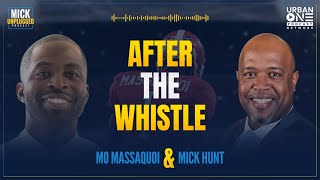
Mo Massaqua, former NFL wide receiver, lost his left hand in a 2017 accident. He rebuilt his life through Harvard's leadership program and now runs a consultancy called The Vessel, sharing lessons on vision, support systems, and role clarity.
Questions this video answers
2017
Master's in Industrial/Organizational Psychology from the University of Georgia
Harvard Business School's Program for Leadership Development (PLD)
Cleveland Browns, second round
84 yards
Chapters
You know, I lost my hand, but I gained a new perspective of who I was as an individual. Things that were dormant or things that I took for granted, I started to learn. And that came from just going within myself and the things that people are interested in that may be the key to unlocking their gift.
Ladies and gentlemen, welcome to another exciting episode of Myth Unplugged. And today, we might as well call this the universe. University of Georgia showdown. From former NFL stardom as a Cleveland Brown wide receiver to founding a consultancy whose mission is guiding leaders through transformative change, he embodies resilience and leadership. After a life altering 2017 accident resulting in the loss of his left hand, he emerged stronger, earning a master's in Industrial Organizational Psychology from the University of Georgia and completing Harvard Business School's Program for Leadership Development. Please join me in welcoming Independence High School's own University of Georgia. One of my favorite all time receivers. We're talking to none other than Mohamed Mo Massaqua Muhammad. How you doing today, brother?
I'm doing great, brother. How you doing today, man? I need to take you everywhere for introductions.
Mo, you know I was telling you offline, man. So I've got an uncle shout out to my uncle Troy and Jackson, former University of Georgia running back. Been a Bulldog my entire life. My entire family on my mom's side are nothing but Bulldogs, man. And so being able to see you play in person, like probably 15 times, just the athlete. I'm not going to say that you were because you're still an athlete. The athlete that you are, man, the things that you were able to do were pretty much unmatched, man. So just thank you for taking time with us today, bro.
Well, I'm going to say this. You come from good pedigree, that all your families, Georgia fans, you were raised right.
I was raised right. I'm gonna say I did go to the University of North Carolina, so I personally am a Tar Heel, but I'm.
A Tar Heel as well.
There we go.
Yes. Carolina. Being from Charlotte, Carolina was one of my favorite schools growing up. I still perform and everything and so that's my second home too.
Yeah. So you understand it there, man. Like very few people can be UNC basketball fans and you and Georgia football, like, there's almost nothing like it.
Right? I'm a lifer and, and I, I was tracking the, the March Madness and I was seeing Duke and all their talent and I was like, no, I just can't take it so at all. I wish all those young men all the best of luck at the NBA level, but I did not want them to come home with it.
Yeah, I tell people all the time, Duke doesn't breed NBA players.
But we'll. We'll.
We'll move on from that one. We'll move on for that one. So. So, man, again, honored to be here with you, brother. I want to go back. Not to the. To the very beginning, but I want to go back to Independence High School, man. Like, a lot of folks don't understand. You hear all the big schools from Texas and California and Florida, but I'm telling you, in the Carolinas, there's nothing like Independence football. Like, you talk about Friday Night Lights like Independence is that a ton of stars, and you are definitely one of them, man. So what was it like for you Friday nights at Independence High School, bro?
See, people don't understand because we have all the legacy basketball, whether it's Duke or Carolina, Wake Forest, North Carolina State. There's a ton of good basketball talent, and people think that North Carolina is a basketball state, and largely it is. But there's a lot of football talent that come through there. The Jordan Davis of the world, the Hakeem Knicks, the Todd Gurleys, and the list continues to go on. And so being able to go to a school like Independence and largely being able to play for an individual like Tommy Knotts, our head coach, who's, I think he's on 16, 17 state championships during my run, it was 109 games in a row, seven straight. And the fact that, like, losing wasn't an option. It was, we're going to set a goal. We're going to go hunt it down. The fact that we're going to work together as a team, there's no individuals that are bigger than the team. The fact that you. How disciplined we are or how hard we work, all those things, I think was the undercurrent of allowing us to really thrive. And Friday nights were exciting because you knew going out there, you're going to put yourself in a chance to win and have a lot of fun in the process.
Yes, sir. Yes, sir. I love it. And so then the decision to go to the University of Georgia, I always love people explaining their decisions to go to different schools, whether they were athletes or not, because it's personal for everyone, man. And so this is pre nil, right? So for Mo, like, what was Georgia like without telling us the bag that they gave you? Like, what was it about Georgia that said, that's where I'm going now.
I played for Coach Rick, so There were no bags being exchanged. Everybody that you saw where that red and black came because they, they really bought into the culture. What, what Coach Rick was, was building really bought into the university. Just you've seen how the university's grown. Great experience while you're on campus, great education. Bulldog Nation, as everybody knows, is one of the best in the world of just you see a Georgia hat anywhere, you found a friend for life. And the combination of all those things made it a place that was just. I knew I'd be comfortable. Athens isn't that far from Charlotte. Door to door is under three and a half hours, and so it's relatively close as you cross state lines. The ability to play early. We were graduating two really amazing receivers and Reggie Brown and Fred Gibson and so knew there'd be an opportunity to compete for a spot. And the thing that sweetened it all, I got a chance to go with my high school quarterback, you know, best friend, guy named Joe Cox. And so we got a chance to go down there together and, you know, just increase comfort and increase the opportunity to have somebody that's going to make you familiar, have somebody you can work hard with, just do life with. And so the total package was one that worked out really well and haven't looked back since.
I love it, man. And knowing what Coach Rick means off the field, right. You know, he's a family first, faith first kind of guy. And I love Mark Rick to death. How did that translate for you playing for a guy like that?
Well, you know, it's interesting because being an athlete, people look at you one dimensional. And one of the interesting things about Coach Rick is people almost know him more of just as a person than as a coach, which is saying a lot because he had tremendous success at the university. But when we leave the game, or even when we're playing the game, we still have to be complete humans. We don't get a chance to just be athletic in this isolated domain. And so whether it's getting your education or being a great family man, or being a great person in a community, or knowing how to engage with different individuals, knowing how to adapt to different situations, all those things were a part of the journey and a trajectory. And I think it's helped a lot of individuals transition out of football, you know, once our bodies can't do it anymore.
Yeah, man, so, so true there, you know, a lot of great things that you did at uga. Got to play with Stafford, right? I think one of your. I was actually at this game, was it 82, 89 yard reception.
Florida. Florida. Yeah, man.
Yeah, man. You know, we hate the Gators over here, so shout out to my buddy, Brett Merrill. But yeah, the Florida game, man, was it 82 or 89 yards?
We went 84. And it's just, I mean, Stafford's a guy that there's. There's not a place on the field that he can't put it. And he's just a great human being. Just was an honor to play with them. Still track what he's doing now everybody's getting a chance to see his talent. I think the guy, his arm is going to last until the 60, so it's just a matter of how long he wants to play.
So let's talk about that, man. So I had an uncle who played in the NFL, wide receiver for the Patriots. And then, you know, he was telling me going to the Pro bowl with John Elway was the hardest ball he ever caught. Right. Like, it actually shattered his pinky. Catching a ball from John Elway in the Pro Bowl. And everybody that I talked to says the closest thing to John Elway's fastball is a Matthew Stafford fastball. What was it like being ready to catch those bullets? Sometimes from Matt?
I mean, the, the first year that he was there, it was, it was different. You know, it's something that, you know, he probably could have played pitcher in the MLB if he wanted to. Yeah, but it's, it's such a live arm. But I think one of the things that he's been able to do is also put touch and precision and timing. And so it's a combination of not just having a big arm, but also being able to. To throw the pass that is needed. You know, you see him throwing. No, look, in the super bowl, you see him fitted in different areas with his arm angles. And so once you get used to that, it's something that is a gift because you're always open and he trusts you to make a play for him.
You just gotta be ready, right?
Exactly. Exactly. That's what's up.
That's what's up. So you end up going second round to Cleveland. And so you're the first person I've asked this, and I want you to be honest, Mo, I know you're going to be honest. When you heard you were getting drafted, super excited, right? When it was Cleveland, did you go, oh, man, I gotta go up there?
You know what's interesting?
This is just me and you.
Now I'll give you an honest answer. So I'm from Carolina, and we didn't get a lot of Cleveland media. And so I wasn't actually familiar with them. And Cleveland had gone. Maybe they finished like nine and six, maybe a year or two before. And so they had a complicated background, but they looked like they were up and up. And then they, you know, took a dip. And then they brought a new head coach in, and so I had no knowledge of what it would be going in. And then you get the culture shock. I remember flying from Georgia to Cleveland. I left Georgia in shorts because it was 80 degrees. I landed in Cleveland, it's like 40. And I was like, whoa, I've never seen anything like this in May. And it was complicated because there was so much change taking place where we didn't know, but the team in the background was being put up for sale. We had a new head coach. We had multiple position changes, we had multiple player changes. And so I would say it was just almost like a case study of change, of what to do, what not to do, how to set up structure, how to set up stability. And we never really got that while in Cleveland. And I think we're still trying to figure that out as an organization 15ish years later.
Yeah. So, Mo, you're one of the brightest people that I know. And being a psychology major, having a master's in psychology, I want to. I want to take a step back now, because I hear a lot of folks talk about this. You go from high school and college where most everybody, maybe not everybody, but most everybody you're with loves the sport, right? Like, they eat, sleep, and breathe the sport. And then you go professional, right? And you're in a locker room with people that for some of them, it's a job, right? It's a clock in, clock out. The love, the passion isn't there with everyone. So for you, looking back, and again, you're one of the few people I can ask this because I want you to take your psychology hat now. Right? So, now, looking back, was that something you anticipated, expected, and then is there anything you would do differently to deal with that situation?
Now, it's a complicated question because some people are really talented but don't love it and can still be great players. Some people's motivation are to change the trajectory of their family. Some people just love to compete, whether it's basketball, football, accounting, engineering, they want to compete. That's just how they're wired. And so you just see a different flavor of it. The other side of that, though, depending on the system that you're in can change your love of the game, you know, if you're losing, you know, it's not a place that you want to be. It kind of wears on you if you don't necessarily have trust in your coaching or if you don't have trust that you're going to be there. Like all these other factors, if you don't think that you're being compensated fairly, can change the purity of the game that we played, you know, on the street or, you know, sideline tackle. When a car is coming by, you got to press timeout. And so all those things like, really complicated. And if you're in a organization that is a little more volatile and doesn't have that trajectory where you think you're going to win, the love of the game can change a little bit. And so it's a little complicated.
Nah, I get that, man, I get that. I appreciate the honesty too, because I talked to a lot of former athletes or, you know, retired athletes, I'll say, not former. And they always tell me one of the biggest shocks that they walk into a locker room is just, you know, everybody doesn't love it the same way. And at some point that that becomes everyone else too. Right. But I think for the rookies going in, it's just like, whoa, like, I love this. I'm a historian of this. And then you have some guys that are really like, hey, these meetings are over at 3, I'm out. Right? I'll see you tomorrow when it's time to come back in. I don't want to talk football, I don't want to talk basketball till it's time to. And that was a big shock for a lot of people. But I always have the conversation because I talk to a lot of athletes, especially rookies, that the one thing you have to understand going into this is it is a business from top to bottom, right. And it is going to operate like a business. The game of sport is a business. And so now you go from being a player to having to think like a business person because you become a business yourself at that point in time as well too. So loved your insight.
I mean, and it's, you have to invest in your body. Nobody's going to baby you. You have to find the right mentorship. There's no guarantee that you'll be there next year. There's no four year scholarships. And so you have to earn your spot every year. You have to continue to develop yourself. Even though you're, you know, one of 16, 96 people, you still have to figure out ways to get better. You can be replaced at any time because there's a new crop of athlete that younger, cheaper, faster, and then so the. The desire to continuously compete. What you put on film is your resume. You're getting evaluated all the time. And so you want to make sure that you put a good product out there. And so it's a different animal from just, you know, happy, go lucky you're on the team, and you're just happy to be there. You better be adding value to the team.
Yeah, absolutely. Absolutely. So, Mo, now I want to go a little bit personal because I've never. I've never got to talk to you about the 2017 accident. And I want to. I want to take my time here and give you the light because I know you've. You've told this story a lot, but I want to ask it in a different way, because you. You were a wide receiver, so your hands, your fingers were your tool. They were your craft.
Right.
And you have an accident where your tool and your craft, part of it's taken away. And for a lot of people that aren't mentally tough, it's devastating. Not saying that it wasn't devastating for a moment for you, but knowing the resiliency that you have and. And the inspiration that you are, like, we don't have to go through the moment of losing, of the accident. Right.
But.
But. But the grit, the resiliency, that switch. That said, I'm not gonna feel sorry for myself because I have a bigger purpose, man. Like, what was that like for you? Like. Like, walk us through that. Because that's why I'm so inspired by you. Like, yeah, all the sports accolades, awesome.
But.
But this is why I love Mo Massaqua, because you literally are like, hey, man, like, I can be down or I can become the person that I really am that I was supposed to be. And I think you use that as that platform for that.
Yeah, I'll attack that in multiple ways. You know, one, you want to have a decent base before you face adversity. Having the way that I grew up, the resiliency through football, like, I almost built muscle memory so that if it was something that shocked the system, whether I knew it or not, I had a reference point that I could get through it. And so I'd encourage people to put themselves in uncomfortable situations before they need it, because then they have a reference that, I'll get through this. The other part is to give grace, because there are times where you don't know if you're going to get through it. And so in My case, people see me now, but they don't see the anxiety attacks, they don't see the depression, they don't see the crying, they don't see the despair. They don't see all the things behind the scenes that you have to work through. And as you're working through them, they're not an isolated journey where it's just me going through it, you know, just having a rock solid support system where you know your wife is checking on you and making sure they're good. If she catches you crying in the night, where you are unshaven and don't have a haircut and you got a friend that sends a barber to the house that says, clean yourself up. The ability to have someone like prop you up and say, hey, you need to start working out, you need to start doing this, you need to start doing that. And so there is no individual hero. Even though you may see, like, the character of a person that looks like they've emerged through something, but there's a ton of people that are putting inputs in to kind of help you. And then over time, you're making progress. What you can't do is get so, like, sedimentary in whatever the despair is that you don't allow people to add momentum. Because I'm eight years removed now, and so I'd technically be in the same position eight years later if I didn't allow people to push me for it. But now you almost get a little win behind your sail and then you can start to kind of pick up the pace on your journey as well. And so it's a. I can't take credit for all of that, to be honest with you. But it's just the inertia of being in motion from a previous experience while also having an amazing tribe around me that is helping me through everything I've been able to do.
I love that, dude. And now taking that because a lot of those same principles that you're talking about, I know, are things that. When you're doing leadership development, when you're talking to businesses and corporations, how do you take that same thing and then correlate it to a business?
Well, it's interesting because it's one in the same. A lot of leaders think that they have to do everything by themselves. You often hear leaders say, like, leadership is lonely. And it's not lonely, it's isolated because there's a ton of people going through the same thing that you're going through. You're just not allowing other people to kind of help what you're trying to accomplish. I knew that I did not want to be in that position. I knew I had a greater purpose. And so the vision for what you're moving towards, if you don't have a vision and people can't buy into it, if you're not continuing to iterate along the way, I couldn't tell you eight years ago that we'd be on this conversation. But it's an iterative process to where you know where you're trying to go. And along the way, you're learning different things and you're gaining different insights and you're developing yourself. And eventually you get to either the target that you thought or a better destination that you couldn't afford to see prior to. And so a lot of times I'm helping leaders, like, understand, like, what is our mission? What is the vision that we have? How do we work really good as a cohesive team, but then as an individual, from a role, clarity standpoint, how do you give people an opportunity to do what they do at a high level? And the individual and the collection, they're working together to achieve something. And I'm an athlete, I'm a competitor. And so we're trying to perform, we're trying to put points on the board. And if you're not trying to do that, then you're going to get passed up regardless if it's an opportunity or a challenge. And so that attitude of we're out here to compete, you know, you want to be the best podcast in the world, not just in this discipline. Be like, in general, I want to be the best in the world. And when that's your target, it continues to inspire you to go figure out new ways to improve, new ways to make tweaks, new ways to assess yourself, new ways to be honest of what your weaknesses and deficiencies are. You need to hire for it, improve it, work harder at it. Something of the sort.
Yeah, man. Like, I want to unpack one of the things that you said, because people do say, you know, leadership is lonely or it's lonely at the top. And I tell people this because I do leadership development as well. There are times where you're going to be surrounded by a lot of people and you're going to feel lonely. That just means you're not surrounded by the right people anymore. Right. Like, when you outgrow the surroundings, you do feel lonely. That just means now you need to look for those new surroundings. You need to look for those new mentors, those new coaches, maybe that new challenge to push you. And so I love that you said that because I totally agree, man. Like, leadership isn't meant to be lonely, but there are going to be times where you've outgrown a situation or you're not in the right situation and you feel lonely because your surroundings have changed or your surroundings need to be different. And that should always be your first signal, 1,000%.
And I feel extremely blessed because a lot of my friend group, they're athletes who have reached the, you know, the highest levels or wherever. They're business leaders, they're entrepreneurs, and they're all like hunters. And so we're on a similar journey. If I didn't have individuals like that and I had to carry that burden all by myself, but I can make a call and say, hey, I'm kind of facing this problem. So, man, I just got through that. Or somebody called me and said, hey, I'm going through this situation. You can talk through it. And it's not the fluff that people kind of get enamored with. I don't know, wake up and wash your face and, you know, run 50 miles a day. And it's like, that's not even realistic. But tactically, how do we work through these things to get us to the other side of the equation?
Yeah, absolutely, man, absolutely. So I usually ask this question at the beginning, but I wanted to let everybody remember who Mo Massaqua was from a football standpoint. So I'm asking this question now, man. What. What is your. Because what's that big purpose for you that's deeper than your why? If you had to say, you know what, Mick? Today, my. Because my reason is this, what would that be?
Wow. You know, it's interesting. I. My because has changed and you have a near death situation and you realize that one life is very fragile, it's fleeting. And so we have to make the most of it. And we kind of take that for granted depending on where. Where we are in life. But then in the other side of that, I feel like everybody's going through some type of transition, you know, and sometimes it's good, sometimes it's bad, but we got to work through it and we're going to go through many of them. And so I feel like God's equipped me with the ability to help individuals go through that transition to reach whatever the highest form of their being is. And I enjoy that. And it's. I would have never anticipated this because, you know, I was so focused on, you know, sports and all that other things stuff. But as life has just evolved and I've gotten these collection of experiences. I just find myself engaging with people that are trying to figure this out. And it's just truly a joy to try to help someone become the best version of themselves as they're switching and transitioning through these different facets of life. So my because is to just help, you know, just. Just to help people on their journey.
I love that, brother. I love that. If you could give the listeners and viewers, like, one or two tips for those that are struggling to find their purpose or, you know, they don't know how to. I. I don't want to say grieve. They don't. They don't know how to take that next step. They're stuck in whatever rut they're in. Like, what would Mo's advice be?
I would say go within themselves. You know, I. I lost my hand, but I gained a new perspective of who I was as an individual. Things that were dormant or things that I took for granted, I started to learn. And that came from just going within myself and the things that people are interested in that may be the key to unlocking their gift. I'm just fascinated with people. I'm fascinated with professionals, performance, how I apply that is through going within myself and, you know, and discovering that now towards the work that I do. But once again, I continue to harp on it. I've always been on teams. Everybody plays a different position, everybody plays a different role. The same is true in life where you can't do everything by yourself. The more that I allow people in on where I think, you know, the vision is for my life, where I think things are coming towards me, the more that they start to open up doors and they start to become thought partners, and they start to be encouragers, and they start to be accountability partners. And those are the things that continue to help move things forward. You put something out in the air and you realize somebody's checking up on you. Did you do XYZ that you said you were going to do? Somebody's making an introduction for you, but it comes with you having some type of direction first in life so that people understand how to help you along the way.
Dang it, Mo. I love you, brother.
I love you, man.
Like, I could do this all day. Like, there's so many insights and wisdom that you have. One of the things that I'm working on this year is I'm. I'm building a series of live events, of live summits, and I need one of those to. To be keynoted by Mo Massaquah. If you're.
If you're down, man, count me in. As a friend, bro, I. I see a lot of value in what you do and just who you are as a human. If I can help at all, count me in.
Oh, then you're in. You were totally in. You're totally in. All right, I'm going to end this with a hot five for Mo.
You ready? Go ahead.
All right, hot five. First one, give me your favorite teammate of all time.
We can't do that. We can't do that. Listen, this. This. You have a very popular podcast. This is something.
All right, we'll keep it that way.
All right.
Matthew Stafford.
How about that? Yeah.
All right, so the. The one DB you hated going against.
Oh, man, that is. You know, it's honest. It's the Georgia guys, because the Georgia guys talk so much trash, whether it's, you know, your Prince Millers, your Asher Allen, Brandon Boykins, your Tim Jennings, your Demario Miners. Rest in peace, Paul Oliver. But, I mean, those battles are. You love them so much because you're actually spending real time with these guys all the time. It's not like, you know, high school or college. Like, you're living with these guys. You've seen them all, and it's just tension and trash talk. But I love all those guys, but hate all of them as well.
All right, number three, your favorite UGA memory.
The obvious is beating Florida. Unfortunately, we were one in three against Florida when I was there, and the ability to look over at the other side and, you know, see a little pain in Gator. Gator Nation was probably the most fun, you know, down in Jacksonville. There it is.
Your favorite NFL memory.
Wow. Now, I would say beating the Steelers because we. We didn't have a lot of success, but interestingly enough, it's just being there. You know, you're. You're there with. You get a chance to just watch individuals do their craft at the highest level. And while you're playing, you're also a spectator because you're seeing just the most amazing thing from names that you know, names that you don't even know. And you just have an appreciation for the craft and. And the ability for this discipline and whatever a person's put in to actually do that on a stage where 80,000 people are in stadium, millions of people are watching home, and just the ability to perform. And so that's kind of a little bit of both.
Okay, and then last one, what's the one book that you think everyone should read right now? Ooh.
The one Book. Give me a. Just in general or.
Yeah, from. From you. Yeah, for me.
You know, I love a man's search for meaning. That's an amazing book. And then a Midnight library is amazing book where it kind of gives you different interpretations of what your life could be like depending on decisions that you make. And then we. Depending on which direction you want to go. We could go a million different directions, but I would say those two are. Are really amazing just from, like, a life perspective. Cool. Cool.
Mo, I appreciate you, man, more than you know. This was a true honor. Would love to do it again, because there's so many conversations that we can have that I want to go deeper in. So I'm gonna let the world know. This is Mick and Mo. Part one. Part two is coming.
Count. Count me in, brother. Happy to make it happen.
You got it. Where can people follow and find you?
So you can find me on LinkedIn. It's my name. You can find me on my website, the vessel.com t h e v e s s o l.com and then all my social media are at ironmassaquah. And so reach out. Happy. Happy to connect with you.
There you go. Part two. We're going deep into the vessel, just so you know.
All right. Love it. I'll be here. All right.
And for all the viewers and. And listeners, remember your. Because is your superpower. Go unleash it.
More from Mick


How My Supportive Parents Shaped My Life: Patric Young on Gratitude and Faith



Transform Your Leadership with Ken Coleman: Discover Your Sweet Spot | Mick Unplugged





The Power of Character: Building Stronger Relationships - Mick Unplugged | Bela Gandhi
