From Tragedy to Triumph with Grit, Faith, and an Unstoppable Purpose
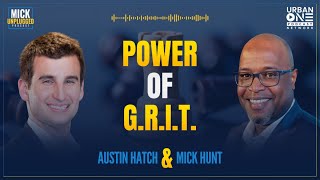
Austin Hatch survived two plane crashes that killed family members, woke from a two-and-a-half-month coma, and went on to play basketball at Michigan. He talks about purpose, daily progress in recovery, and choosing gratitude.
Questions this video answers
Two and a half months.
Nine days after accepting the scholarship.
About seven years ("going on seven years").
Son Hudson, two and a half years old; daughter Marley, five months old.
Freshman: about 18 points and 9 rebounds; Sophomore: roughly 20–24 points and about 10 rebounds. Also recalled a game with about 30 points and 16 rebounds.
Chapters
You had it, you had to be a little patient at times. You know, trust the process that everybody, you know, well, everybody says let the process, you know, work itself out. But I'm not trying, like, like if something could take five weeks, I'm not trying to. I want to do it in one week.
Ladies and gentlemen, welcome to another exciting episode of Mick Unplugged. And today we have a story full of emotion, full of grit and full of resilience. We're talking to a guy who survived two plane crashes, lost his immediate family, and still earned a scholarship to play Division 1 basketball at the University of Michigan. His journey from tragedy to triumph is one that you're going to want to hear. You know, when I, when I think of Austin Hatch, I think of toughness, I think of faith, I think of resiliency, but more importantly, I think of an overall just good human being. Ladies and gentlemen, please join me in WELCOMING the guy, Mr. Austin Hatch. Austin, how you doing today, brother?
Thank you very much. I really appreciate the introduction. Thanks for your kind words. Really appreciate it.
Nah, absolutely. Austin, man. You know, I usually start with one question for all my guests on Mick Unplugged. But you know, I know your story. I've been a follower of yours for over 10 years now. When I ask you, Austin, what's your because? What's that thing that's deeper than your why? What's your purpose today? What would Austin Hatch say his because is?
Well, I think it's been my wife for going on seven years now. Right. Honor her. Do my best to lead our family. We have a two and a half year old son named Hudson.
Hudson.
And I have a five month old daughter named Marley. And they're my, they're my why now? They're my purpose. They're my because. Right. You know, and it's. Yeah, I think the, the big thing about that is remembering what that is for you. We all have a different purpose, a different why, different because. Right. But I think always remembering it is important because when things get really tough, if it's just for us, we'll probably throw in the towel, give up. But if we remember that greater purpose that why that, you know, like, I think we'll always be willing to do what it takes to overcome, so.
Totally agree, man. And specifically I wanted to ask you that question, man. Again, just knowing your story, knowing the triumph, the tragedy and everything in between to survive, and I don't think people understand the magnitude of this. To survive two plane crashes, and in those two plane crashes, the first one you lost your mother, your siblings. The second one, you lost your dad and stepmom, Right? Like, the magnitude of that. How did Austin Hatch keep going, bro? When most people. That's not really going to be the thing. Like, how did Austin Hatch keep going?
Well, I think after the first one, when I tragically lost my mom, Julie, my sister Lindsey, little brother Ian, obviously devastating loss, incomprehensible loss, but my dad led me through that, right? And I don't know how he did it, to be honest with you, but he kept going. He kept living. And obviously, it was a. There was some grief and adjustment, but, you know, we. That wasn't the end of the road for us. It was obviously a terrible loss, a terrible tragedy, terrible circumstance, but we still had life to live, and we felt that we could honor our family in heaven by how we loved each other and kept living our life. And life was good. And he was remarried a couple years later, then had a great blended family, you know, and didn't replace what we lost, obviously, but it was great to have a mom and siblings at home again. And then, tragically, the second plane crash happened nine days after I accepted a scholarship to play for Michigan, and I was in a coma for two and a half months. And I, by the grace of God, came out of that coma, and I had so many people who were there to support me, right. And who they did out of the goodness of their heart. And I had. And Coach Beeline, too. He. He made it clear to me that he was going to honor my. His commitment to me. And so I felt I owed it to him, too, right, to make. To make the best recovery that I could and try to, you know, get as much. My ability back as I could, which obviously, I was not really able to get much of anything back. But Coach stayed true to his commitment, and I think from a leadership standpoint, that. That principle of following through on our commitments all the time, no matter the task, no matter the circumstance, I feel like if we're known as that kind of a person who wouldn't want to give everything they have for that kind of a leader, so. But, yeah, back to your question, though. There wasn't really an option. Well, I mean, there definitely was, but it's like I. I had. I had, you know, okay. I wanted. I mean, I'm coming out of coma right now. I can't walk. Coach Beeline's gonna honor his commitment to me and have me a part of the team at Michigan. Okay, well, I got some work to do, so. Yeah, you know, it's like, what do they say every day you either get better or get worse, right? So I just tried to take every single day, use that as an opportunity to get a little bit, little bit better, you know, walk one a little bit further, do a little bit more wall push ups, do a little, like, get my balance a little, a little bit better. Just one day at a time, just try to get a little bit better.
So, yeah, no, I love that. You know, if you're not getting better, you're getting worse. And I would say, you know, especially in today's era, in today's society, if you're not getting better, you're falling way behind, right? Austin, another question for you, man. So you were given a second chance twice, right? Like, how do you stay grounded in gratitude with that?
Well, I think, I think gratitude, I'm not going to say that could solve every issue on the planet, but if everybody in the world had had a lot more gratitude. And here's the thing. It's not hard to have gratitude, right? It's just a choice to look for the good, look for the, look for the positive, look for the opportunity, focus on the blessings, right? And it's like, man, if you. Because here's what I found. It's obviously, we all have reasons to be negative, right? You do, I do. People watching, listening. Everybody has reasons to be negative, right? And we're all human. And of course, there are times when I'm negative. Of course there are times when you're negative. I'm sure when things, you know, things are far away, whatever. But coming back to gratitude, though, it's impossible to be truly grateful and very negative at the same time. It's impossible, right? Those two emotions can't coexist. You can't be, oh, man, what a beautiful family I have. What a great life. What an amazing situation. We're so blessed. How. How lucky are we? You're still probably dealing with something that's not going great, but you can't really dwell on that when you're focusing more on the good. And so I just choose not to ignore. Not to ignore the negatives, not to ignore the challenges. But why not spend more time and energy looking at what's going right, you know, and looking at the positives? Like, for me, obviously, it's so terrible what I've lost, you know, in my whole immediate family and everything, and it's so sad. And I can't. I hope to see him again someday. I think I will. And. But it's like, man, my family here Like. Like, it doesn't get any better than this. My wife Abby, our two kids. Hopefully my wife wants, you know, four or five. So I think we're gonna compromise and have four or five kids. Right. So. So. But yeah. So. So it's like. It's like, man, how good. Life is so good here. Obviously, that doesn't mean I. I don't remember my family and. And don't acknowledge the loss.
Yeah.
But it's hard to be overcome by it, you know? Yeah.
Yeah. So I have two friends who lost two different friends, not the same family who each lost their parents at a young age, both somewhat tragically. And one of them also lost a sibling as well. And they each. Yeah, they each told me.
Or.
Tell me, Mick. You know, it became really hard for us to. To want to get close to people because we felt like if we got close to. And we might lose them. And the hurt of losing family is really tough, like, especially at a younger age when that's traditionally not supposed to happen. Is that something that you went through, like, getting close to people, like, wanting to be around people? Like, what was that like for you? Or what is that like for you?
Yeah, well, for me, kind of the opposite is true for me. I just love people. I love relationships. I'm just so grateful again. And obviously, I'm so sad and, you know, what I lost and everything, but, you know, my family still impacts me to this day, and.
Yeah.
But. Yeah, I'm just, like. So I love. Yeah.
Not.
Not to just completely shut down your point, but just for me, I. I never dealt with that. Okay. I just, you know, my. My fan. I had so many people, like, especially after. Well, after both plane crashes, but especially the second one when I was almost killed, I had so many people out of. Who, out of the goodness of their heart, made sacrifices to be there for me. Right. Like, maybe. Maybe it. Maybe it gave them some gratification to, like, oh, yeah, you know, I want to be here for this guy Austin, who went through a terrible tragedy. I want to make sure I'm there for him, make sure he knows I'm there for him. Maybe that. Maybe that made them feel good, but it was more for me. Right.
Yeah.
And I'm just like, man, like, people that. And are willing to invest their time and give of their, you know, their talents and energy, and it's like, Yeah. I mean. I mean, I just. I love. I love people, and I am so appreciative of everybody in any area of life who's had ever. Who's Had a role in my. In my recovery, in my life today. Like, I had so many. Like, it took a village, you know, the whole saying, it takes a village. Right. Like, for me, especially after the second plane crash. After both plane crashes, but the first one, I had my dad there. Right. The second one I didn't. And I had extended family friends. Unfortunately. Unfortunately, my store was pretty public, for better or worse. So I'm not going to say I had millions of people praying for me, but I think I had a lot of people praying for me. Yeah. So it's like. And I'm just. Again, I'm so grateful and I love, love building friendships.
So there it is. No, I love that, man. And I want people to remember this as well. Austin had a basketball scholarship to Michigan.
Right.
That means. And Austin is from Indiana. Like some folks would say, that's the hoops capital of the world. I'm a Carolina guy, so, you know, I'm a little biased to that, but, man, so let's talk about Austin, the Hooper for a minute because I don't want people to forget that story either, man. So growing up in Indiana, one of the top high school players in the country. Definitely in Indiana, man. So, like, let's go through high school, I think, what, your junior year, you average, what, 23, 24.
So.
Right.
Well, well, so I got. The second plane crash happened after my sophomore year of high school.
Yeah.
So freshman year was okay. Didn't. You know, maybe. Maybe 18. 18 points, nine rebounds, just okay like that.
18 as a freshman in Indiana.
Sophomore year was a little better. Maybe 20, 20, 24 and 24 and 10 or something.
There you go, 24, sophomore year.
Okay.
I remember the status there.
Had a. Had a good game. Coach B. Line came to see me play against a rival school from across town who we'd never beaten. And, you know, it's packed, gym, standing room only. And Bishop Lewis is the name of the school, and I'm from a Catholic school from across town. And yeah, I had a pretty good game, I think I had. I had 30 and 16, I think.
And a casual 30 and 16. I like it.
Yeah. And coach, like. And then. So he went and he wait. Because he wanted to see two years of good grades to prove that I can. So I could do. I could handle the coursework at Michigan. Right. So he got my transcript after the semester and then saw that he's like, cool, let's bring him to Michigan. And yeah, man, it was a dream come true.
More from Mick


How My Supportive Parents Shaped My Life: Patric Young on Gratitude and Faith



Transform Your Leadership with Ken Coleman: Discover Your Sweet Spot | Mick Unplugged





The Power of Character: Building Stronger Relationships - Mick Unplugged | Bela Gandhi
