Gary Forbes: Unlocking Success Strategies From the NBA to Entrepreneurship
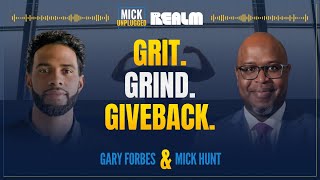
Former NBA player Gary Forbes talks about managing type 1 diabetes while competing professionally, his path from Virginia to UMass to the league, and founding Soul Survivors to mentor young people with chronic conditions. He discusses injections, athletic performance, and his plans to write a comic book and book.
Questions this video answers
Conference Player of the Year (senior year at UMass).
He says he is one of three players to have ever played in the NBA with type 1 diabetes.
Friends for Life in Orlando (a diabetes awareness event).
A campaign to sell 100 trilogies.
Email: gary@garyforbesoul survivors ; Website: www.thesoulsurvivors.com
Chapters
Plan B all the way to Z is to make plan A work. Always have that kind of mindset and vision and just that love. Like when you were a child, Plan A was to play basketball and have fun and be the best and score a whole bunch of points. So to have that same mentality and love for the game and around the game and what you do, I think it, you know, those kind of experiences will come to you.
Ladies and gentlemen, welcome back to another exciting episode of MC Unplugged. And today, we're talking about going from the MBA to navigating life with diabetes. He's a global Hooper turned advocate, entrepreneur, and mentor. His story is one of grit, grind, and giving back. Please join me in welcoming the resilient, the driven, the unshakable, Brooklyn's finest, Mr. Gary Forbes. Gary, how you doing today, brother?
I'm well. I'm well. I'm blessed and highly favored, as my grandmother would say.
Yes, sir. Yes, sir. Grandma always had the right words for us all the time. Right, Gary, man, been a huge fan of yours. I remember your days at Virginia. I'm a UNC Tar Heel, so I actually got to see you play at Uva, then going on to UMass and then having a wonderful professional career, man. I always love starting out by asking my guest, what's your because? That thing that's deeper than your why, right? Like, I could ask you your why, but I could probably guess it. But there's a reason that your why is your why, and I like to call that your because.
I think for me, I'm. I'm learning it as I'm in it right now. I think my because is. I think the world is missing optimism. I'm. I feel like that's one of my superpowers. I just look at every opportunity or every situation as an opportunity to either, you know, win or learn. Obviously, being an athlete has taught me that, you know, you know, you lose some games, obviously, I had to learn that very young. You know, I used to cry about every loss, and that would show my passion and my dedication to it, but. But I would also have to learn the lessons from it and how to get better and how to not make those same mistakes. And that's what I'm learning now with life after basketball, you know, managing a business and then also being a new father. So all these different kind of things are new, and I'm enjoying the process of it, obviously, just having that athlete mindset in it.
Yeah. Well, congratulations on new fatherhood, man. Big honor, big responsibilities.
It's amazing, man. I helped create my little best friend, a digital twin of myself or replica, not digital.
I love that, man. I love that. So talking about the optimism that you have and that being your superpower, I would say for anyone that ever saw Gary play ball, man, you saw it in your expression. I think it was infectious with your team. Like, no matter what was going on, you always were like, that bright spot. When did you know that you had that superpower?
I think it was around in high school. One of my coaches would say, you know, I kind of have, like, an energy. I'm always, like, smiling. I'm always thinking the best situation possible. You can ask my family. I always have the. To them these wild imaginations of these wild dreams.
Yeah.
And I'm a big cliche guy. So, you know, they're saying, if, you know, you can see it, you know it's true. And all these different things, if you know what's in the mind is, you know, can be a reality. So I've. I didn't know that I was practicing these things growing up is this was kind of like, man, this is what you're supposed to do. My father would always say these things, and I didn't know this till recently, in the last couple of years. He would always say, man, you're a Forbes. He would never be surprised if we would do good in school. He would never. Wouldn't be really surprised if we. If I scored a whole bunch of points or we did great things. He would be like, you're so. You're a Forbes. You're supposed to do these things. So I think in. In high school, it may have come off of this arrogance kind of thing. Like, you know, he's, you know, thinks he's better than. But now that I'm learning what I was practicing during high school, it was like a form of optimism. Like, I believe that I can do anything that I put my mind to, and that goes for anybody. If my last name was Jones or if my last name was Rodriguez, whatever my last name would have been, he would have said that your last name is whatever it is, you know, you're a descendant of me. I'm this way, so you're, you know, a better version of me. So, you know, pass that on.
I love it, man. So I always like to ask this to. To sons and fathers who play sports. How old were you when, like, your dad couldn't beat you anymore?
My dad, I think. Let me see. I think around, like, I want to say, like, eight, nine years old, man. It was over for him, man. I. I don't think. I don't think it was. I don't think it was. He didn't. He didn't last too long. My. My older brother is the one who taught me how to play basketball. I remember when I first moved to the United States, we were in New York. We went to 258 park and we watched NBA on NBC. Michael Jordan against the Knicks or something like that. And I was like, man, this is what I want to do. And I remember we went to the park. I was doing the dribbling between my legs. Obviously, you know, the pavement in New York is kind of rocky, so. Right. You gotta deal with that. But I remember we were at the park and, you know, we were practicing layups and all these different shots, and there was something that I wasn't that good at yet, and it was something I was, you know, I wanted to get better at. I was something. You know, basically addicted to it.
Yeah. I love that, dude. I love that. So, superstar, in high school, college, your choices, right? I'm a little upset. You didn't choose my Tar Heels. You didn't choose unc.
I got this. That's a funny story. I used to wear a UNC shirt every single day to practice. I remember my sophomore year in high school. Every single day, I wear it under my. My practice jersey, go home and wash it. That was the school I wanted to go to. And I remember UNC was recruiting me going into my senior year. The week before I go on the visit, my plan was to go and commit there. I had other schools, ACC schools, but my plan was to go and commit there while I'm there. And the week before I go there, Rayshawn Terry commits a week before I go to to commit. So, man, that was a hometown guy kind of guy. I was like, oh, man, that's tough.
Yeah. Rayshawn's from Greensboro. You guys about the same height, same build. Couldn't have two of you on the roster, huh?
I mean, we all know, man. We don't know.
That's dope, man. But you had an illustrious career, man. Like, did some amazing things at UMass, I think your senior year, conference player of the year, right?
Yep, yep, yep, man.
So. So what was that? Like, Gary Forbes, Brooklyn's finest, right? You're at UMass and your senior year, your conference player of the year. And for those that are listening and watching, I don't think you understand. There's a lot of players in your conferences, right? Like, so for you to win Player of the year. Like, what did that mean for you? What was that moment like for you?
For me, I was really trying to win. And for me, what my role in winning was. Scoring, rebounding, passing, kind of doing everything at a high level. And I was literally focused on winning and doing the best. I was trying to get the most rebounds, trying to get the most points, you know, steals. I didn't have to do this. This too much because I would pass the ball. So, yeah, so that was my take on it. It wasn't necessarily chucking, even though I was kind of putting a lot of shots up there.
Yeah.
But for me, I was just so driven at being the best at every single thing. And it would seem that way. And I remember I was in my apartment and coach called me, and he was like, how does it feel to be player of the year? And I was just like, what are you talking about? And he was like, yeah, you're the player of the year in the conference. I was like, oh, man, that's, like, cool. And I didn't realize, like I said, until now. It's like, my father would always put these things in your Forbes. You're supposed to do that. And I, like, felt like, yeah, I am the best player in the conference. Like, I am supposed to be the player of the year. So that kind of thing always kind of. It kind of messed with me a little bit, I guess, in the sense where I wouldn't necessarily appreciate these. These, like, these goals. Now that I look back, I was like, man, I was the player of the year in a conference. Like, man, I did this. I did this. I was like, wow. But during it, it was, yeah, I'm supposed to be this way.
I'm supposed to be awarded this Y Y Y. So I want to go back to this optimism thing, man, because, you know, going into the NBA, your professional career, you have type 1 diabetes, bro. And. And for a lot of people, like, even that smile you have right now, right? For a lot of people, man, like. Like, I. I know it was life changing for you, but when you talk to Gary Forbes about it, when you. In that moment, it was like, all right, it's just another thing I gotta deal with, right? Like, it's just another thing today I gotta make sure I'm prepared for. But I'm still gonna be Gary Forbes, man. So when you find out the diagnosis of type 1 diabetes, and obviously it alters how you can handle life professionally, being an athlete, talk us through that moment a little bit.
I remember when I was diagnosed, well, the week or prior that I had the symptoms, I remember I gained, gained a whole bunch of weight, like muscle. At the University of Virginia. We were drinking these Gatorade protein shakes, I remember had 52 grams of sugar or carbs and then another 20 something grams of added sugar. And my father would always be on me. He's like, man, you're not supposed to be eating too much of that, telling me all these different things. And my hard headed stubbornness is like, man, like you don't know what you're talking about. I'm in the ACC. I'm supposed to be, I'm, I go in at 190. I'm like, man, I gotta play against Rashad McCants and all these, you know, the Dukes, the Carolinas, the Clemsons, all these big schools. So I gotta get stronger. So my idea is like, all right, I gotta drink these shakes, get in the weight room. And my father would always tell me that it's, it's too much. And I guess in a way we didn't, he didn't really talk about diabetes too much. He would more so show it. Like, I didn't see a weakness. My father would take injections, go to work, lift, teach me how to, you know, do Olympic lifts and do everything normal. I didn't see any kind of disability in a sense. I didn't see a lack. And when I was diagnosed, I remember I got the test, the doctor said, you know, you may need to put basketball to the side, you know, to focus on your health. And I understood, I understand that now, what he was saying. But you know, you know, my stubbornness is like, all right, this doctor doesn't think I could do it. All right, watch. And you know, I remember everybody in the family was sad, obviously. I was like, nervous, was like, all right, what's, you know, what is this? And it's like my dad talked to me and I'm like, all right, see my dad do it. All right, I could do it. Only thing I did have a fear of needles. I've always had a fear. I've had. I watched this movie, saw when the lady was in the, in the little pit with all the needles. So ever since all these different things, I had this. But I remember the first day, I remember the nurse was trying to teach me how to do injections with saline and I was like, nah, you know, maybe there's a pill or something you guys come up with some kind of formal way. See, and there goes my thinking of there has to be some kind of different way you know, to figure this out. And I was like, nah, you got to do this. And I missed class that first. First day because I'm just sitting there at my. You know, my table in my dorm, looking at the syringe and looking at the vials, like, all right, I see my dad do this. Or I got. I could do this. I could do this. And I talked myself. It took me a couple of hours until I talked myself into doing it. And once I did it. So, yeah, okay, it's not that bad. And I can still do everything. I went to practice. I'm still playing. It's like, all right. It's not really a big deal. I just have to be more attentive to me.
Right. Right now. That's good stuff, dude. That's really good stuff. So you transition from professional sports into the business world. Right. But there's that mentality that you had. So. So how did that mentality help you into the business world?
I remember in 2018 when I came up with the concept of Soul survivors, which is the platform that I created.
Yep.
And I was like, man, I'm.
I didn't.
It's not that I didn't want to do coaching. It's like, I didn't feel like it would wake me up every single day. I didn't feel like that was my purpose. Yeah, I knew that having a diabetic coma, six knee surgeries, you know, being one of three players to ever play in the NBA with type 1 diabetes, it's like, all right, this has to mean something. This has to be more than, you know, just coaching basketball. And that's, you know, for some people, that's their purpose. That's their, you know, reason. I just didn't feel like that was solely mine. And I looked at all the experiences and creating Soul Survivors. I've played in different countries, met different people, experienced different situations, and I just had a different perspective of it. And I wanted to figure out what was that way to, you know, impact or share that with the world. And I love, you know, children. I have this kind of childlike mentality anyway. Everyone says I always play around. I'm just that giggly kid. So it's like, man, I have to find a way to connect with the youth who are going to be adults someday and carry that on and pass on the legacy and that shared optimism through difficult challenges. I didn't realize until a couple of years ago. It's like, man, you're one of three players to have ever played in the NBA with type 1 diabetes and the only Afro Latino. It's like only 5,000 people ever played in the NBA and you're the only one just, you know, the first. It's like, wow, that's kind of, you know, unique and just. I want to share that perspective and that mindset with the youth who are. I've. From what I've seen what my, my take on it is, there's a lack of confidence, there's a lack of optimism and seeing kind of that man, you can, you, you know, you will, you must. You got to keep trying all these different cliche things that I live by and follow by. So that's why I want to pass on to. With the, with the platform and it's taken, it's taken. It's still, it's still, it's still taking some time. But I believe in the 10,000 hour rule. You know, if you put in 10,000 hours, you become a professional at it. I think I'm just about 10,000. I mean, I'm a published author. So, you know, now the goal is to get New York Times and just create a global impact.
So let's talk about that man. Like published authority about to be a best seller. Again, that mentality that you have, that mindset that you have. When did you just say, all right, I'm about to write a book?
It was in, it was in towards 2017, 2018. I wasn't getting the same deals and I started to understand it from a business side. It's like, all right, this guy's getting older. Even though I can do the same things, it's like, all right, six knee surgeries, he has type 1 diabetes. There's. I kind of play it in a funny way to. It's like a Carfax report. It's like, all right, you got two Toyotas, one has or two Lexuses. One has a hundred thousand miles, one has 50. The other one has been in an accident, the other one hasn't. It's like, all right, which one do you choose? The same car, but one is a little bit more damaged. Even though this one is still reliable, it can still get you from A to B. Still do all the same things. It's like you're going to choose the one with less mileage, I guess. So I started to understand that. And I remember I came home from, I forgot maybe Argentina and I was like, man, it's like I got to figure something out. And I remember I like sat in the room and I cried. It's like, I'm a super emotional Guy. So it's like, man, I got it. I had. There has to be a way. There has to be something else. And it took a little bit. Bit of time to figure it out. And it just clicked for me one day. It's like, I write. I have to write a comic book. And I remember my parents was like, you can just go, coach. You know, you do this, do this. Everyone had the answers. And I think, you know, it could have been there. There's a space where, you know, I do do that, but I don't know, I felt like what I. What I've. What I'm creating and what I've created thus far is needed, especially in the space that. That I'm doing it in.
Yeah, I. I've always wanted to ask you this, Gary. Right? Because you're. You're a huge in. In my mind, and. And I know people that look up to you. We have the same circle of friends. You're a big time mentor, right? When did you know that also you could mentor others? Because I get asked that question and I'm like, I don't know. I think I just looked up one day and, like, people were reaching out to me. People were wanting advice from me, and it was like people were calling me mentor. And I was like, that's different. When did you know that moment for you?
I kind of looked back and I was doing it the entire time without really knowing that I was being a mentor. I remember one of my diabetes awareness events, it was a softball event, and one of the parents came to me and she was like, thank you for what you do. You know, you're amazing. And it's like, I'm thinking in my head, I'm playing basketball. I'm doing something for the community. It's being a normal human being. And she said, she gave. She told me a story that her son wanted to play basketball. And he got in the car with his father after school, and he was with his friend. He was like, dad, the basketball trial said tomorrow, you know, you know, can you sign me up? He was like, oh, you can't because you have type 1 diabetes. And, you know, fortunately, his friend was in the car. He's like, gary Forbes has diabetes. He plays in the NBA. And I like that. It still kind of gives me, like, chills, like, thinking about it. And I remember when she told me that and I gave her a hug, I was like, wow, that's really cool. And still didn't really click with me until recent years. You know, I had athletes who reached out to me, you know, who are type 1 diabetic, how do you manage type 1 diabetes playing and, you know, in the NBA in college and all these different things. And it's been really, really cool to go through those experiences and be able to share, you know, my, you know, my path and my journey to success or, you know, to help them even be better than what I did.
I love that, dude. I love that. For the listeners and viewers right now that are going through something that it could be something health related, it could be something spiritually related. It could be something at their job, right? What's some advice that Gary Forbes has to help people just push through whatever it is that you're going through in this season of life?
Big cliche guy. I live by it. I have it in my soul. Survivors, you know, series, your present situation is not your final destination. That's something that super powerful. For me, it's like, all right, you know, whatever troubles, you know, are happening now, the goal is for tomorrow or the next day or whenever it is in my future self, it's not going to be there. And even another one has to always doubt your doubts before you doubt your faith. You know, it's like, my grandmother enlisted. I'm not super religious, but I am spiritual. I do have a conscious knowledge of a greater power. My grandmother always told me I'm a child of this great creator. It's like, all right, these challenges. I never call it even having type 1 diabetes, a disease or illness. I kind of changed the wording to change something in my mentality. It's like, it's a challenge. It's the health challenge. And I can overcome a challenge. I can manage it, live with it, be the best, obviously be one of three to do it. So, you know, these things, you know, I know I can do it. So whatever has been put in front of me, I'm up for it.
I love it. And last question, Gary, for that athlete, right, that's like needing that push to keep going. Because you know how it is, especially in the NBA, right? Like free agency, period. We're in right now. And, you know, you might not get the call that you want, right. Or you've got to play the waiting game because teams are like, well, I got plan A. And what Gary can tell you is teams have all the way down to, like, plan Z, right? So you might be playing. Yeah. And you don't realize it yet. For that athlete, that's like, man, like, should I keep pursuing my dream? What's your advice for that athlete?
I Even have enough. I have a. Plan A is to be, you know, a New York Times bestseller, a successful business person. You know, Plan B all the way to Z is to make plan A work. Always have that kind of mindset and vision and just that love. Like when you were a child. Plan A was to play basketball and have fun and be the best and score a whole bunch of points. So to have that same mentality. Mentality and love for the game and around the game and what you do, I think it, you know, those kind of experiences will come to you. I've seen it done. I've done it.
So there we go. There we go. All right. We're gonna do my hot five with Gary Forbes. Rapid fire. All right, Gary. So, you know, I have a lot of friends and mentors and buddies from. From New York. What's the best borough of basketball players? All right, so Kenny. Kenny Anderson, my goat. You heard that? Kenny Smith. You heard that?
I'm from the town, man. I gotta go home. I gotta go with home court. I gotta go Brooklyn.
What's the best place to get a slice in Brooklyn right now?
Cuts and slices in Brooklyn. So that's a promo. That's a promo.
That is my spot, man. I went to the one in Manhattan, down in, like, the. The topping selection.
Yeah, they got it. That's my boy. That's my boy.
Cuts and slices, is it? All right, so what's one team that you never got to play for that you always wanted to play for?
New York Knicks. I wanted to be in that trade with Melo when he went to the Knicks. I thought I was. But that would have been fun to be home playing at, you know, My dad loved the Knicks. Playing at the Garden would have been cool.
That's what's up. That's what's up. Who was your best teammate of all?
Still my guy today. Al Harrington, one of the godfathers of his. Of his children, My daughter, my goddaughter, Alaya. Yeah, my boy Al.
Okay, what's the post? Post NBA, Post professional sports. What's the best piece of advice you ever got?
You're a Forbes.
I love it. You're a Forbes. That's. That's very similar to my grandfather, man. My grandfather always told me, like, the one thing you have is a name, and what you do with it is what you do with it, right? Like, your name precedes you and will outlive you. So it's. What do you want to do with this? So I, like, Pop said you're a Forbes, bro. Bureau Forbes. I love it. So, Gary, man, where can people follow and find you and what's something exciting you have going on?
Find me at gary@garyforbesoul survivors www.thesoulsurvivors.com Right now, this week we're going to Friends for Life in Orlando. It's a big diabetes awareness event. We're doing a campaign to sell 100 trilogies. Would love for everyone to a part of that. The goal is to impact and empower children with chronic health conditions. There are over 2 to 300 million children globally, so this is a global impact that are affected by a chronic health challenge. So we're just not just. We're going to impact and change the mindset and lifestyle of children all across the world and make them feel like heroes, because they are. And that's the mission and goal with Soul Survivor. So a lot to lot to come. Lots a lot to do. We're doing, we're doing, doing big things. The goal is to be everywhere.
I love it, man. So I'll make sure we have links to everything in the show, notes in the descriptions. Everyone do me a huge favor. Follow Gary on all his platforms. Go check out Soul Survivors and just appreciate the human being that Gary Forbes is. Man, I can't thank enough.
Gary, my love. Big love. Big love. Likewise to you everybody who's on this. If you ain't subscribed to the Mick Hunt joint, you know, gotta click, gotta click.
Let's do it. Let's do it. Well, Gary, I appreciate you, brother. I know how busy you are. This meant the world for me to chop it up with you. And to all the viewers and listeners, remember your because is your superpower. Go unleash it.
More from Mick


How My Supportive Parents Shaped My Life: Patric Young on Gratitude and Faith



Transform Your Leadership with Ken Coleman: Discover Your Sweet Spot | Mick Unplugged





The Power of Character: Building Stronger Relationships - Mick Unplugged | Bela Gandhi
