Josh Drean’s Vision on AI and Culture
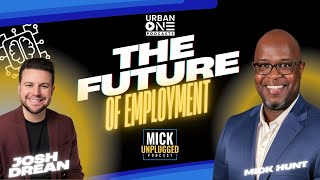
Transcript of a Mick Unplugged interview with Josh Drean discussing how AI and disruptive technologies are reshaping employment, workplace culture, and employee experience. Drean argues the traditional employment model is outdated, emphasizes culture adoption by frontline employees, and outlines the Work3 Institute’s principles for merging emerging tech (AI, Web3) with human-centered workforce strategies.
Chapters
Employment is dead because AI is taking your jobs. You are unemployed. The system is broken. Employment is dead. We are running on an antiquated model for work. They will get excited about the perks, their snacks in the break room. We have an amazing culture. Let's do hot yoga. It's an amazing culture. Revenue forward. We don't have time for your touchy feely. Leave your emotions at home is typically how it used to be, right? The younger generation not really putting up with, you know, poor behavior because they know how exploited they have been.
Ladies and gentlemen, welcome to another exciting episode of Mick Unplugged. And today, we have a brilliant one for you. We're talking about a groundbreaking trailblazer in the arena of work and technology and AI and just culture. A person I've looked up to for a very long time, a person I'm very honored to call a friend. We're talking about the one, the only, the groundbreaker, the trailblazer, the visionary, the guy that's gonna lead work future into the Future, my man, Mr. Josh Dream. Josh, how you doing today, brother?
Nick, thanks for that intro, man. I always feel like, you know, an MMA fighter coming out of the tunnel when you give those intros, it's so powerful.
We're going to get your favorite hip hop song and play under, and that can just be your intro as you move forward, because I know Josh is a hip hop guy. Right?
That's it. Big hip hop guy, big heavy hitter.
Here they go. Josh, man, like, you're someone I've been following for a long time. You know, we talked off, off camera just on what you've meant to me over the last few years. Right. Like someone I really follow that I feel like we share a lot of the same pillars and values when it comes to leadership and culture. My question, Josh, when did that start for you? Like, when did you know that that was going to be the niche, that was going to be the place that you could leave your mark?
Yeah, I appreciate that. And I do feel like we share that ethos. Right. I think we both are in this for a lot of different reasons, but one of the foundational reasons is because we want people to achieve their full potential, whatever that looks like and feels like. And it would be so disheartening to go through your entire life and recognize that you only achieved a small part of that full potential. And so the reason we put out content, the reason, you know, I'm active on my socials, and the reason why I follow you is because it's interesting to see how many people. I hate the word sell out, but, you know, they. They kind of get stuck. And so that was kind of the big raison d', etre, if you will, that I brought to a young startup that I was building out of the Harvard Innovation Labs. We were essentially pioneering sentiment analysis in real time, which is a fancy way of saying, let's ask employees what they need to achieve their potential. Let's ask them what they need to be satisfied at work, and then do everything we can as a business to give it to them. Because the age old adage a happy employee is a productive employee holds true no matter the economic circumstances. And that's what really drove me as this young startup. Right. We were so interested in helping employees be better at work. And we started to recognize all of the challenges that came along with that. Some of them were motivational, right? An individual might not be interested in achieving their potential. They just want to kind of coast and do their work, and that's your prerogative. But there was also a systemic problem that a lot of companies weren't established or set up structurally to help employees unlock their potential. They were set up to drive shareholder value, which is nice for shareholders. And there wasn't a lot there for employees to do more than just going and collecting your PayCheck, doing your 9 to 5, learning the skills that you need to do the job that your company wants you to do. And so I guess that kind of kickstarted me into this world of work. Understand, like, we just published a book. It is called Employment is Dead, How Disruptive Technologies Are Revolutionizing the Way We Work. And the entire, entire theme is that the traditional model of employment is not set up to unlock the potential of employees. And so we need to change the model if we want to see a change in individuals.
That was so deep, man. That was so deep. And one of the things I know was a overarching theme for what you do is talking about thriving at work. Right. And I think that there are a lot of things that I don't want to say organizations do wrong, because I don't think things are always intentional. I think it's just awareness is sometimes not where she needs to be. When you talk about thriving at work and making that essential theme of your message, how does that help organizations, like, break down thriving at work and what that means to you and what organizations can be doing?
Yeah. So one word that you've already mentioned is the culture, right? What is it? What is the culture of the organization? And, you know, I'VE been doing this long enough to know that there was kind of this era in the 80s and 90s of motivational speakers getting up on stage and saying, you need to build a culture. We have Stephen R. Covey who's talking about your standards, ideals and values. If you can identify what the culture is, then you can have a successful culture. And a lot of companies jumped on board. They wrote it all out, they put it up in the break room, and they said, this is what you need to do to be successful. Just follow our model for culture. And what we are seeing now in the mid-2020s is that that's not enough. That establishing or defining the culture is, yes, a very important part of it. But what about the subculture? Like, are executives actually living the culture? Are your employees feeling the culture of the organization or is there something else going on there? Because we didn't actually take the time to ask employees what they wanted the culture to be. We just declared a few executives high up in the organization, said, this is what the culture is going to be. But it's that culture adoption from your frontline employees is what matters most. And the reason why I'm talking about that is because employees can't have the experience that will unlock their potential unless they, you know, have the environment and the tools that they need to be successful.
You're exactly right, man. I have this quote and it says, I have this for leaders. Leaders don't lead businesses. They lead their culture. And it's the culture that actually leads the business. And so I love the fact that culture is a big thing. But to me, culture is felt, right? Culture is seen. And culture is a four letter word. C, A, R, E. Right? Like if I care, if we have a culture of care, everything is felt around that. I don't need a fancy mission statement. I don't need a vision statement that nobody on the team knows other than the CEO and the CEO doesn't have it memorized. Culture is something that you feel. Josh, what's your take on that?
It is. And what is unfortunate is that companies will give lip service. I'm not saying all companies, most companies will give lip service to what we call employee experience design. They will talk about culture. They will get excited about the perks, their snacks in the break room. We have an amazing culture. Let's do hot yoga. It's an amazing culture. And what they're really doing is like offering nice perks, which might be above and beyond the perks that you see in your contract, which is, here's how much I'm being paid, here's the hours I need to work, right? That is not culture. That is nice perks to keep your people happy. What culture really is is understanding what people experience working for you. And if there are any pain points or obstacles working to remove them. And unfortunately there are certain pain points that we can't overcome. And companies, well, we can if we're thinking about the long term goals. However, a lot of times we just look at the short term shareholder value. What can we do this quarter to push revenue forward? We don't have time for your touchy feely. Leave your emotions at home is typically how it used to be, right? Whereas now it's like, bring the whole person to work. Well, we are bringing the whole person to work, especially Gen Z. Gen Z is bringing their whole selves to work and they are pushing back on this narrative of work is contractual, it's a contract, just come and do the work and be done with it and have work, life, balance. They're like, no, I want to know why I'm doing this work. I want to know why you aren't able to help me in these certain ways. And so it goes so much deeper, Mick, which hopefully we can unpack a little bit here.
No, for sure. I mean, you know, McKinsey did a study and 76% of workers care more about purpose than they do anything else. They want their, not their work to be valued, them as an individual to be valued and the things that they do to deliver purpose. And I thought that that was so impactful because again, I've been saying for years, it's not about motivation anymore, right? The Boomer era, right? The Gen Y error, like it was all about the, the paycheck, the benefits, the, the retirement that comes with it, right? Well, now my kids, right, they're like, yeah, dad, if I want to make a million dollars, I can go get the side hustle over here and do that. Like, they're not thinking about a pension, a 401k because it's a different valuation for them. And so I think the shift needs to go from motivation to inspiration. Motivation is what gets that employee to sign that contract to work with you. Inspiration is what brings them back tomorrow. Because if Josh isn't inspired to come back, Josh can go start his own business. And I tell leaders all the time, that is what you're competing against, right? Like you're not competing against Pepsi or Nike or AT&T or Amazon. Like you're competing with that person who realistically, for their Purpose could just go start their own business doing something that they love. And so you need to tie that into what they're doing in that nine to five or nine to nine, whatever it is. So, again, I love your feedback on that as well.
Yeah. My goodness, there's so much to unpack. You're absolutely right. And when you really laser in on that purpose, you start to see you ask the right questions. Right. Like, well, why do employees not feel purpose at work? Well, they aren't doing what they love. Can we as an organization allow them to do what they love and still get the work done? Or do we just need them to be a cog in the machine to do the work? And you mentioned the benefits of a traditional employment model, which is security. I have a 401k. I can retire comfortably. I have nice house. A lot of these perks, or I wouldn't even call them perks. These are just like essentials to live.
Right.
Like not even available anymore. You know, like this younger generation is seeing their parents unable to retire. They are working well beyond 65, 67 into their 70s. They can't retire. They are seeing what's happening with Social Security. Like there a lot of these assurances are not assurances anymore. And so they are pushing back on the narrative of like, oh, yeah, I'll just come and sit in my seat and I'll work and I'll have that purpose. It's a structural issue. I love the way that you just framed it right, people. The way that I like to say it is when The Great Resignation 2.0 happens, when the employer market swings back to an employee market and employer employees have options again, they're not just going to jump from job to job. They're going to jump to more attractive alternatives for work. And when that happens and they can probably find the security that they want and they need over there, what does that mean for corporations who are like, culture, let's go, let's. Motivation, let's go.
You know, you don't like bragging. You're not going to talk about all the amazing things that you have heard about, been a part of. For those that don't know about the Work three Institute, one, let's break down what it is. Let's break down how it's helping individuals and companies. And then, Josh, like, what was the brainchild around that? I know I just gave you three, and I never do that, but three is our favorite number. Right?
So unpack it together, starting with that last one, right?
Yeah.
The work3 institute is a play on web3. Web3 is supposed to be the next iteration of the Internet. How are we moving beyond just looking at our screens to be within interactive worlds? What do our relationships look like in what we used to call the metaverse, which is still moving forward, by the way, if anyone's curious. So the Work 3 Institute, we essentially help companies marry emerging technologies with workforce strategies. If you are a digital first human centric leader who says, I value my people, I'm not trying to get rid of them for AI, I value my people and I want them to use AI to become better, we say, well here's how you do it. And so what we've seen is that there are a lot of younger, hungry executives who are like jumping into these new work models with both feet. And we provide the roadmap. That's part of our book Deborah Perry Pushoni and I have published. It's the last chapter where we provide a 13 step roadmap on how do you even do it? Is it buying VR headsets for all of your employees? Is it going to a virtual office? Which that trend has kind of died off. And I would say it's not that on the surface. No, none of that really. What we're saying is there are 10 operating principles of the Work3Institute. These are the non negotiables of the modern workforce. And I talk to HR leaders all over the world and I say, can you offer any of your employees these? And if they say no, my simple question is why should they work for you? Then just to name a couple. Transparency. Employees expect transparency from their company. They don't want you to lie to them, they don't want you to make up a story to rebrand their experience. This is what their experience feels like. They want to know why. If you are transparent, honest with them, trust comes back into the relationship. They want autonomy to make decisions. Right now they can't make decisions because a manager micromanages them or they have to do things a very specific way, which doesn't really feel right based on what we are seeing on the front line. So we need to give them autonomy to make real time decisions based on their own knowledge and then ownership, give them ownership in the work that they're doing. This isn't, you know, an ESOP which is giving them arbitrary equity in the company. It's contribution based compensation, a stake in the value they generate for the company. So we don't have to go off on those. But essentially it's look, the modern workforce has these expectations. They're not just going to work for a paycheck. They want to be cut in on the deal. They want a relationship with you that is two way communication, not just you telling you what to do. And if you can't give it to them again, they're probably going to bounce to a DAO or decentralized autonomous organization.
Absolutely. What type of results are you seeing within the Institute now?
Yeah, I mean, it's really interesting because a lot of these technologies still have to prove themselves. Right. A lot of people are waiting on the wing for Web3 to see any use cases. There are some, you know, late adopters to AI who are like, we're going to see how other companies are using AI and then jump in.
Yeah.
So again, like they have to prove themselves. The case studies are there. It's, it's hard to see. But what we're seeing is what has been said a lot, which is a very nuanced approach, people centric, focusing in on your people. That's what's going to make high performing teams all day.
And one of the things I love about you, Josh, and you say this a lot and shameless plug for Josh's YouTube channel, by the way, because I heard you say this probably 30 times there. AI plus humanity equals the perfect workplace solution. Right. And I took liberties on saying that, but that's kind of how I grabbed that. How can organizations and companies one, not be afraid of AI to not look at AI as a true replacement of humans and humanity and making it work? Because to me that's where you get the dynamic, true workforce. Like if me as a company, if we embrace AI and we're using it for the betterment of what we do to make humans better, to have true human interaction, like that's a huge win across the board. So for, for Josh, man, and the things that you're teaching, talk to us a little bit about AI and humanity together.
Yeah, I mean, it's interesting. I. There's two camps. This is an oversimplification. But there are companies who recognize that your workforce is expensive. You spend the most money on your people. And so if we can reduce the workforce using AI, we save money. That to me is a very closed universe kind of negative perspective. And then there are companies who say we could use AI to supercharge our efforts. We can 10x and 50x and 100x our outcomes. If we can train our people to use AI, if we can leverage this in a way that is still mutually beneficial. And I am very much in that camp. I think that you know, we're going to see companies probably go fully automated. And I mean, to me, it just kind of, you look at the foundation of what a business is designed for is to drive value for people. And there are businesses that can be automated fully. And it's coming. So we need to be aware of that. But I think the companies that are going to win are the ones that say, hey, let's help you learn AI. Let's implement it into our ethos. Let's how can we achieve our purpose with AI? And they move in that direction, are going to see much greater returns.
No, I totally agree. You know, even for my teams, you know, I run three different companies, and we look at. All right. What are some things that AI can actually do that are the part of.
More from Mick


How My Supportive Parents Shaped My Life: Patric Young on Gratitude and Faith



Transform Your Leadership with Ken Coleman: Discover Your Sweet Spot | Mick Unplugged





The Power of Character: Building Stronger Relationships - Mick Unplugged | Bela Gandhi
