Positive Peer Pressure: The Secret Sauce to College Success
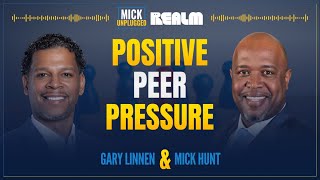
This is a recorded interview (host Mick Hunt) with Gary Lennon, founder/CEO of Peer Forward (formerly College Summit). Lennon recounts his pathway from Spanish Harlem to Cornell, explains Peer Forward’s model of leveraging positive peer pressure and peer leaders to increase college-going culture, and describes program elements (peer leaders, college lists, FAFSA completion, college retention support). He reports organizational reach and impact and gives practical advice for parents, students, and community members about college readiness basics and peer-based support.
Questions this video answers
1996
Close to 700,000 students
In 12 states and in Bermuda
Students get a list of 10 colleges and are required to apply to at least 3
About a 10 percentage-point increase (60% enrollment for peer leaders vs. 50% national average)
Chapters
In the 80s, one of the most memorable lines of a Whitney Houston song said, I believe the children are our future. Well, today's guest took that literally and is impacting the lives of so many youths. We're going to talk to Gary Lennon about Peer Forward, the nonprofit he created that's helping young kids get into college, but not how you think this episode. We're going to talk about why your peers are more influential than your parents. We're going to talk about the fundamentals that all kids need to know about college. And we're going to go deep into what Peer Forward is doing and the mission that Gary Lennon is fulfilling. Ladies and gentlemen, this is Mr. Gary Lennon. Gary, how you doing today, brother? Good.
I'm good. I'm good.
How are you, dude? I am great now that I'm talking to you, Gary. You know, when I was growing up, there was a song and the first line said, I believe the children are our future. Right. I think you heard that song, too. But, Gary, you're one of the few people that took action and is actually doing something, man. So I wanted to applaud you for doing the action, because a lot of times we talk and a lot of times, you know, we'll support, we'll donate, we'll do some things. But as you know, it takes a lot more than just pats on the backs to do the things that you're doing. So I applaud you, brother.
Thank you. Thank you, thank you. Yeah, you hit on the nose, right? It said a lot of people do a great job of talking. The question is, can you walk? You know, are you willing to do. And I'm just, you know, I'm humble and just grateful that I get the chance to be around just like some phenomenal, phenomenal folks that, you know, people just tend to overlook.
No, totally agree, man. Now, I want to start by asking you the question of when did you know that that was something that you were supposed to do?
You know, great question. You know, I'll start with. So an interesting journey to me getting here, right? And so I'm from Spanish Harlem. Grew up, you know, I'm of a certain age, but, you know, I grew up during the. The cracking AIDS epidemic, if you will. Right. And so as an individual growing up on welfare, low income, like, college was never at the. The goal. It was about, let's just get out of high school. Right? And if you could do that, you've accomplished, you know, a lot. But, you know, interesting enough, I was always in the talented and gifted program. So The Oliver program found me in junior high school. And it was like, hey, you're smart. So are some of your friends. I remember getting called in office and I was like, why, am I in trouble? They were like, no, you're actually smart. I was like, oh, forgot that part. Right, right. So got got chosen, and they gave me an option, and the option was to either go to a private boarding school or a private day school. And in New York City during that time, like, that wasn't really something that we've ever thought about. I was like an independent school, sure. But I knew that I needed to leave. And so I chose a boarding school. And, you know, against my mother's wishes, against the family wishes, it was like, what do you mean you're going away? You know, But I knew that during that time, like, I needed to get out because if I didn't get out, I wasn't going to get anywhere. And so that was my way of like, yes, you know, finally there's an opportunity. So I go to a private boarding school, West Town School, shout out to them outside of Philadelphia. And if you could imagine, it's a private Quaker school. So coming from the city and going to a Quaker school, I'm like, okay, turn to the light. I was like, oh, my goodness, what are you talking about? But at that changed my entire life because it gave me the opportunity then to go to Cornell, which was never on my list. Right. I was able to meet lifelong friends that I still talk to today. And throughout that journey, what I learned is that there were individuals in my community that were just as smart as me, if not smarter. And for some reason, every time I came home, they were still on the corner, they were still on the block, they weren't doing anything. And I'm like, hold on, I'm giving a chance. Why not then? And that for me, like, I, like, internally bothered me because, you know, I look at my sister, I look at my. I have three sisters, and I look at how they struggled, and I'm like, but I got out. And I just don't like that. That notion of you get out and you don't give back. And so that's how I got into this work. You know, I graduated from Cornell, went into PR for a little bit, didn't like that. I used to work because it was about. For me, it was inauthentic to me. It was business to business, PR for technology companies. And then I started working with the Princeton Review. And as you could imagine, like, that's helping, you know, the elite to be able to, you know, get. Helping everyone to be able to get into college. But it wasn't fulfilling for me. And then, lo and behold, this position opens up. You know, during that time, we were known as College Summit. And I just happened to be searching and it was like, hey, you know, we're starting the New York office and we would love to, you know, we're building a team. And it was in that moment I was like, I gotta try this out. Like at this pretentiousness, or not even pretentiousness. I mean, it's a viable career. But, you know, people paying 20, $30,000 for a tutor, it was not, you know, filling my cup. It wasn't giving me joy.
Yeah.
The moment I came over to College Summit and I went to the first workshop, I was like, this is a dog on cult. Like, I gotta go. Because everyone was hugging each other and I wasn't used to that. Like, don't touch me. But they were hugging each other because they knew we knew that we were doing the heart work. And that for me is what, you know, what was fulfilling and why. I've been here now 18 years.
I love it. So that's the journey of how you got there and why you started it. Now I'm going to ask you the question I usually ask all my guests. What's your. Because? What's that thing that's deeper than your why? Like, why do you continue to do what you do? What's that purpose for you? What's your because in the.
The years of when we started the New York office, like, the. The organization was founded beforehand by our three co founders, but I took over afterwards. There are two gentlemen, Michael Ferrone and Adon Penny, that I met while in New York. My because is because of the relationships I built with them and the brotherhood that I built. And I was like, hold on. You can actually have a brotherhood with folks and they don't look at you any differently. And for them to say, you are like a father figure to me, like, that I could not measure because I didn't have kids during that time. And so I do it because individuals need somebody that looks like me, that talks like me, to be in their corner when they are. When they're at their lowest points, to be able to say, you can actually do that. So that's my. Because it's fulfilling every day to have. And I'm looking at that one's a lawyer, the other one works for, you know, one of the big four. And I'm like, wow, I Think I kind of did something with that.
Yeah, that was me. Yes. That's. That's awesome, man. That is so awesome. So for the viewers and listeners, now, let's talk about Peer Forward. Like, talk about what it is that you all do.
Yeah. Thank you. So Peer Forward, formerly known as College Summit, started in 1996, a little bit before then from our predecessors here in D.C. and what we learned is that we were actually just helping people with their college applications. At first they were bright young folks at a community center and was like, hey, you should go to college. Like, I went to college. You should go. And what we found is they all applied to college and they all went. And we was like, this is cool. Let's run a workshop. And the workshop was focused on helping them with their essays, helping them get together a college list, you know, from, like, some very reputable individuals to support them that they never had access to. But then also tapping into their why, like, why should you show up? Why is it important for you to know that you're worthy? And so those are the three elements. I can help you with the transactional stuff, but I need you to believe in yourself as well. And that, that edifice, when we started, started like running like wildfire. What we found is that while we were helping those students, they were going back and helping their friends. It was like, that wasn't our intention. Our attention was to help you, but everything that they learned, they went back and told somebody else. And then we, we got into this idea, like, hold on, Friends helping friends. That's interesting. It happens all the time. How can we actually put that in a bottle and expand it? Because what we do know is that a 17 year old is more inclined to listen to another 17 year old. Any of us that have kids, family members, young folks, you can talk to your blue in the face, but the moment their friend validates it, it's golden.
Yeah.
You know, and so we was like, why not take that? Because that's, that's what we're considering. Positive peer pressure. Leverage that to make them, you know, do positive choices, you know, so that it's not just the adult saying, go to school. It's a friend saying, I'm going. So that means you're going with me. Let's go.
Yeah.
And that was the birth of College Summit. Now Peer Forward, you know, we've been around being able to impact close to 700,000 students since our inception. We are, you know, in 12 states and in Bermuda, so just excited to be able to have that international threshold but now in the states alone, you know, New York, Philly, the DMV area, Florida, California, Texas, Detroit, Colorado, Hawaii, all the different areas where we know that every single child that we have been able to support, they want to help their friends, they want to be able to succeed. And the way in which that we do that is by tapping into the power of peer pressure, positive peer pressure to be able to support folks.
I love that, brother. And one of the things that you, you do is you match the students with what, three programs, three schools, three universities, at least three.
Yeah. So they get a list of 10, but they're required to apply to at least three. And the reason why is because research shows that if you have more options, as we know, you're more inclined to go. We are also, they're required to fill out their financial aid forms early. You, you'll be surprised. Particularly for students in low income communities, they are typically the last one to fill out their financial aid forms when they, they're the individuals that should be first in line, not last in line. And so we were very intentional about getting them to do their stuff early so they can maximize the benefits of going to college. The third piece that they're required to do is about connecting academics to college and career. Right. And so we also acknowledge that as a ninth grader you may not know what you want to do, but having a 12th grader say, hey, if you were 10 years from now, if I saw you, what would you be doing? If they said, I want to be a detective, we're like, great, no problem, or I want to be a doctor, fine. But the 12th grader is telling them, if you want to be a doctor, you may want to come to class, like how about you get out the hallway in order to be. And it's not the guidance counselor saying it, the guidance counselor was going to say it, but it's coming from the peers friend, which makes it relevant to them. And that is by far been the most remarkable way of being able to, you know, increase college going culture in our school systems.
And I love that. And here's why I love it. So, you know, back in the, I'll say my decade, back in the 90s, when I graduated high school, yes. I knew I was going to the University of North Carolina because I was a Tar Heel.
Right.
Like Carolina Blue was my favorite color. Michael Jordan went there.
Right.
I didn't necessarily know what programs they had, I didn't know what schools they had within there. I just knew that I was going there. So I applied Got scholarship, I'm there. Luckily what I enjoyed, they had. But I didn't know that. Right. Like in the 90s and the decades before that there wasn't the Internet where you could literally go see and do matching. You didn't really go visit schools. Like you didn't have folks from schools coming out the career center unless it was a local school. Right. Like, so I grew up in South Carolina. The University of North Carolina wasn't coming to my high school to tell me about the University of North Carolina. So I applaud the fact that yeah, the kids can look online. But like you're actually helping provide that research as well too, which I think is the most critical to make sure that the school aligns with you. It's never going to be perfect.
Right.
But you have better capability of finding that alignment now than you've ever had.
And that's why, you know, the type of student that we, they're called peer leaders. Both in high school and the college space. The type of student that we look for is the most influential student in the building. And, and the reason why is because people, when they walk, people watch them, when they talk, people listen. It could be the class clown, it could be the person that's cutting class. It can, you know, it's that mid tier student because that allows there to be a belief system for other folks in that school to say, hey, if Johnny can do it and I know Johnny been playing around all day, then I can as well. Yeah, but the cool thing is that Johnny's sharing information and it's right to your point, it's about fit, right. It's not just about, hey, I'm a student, I need to go to college, I'm just going to apply to the school. Up the street they're asking the questions like what do you like, you know, and what don't you like? Do you want to stay on campus? Do you, don't you know, do you know how to do your own laundry or don't you, you know, do you have, you know, requirements or like a commitments within your family that won't allow you to leave? Because what we found is, you know, we had a lot of students going into college, but they were not graduating for a college because it wasn't the right fit. No one asked them the right questions. They just, you know, went ahead and said, I'll apply to the school. But there was no, no yearning to want to stay. Yeah. And that's why we started up here for it in college program. So historically we've been on the high school side, but our folks were coming back to us and say, hey, you know, whatever you did for me in high school, I need. My friends need help in college because they're leaving at large rates. Can we do something that came from our alumni? It wasn't even us. We didn't think about it in that space. So our alumni came back, and then we created a college component so that it's the same model. Friends helping friends to be able to stay in college, minimalize the amount of debt, and get a degree that's viable for their economic future.
Gary, you're the perfect person to have this conversation with. I want to talk to the viewers and listeners about something that I'm noticing because my oldest son coaches football, right? And the last three years he's been at the college level. And it every day during enrollment for the football team, he calls me and he's like, dad, it happened again. Dad, it happened again. Gary, here's what's going on. Children, kids, youth that are going to college day one, they don't understand the things that they need to survive, like having their ID and what their ID numbers are, their Social Security numbers, their mother's maiden name. Like, I'm going to say this. Things that I took for granted, right? Things that, you know, I talked to my kids about. It didn't have to be a long conversation. It was just, hey, these things, you got to make sure you know how to do little things like that. Forget laundry, right? Forget financial literacy, all that. We're going to talk about that, too. But just the basics of you got to know some things, and day one, you're going to need to know those things. Like, literally, my son Jay is listening to this right now. He will tell you how many times someone will drive or fly in out of state and literally have to go back because they can't register. They can't get their dorm room because they. They don't know how important it is to bring an id. They don't understand, you know, how to fill out an application. Like, talk to us, talk to the viewers and listeners, to the parents, to the students, about just the fundamentals that you've got to have to survive.
You know, it's funny you mentioned. I'll tell you this quick story that it's a generational thing. I don't get it. My nephew just applied to college and which. Which was great, but he used my email and my number. So I'm getting all these calls from colleges as if I went. I was like, what do you mean? Yeah, like the rudiments, the basics, like, use your number, use your id. My name is not Nazia. Why are they calling me? Looking for you. Right. And I think that's, that's the challenge that we're seeing across the board, particularly with just, you know, young folks about understanding the basic needs. And that's where it's, it's important for us as an organization, school systems and friends, to have that type of checklist. Like, hey, in order for you to go to college, here's the five things you need to understand. Right. And it's back to understanding, you know, what are the different academic offices that are there? What are the. What's the personal information that you need to make sure that you have? What are the emergency contact information that you need to have? Because you're getting there. And you know, what happens if you stomp your toe or whatever the case may be. They just don't know. And it's sad, but we're seeing that across the country. And so I think as parents, whether you went to college and, or not, we understand that there's basic things that our individuals, our young folks need to have, and we have an opportunity to make sure they have them irregardless, if they go to college or not. It's like when you're turning that age of 17, 18, you need to know your Social Security number. So how do we educate folks to like, hey, these are the five things as you go into adulthood that everybody should have. And unfortunately, in the age of the Internet, information goes too quick and it's not landing well with our young folks.
Yeah, you just brought up something too, about email. And my youngest son, who's in grad school at the University of Miami, only has an email account because he needed one for the University of Miami. Right. But I'm starting to see colleges now on applications, and I'd love to get your viewpoint of this. They're asking more about what's your preferred social handle so that they can communicate with you that way. And at first I was like, why are. College is doing that? But then I realized I'm just getting older and I'm turning into that stubborn old grandparent, right? There's like, you can't be doing that. But I was like, okay, I guess it does make sense because this generation, I mean, I have team members, employees that, yeah, they're going to check social before they check an email. Like, talk us through what. You're seeing that type of shift in colleges and universities.
We are like, I graduated in 1996, from high school. And it's the same emails, not there we go. Email was important to us. It's a generational thing that we're finding. And so social media is always going to be what we've learned, the easiest way to get to them, because it's the way in which that they communicate. We try our best to say, get on email. Get on email, but the reality is that we have to pay attention to the market. And that means looking at social media and using that. Like, you have to diversify the way. And we're doing this. Diversify the way in which that you're communicating with folks. But that is. It's not going anywhere. Secondly, though, the challenge with that is that our young folks use social media for both public and private use. And so how do we educate folks to say, you know, colleges want your handle. Why? Because they're looking at, like, what type of person are you? And if you, you know, if you have an account that, you know, can have individuals question the type of person that you are, then that's probably not the best handle that you want to use because it's another way of screening folks. That's just the reality of where they are. And I think our young folks don't know that. They're like, oh, yeah, follow me on some random name. That's one. Secondly, we were trying to educate them on the names that you use.
Yes.
Because, you know, it can't be, you know, sexy something, you know, and you're giving that to, you know, an admissions officer. So part of our education is like, great. If they're going to ask for a handle, make sure it's a formal one where you're not posting, you know, what you're doing, you know, after dark.
Absolutely. And remember, things you did two and three years ago are still there. So you should probably do some type of audit on your social media as well, too.
Yes. You know that it's funny, I changed. I had to change mine years ago. I was sitting on a board and I had my handle from college my entire life. And, you know, the moment you become a public figure, they're like, hey, remember what you did at Cornell in 1999? I was like, whoa, yeah, let me go ahead and get a new handle.
Yes, sir. Yes, sir. So, Gary, man, what are some of the metrics or KPIs that you as the CEO look at to determine the success or the areas that we need to improve with Peer Forward?
Yeah. So I'm breaking up into two sides. So for the High school side, the major KPI is like, am I getting individuals into college? And so we're looking at college enrollment data. And what we're finding is that for our peer leaders, the individuals that are directly go directly through our program, there's a larger 10% increase. So 60% of them are actually enrolling in college versus 50%, which is the national average. And so we're outpacing the national average, but there's still work to be done in that. So that's one major KPI. The second one that we're looking at, particularly for participants, is around FAFSA completion. And so we know that, you know, you can apply to all your schools, but if you don't have money to be able to get in and sustain it, then you're not going to go. And so what we found is that schools that partner with us, they have a 26% higher FAFSA completion rate versus others, which unlocks about $100 million more in financial aid for, you know, students and or school partners with us on that side. So those are the two main ones that we look at, enrollment data as well as financial aid completion, if you will. On the college side, we're looking at retention. So what we do know is that generally speaking, individuals are graduating about 26. It's about 20% of individuals, excuse me, graduate by the age of 24 in six years. Like that is a significant challenge. And so, and the major drop off tends to be between their first and second year. And so we look at first fall to spring retention rates and fall to fall retention rates. And what we've found in some of our partner schools is that due to that mentoring program, we have a 71% higher completion rate of individuals going to college and decreasing the amount of time it takes for them to do it, which has been very, very promising for us on the college side.
That's deep, Joe. That's totally deep, man.
But I would say, like, those are the transactional, the major KPIs, the one that we cannot measure, that by far is anecdotal, is the transformative experience for our young folks. And so the fact that they come back, I mean, literally from 1993 and they're still volunteering with us, they still, you know, serving as a writing coach. Our 60% of our staff are alumni, and we've been very intentional about that. It's the part you can literally never measure because it's the heart of the connections that literally is immeasurable and an invaluable experience for them.
And you know what that tells me, Gary, is that you've created and established an amazing culture. Because culture's something you can't talk about, culture, something that's felt culture, something that's seen, right good or bad. So I'm telling you, you have an amazing culture. The fact that you have alumni that are coming back and donating time and donating wisdom speaks volumes for you and the leader that you are. So give yourself another pat on the back for that one, brother.
Thank you. I appreciate that. It's a blessing and a curse because I'm like, go home. They don't want to go home. But I love it, though. It's like, you know, you have that whole family where you create a community where, you know, we can have a slumber party all dog on day. But I'm like, I need you to go home.
Yeah, yeah, yeah, you gotta go home. You gotta go home, Gary. So for the viewer, listener right now that is intrigued with what you're doing, and they're like, hey, I don't have peer forward where I'm at, but I want to be involved in the community and with youths. Right? What's some advice that you have for them to start again? They don't have to start what you've created, but to start that impact and that transformation.
So one, I think it's. They are. It's about small wins for them. Right. The ability to be able to help at least one person in your community and share, you know, it doesn't necessarily need to be about getting them into college, getting them out of college, but helping them to tap into their own potential. Something as small as saying, I see you goes a long way because there are individuals that are not seen. And sometimes we really forget how powerful that goes and how long it can go. The ability just to say thank you for showing up, affirming your friends goes a long way. And so I think sometimes society, we look for somebody else to do it when we have the power to be able to do it.
I love that.
Just affirm your friends, affirm yourself. Look in the mirror one day and say, I'm beautiful and I'm worthy and I'm going to show up in my best way. And when they ready, call me, because we can come to that community. I'm okay with that too. You know, we're looking to go into new markets as well.
So that was going to be a personal follow up question for me. What do we got to do to get in the Carolinas, man? Right.
We used to be like, yeah. So interesting enough, we used to be in South Carolina years ago, and, and my family's from Dunbar, South Carolina. South Carolina. But we were in near Columbia, but we could talk offline. Yes. More than half, I think lower Richmond area. Yeah. So happy to get back. We actually, one of our colleagues lives in South Carolina as well, and he's definitely like, hey, we need to get back some, you know, it's nothing more than a conversation with a district, a school that says, yes, this type of program is what we need. And then, you know, my team is to be able to find out the philanthropic support to, you know, because it has to be both. Right. We want to make sure that the investments are there, the community is there, because we want to help everybody. At the end of the day, if I could be in every state, I would.
There you go. Okay, Gary, man, I appreciate you so much. I want to get you out of here. On the top five, though. So it's my, my rapid, quick fire. Five questions.
Yes.
Ready? All right, first question. Why'd you hate PR so much, man?
During that time, it was too transactional for me and you had to like, oh, my God, Hi, how are you doing? That's not me. It's not. It was not my field. I was just getting used to talking to folks. It's like, never mind.
Look at you now. Look at you now. All right, Are you a let's chat at a coffee shop or let's chop it up on a whiteboard kind of person? Where are you drawn to first?
Whiteboard.
Me too.
Yep, whiteboard, Definitely. Me too. Yeah, whiteboard all day.
All right, what's been a book that you can always go to, like, what's a regular read for you? You.
I'm going to draw a blank. But it's social bandwidth. Why am I draw. It's this book that talks about everyone's social bandwidth and the fact that when you wake up, you start at 100. By the time, you know, you get out the door, you're probably at 70. How do we acknowledge that? And knowing that there's a huge disparity with our young folks, but I can't. Yeah, it's social bandwidth. We'll put a blue book that's sitting on my desk.
We got you covered. So speaking of mornings, what's a daily non negotiable routine for you? No matter what, you're making sure this gets done.
Great. Calling my kids. I have a five year old, four year old, and now a three month old. And so because I'm on the road so much. Like, there's no negotiables. If I'm home, like, it's blocked up. I have to pick them up from school. I have to take them to school. It's non negotiable. I won't take a call in the car with them. And you know, because we got to sing Chris Brown residuals every day. You know, that's. That's our song together every day.
All right, so last question. What's your theme song? Gary Lennon's about to walk on stage. What's the song that's playing behind you?
I'm Coming out by Diana Ross.
There you go. There you go. Walking out to it. I love it. Gary, man, where can people find and follow you? I'm going to make sure I have links to peer forward. But. But where can people find and follow you, brother?
They can definitely follow me on Instagram. It's Zebby jlm. I can definitely send that to you and. Or follow Pier 4. That's the easiest way to get us on Instagram as well as on Facebook and all our social media handles. But we do a lot of. There's a lot of visibility there. Also on LinkedIn. You definitely want to find me, hit me up on LinkedIn. It's learn more and happy to have a conversation with folks.
I love it. Ladies and gentlemen, this has been Gary Lennon. He believed that the children were the future and is doing something about it. Gary, brother, I thank you from the bottom of my soul, man.
Thank you, thank you, thank you, thank you. I appreciate it.
You got it. To all the viewers and listeners, remember your because is your superpower. Go unleash it.
More from Mick


How My Supportive Parents Shaped My Life: Patric Young on Gratitude and Faith



Transform Your Leadership with Ken Coleman: Discover Your Sweet Spot | Mick Unplugged





The Power of Character: Building Stronger Relationships - Mick Unplugged | Bela Gandhi
