Seeds of Service: From the Community to the Classroom with Monica Badgett
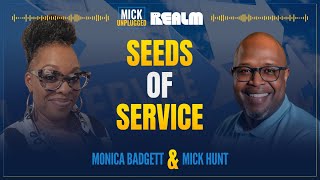
A podcast-style YouTube interview (Mick Unplugged) with Monica Bagehot (Denver-area community leader). Monica describes ~19 years working for the city/county, six years serving as a city commissioner, her advocacy for programmatic equity (workforce centers, schools), and long-term volunteer/service roles (sorority leadership, nonprofit boards, doula work). She explains her driving "because": serving unmet needs for Black and brown women and girls, shares formative mentorship at Wilberforce University (mentor Beverly Hall Ogletree), recounts classroom storytelling that affirmed a Black girl's self-worth, and advises listeners to start small when serving. Current work highlighted: supporting Queen Chip (nonprofit for Black and brown girls; CEO Tanica Shipp) and planning senior storytelling projects. Contact: Instagram/Threads handle given as MO Better Mo.
Questions this video answers
About 19 years.
About six years.
Wilberforce University.
1856.
Beverly Hall Ogletree.
Chapters
When the why is done, what is your undercurrent? What is the thing that you really. What is that thing that when you wake up in the morning, it wakes you up? That's not always the why that sometimes it's like, why not why am I doing this? But I know that my because is because.
This is make Unplugged. Let us uncover the because. That thing that drives you, that thing that fuels you.
You.
I'm ready if you are. Let's go. All right, we are live back with Mick Unplugged. And I wanted to give my guest a moment to introduce herself. She's someone that I met through a friend. She's dynamic in her community. She's doing amazing things. It's Monica Bageant. Monica, tell the world a little bit about yourself and what you're doing now.
Oh, wow. Well, this is great. So thank you so much. I'm just really excited to just to be on, on this pod and just the work that you do, just to be a part of it, this is pretty awesome. So my name is Monica Bagehot. I actually live in the Denver metro area. Worked for the city and county for about a good solid 19 years. Have done community work and activism for a lot of that time outside of just my regular day to day work. A lot of advocacy for programmatic sustainability for those in our community who may not necessarily have access to just in going into workforce centers, making sure that they have that the same programs that were actually that we're providing for folks who are able bodied, that we can be able to provide those same services, doing that and then also doing some of that same kind of equity work at district levels with schools. And that's just based off of being a mom, being in the community, hearing the heartbeat. Served as a commissioner for my city also for about six years. Really just kind of being in the heartbeat for the African American community as we're communicating that to mayoral leadership for that tenure for those six years. And so that's been kind of the little bitty things. But then other than that, other than just being a part of my amazing sorority, which I'm so glad to serve in in leadership positions, Delta Sigma Data Sorority Incorporated Denver alumni chapter. Just wanted to throw that out there just so that we would know. But then also right, just a little bit, just a little bit. But then also just serving on nonprofit organization boards, just literally trying to figure out any opportunity that I can get in to help to provide support and to be a voice in somewhere in some capacity. And so what Happens is oftentimes people don't know that they have a voice. And they think that it has to have all of these different level. Levels of accolades and different things. But if you go into things like this with the work that I'm doing and have done, when you go in with a heart to serve, it hits different, it measures different, and your outcomes look different, as you know, as well.
Yeah, absolutely. And Monica, huge fan of the work that you're doing. And. And I want to highlight, you know, a few things. You talk about advocacy. You talk about being a champion for those that need a champion. Right. So if I would say, Monica, what's. What's your because? That thing that's deeper than your why. Like, those that listen and watch the show understand that, you know, I feel like you're. Your why is superficial. Your because is the real thing.
Absolutely. Absolutely.
So, Monica, what's your because?
The because is because no one else is doing it. Real talk. There are often. I always say this, and. And I'm a staunch believer in this. Everybody in community is not for community. I've always said that. I always believe that. And often people sometimes lead with their why. But when they. When the why is done, what is your undercurrent? What is the thing that you really. What is that thing that when you wake up in the morning, it wakes you up? That's not always the why. That sometimes it's like, why not why am I doing this? But I know that my because is because I'm a mom, because I am the caregiver of an elder, because I'm a daughter, because I'm a community member, because I'm a black woman. Right. Because there are the different intersections that I represent, because I've worked in government, because of literally being able to be a voice for over 300,000 black women who've lost their jobs since January. It's those kinds of whys. What can we do to be able to identify where those things are, get in and stop the cycle, to be able to create a new learning environment or a new learning experience? And that also starts with. Even with babies, I'm also a doula. So really being able to see what can I do is the. Because I stand in the seat of a mom, because I stand in the seat of a woman, because I stand in the seat of a black woman. There are things that push me different and that are a different motivator for me that may not be a motivator for everybody. And you know what? That's not my. That's not my thing. I don't have to measure my because along the lines of someone else's. Because. Because that thing has to be the thing that literally is not only the thing that I was born with, but it's the thing that if I don't do it, I know that I'm out of alignment. And so that's where that push in, that pull, the pull what is pulling you into the thing you should be going into, and what is the thing that you might be doing that is pulling you out of it, that's trying to realign you to where you need to be.
I freaking love that. I love that so much. And I want to. I want to go into a couple of things that you said there. The first one you're. Because is because no one else is doing it. Like, why do you think that? You know, we talk about servant leadership a lot, but at the end of the day, a lot of people don't put one foot in front of the other to do that. Why do you feel like sometimes you're alone in this mission to give back to us? Yeah, we're going.
We're gonna go deep. The. The funny thing, though, my friend, is that even when you feel like you're the only one doing it, there are a whole bunch of other people who are feeling the same way, that nobody is doing it but them. And with that, there has to be this reasoning that is, as you mentioned before, that is the bigger than you. It has to be the thing that triggers you when you see it. I always had a pastor of mine who used to say all the time, he said the thing that either you have gone through that your mess is your ministry. But he always said that the thing that triggers you is the thing that you should be doing or the thing that you need to address. And so when I see little girls, even teenage girls or middle school girls, and the way that they may carry themselves, I remember I had a conversation. This is just a little example. Had a conversation. I was volunteering in a girl in a girlfriend of mine who teaches at a local middle school, and I was volunteering in her classroom. I'm just talking. She wanted me to come in and just have a discussion with the young people about storytelling and about being an author. And what does storytelling mean? Because as they were reading books, she wants to get them into the idea of thinking about what they think about in terms of storytelling. And I remember this little girl, beautiful little girl. She was so precious, and she was. Her whole face was all scrunched up. And I heard her cuss, and I walked up behind her and I said, baby girl, you're too pretty to talk like that. And she stopped, and she didn't say nothing. And she said, yes, ma'. Am. And she wrote me a letter. At the end of the class, all of the kids wrote me these letters of how talking about storytelling influenced them to have conversations with elders and even conversations with their own colleagues and their own classmates. And she said something to me that blew me away. And I still have that letter. She's now graduated high school, and I still have that letter. And she said, Ms. Monica, you didn't know that at that time I didn't feel pretty. And I was a little chocolate girl who had always been told that I was too dark, that I wasn't pretty, that I wasn't pretty. Now she goes, and that last. She said, that started when I was in the third grade. And she said, here I am in the eighth grade, and you told me that I was too pretty to behave a certain way. She said, I didn't know that my black was beautiful until you told me. When I tell you, that thing hit me different. And we don't understand that our impact doesn't have to be. It has. It can also start on a very small scale. It starts with the seed, and then it expands that little seed for her. She said, I will never again see myself as just that little black girl. I will always see my understanding my black is beautiful. Because she told me I didn't know that when I said that. The mother in me wanted to correct and encourage, but I did not know that at the sign that I was also coming in to heal. And what we. And we often don't understand that, friend. We don't understand that when we're coming into spaces and we're serving in multiple tiers and we feel that we're alone, we don't understand that the servant part literally means that oftentimes you don't know you're a servant until you're treated like one. You don't know you are servant until you're treated like one. And there may not necessarily be a thank you. There may not necessarily be a what can I get out of this? But when there's something on the inside of you that when you can give it away and somebody grabs onto it and they can take it and they can give it to somebody else, you know that you are now that rock and that ripple effect that is causing that change, however small it may seem, that small pebble makes a huge Ripple and it stretches across the pond. So we have to be able to understand that often serving literally isn't just to be seen, is so that the impact that you. That you plant and that you give can be seen in the lives of other people in however way they transport. So you have to be able to see it in that way.
I love that. I love that, Monica, question I have for you all these amazing things and wisdom that you have and that you're imparting into others. When did you know that that was you? When was. When was that moment when you were like, all right, this is my purpose.
Man, I'm so glad you said that. I think about this often, and it's so. It's so funny and so in alignment that you would ask. I was in college, and I went to Wilberforce University, which is a historical black college University founded in 1856, educating black folks nine years before the Emancipation Proclamation. And I had a mentor, Beverly Hall Ogletree. And she was our director of our counseling services. And she would always, in my work study, was in the counseling office because I was a psychology major. And I remember the conversation she would have. And she would speak into me in very smooth beauty. She would. She would give me beautiful, small stones, is what I say, and these stones of wisdom that she would give me. And she would call those things out of me. I didn't know they were in me. She called them out of me. And I think that they had been laying dormant for so long that oftentimes you need somebody to speak to a thing in order for that thing to connect to the thing that's already in. And I remember her saying things and saying she was very quiet. She was very tall, very statuesque, but she was very quiet in her spirit. And she said, monica, you know that you're powerful me. She said. She said, you are. She said, your words impact lives. She said, you need to understand that. She said, it doesn't matter that you're an undergrad. She said, your words impact lives. And so what she did is that there was a conference in Dayton, and the work that she did as a psychologist was in that mental health community, mind you, way before this was a thing. And she had undergrads to come in and to talk about to mental health care professionals about how to counsel people of multicultural environments and backgrounds and how their practices, very westernized in their approach, are literally probably doing more damage than they are. Are doing more damage than they are. Solution that's not solution oriented. I'm an undergrad. She Said, I want you to facilitate this workshop. I said, these are practice. There's a practitioner. She said, that's all she said. So I got in and I told them about marketing strategies that are used for African American folks that literally help organizations and corporate environments structure different businesses in our community that are not in adverse communities or of our constituents on other sides of town. And the other side of town just depends on the other. It doesn't matter where. And I was talking about marketing strategies and what it looks like and how malt liquor is sold in African American and black and Latino communities, but they're not sold in more affluent neighborhoods. And I was, as an undergrad, I didn't realize what that was doing for me. But that's when she started to speak into me, and that's when I started to do a lot of those kind of trainings. And I did those things on campus. And so she told me I would get so frustrated. And I was like, oh, my God. I said, there was supposed to be leave 200 people here. And there were a hundred. And she said, let me tell you something. This is where the servant part came in. She said, if you are in a room and there's 250 people show up, if five people got it, you've been successful. And it hit me. And so when I started to. To own my voice, because she said I was powerful when I went into spaces, I wasn't going in to be powerful. I was just going in because I was going in to be me. So someone would ask a question. We would have these wonderful forums on campus in regards to interpersonal communications between coeds. And we would do that all the time. And so I would just drop a nugget. I'm like, well, the problem is that there's no cohesive alignment with this, this, and this and this. And I thought it was just real simple to where it's like, sis, where'd you get that from? It's in me. It wasn't something that. But when you have someone who can speak into you, it literally removes all of the other excuses that you have here. And even the things that have been planted here that help to recalibrate the thing in you that is really you. And it's not the thing that you're trying to pretend to be. It's not the thing that you wake up in the morning, you put on this mask. It literally is this beautiful unmasking of who you are in order to discover who you are. And so with her, that was. That was the. That was the point for me, that was the point for me. And I always had told myself that I wanted to be to other young women in my community what she had done for me and what she did for us, that was some 30 plus years ago. And there are still friends of mine that we have still, we're still well connected and we still talk about her influence to this day. She ended up teaching and she left Wilberforce and she went to Worcester College in Northern Ohio and she ended up passing away. And that ripple effect through us now, even 30 plus years later still hits us like it's fresh because her impact was so heavy and everywhere she went, she changed lives just by speaking life. And so I just wanted to be able to be a life carrier, to be able to speak the same life that was given to me in a time that I didn't even know I had.
It for the listener reviewer, Monica that they feel like they have that same passion, that same energy, but they haven't had a breakthrough to where they've got that mentee that they can pull up. They can't get into the room. 200 to impact just 5. What's some advice that you can give them to take those steps forward to.
Make it keep going, keep going it. The beauty about it is that there's a scripture that I absolutely love. It says, one man waters, one man souls, one man waters and God brings the increase. It doesn't matter where you start. It can start with volunteering in a classroom. It can start with volunteering in a hospital reading to babies. It can start with being in the nicu. And for a lot of folks, because I love children and I love babies, it's really, it's some for folks, it's really hard to hold babies. But when you realize that that is, that's a part of it, that's a part of giving life and speaking life. It can start from a very small seed. It doesn't have to be starting with a platform of being in a room. You're not, you haven't made it just because you're in a room with 10,000 people. Your ability to be able to speak to people in a room of 10,000 doesn't mean that you're going to impact 10,000. You could very well impact the one they walk away and they impact 10,000. So you have to understand that it doesn't that where the starting point is not where doesn't really matter where you start. It just matters that you do. And so because you have a voice and I, when I tell this to, especially to middle schoolers about storytelling. I tell them all the time. I said, your story is important. I don't care how long you've been on the earth, you have a story. And oftentimes people need to hear your story in order for them to understand that they can go on. You have no idea how. When children tell stories or they listen to elders in their family tell the stories, they then understand why they are who they are and, and then they can build on that. So just start wherever. Start wherever. Start with your impact in your community. Find, identify a need. And right now, because of the climate that we're in, the needs are great. They are vast, they are deeply embedded, they are triggering, they are hurtful, but the needs are very vibrant. We have an entire population of elders who might need somebody to come in and, and figure how to volunteer and do activities with them so that we can help to counteract dementia and the growth of Alzheimer's and the progression of Alzheimer's. There are things that you can do that as a heartbeat that you can be able to serve. It doesn't matter where you start. If you start in your local church or your place of worship, that's a perfect place to start. Schools, perfect place to start volunteering with you organizations, it's a perfect place to start. If you don't like kids, that's okay. You can start as maybe a humane society, being able to care for animals. It doesn't matter the where. It just matters that you do.
I love that so much. I love that so much. But before I let you go, like what initiatives, what programs, what are some of the things that you're getting behind now or that you're doing that we can give some light to?
Oh, wow. Well, this is what's awesome is because I was also. This is another, this is another tier. I was recently laid off from my good government job, which has kind of loosened up some abilities for me to do some. Some things and kind of rethink and recalibrate and between. In between that it's literally just connecting to community. Some of the things that I'm behind now is an amazing nonprofit organization here in our city called Queen Chip. And they have contracts with various schools going in and providing leadership, building community and sisterhood with black and brown girls. The CEO is Tanica Shipp. She is dynamic and beautifully amazing and she loves the work that she does. And the work that she does has literally created this beautiful. She's kind of that rock in the pond that literally has created this beautiful tier of engaging these girls who to figure out what, what do we want to do? She's done it. She has a few schools that she does within Denver Public Schools, but also with Aurora Public Schools. And she's just really just her heartbeat is to serve and to serve the babies who are often forgotten. And those are really black and brown girls. But it doesn't eliminate other little girls to come in either. But the focus is to be able to create community and sisterhood in that and build that community so that healing and breaking of cycles and circles can happen. It can happen. And it's so effective with that. So in between that and then, I have a few projects that I'm working on on my own. Just really trying to see some things that I want to do with some seniors in our community in helping them to build their own network of storytelling. So really just kind of, that's kind of in the works right now, but literally just figuring out where those things are. But Queenship is really what I'm standing behind right now. And I'm so excited to be able to do that and to provide that support and voice for the work that's being done on a local level. But I really earnestly believe it's going to end up being on a national level.
One, that's dope. That's dope. That's dope. Monica, where can people find and follow you and connect?
You can connect with me on ig. It's under MO Better mo. Two, just go ahead and and send me a message. That's perfect. I usually just use that. I'm also on Threads, so threads under the same thing. MO Better Mode. You can find me there and you'll see it. It's just like I said, Colorado Girly Adulta hbcu Brad, you'll see it. It'll be my picture. So yeah, so you can find me on ig, you can find me on Threads.
So yeah, awesome. I'll make sure I have links in the show, notes in the descriptions. Monica, again, I appreciate you taking some time out of your busy day. But most importantly, I'm just proud of all the work that you do to make an impact. So from the bottom of my soul, I thank you for all that and.
Thank you for this beautiful platform to be able to share all the things that people are doing around the world and in our communities and abroad. I'm so proud of being able to be a part of this work. So thank you for the invite.
You got it. And to all the viewers and listeners, remember your because is your superpower. Go. Unleash it.
Thank you for tuning in to Mick. Unplugged. Keep pushing your limits, embracing your purpose, and chasing greatness. Until next time, stay unstoppable.
More from Mick


How My Supportive Parents Shaped My Life: Patric Young on Gratitude and Faith



Transform Your Leadership with Ken Coleman: Discover Your Sweet Spot | Mick Unplugged





The Power of Character: Building Stronger Relationships - Mick Unplugged | Bela Gandhi
