The Crown Fits: Al-Rilwan’s Journey of Purpose, Sport, and Culture
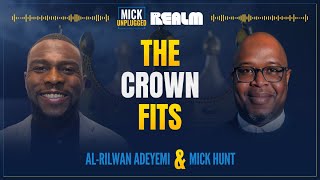
A recorded interview on MC Unplugged in which Al Rewind Adeyemi (a Nigerian-born, U.S.-raised former professional American football player in Japan) discusses his motivating purpose (“because” tied to his immigrant family’s sacrifices), the meaning of his Yoruba name, his athletic development as a defensive back, cultural adjustments living in Japan, his transition into coaching and community/business initiatives (including a COVID-era “Rice and Tomato” relief effort), and where to follow him online (Instagram @alrealone). The tone mixes personal reflection, cultural comparison (collective vs individualist norms), and practical advice about small daily wins and giving back.
Chapters
You know, they say that in order to have a connection with the future, you have to have a connection with the past. And, you know, it's simply said and simply put that my because is because.
This is make Unplugged. Let us uncover the because that thing that drives you, that thing that fuels you. I'm ready if you are. Let's go. Ladies and gentlemen, welcome to another exciting episode of MC Unplugged. Today we got a good one for you. Talking about from Nigeria to the land of the rising sun. His journey is a masterclass in discipline, sacrifice, and the global grind. Let's go full throttle with the tenacious, the trailblazing, and the fearless. Al Rewind Adeyemi Al Rewan. How you doing today, brother?
I'm doing very well. Thank you so much for having me, man.
Thank you for. For being here and just thank you for taking some time. And before we get started, man, like, I know we're recording this now and it'll release after, but I want to tell you, happy birthday, brother.
I try to. I try to keep it on the, on the, on the down low, but I appreciate you.
You got it, man. The 13th is yours. The 12th is my brother. So we get to keep the.
The Leo team rolling. I appreciate that. Thank you so much.
Oh, man. So I want to go into a little bit of your journey, but I want to talk through what I call your. Because that thing that's deeper than your why, right? So if I were to say, bro, like, what's your. Because what's your purpose? Why do you keep doing the things that you do? Why do you make the sacrifices you make? And more importantly, why do you have the outreach that you have? What's. What's your purpose for doing all that?
I mean, anything that, you know, they say that in order to. To have a connection with the future, you have to have a connection with the past. And, you know, it's. It's. It's simply said and simply put, that might be because. Is because of the people that came before me. I think I would be doing myself and I'd be doing the people that came before me in injustice if I didn't give everything I had to the opportunities that I'm afforded because of the sacrifices that they made. So when you look at the life of an immigrant family, there is. I call it the three generation rule, right? There's the generation of we have to do what we have to do. There's the second generation, which is the generation of we can actually choose and we can actually Pursue happiness. And then the third generation is the generation of therapy, which is the generation of all our basic needs are met. And then now we can look forward to addressing some of those, some of those imbalances, some of those things that you know, that, you know, that we have to work on deeply. So I'm in between that generation. I'm in the, I'm in the, you know, choosing happiness and choosing your purpose generation. You know, my parents generation, when they came to the United States, they didn't have an option, right? They, you know, they needed to, to, to major and they needed to get employment in jobs that were recession proof because they had to send money home because they had to do the things that put food on the table, you know. So I am, I am forever grateful in the sacrifices that they made. So that is simply put, my because and my why.
I love that. And so I want to talk about the generation that you're in and in between. So the pursuit of happiness. When you say that, what does happiness mean for you?
I think happiness is a, is, is not something that's always achievable and I don't think it's necessarily something that you always strive for. But I think you can find small happiness in, in, in, in your daily pursuits. I think happiness is, is waking up and, and doing the best you can in everything that you do and finding small victories in the day. You know, whether it's you know, getting up and brushing your teeth, whether it's getting up and, and you know, and making your bed or whether it's getting up and just, you know, finding your small wins of the day. So that's, that's essentially happiness for me, right? If you, if you set out to do 10 tasks in a day, right? And let's say, you know, your first task of the day is brushing your teeth and you brush your teeth in a day, you're one for one, right? Then you move on to the next tax and you, you accomplish, let's say just out of those 10 tasks, you only accomplish eight of them. Right now you're looking at 80% success rate for the day. That is a cause for happiness and that is a cause for self fulfillment. Rather than if you set out to do two tasks and you only accomplish one, now you're feeling like you only accomplished 50% of your goal. Now your mind starts to, starts to waver a little bit. And I think in today's society we have so many things that, you know, they pull us away from what we think is happiness, right? With that you know, oh, you're comparing yourself or you're comparing your accomplishments to this person or this or that. You're always looking forward to the next opportunity, that sometimes you miss the things that are right in front of you, which is, you know, thanking the Lord and waking up in the morning and go about your day.
I love that, dude. I love that. So let's talk about that journey, man. Like, well, so before we go there, I do want to talk about your name, man. So, alright. Means the crown fits me, right? So the crown fits you. You were given the crown at birth. Talk to us now through that journey of, you know, your name to, you know, all the things that you've done to where you are now.
Yes. So my, my first name, real one, actually comes from the Arabic, Arabic name Ridwan. And the Arabic name Ridwan means someone who was content with the will of God. And then Adeyemi is my last name. So Ade. Ade, You've probably heard that in a lot of Nigerian names, right? But Ade actually means crown and then Yemi means fits me in a lot of, in a lot of Nigerian names, sometimes Ade will come either as a prefix or as a suffix in the name, you know, so at some point in our family's history, we were tied to a royal court of some sort, you know, so that's where. So basically your last names, you know, coming up in those traditions was a title rather than just the name, you know, so that's how the name. And traditionally in Yoruba culture, the West African people that, you know, that come from in Nigeria, our grandparents got the honor of suggesting names and if, you know, our parents like them enough actually naming us, you know, so my grandfather actually named me, so, you know, I'm very blessed and you know, may God be pleased with him and, and have mercy on his, you know, in his grave. And so he, he, you know, he was a very, very good man, an honorable man, you know, so he got to name me and I, you know, I try to live up to the, to that name every single day.
That's amazing, man. That's amazing. So, I mean, the world already knows the football prowess that you have, right? So let's go back to, to young you and when did you know that you had that talent? Like, and I know you played multiple sports growing up too, but like, when did you know football was your thing.
You know, the beautiful American, American football. The beautiful thing about the game of football is that you can come with a number of skill sets, you know, so you Know, you know, coming up, I grew up playing, you know, you know, different sports. And those different sports when, when football became a thing in high school allowed me the skill sets that I brought from those sports allowed me to excel in the sport. And it wasn't really until probably my junior year of high school that I realized that I may actually be good at football because of those skill sets that, that I grew up and that I brought from other sports. You know, things like ni coordination, things like footwork from soccer, things like lateral agility from tennis, things, you know, just certain things that at the time I didn't know would contribute to, to this sport that, you know, that I would eventually fall in love with and grow up to play.
Yeah, and you fell in love and you dominate, right? So let's talk about one, the position you played, how you're almost like the, the quarterback of the defense back there, right? Like, like you got to see everything. You've got to contain you. There's a lot that goes on that most people don't think about. They think, oh, C ball, get ball, or, you know, break up the pass or, or catch the ball. But there's a lot of manipulation you have to do. There's a lot of things you have to tend. So talk to us about the entricies of playing defensive back, running, you know.
So I think this actually goes beyond just sports. I think the mentality of my family or the mentality of the patriarchal, the patriarchal side that I come from, we were into law enforcement, and we were into investigative law enforcement, you know, so my grandfather on my dad's side, he was in internal affairs in Nigeria before my dad came to. Came to America, you know, so in terms of that, we come from a family of, of, of decoding and, and, and intelligence, you know, so I think that applies very well into football is that we look into how to solve problems and then we go about it in dissecting those problems. So when it comes to playing cornerback or when it comes to playing safety in football is you look at an offense, right? And the first thing you're trying to do before the ball is snapped is how are they. How are they trying to attack us? Right? You need to understand the game from a cerebral point of view before you start to put the physical in, because that'll make your work a lot easier, right? So things like formation adjustment, things like formation tendencies, things like, okay, body language, he's leaning this way, he's going this way, right? And watching film, watching film with coaches and understanding the Game plan and understanding how the game plan fits and every player fits in a different. In a different way within the game plan and where you fit in within that game plan, you know, So I think there was a general. I think there was a general innate development in me that. That really allowed me to excel in football because of our family trait.
I love it. I love it. And so then you went on to play professionally in Japan, right? Winner over there, one of the most popular players over there. So talk to us about embracing that culture when you first got there.
So the Japanese. The Japanese experience is, is. Is like no other, right? You're coming to a place that, you know, most people like there's football in Japan. Like, they. They have. They have no idea, right? And so you come to this land where, where respect, where family, where tradition, where. Where, you know, just the east is a very different place to the west, right? The west is very much an individualistic society where the collective. Right now, when you're talking about sports, the collective is good, right? But the collective moves beyond sports in, In. In. In the east, in Japan especially, right? It moves into society, it moves into the workplace, it moves into different aspect of life. You know, so. So coming to Japan for me was, was. So I, you know, so I spent the first 10 years of my life in Nigeria, and then the. The next middle part of my life I spent in the United States. And then having now spent 12 years in Japan, it was almost like returning back to the way that I grew up in Nigeria. With family, with culture, with tradition, with collect. Like. Like we were. You know, you hear the African proverb all the time. It takes a village to raise a child. But that, you know, when you grow up in Nigeria, that's actually a thing, right? Your. Your neighbors are responsible for you. The people down the street are responsible for every kid in the neighborhood. So coming back to an eastern culture in Japan, it fit the way that I was raised. Small things like taking off your shoes before you enter a home, announcing your presence in the home, these are things that in the west are not. Are not. Are not necessarily enforced. But when you come to a place like this, like, there is a way that you do everything in a place like this. And the way that you do anything is the way that you do everything, right? So when you take just culture and football and I think it was. It was an easy adjustment for me because of the way that I was raised and the way that I grew up and the experiences that I had, you know, because of my parents, right? You know, they, they allowed me to because I lived apart from my parents for a number of years because they wanted me to have certain experiences to, to develop me into the person that I am today. And I'm forever grateful and indebted to them.
Yeah, I love that, dude. And, you know, the culture in the east, particularly Japan, is something that I've got to, to witness and experience as well, too. You know, I've got friends that, that are from there and live there. And you know, when you talk about the responsibilities of like the oldest child, right, In Japan, and when it's, when it becomes time to take care of your parents, it's the oldest child's responsibility. And so I have a friend who like, literally stepped down as the CEO of his company, big company, because responsibility was his. And so when I had the conversation with him about it, I was taken aback in a good way. Just like, wow. The fact that without hesitation, it's like, hey, you know, I have to take care of my dad. It's my responsibility. Yeah, I have four other siblings, but I'm the oldest and that's what I'm supposed to do. And I was, I was so blown away just by, again, the commitment, the no hesitation. This is what I'm supposed to do. And it really made me think, man, like, what's the purpose and impact that we're really trying to make here in the West? As you say, when there are certain values that we don't extend, that we don't think about.
That'S, that's definitely, that's definitely a food for thought, you know, and going back to that responsibility and going back to that duty, right? There's a joke in the, in the Nigerian community that most parents will say they don't have a retirement plan and that their kids are their retirement plan, you know, but it's, and it's, it's, it's a joke, but in, in reality, it's, it's, you know, we will look after the youth and we expect the youth at some point when they get to a place to not necessarily drop everything they're doing and look after the elders, but, you know, give them the space and give them the, you know, the, the same types of time and opportunity that, you know, that they gave you, you know, when you were coming up. So, you know, but when it comes to, when it comes to the west, right, it's, it's, you know, the west is a beautiful thing in itself, right? It's a place of individualism. It's a place to, it's A. It's a place of capitalism, and it's a place to develop, you know, a sense of self, right? But within a sense of self, we also have to extend that, you know, to the community. We have to extend that to the country as a whole. We have to extend that to, you know, the. The. The region as a whole, you know, So I think there's. There's lessons to be learned from every region of the world that can make the world a beautiful place. Right. You know, I once heard a quote that says that the civilization is not necessarily a sprint or a race, right? It's more of a relay within track and field. And the baton is being passed from one civilization to the other. And your, you know, your responsibility within your civilization is to take everything that you've learned and pass it on to the next civilization and to the next civilization. And that's how we are where we are today. The advancements in technology, the. The advancements in medicine, the advancements in aeronautics, engineering, the advancements in all these different places and all the different spaces, you know, in society, it is. It came from someone, right? No one is reinventing the wheel here. Everyone's kind of passing it along, adding their sauce to it and passing it to the next generation, you know, So I think, you know, with global, with globalization now with social media, now with podcasting, you know, I think this is an extension of that baton and that relay to be able to relay some of the messages and some of the lessons that I've learned that we've learned around the world and pass it on to the next generation, whether that be in the east or the West.
Amazing, dude. Amazing. You know, aside from all the accolades you have in sports and athletics, you also have one of the top business minds in the world, too, man. So talk to the folks about, you know, the things you're doing outside of sport.
I mean, when you. When. When you have an opportunity to. To really. To really travel to a place, when you have an opportunity to connect with people that many people don't get, I think it's your responsibility to turn over every stone. And I think the first thing that you have to look at is how do I connect where I am and the people that I'm with, where I come from? So in terms of. In terms of investment, in terms of doing certain things, I think it's. It's, you know, finding people are. People are what's going to make you grow, right? So it's. You have. You have to have a belief in people, right? And people are not always going to do right by you. But for the most part, if you trust them people and you build these relationships even off, even off the field, right, the winds will come. You know, so when it comes to business, it's partnering with people that, that, you know, have your best interest and have the best interest of, of society in mind, whether that's reaching out and, and doing projects, you know, back home in Nigeria, doing projects here in Japan, making sure that, you know, making sure that people are, are at the, at the basic of of levels eating right, at the basic of level clothing, at the basic of level community outreach, at the basic of level volunteering. You know, so those are the kind of, some of the things that in my spare time I've tried to, to kind of connect with. You know, we started, we started an initiative during COVID we call it the, the Rice and Tomato initiative where we, you know, initially took some of the, the, the stimulus money that the government gave us and we took some of that stimulus money and we were able to affect some lives and affect some changes back home in Nigeria. You know, I think that's, you know, I think that's some of the things that we kind of look at and doing and partnering with, you know, with my cousins that live in the UK and just, you know, picking their brains about their society and how can we affect change in different parts of the world, you know, just to kind of touch a little bit on it, you know.
Yeah, yeah, yeah. So, you know, you've embraced the Japanese culture so much is that, do you see that being home forever home.
So initially, right, like when I, when I came to Japan, it was a six month thing, right? But you know, I had a, I had a, I had a coach and he's still alive, so I still have him as a mentor that told me when I was coming to Japan, he said, be where your feet are at, right? And it seems like such a, such a simple, you know, grammatical, grammatical statement, you know, but it's, it's, it's really true in the sense of we don't know how long our opportunities are going to last. You know, so we make the best of those opportunities. And six months has turned into, into 12 years. But I don't know what tomorrow has to offer. The same way that I didn't know three months before I came to Japan that the Japanese opportunities may be a thing. So tomorrow an opportunity may come. And now that, you know, I'm married, like those opportunities have to be looked at as a couple, not, not just as an Individual, you know, so where we go next or if we stay here for, for the long term. And we love, we love living here, you know, that we love everything about it, but we still also realize that, that our families are back home, right? And we are only a phone call away from, you know, God forbid, having to, you know, having to go take care of, like we talked about earlier, right? Having to go take your family back home, you know, so we have, you know, we're always looking at our options and we're always looking at what tomorrow has in store, but we love it here. We'd love to stay and we just take it. We take it day by day. We take it year by year, you.
Know, so that's good stuff. So I was going to say, what's next for you? But, so I'll, I'll phrase it different, like, what are some of the things you have going on right now?
Yeah, so I, so I, I've. I've transitioned from playing now into coaching, you know, So a lot of the things that I've Learned over my 12 years here and the things that I learned back in America and the mentors that I had and still have that back in America, trying to translate the game into, into. Into the, into the next generation of Japanese football players, you know, it's, It's. It's said that, you know, like, when you, when you look at football, right, you look at the growth of football, you look at the proliferation of football, American football, that is, you know, when, when it's all said and done, the NFL will take credit for the growth of the game abroad, right, because they're pushing it. They're the biggest. It's. That's. That's the highest level of competition, right? But when you look at guys like me, guys that have come. Come before me, guys that go to Europe to play, we're the quote, unquote, foot soldiers of the game, you know, that are in these communities day in and day out. We're the ones that are. That are teaching these techniques. We're the ones that are teaching, you know, the growth of the game. We're the ones that are doing these small little things and creating relations, you know, that will make the. That will eventually make the game grow. So that's. So I am basically an ambassador of the game right now in Japan and continuing to make friends and continue to make and build relationships to, you know, to move on into the future.
I love it, dude. I love it, man. So as we exit out of this, where can people find and follow You.
Yeah, so I'm. I'm on. I'm on Instagram. Instagram is. Is my primary. Is my primary mode of communication, you know, obviously email as well. It's at our real one. A L, R E A R E A L. And then the number one. Our real one at our real one.
You know, our real one one on Instagram. Any. Any final words of wisdom that you want to drop for the viewers, man?
I mean, it's, it's. There's. There's so many things going on in the, in the world today, and there's so many people that are going through struggles. I think if we can just extend our hand and if we can just extend, you know, a smile to, to. To our neighbor, you know, something as little as a smile is an act of charity, you know, from, from our faith, right? From the. From our faith and our teachings, right? So it's, you know, try to make the next person try to make their day just a little bit better by just extending a smile. And, and if you can, you know, if, if you see something that's wrong and if you cannot change it, you know, the, you know, our, our teachings. And our prophet taught us, if you cannot change something with your action, then change it with your words. If you cannot change it with your words, at least condemn it in your mind, right? So that's the lowest form of things that we can do. So we just try to make the world a better place one day at a time, you know, by starting with a smile.
I love that man. Al Realwin Adeyemi. I appreciate you for taking time, man. I appreciate all the positive that you're bringing to the world, and I just appreciate you for being the man that you are, brother.
Thank you. Thank you so much for having me. Thank you so much.
You got it. For all the viewers, remember your because is your superpower. Go unleash it.
Thank you for tuning in to Make Unplugged. Keep pushing your limits, embracing your purpose, and chasing greatness. Until next time, stay unstoppable.
More from Mick


How My Supportive Parents Shaped My Life: Patric Young on Gratitude and Faith



Transform Your Leadership with Ken Coleman: Discover Your Sweet Spot | Mick Unplugged





The Power of Character: Building Stronger Relationships - Mick Unplugged | Bela Gandhi
