The Jason Aron Effect: Bridging Worlds of Film, Sports, and Culture
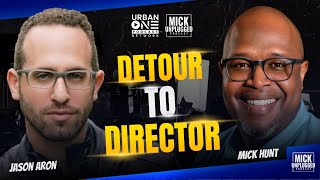
An interview (Mick Unplugged) with filmmaker/producer Jason Aron covering his accidental entry into filmmaking from graphic/web design, his Kickstarter-funded documentary about Back to the Future (genesis, fundraising, high-profile interviews), his approach to storytelling (appeal to broad audiences), and his work in live sports production culminating in streaming/coverage for Showtime including the Floyd Mayweather–Conor McGregor press tour.
Chapters
I'm just into what interests other people. And that's what I think a good story is. I think far too often things are a little too artsy, you know, And I think that artsy really is nothing more than saying it's just so niche.
Ladies and gentlemen, welcome to another exciting episode of Mick Unplugged. And we have an award winning everything. When I talk about filmmaking, directing, producing, he just told me he is Teaneck, New Jersey's finest. My guy, unofficially. There we go. Jason, how you doing today?
Good, how are you? McMahon.
It's a pleasure to be here, man. Like, I am honored to have you here. I don't get to talk to award winning people all the time, Right. So there's so many questions I want to ask. There's so many places I want to go, man. But let's just talk about you and what got you into this world of entertainment and filmmaking. Directing, producing. Like, what got you here heavily by.
Accident, to be honest, my college degrees in criminal justice. I did nothing with it. I was gonna go to law school.
Yeah.
Dropped out three months before it was gonna start and was just lost, you know, 22 years old, a degree in something I wasn't gonna use. What do I do? I had a little bit of a cushion just to hang out for a little bit.
Yeah.
My dad had a sales business and, you know, I was always creative. I was always into Photoshop. And in college, I was that guy sitting, editing music. And I was a DJ in college for a while.
Okay.
And that kind of pushed me somehow into like web design and graphic design. This is the early 2000s.
Okay.
And I was an okay graphic designer. I was. I was okay. I was all right, you know, I could still. I could still work my way around Illustrator and Photoshop, but that allowed me a platform to, you know, this is still the early. This is before Canva. Right. This is before everyone could do it themselves. So as long as you could do something, you can make some money. And I was designing a bunch of logos for people and doing, you know, business development in the graphic design space. Nothing major. And through that, I'll never forget the day a family friend who had an insurance business said, do you do video? And I said, yeah, of course. But no, I'd never done a single video in my entire life. And that was it. That was the genesis of the whole thing. I went out, he wanted a website and a video for the website.
Okay.
The irony is he ended up hating how he looked on camera, which was probably my fault. But he decided after we shot the video that I went out and bought the camera and did the whole thing. He decided that we were just gonna do a stock video, a stock footage video, which I made for him, but I didn't even need the camera. That was the whole. But that was it. Once I had that, started doing corporate video. And I think the good thing is that I didn't know what I wanted to do, which allowed me to do a lot of different things. And, you know, the first television pilot that I shot, which I still think would be a good show that never went anywhere, was a show called music school. We went to different college music festivals, like, you know, their spring festivals. We shot our pilot at Rutgers fest, which was my alma mater. That was nerd played. Like, shot Pharrell. Like, first thing I ever shot was, like, pharrell. It's like, oh, okay, there you go. And it was a CO. We had a Z100 DJ. His name is Nico. He, like, hosted the show. I still think that's a cool show and would sell. Shot a couple pilots, but along the way, just started making money. The corporate video stuff that, like, everybody does, you know, dentist office or, like, whatever. And then 2012 was my big break when I had the wild idea to make a documentary about Back to the future.
There we go. And so I want to go there next, man. So actually, before I go there, let me pause for a second and give you some appreciation, because what you do. And I don't think a lot of people, the average person like myself, don't understand storytelling through film. Right? It's not just, hey, we're gonna go record something. There's still a story that has to be told that's deeper than the story that's telling.
Right?
Like, how did that become a thing for you? And how. To me, I call it creative genius. Genius that I don't have. But definitely through your work, is there, like, how important is that for you when you're like, before you take on a project, what's the story? And then how do you take that story and truly tell it?
I think one of the interesting gifts, and I'll use that word that I have, is that what interests me, I think interests a lot of people. It's a weird gift, but I think over the course of the last 15, 20 years, I've kind of figured that out. I'm into some obscure stuff. And I think you have to be. And I think you have to be a little nuts. And I think you have to be willing to work 22 hours a day sometimes you need all that. But I think as we're gonna get into kind of that Back to the Future doc, I'm just into what interests other people. And that's what I think a good story is. I think far too often things are a little too artsy, you know, And I think that artsy really is nothing more than saying, it's just so niche, you know, and there's nothing wrong with it. It interests you, and maybe it interests 10 other people. But I find that the stuff that I'm interested in is what interests a million other people or 10 million other people. And it's weird to say this, but I think I'm just an average guy. Right. Like, I'm just.
No, no. Not letting you get away with that, Jason.
I think, you know, I like to watch sports and I like to watch movies, and I. I. You know, the entertainment that's supposed to appeal to the masses appeals to me. And in turn, I could take that and turn it around, and the things that become interesting to me become interesting to other people. The documentary I'm working on now, it's about eating healthy. And, you know, I thought I hit a big cultural moment, hitting the 30th anniversary back to the Future, which was huge. And we'll get into it.
Yeah.
But now I'm doing a documentary about eating healthy. I mean, everybody eats. Literally. There are so little things that, as human beings, we all have in common. We don't all have the same political beliefs. We don't all have the same religion. We don't all wear the same clothing, but we all eat. We all eat, we all breathe. I don't know that a documentary on breathing would be interesting. Maybe it would be. But outside of that, what do we really all have in common? And that wasn't something that I was thinking about when I had the idea for this, but over the course of a year, producing this documentary, and people would say, hey, what are you working on? And I'd say, oh, a documentary about eating healthy? 100% of the people I've talked to have been interested in it or want to strike up a conversation about it or want to know what the angle is. And that's. Even to me, that's, like, mind blowing because that's a hundred layers beyond Back to the Future.
Yeah.
I have way too many friends in their twenties that have never even seen Back to the Future, and it's like, oh, my God, you know?
Yeah, so let's go Back to the Future first, because. Perfect segue, because one for you to do a documentary on that was amazing. And it's one of my favorite ones, by the way, so definitely go check it out.
Love that.
But then two, it's hard for films, a classic like Back to the Future, one, to have three, to have a trilogy is hard. And then to say, not only was there a trilogy, now we're gonna do a documentary about it. Like, so. So walk us through that whole.
It was. The year was 2012.
Yeah.
And the Genesis story is amazing because I was still working in event film production, so I kind of got to that point where I was shooting a lot of weddings, bar mitzvahs, whatever.
Yeah.
And this was sort of the odd phone call. Somebody who was having a bar mitzvah for their son wanted me to make a short film that they were going to play at the bar mitzvah. And the guy sold insurance. I don't know why everyone in my life sells insurance, but the guy sold insurance. And. But. But his calling in life was to be a film producer. You know, he wanted it so badly. He loved that world. And so this was his opportunity to write a script and act and produce something. And it was a little hokey, but basically, he takes his son, who's now 13, takes him back to when he was 13, and then to when his grandfather was 13. And they do this through a DeLorean time machine, and they go and they see their grandfathers, and everybody in the family got to be in the film, and it was fun. Well, he rented a DeLorean. This is out in Long island, and the day that we were filming, everybody who passed by stopped their cars dead in the street, got out, took pictures of this DeLorean, and I was like, wait a second. It's like, I love Back to the Future. I guess a lot of other people love Back to the Future, but, you know, this is a fairly affluent area of Long island where, you know, a DeLorean at the time, you could buy a perfect condition DeLorean for, like, 30 grand. And people are pulling over their $100,000 cars to take a picture of this relic from the early 1980s. And that was it. That's all it took. And I was like, wow, this is incredible. I should make a documentary about how the DeLorean affects so many people all these years later, you know, from Back to the Future. And that was it. That's all it took. And then I just had. I had the ability, because I had the equipment to go out. I found the guy up in Massachusetts who was a huge collector back to the future stuff. Went up there for a day, shot a pitch trailer, put it on Kickstarter, raised $45,000 on the first Kickstarter. And that was. I think we had 600 backers for the first one. But that's all it took to know, okay, this project is viable. They wanted to be made. I thought $45,000 was, like a million dollars to make a film, okay? Because to me, it's. I'm doing it. It's all my equipment. Like, that's just so much money. I burned through that money in, like, three months. It was gone. Our first couple of shoots were in Vegas, Louisiana. Of course, and it was just the travel that just ate through the money. Ultimately, we had another producer who came on board, and he invested in the film to become a producer because we had already sort of, you know, kicked the ball down the hill a little bit. So that brought in more money. And then we always knew we would do a second Kickstarter where we raised $150,000, which to me was $10 million, right? And I feel like some of that money was already also spent before we even got it. But again, it was enough to finish the film. So we basically had zero out of pocket cost. You know, we just had fan investors, essentially, who got paid back in T shirts and Blu Rays and license plates. So all it took was just that spark and knowing that, hey, the public wants to make this film. It's clear. The media attention we got was unbelievable. I say we were. We were in every publication from National Geographic to Playboy, and that is with no exaggeration. We were in both of those publications. Everything. You know, the Hollywood Reporter and all that, you know, all the stuff you'd expect, but just everyone picked it up. And the. They were sending cars to my house to take me to Dirty Rock to go on msnbc. I'll never forget my second appearance on MSNBC was right before the doc came out. And I'm on. I don't even remember what the show was. I'm on the show talking to the host, and they're like, we have to break. Bernie Sanders has just announced his run for presidency. I'm like, okay, I guess Bernie Sanders is booting me. And it was just moments like that, it kept happening over and over and over. We were. We promoted the film at, like, seven Comic Cons. We went to London, where we were the opening panel on the main stage of the London Film and Comic Con. And the panel after us was 15 members from the original cast of Back to the Future. It was the largest assembly of that. And we were there, opening act. And it's just like, how. How does this happen?
Amazing, all.
Cause I just sat there and said, oh, I should make a documentary about DeLorean. And, oh, three years from now, there's this big 30th anniversary, back to the future. And it's the date in the film, October 21, 2015, when they go into the future. That'd be a good date to release a film. Yeah, that was it. That's all it took.
Crazy outside of the box, but almost simplistic in your thinking, right to the.
Point that you get scared. Because I had the thought, well, who am I? I'm just some, you know, filmmaker from Long Island Universal Studios is gonna want to do this. Like, I can't do this, because, you know, they're. Nope. You know, and you gain a lot of confidence through an experience like that where you just go, no, I'm going to do this, and I'm going to do it first, and I'm going to do it better. And I think that once everybody realized how big this anniversary was, I'm sure Universal would have loved to do it, but I was way ahead of them. And so, you know, I beat a big studio to the punch, which is. It's crazy to think about.
And you got to. To me, obviously, and talk in films, some of the cast, right?
Yeah, I mean, almost everyone who's in the film.
Yeah.
Steven Spielberg is the only one. He was busy on post production of film. So he did our interview. His team basically said, okay, what cameras you want to filmed on? What's your framing? What microphone are you using? How do you want it shot? Send us the questions, we'll ask for you. I try to fight back, but I lost that battle. But everyone, you know, to sit this close to Robert Zemeckis and talk to him about a film that he made is like, is mind blowing. Michael J. Fox, who lives pretty close to where we are right now. I mean, we just sat and talked about hockey. Like, we're both like, hockey guys. Yeah, it was. It was weird. It was weird.
So. So what was it like, man? And I'm gonna call him Fox because, you know, there's two Fox. There's three Red Fox, Michael J. Fox and Jamie Foxx. Right. Like, all of them. You can go Fox. Vivica A. Oh, that's true.
Yeah.
Vivica A. Fox.
Can't forget her.
Yes. So. So the four Foxes, right. You can just call them Fox. So when you met Michael J. Like, what was that really like? Because I could only imagine, like, me sitting here. It's like, holy crap.
It's so surreal. Oddly, I think the date was January 7, 2015. I don't know why I remember that. And there was a snowstorm here in New York. He has his, like, house and office are combined uptown. Not gonna give out his address, of course, nor do I remember it, but just the date. So there's a lot going on. Right. Commuting into. So one of the things about this documentary is we did very little filming in New York. Most of the filming. Adam F. Goldberg, who is the writer and creator of the show the Goldbergs on abc, he was an executive producer, which is a story in and of itself. But he had come on, and he basically gave us carte blanche access to the Sony lot in LA to film as many interviews as we needed on the set of the Goldbergs, which was perfect, because that show was set in the 80s.
Okay.
So the set looked like the 80s.
Yeah.
So we've. We had filmed Dean Cundy over there. Leah Thompson. We did on that set. We. I finally convinced Adam to get in the documentary. I'm like, you are a part of this.
Right.
You know, because the show had done an episode on the Goldbergs, which I filmed BTS of them filming their episode, which is also like, another out, like, out of body experience. And Michael J. Fox was one of the rare interviews that we did in New York.
Wow.
I mean, almost I. Off the top of my head, I can't even think of another one. So the weird part of that is it's not weird for me to wake up in my own bed and go to work. I mean, I do it all the time. But for this documentary, to wake up in my own bed, get up, go into, you know, come into the city and film an interview. That was very different than almost everything else on this project.
Mm.
So the buildup wasn't there. Like, I didn't get on a plane. I didn't go somewhere. I didn't have to go to a. To a movie studio that day.
Yeah.
I just got up and went. And then. And it was snowing. So there's, like. There's snow, which is like. You know how it is here. It's just a pain.
Yeah.
So now you're dealing with all that. We're unloading a grip truck in the street in the snow. And, like, we had a hand carry everything into his house and make sure that we didn't get snow everywhere, because it's this guy's house.
Yeah.
And the next thing you know, and then we're setting up an interview. It's like, okay, I've done this 10,000 times. And then Michael J. Fox walks, walks in and it's like, damn, like if, if nine year old me could see this right now.
Right?
Like, this is crazy.
Yeah.
And that's, that was, it's so out of body. And then afterwards, like I said, we're just talking about hockey. Like my team's breaking down and we're just. Oh yeah, I go to the Ranger games all the time. Oh yeah, where do you sit? Oh yeah, yeah. I'm friends with Cam Neely and you know, and he's Canadian and yeah, you know, he's a Bruins guy and a Rangers guy and it's just so weird. And then I saw him again a few times. London Film and Comic Con was one of them. And you know, we got like the semi VIP treatment at all these things and, and like we were just like kind of hang out backstage and just talk and it's weird to be you end up on the same level as these people that like, you watch on TV and you know, when you're a kid, like these, these people are heroes.
Yeah.
Athletes and actors and whatever. And then, and then they just become a part of your life. It's, it's, it's a weird place to be.
What's something cool that most people don't know about Michael J. Fox?
Oh, I think now when you see him with the disease, everyone's like, oh, is he okay? You know, like, is he like, how was it? Is he. His mind, he is sharp as attack. Like, you know, he has a physical, A physical ailment.
Yeah.
Yeah. But you know, when you, when you see the tremors and you see the shaking, I think to a viewer it makes you uncomfortable. But when you're kind of a foot away from him and talking, he's just, he's that guy. Yeah, he's still that guy. And I know he's in a lot of pain and obviously he's basically given up on acting except for sort of weird either commercial things or one off appearances. But it's, it's sad. I liken him to. I think this is crazy opinion here. I think that Michael J. Fox would have had about 50% of the roles that Jason Bateman's had in the last 10 years.
Can totally see that. Can totally see that.
I don't know why, but that came to me one day and I'm like, I'm positive. I feel like they're in the same lane. And, you know, Michael J. Fox. Michael J. Fox, I feel like he would have had so many of those roles. Agree. And Jason Bateman tries hard to kind of be the bad guy, too. I think he wants that for himself, you know, even like a role like he had an Ozark, let's say.
Right.
You know, he's. He's good, but he's bad.
Right.
I don't know that Michael J. Fox fits into those roles, but I feel like so many parts I've seen Jason Bateman have, and he's blown up. He's huge. Of course, that would have been. That would have been Michael J. Fox.
I could see that. I could see that. And so, like, right after that. I shouldn't say right after, but sometime after that. Right. You also had to work with probably the most tantalizing sports event ever, at least at that time. And I'd say still probably.
It's probably ever.
Yeah, yeah, ever. And for those who don't know, we're talking Floyd Mayweather, Conor McGregor, Jason. How did that come about?
You know what? That's another one that's no planning right place, right time. What's fun about my career is that I did not stay in one lane. I think that's my brain that just fires in a million different directions all the time. It's funny, I'll run into somebody on a pickleball court and they say, oh, what do you do? Like, totally out of context, and I just say video production, because I don't even. That's. What do you say? And they're like, oh, that's cool. They're like, yeah, it's fine. Let's just end it.
But I've got a trophy back home, though. You can see my awards.
But, yeah, no. So we. I had gotten into a lot of live production after the documentary just because it was, again, a natural progression of my career. I was doing live production when I was shooting weddings still, I would get the weird phone call, like, hey, I know you do, like, some live stream stuff. And this is before live streams. Live stream. My grandma can't make it up from Florida for the wedding. Could we live stream the wedding? And that got me in, like, really at the ground stages of the prosumer live stream world and equipment and how to. And figuring all this stuff out. Believe me, when we got to Covid, it was a great skill to have. I was one of the busiest men on earth during COVID and I truly believe that. But I. One of our clients at the Time was Showtime. I was working full time at an agency and we were just following their boxing weeks and making like little video clips like for social media. And that grew, that relationship grew into, hey, you know, we have these press conferences like after fights and some guy's like throwing it up on Facebook live on his iPad. Do you guys think you could do something a little better? And we're like, yeah, we can definitely do something a little better. So ultimately what happened is the agency that I was at, we became Showtime's digital arm for all the ancillary events that were not the fight during the fight week. So that was press conferences, weigh ins that grew into doing a lot of these pre shows. So we would do some of the fights. So if, let's say, you know, for those that don't know, if you ever watch boxing on tv, you see usually four fights, maybe five, Right. But when you go to the stadium, there are 12 fights that happen or 10 fights. So it's a long day.
Yeah, long night. Yes, long night.
I mean it's crazy because you know that when you turn on that pay per view at 9 o', clock, they've usually been fighting since like 4 or.
5 o' clock exactly.
And at 4 or 5 o' clock they're fighting for nobody because the stands are empty. Yeah, you hear like the fighter's mom like, like go, Mike.
Right?
Like that's, that's what it is. And so we started, not those fights, but basically like seven to nine. That was us.
Yeah.
And then, you know, the truck production would take over, so we started doing all that for Showtime and it became very cost effective for them to use a smaller digital crew that didn't have the expense of two trucks and union labor and all this stuff.
20 people, right.
And so we would do, a lot of times they would do a kickoff press conference for a fight that, let's just call it a pay per view that kind of knew would have legs. Instead of just doing a press conference four days before the fight, they would do a press conference right after they announced it. Like anything else in sports, right? You sign a player for a seven year contract, do a press conference. So same deal, they sign up a big fight, we would do the press conference and that was flying all over the place and you know, doing these things and I mean, again, I'm underselling it. It became very turnkey and it was, it was a very repeatable process and it was great. Well, 2017, Floyd Mayweather has come to the end of his career and decides he's going to fight Conor McGregor now. Anytime. Floyd Mayweather. Floyd Mayweather was boxing. Floyd Mayweather still boxes these stupid exhibition fights and people still watch and he gets paid a fortune to do it. At the time, this was going to be his last professional fight. This was fight number 50 and he was fighting at the time, by far the most polarizing, exciting fighter in the UFC, Conor McGregor. And they decided to do a press tour, which not unheard of. It was going to be a four city press tour, L.A. new York, London and Toronto was the fourth location. London was last. The other three first. We started west and moved east and Floyd had done, I think Floyd had done like 10 city press tours when he fought like Maidana and stuff like that. Shout out to Kelly Swanson, who put all those things together for all these years. And we were doing this thing and they asked us, the digital team, to come in and just stream these press conferences because, you know, they weren't going to bring in the whole truck production for this. Like it was too much. And not only that, there needed to be some level of being nimble because we were in LA on Monday and Toronto on Tuesday. You can't move trucks that fast. Yeah, it's impossible. And Showtime had their own truck that, you know, they own their truck for their, for their fight production. So I don't know if that was part of the equation. Like, well, we can't even physically do this. We'd have to rent broadcast trucks in different cities. So let's just use the guys to do digital stuff. Mick, I was in so far over my head on this. First of all, this was going out to linear television. It was my first experience doing that. We were in these. I say we were in LA and New York. We were at the Staples center and the Barclays Center. Okay. Those are the locations. And in Toronto we were at A, a 10,000 seat amphitheater. It was outdoors. They did a lot of music stuff there and whatever. And I'll tell you a great story from Toronto, but.
More from Mick


How My Supportive Parents Shaped My Life: Patric Young on Gratitude and Faith



Transform Your Leadership with Ken Coleman: Discover Your Sweet Spot | Mick Unplugged





The Power of Character: Building Stronger Relationships - Mick Unplugged | Bela Gandhi
