The Power of Simplicity: Marlissa Hudson’s Leadership Lessons | Mick Unplugged Podcast
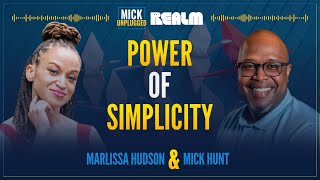
A long-form podcast interview in which Marlissa Hudson—former Carnegie Hall soprano turned consultant and fundraiser—discusses her personal motivation (rooted in family sacrifice and the ethic "if not you, then who"), her move from performance to consulting to drive broader impact, and her leadership principles: keep simple tasks simple, prioritize impact over busyness, set rules of engagement, and practice courageous candor. She describes practical approaches to fundraising and corporate engagement (invites, leveraging existing supporters and boards, event fundraising) and cites organizational results (doubling budgets, exceeding event goals ~90% of the time). The episode closes with a rapid "Quick Five" and contact info (english-hudson.com, social handles).
Chapters
So what happens when a UNC Tar Heel like myself meets up with one of the brightest minds who's ever come out of Duke University? Conflict?
Probably.
Friendship? Doubtful. But an amazing conversation. Absolutely. And friendship for sure. You know, I was just teasing on that piece, but I'm sitting down and had one of the most amazing conversations I've ever had with Marlissa Hudson. Marlissa. Carnegie hall, great. One of the best singers you will ever have the honor of listening to, but also one of the brightest consulting minds and fundraisers in the business. In this conversation, we talk a little bit about her journey. We go deep into her because. And you're gonna come away with.
With action.
If you are a leader and you're struggling with time management, priority management, and you wear the term busy as a badge of honor, we're going to break down what you really should be doing instead so that you're the most productive person that you can be. And at the end, in our top five, we talk about why Marlissa should have gone to UNC versus going to Duke. Ladies and gentlemen, I present the wonderful, the amazing Marlissa Hudson. Marlissa, how are you doing today, dear.
Mick, I'm better now if you are willing to be hired as a hype man. Sold. You're amazing. Thank you for that intro.
It's the Carolina thing that we do, Marlissa. So let's just go right into that whole Carolina thing. University of North Carolina at Chapel Hill. The greatest university on earth. We call it heaven where I'm from.
That's a strange.
How do you feel about that, Marlissa?
I mean, you know, I went to Duke. You went to where? Don't. Don't do that. Duke. The Duke University. Yes.
We'll bleep that out. Don't worry. We'll bleep that out.
I will allow the UNC thing only because my best friend at the time, her sister went there, so we had a bit of a cultural exchange happening.
It's okay. It's okay. You really didn't want to go to Duke. I understand. I understand.
I'll deal with you later. Off the record. But yes. I can't say what I want to say because I don't think I'm on a curse on here, so I'm letting go for now.
No. Marlissa1, all jokes aside, huge fan of who you are, huge fan of what you represent, and just the person that you strive to be, the mantle that you are. And I know you're very humble, but on behalf of a lot of people. I just want to say thank you, Marlissa, for the conversations you have, the rooms that you put into, for the voiceless and faceless that can't get into certain rooms, for the conversations that you bring forward. I just want to say thank you.
I'm not even sure how to. Because I feel very much the same way about you, Mick. And I'll receive the thank you in this moment, but I have to tell you, I never felt like it was a choice that I had to be here in this moment, that I'm built for this. I'm designed for this. So I'm really grateful in a lot of ways to even be in this position.
Well, again, all I can say is thank you, because you are the shoulders for a lot of people to stand on. Right? And I think we all get to a point. Well, I shouldn't say we all. A lot of people get to a point where you've stood on shoulders, and then you have to take a step back and then realize, wait a second. Now I'm shoulders for people to follow and to come behind. And so, again, just want to say thank you for that. Which leads to the first question that I have for you, Marlissa. You know, I always ask my guests, what's your. Because that thing that's deeper than your why, that keeps you rooted into what you're doing? And I've wanted to ask you this since your. Your. Your Chapel Hill days, but. But what is. What is your. Because why do you do what you do? Why have you become that shoulder that others can stand on?
Well, I'll start. I mean, my why is because I can, frankly, because I'm in the unique position. And you know what? I don't know who this should be attributed to. They say if not you, then who? Like, I know I was designed for this, but the deeper because of it all, I think, is because people poured into me at so many points in my life when I had neither earned it nor deserved it. And when I think of the sacrifices made, like, I looked. I was going through my paperwork the other day and discovered my paternal grandmother had two master's degrees. This woman was born in 1919. So if she was able to do those things right, to support, who would eventually become me? Who am I to not take that advantage and privilege and use it to exponentially grow what I see as an unjust world to become? Just, wow.
Wow.
Yeah, she was something else. Mommy, Alice was not a joke.
I'm telling you. I'm telling you. And I want to go A little bit deeper into the. If not you, then who? Because that's so powerful. When did you know it was you? Did you have that moment? Was there a time when it was like, all right, it's me?
That's a really good question. To be honest. Even when I was singing, like, fully in that world, I knew that communication and using my privilege for change was going to be part of it. Something that I thought it was going to be through single singing, primarily. In the beginning, I would say if there was a moment when I knew it was me, it was probably three years into my solo consulting, which I know we'll get into, and my mentor, who became my colleague and friend and then business partner. We were having a conversation about what could happen. We mapped it out, and it was like, there's nothing we cannot accomplish together. So. So that was really the moment that I knew it was me.
Yeah. I love it. I love it. So let's go into Carnegie hall, and you owning stages for two decades. Right? Let's go into Marlissa, the soprano, the standard again. I will give Duke some credit. Right? You did some great things there.
Well, thank you.
It's over. That's all the credit I'm gonna pay.
That was it. I'll take. You know, I'll take my little.
Yeah, yeah. We're done with the Duke praise now. It's the Marlissa praise. Right? So talk about those moments of your voice and just commanding stages and when you knew that your voice, pun intended, was making a difference and could get you places that. That maybe you wouldn't have got before.
Gosh, you are. You know what? You should run a podcast. You asked some really deep, thoughtful questions, sir. So when I went to Duke, it wasn't even for music. I wanted to be an economics major and realized for the first time, I think it was my sophomore year, that I was kind of sad, which, as you get to know me, is not really a thing you would attribute to me.
Well, it was Duke. I get it. I would have been sad, too.
You're gonna get me in so much trouble. I realized that there was something more, and that music was that thing, and through my voice, I thought I could heal. I still think I can heal. Right. And classical music wasn't even my original goal, but I just had a voice that lent itself to it, and it gave me both a tenacity because, I mean, you understand in that world, you hear. No. Every five minutes and. Mick, it's not just about your voice. Don't think they're just Criticizing you as a singer. They will talk about how you look to your face.
Yeah.
They will break down, like, your way of practicing, your way of performing. And it. I mean, I was a sensitive child. It broke me down to the studs. Do you hear me? But the strength that came from it let me know that that was part and parcel of whatever else it was I needed to do. Definitely. For that question.
Absolutely.
Okay, great.
Absolutely. Absolutely. And. And so for those that don't know, for those that are watching or those that are listening, just how hard is it to get into Carnegie Hall?
Okay. So hard. Let's start there. I mean, and there's several ways to do it now, and depending on who you ask. The prestige depends on that level. You can go as a kid if, like, your children's choir's invited, but y' all are paying.
Right.
And then at the top level, it's when you're invited. So I had the beautiful fortune of being invited by a composer who was doing a premiere at Carnegie Hall. And so for me, it was like, again, I think if I had to say a theme of my life, it's like, how did I get here? And that was one of those how did I get here? Moments. I mean, he found out about me through a mutual friend who I went to high school with Nick, who was a conductor, and she happened to be friends with him, and he was doing this thing, and they were looking for a soprano, and it happened to be me. So that's. So bottom line is, if you are invited to Carnegie hall, my friend, it is difficult.
Yeah.
And that's been the case for me each time I've come.
Yeah. Yeah. And. And you went from Carnegie hall, like I said in the. The beginning, to boardrooms, and. And now again, becoming that voice for the voiceless, that face for the faceless, as a consultant. And, you know, at some point, I want to retire the word consulting. But until we find out what's that new word or new phrase or term for it, because it's more than just advice. It's more than therapy. Like, there are a lot of times that, you know, we have to open doors, we have to create tables when tables and rooms don't exist. Right. Why. Why did you. And when did you say, okay, this is a focal point for me now?
For me, the biggest piece of that. So I knew I was always an entrepreneur. Let's start there? Even as a singer, I was an entrepreneur. But the reason I chose consulting is I wanted to have maximal impact. And I felt like in order to do That I needed to be in a lot of different places at a lot of different levels. And fundraising, little secret. The science of it is not that hard. Nick, don't let them fool you. Because of privilege and a whole lot of gatekeeping, it's obfuscated and made difficult for people to access. So I knew I wanted to get in there. And that's the second reason I wanted to be a consultant, because I wanted to disrupt the current systems for fundraisers and bring folks who normally wouldn't do this work into it. You can make great Money Mid Level 6 figures as a fundraiser, either as a consultant or in house at an organization. And I'm like, I can do this because frankly, from my singing one, I had no ego left. So there's nothing you can say to me that's going to deter me. Plus, frankly, I have a mental toughness that was hard fought, probably through a little bit of trauma, but either way, it's hard to dissuade me. And once I saw the Matrix and that I saw. Okay, wait a minute. The science of fundraising isn't the hard part. And I already had the art friend. So let me get in here and see what change I can create.
And change you do. And change you do. Thank you, Marlissa. Again, I'm a huge fan and one of the reasons why is we have a very similar philosophy. And I'm going to let you break this down, but you often talk about. I'm going to say it my way, keeping the simple things simple, right? Like don't overcomplicate something, or some things that can be simple tasks or simple decisions. Let's talk to the viewers and listeners about the importance again, my words. But I'm going to let you say it, your way of keeping the simple things simple.
I mean, part of that, frankly, is understanding what's most important. And sometimes people can, sometimes people confuse urgency with importance. So I start there. What is that one thing today that will drive impact? Like, if I do nothing else between now and the end of the day, what is that one thing that will guarantee me to be one step ahead tomorrow? And I know you know 1% better is out of favor. I think that's a little weird. Anyway, I listened to a few of your podcasts with the subject, but what you can do is set yourself up for success. The other piece of that is focus. Yes, you know your inbox is flooded. How do you know which one of the things is most important? And that's by understanding your true north. Mick, I used to call myself the chief parkour officer. That's it. Because I, you know, I will not let anything, I will go around, through, jump, go underneath to get us there. But the bottom line is I have to know where I'm going in order to be successful when I reach it. And I think people over complicate a lot out of fear, which I hope we get to talk about. Yeah, it's like if I'm busy, if I'm doing things like nobody will notice or people will leave me alone. I am disinterested in being one of those people who says, oh, I've got, you know, 18 meetings today. I have. No, no, that's not a flex.
Correct.
My flex is when I'm able to spend two hours in deep thought about how to drive the next piece of change. And that, frankly, beyond the fact that my brain is the way it is, is why I simplify. I want to do what's most important and the thing that's going to help my community live a better life.
I totally agree, Marlissa. This is why we vibe so well, because I'm a huge proponent of using the Eisenhower matrix. Right. So I start my day literally with everything of what's urgent and important. What's important but not urgent.
Come on now.
Right. And I try to put everything in my life that's important but urgent, but not urgent. Right. And one of the rules that I have, and this is for every entrepreneur, for every leader out there, Melissa and I are going to break this down. Just because it's important and urgent for someone else doesn't mean it has to be my priority. And in my companies, we have rules of negotiation. And if you want me to take something off of your plate that is urgent and important for you, then you've got to negotiate something off of my plate or it wasn't meant for me to be working on this with you. Like, we have ground rules and barriers because I think that's where many leaders and entrepreneurs go wrong, even from a customer service standpoint. Right. It is not Marlissa's fault that Mick called her Co. At 4:55pm and needs something in five minutes before the doors close or the lights turn off. But for whatever reason, a lot of companies take that. And now you put your employees under stress for no reason. So we have rules of engagement. We have service level agreements with our clients that, hey, just because you called or emailed or sent something in doesn't mean that we stop everything that we do for you. It's not bad customer service, but we set the rules of engagement. So we know if you call in or request a certain thing, the turnaround time for this might be 48 hours. The turnaround time for this might be seven business days. It could be 30 business days, whatever it is. Because we never set the expectation that just because you called means that you get a response instantly.
Oh, my gosh. This is a very long conversation that we don't have time for. But English Hudson has very distinct rules of engagement as well. One of the biggest ones, we use a book called Radical Candor for communication. Patient. Okay. Love it. Another one is courage, which is probably the hardest of all of it. Like, I have to be able. And this is just my own personal hypothesis. I think if one of the top three issues with how we all do business and how this current world works is a lack of courage. Notice I didn't say, you know, fear. You can be afraid, friend, but I sit in meetings all day where people don't say the thing because they're afraid of how they'll be perceived. And if they do say it, they hit you with the, oh, I'm. I'm just giving blunt honesty, which is very much disguised as meanness. Right, Right. So for us, yes, we are highly responsive. Yes, I will give you the best serve. Excellence is one of our core values. So that has to happen. But it can't come at the cost of the health and wellness of our people.
Yes.
So we formulate everything. We put all the stop gaps in place, mix so that that 4:55 call rarely comes, frankly. But when it does, I expect to get pinged. I don't want any of my consultants to feel like they're having to take that on alone. And that's one of the other biggest pieces. We are 18.
Yeah.
So as one of us goes, the other goes. If one of us is suffering, that means the rest of us are suffering. And we know we are not an er, despite what people feel like. Nobody is going to live or die based on this moment. But yeah, we do create change, but we do it not at the cost of hopefully, of our people.
Yes, yes. And I want to go deeper into something that you talked about with the. I'm busy. But it's really fear in disguise. Or it's a badge of honor because I. Again, we could talk all day because we're in so much alignment with our philosophies. I'd love for you to break that down because I know that there is someone listening or watching right now that for years has used the label busy as a Badge of honor, when at the end of the day, they probably are one of the least productive people at said organization.
Yeah, hello. And I can speak to this because at some point, I'm sure I was this person. Right. Calendar lit up from stem to stern and proud of it. I think that's the difference. So just to pull back, you know, my firm does fundraising, and, you know, with money comes fear. I mean, raise your hand if you've never had any trauma around finances. When we say this in the room, everybody's just. And when there's trauma, that means there's shame. So you'll do a lot of dances to cover up and not again. Use the courage to confront what you're doing. And busyness is one of the biggest things people use. I can't be prepared for this meeting because, oh, I'm so busy. I've got to do all these things. Everybody's counting on me. I can't read this grant that you wrote because I'm so busy. I've got all these things. Everyone's counting on me. I. I have had people ask me for five to seven pieces of paper to go into a funder meeting because they're afraid. They feel like it's like an armor. They'll put it all over themselves and they'll be ready friends. You won't. You won't. You have to be vulnerable, Nick. If you want to really make a dent, and frankly, you want to get away from that busyness line and busyness label, you have to be authentic and vulnerable. And that's hard for people, I'll say, particularly for folks like us, who were raised to be professional. Raised that this is the way you conduct yourself in a business world, but it creates a barrier between you and the people, frankly, who want to invest in you.
Say that again. Wow, That's. That's. I'm writing that down. I might need to borrow that line.
I'm sure we can borrow a lot of things from each other.
Yeah. I'll give you my UNC diploma.
I knew you were coming. He's going to make a UNC joke. I walked into that one.
It's okay. It's okay. So, Marlissa, let's talk about corporate engagement and gifts that often feel like closed doors to black and brown communities. You, your organization. When I talk about the shoulder that you now are for us to stand on, I know this is one of the things that you pride yourself in. So let's talk to the viewers and listeners about these closed doors and locked doors and what you're doing to help open these up.
Yeah, access is something that's denied historically and categorically, but we are definitely in an era where even more so the money is hidden. Some people call it dark money. You know, use whatever label you want. But there are a few keys to break open those barriers. For one, the bigger grant dollars now, you know, from foundations, most of the time it's invite only. You're like, okay, but how do I get an invitation one? Sometimes you're able to find somebody. I've done this friend to go on the website, find an email. I even know how to look emails up. I won't tell you all at this moment and just send an email like, this is why you should care. Some have a form where you can submit a short. Why? That is not the most efficient way to do it, but it yields results. Frankly, the most efficient way to do it is to do incredible work and invite those people in to see it. Before you start asking for things, invite them in as something beyond a wallet. Invite them in as somebody who can contribute as a thought partner. So I've seen a lot of folks get in with the foundation because they're like, I kept inviting this person to our annual. Whatever it was until they came. Also, obviously, whoever's already currently invested in you is your best source of the next folks who'll be invested in you. They all hang out. Mick. So, you know, I know you're at X Foundation. Would you be willing to recommend me to a couple more foundations? Now, you got to stay on folks to do that. But I guarantee you the closeness of your relationship with them beyond the dollars is what will dictate if they didn't champion you to other folks. Yeah, there's one more. It's a little. It's interesting. So whoever's on your board can also be very helpful, like if you have a board of directors, because they have access. I mean, there's a private foundation and there's corporate foundations. Particularly for corporate foundations, if they have an in. See, I'm really talking shop now. I hope this isn't too boring. If they have an N, it's an easier end for you. And if the employees in that corporation are already volunteering, pro bono, doing whatever, and are engaged with your organization, that's going to make the corporate folk stand up and take an interest. I could do this all day, but those are a few to think about.
So let's tell the, the viewers and listeners some of the results that you've had. Right. Like again, I want everybody to Understand who Marlissa Hudson is and what she means to these communities. So let's talk about again. I know you're humble, you don't have to brag, but let's talk about some of the results you've gained.
Yeah, I mean, as a company and as me as a person, we've doubled the budgets of multiple organizations. So you're going in, let's say, at a million in a year. And this doesn't happen. I mean, 100% growth is difficult, but we've done it more than one time. Event funding is another big one. Everybody wants to have an event. Typically, Mick, they don't have great ROI because of the energy required to do them. Actually, this friend, but we've exceeded the goal amount 90% of the time, so we know how to raise money. That is not my issue anymore, frankly. What I am prepped, the thing that keeps me up at night is, is the money I'm raising creating change? And am I partnering with the right organization? Come on, friend. Am I partnering with the right organizations to get that work done? My nightmare is that when I leave this mortal coil, my tombstone reads, here lies Marlissa Hudson. She raised $4 billion and nothing changed. The money is the vehicle, it is not the purpose.
Correct? Correct. Come on now. Yeah, come on now. We could talk all day, Marlissa. We could talk all day. We really can. Because again, the work you're doing is so important and so needed. And you're right as someone who throws and hosts events. Right. A lot. In the leadership community and the entrepreneur community, people don't understand what it takes to. To put on a game changing event. Not just an event for the sake of events, because a lot of people do that. But when you're talking about the experience, there's a lot that goes into that. And again, that's why I applaud you. Because you make it possible for people like me to be able to do the things that we do, to have the reach that we have, to touch, impact and change the lives that we're supposed to. So again, I applaud you for that because I know you're doing it too well.
And frankly, Mick, I don't know if you've ever tried it, but you would be a fabulous fundraiser. Have you ever thought about it?
I have not.
Yeah. I mean, because if there's one thing I can tell you do exceptionally well, it's grow relationships. That is the secret of fundraising.
Wow.
So whenever you're ready, like, you know, we can combine forces, like, I know we could get some magical things done together.
Done deal. Done deal.
I can't believe you. I am so excited.
No, I'm very serious. Done deal. Done deal. We don't even have to take it offline. That's a done deal. Absolute. Yes. Absolutely absolute. Yes. So before I get you out of here with my top five, I want to talk about what neuroscience means to you and why that's so important to you and the family and what you're doing now.
So my son is at Brown University. He's a rising senior, and he wants to change how we age. So he wants to increase both your lifespan and your health span, which some would argue is more important. I think you get the difference. And the way he wants to do that is to go into either neuroscience or become a neurosurgeon. He wants to unlock the powers of health through the brain. And it's important to me for a number of reasons. I mean, that that young man. I'm trying not to say child, is. Is my heartbeat, but he's also an empath and a healer and a truly kind soul. And I actually see a lot of that in you and people like him and, like, you have to be put in positions where they can unlock the full, full extent of their talents.
Yeah.
And for him, that's neuroscience.
Okay.
But he also intrinsically sees the good in people, and I think as a little kid, he wanted the pain to stop every time somebody was hurt. Like, he felt it.
Yeah.
And neuroscience is one of many ways that that young man, Hudson Eaton, is going to end up changing the world. I hope to be the first investor in his company when it launches.
I want to be number two. Then we can let mom be number one. I would love to be number two. And I mean that. That's on recording, so I can tell.
Yeah, absolutely. Thank you for asking.
Absolutely, absolutely. All right, you ready for this quick five?
Let's do it. I've been practicing quick five.
You've been practicing?
I mean, you know, I listen to yourself. I do my homework mix. So I listen to everything.
All right, so I'm gonna start you with the easy one. I'm gonna lob before we get into the hard ones. Your most favorite arena that you've ever performed in, aside from the dean Don't. But yeah.
So this is gonna be a strange answer, but it was actually ledoux chapel in St. Louis, Missouri.
Ooh.
And it's not because it has the best acoustics in the world. Carnegie hall actually takes that cake. It's because it's the Place I performed two weeks after my father passed and I was raising money to go to grad school. And the energy and the love I felt in that room means that no matter where I am in the world, like, that's my safe space. That's where I go back to.
Okay. I love that. I love that. Man. My heart just got touched.
Thank you.
That's deep. That's deep. So if Marlissa is going on a mental retreat, are you going to the mountains, the beach, or the lake?
Beach. All day. Okay. All day long. Technically, I should go to the mountains. That's actually where I feel the most. Like I'm one of those people who should have no shoes on and just be walking through the grass. Like, when I do that, I am charged. Although, you know, black folks would snatch my card for that, but that's okay. Like, we'll have that run, but there's something about the sun and the sand. A good book in my hand for me, that does it 10 out of 10 times.
Okay, so speaking of book, what's one of your most favorite books that's changed the way that you lead?
The way that I read. Oh, wow. Lead. Sorry, Lead.
Lead. Yep.
Actually, there's a few. I'm an avid reader, Mick, so I probably go through 20, 30 books a year. But one I recently read called Super Communicators rocked me. I thought I was a great communicator until I read that book. So I highly recommend it. If I do, I get a one. A.
Sure.
The. I think it's called the Friction Project. The Friction. I'll Google it, but I read that at the beginning of last year, and it. Because friction is what keeps a lot of us from getting where we need to go.
Yeah.
And it teaches you how to get past it. Again, we're back to that chief parkour officer bit, so I'm always trying to smooth the way.
Love it. I love it. I love that a lot, too. All right. So why did you go to Duke and not unc?
Because I was smart. And I went to a school, frankly, where they wanted to push all the scholarship kids to go to the best schools they could. I didn't even know what Duke was when I applied. I had heard of it. I was going to Princeton, to be frank. But when I got to Duke, I fell in love. I mean, which I know you can understand because you would have gone there, too, friend. No, during our visit, I walked on campus, and I was like, I'm home. So that's why I ended up at Duke.
See you should have visited Chapel Hill first, and then you would never look at Durham the same way.
Just your recruiter should have found me. I blame y'. All.
Well, you know, we do have an elite group of people, so I get it. Everybody can't go to unc. Marlissa.
There we go.
Everybody can't go to unc. All right, last. Last top five question. When the story of Marlissa Hudson is being told, what's one word that you want to make sure is in.
Indomitable? Like I. I have a spirit that cannot, will not, shall not be stopped.
Let's get it.
Yeah, let's get it. Sorry for busting out an SAT word, but I was trying to think of one word that, like, captured all of it.
Yeah, us Tar Heels know what that word means. It's okay. It's okay.
I bet you do. You made me snort dog on it. I almost made it without snorting.
Marlissa, I love this. Like, we totally have to do this again. I think the Marlissa and Mick show featuring Marlissa needs to hit the road somewhere. For sure.
I would love it. And speaking of which, we didn't even get into the love piece of why we do what we do. But I know for you and I, that's both a connector and a driving force. And for me, it's the currency of the world. So everything I do is steeped in, run by and pulled through love.
Yes, absolutely. So, Marlissa, tell the viewers and listeners where they can find and follow you.
Absolutely. I mean, I'm at Marlissa Hudson on everything, so there aren't a lot of Marlissa's running around this earth, so. So you can find me on Instagram. That's probably the easiest place. LinkedIn. My website is english-hudson.com. always email me if people have questions or want to learn more about what we do.
I will make sure we have links to all of that. I'm going to start resharing and reposting some of your amazing articles and posts that you have on social media because you are that important to me personally. And I think, again, you are that shoulder that a lot of people are standing on. And I need you to know that.
I need you to know I will be those shoulders for the next generation. We're gonna make some change happen, Nick.
Absolutely we are. Absolutely we are. To all the viewers and listeners, remember your because is your superpower. Go unleash.
More from Mick


How My Supportive Parents Shaped My Life: Patric Young on Gratitude and Faith



Transform Your Leadership with Ken Coleman: Discover Your Sweet Spot | Mick Unplugged





The Power of Character: Building Stronger Relationships - Mick Unplugged | Bela Gandhi
