Think the Vision: Sunny Bonnell on Building Brands & Breaking Rules
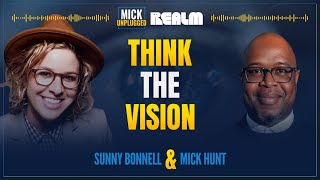
Sunny Bonnell on why visionary leaders need operational partners to turn ideas into action. She walks through her VisionCamp program and a seven-step Vision Script used with Google, Microsoft, and the Minnesota Vikings to align teams around a shared future.
Questions this video answers
A two-day workshop for executive leadership teams offered by Motto to codify and crystallize vision.
A seven-step process used at Motto to help teams realize their vision (part of VisionCamp).
The Minnesota Vikings (worked with Motto to define their 2025 strategic vision).
Examples mentioned: Google, Microsoft, Minnesota Vikings, Aptos, Omni, Cresta, Andela.
Chapters
I think you can get incredible things done. And you can also be very visionary. And sometimes people don't equate the two. They think that if you're highly visionary, you're painting a future that is so impossible or so hard to achieve that it makes it impossible to get traction and to get things done.
Ladies and gentlemen, welcome to another exciting episode of MC Unplugged. And today, we have someone that I could be related to. We just don't know. We're gonna find out. She's a rebel with the cause, a visionary who turns defiance into brilliance, and a leadership powerhouse rewriting the rules of success. As the co founder of motto, author of rare. Sorry, Author of Rare breed, and a champion for the bold and unconventional. Buckle up for an unfiltered conversation with the fearless, the trailblazing, the unstoppable. Sonny Bonnell. Sonny, how you doing today, dear?
How are you? Thanks for having me.
I am honored to have you. And Sonny, you know, huge fan of the work that you do. We share some connections out there in the world. And I've been waiting to ask you this question. Cause on MC Unplugged, we talk about your. Because that thing that's deeper than your. Why. If I were to say sunny today, what's your. Because what's that purpose that keeps you driving?
I really believe in helping people and companies and leadership teams find their ultimate potential. So in our work, we see a lot of visionary teams. And it's become notable that not everybody is led by a visionary leader. And when you look at some of the statistics out there, a lot of people don't actually understand the 74% of.
Most leaders aren't visionaries. Right. By nature. And what happens is you have a lot of leaders who pride themselves on getting stuff done. And I tell these leaders all the time. I just spoke at an event two weeks ago. Getting stuff done is not a leadership trait. And it's definitely not one that you want to brag about, because that's not what leaders do. Leaders create the vision and the roadmap, and then their job is to make sure that the pieces are in place to make that happen. If a leader has to get involved in getting stuff done, and I'm not saying that you won't ever, there are gonna be moments that, yeah, you gotta roll up your sleeves and do things, but if 60 plus percent of what you do is getting stuff done, your team isn't the best team that they could be because you're doing it the wrong way. Love your thoughts on that.
Yeah. I think that both can be true. I think you can get incredible things done and you can also be very visionary. And, and sometimes people don't equate the two. They think that if you're highly visionary, you're painting a future that is so impossible or so hard to achieve that it makes it impossible to get traction and to get things done. But in our experience at Motto, it's the exact opposite. If you have a visionary leader or leaders and a leadership team and you empower visionary thinkers within the company, you drive that down through the culture and then you ultimately reveal it in your brand and you have alignment at every level, you move quicker. Brands and companies that don't have alignment around vision often spin their wheels. They lose a lot of traction. They can't get things done even with an army of people. And it's because they don't always understand what they're fighting for. And so the goal is, is when you're leading a, a, A team, you have to make it absolutely clear this is the hill we're marching towards and this is the flag we're going to carry. And more importantly, don't cast your eyes on anything else. Just focus on the horizon line, focus on the mountaintop. And when you can do that and when you can really help people understand how important their work is to in the contribution that they bring to helping you and them realize the true potential of their work, in accordance with your work and your dreams and your hopes, you make that shared vision so much more powerful because then you remove distraction, you remove indecision, and you ultimately create better, more agile teams. And it's just something that it takes a lot of work, it takes a lot of intention, it takes a lot of focus. But when we have worked with brands and organizations that have that and really understand that and they prioritize, is unbelievable what they are able to accomplish.
Yep, yep. And to clarify, I wasn't saying that the organization couldn't get things done. I just meant like the leader, that individual leader themselves.
Right.
That should not be your responsibility.
Yes.
Your vision and the things that you're doing should get things done. But like, you should not be the catalyst physically to make that thing, whatever that is, done. But so I totally agree with you there.
Yeah. And visionary leaders usually are the why people and they're not the how people. And that's something that's really important. And it's an important distinction because a lot of people think that visionaries are just up in the clouds and they dream really big and they're Radically bold. And a lot of times that's true. They're not always great operationally, they're fantastic at helping inspire and cultivate what we call motto, a culture of possibility, which is like what you dream you can achieve, but they're not always good at telling you how they need you to do that. And so you kind of need at motto. For example, I have a quote unquote a coo, an operator, my co founder partner, Ashley, who is the exact opposite to me in terms of she's a big idea person, but she's also an operational master. And so what she allows the two, you know, the two of us are able to do is be able to, while I'm dreaming big and trying to drive the company towards that visionary leadership, she's also helping make those how things happen. And that's what you need a lot of the time. You need that sort of operational excellence to mirror the that visionary thinking because they're so important. And whoever that is, whether that's a chief of staff or somebody who just is a little bit more strategically minded. And also in your company, you need both what I call visionaries and stabilizers, meaning the boat. If you have a bunch of visionaries on the boat, the boat's probably going to go in circles, right? But if you have stabilizers in the boat, they're able to kind of understand and chart the course, they're able to row in the right direction and, and they help the visionary team move where they're trying to go. And so you kind of need both. And that's just something that we've seen time and time again in our work is how important it is to have both the visionary and both the stabilizers within the company and the culture because they both have such powerful roles.
Totally agree, totally agree. And I want to go back to something you said early on too, about making sure that there was alignment with the mission division, the core values and all that. So, you know, I told you two weeks ago, I was speaking at a conference and it was for a US based. I'm trying not to get them in trouble. So I need to go down the list safely. US based Fortune 75 company, right? So that way I'm not getting anyone in trouble. And so I had shareholders of the company were there not all of them, but some chairman of the boards were there, all the senior leaders and then like two rungs below the pecking order. Right. So there's, you know, a good 300 people in the room. And I always do this exercise, Sonny. And here's where I want your, your feedback because I know based on who you are, we align with this. I, I had the CEO come on stage with me and I said, you have to promise me you won't get upset and no one gets fired. So we agreed.
I like that. I like the caution tape, of course.
And I said, okay, everyone, not looking at your phone, not looking at your laptop, look me in the eye. If word by word, you can recite the mission statement of the company, raise your hand. Three people raise their hand. And this includes shareholders, chairman of the board, senior leaders. I said, if you can recite all of your core values, raise your hand. Fifteen people had their hands up. None of them were chairman of the board, none of them were shareholders. So I look at the CEO and I said, this is the problem, because if your team has zero idea what you and your shareholders and your board of directors believe and feel, there's no way they could ever deliver to your expectation. And I'm not saying that they're not doing a great job. I'm just saying you're doing too much by doing nothing at all. And so we went through this exercise and I do this with most of my clients is we create because statements. I don't care about your mission. At the end of the day, I care about your vision, but it needs to be based on a because statement. So I would love your feedback on when you're working with organizations and when you and Motto go do what you do, how often are you finding it that people are misaligned with the mission and vision simply because they don't really know it?
Complexity. So most of the teams that we work with, we work with really big iconic brands. Everybody from Google to Microsoft to the Minnesota Vikings to really up and coming teams like Aptos and Omni and Cresta Andela, brands like that that are really innovating in this space and the biggest challenge that they have in helping people understand the vision, the purpose, the mission, the values is oftentimes there's too many values. The values aren't clear enough or tied to behaviors and actions, or it's just complicated and our human brains can't handle complexity, especially now in this modern landscape. So a couple years ago we launched at Motto a program called Vision Camp. VisionCamp is a two day workshop for executive leadership teams to not only help you codify and crystallize your vision, but we have something called a vision script, which basically is a seven step process to help you take your team to realize that vision. So vision without action is Just a daydream. So we really created Vision Camp to essentially solve this problem because we were seeing so much of it. Teams were coming in, and they had a very clear ambition and sometimes an incredible product. They were filling a niche in the market, but they didn't know where to plant their flag. And more importantly, they didn't know how to get everyone else rallied around that flag. And so we designed Vision Camp for that. One of our pilot teams that came through VisionCamp was the Minnesota Vikings, and we worked with them to define their 2025 strategic vision through Vision Camp. And one of the most powerful things that comes out of that is it's not enough to have a statement or a set of values if you do not tie actions and behaviors to the things that you want people to demonstrate. So at motto, for example, we have very clear values, and we reward and kudo based on the demonstration of that value. So if you ask anyone in our company what our values are, they can recite them immediately. And then, more importantly, if we ask what we do here, everyone will tell you, we do big things. And that is such a big idea. But it's so simple and it's easy to understand. And when they're measuring their performance in their work, you want them to ask the question, is this big enough? Is it audacious enough? Am I doing everything that I can to make this work succeed? And that's what that is. That's how you embed that into your team.
I love that. I might have to borrow that. Like, one of the things when people ask me what I do, I'm just going to say, I. I help you achieve big things.
Exactly.
You're not looking for big things. I'm not the person for you. Sunny isn't the person for you, Sonny. I told you we were related.
I know.
I knew that.
It's feeling. I'm feeling a kinship. It's unbelievable. I like it. We're going to have to hang out after this.
Oh, for sure. For sure. So I want to go to this amazing book of yours, Rare Breed. And one of the themes that's recurring throughout that book is the fact that people need to embrace, right, Their uniqueness, their differences, those things that make them the rare breeds. Because these are the words of Mick and Mick. Only society is going to tell you it's an outlier. Society's going to put you in boxes. Society is going to try to frame who you understand that you need to embrace.
More from Mick


How My Supportive Parents Shaped My Life: Patric Young on Gratitude and Faith



Transform Your Leadership with Ken Coleman: Discover Your Sweet Spot | Mick Unplugged





The Power of Character: Building Stronger Relationships - Mick Unplugged | Bela Gandhi
