You Can't Stand Out Standing Still: Mario Armstrong on Motion, Mindset, and Modern Leadership
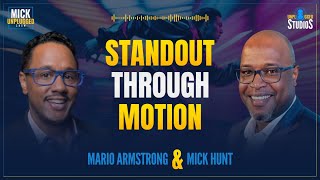
Mario Armstrong talks about building momentum through small consistent actions and local visibility. He's writing his first book and credits vulnerability as modern currency for leaders. His 11-minute framework compounds into real momentum, and he got national exposure by dominating local radio and TV first.
Questions this video answers
July 14, 2025
-$77
$800 for a half hour (Thursday, 12:00–12:30)
Chapters
You, you can't stand out and stand still at the same time. You cannot stand out and stand still at the same time. So what does that require? It requires motion. We need the motion.
Ladies and gentlemen, welcome back to Mick Unplugged. And today we have someone who I call my blueprint. He likes to say he was the spark, but we'll debate that live in person. But he is an Emmy award winning disruptor who turned motivation into movement, blending tech, media and mindset into a formula of unstoppable success. We're talking about going from NBC to never settle. He's living proof that your dreams don't have deadlines. He's magnetic, he's relentless, he's game changing. He is the blueprint of MC Unplugged. We are talking to none other. Mr. Mario Armstrong. Mario, how you doing today, man?
Let's go, let's go.
Yes, sir.
The intro alone sets the tone. You do this so well on your podcast for all your guests, obviously. And your team is really well researched. I can tell. Like you put in the production and the investment into not just the quality of it, but the technical quality of it, but the conversational quality of it. And that requires research and energy and time. So. So thank you for that and thank you for having me here.
So. So you're saying thank you, but I'm holding up a mirror, Right? Because you should be thanking you. You know when I told you that you were the blueprint man, like, yeah, having conversations, I naturally do that. I'm a business owner. I own three businesses, so networking, having conversations is all that. But there's a blueprint to this success in media, man. And so when I said I researched Mario, I studied Mario, it's because the things that people don't see on camera, that make you dynamic. Yes, you're brilliant on camera. I totally know that. Right. But authentically, you were you and you care. Like you didn't know that, that you were my blueprint. But you give enough information for free. You give enough from your heart that people that just spend a moment with you grasp so much. And I just wanted to publicly thank you for that, brother.
I appreciate that because I feel like in. It's just been kind of me. But what's also happened is I've recognized that vulnerability is currency.
Yeah.
And it's hard for people to get to certain levels of vulnerability because then you have to deal with yourself. And the more willingness that you are to go into that zone of uncomfort or that zone of potential embarrassment because that's really what it is. You're afraid of failing in front of people or you're afraid of being embarrassed. The more you start to find that, you will gravitate and the people that are looking for you will find you. Because if that vulnerability is sincere, if it's real, if it's not a marketing tactic, if that vulnerability is sincere, like, hey, y', all, like, case in point. I'm writing a book right now. My first book, and I'm writing this book, and I've been wanting to write a book for 10 years. And start, stop, start, stop, start, stop. This one just flowing out of me. I almost had to reschedule this podcast because it's. It's. It's. I'm like. I'm, like, moving meetings because it is. I don't want to stop it. I am on chapter 10 already. It is flowing out of me like crazy. And the reason why I'm bringing this up is because I'm even telling people. Even in my most recent post on my Instagram, I'm like, I don't know what I'm doing. I don't know how this is going to work. This is completely unknown. I'd much rather prefer to be on a stage. I know many of you may be scared of that. I much rather be on a stage. I am a verbal communicator, not a writer communicator. And so this is a weakness of mine. But you know what? It's uncomfortable. I might get embarrassed, but I got to do it. So that vulnerability, that truth that I'm willing to share publicly, is also helping people that want to find this type of motivation or this type of energy to come to it, because it's real. So whatever that is for some of your listeners and some of your viewers, whatever that vulnerability is, start touching that line. Whatever feels uncomfortable, whatever you've been hiding, whatever you were teased at as a kid, I was in detention for talking, Not Mario. Detention for talking. Didn't know how good talking would take care of me later, but detention for talking. Didn't understand the power of it as an oral communicator at that time. So the vulnerability will help you with the transparency. And that transparency, to me, is the new currency.
I wholeheartedly agree. You know, I also am writing a new book, and one of the things that in my book is about modern leadership, and I, in this book, I talk to leaders about how for the modern employee, transparency is the new currency. Transparency is the new 401K.
Wait, hold on. How do you. How do you this is genius of you. How do you get an employee inside of a system that is known for not rewarding transparency, to be transparent? Or I guess the better question is you're probably not trying to convince the employee, you're probably trying to convince the leader on the leader. So, so what's like a tip or a strategy? How does that work?
One, you've got to change those mission and vision statements that your employees don't even know what they are anymore. They don't believe in a shared vision. You've got to start with telling your team what your core values as a leader are. Right. Forget what the company is. I might work for IBM, that might be who's signing the check. But I work for Mario. I need to know what Mario believes in. I need to know what Mario stands for. And as a leader, if I can be transparent about my core values. Now I've got an employee, someone that I lead, who by the way, is also a leader. Right. They're also a leader in their home, in their community. If I can be transparent about what I stand for, I'm building that currency with them.
That's. You're talking about a leader's personal mission statement. That's crazy good. Right?
Right. Because again, I might work for IBM, but I work with Mario.
Right.
And if I'm going to follow Mario's vision, I need to know why. That's his vision. I need to know what he stands for. And the only way to do that is to start. That's the first part of transparency, right?
Yeah.
The second part is I've got to listen to you and what's important to you. Right. If I'm, if, if Mario is my leader, he needs to listen to me. And this, this episode is about Mario. I don't know why Mario is being. Mario is turning on me. I love it, by the way. But that's the key. Transparency is the new currency. Transparency is, is what this modern employee wants. I can trust you. The modern employee doesn't care about a pension or 401k because in their mind now they're trying to be an entrepreneur leader too. And they're probably not going to be with Mario long term. If Mario, if Mario is a great leader, he's building another leader.
Correct? Right.
And so.
Correct.
My kids don't care about 401ks, brother. I can promise you that. My kids. Dad, that's great, but I need to, I need to know what Mario stands for. Because if I'm working with Mario, I need to know Mario is going to Stay on with me, Nick.
This is good, man. This is really. Wow. Yeah. And that's why I turned the tables, because here I am, I'm talking about it from a personal development, from a personal branding perspective, like the individual media company owner that's also the brand. And. And how. How I've been leaning into that layer of uncomfort. Like, you know when it's uncomfort, when your father calls you and he's like, you sure you wanted to post something like that? Why would you tell people you're broke? Like, why People think you're doing very well for yourself. Why would you tell people you're broke? And I'm like, dad, because it's the story. You were once broke, too. You just. You didn't have the tools at the time. Maybe you would have communicated it, but maybe in your generation it was better to keep that stuff hidden in mine. I'm more willing to talk about it because I feel like it will empower other people and I want people to see that. It was documented. Like, I show my bank account when I was broke. It's in the book.
Negative $77.
Yes.
Right.
You know it very well.
Yes, sir.
Oh, man. Yeah.
And that's why I love and respect you like I do, man, because you are transparent and you give people actionable insights. Right. Like, I'm a believer in I can't do more than three things. Right. Like, if there's a process that's like 10 steps, I'm not going to do it because I can only focus on three at a time. But. But, Mario, that's how you break things down, man. So I would love. Let's talk to the viewer, to the listener, that they know that they need to get uncomfortable, but they like the comfort. They like those benefits. Right. Like, they like that corporate ladder.
Yeah, yeah.
But that uncomfort is eating at them, and they know that they're ready to make that step. I love to talk about your journey and then give people advice through your journey of how you decided to take action and do it.
Yeah. And I think one of the worst things that a human being can go through is knowing what they're actually gifted at but not pursuing it. And that's either because they're choosing or they haven't been exposed to it yet, or they're refusing to answer the call that's being placed to them. And so when I decided to pick up the phone that was calling for me, and. And it's an uncomfortable phone call, and you're like, okay, should I Actually do this? Should I leave this job? Should I, should I make this decision? I got a child, I got a wife, I got a house. We had things you get, you know, so you're clearly thinking about the responsibilities of what you're about to do. So what I decided to tell people and what I think works well for people I've coached, is I look at it at 11 minutes at a time. I look at 11 minutes at a time. I don't look at what's the overall vision. Sure, I need to know where I'm going, what's my gps, what's my destination. But what happens when people put the GPS out or the vision out? It is so daunting. If you're ambitious, it's big. And if you know what it truthfully is, it's scary. Even if it's not huge, it's still scary because you're in that comfort. Like you put. So when you hit that vision, it can feel like, ah, it's a big mountain. I don't know how I'm going to climb it. So what I say is, okay, know what the big mountain is? But tell me, what are you going to do in the next 11 minutes? What can you do in 11 minutes? Can you read an article? Can you write up an email? Can you come up with a prospect list? Like, what can you do in 11 minutes? That's all. I'm not saying leave your job right now and jump off and get grow the wings on the way down. I'm saying, what can you do in 11 minutes? And if you were to do that repeatedly in the aggregate, you will start to see your plan, your strategy. And what happens is, as you know, the universal law of motion kicks in. And when you start moving in a certain direction and you're committed to it, even in small doses that are consistent, the universe will start to bring you things that you think are now just happening out of circumstance or just lucky. And so I, I believe that every 11 minutes informs the next 11 minutes. So I feel like that's what I did. I started looking at how do I keep my day job and start the side hustle and how do I do it at that time, I wasn't calling it the 11 minute framework. @ that time, it was just small bits of momentum. How can I get them? I used to call them green lights. Like I just want to get a green light. How do I just get another green light if I get a red or a yellow? How do I shift and see if I can get a turn the corner and get another green light. But then after years of looking at this, I'm like, it's been these micro moments of. Of strategic focus that has actually gotten you to this mindset that no matter which vision or thing or idea or project you want to go after, you know that if you give it 11 minute consistency, it will happen.
Yeah, yeah. So I just wrote this down. I'm gonna have a team meeting with one of my companies and we're totally doing a shift to talk about the 11 minute framework in the 11 minute straight. I love that so much. I'm gonna borrow that.
You're welcome to it, man. And when the. When the book's ready, you can. You can get the whole framework in the book.
Oh, well, absolutely. We're gonna definitely buy the book and distribute the book for you too.
Appreciate it.
So that's a no brainer. So, Mario, man, like, I've always wanted to ask you this. When did this start? When did you know that this was you? You talked about detention for talking, right? Like, when did you know that this was going to be you? Mr. Baltimore's finest himself?
When I showed up at my little brother's little league game with a handheld mic and this camcorder like thing. Yeah, no, no, I didn't even have a camcorder like thing. I just had the handheld mic and told my mom to take a picture. We didn't have a video camera. I just told her, and I have this picture. Oh, you know what? I got to include that picture in the book. But it's. He's in his full little league gear, everything, hot tights, everything. And I'm sitting there with a microphone and it's like, I think I had on jam shorts and a red shirt. And I think at that moment I realized I like to talk about what people are pursuing. I like to. I'm curious. That's really. It wasn't that I like to talk. It was that I like to ask questions.
Yeah.
And that curiosity led me to more questions, which made it seem like I like to talk. And so I think at that age, my mom will also say that I like to figure out how things worked. She's got this story where she spent all her teacher salary working hard for Christmas one year and got me this remote control car. And apparently I love this car. And I remember it so vividly. The Firefox. I remember it. And apparently I do not remember this. Apparently at some point I decided to take the damn thing apart and. And I said, mom, something was wrong with it. Then right and she said, no, it was perfectly fine. You were just so damn curious. It took everything for me to not lose it. So I said, oh, so this was, this was the engineer in me wanting to know what's working, but I wasn't really wanting to be the engineer. I wanted to communicate what the engineers were doing or what they were seeing. And then it was, oh, the engineer of everyone's life, of everyone's dream, of everyone's passion. If I saw someone doing something that I was admired or inspired by, I'm, I'm now in engineer mode. How did you do it? What were your thoughts? How did you get over the, the objection? What about when your friends told you that ain't cool? Like, I wanted to know. So I didn't know that years of this was being embedded in me, of this level of curiosity and having all of this data from individuals that I have been interviewing, meeting, hanging with all this time and then recognizing that I belong on the radio, I think I belong interviewing people, I belong on tv, having conversations. How do I do that with no degree? I was pursuing communications as my degree, but then a local gangster in West Virginia decided to target the skinny curly headed freshman from Baltimore at an off campus party and then brought everything, including guns to campus shootouts. It's drama at the highest level, really. Could have died and left in my second semester and then tried to re. Enter into college. You ever been thrown off your track and you never can get back on the same track again? Yeah, so that, that was the story of my life that I was trying to figure out, okay, how am I going to do this without a college degree? And so that's where this idea of one, do you believe in it? Two, how are you going to get small moments of experience? And so then that, that turned into, let me see if I can. I saw, I saw a possibility to host my own show. And I was like, let me, let me, let me call this station and see what's up with this. And I called the station and they were like, yeah, it's going to cost you $800 for a half hour. And I was like, okay, if I find a sponsor to sponsor that we can do this, right? They're like, yeah. I'm like, all right, what are the times available? They're like Thursday at noon, 12 to 12:30. I was like, put me down. Give me a couple of months, I'll be back. Took me like three weeks. I called up some tech companies in the local area in Baltimore, had one within like three calls. That was like, sure, they were spending a lot of money on training and certifications. And so they had a reason to really put some money out there for a show around tech, which was my show. And I basically used that 30 minute show that was in Annapolis, Maryland, that was about 20 minutes from my day job near BWI Airport. And I would fly from, from my office, from the, from the day job, go down, do the hostess half hour show and come back and always be late from lunch. But that was my training. So that then what happens is once you start doing something that you are actually gifted at and you start working on it, then you want to take it bigger. So I'm like, I got to go from AM to fm and then I'll go, how do I go from FM to npr? And then I'm like, how do I go from NPR to tv? And so it started like that. And that's when I realized, like, oh, this is a real thing. Yeah, I just need to build up my own experience and credibility so that people can see the potential.
Man, I love that. And I want to unpack a couple of things because what I know about Mario Armstrong is this. You freaking dominated Baltimore, right? Like, you can't go into the city of be more and people not know who Mario Armstrong is. And so I always tell entrepreneurs and people that think they're influencers this. If you can't dominate your hometown or where you live, you are never going to make it on a national level because people are going to fact check you and they're not fact checking you to find something wrong. But like, hey, if I have friends, if I have business partners in Baltimore, hey, do you know Mario Armstrong? What can you tell me about him? Is that somebody I want to do business with? Right? Like, if your hometown doesn't love you or the city that you live in, wherever you live now, if they don't love you, and I'm talking about from city councilman to the school systems to the true local community, if they don't know who you are, you're never going to grow as big as you think you can. And I tell people it's easy because most people aren't active in their community. People aren't trying to be the voice and they're not consistent. Right? You did that. So for the viewers and listeners, talk about that strategy and more importantly, why is it important to dominate where you live?
You are really, you are unlocking some stuff right here because this is golden. What you're talking about is because our thinking today is that we should Instantly try to go national. We should use our social media. We should use the Internet. We should try to go national because we've seen other people go national. So we assume. But you. Have you done research on them? Are they known locally? Are they known regionally now? Every once in a blue moon, you're going to have somebody that popped. Absolutely. And they didn't. They didn't have. They didn't have time. It wasn't in. It wasn't. Their destiny was already set up. It was. They didn't have to do that, but most of us, we have to do that. And so here's a quick strategy. I want all your experts. Every last listener that you have is an expert, whether that's in money, in finance, personal development, public speaking, running a company, entrepreneurship, leadership. You all have expertise. You're underestimating the power of local television by going on local TV as a local expert for topics that would be relevant to that audience. Completely underestimating. And what's great about that is it's wide open for you.
Yes.
Because nobody else is thinking about it. They think it's beneath them or they think it's, like, not gonna help them. That was the stepping stone to national. National doesn't happen unless I actually go to WMAR TV, ABC2 in the local market. And I went to the station and. And I said, here, my name is Mario Armstrong. I have a. A podcast on technology. I would like to talk about tech on the morning news for free. I don't want any money. Your viewers need to be educated on this. And here's why. And the reception is like, I can't make that decision for you. And I'm like, who can? So she's like, hit, hold tight. I'll get the producer and I'll get the director. And next thing you know, I'm having a meeting with the local gm. Because they're accessible.
Correct.
And if your expertise is really good, or if you really want to do this and really increase your odds show, bring a. Bring a corporate sponsor with you for the station to have 70% of the revenue.
Right.
You keep 30. I mean, if you need to make money doing this, then don't take that piece of advice. But if you're already making money and you're looking for more influence, more authority, more. More credibility in the marketplace, then you want to remove every obstacle possible to get in. And I'm telling you, if you email these people, or better yet, go to the station, tell them who you are, that you're willing to do that, you would like to do a segment for free and you can DM me this on Instagram and I'll help you shape it. Because I, I would love to have a, a, a MC unplug listener or viewer tell me. They actually reached out to me. I helped them shape their pitch and they went to a station and they're going on next month. Like, that would be crazy for both of us to know that that happened. Right. So I'm challenging people like DM Me and I'll help refine your pitch. Go to @Mario Armstrong on Instagram, DM Me and we'll refine your pitch. But that's the strategy. The strategy was go local, get on tv local. Because TV is visual, it's influential. It's a powerful medium for your credibility, for your own business. And then you capture the video of you appearing.
You capture professionally produced, by the way.
What's that?
Professionally produced?
Professionally produced. You look amazing. There's cameras cutting in, there's editing. That's happening. You're in a professional studio, you're standing next to an anchor. So. Yeah, very, very much so. And then you want to just grab a couple of moments of how do you prep? What's your research like, what's your study like, what's the drive there? What are you thinking as you're walking in? Couple of those behind the scenes kind of documentary moments. And now you have a killer clip that you can use from everything from getting more clients to believe you and sign up for your services to actually getting on larger platforms or larger podcasts because you have something you can point to that's credible all day.
And I tell people this, you'll be surprised at the journalists and producers that love the fact that you're reaching out to them because for them to find people to come on is challenging. Right. Like, you don't believe how challenging it is. But then the second part of this, Mario, and you know this, the national level is gonna wanna see your clips from TV episodes. The Today show, I promise you didn't just say, oh, yeah, Mario, come on through. You better believe it.
In fact, I know it because I have the email from 11 years ago where Rainy Pharrell says to me, we saw your local clip. Now here's one difference. I posted that local clip.
Yeah.
On my own YouTube channel. So they were searching for tech expert, happened to pop. But they saw it on the channel website as well as on my YouTube channel. And that got me the introduction to come in. And oh, by the way, when I got the introduction to come in, Today. So think they slick. They used. They. They do these segments that are called a whip. I don't know if we do them that much anymore. I haven't really seen them that much anymore. But a whip is when they take one segment block. Normally now when I'm on, I have my own segment block. Or, or it'll be three minutes or four minutes and it's just me as the guest or the guest contributor with the talent. But back then, when they try out talent, they put you in what's called a whip. And a whip is where they take the same three minute block, but they have three different experts within that same three minutes. So I might be with Al in Studio 1A upstairs, but someone else might be with another anchor downstairs, and then another person might be out on the plaza with Carson Daly or something. And, and the idea is that Mario or these other three people, they probably can't ruin our viewership in 60 seconds. So if they bomb, it's okay because we're going. By the time you realize they bomb, we're on to the next person that. So this was. I didn't know this at the time, but this is tryouts. Right?
Right. Right. Let's really see if Mario is. Is who we think he is.
That's right. That's right.
Right. So again, I want to go back to. And I. I know you're gracious with your time and I won't hold you long, man, but you left comfort to be you. And I don't think people understand the gravity of that, the brevity of that, of really saying, okay, I don't like when people say I bet on myself. Right. Because on a bet, the house always wins. Right. Like the house always wins. And you can't control the outcome. You might have a lot of information, but you can't control the outcome.
No, you can't.
What Mario said was, I'm investing in myself. Yeah, right.
Yeah.
Talk about that investment and, and what you learned about you and the things that you are doing now.
I just had this innate belief that all we need to do is prove our potential. I think that many of us may feel like we don't take that investment or don't take that step because we need to have it all together. And I. What I have found is I don't need to have it all together. I need to show the potential of what I could possibly have together. So what comfort level am I with showing what I'm working on? What, without it being perfect? Perfect doesn't exist anyway. But without it being in whatever your eye, Eyes, mind is a perfect. And so I think that that level of investment of removing the angst by, number one, shrinking the momentum. How can I do things in small doses? That's step one of my own confidence building. Like, you wonder, like, yeah, how did he do it? Yeah. I didn't just bet on myself. I actually did small things that I would then reflect on because then I would put in another system. How do you remember the small things that you actually did? You don't. Unless you put a system in place to remember them. Because I bet you, you do know what you don't, what you have. I bet you remember what you haven't accomplished, which you haven't done yet. But can you tell me, can you rattle off real quickly the three things you got done this week? It's very hard for people. They got to sit still and think about it. So I came up with the three wins. I was like, at the end of every single week, now I do it daily at the end of every single week. I'm going to sit down with my family Sundays, and we're going to go around the table. What were your. What were three wins this week? I don't care what they were. You had the great. You got a great sandwich. You got that email that you were hesitant to get off or you got that contract that came in. Whatever it is, didn't matter. Just give me something to reflect on to move us into Monday with strength. And so it was small moments reminded me with this system that, okay, I'm having progress, that progress created conflict.
More from Mick


How My Supportive Parents Shaped My Life: Patric Young on Gratitude and Faith



Transform Your Leadership with Ken Coleman: Discover Your Sweet Spot | Mick Unplugged





The Power of Character: Building Stronger Relationships - Mick Unplugged | Bela Gandhi
