Data-driven Software License Management: Strategies for Enhanced Visibility
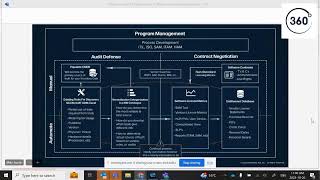
A webinar by Mike Austin (Metrics Data360) on strategies to improve visibility for software license management. Covers challenges organizations face—complex licensing models, migration to cloud/SaaS, data collection and normalization, discovery across many inventory sources, maturity levels for SAM, and goals like cost optimization, audit defense, and contract negotiation.
Chapters
Hey, thanks for joining us this morning or afternoon, depending on whereabouts in the world you are today. Metrics Data360 is proud to present our webinar on data driven software, license Management. We're going to talk about strategies for enhancing visibility into data and how you can use that from a license management perspective before I get started, unfortunately for those of you that are tuning in on YouTube or LinkedIn, you won't be able to ask questions. But anybody that's in the teams meeting, if you want to ask any questions, please feel free to add those questions either into the chat or into the Q and A section of teams and I'll try and answer those as we go. I will leave a couple of minutes or a few minutes at the end to answer, answer a few questions as well. And so before we get started, I wanted to talk about why did this, why does this matter? Right? And in conversations with a lot of companies, you know, regardless of size, you know, anybody from a few hundred employees all the way up to the largest companies in the world, they're struggling with these sorts of things, right? They're struggling with how complex licensing models are, what it looks like when you move from, when you move from the on premise to cloud models, how does SaaS work, what does public cloud strategies work, what does BYOL work? And you know, the vendors prey on this complexity for a lot of reasons that kind of fall into that third button or bullet there around risk mitigation. Right? So, you know, we want to be compliant. How do we mitigate that risk? And you know, some other things. But the vendors like it because it makes it so that you either overbuy or that they can come in and audit you in the future and, you know, capture revenue through that process. Right. Obviously, cost optimization is on everybody's mind nowadays. I mean, we're having so many conversations with organizations. If you look at all the software publishers, I think IBM just announced more price increases on some Red hat products today. But you look across the board, all the software publishers are, are raising prices without really raising value, but they're raising prices. And so cost optimization becomes really, really an important conversation. People are starting on the FinOps journey. We won't get into FinOps. I think we're going to run a series actually on finops here in the coming weeks. But everybody's starting down that journey. And the biggest thing in finops, or one of the biggest things is to look at efficient resource allocation. So how do we get data to determin? You know, are we buying the right size? Are we putting those. Are we, you know, scaling them and auto provisioning and all that great stuff appropriately. We already talked about vendor audits. But, you know, one of the big things that people are trying to do is really get value realization. And value realization comes through improved decision making. So having data to make better decisions on software licensing, it comes from having the visibility to be able to organize and do things differently to purchasing the right licenses, right down to, you know, not falling prey and victim to the bundles, the bundles that people or the software vendors want you to subscribe to. Sorry. So, you know, we always ask, you know, when we set up these webinars, what are the types of things that you have questions on? And I wanted to, I wanted to put this up today because it falls back into what, you know, we're seeing. But it also, you know, I brought this up because I want you to understand that everybody is probably experiencing the same things as you or you're not alone in some of the things that you're experiencing. So I'm going to try and answer these questions as we go. But you'll see things around like collection of data, how do I collect data? How do I make sure I have a single source of truth on that data? How do I bring multiple data sources together to get pictures of what's being used out there? And we're going to talk about that, right? They're going to talk, they want to talk about things around like what technologies to use, you know, how do I reallocate licenses so that I can, you know, more effectively use those or harvest them. Right. So if they're not in use anymore, what's that process look like? Right. You know, a big one. Just understanding what is needed. Right. I talk all the time about the amount of data that's required. And I just was working on a smaller audit for an organization. It was less than 2,000 users. And the amount of data that the vendor sent back, I believe there were 400,000 rows of data, 400,000 rows of data to create a license position. I mean, it becomes unwieldy in some ways. Right. Obviously there's the cost thing. The value of your reseller is one that we get asked all the time. Some smaller organizations are sold by the resellers that they provide these services and then when they contract with them to provide the services, they find out that it's not what we expected. What's the motivation of the resellers understanding process? So governance is a big thing. How do we track licenses? And I like this complex versus simple Right. Because some licenses are quite simple. If I'm licensing say a desktop product, it might be quite simple. But when I get into data center products and taking those into cloud, it gets very, very complex. Variety of entitlements. We are going to talk about this today. What that really means is I could have one product that I have eight or nine different entitlements, types of entitlements for some metrics, versions, additions, you know, you name it, right? So there's all kinds of different things that we can, we should be there, can do there, right? How do I, how do I handle true UPS and compliance? You know we have a large organization that we work with that every year for their Microsoft True up. They would start the process anywhere from you know, 10 to 12 weeks before their true update. Strike up a team that consisted of about 10 people and they would run that as a project to do their true up. That's an expensive process to run and inefficient. How do I make that more efficient? Not being able to track installations on PCs. So back into that data visibility. I love the not sure, not sure what because where do you start with this stuff Again if you look here you can see the themes, right? So managing multiple licenses and keeping track of the ever changing rules, right. I tell people all the time Microsoft makes more than 400 licensing changes a year on average. Some of the minor, some of the major. Right. How do you keep up with that? Right. Time and resources, that's a big thing. Like when we talk to people about putting in SAM programs and doing software asset management, how much resource do they have, how much they budgeted for it? Right? And here you're just talking about how to make an accurate lp, right? How do you automate that? How do you make that better? We're going to talk about, I'm going to talk about that and then you know, the manual processes for that, provisioning, reassignment and removal of licensed software and then just getting visibility into it. So I'm going to try and answer, you know, or go through and touch on all of these concepts and actually going to do it in one slide today. This is the one slide webinar today. But I've tried to put this into a process and I'm going to walk through this process with you that starts to talk about how to get better visibility into your data around things like deployments, around entitlements, around contracts and what sort of the high level program would look like as I'm building, building this out. Okay, so here is Sorry, I should introduce myself. I'm Mike Austin. I'm the CEO and founder of Metrics Data360. I worked at Microsoft in licensing for about 10 years. I have known to many in the industry as an authority on licensing and things around software asset management and things like that. You know, I've helped contract negotiate over $2 billion in contracts. And my passion really is helping organizations like those of you on the webinar beat the Goliaths that are the software vendors. You know, I say all the time at their own game. And it is a game, right? The whole negotiation process, understanding what you needed is a game. And I'm very passionate about helping organizations win that game. You know, one of the things that I say to organizations all the time is money in your bank account is better than Money in Microsoft's, IBM's or Oracle's or SAP's or Salesforce forces bank account. And we have to find ways to stop wasting money and giving those guys money that we don't need. So this is the slide that we're going to talk about today. Okay, I am going to start in sort of the left and work my way, the bottom left corner and then work my way to the right and then back up and around like, you know, in a circle or clock, counterclockwise I guess that is. And I'm going to talk about what I believe to be automated processes, what I believe to be manual processes. And you'll see here on the left I've got things that talk about kind of audit, defense and things on the right that talk about contract negotiations. And when you put that all together, this is what I believe software asset management to be, right. There's other components of software asset management, but this is what I believe the components to be and this is what I believe the data to be. And this is when we help organizations and go in. So that organization I was talking about that would strike up true up teams of 10, 12 people for 10 weeks, why were they able to do it in less than two weeks with three people this year? And why did their true ups that they were spending millions of dollars go down to only a couple hundred thousand dollars a year? We're going to talk about that today. Cause I think that's what people want to get right. And so everything really starts in this bottom left hand corner, right? And it starts with discovery. Now I put existing tools because I'm going to walk you through and try to walk through as well the sort of process of, you know, going from level one to level four in software asset management. Right. And level four is if you can do everything that I'm about to talk about in this slide today, that's kind of level four. Level one is where you're in complete chaos. You don't have any centralized systems. You're probably doing things in a lot of spreadsheets. You may be even just kind of guesstimating on things. Most organizations probably sit in level two, where there are some systems, things aren't centralized. They're getting data from multiple sources. You know, that sort of thing right up to this becomes more or less a fully automated thing, which I think is utopia that I don't think exists and I think would be super expensive even if it did exist. Okay, so down here in the bottom left hand corner, we're going to talk about discovery, right? And so discovery comes from all kinds of different sources. And what I mean by discovery is in the world of software licensing, I need to be able to go out and find information and data. And that information and data is around devices, so PCs, laptops, maybe mobile devices. It could even include going into like Internet of things devices, those sorts of things. If we're really going deep into asset management, but for the most part, people are going to start with kind of the desktops and laptops, maybe mobile devices and servers. I'm not going to get into the complexities of physical and virtual right now. We're just going to start with I need to be able to go out and discover those things. In other words, I want to know that it's on my network, that it's active, and I want to be able to query it, to pull data when it comes to hardware side of things. And even though we're talking about software asset management, hardware asset management plays a huge piece in this as well. I need to be able to figure out things like processors and core counts, maybe, you know, the amount of ram, hard drives, size, all the sorts of things that have licensing metrics that do that are back to the hardware. I need to be able to discover. Okay, I also need to be able to discover software information, right? So titles and versions and publishers, those sorts of things. On the discovery side, I would also put things that maybe aren't what you would consider inventory. If you think of licenses that are based on user counts, I need to be able to discover users. How do I do that? If you think about license metrics that are based on, say, API calls, I need to know how to discover how many API calls are occurring so they can see how we're performing against our contract. Now, some of that is simpler. Things like if it's an API call, maybe there's a report that I can get from the publisher or the vendor that I can monitor. And then maybe I want to go and look and see what's making API calls and how those are occurring to see if there's things that we can do to decrease them. But some of them might be that simple. Others are very, very complicated to get at. Okay. And when I do that discovery, right, I need to know where it's coming from. And most organizations are not able to do discovery through a single source. Even for their desktops and servers. They're not able to do discovery through a single source. They're pulling through multiple sources, right? So I might have sccm, I might have the IBM IOMT tool. I might have. I might be pulling discovery information through my antivirus software and their consoles and things like that. Discovery doesn't just happen in one source. In fact, one of our clients that we perform a data discovery process for, we pull data from over 151 sources and pull those together for them. Because the idea goal is to put that into some form of centralized database or have the ability to centralize it. I say the ability to centralize it because maybe it doesn't necessarily need to be in a centralized database, could be in a few different systems. But as long as I have the ability to query and pull that stuff together, that's a step towards a move up on the maturity model. Now, a lot of organizations are trying to use their CMDB as that centralized data source. ServiceNow, for instance, has become much more popular in the world. Organizations are trying to use that CMDB as their source of data. So they're trying to pull their inventory and push that into their cmdb. Now, a lot of the times they're using it for ITSM and doing CIs and things like that. But the data that you need from a software asset management perspective could all be in there. And I could tap that as a source and I could use that as my centralized source, okay? And that's what a lot of organizations try to do. The challenge is, you know, if you just think about some of the things that I just said, I'm getting data from multiple tools, I'm getting data from different types of data, user data, API calls, storage, all that sort of stuff. From a licensing metric perspective, how do we understand what the best source of that data is? And this is where we start to move a little bit to the right in this Normalization and categorization. Okay, of software, I say into a software catalog. I'll speak to that a little bit more here in a couple seconds. But what I'm really saying is what you're trying to do is get those data sources into a centralized place. Right now one of the first things you need to do is go out and this becomes complicated. But we're going to make, we're going to talk about this in a simple, simple world today. Okay, let's just assume I'm able to do everything with SCCM and I'm putting that SCCM data into ServiceNow, into my CMDB. The first thing that you want to be able to do is look at your data quality or discovery quality is probably the best way to put it, which is I know something's active on the network. How do I do that? Come to that in a second and I have the ability to inventory and query it. And if we think about a Venn diagram, if I'm in level one, two, three or four, again just think of this as maturity levels, right? Level one I probably got less than 60%. Level two I might be going starting to get to 80%. Level three, I've got 90 to 95% in the middle of that Venn diagram. In other words, we know it's out there and we're able to inventory it. Okay, Now I'm not talking about what we're inventory at this point in time. I'm just saying in this scenario, we know it's out there. SCCM has it in it in the middle. 95% of what we know is out there is in SCCM. Okay, that's the simple scenario. Now where does it start with the we know it's out there. I always start with Active Directory because that's typically where most people keep their assets. Now as again we can add complexity. Non Windows devices might be in an LDAP and you might have mainframes and Internet of. You see, I can continue expanding out the complexity of this, but I want to keep this simple because the concept needs to be simple and then we need to add the complexity into it. So we're just going to be a pure window shop today. So SCCM is installed on everything. I can go out, I'm going to look at Active Directory. I look at what I believe to be active on the network. Now that can be a challenge in amongst itself, right? But I can go out and I can look and I can go and find. 80 says that I have 10,000 devices, I've got inventory on 97,000 of them or they're in SCCM. I'm 97%. I meet that 95% threshold. Okay. That's where you want to get to 90 to 95%. You're never going to get to 100%. These are dynamic environments and things like that. They're always changing. You're going to have stale data. There's all kinds of challenges there, but you want to be in that 90 to 95% range. Okay, now I'm going to go back to our customer that had 10 weeks of doing a true up, right? One of their biggest problems, why they had to strike up teams to do their true up, and why most of you on this call have to strike up teams to do true up, is your data quality right there is below that 90 to 95%. And you spend a lot of time.
More from Mike



Microsoft Add-Ons Hidden Costs Explained | EA Renewal Risk & License Optimization Expertise Sharing

SaaS Sprawl Explained: How Decentralized Software Buying Destroys Negotiation Leverage.

Microsoft EA Renewal Strategy: Mike Austin Explains How the War Room Method Works.





