Demystifying SQL Server Licensing
30 Sept 2024 · 1 min
0:38
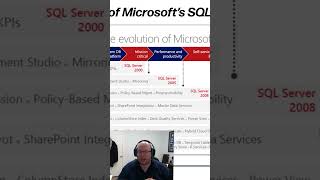
A short YouTube talk by Mike Austin about SQL Server licensing and the product's evolution. In this excerpt he traces SQL Server from a traditional departmental database toward broader functionality and notes Microsoft’s shift from a ~3–4 year release cycle to a roughly two-year cadence, citing SQL Server 2012, 2014, 2016, 2017 and 2019 as examples.
Questions this video answers
SQL Server 2012, 2014, 2016, 2017, and 2019.
Approximately a two-year release period (down from a three-to-four-year cycle).
Chapters
More from Mike



youtube.com
Microsoft Add-Ons Hidden Costs Explained | EA Renewal Risk & License Optimization Expertise Sharing
7mo ago

youtube.com
SaaS Sprawl Explained: How Decentralized Software Buying Destroys Negotiation Leverage.
7mo ago

youtube.com
Microsoft EA Renewal Strategy: Mike Austin Explains How the War Room Method Works.
7mo ago





See all content
