Optimize Your Cloud Spending: Insights and Strategies
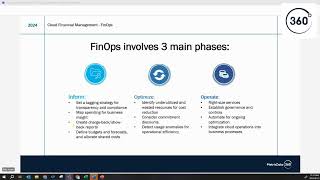
Mike Austin walks through FinOps, a three-stage framework to cut cloud costs: Inform, Optimize, Operate. He identifies common waste like oversized compute and over-provisioned storage, explains how to use tagging and anomaly detection to find it, and shows Lucidity, a tool that auto-scales storage to reduce spend.
Chapters
Okay, good morning everyone. Just give me a thumbs up in the chat. Sorry, I just want to make sure, because we're streaming to Twitter or to LinkedIn. Sorry. And I know there's a few people over there. We're good to go. Perfect. Sorry. Sorry about that. Good morning everybody. Welcome to metric data 360's optimize your cloud spending insights and strategies webinar. I'm Mike Austin, the CEO and founder of Metrix Data. For those of you who may not know me, I worked in licensing at Microsoft for about 10 years and I've been helping organizations for, I guess Almost the last 15 or 16 years now on license and cost optimization. So I'm an expert in software, asset management and finops. Have a very strong passion about using data to provide business insights and really heavily focused on license and cost optimization. So when we, when we set up these webinars, we usually ask customers, you know, why, why they want to join. And there are a number of reasons and things that they want to hear about today. But for those of you that are investing in the cloud, it's no surprise that cloud costs are increasing year over year. Spending is increasing and that comes from a number of things. One is just more. Putting more workloads. Can't think of the words I want to use today. Putting more workloads in the cloud. But there are also other reasons. There's price increases coming from the cloud providers. There's been currency adjustments like over the last 12, 18 months, Microsoft has had major currency adjustments around the world. So depending on what data centers your instances are in, there could be adjustments based on currency. We hear a lot about how you get invoiced for your cloud. Your cloud spend is very confusing. You know, I'm probably being generous saying there's thousands of rows of data, it doesn't take too much for, you know, the invoices and the data that you receive just around pricing and what you're paying and what you're buying on cloud to approach a million rows of data and you know, even just trying to manage some of that inside of Excel spreadsheets is very, very difficult. Obviously people want to optimize, you know, not just cost, but resources. There's a growing trend in the industry around finops financial operations. You know, people want to learn what that is and how does that relate to cost, cost optimization. And then, you know, others talk about just lack of visibility and how they can use tools to get visibility. So I'm going to try and touch on all of these today. If you do have any questions and you're on the teams meeting, please feel free to, you know, drop it in the chat. I'll try and watch those and answer those as we go. For those of you, unfortunately on LinkedIn, I don't have any way to see if you're asking questions, but you know, please drop a question in the notes or hit me up on LinkedIn and I'll try and answer those questions after, after the webinar today. So this is a little bit old, but I put this in here because it hasn't changed much, right? Like, if you look at the top 10 cloud vendors, they're Microsoft, Amazon, IBM, Salesforce, and this has probably changed a fair bit in terms of the dollar amounts, the revenues in billions. I think Microsoft is up over 30 billion now. Azure is approaching 30 billion, but suffice it to say it's big and even players that traditionally when the cloud first came out, it was kind of like Salesforce was the player. But you can kind of see everybody's getting into that now. Even Citrix has renamed themselves Cloud, the cloud company. Right? So cloud is a big thing. It's a big revenue generator for all of these companies. But if you look at the market trends and the growth, right? This is what I think is really important to look at because you have different types of cloud, right? You have business process cloud, you have applications or paas. You have your SaaS environment, which are your application services. So Salesforce is probably the, the best well known example there. But Office 365 from Microsoft fits into that category as well. They have infrastructure as a service and you can see how quickly these are growing. If you look here at the very bottom, just from 2017 to 2021, infrastructure as a service almost tripled the SaaS market, which has been around a little bit longer than the infrastructure and platform as a service. Even that had a double in that timeframe. And those are huge growth rates. In fact, I just read Microsoft's annual report for their fiscal year that just ended in July of June 30th. July 1st, their CFO came out and said that Azure was growing at 27%. It was down 2% from. Sorry, it was growing at 21%, down from 23%. But she's forecasting, the CFO of Microsoft is forecasting Azure to grow at 29% in their fiscal year 2025, which just started July 1st. Right. So they're still expecting massive growth here. Right? So, you know, we started with a lot of people, like, why do, how do we do cost optimization? Understand things. And I always believe that understanding kind of the root cause or at least understanding where the areas that you can be looking for is important to start on that journey. So before we even get into anything else, let's talk about what ends up happening in the cloud. I kind of like to look at it like this. You have what you're paying for, you have what you deployed and you have what you need. And what you're really trying to get to is that intersection, the three, if I can get to that, that is the utopia where my resources and my cost are optimized. Now, cost may not quite be optimized there. And the reason for that is if, you know, if you're just paying as pay as you go and you haven't negotiated a deal, maybe you get a little bit better unit economics. But for the most part you're trying to get into this sweet spot here. Right? But the reality is most people are in this spot where, you know, they've paid for, you know, they paid deployed more than what they need. Right. And so there's a lot of talk about oversized resources. And, and I can give you some examples. Just take cpu. A lot of the times you can look and you can see that the CPU is not being used nearly as much as it needs to be. A lot of the times what happened was engineers took what they were using on premise and just put that in the cloud. Not accounting for the elastic nature of the cloud, where you can expand and scale up, scale down as required. So there's all kinds of reasons why this happened, but this is where most people are. When you look at most bills, there's a lot of oversized resources. Another good example there is storage. Because what ends up happening with storage is I might need, say 10 terabytes of storage, but because I don't want outages, we have peak usage and stuff like that, I'm going to provision two to four times that. So I'm going to pay, you know, I'm going to provision 20 to 40 terabytes of storage and if I provision it, I pay for it, right? So it's kind of in this category. I don't need it, but I've deployed it and I got to pay for it. I'm going to talk a little bit about billing errors, but a lot of what you paid for, there's large billing errors. You should not trust that your Azure AWS or your GCP bill is accurate. There's a lot of billing errors there. When we're looking at if you've deployed stuff, you're paying for it, but if you deployed it and you're not using it, you got to go and look for idle or zombie resources. So idle resources are ones that are sitting there, not really. They're turned on, not really being used. Zombie resources is a finops term for those of you that don't know what that means. It basically is a resource where it's out there but not being used. So storage is a great example. It had a vm, it had storage. We shut the VM down, but the storage is still sitting there. It's not attached to anything, but we're paying for it. You really want to be able to go look for these things. So kind of what you're always trying to do as a cloud cost or finops person is balance this. We're trying to balance what we need with what we got deployed and what we paid for, and working with engineers and all the business itself to try and understand this stuff. I'm going to start a little bit with what is finops at a high. I'm just going to touch on this at a high level. But basically FinOps is a framework that helps you maximize the value of your cloud deployments. Now, I actually believe when you go through FinOps and you study FinOps and you read through FinOps, a lot of FinOps is based around your public cloud infrastructure. The AWS is, the Azures, the Googles. But I believe that the concepts of it actually transition down into SaaS, which I don't think a lot of FinOps practitioners are thinking there. But it definitely, you know, drives down into like you do the same sort of thing with Salesforce, with, you know, M365, all of those sorts of things. So it really is three stages or three phases, I guess, or frameworks inform, optimize and operate. And I'm going to go through each of those quickly here. So basically for inform, what you want to be able to do is get visibility into what's going on out there, right? And so you're going to hear a lot about tagging in the cloud world. So tagging so that we can slice and dice our data in ways that are meaningful to our business. So, you know, that could mean, can I see what country is using that, what business unit, what engineer, what product? There's all kinds of different tagging strategies, but it's basically setting out the mappings so that we can see where spend is, where things are being spent to get business insight on that. And the ultimate goal typically Starts with trying to create chargeback or show back reports. Right. So in other words, show if, you know, if the spend is centralized in it maybe say in the CIO's budget. Can I actually, can I actually show where that's being used so that, you know, maybe I can show this business unit how much they're paying and then get to the point where we start to charge the business units or however we decide that taxonomy should be done, built and then also starting to use that to define budget and build out forecasts for those allocated and shared costs. So inform is really about the visibility of what's being used, where it's being used, the cost and being able to break that out into meaningful units within the business, so to speak. And then you get into the. Operates, sorry, the optimized stage. And in optimize, this is where you're going to try and get rid of the waste. Right. So if I go back to my Venn diagram here, we want to optimize oversized, we want to right size those, right size those things. We want to get rid of zombie resources. It could be optimizing unit economics and negotiating prices based on volume and things like that. Because now that I've got a strong foundation in the inform stage, so to speak, I can actually forecast better and go negotiate those deals so I can commit to higher volumes. And. And then it's also around detecting anomalies in use. Right. So a good example here is we have a tool that we monitor some of our clients environments with for these sorts of things. And we had a client where we saw a spike, where we watched and we saw a spike where over the course of five days they had a fairly significant spend that popped up that wasn't there before. And so we were able to go back to them and say what's going on here? Like we see this spiking, we've got some alerts going on that are telling us that there's something wrong here. And they looked and basically an engineer over the weekend deployed something that they shouldn't have. If it had to stay down in the month, it would have probably cost, I believe it was going to cost them close to $100,000. And we were able to contain it because we were watching it and looking for those anomalies. Can't speak that but a hard time speaking today. And then once you get from there, you want to go into the operate phase. Right. And that's where you start, you know, Right. Sizing. Right. Start putting in governance and controls. It's how you Start to automate for optimization and then you're going to integrate your operations, your business practices and processes from around the business into cloud. Now these are kind of the three main phases, but as you go through them, you're going to run right and you may be a different, different stages, right? Like you may be able to right size services based on something that you're doing without really having a tagging strategy. Now it becomes better when you have a tagging strategy more powerful, but you can be anywhere in any one of these at any given sort of any given time. Okay, so again I'm not going to spend a lot of time on these next couple of slides but again if I just kind of highlight what is inform, it's to be able to provide overview of your monthly spend the categories, look for opportunities within the business, develop the tagging to give you the visibility, you know, improve tagging. Because a lot of the times tags were created and there wasn't really a lot of thought put into them, right? And you have set those tags and you know, you start to try and use them and you're not getting great information out of them. So you want to improve what you call standard tags. So standard tags, think of those as anytime we, you know, spin something up, this set of tags get applied. But you may also want to be able to create custom tags so that you can slice and dice the data even further. That may be, we may want to take, forget about all the dev and test environments, we want to take our production environment, be able to tag that so that we can see what the cost economics are of the product that we have in the cloud that we're selling to our customers so we can see if we're to hit our margins, are we selling it correctly, those sorts of things, those are what companies are actually trying to get to, right? And then ultimately get into budgeting, forecasting, doing chargeback and showbacks. Like we talked about resource efficiency, the optimized stage again is discover assets that are not optimal in their resource allocation, right. And then use the information that you have to negotiate better deals, better pricing for long term savings with the vendors and then move into the operate which is the governance and automation. So right. Sizing, doing that on demand. So maybe that is getting into the elastic nature of the the cloud, which is the ability to scale a resource as required based on the specific needs of that application or whatever it is. Right. So again, if I summarize, how do you maximize your value? Why would I want to start down a finops and why did in a webinar about cost control on the cloud. Did I choose, you know, to start with FinOps because it is your foundation, it's your framework, right? If you start just even starting to learn little things like even tagging to get some visibility, you'll be shocked at what you can find and you can get real quick wins with good data quality, right? And then that allows you to start forecasting, start understanding cost better. Start looking at optimizing storage. We're going to talk a little bit about that here. A little later. You can also look at how do you negotiate? I have Microsoft on this slide, but it could be aws, Google, whatever. It gives you the ability to empower decision makers using insights. One of our clients, for instance, has a centralized Azure team. But divisions, and they're not able to impact. They're not able to change what a division does. They can look and see and say, hey, this resource is, you know, you're buying a D12 and it could be a D4 and that could decrease your cost by 30%. You know, you can do that, but they can't control it. They can't actually go out and do that. But by having visibility into the data, understanding their resource groups and who's using what, they're able to go to the engineers and say, here's an opportunity there. Here's the data that you need to make. You need to make the decision on whether you want to do this. Because a lot of the times you can run reports in the AWS tools or Azure tools or Google tools, they all have these cost optimization tools, and it's not very deep and it doesn't provide the data. So a lot of times these guys will see and go, yeah, I see it, but I don't believe it. I don't trust it. So you want to make sure you have that data to do that. Putting in a FinOps program for the first time, you're going to probably save somewhere between 17 and 30% on your spend. I describe the cloud journey kind of like the VMware journey back in the early 2000s. When VMware came out, everybody started virtualizing. They virtualized everything. And then about four or five years in, they realized that they had all this VMware sprawl that VMs up for no reason. They didn't know why they were there. They were paying for these things. And then there was a consolidation effort that happened. I think we're in that expansion part of the cloud. Some organizations are starting to get to the consolidation piece where they're going to right size, look at all doing all these things. But you know, everybody depends on where they're at. I have one client where we went and we were able to show them like you're oversizing, you have all these things, it's costing you 30% more. You can save this if you make these changes. And this is where understanding what the business is doing becomes important. Because the response to me was, Mike, that's great. We understand that and we want to get there. But we're moving out of two data centers. And if we don't get out of those data centers, the penalties for not being out by the dates that we, that we're contractually obligated to get out are more than that, 30% savings. So we need to get out of the data centers, then we'll start down this journey, right? So that just changes the conversation, understanding that business context, right? So again to summarize, what are you looking for right before we get into, and then start getting into some optimization opportunities here and where the savings come from. But the biggest thing is visibility. My company's called metrics data 360 for a reason. When I started it, I knew it was all about data. And I don't even think, you know, cloud was probably just starting out. I think AWS was still sort of in its infancy when I started the company. But I knew it was all about data. And even we were doing software asset management work, I knew it was all about data. Right. And so visibility is important and that's all about your data. And so being able to report, being able to tag, tagging is so crucial I can't emphasize it enough. And then being able to provide that to the relevant parties to develop allocation models, chargeback, showback, all that fun stuff. Getting into forecasting, then starting to optimize, then starting around the governance journey. And this is sort of the journey that you want to go through. Like I said, you can start with optimization. There's low hanging fruit in everybody's environment, right? I can connect our slim360 tool for Azure into anybody's environment and I can easily find anywhere between 5 and 20% in low hanging fruit that they can optimize and they can go, go and do that. But if they don't have governance around stakeholder expectations, giving them the data that they need to make those decisions, you know, they just, they won't even, they won't even actually, oh, go after those opportunities. Say, jeez, brain fog today. Okay, so let's get into some, you know, Cloud negotiation and pricing. Because this is the first, first one of the first things that people usually start to think of, right? When they get into cloud. They're like, I need to go and negotiate a deal with Microsoft on a Mac for Azure which is, you know, going to commit to a volume of licenses. I'm going to negotiate AWS deal, Google deal. I'm going to go and tell them what my three year spend is and they're going to give me some form of discount. That's where most people start. So let's start there. I think that, you know, that is where you, you know, where naturally you want to start because this is where cloud becomes different, right? That mentality is almost like the mentality of purchasing software, right? And yes, you want to do that before you get to massive spends in the cloud. You know, there's going to be a point when you get there, but sometimes it's not about trying to figure out our forecast and how much the volume to, to commit to. Because one of the first mistakes we see people make is, is an inaccurate estimation of spend, right? And this happens in two ways. They either overestimate or underestimate and both are equally as dangerous, right? Because if I overestimate, let's say I go to Google and say I'm going to commit to 30 million over the next three years and you know, I'm only getting to 20, what happens with that 10 million? Google and Microsoft and all these guys, they're not dumb businesses. You're committed to spend that money, so they're just going to take your money. Now sometimes they'll give you an extra year. You can negotiate, but that's dangerous, right? What if they came and said no, you just gave us the 10 million thanks for over, over forecasting because you're contractually obligated now if you underestimate, let's say in this case, same deal, I forecast 30 million over three years, but we end up, you know, run rating to 60 million. Did I leave money on the table, right? Did I, was there more discount if I had to negotiate a 60 versus a $30 million deal? Theoretically we're going to say yes, but there's all kinds of other things in there as well, right? And so it can happen both ways and then what ends up happening? Especially when we overestimate, when we overestimate, like I have a client where we're like, you can optimize like, hey, we're not even going to hit our Mac. Why would we reduce, right? So now they got unused resources, they're wasting money when they get even, get through that, like if they don't even put a plan in place to correct that, once they kind of get out of the mess that they're in, it's just going to run rate at that moving forward, right? So this is probably the hardest part. Everybody's trying to figure out how do we forecast? And I can tell you 90% of it is this, right? That's how people are forecasting and it's very dangerous. The other thing is, I just touched on this a little bit already is they don't understand the unique purchase, the purchasing nature of the cloud. We're caught in that mentality still of hardware and software purchases. But the cloud is not the same, right? It's not like going out and buying a O365 service for Microsoft. There's not one size fit all bundling that happens inside the, inside the cloud. It's different for everybody, right? So how do we manage that? How do we manage Apex versus capex, all of those sorts of things that end up happening, right? It's not like when I can go, you know, estimating hardware is easy. Like when we had a project, if we had to do, let's say an SAP build out, we would go, we would build our architecture, we would know how many servers, how much storage, all that we need and we would go out to our vendors and say I need the best price on this, right? And we could go to Dell and HP and you know, whoever and go and put them up against each other so that we could get a better price. It's not the way the cloud works, right. And so we're still stuck in that sort of way of thinking and it causes all kinds of problems, right. The other thing that we see is overlooking the non cloud related cost, right? So you know, a lot of the times people understand that there's a migration cost. A lot of the times the cloud providers will provide funding to sort of offset some of that. But a lot of the times people would be like, I estimated it was a million dollars, it ended up being three. Right? So that's still, they still struggle with understanding it, understanding the nuances of it, all the architectural changes that are required. A big one is a lot of the times they do not have staff that are, you know, call it cloud illiterate. Right? They're used to managing on premise stuff. You know, I heard somebody say storage is storage, storage is storage. But it's different in the cloud than it is on premise. And one of the biggest differences is you don't control it in the cloud, you can control it on premise. Right. And what I mean by that is I don't know if that's emc storage in there or whatever it is. I'm just looking at the amount that I'm buying, right. And I may be limited to what I can do, right. I might have to have, you know, spinning disk, you know, very expensive blobular storage because of what I'm buying. But I had the ability to just have spinning disk on premise, right. So a lot of the times they just don't, you know, there's nuances that aren't thought through. There's also differences in support. Right? What is the responsibility of the cloud provider versus what is your problem? What are, what are your problems or your responsibilities, you know, when it comes to supporting cloud, cloud deployments? And then the other thing is too is, you know, when I bought hardware and software and again, this goes back to that kind of understanding, that unique nature of the cloud. When I bought hardware and software, I bought it, I had, you know, hardware, I own it, I can, you know, you know, kind of figure out I'm going to run it for five years or whatever it is, I know what it is. Even software, you know, I got, I'm in a three year contract or a five year contract, I can, I can lock the terms in the cloud. It's dynamic pricing, right? So if you look at just even Azure, within the last 18 months, Microsoft has had significant price increases on their cloud in different countries around the world due to currency adjustments. Right. And there's little that you can do. There are some things contractually you're able to do, but there's also, there's not a lot you can do there. They can just come and say, I'm going to change the price, right. They're constantly changing the VM types and names and they're updating them, new processors and things like that. Those change prices sometimes for the better, sometimes for the worse. You have to understand all of these things then understanding billing. I have Azure in here again, but it's the same with aws. Do you understand the Azure cost management and billing tools? Can you decipher the different types of reports? Like what is a cost analysis? Can you get by cost, by service? Can you review the invoices? Can you look at the unit pricing? Right. And do you have a process where you're reviewing that on a regular basis? Right. So I think that's kind of one of the key things. And like, do you reconcile that. Right. I know for us, I think our Azure spend is a little over $100,000 a year for what we do in Azure. And I look at the bills and I'm like, man, this stuff is Greek to me in some ways, right? Like the invoices that we get, they don't match up with what we see in the portal. Like, it's all over the case. And then when you do find, like, are you looking at and reconciling it? And when you do find discrepancies, are you actually escalating that to Microsoft or AWS or Google? And I'm going to loop back on this here right now. My next slide, according to finops. Org, in 2023, there was a 6.7% of the total spend in cloud was error. So in other words, you think about that 6.7% of. I can't remember what it was on the slides. Hundreds of billions of dollars is just incorrect billing errors. Right? And that's happening in a couple of ways. One is the billing rate does not match the contract. So we are contractually obligated to get a 10% discount. I can tell you, every time I analyze an Azure bill rate, Nobody gets their 10% discount correctly. This always has errors. And I would think it might even be higher than 6.7. And then the other thing is, like, we have actually seen instances where the pay as the go rates are better than the portal rates that a client's paying for. Right? And so that's a big issue. Like, are you looking at that as part of what you're doing? Right. And so there was somebody that when they were signing up, said, like, I don't know how to even go about getting at this stuff. And the thing is, like, you have to have tools to do this. And the free tools that are given to you by Microsoft and AWS and Google are not sufficient for this. And there's other tools in the market that say they do these sorts of things and they sort of do these sorts of things, but they don't really do these sorts of things. Right. And the reason for that is they're developed for other purposes, say, like DevOps. Right. And they're not developed for cost optimization in the cloud. Right. So you really want to be careful. Not all cloud, not all tools are created equal. Even when you see someone that looks great, you actually, you know, it's just polling, like, we see enough. We evaluate a ton of tools, always looking to see what's good. Our clients have them. We support our clients utilizing their Tools, a lot of them that say they do this sort of stuff are literally just pulling the recommendations out of the Azure cost optimization tool and through the APIs. They're not actually even building their own logic or anything like that to take it further. And I always say to people like, what incentive does Microsoft really have to help you reduce your bill? Like, let that sit in for a few minutes. Because I think a lot of times people think they, you know, that tool can really help them. And again, but that much. So again, what you're looking for in tools is you want to get that full picture, right? Can we create tags? Can it pull in the Azure tags? Can I pull in the AWS tags? Can I create other smart tags on top of that to get better picture? Can it help me forecast what my future spend is going to look like from a monthly and a yearly basis? One of the biggest things, people have a hard time, they said, like Mike, I have no visibility into my Mac with that Microsoft, my Azure commitment, the tool that we have, we actually build a module just for that. So people can go in and go and see, are we trending to hit it, exceed it, not hit it, Right? Because what can I do with that? If I know that I'm looking, I'm trending, like I'm going to go way over what we committed. Maybe I want to go back and renegotiate. If I'm way under, maybe I want to be looking at, okay, we have a multi cloud, maybe we need to be looking at, if we got to bring some into the cloud, does it really go to AWS or do we bring it over to Microsoft or vice versa so that we hit our commitment, Right? And then you want to see the logs, can we look at the logs to see what's going on from an audience and compliance and troubleshooting perspective? Right? And then I want to optimize for efficiency. So can it identify wasted resources? Can it right size, Can I track the performance, all of that sort of stuff and then can I unlock cloud savings? Right? So in other words, can I, is it going to enable me to make good decisions on things like reserved instances versus pay as you go? Is it going to help me eliminate those zombie benefits? Am I able in a Microsoft world to utilize hybrid benefits, not to pay for licenses? If I'm in other clouds and it's Microsoft, can I do byol even in Microsoft, should I be looking at Red Hat byol? Right? There's all kinds of different scenarios here. Again, I'm not going to go into the details on that stuff today. But I want to be able to know that can it help me provision UAT dev test services versus production? Right. Because, you know, most of the time a dev instance is cheaper than a production instance. In these public clouds, we see so many dev and test instances being paid for as production subscriptions. So can you identify that? Right, so those are a couple of. That's kind of the high level of what we're trying to do. And this is what finops is. This is about how you get into cost optimization. Now, I'm going to drive into a couple of very specific examples and areas of where you can save money, because I think that was one of the promises that we made for this webinar. One of the first thing I want to talk about is storage optimization in the cloud through a technology called lucidity that we've partnered with. What lucidity storage optimization is, there's a lot of words on this slide and I'm going to try and explain this in a simple manner. It is basically an auto scaler for storage. It's the only one that I've seen in the industry that does this. And basically what it does is it sits on. It's got a little agent that sits on your VMs and looks at the storage and scales it up and scales it down as required. Right. So at the beginning, I talked about where one of the waste areas is in storage, right. And we're seeing anywhere from the ability to reduce storage 50 to 80%. Sometimes, you know, probably on the low end about 20 or 30%, but we've seen it as high as 80% reduction in storage. Right. And I know this, this, this doesn't show up great on this slide here. But I'm going to try and explain this. Here is. You've got a graph that says this, you know, up and down like this. And this is our store is, is the actual use. And then a line that goes like this that shows the storage that's been provisioned. Right. So what ends up happening is in here. I don't know if you can see that. Let me. Is there a highlighter? Put that on. I can't find it. I used to think there used to be a little highlighter thing, but I can't seem to find it. Oh, here it is. Highlighter. Okay, so over here you can see this is how the storage is being used like this. And this is how they're provisioning storage like this. Right. And what happens is you're going to provision the storage so that you don't run out of storage. Because if you run out of storage, that's downtime, right? So you're always over provisioning. So what ends up happening is the gray area, the blue area between what you're using and what you're paying for is waste. You're paying for that. As soon as I provision it, I pay for that, right? So all that area in there is waste. And especially look here where we have a spike probably at the end of the quarter and then it goes way down. So now I have all of this as waste that I'm paying. So basically what lucidity does is instead of us provisioning storage, it auto provisions. And this works for aws, Azure and Google, right? So basically here's my storage needs up, down, here's my lucidity AI auto scaler making sure that I don't have that waste. So basically what I do is I say I want to have about a 20% overhead or I can set it to like I want to have 100 gigabytes of overhead. Whatever it is, wherever we are comfortable, we set that. And basically as our storage requirements go up and down, lucidity takes it up and down. What that means is all of this in here, for instance, this period in here where I'm overpaying by 80% because I got eight times as much storage provision that I'm using I'm not paying for because I've gotten rid of it through this auto scaling technology. Now we call it a no ops tool. And the reason is typically what ends up happening is when we're looking at storage, what happens is you've got DevOps and then you got performance, you got tools monitoring performance, you got a DevOps tool, you got tools monitoring the performance as well as the availability of the cloud, right? So what ends up happening is if I want to provision storage, I've got four touch points, I got my availability, I got my monitor, I got my provision performance and I've got my DevOps tool that I have to go in and actually make changes in to manage the disk. And if I want to shrink disk, right? So if I want to shrink, if I provision here new, I only need it and wanted to shrink it, I have to have downtime of at least four hours just to per terabyte to shrink. So most companies aren't going to do that, right? They're not going to turn down production especially to do that, right? And then I've got latency issues and things like that. Now if I over provisioning I have a Downtime, because I. Sorry. If I run out of storage, I get downtime as well. Right. So lucidity gets rid of that. I don't have to have all these manual points because lucidity is taking care of it. It's seamlessly shrinking it. With no downtime, it expands in under 60 seconds or under 30 seconds. Sorry. And it's dynamic auto scaling, so there's no gap there. Right. And it actually improves iops and a few other things for those of you that want to get into some of the technical stuff. Right. So what this really means is this was a fairly large customer, that this should be an M here, not a B. But anyways, they were spending 1.5 million per year on storage and we went in and did an analysis with them and we're able to actually reduce it by 60% to somewhere between 750 and a billion and a million dollars. Right. And in order for them to have done that, because of all of this overhead that's here, they were able to take what would have been 100 days of FTE effort and just do that in two hours. Now they had mitigation of risk every quarter for downtime. You know, you can imagine what that costs. Revenue loss. You know, think about it. It's our booking site for, you know, I don't know, we're an airline, it's our booking site. It goes down because we run out of storage. Like that is something that you do not want. And then, you know, on the sort of plus side is it actually reduces the amount of CO2. So if anybody's got some environmental or green goals or sustainability tools, this tool helps. Because I'm not over provisioning disk, which is one of the leading causes of CO2 inside of the data centers. So we offer, for those of you that may be interested, just reach out. Like I said, I'm just doing a quick touch on this stuff, but we are seeing anywhere from 20 to 80% reduction here. It works very seamlessly. There's some really good reference customers. American Airlines is one of the, one of the ones, one of the top ones that are using it. And you know, we have a process that we go through to help people understand it. We call it a. We start with what we call a storage audit, which basically we're going to go out and we're going to take a look at what disk you have, how much you're using, how much is over provisioned and come back and basically say, hey, here's what you're paying for storage. Here's how much we can impact, because it's not all storage like in Microsoft. It's only managed disk. Here's how much you're paying, here's how much we can impact. This would be what the ROI is, including the cost of the technology. Then if you're interested in that, because the report comes back and says, hey, this makes sense to me, then we can move to a POV where we deploy it on a handful, two to three VMs in the dev environment, show you how it gets onboarded. Let's show it in action. Allow your dev teams or your engineering teams to basically go through all the scenarios. What if it fails? What if this, all those sorts of things to show that it works, show that it can be offboarded, and then if that makes sense, then move it into production and start saving money. The thing I really love about this technology is even in this pov, you're going to save money. Because as soon as we start reducing that disk on those two to three VMs, you're saving money, right? But you put it in production, the minute it goes live, you know, give it about five minutes later, your storage is reduced and you're saving money. You're not paying for it. Like, it's got basically, for all intents and purposes, an instant roi. And this is just an example, right? So here's an example of a customer that had 30% disk utilization before we went in. They're now at 75%. Not a. You know, this works in smaller customers as well as the bigger ones. They were 50k a month. We reduced it to 25k a month, which basically meant that there's 600,000 a year they were spending, went to 300,000. And if you extrapolate that out, the thing is like, if you look at that out over five years, what's going to happen is storage is going to continue to grow. And so this 300k in savings actually extrapolated out over 5 years, was close to a million dollars, sorry, almost a million point eight, 1.8 million, right? So it has a great ROI. And that's an example of what you can do with data, right? Like, if I think about it, if you think through this storyteller, give us data to make the decisions to show the engineers, we go and test it, show them again that it works, and then you move it forward. Okay, I got about 15 minutes left. I'm going to pull up another tool that we use and just show you. This one, specifically built for Azure aws, is coming before the end of the year. What I'm showing you for Azure we're going to be able to do with AWS here in a few months. Basically this tool connects to the API for azure, works for M365 as well. We're not going to talk about that one today, but when I come in, basically what happens is I have a dashboard. You're going to be able to see some things. Now these tiles are customizable, you can edit it. I think there's about eight, 80 or 90 different tiles here. So you create different views for different teams, you know, whatever you need to see here. But I can come in and start to see things like I can see what our spend to date was, I can see what our previous month was, what our month to date is what we're forecasting for the month. And so you know, this may be a problem. We're going up about, you know, up 0.7 K. Is that a problem? Might not be. Maybe it was a 30 day month. June. Yep. Versus or July and August, same amount. But anyways, you get the point, we gotta look at those. There's about you know, anywhere from three to eleven and a half percent savings in this environment. This is our own environment, so it's kept pretty lean. We see much bigger numbers a lot of the times when we connect. But I'm going to go and just show you a couple of those things. So you'll see this is set up like finops, like here's the inform stage, here's the optimized stage and here's the operate stage. Right. So if I go in for instance, and I just want to be able to see like cost allocation, you know, I can come in here and I can actually see cost allocation. Now you're going to see chargeback showback right off the top, right? Because I want to be able to see that. Right. So what you can see here is here's some tags that have been set up and here's the cost associated with them with some heat maps, like where the most is being spent versus the least. Most of ours seem to be in the same. So they all kind of look the same color. Ish. Right. But I can see. And if I want to drill down and see, okay, what is in the production environment I can see, okay, there's a power BI embedded. If I want to go down even further, I can see what Type of Power BI is there. So I can see there's an A3 node, an A2 node. I can see what's been going on in terms of the usage of that. Right? So it looks like we needed some expanded use of A3. So we decrease, you know, that increase. But we decreased some of the A2 node usage. Right. So I can start to drive in if I want to see like what's going on. Why was it 3.39 versus 4.56 last month? Right. Now this here is what we call smart tags. So these are tags that have been created within the system to allow us to look at this. Because our standard Azure tags aren't set up this way. We don't set them up to look at production versus customer service versus our power bi, gateway or whatever. But here, if I click this is the Azure tags In Azure we're tagging typically to an engineer or a different environment. Over here, if I wanted to just see what are we spending on storage? Oh, look, we're spending $1,600 a month on storage. I can then go in and see what type of disk that is, et cetera. Right? So this is the first start to the inform. I'm not going to go into a lot more detail than that other than I show you. Like, look at how we can slice and dice, right? So look at how I can take that and start to slice and dice and look at where things are being spent if I wanted to. Let's say Harold and Manny are, you know, peers. I could benchmark Manny and Harold, let's say they were running very similar systems. I'd be like, manny, why is yours more expensive than Harold? Right. Harold's able to do that probably with smaller VMs or whatever it is if I dive into the data, right? So, you know, you can kind of get start to see a little bit of the power there. Right? Now if I go into optimize, what I want to be able to do and optimize is look for those areas of waste, right? So can I see zombie resource? Can I see, you know, idle, idle resources, all of that sort of stuff, right? So if I look here, when I come in, what I'm going to be able to see is reserved instances. We can see here that this is basically telling us that we have some opportunity to put some things on reserve instances and save some money or move them to virtual machine savings plans. We're looking at hybrid benefits. Are we paying for Windows Server licenses when maybe potentially there are licenses that we can use from on premise to cover these things? We talked a little bit about can I identify dev and UAT workloads that we're paying production on? Right. Zombie resources Right. So now I'm able to click into any of these. So if I click into Zombie Resources, what we're going to see here is the subscription name, the resource name. What is this? So this is orphan disk. And what action is being suggested and what the potential, you know, savings or bill or cost is on this. Now like I said here we, this is our environment. So this is kept pretty clean. We have a few things in here so that we can actually demo it. But you know, I went, we went into a large environment and they like, we're, well, you know, we've got it, we've, you know, we're doing a good job. We've got DevOps and all this. We went in and we found $500,000 a month in zombie storage, right. So in less than, I think it was 48 hours, we basically could save them $6 million by going out and identifying that. And so those are the sorts of things that can happen when you, when you do these sorts of things, right. So if I go in and I look at virtual machine, like at reserved instances, what's it telling me here? So it's telling me that this instance here is not on an RI and it could potentially be. And how much would we save if we did a one year or a three year ri, right. And then I also want to be able to do things like look at, can I do what are the flexibility groups? This, what this means is in the Microsoft world I can shift between things that are in the same flexibility. So I can look and see if that's in the same one and things like that. If I'm doing some comparability comparisons and things like that, again, I'm not going to spend much more time on this. But you can see I can go in and start looking at all of these different things to figure out what makes sense, right? Like if I want to look at resizing SQL Server, right? So we talked about resizing. Have I over provisioned? So this could, this has the knowledge and the ability to go in and look. There's nothing in our environment here because not having SQL, right, can be potentially very expensive. But we see in a lot of environments where they're over provisioning SQL Server, you can go in and drill in and get down to the data to show the engineers on what's going on there. Then from the operate stage again, what can I see in here that's going to start to show me some stuff. So remember how I said can you see the logs to see what's, what's going on. Right. So you can start to see what's actually happening. Like I want to see, troubleshoot, understand what's going on and anything I can go in and I can see those. This won't have anything populated here because we're not on a Mac. But remember I talked about how a lot of organizations can't even see how much they're consuming, how they're trending against their Mac. We've built out the ability to go in and look at that, particularly if it's being pulled across multiple subscriptions or enterprise agreements or whatnot. Right. So again, all of this starts to give you that visibility that's required to make decisions. And so there's other, you know, we've done more webinars on the tool if you're interested in it, where we go into this. Like I could, you know, over a course of an hour and really dive deep. But I do wanted to just give you sort of a high level, whether it's, you know, slim our tool, whether it's, you know, cloud health or anything else out there that's in market. What you want to be able to do is see if it can do all the things that we were talking about when we look at. Bring this back up, you know, when we were talking about all of these sorts of, you know, upwards right there, you know, can it do all of the. If I can please stop. Anyways, why can't I get to that? Anyways, you get the picture. Oh, it's because I have the, the whatchamacalliton still right here. Right. Does it give me visibility? Can I tag, Can I start to do cost and cost allocations? I didn't show you that. But we definitely can, we can take right down to the resource level and show what the cost is to write allocation of cost, you know, against those, you know, can I forecast, can I do optimization? Does it help me start to do some of my governance stuff? And this is sort of what you're really, really looking for. So I think from there, you know, I've kind of touched on the points that I wanted to get across today. I think one of the last things I'll just say is that if you are interested in understanding any of these sorts of things or concepts, we do have these quick starts which are anywhere from 30 days to 60 days where we can come in and help you in any stage of your FinOps journey. So, you know, it's basically taken. Operationalize what it is that you're doing in finops. I'm just going to go back up to here and think of it like this. If you want to set up a tagging strategy or if you want somebody to come in and review your tagging strategy or start to look at how can we create chargebacks showback, show us how that can be done. Show us the power of it. We can do a quick start to come in and help you there. We also have an ongoing service where we can just manage that for you or help you manage it. Same with Optimize, same with operate. Right. So depending on where you are in your journey, we can help with that. And so I think with that, I think that, you know, kind of covers what I wanted to get across today. I think I did see a couple of questions that I did answer. So if there's no other questions, thank you for attending. Hopefully this was helpful. And if you have any questions, please feel free to reach out and, you know, you can hit me up at miketricsdata360 metric. Hold on, let me just go to the last slide because I think my email is there, but maybe not. Yeah, sorry about that. I'm having all kinds of. All kinds of problems, but Mike M I K Etrix data M E T R I X D A T A 360 the number360.com please feel free to give me. Send me an email and I'm happy to answer any questions you may have.
More from Mike



Microsoft Add-Ons Hidden Costs Explained | EA Renewal Risk & License Optimization Expertise Sharing

SaaS Sprawl Explained: How Decentralized Software Buying Destroys Negotiation Leverage.

Microsoft EA Renewal Strategy: Mike Austin Explains How the War Room Method Works.





