S1.EP5🎙️ MetrixData 360 [OFF ITAM] | [OFF FINOPS]
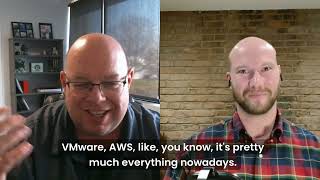
Mike Austin, CEO of MetrixData360, explains how deep data cleansing and CMDB hygiene cut a Microsoft audit claim from $10M to $750K and recovered $1.2M for a 7,000-person organization. His approach prioritizes continuous validation over passive SAM tools.
Chapters
They'll stay there compliant. But if, unless you reset your licenses, you don't know whether that's the optimal compliance, whether, you know, there are other things I can do. And so you know, even when we are running ServiceNow, SAM Pro, let's say, or Snow for one of our clients, we're not just taking what the tool says, we're we're doing these manual.
Welcome to the first series of the Oft Menu it podcast. I'm your host Sean Ashbury, and in this episode we are focused on Metric Data360's ITAM solution, which is one of nine episodes that you can enjoy this season. This episode was recorded on 30th October and some of the proposed announcements may have already been released. This podcast is fully independent and does not accept payments from its guests. The mission is to help the ITAM community make better decisions through their own discovery. Let this maximize your IT budgets and improve your RFP process. In this episode we have Mike Austin, the CEO and founder of Metrics Data360.
All right, welcome Mike, and thank you so much for taking time to join the podcast. Mike's story is quite unique and I'll let him tell and explain why. But Mike first of all started in Microsoft, learning all the tricks of the trade per se and realized he wanted to help people. Mike's journey into software asset management is quite personal and unique and to be honest, I think it's better introduced by himself. Mike, what happened and I guess at what age and how did Sam find you?
Sam found me the startings of it was while I was at Microsoft, but really for me it's a little bit more personal than that in that I grew up in a small town in in Canada and my mom was actually an IT manager at a manufacturing facility. And I remember, you know, being fairly young. You know, I don't even know If I was 13 at the time, but you know, kind of in and around there and my mom was kind of more stressed than normal and I started to realize that they were threatening to close the plant and move it to Mexico. And I know she was working very hard. And this, you know, this is in the 80s prior to, you know, software contracts and SaaS and all of that. But I know she was working really hard with her vendors, trying to cut cost in order to save the plant and save jobs and you know, just being frustrated in the conversations that she was, she was having with her vendors at that time. And I remember actually sitting at the table one night and she came home and Went straight to her bedroom. And that was not normal. You know, normally she would, how was your day? What's going on at school? And I could hear her crying. And I knew that was the day they closed the plant. And so, you know, I joined Microsoft in my early 20s and was doing really well there. Actually. A lot of the programs that are in market today I was on design teams for. And I was getting pulled into Redmond to help with that stuff. Awesome. Because some of the things that we were doing, we were leading the world in like EA renewal rates and revenue attach rates and all these things. And so they were having me go down to Redmond to teach other licensing people, you know, how we were doing it or what could be done. And I remember in 2008, I find found myself not being able to sleep. And really what happened was by this time I'd moved out of licensing and I was supporting automotive accounts. And you know, at that time, you know, the economic downturn had hit and all these guys, you know, gm, Ford, they were flying down to Washington begging for money to save. Save their companies and save jobs. And my management team was like, Mike, you need to go and sell 20% more to them this year. And I was like, hold on. They're laying off 30% of their workforce. They're going to Washington, you know, looking for money to save their companies and you want me to sell 20% more? And I was literally told more or less that if I didn't do it, I wasn't a great, I wasn't a good sales rep and I wasn't a team player.
Okay.
And, and, and the, the worst part for me, Sean. Sean was I knew I could do it. I knew I could go and figure out, you know, the games that these software companies play. I knew I could figure out a way to do it, but ethically I was misaligned with my personal values. And so that's when, you know, the writing on the wall started. And I did end up landing on a systems integrator selling software before I, before I started, you know, what IS metrics data360 now. But when I did start it, it really was focused on, you know, in some ways writing what I feel were my wrongs. Like, you know, I negotiated a billion dollars of contracts or more when I was at Microsoft. Now my, my mission in life is to help my. Help my clients save a billion, you know, and a lot of that is really, I called the company metrics data 360 for a reason. A lot of what we do is Driven on data. So when I first started Metrics again, it was prior to cloud and things like that. But I knew when I was at Microsoft that we knew more about our clients than they knew about themselves. And I used to sort of joke all the time, it's like, why is Every enterprise agreement 10,000? It's, you know, 52,000. It's never 9,632, you know what I mean? Like, it was because people were doing one of two things. They were either they were guessing at what they needed, to be honest, and they were typically rounding up to avoid being audited. And, you know, I knew that you could leverage that to your advantage when I was there. And it just, you know, it just didn't seem right. So when I started the company, we really were heavily focused on going in and helping people understand what do you actually have in use? So that Instead of buying 10,000, you'll maybe only need to buy 8,142. Right. And let me show you, let me show you what that is. And let's not focus so much on. Because back then a lot of organizations, particular bigger companies were focused on, you know, trying to get a few percentage points discount off of Microsoft, then calling it a day. That game's changed quite significantly over the years. But back then it was like, if I can get a few points discount off of this thing, I feel good about it and I'll move forward. But, you know, if you go back into those days, 10, 15 years ago, Microsoft was a smaller percentage of the IT budget than it is today. And so the stakes are just so much higher.
Thanks so much for very detail. I mean, it's amazing to obviously hear that it was a personal journey for you that most people's software asset management introductions come from. They were asked by Joe Bloggs to look at something whilst they were already in a job and then they just kind of fell into it. You had this personal feelings. You went into Microsoft maybe to kind of to change the game and then you realized where there was an opportunity for you. And metrics360 through seeing the fact that you knew more than those who you were selling it to, and you've now armed your customers with that information and that understanding. So is that typically where you realize that you had that kind of unique and valuable offering within the market compared to others?
I mean, I think so. I mean, if I really look back at the history, because we really started as an organization helping on Microsoft contract renewals, now we do, you know, everything right up to manage software you know, managed SAM services, right? But when I first started out, I think, you know, I thought that was part of it was, you know, understanding how licensing worked, but actually going out and doing that, dive into what was on the network or what were on the desktops back in the day and kind of saying, like, why are you buying all this stuff that you're not using? Let's get rid of shelfware. Like, I think, you know, I think I was looking at that probably prior to most people even realizing it was a, was a thing, right? And I think where, where it really solidified for me was we had a, we had a client that was getting audited. They were in an audit with, again, that's a Microsoft example. We'll probably start talking about some other vendors here in a little bit. But, you know, you know, it's another Microsoft example. And this is one of my, you know, first early on clients and I remember very direct communication. We'd done an email blast out, said, hey, if you're getting audited, we can help you. And I got a response that was, prove it. Call me right now. Right? With a, with a phone number. And so anyways, I called this gentleman up and he'd literally just walked out of an audit meeting and where he was told that they were owed, they owned a little over $10 million and they'd been fighting this audit for almost a year and a half at this point. And he's like, we know we don't know this, but we just can't figure out how to, how to prove otherwise, right? And so, you know, long story short, we went in and helped them inside of six weeks, take that from 10 million to $750,000.
Six weeks, reduced six months from 10 million to 700.
Yeah. And back then, like, it was a really manual thing. Like, if you've ever seen a license position from any of these vendors, I mean, these spreadsheets that have hundreds of thousands, if not millions of rows of data, and these customers get confused and not sure even where to start. And this was a large organization. I mean, they have a hundred thousand plus employees. And when I, when I started looking at it, I knew what I needed to do was really dive in and look at that data and figure out, okay, where are the assumptions? Where are the bad assumptions? Where is the data? Just wrong, you know. And so I remember literally sit, I was like going to a conference, remember, literally sitting in the back of a taxi, going to an Oracle Open World conference and going through, you know, 500,000 rows of active directory Manually to find duplicate users and things like that. Right? And so it really, you know, that's where it really solidified for me, right, was look at, look at the results that we got, how quickly we're able to do it, taking this data centric approach, really understanding the data itself. But where it really cemented was when they phoned me four weeks later and said, mike, we're getting audited by Adobe now. Can you come in and defend us through this Adobe audit? And I, I was like, at the time it was only Microsoft. And I said, remember saying, you know, I, I can spell Adobe. I, I don't know anything of, you know, I don't know anything about their licensing, you know, all of that sort of stuff. And the client said, mike, no, you don't understand. That process that you just went through with Microsoft is what we need and what we want. What you don't know About Adobe is 10 times more than what we don't know about Adobe. And we want that process, come and run that process again. And we did the same thing with Adobe, you know, same thing with Adobe. And that's when I knew I was onto something.
It goes back to what you mentioned at the start. The underlying factor is that your customers have no idea or had no idea. Obviously it has progressed since you are the, you are better placed to provide this process or to introduce this process that you've created and you know, works. And it's not just Microsoft is, it is Adobe, it's Oracle. And what else have you, what else.
Have you added to the original IBM VMware AWS? Like, you know, it's pretty much everything nowadays. You know what the thing that we don't do a lot of, although we do it, it's just not a lot of big focuses when you get into industry specific stuff like, you know, you look at healthcare management systems or HR systems, things like that. So we don't tend to do a lot of work there. But having said that, it's the process, right? It's understanding, you know, when I bring somebody on, you know, I, I always say like, look, really what it is at the end of the day, what are we trying to do? At the end of the day you have a licensing contract that has licensing metrics and you have data that you need to go in order to figure out how many of those licensing metrics you need to buy, basically. So how do we go get that data and how do we look at those licensing metrics and if it's a software that has multiple licensing metrics, don't stop. Which is the one that they're buying if they haven't bought. Like, you know, I'll give you an example here, Sean, just to emphasize what I'm talking about. We recently helped a university with an IBM audit and they were, they were offside a fair bit. And when we went in and we looked at it, we realized that they were licensing everything based on processor value units or PVUs. But when we analyze their environment, and they've been doing that for years, 10 years, it was Cognos. They've been doing it for 10 years that way. And when we went in and analyzed their environment, we're like, hold on, you've got a production environment, you have a dev environment, you have 30 people in your dev environment that you're putting PVUs that cost half a million dollars on, when you can just go out and buy brand new $30,000 of user licenses and not even have to worry about those PVs, shuffle those over to your production environment and we get rid of this compliance issue for, you know, 30, $30,000 instead of 500,000 or whatever it was. Right. But the reason that we were able to do that is we don't get stuck in looking at just what they have. We look at what are all the opportunities. And I think in the SAM world in general, to be honest, this is a big part of the problem is it's what I refer to as set and forget. So a lot of people go out, they get a SAM tool, they'll put the licenses in, it'll say they're compliant, the run a reconciliation, it'll stay, they're compliant. But if, unless you reset your licenses, you don't know whether that's the optimal, whether, you know, there are other things they can do. And so, you know, even when we are running ServiceNow, Sam Pro, let's say, or snow for one of our clients, we're not just taking what the tool says. We're doing these manual requires people look every year to make sure that is still the right way because the world changes, right? The, the way their environment changes and all that sort of stuff. So it really is, you know, a lot of, a lot of expertise required to do this stuff. But it's a lot of fun.
And that's, I mean, one of my questions was going to be is you mentioned your process and the understanding of where to look. Is that down to the people that you've employed and the training, next training and mentoring that you provided, or is it a case of the process and you Have a checks and balances in place.
It's a little bit of all of it and it's also some, it's also some software that we've wrote. Right. So we have, you know, we've, we've developed some internal tools that we use that aren't really commercial. They're just used in our products. We do have a commercial tool, but that really helps on M365 and Azure and AWS. But some of this stuff just, you know, like I can give you an example, right. When you're, you take Active Directory, right? In order to figure out, you know, the first thing you do in an audit is, are all my devices inventory? Well, where do they start? They're going to go and start at Active Directory. What's active in the directory? And do I have inventory on it? Now I say think of it as a simple Venn diagram. It's active in AD. I have inventory. I want 90 to 95% overlap. There's. And then I can probably move forward. If I have less than that, don't even move forward. Go figure out why I don't have 95%. Right. Well, when I tell people that an audit starts with Active Directory, most organizations have the, have a look of fear on their, you know, on their faces because Active Directory is not clean. And if I go back even to that audit that we saved them $10 million, I was literally going through 500,000 lines of Excel spreadsheets, you know, trying to figure that out. So we wrote some custom code and some custom logic that we take in an ad set and at the snap of a button, we come back and say, we believe you have this many active employees and this many active devices, servers, desktops, whatnot, is this close to what you believe. Right. And then we just clean it up from there. Right. And, and that right there, that is one of the fun. That is a fundamental difference of what I do. I've, I do not see many organizations do that, but that is getting good data quality. So even like, even again, if I take and look at like ServiceNow for instance, you know, in the SAM space, a lot of people are buying SAM Pro and they're just basically saying, I'm going to turn this on and I'm going to get these great elps. I'm going to save all this money because my ServiceNow sales team told me so. Right. Well, think about it. Service SAM Pro works from taking the CMDB and converting it to software tables that you then go and do software asset management work on. Well, if I, if we were in a room of 100 people that were managing CMDBs and said, what do you think the data quality is on your CMDB? 80% of them are going to say 60% or less. So they magically think that I take something that I have 60% confidence in and then I can have 100% confidence in a licensed position that created. It's just, it doesn't make any sense. So that data cleansing process for us now, like even you take active directory for us, we've also created a data cleansing process for ServiceNow to make sure that the CMDB has data quality to ensure that if I'm looking at say Microsoft, the licensing metrics that I'm in, that I'm looking for, that I need, the data that I need to look at, that is at 90 to 95% sure. So I don't have guests to host relationships and processors and cores and all that sort of stuff. There's no point in moving forward, let alone doing, you know, software normalization. Right? So, so you know where that, where that comes into play for clients, right? Is we had a big client on ServiceNow. They were doing their SQL true ups every year through a manual process. They would strike up a team eight to nine months before their trip was due. And every year their trips were seven to eight figures on SQL Server alone. We came in, we started a data quality journey with them and in the first year we took that process from a team of 10 and eight months to a team of two people validating our data in four weeks. And for the first time ever, they had a true up in the hundreds of thousands of dollars. Right? And it was, they just, again, it was all data thing. And so, you know, now all we do is every month we got a data quality process on their thing. We go and say here's some issues in your CMDB and then we'll go work with their teams to fix that so that at any point in time they want to see where they're at at a snap of a button we can, we can tell them, right? And we can tell them with, you know, a good level of confidence that this is going to be correct.
And it's not, it's, it's not rocket science what you're implementing, is it, I mean it's, you are extremely deep dive onto the correct. I mean, no, no, not, not saying it's not, not hard, but you are deep diving onto the data and that's your first part and that's how, I guess, how, how do you Compare to your competitors. I mean June, do you see your competitors doing an equally as deep dive forensic approach as, as metrics360 I have, I have not.
I mean we've gone in after many of our competitors and still found stuff because of the process that we take. Right? And, and, and, and I, that's what I mean. Like when I first started, when I, when I first started out coming from Microsoft, I just knew people didn't have the data. And so that's why we take this very data centric approach. Right? So even, even like if, if I take and look at like a more modern example because we've been talking a lot about like on premise and sort of the old stuff. And so that stuff's still very relevant. Right? But you take like O365 today, right? Think about how much money people are spending on Office365. If I go into an organization and say, okay, You've got an M365E5 what, how much of that are you using? They'll just, they don't, they don't even know how to answer it, right? And, and you know, but I've, I've got tooling that we've developed that I can go in and look at 80% of the 80 some odd services that make up an E5 and tell you to an individual level who's using and who's not using. Right? And so where that comes into play is you start to look at like we just, we just finished an organization. We just pulled $1.2 million out of not even their renewal. They're on an anniversary date. We just pulled $1.2 million out of about a 7,000 person organization. Because we went in and we went in and started analyzing and I was able to see, hey, because we do tagging and all kinds of fun stuff in, right? But you know, one of the things I went to them, I said, I see you guys have a thousand contractors. And they're like, yep. I said, how would you like to know what your contractors are using? They said, what do you mean? I said, well, you're giving them all E5s. How would you like to know what they're actually using? And what ended up happening is 80% of them weren't even logging into email, SharePoint, OneDrive, you know, not using the office license. So they were just coming in as guests, right? So we were able to show them that and you know, reclaim all those.
Licenses and just quick, I mean, how long did that take? So 7,000 person organization. I mean, how long did it take for you to get to that baseline of data, to then work back and implement your tool and then create this savings?
It took us four weeks to get to the point where we had the confidence in the data to tell them these things. Now it takes them a lot longer, right? Yep. You kind of put yourself in their, like in their, their shoes. There's two things that happens when you go to an organization and say things like when we start showing them things, first off, they go through this. I don't believe you. Right. Because it just can't. We, we haven't been wasting all this money. I don't believe you. Right. And so we, we have to get over that hurdle with them, which is usually fairly easy because you just start showing them data. Right. But then the next thing is it's the change management process that they have to go through. Right. Because they don't want to have end user interruption. And what if we're wrong? And so all that doubt starts to creep in. So, you know, you just need to make sure you work through the process. So I would say it probably took them three to four months to get to the point where, yes, we can do this. In fact, we actually identified this for them last year. They didn't quite believe us. And then we said, okay, fine, let's strike up a project about six months.
More from Mike



Microsoft Add-Ons Hidden Costs Explained | EA Renewal Risk & License Optimization Expertise Sharing

SaaS Sprawl Explained: How Decentralized Software Buying Destroys Negotiation Leverage.

Microsoft EA Renewal Strategy: Mike Austin Explains How the War Room Method Works.





