Taking the Scare out of Your Azure Spend
Mike Austin (former Microsoft licensing lead) presents a webinar on reducing Azure costs by collecting and using detailed usage/licensing data, understanding Azure-specific licensing (notably Azure Hybrid Benefit and SQL mobility), and applying targeted optimization (zombie resource cleanup, right‑sizing, reservation strategies). He argues organizations can often realize rapid ROI (days to weeks) by finding storage and licensing inefficiencies, gives multiple client case studies (large savings and commit reductions), and closes by offering a 30‑day Azure Health Check/blueprint tied to the slim360 tool.
Questions this video answers
For every 16 cores of Windows Server Datacenter (or stacking Standard equivalents) you qualify for two Azure VMs of up to 8 cores each that do not require paying the Windows license as part of compute.
SQL Server licenses with Software Assurance can license both on‑prem and the cloud for a period of 180 days during migration (server mobility rights).
A client had ~$400,000 per month in zombie storage; cleaning it returned the equivalent of about $4.8 million back into their budget within ~72 hours.
A client planned to commit $120 million over three years and, after optimization, committed to $65 million instead.
Promotional price: either $2,500 or 4% of your Azure monthly spend (whichever is greater). The speaker also referenced a typical engagement value of about $22,000 for reaching that point.
Chapters
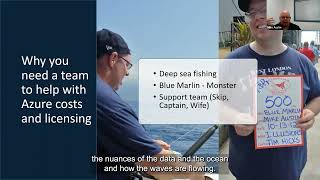
Foreign. And welcome to Metrics Data 360's October webinar on taking the scare out of your Azure spend. So today we're really going to talk about a few things we ask people when they sign up for these webinars, kind of their top concerns. So we can try and make sure that we make the content related to what people are, are concerned with. But there were three things that really came up and so I'm going to focus on those in today's session. But really what it boils down to is there's a lot of confusion around licensing with Azure. There is a lack of visibility into Azure environments to understand where optimization opportunities come from, which leads to the third biggest category that people wanted to talk about, which is really around cost optimization and how do we not spend more money than we need to for Azure? And so I always tell people, if you're concerned you're spending too much in Azure, it's not your fault. You probably are. It is very difficult to get the data. Microsoft doesn't make it easy. The way things get deployed makes it challenging as well. You know, Microsoft also wants you to think that you need them in order to make sure that you're not over buying. And their idea about saving money, if you went and said, hey, our Azure bill is getting out of control, they're going to tell you things like, well, do reserves, instances and things like this. And so what we're going to try and do here today is show you that you can get the data that you need. Some of it is stuff that you can get out of, you know, standard reports out of the Azure portal. Others, you know, you may need a tool in order to do that. But we are going to show you the sorts of things. We're going to talk a little bit about licensing and we're going to talk about areas where people are overspending. Okay. So my goal from this is really to, you know, help people who don't want to overpay on Azure and make licensing easy without, you know, without you feeling like it's being taken advantage by Microsoft. Because we get, we hear a lot that, you know, Microsoft and their resellers, clients feel that they're just getting taken advantage of. It's so confusing. They don't know what they need to do. I actually had a conversation yesterday with a large client and you know, their thing was like, Microsoft keeps coming in telling my executives that they can save us all this money on cloud. And then we go and analyze it. We can't find any savings. We actually think it's going to be more expensive. And so they're not even aligning or basing their statements on stuff that is relevant to us. They're just making broad statements and trying to push this stuff down. So, you know, who am I? My name is Mike Austin. For those of you that don't know me. I worked at Microsoft in the licensing group for just shy of about 10 years. A lot of people in the industry consider me an authority on Microsoft licensing. You know, I've negotiated over $2 billion in contracts. They're both for Microsoft. And now on the flip side, helping organizations purchase better contracts. And I always tell people I'm passionate about helping organizations beat Goliath, which is Microsoft. So really focus on sort of, you know, understanding licensing, understand data and how you can actually use that to buy what you need and at a fair price when it comes to Microsoft. And one of the things that I tell people all the time is that when it comes to beating Microsoft, you need a team, whether that's an internal team or whether it's an external team. And you know, I tell this story, some of you may have heard this story before, but it just sets the stage for what we're going to talk about today. When I was actually at Microsoft, I had one president's club and they had the events for the day. And the, the one day my wife and I were looking at the events and there wasn't really anything that we were all that interested in. One of the events was to go deep sea fishing. And so we thought, let's go, we'll go deep sea fishing. At least we'll get to spend the day on the ocean. It'll be nice. And so we signed up to go deep sea fishing. And instantly I actually got sick feeling in my stomach because I get really, really seasick. And so true to form, we get out on the ocean and we're at the end of the season. We're, we're out there actually about this time. It was in October and that's the end of the season. And so it wasn't a great day for fishing. They were out trying to catch bluefin tuna actually, is what they were trying to catch. And true to form, I actually got seasick about an hour in. And so I was lying in the cabin and the other couples that were with us on, on the boat were actually up top, on the top deck and having a few beverages because there was no, no bites or anything. And I remember hearing the skip yell fish on. And it's A big one. And I kind of jumped up and went to the back of the boat because I was the only one on the main deck. And I saw it jump and go down. And you know, he basically told us that it was going to take all four of us on the boat to pull this thing in and it would probably take about four hours because it was the biggest fish he'd ever seen. And so, you know, when I was out there, the, the key thing for me was that I had this skip. And he was really good. He knew he basically was sitting in a chair that sort of slid up and down and he would tell me when to squat down and when to move forward so that I could put slack on the line or when to, you know, tighten the line. And he would watch sort of the waves and then the captain was there watching the ocean and the, the line as well. And so at certain points in time he would back the boat up to again, loosen the line or pull forward to, you know, put some tension on the fish to tire it out. You know, I had my wife there pouring water on my, my head because it was, was a hot day and all of that just to say that, you know, I was able to actually pull in this 450 pound or 500 pound blue marlin in about 40 minutes by myself. But it wasn't by myself. It was with this team without the skip and telling me when to, when to back down and things like that, and without the captain who had the data to figure out where this thing was and where to go find it out there in the ocean. It was really, I couldn't have done that, wouldn't have caught it. And so it's kind of similar to Azure in some ways. There's a lot of data out there in the Azure ocean, so to speak. A lot of people get that sick feeling in their stomach when they start to think about Microsoft licensing and having to go deal with Microsoft on pricing and things like that. But with the right team, when you've got a team that can use the fish finder to figure out where the savings are inside of that Azure ocean, or where the blue marlin was in my case, and you got a skip that understands the nuances of the data and the ocean and how the waves are flowing, you can go and find those savings and then you have to have a support team. Anything that you do, if you're trying to drive cost out of Azure, you're going to need people that understand licensing, you're going to need people that understand technical implementations. You're going to need finance people, you're going to need procurement people, you're going to need legal teams. It's not just a single person that does this anymore. You need a team in order to effectively go out and figure out where the cost savings are going to come from and how you go about getting those. And so how does this apply to you? Right. The thing is, what I want you to know is licensing doesn't need to be confusing. In fact, we're going to talk about how Azure really isn't even about licensing. There are elements of licensing things that are in Azure, but Azure itself really isn't about it. You can pay a fair price for Azure. That could be unit cost and what you're paying for an hourly service. It could be ensuring that you're not over buying. It could be ensuring that you're not oversizing. It could be giving you the confidence to purchase reservations when maybe you don't have that. And you can control the conversation and the data that you need in order to do this exists. It's just hidden. And sometimes it's not hidden in plain sight. It is really hidden. And so we've got lots of proof of this. I'm just going to give you a couple of examples of some things that we've done recently. We had a client that was spending 60k per month. We reduced the spend by 60k per month out of their 70 or so. We reduced 60k out of a 700k annual annual expenditure, I shouldn't say per month. It was just over, you know, just shy of 10%. And we did that in three days. That's not the ongoing there. The key thing here is we found something very quickly that they were able to go and get a quick ROI on utilizing our services for. Right. And what with Azure, one of the things that is different than a lot of products are depending on what you can do, you can see returns on your efforts in as little as 24 hours. Whereas if you're doing Office 365 or on premise stuff, you've got sunk subscriptions that maybe have a year, maybe even up to three, depending on what the scenario is, before you can impact them. On Azure, you can really impact things pretty quickly. An example of that is we had a client, large Azure spend, but they had $400,000 a month in what we refer to as zombie storage. Zombie storage is the VMs were destroyed, but the storage was still out there and they were paying for it. And talk about data, they didn't have the data the visibility to understand this. In fact, they thought they had a script that got rid of it. And we went in and found out that that's not the case and basically put the equivalent of 4.8 million back into their budget again inside of 72 hours. Another company that we looked at their data and this is where it's not hidden in plain sight. And this is where you need those teams. We had a company that was spending over a million dollars a year on Windows Server licensing for batch processes. Now I'm not going to get into the technicalities of this, but basically that was all being done on Linux Instances. But the way that they set up the compute, they're paying a million dollars for licenses that they didn't even know. They just thought that this was the cost. And again it was about the data and going in and looking at that and analyzing the data and understanding it. But again, pretty quickly, this was inside of 30 days, we were able to identify this batch processing being done on the wrong type of compute. Okay. And then we helped an organization right size their three year Azure commit. So we had a client that was going to commit to Microsoft for $120 million for three years and they ended up committing to 65 million. And the reason for that is what they were doing, this is not uncommon, is they went out and said, okay, well we're spending X a month right now on Azure and that's, you know, some percentage of our workloads that we're moving and we're going to move all this other stuff over the next three years. And then they forecast it out and said that they were going to need $120 million worth of Azure based on their forecast. And so they were going to negotiate $120 million commit. They were going to give Microsoft $120 million over three years. But when we went in and started looking at what was going on and optimized their, their run rate was way too high. And so when you actually factored that in, they ended up only committing to 65 million. Now if this client had committed to 120 million and then decided to optimize 4, 5, 6 months down the road, they would have been stuck because Microsoft's like you committed to it. That's our money, you need to give us that versus committing to 65 million and being able to burn that and use that up over the three year commitment. And so these are the sorts of results that we've had based on what we're going to do. I'm going to really Talk about really two things today, but this is going to cover that data visibility, the licensing, and then just overall cost of Azure. You need to know how to collect the data that you require to be more prepared than Microsoft. Because a lot of the times that forecast, I go back to this slide, that $120 million forecast was created in conjunction with Microsoft, and everybody thought it was right, and they were about ready to go to the board to request that approval for that money. Right? And you need to learn how to purchase only what you need. And this is a key thing with Azure because like I said, if I go back again here, $400,000 a month of storage costs that were there for something they weren't even using and didn't need. The examples that we see out there are there. Why is this so important? I know this is a talk about Azure and I've got Amazon and Google and stuff, but I think the key thing here is if you look at the market for cloud infrastructure, whether it's IAS or PaaS or hosted private, it is growing substantially. And if you look at the market share, Amazon is still number one. They were first to market. They hold that advantage at 33% of the market and Microsoft's at 22%. But if you look at what's going on with Amazon and others on the chart on the right, Amazon's basically been flat on their share for quite some time. Right. Going back into 2017, they've been at about that 33% market share, whereas Microsoft was at 12% and have moved that up to 22%. So you think about the growth rate that Microsoft is getting in Azure. They want that to continue, right? They want to catch Amazon and eventually surpass them. And so it's really important to understand this because this is what's driving their behavior and how they're selling to you in market today. Okay. So, you know, I talked about the secret, number one being how do you collect the data that you need for Microsoft to be more prepared? Because a lot of the times, like it people, procurement people, they'll tell us they don't understand what even how using data is going to beat Microsoft at their own game, Right? Because a lot of the times what they'll do is they'll say like, well, you know, it's. It's kind of rack rates and I pay, pay whatever the per month or the per hour or whatever the thing is. So how does getting data help me beat Microsoft at their game? And I want to tell you a story of a client, Marty, and What Marty would do is he would go and get all this data. I never understood why you would collect so much data. This was when I was at Microsoft pre Azure days. But the concept here still stays the same. He had more data on what he was doing internally than we did on him. And that was unusual. Most of the time, Microsoft feels that they know more about what you're doing than you do. Maybe not like the technical architecture and where you're going, but they know that they have playbooks that are going to push you into certain areas. Right. So if I go back again to that, the company was going to forecast $120 million. Microsoft was pushing that. They were using data to their advantage to push that based on the workloads that they had, the workloads that they were forecasting and worked with that company to forecast bringing in what that looked like on premise and how they felt that would fit going into Azure. Right. And the only way to beat them. And Marty's the only person when I was at Microsoft that really beat me in a negotiation. And it was because I couldn't. Everything I threw at him he had an answer for because he had his data. Right. And so you really, really need that data to drive at them. Right? Because when you tell them things like, okay, that's great, but when we architect it on premise, we architect it with a, you know, a 60% headroom space on our servers. So we don't need to take them like, you know, we got, you know, 120 cores supporting that. We don't need 120, we only need 40. And you're not factoring that in. You're just taking 120 over and pushing that over. And I'm kind of oversimplifying, but that's the sort of thing like you really need to understand your data. You need to understand what's going on. If you're going to negotiate against them, is it and you're trying to get some discount because you're a large organization, you know, is it better to try and negotiate a flat discount across the board of X percent, or is it better to look at your spend and where you're spending money and realize that, you know, our number one spend category is not compute, it's not resources, it's storage. And then when you look at the price that you're paying for storage on prem versus what Microsoft's charging you and realize that they're super expensive, does that change how you're going to negotiate with them? It absolutely does. And that's why Understanding the data and knowing what data points to go and get becomes so crucial with driving out costs, which is the number one sort of thing that most people are trying to do when it comes to Azure. Okay, so, you know, like I said, how do I know this stuff works? Because we see it all the time. But a couple of things that really happen is, you know, negotiation cycles becomes much smaller. People are purchasing less, their bills are going down, and they're making decisions on what to buy based on a position of knowledge, not guessing. Right. So if I go back to my blue marlin story, right? If the captain just went out to the sea and drove around, will we ever caught it? No. He had knowledge of the sea, where those things were. He was using a fish finder, a tracker or whatever he was using to get us in an area where it was. He also knew, you know, the time and where the. Because remember, I'm telling me where the fish that the marlin would feed on were located or potentially would be based on currents and water temperature. There's all kinds of stuff that goes into that same sort of thing in Azure, right? And so if I talk about this sort of stuff and I look at data, right, I'm just going to show you a few examples of the sorts of things that you're able to do. So here's an example of overspending. 20% due to lack of data, right? So this client was overspending, not a big one, 25K a month, they're overspending by 5 1/2K. Why? You know, look at the first two categories. Azure Hybrid benefits. They were paying for Azure hybrid benefits that should have been free. They misplaced dev and test workloads, and that was costing them money, right? So they had production. They had dev and test environments sitting in production instances on Azure, and there's more efficient ways to do that. But they didn't have the data. The engineer just went out and put it out there. And they didn't realize, right, they needed data in order to do that. And then, you know, ris. So they have an opportunity to reduce their spend based on ris. And our strategy around our eyes is not, if it's riable, go out and RI it. We look at, you know, the number of VMs and the amount of processors, and we make recommendations based on a minimal risk profile of RIIs, because a lot of people don't want to go out and reserve everything and then get, you know, stuck paying for them. And then zombie, you know, we talked about zombie storage. Zombie is Anything that's actually not in use that they're still paying for. So look at that. Fifteen hundred dollars a month on zombie resources. Like it literally took them, you know, less than 30 minutes to clean that up. And you know, you extrapolate that out over 12 months or look at that as a percentage of their spend. That's pretty, pretty substantial. Right? But you can see here, down on the bottom part here. It's not just about where there's, where they can save money. Look at where they're spending money, right? And where there's potential savings. So the biggest place that they're spending is on storage and there's definitely savings in there. Some of that's, some of that's, this is again, just looking at surface stuff, we're not looking here at are they using s SD disk vs spinning disc? What makes sense, are they using blob restoration? I don't even getting into those advanced tactics. That's just a zombie storage that needs to be taken, you know, taken out. But you can kind of see like, you know, a lot of people go out and they're like negotiating on this long tail stuff. And look at this. There's four or five categories that make up the most of their spend. So again, even just understanding the categories you spend help you make decisions on what you're, what you're going to do around, you know, negotiation tactics with Microsoft around our eyes, those sorts of things. Okay, so how do you use this data? Right. Like I said, it clarifies what, what you need to buy. Right. So you know, can you look at what you're, you're spending on Prod dev test doctor Right. Does that make a difference? Can I look at what, what I'm spending on various categories of Microsoft? How's that trending month to month? Right. So you can see here they were spending 7k a month on storage. It went down to just over six. It's back up to seven and a half. Well, can I dive into that? Which we can dive into that and see why do they put more on there? Are they doing things that are costing them money? Again, that shouldn't be. You can see here as they put reserve strategies, they went from 7k a month on VMS to 4k a month. Right. What is the service bus that they're spending money on? It's pretty consistent. But what is it? A lot of times people don't even know. They just get this bill and they're not even looking at it. It's just, they're just paying for it. Right. Look at what they're spending here on virtual machine licenses. A thousand dollars a month, should they be, or are there free ones that they can do? Right. And so what this does is starting to gather this sort of data together and putting in views. Is it going to allow me things to do things like make licensing easy for me? Right. So a lot of the times when people, we talk to people about licensing in Azure, it's really not about licensing because it's all about consuming resources. So it's all about consuming resources. And so licensing is sort of like, still almost like the on premise concepts, but they have different rules. Right. So if I'm running a Windows server, I need a license for it. I'm not licensing a Windows server in Azure, I'm licensing a VM or I'm buying a vm, sorry is a better way to put that. And I need to have my Windows licenses that go on top of that. Again, looking at all this stuff and starting to pull this together because I can go in and look at these virtual machine licenses. You can see this is just an image. But if I click on that, I can see whether they're Windows licenses, SQL licenses, Red Hat licenses, what am I paying licenses for to Microsoft? And if I'm paying licenses for things that maybe there's a benefit for or right for, then I can go and look at my on premise footprint and look at bringing, bringing that in for me. On the zombie side, I can look at helping me decide what to deprovision. Right. Can I look at whether a server is actually being utilized or if it's just spun up? Right. A lot of times we see stuff that's just sitting there, spun up, looks like it's still in use, but it's not, it could be deprovisioned. Right. So like I said, I talked a little bit about this. Like people believe that Azure is about licensing when it isn't. There's that component of it. It's more about understanding your metrics. And, and if you're familiar with the concept of finops, what I mean by understanding your metrics are, you know, if I look here where this person, this company here went from 24k to 20 to 21k in May or June, Right. Some people would say, oh, well, they had a, they had a, a significant drop, right. They went from 24K to 20, you know, just, just over 22K. Well, there's 31 days in May and 30 in June. Right. So I can't compare them because I have an extra day. Right. And so was that really a significant drop? Because you can see it starts going back up into July, and then, you know, in August and September, you know, there's there. So there's probably something that they did in there. And I know what they did. I'm just using this as to illustrate. You have to understand what your metrics are. And the metric that most people want to use when it comes to Azure is monthly spend. You know, is my monthly spend staying flat or the same? But, you know, compare February to July, you get three extra days. I see that. Even if nothing changes, you'd be like, what the heck happened? Why did we go up? Well, that's because there's three extra days. We're looking at the wrong metric, right? So you really want to be starting to think about your metrics, because different metrics apply to different things, right? So does what's my metric on storage versus my metric on vm, Right? Because this should be different. Like on vm, it might be hours running or days running. With storage, it's going to be, you know, gigabytes or terabytes or whatever, right? So you need to understand that each service or resource, you're going to measure something, something different here. Okay? So again, the words on the left here aren't, aren't the most important thing. But what I want to show you is again, like here you can see $380,000 a month spend, 53,000amonth overspend, 600,000 annualized overspend. And again, there is a significant piece that is in our eyes here. But look at these zombies, right? 26,000amonth. That's over a quarter of a million dollars a year and stuff that's just sitting there, not even in use, because it wasn't deprovision. And they didn't have the ability to sort of go and look at that and say, okay, how do we get that right? So again, it's all about getting that data and getting it organized so you can sort of look at it. Okay? And so the second piece is again, like I talked about is, know, how do I purchase only what I need, right? Because a lot of times people think, well, I'm not a licensing expert, I'm not a, you know, maybe I'm not a professional negotiator. If I'm in it, if I'm in procurement, I just don't get the right data I need from it in order to know how to go and negotiate this properly with Microsoft. Right? And so, you know, I always tell a story about steph Curry. And so I think everybody knows who Steph Curry is, you know, place for the Golden State Warriors. Probably one of the best three point shooters of all time. Early on in his career, Steph was actually sponsored by Nike. And Nike had actually considered Steph because there were a lot of things about Steph, if you knew him early on that probably said he shouldn't be the star that he is today. And so Nike was looking at the wrong data points. And when his contract came up and they have a right of first refusal on it, they had actually put him below a lot of players that were nowhere near the caliber of staff. And so they gave him a low ball offer to renew his sponsorship contract. Under Armour, on the other hand, was looking at a lot of, a lot of stat points and realized a lot of things about Steph and his trajectory of his career, but also the demographics of his fans and things like that. And they took a bet on him and put a big contract out there to overtake Nike's contract. And Nike had the right to match Under Armour. But because of what they were looking at, the data points they're looking at, they chose not to. And if you really dive deep into this story of Nike versus Under Armour and Steph Curry, there's some that believe it's cost Nike 7 billion with a baby in apparel sales and things like that, right? And so again, it's just all a key of what you look at, right? Even in sports they get it wrong sometimes, right? And so, you know, a lot of the times people will tell me, like, we just, you know, we, we know more like after they work with us, we know more than we ever have. And that's what you need to be, you need to, you need to get to that point if you want to beat them at this stuff, you know, because we perform a lot of data analysis and we're looking at the data, right? And you know, a lot of the times we know it works as well because Microsoft actually requests the business cases and things that we put together in order to go internally and sort of either a justify why a deal has gone from 120 to 65 million or to use for, to go and get approvals on concessions and things like that. Okay, so I'm going to switch gears a little bit out of data and I'm going to talk about licensing for a couple of seconds here. Okay, so I've made mention of Azure hybrid benefits. If you're not familiar with what the Azure hybrid benefit used to be called, the Azure hybrid use benefit Ahub now they just call it the Azure Hybrid benefit, hp. And so what HB allows you to do is utilize licenses that you have for on premise in Azure, okay? And particularly Windows servers. Now, there's different rules for Windows servers, the different rules for sequel, different rules for System Center. So I'm going to touch on them all here in a. In a quick, you know, quickly. Okay, so Windows has an Azure hybrid benefit. And what that Azure hybrid benefit says is if I have data center licenses for every 16 cores of data center that I have, I can have two VMs of eight cores or less in Azure, where I don't pay for the Windows license as part of my compute, because when I buy compute, I can buy compute and pay for a Windows license, or I can just buy compute and use an Azure hybrid benefit to allow me not to pay for the Windows. Okay, now that is truly what I'll say is a hybrid benefit, because I can use those data center licenses in my own data centers, have unlimited VMs on those servers, and then get the two free Windows licenses in Azure as part of the hybrid benefit. Now, Windows standard is the same sort of thing. For every 16 cores, I can get two of eight and I can stack. So if I got 32 cores, I could stack these hybrid benefits. But standard only allows me to use in on premise, So I can use it to cover a physical server, let's say, or I can use it to cover a VM inside of Azure, right? So that's kind of the way that the Windows Hybrid benefit works. Now, SQL doesn't really have a hybrid benefit, they do. What the SQL hybrid benefit says is as I'm migrating from On Prem to the cloud, I can use my SQL licenses to cover both my On Prem and my Azure instance for a period of 180 days. After that, I can only use them to license one or the other. Because SQL has what's called server mobility rights with software assurance that allow you to take your licenses into the Azure cloud or aws. Currently that may change soon, we think, but it allows you to take those SQL licenses into the Azure cloud and use them to cover your cores that you're using in Azure. Okay? System center, if you're using System center to manage Azure, does not have a hybrid benefit. It has a right as part of software assurance that allows you to manage a number of instances depending on if it's Standard or Data Center. And so with Data center, for every 16 cores, you can have 10 instances that you're managing in Azure. Standard is two cores. So if I have 100, I can either get 160, data center or whatever the math is on standard and figure out the dollars. And that allows me to manage those. Okay, so I know that's confusing, but if we really boil it down with Windows, it's all about Azure Hybrid benefit because I cannot take my own licenses into Azure and I get two VMs for every 16 cores, whether that's standard or data center. I'm going to come back to that in a second on SQL Server. It basically works the same as on premise. I just need to have software assurance. I can't use L only license only in the cloud. On Azure, with System Center, I get a number of VMs that I can manage depending on if it's standard or data center. Now, I want to talk about a client that thought this Azure Hybrid benefit thing was great. And this is where you need to really understand data and understand licensing in a pharmaceutical company. And about 5,000 people, they were closing their data centers. They were going to become a cloud only and move everything to Azure. And they thought they were licensed correctly because when they were on premise before they started to move, a few months before that, ironically, Microsoft audited them and they passed the audit and they thought they were completely compliant. The reality is they ran out of Azure Hybrid benefits. They were non compliant due to having data center licenses, which I'll loop back here in a second. And they needed to purchase $600,000 annually of windows licenses because of their move to the cloud. Okay, so how did this happen? I make this simple, right? Imagine I am a small company and I have one host server. It's got 16 cores and I have 16 cores of data center licenses and I have 20 VMs on that, all running Windows. I say I'm going to get rid of my physical server, I'm going to move it to Azure, right? So I take my 20 VMs, I put them over in Azure, I turn on Azure Hybrid benefits because I'm completely licensed for Windows on premise. So I move them over, I turn on Azure Hybrid benefits. All is good. Microsoft comes knocking and goes, how many Azure Hybrid benefits are you actually qualified for based on the licenses they have? And you're like, I have Data Center, I get unlimited, move my my VMs over. No, I get two, right? 16 cores of data center only allows me two VMs in Azure that I don't pay for Windows on. I have to go out and buy for the other 18. So see the irony in this, this is why the Azure Hybrid benefit, it could become problematic Because I'm running data centers and have all these licenses. So now with standard I still get the two, but they're cheaper, right? So really what this does, see, see how getting this data becomes important, right? Because as I understand the moves, as I understand how I'm licensed on premise and how I'm using those and what's free and what's available, I can plan what I need to do. There is going to come a time where organizations, particularly large ones in my opinion, are going to need to go to Microsoft and say I had a thousand VMs and I had this many data center licenses completely compliant, but now I only get 100 or 200 in the cloud, I gotta go buy 800 licenses. I'm paying essay on these data center licenses that only give me 200. I need to get out of this and move those down to standard so that I can get more for the same price to cover this off, right? But if I don't have that data, I'm just deploying and I'm not tracking this sort of thing, I'm going to get into that problem. Okay? So the, the key thing to notice you have to figure out what's going on. Now if I look at SQL Server, do I have this problem? Probably not. Because the SQL Server mobility, as long as I have SA allows me just to move over. So if I move all the same number of cores SQL over, I'm fine. Where it becomes maybe I'm overspending is I'm of the belief that you're not going to need as many SQL servers in Azure because you're not needing that much headroom on your servers. Dropping essay can only be done on anniversary, like a renewal time. If I'm in year one and we move a bunch and we don't need them, we're going to pay for in year two and year three. But even there, like think about it, hey Microsoft, I just went from spending zero to Azure. All this money I got these licenses I can't use because I did it. Why am I paying for this? So think about the conversations that you can have and negotiation points that you put yourself in strong suits because go to Microsoft, say you had us move to Azure. We're spending a million bucks on SQL licenses that we no longer need. We're now spending X in Azure. Why am I continuing to pay for this during. Because I'm in a contract, right? You guys are double dipping. So it's going to make conversations difficult with Microsoft. But you have to have the data in order, in order to make those conversations difficult on them. Okay? So a lot of the times people tell me, mike, I'm not a business analyst. Procurement people tell me I'm not technical even it people say I don't have access to the systems to get the reports. A lot of times, you know, it's like, man, I don't have time to do all this work. You know, a lot of the other times it's like, will I really get better results? And so this is, you know, you're not alone. And that's why I started the presentation today with the team. You need a team in order to make sure that you can overcome sort of all these objections. If, you know, if you're a member of a SAM team and need to go out and find savings, this is. This is sort of what you're. What you're up against, right? So, you know, what I want to figure out is who wants to take this to the next level. Right? And so what. What I am going to introduce today is the Azure Health check that we have as a service offering. And it's really about helping you understand this data to figure out if you're over buying in 30 days or less. Right. So it gives you basically the visibility into some potential opportunities to put money back into your IT budget next month. And it's really quite simple. Here's what you get. Basically, it's a blueprint that shows you how much you potentially save before you commit to our annual service, which is called slim360 for Azure. So all those charts and those graphs and all that data collection that I was showing you, that's all done through our slim360 tool. And that's how we help our clients get there. But we'll give you a blueprint to show you that there's an ROI to purchase a tool and our service to help with that. Right. And so you get access to our consultants to help, you know, analyze that data, help you give you access to the tool that. That does that for the 30 days. And then we'll get. We'll help you build a business case. And so typically, you know, you're looking at about $2200, $22,000 in just getting to that point. But what we're doing right now is it's either $2,500 or 4% of your Azure monthly spend, whichever is more there, obviously, because the bigger the client, the more effort there is. But it's a very simple process where we come in, connect into your O365, into your Azure tenant Grab the data, start looking at it, identify zombie resources, ri, opportunity, storage, switching opportunities, all these things that we talked about today, and then figure out if there's a true ROI there. So if you are interested, you can go to the following link here and that will set you up with Herb to have a quick 15, 20 minute conversation. He'll explain in more depth what the, what the program is about and how that works and then go from there. So, and you know, we're actually going to even on offer a money back guarantee on the blueprint. So in other words, if we don't find you savings, don't bother paying the 4%. We'll just, you know, we'll just call it a day. But we're confident, that's how confident we are that we can save you money. Okay, So I think, you know, that's, that's all I had today and I think I answered a couple of questions that I, that I did see in the chat. If there's any other questions, you know, either put your hand up and you can ask or drop it in the chat. Give it a second here before we close off today. But if not otherwise, have a great day everybody.
More from Mike



Microsoft Add-Ons Hidden Costs Explained | EA Renewal Risk & License Optimization Expertise Sharing

SaaS Sprawl Explained: How Decentralized Software Buying Destroys Negotiation Leverage.

Microsoft EA Renewal Strategy: Mike Austin Explains How the War Room Method Works.





