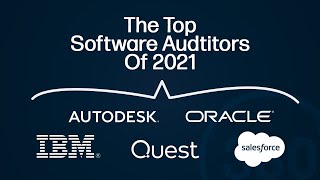
A YouTube video (by Mike Austin) discussing software vendor audits active in 2021 and practical SAM (Software Asset Management) advice. The speaker identifies audit‑hungry publishers (Quest, Micro Focus, IBM, Oracle, Autodesk), explains common audit drivers (changing license metrics, virtualization definitions, subscription migration), and gives mitigation steps for IBM, Oracle and Autodesk customers.
Chapters
Foreign. My experience in the past 12 months is typically around kind of some of the publishers that are audit hungry. We've seen Quest, we've seen Micro Focus, IBM, Oracle, these are really kind of audit hungry publishers out there. They know that during COVID the technical landscape has changed and they're kind of just doing a dog pile on it. So I think that they're causing some, some major challenges. The SaaS providers of the world really aren't at this time going forward in auditing. That's, that's been my experience at least. It's really, you know, the, the publishers that kind of have what I consider legacy technology or you know, more on prem technologies than sas. Yeah, so if we're talking about. Yeah, so some of those legacy publishers, there's a few things going on. One, they're auditing clients at the most inopportune time in recent history. So that's the first thing. The second thing is they're shifting license metrics. If you look at say IBM, IBM's, I don't know how many license metrics they have, they're trying to consolidate down to far fewer. But you know, they have probably a couple hundred different license metrics and products and ways to get those license metrics. So that's challenging. And then, you know, if you look at the Oracles of the world, they've basically rewritten their definition of, of virtualization and that's causing massive issues. And that has been major headaches for folks using Oracle on virtual environments. And yeah, those are a lot of the things that are causing some turmoil in sam, but they're not new. I guess from my perspective, changing license metrics has been around for a while, so it's really incumbent on the licensees. So the folks using the licenses to be abreast of the information to understand their landscape or their environment and understand how those changes impact their compliance and their ability to optimize what they're using. So with IBM, I think some of the common advice I'd give is if you're using pvu, RVU or VPC licenses, make sure that your ILMT is up to date, that it's current, that you've done the technical bundling that you've enumerated, the comments on why you're excluding certain things, these are typically things that get caught in any audit. And then also make sure you have a routine at doing your audit snapshots. Just having a tool in place that's contractually mandated is not enough. And then take that one step further of once you you get that visibility with IBM, figure out what you are using that is current and need support and everything else, you can make an educated decision, do I need support and do I need to be paying IBM for stuff that I'm never going to use? And if the answer is no, I don't need the material and you question why you're paying IBM, then you can probably cut support. There's a few obviously edge cases around that things that are security related, that gets like signatures on things or the IDS products, then you probably cannot remove support. And then I guess the other advice around reducing IBM spend is look towards perhaps third party maintainers. If you are using a product, you're doing active development on it, but it's a few versions behind, you could look towards kind of a third party maintainer to help you with that, that can provide patches. Even if IBM is no longer putting out patches, but security patches or whatnot, they can work with you on that. The top issues that I've found working with Oracle have been typically around virtualization and backup. There's a major kind of misunderstanding with what's commonplace in the market and how people understand virtualization to function and how it impacts licensing and how Oracle interprets their language and their contracts. So I think that's probably the largest issue that I see with, with Oracle and the other, you know, one of the other kind of issues that I see with Oracle is folks, you know, they sign up for these, these massive contracts like a UL like ulas so unlimited license agreements and they think they get an all you can eat buffet. And that's true to some degree, but doesn't mean it's unlimited for everything that Oracle creates. It's only what's in the, the product product set of that agreement. And I've run into it multiple times where you know, senior people that you know, sign those, those ULAs believe that it's everything that Oracle creates. And so Oracle puts out a new product and they install it and when it comes to reviewing that they get caught in an awkward position that they're, they're paying, you know, $10 million for a ULA but they have to actually pay either Oracle to renew that agreement at a higher price to get access to new product or they get fined in an audit and have to buy that product at kind of like at list price. So you know, that's always kind of a challenging situation. And it goes back to the way to prevent that is really understand what your agreements say and what you're allowed to do. And going back to really get visibility on what you've deployed and how that works with your agreements and your entitlements. Autodesk is interesting. Autodesk is really crossing the chasm similar to how Adobe did it. Oh, there's probably almost 10 years ago they're switching to solely subscription based licenses. So they're having a little bit of a challenge. I think it's in 20. Well, I know it's in 2022 that they will no longer be able to one sell support for perpetual licenses. And on top of that they've removed certain license types. They've removed a license type called network based license type, which are essentially you install it on a server and then anybody can use the product as long as there's a license available. This is really used in kind of engineering firms and construction firms. The challenge is they're taking it away and a lot of businesses base some of their development and their design cycles in these cyclic patterns and they're going to have to rethink how they run their business because of it. With Autodesk, now is probably a good time. Like there's a call to action, like if you can determine and I guess quantify how many people are using these network based licenses, you can actually then go back to Autodesk and work with them to convert those network based licenses into subscriptions at a far, far better rate than they're offering. Kind of out of the gates they're offering right now a two for one. So for every network license you're allowed to get two subscription licenses which are assigned to an individual. If you can show 20 people are using this network license, you have a far better negotiation stance with Autodesk to say perhaps 20 subscriptions for the price of the network license is not acceptable, but maybe 10, maybe eight, something of that nature. And so you can work with the data to kind of prove out why you need and why Autodesk owes you or should do right by their customers and give you additional licenses at the price point that you were paying previously. Software Asset Management 2021 is in a little bit of a weird position. I believe it's kind of like poised to take off in a really significant way and really drive positive benefits back to organizations. The challenge there is it's kind of been in this position or this holding pattern for the last, I want to say maybe three, four years. It's kind of similar to how service management was in the mid 2000s, but hopefully with added cost pressures that organizations have around Covid and what they've experienced with a dynamic shift or a large shift to work from home of their employees, they'll start to realize that ITAM or IT Asset Management and specifically Software I Asset Management is really important to one deliver value back to their employees and also a way of putting dollars back to the bottom line. Yeah. So if you'd like to work with me or any of the other professionals at Metrics Data360, please press the link below and we'll get in touch and see what awesome outcomes we can provide. Bye to you.