Unlocking Success: Navigating the Maze of Software License Compliance
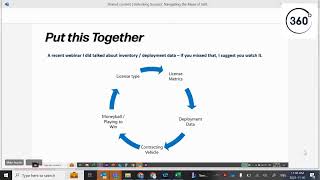
Mike Austin (founder & CEO, Metrics Data 360) presents a webinar on software license compliance and negotiation strategies. He outlines market forces—vendor consolidation, shifts to subscription/cloud, bundling and decreased discounts—that are driving price increases and stronger vendor leverage. Using real client examples (a 5,000-user SaaS renewal that rose from $25 to $30/user with reduced discounts, and Microsoft/IBM/Oracle licensing scenarios), he stresses the need for data-driven software asset management: understanding license types, license metrics (device, user, PVU/PVU vs named user), purchasing programs, and negotiating with strategy ("play to win" mindset). He also shares personal background motivating his work and emphasizes that there are no silver bullets—successful outcomes require accurate data, analysis of license metrics and mix, and proactive contract/portfolio choices.
Chapters
Foreign. Okay, good morning or afternoon everybody, and welcome to Metrics Data 360's webinar this afternoon on unlocking success navigating the maze of software license and compliance. So throughout this presentation, you know, please use this as interactive. There's both the chat feature, if you're watching through the team. Sorry, if you're on LinkedIn, unfortunately, or YouTube where we're broadcasting to as well, you won't be able to interact with us. But if you do have questions, you can hit the chat, put up your hand, raise your hand, or drop a question in the Q and A. I'll watch those and try and answer those throughout the presentation today. So I did want to start with why this topic's important because we're seeing a lot. We get asked a lot of the times, like, you know, what do we see going on in the world of kind of software licensing today? And you know, one of the things that's definitely going on is vendor consolidation. You know, there's a lot of activity happening around this. I mean, if you work. Look, this week alone, Broadcom finally closed on the VMware deal. Flexer announced or entered into an agreement to purchase Snow software. And basically this is happening because in my opinion, they're all trying to grab market share, particularly while prices are down or stock prices are compressed a little bit with some of the challenges in the global economy. But the reason that they do that is the greater the market share, the more pricing power they have. Microsoft has taught all these software vendors that when you have market share, you own pricing power. And the other thing that we're seeing a lot is the move to subscription and cloud license has really driven their share prices and costs costs up. Right. So what, what does this really equate to, like, what is it that we're actually seeing happening in the market? Right. So one of the things that I think all companies need to be prepared for is decreasing discounts. You know, if you got a 50 discount on a deal last time with, you know, a vendor, don't expect to get 50% again. They're all decreasing the amount of discount that they're giving out. We're seeing much more activity around in cry increased pricing. Whether that's disguised as currency adjustments or whether it's just price increases that we haven't seen before. If you look at Microsoft as an example here, Microsoft for years never had price increases. I think all from 1995 right up until late 2010, they never had a price increase on Office, where now we're seeing price increases on the Office365 suite every couple of years. Not always on all the SKUs, but we're definitely seeing that there's a lot of changes in licensing that's driving revenue. Some of that's that subscription based stuff that we talked about. I mean, we'll see what broadcom does with VMware. But VMware went from perpetual processor based licenses to core licenses that were subscription only. If you look at the things that Citrix doing, if you Citrix, in terms of what they're trying to do around cloud licensing and things like that, obviously, you know, one of the big concerns out there from a compliance perspective is Oracle's change to Java licensing where they've taken Java from processor and main user to based on the total number of employees and the expense that's associated with that. And we're seeing more and more bundling which equals more vendor lockout. I mean Microsoft E5 and their move into security and bundling in and pushing people up into that E5 suite with security and compliance in there. It's just a great example of that. And so what does this really look like? This is a real example. This is not a Microsoft, this is a smaller vendor or publisher that we helped a client with. But they basically I put in here kind of tongue in cheek, pick a vendor ending vendor because this is what's happening across the board. So this client had a user based license for 5,000 employees. They negotiated a five year deal five years ago. At the time the license was $25 per employee per month and they received a 40% discount. The renewals coming up, They've been negotiating this contract renewal for a few, few months now. Actually the vendor increased the list price on this product by from 25 to $30. They had no future price protection and for, you know, eight to 12 weeks now, the vendor has been holding tight on offers at a 25% discount. So not only did they face the 20% price increase of 20, you know, 25 to $30 per user, they're, they're receiving fewer discounts. And the, the publisher is actually saying that you have a new policy where they don't discount like they used to. Right. So what does this equate to in real life? Let's just take a look at this math, right? Five years ago they had 5,000 employees at 25 bucks a month and they got a 40% discount. It was a $900,000 a year contract. Today that same 5,000 employees is 1.35. Right. So it's 435,000 per year increase or nearly 50%. So you know, I can guarantee you the company, when they were doing their budgeting last year and looked at their renewals, they budgeted about 10 to 20% increase. We know that because they told us that, you know, but where do they make up that shortfall? Right? So you know, regardless of the size of the company, that's a significant shortfall in budget. Now this project is paid within the business. The business doesn't have, have like within a business unit. You know, this is not a product that they can easily just go and find $400,000 indifference, right? So now they're struggling. What do we do? How do we manage this? Like how do we, how do we get around that? So even though we were talking, you know, today kind of about licensing and how licensing works and you know, how to remain compliant, this is what I want you to be thinking about throughout the day. Because if this hasn't happened to you already or hasn't happened to your company, it's about to start happening very soon because this is the behavior of every vendor out there. Like I said, I won't name the vendor here, but this is a smaller software publisher that has a SaaS based subscription model that these guys are just throwing their hands up going, how do you justify this? Nothing's changed in the way that they use it. They're not using all the functionality. So how do you get around that? So we're going to talk about some of that today. For those of you who don't know me, I'm Mike Austin, the founder and CEO of Microsoft or sorry here at Metrics Data 300. I worked at Microsoft for about 10 years in a licensing group. I negotiated about $2 billion of contracts where it was there. I've helped organizations since I left 10 years ago negotiate much more than that. My focus is really helping organization beat their glass, the software vendors. Just to give you a little bit of my background, sort of why I'm so passionate about this, why I started metrics data360 and why we really focus so heavily on the, you know, we're in the software asset management space. So for those of you that aren't familiar, we provide software asset management services, whether that's help, you know, negotiate contracts, defend an audit, help, you know, with quality of CMDB data, you know, right up to running, you know, Sam, as a service for our clients. We'll get into, you know, the details of our services today, but we have a pretty wide breadth of services. But the reason That I started this is when I was a kid. My mom was actually an IT manager at a small, small company. We grew up in the small. I grew up in a small town and it was probably, you know, one of the best jobs in town. And, you know, I remember my mom having lots of sleepless nights. And, you know, I didn't really understand it because I think I was, you know, probably my early teens. I know that she had talked quite a bit about them threatening to move the plant from, you know, our town to Mexico due to cost savings opportunities. And I know she was trying to do everything she could. You know, this is back in the day, like, you know, pre cloud. It was, you know, box product volume, license agreements, hardware contracts. She was looking at all that, trying to work with her vendors to try and find ways to save money to do what she could to save jobs. And I remember sitting at the table one night and her coming home and just sort of walking straight by me and the kitchen table doing homework, and she literally walked straight by me, which was unlike her not to kind of stop and see, you know, how my day was. And she went into her bedroom and I could hear her crying. And that was the day that she found out that they were closing the plant. And so, you know, fast forward a few years later, I kind of said, well, that's never going to happen to me. And when I got at Microsoft and I was sort of on this path, you know, to move up the ranks and things like that, I thought I'd made it right. Like with big company, I got all this security. But really what happened is in 2008, when the first recession sort of hit, you know, they were asking me to go out and sell 20, 30% more to my clients. And at that time I was supporting primarily the automotive industry. And so they were telling me, go sell 20 or 30% more to them. Meanwhile, my customers are flying to Washington, you know, begging for money to save, to save their companies, not just jobs. They were laying off tens of thousands of people. And, you know, they, they were telling me that if I couldn't figure out a way to sell 20 or 30% more to them while this was going on, that I actually wasn't good at my job. And, you know, I remember sitting at home, sleepless nights, going, what the heck is going on? Like, why do I not feel great? And when my daughter asked me what was wrong at the time, she was pretty young. I knew right away, it just sort of hit me. My, you know, I knew exactly what to do. I knew how to play the game with licensing. I knew how to push these guys and get 20 or 30% more out of these clients, but it didn't align with my values. Right. And so that's when I left and started metrics. And we're very passionate about helping organizations get the data they need to purchase the stuff that they need. And this is a core reason why. Right. So coming into this, we always ask people, like, what sort of things do you want us to talk about based on this topic? We know, we put about staying compliant, but we're going to put a little bit different spin on this today because even when you look at these questions, like understanding the, the truth of, you know, entitlements versus consumption, the changing rules of licensing, you know, the bandwidth to track this stuff. Right. Like you can see the bandwidth to track time. Right. You know, license management, the constant change cost, you know, all of these things are part and parcel of having to understand licensing. And how is it that I knew how to go and get 20 or 30% more? How is it that Microsoft and IBM and these guys are, are constantly getting more out of you even though your budgets are shrinking? Right. And so we're gonna talk about how the basis of how you do that today. Okay. And so that really starts with what is a license. And a lot of the times there's a big confusion around what is a license and what is a contract that you purchase licenses through. Right. So license is the right to use software. It's not ownership of the software. Right. That's definitely something that a lot of people misunderstand is it's not ownership. Even if you have a perpetual license, you have a right to use the software. You don't own the softW. The license defines your rights. Typically that means how you can use the software. It's going to have legal conditions in it, such things as limitations, liabilities, warranties, disclaimers, all of that sort of stuff. And it's going to define how software is paid for. Right. So the license metric, more on that here in a few minutes. That's used to calculate cost, the price of the license, and whether you have access to the source code or not. So it's a proprietary software, is it open source? And we're not going to go into a lot of detail on that today. But I think the main thing to understand is that, you know, you don't have ownership of the product, it's the right to use it. And those rights and how you use it are defined by the licenses. Okay, now what type of licenses are there, right? Because this is again where some, sometimes people get confused and your rights change even depending on how you buy the buy a product. If you're buying through these different types of licenses, right? So you have OEM licenses or what, you know, original equipment, manufacturing licenses. The most, you know, prominent example of that is the Windows operating system that comes with the desktop or laptop, right? When you buy the desktop or laptop, it has an OEM license with it. Now the rights associated with that are in what Microsoft calls an end user license agreement or a EULA that states all of those things, what you can do with it, how many, how many times you can copy it, can you share it. You know, all of those sorts of things are included in that eula, right? You can get software that you download. I put downloaded software. I probably should have put download it or use just on the web, right? So you got software that you download. There's still some box product out there. You can go to, you know, best buy and purchase, you know, some. Sorry, why that thing keeps popping up. You can go to best buy and purchase some, you know, box product. There's still a little bit of that out there. There's commercial agreements, such as enterprise agreements, you know, that's the big one. Most people on here work for large enterprises. And so there's going to be commercial software contracts that you're purchasing through. And the other thing that I put in here is, you know, there's these term licenses, licenses and you know, types, right? You got term licenses which are subscriptions versus perpetual licenses, which in theory you own the rights to use, you know, forever, more or less, although, you know, they, they make that even difficult to do nowadays, right? But you know, the reality is there's different ways that you buy stuff, right? And typically when most organizations are thinking about software licensing or compliance, they're thinking about the agreements. They're thinking about the fourth bullet point there. They're not thinking about what this truly is, what is the license truly. And they don't think about the different ways that you can actually buy, buy these things. They might think in terms of subscription versus perpetual. If, if, if a vendor still offers both. Most, most vendors are moving purely to subscriptions. You know, based on what we started out with. It's just so much easier when you know you have no choice, you have no option to walk away, you have to renew. And they can decrease your discounts and increase your prices, right? So the next piece that comes into play is license metrics, right? And so license metrics are typically the way or the license metrics are the way that you count the number of licenses that you require. You require. And then that license metric would have a price associated with it. So you know there's hundreds and hundreds of these, right? I put few of the most common like you have device based. So you know, if I install it on a desktop, I have to buy a license for the desktop. There's user base, there's processor core based. Microsoft's famous for their server Cal model. We've seen contracts that are based on the revenue that you associate with IBM loves these things called processor value units and it goes on and on and on, right? The reality is, like I said, there's hundreds of these and certain products you can buy in multiple different license metrics and through different license programs and terms. So let's just take a simple example that's still out there that you can do, which is Office, my traditional perpetual Office was device based. I can still buy device based licenses for Office. I can also buy Office user based. I can buy Office 365 which they're now called the Office and they're Microsoft 365 Enterprise apps. I can buy that product even though it's a subscription, user based or device based. Now what I can do with it, how I count and who can use it is defined elsewhere. But I can still buy that both ways. Now I can buy that through an online download. I could buy that through a program through a reseller like Open Licensing or what Microsoft calls their cloud and solution provider program, the CSP program. I can buy that through an mpsa, I can buy that through an ea. I can even get Office today through OEM when I buy a Dell, Dell piece of hardware, right? So you can see that there's a ton of options, right? And the challenge is most people, especially large enterprises, are going to think about when I buy Office, I'm buying that through an enterprise agreement. And in my Microsoft or Office 365 today, but we just went through, there's like 10, 15, 20 different options. And so which option is the best? And this is where if I go back to the questions, slide 4, 5, 6 here. Sorry. When I go back to the questions, the confusion and the constant change, that's sort of what drives it, is that the, the options. But those options, when you simplify them actually can become very powerful to you and you can leverage those in your negotiations and in your compliance positions, right? So I can give you an example. I'm going to go to license metrics Here. Okay, so we have a client that was in an audit and they were looking at licensing based on PVUs, right? So this was obviously an IBM audit and they were licensed, looking at licensing based on PVUs. Now we noticed that they had some named user licenses, okay? And when we looked at their dev environment that they were assigning PVU licenses to, it was very expensive based on a number of processors that that calculation ended up doing. But when we looked at their users that were in there, there was only like 25 and they had all these user based licenses that could cover those 25 users, right? So they, they were taking the simple approach, let's just cover the entire environment through ppu. But when we showed them how to get the data for the users and showed them the impact of that, they were able to reduce the number of licenses and the dollar amount of the licenses that they needed substantially, right? And so sometimes you have to look at the mix and the match, right? Sometimes easier is not better. And when I get down a little bit further, we're going to talk about how easier is not always better and how it can end up costing millions, millions of dollars. Okay, so what I want to talk about is, you know, there's been a lot of discussion. Like I said, I know we're talking primarily about compliance today, but over the last week, week and a half, I probably had two dozen conversations with clients that just have no clue what to do, right? They've got Microsoft, yay renewals that are coming up and Microsoft is like not budging on pricing. They've seen, you know, increased prices, decreased discount, got clients that have IBM agreements where currency adjustments are just killing them. Right now we've got Oracle Java compliance audits going on and all of these things become a negotiation at some point in time. Even when you're settling this compliance thing, right? And so one of the things that I'm talking a lot about is kind of like the mindset of dealing with this stuff, whether I'm negotiating, settling an audit at trying to actually figure out what's going on, right? So there's, there's, there's this concept if your sports not like that, you can look at and see that, you know, if I think about a, let's just talk hockey. I'm Canadian, so I love my hockey, right? So it, you know, teams winning, three, nothing, right? So the team that they're playing, you're going to see one of two things that happen. Either that team plays to lose, right? Or they're going to play to win. So there's a difference between a losing team playing to lose and a losing team playing to win, right? And so when I say losing team playing to lose, they're down three nothing. They don't want to get destroyed and lose seven nothing. So they're playing to lose, but keep that loss at like a three nothing, or maybe try and get one goal to make it three one, right? Whereas a team that is playing to win, they're like, we're going to win. And it's a different game. It's a different way that they're approaching it, right? And they're out there trying to win. And you know, they go, and those teams will win 4, 3 in overtime, right? So it's definitely a mentality, right? And so if we look at these vendor games, the vendors winning, they're doing price increases, changing the licensing agreements. The question is, as an organization, are you losing? Are you playing not to lose or you plan to win, Right? So a lot of the times it's like, how do I do this? How do I, how do I win this audit? How do I win this negotiation? There's no silver bullet, folks, right? Like, if anybody is telling you there's a silver bullet, there just is no silver bullet. Especially today. You have to have data and you have to have strategy in order to go after this stuff, right? You have to really dive deep into it to understand your data, the deployment data. You got to understand these different license. If I can not flip the thing the wrong way here, I have to understand these different license metrics. I have to understand the different licensing programs, I have to understand the different commercial products and agreements, right? I can give you example. It's a Microsoft one. We've talked to a client about looking at all their, all their users. They've optimized and used data to optimize their compliance and license position. And now they're looking at it going. We potentially have, you know, some downsizing coming. The economy is not great. We might have a spin off. And we got, you know, we have a flex in seasonal workers. And so they're looking at it going, okay, well, how do we do that in EA? Because if we sign it, like, you know, 5,000 users, we're stuck there. We, you know, we can't flex out if we add, you know, we get stuck until our anniversary date and we're like, let's go look at the CSP program. It's got some more flexibility and like, oh, but we're not an enterprise agreement. Like, it doesn't matter. The EA is Just a vehicle to purchase. Let's go and figure out where the best right thing works and how does that work best for you and analyze it and then we can compare the pros and cons of all the way that these things happen and use that to our advantage. Right? So there's definitely ways you can do it, but you have to be playing to win, not playing to lose. And playing to lose. A lot of the times are, man, they like, if I go back to that company, right, they're like, we don't know what to do. We have no choice here. Like, we basically got a 50% price increase and you know, they're trying to get them to increase the discount by like, you know, 10% so that they're only paying 40% more. That's like playing to lose three to one. That's not playing to win, right? So you have to really think through this and I'm going to show you what a conversation of playing to win looks like in a little bit. Okay? So like I said, I'm a big hockey fan. We've already gone through this, so I was going to skip this one. But the one thing that I always like is like Wayne Gretzky, you know, probably one of the best players ever, you know, always said you skate to where the puck is going to be, not where the puck has been. And the challenge with a lot of this, even in when we're looking at, like when I look at these questions, right, go back to these questions. A lot of these are like looking at where the puck was, not where it's going to, right? How do I, how do I monitor this? How do I track these one offs? How do I, you know, get accurate records? They're all important, don't get me wrong. But they're probably asking the wrong questions quite honestly in order to really drive this stuff, right? So the question really is, where's the puck going and how do I, how do I get there versus where that puck is? So where's this thing going? Where are we going with the usage? Where the, where's the vendor going with their licenses? What, what products are we seeing? What other opportunities do we have? What competitors are coming? How's AI going to play in all this? Like, those are the things you want to be thinking about to sort of try and figure out, okay, where do we start to go and how do we move there? And that changes your focus, right? And how you, how you're doing these things. Let me go back to my current slide here. One of the best analogies I can give is Moneyball, right? So this is a Brad Pitt movie. It was also a book by an author called Michael Lewis. If you haven't read it, it's actually a really good book, right? But basically it talks about how the Oakland A's, you know, were one of the more successful franchises for a number of years under this general manager Billy Bean, you know, with very limited budget. I think their budget was something like 40% of what the New York Yankees and the Boston Red Sox had. And, you know, so how did they compete with them and win and make the playoffs? I don't think they won the World Series, but they made the playoffs like pretty much every year. And you know, how did they do that? They did that using data. They won using data. And this quote from Michael Lewis, it's absolutely perfect, right? It's like basically says people in both fields operate with beliefs and biases. To the extent you can eliminate both and replace them with data, you gain a clear advantage. If you challenge conventional wisdom, you will find ways to do things much better than they are currently done. Okay, so I'm going to paraphrase this and put this into the context of software. Software asset management, right? If you think about it, your software vendor and you and your company have beliefs and biases. The software company believes they know what's best for you. You know what's best for you, right? To the extent that you can get rid of those beliefs and change them with data, you're going to become fact based. And you gain the clear advantage in the negotiation with the vendor. Whether you're settling on it, whether you're trying to figure out how to license and save money, whether you're negotiating a contract. The more data you have and the more you understand that data, you gain the advantage. When I was at Microsoft, how did I know to go get 20 to 30% because I had more data and better data than our clients. You need to be the one with the more data because then you can challenge the traditional way that things are being done. Is the enterprise agreement the right way to do it? Is the Office365 the right license to do? Is the PVU the right way? Or should we be looking at named users? We've got contracts that have been on PVU forever. Have we looked at whether the named user model makes more sense today? Have we looked at what the cloud costs are versus on premise, when seven years ago I was telling people, do not go to O365, they're going to do what they're doing today, they're going to get you, they're going to give you all kinds of great discounts to get in once you're on. They're just going to start increasing prices and decreasing discounts. And it all came true, right? And now people are like, I'm stuck. I don't know how to get out of this stuff. Right? And so you have to be thinking about, how do I change that game, right? So, so I want to talk about how this, this can be done, right? This is a Microsoft example, okay? Basically, they had a renewal and it came up and it basically the renewal pricing had increased substantially through some of those things that we talked about, but also through some things that this client did. And they were at 30% above budget. Microsoft had given them their best and final. They weren't budging. I mean, they were trying to get them to budge on pricing. You know, they were trying to get another 4 or 5% they were planning to lose, right? And they were trying to get another 4 or 5% and Microsoft wasn't budging, Right. They just, they weren't moving. There was like, they escalated. They did all the things that, you know, people think they do. They escalated. There was no offer, no change in price. There was no offer from Microsoft to look at what they were doing, how they were doing it. You know, they were like, well, if you want to do Buy More, we'll, you know, we'll happily look at displacement costs. Like that doesn't help us with the problem that we were facing, right? And so we came in and we started reviewing their data. And what did we find? Right? We found that they had contractors, employees that were oversized. What do I mean by that? They went out and signed E5s to a bunch of frontline workers that could have been F3s. And we're paying $40 a month a user more. And that decision at the time was a decision where the business looked at it and said, it's only $40 a month. Right? And so you think about it and go, okay, across the user, that's not bad. But when that's 3,000 users, that's a million and a half dollars, right? They have data to support changes. We found the data to support the changes that they could change those events.
More from Mike



Microsoft Add-Ons Hidden Costs Explained | EA Renewal Risk & License Optimization Expertise Sharing

SaaS Sprawl Explained: How Decentralized Software Buying Destroys Negotiation Leverage.

Microsoft EA Renewal Strategy: Mike Austin Explains How the War Room Method Works.





