Mike Moran explains how a website's goal—whether to sell, generate leads, or build awareness—shapes your entire SEO strategy. He breaks down three search-intent types (navigational, transactional, informational) and shows how to measure what matters: visitors, conversions, and conversion rate. He uses TurboTax's cycle of learn, shop, buy, use, and upgrade to show how different keywords need different pages.
Chapters
Hi and welcome to Lecture 4 of your class on search engine optimization given by the University of California at Irvine. This one's called Website Goals. I'm Mike Moran. I'm your instructor for this class, and I'm also the co-author of your textbook, Along with Bill Hunt called Search Engine Marketing Incorporated. This lesson covers chapters 5, 6, and 7. We're going to start with chapters 5 and 6. Those chapters cover measuring your website goals. So we have to start by asking ourselves, what is a website goal? And the goal of your website is basically what you want the visitor to your website to do. So do you want them to buy something? Do they buy something online with a shopping cart? Or do they buy something offline? It's possible that your website isn't even designed to help people buy anything. It might be designed purely for brand awareness. Or you might have a website that wants people to donate money or volunteer for a charity. So the goal of your website is driven by the goal of your business. Whether it's a nonprofit or profit business. We're going to spend most of the time talking about selling things because most websites are for businesses. Most of those websites are trying to get people to buy things either online or offline. And so that's what we'll focus on. But you should understand that the goals that you might have for your website, whatever kind of website it is, all the kinds of things that you try to get people to do The way you persuade them to do that is pretty much the same. And the kinds of ways that you approach search marketing based on those goals is pretty much the same no matter what the goal is. It is important for you to understand what that goal is so that you're choosing something to have your searcher and then your website visitor do that really makes sense in context of your business goals. Because how you set those goals is what helps you understand what the value is, not only of your website, but of your search marketing program, which is driving people to that website. So what kind of website do you have? Are you trying to drive sales online? Are you trying to move people offline to buy something? So you're trying to send them to the store? Or have them call you on the phone? Or are you leaving the web experience at an earlier point where you're just creating a lead that perhaps an offline, in-person sales force follows up on? Or are you leaving the web process even earlier because all you're trying to do is to get market awareness? You're trying to get them to think about your cereal the next time they walk into the grocery store. So all of those things are about buying something. For web sales, the whole process happens on the web. For offline sales, all but the last step happens. For leads, you jump off the cart even earlier. For market awareness, even earlier yet. Then there are other kinds of sites that are designed to Inform or entertain or even to persuade. And so those sites might be more media sites, gaming sites, news sites. They might also be sites for nonprofits or charities where you're trying to persuade someone to take some kind of action. So let's start with website sales. Now most websites, as we said, are devoted to sales of some kind. Honestly, most sites don't sell online, and so we'll talk about those as we look at other kinds of sites. But if you do have a shopping cart on your website, if you do sell online, then You are driving to website sales. And so that's really what you want to focus on, is you want to understand, first of all, that your goal for what you want people to do is to put things in the shopping cart, is to check out the shopping cart and buy something. And so you don't want them to have to move offline for the purchase. Now it could be that you also sell offline. And if so, then you have multiple goals for your website. Because there might be some people who for whatever reason don't want to buy online. It could be that they are uncomfortable about providing their credit card information. That isn't terribly common in the U.S., but it still has— in some emerging markets that's still an issue. It could be that They want to try on the clothes. Or they want to try out the cellular phone and see how it feels to them. There could be reasons why they would want to move offline even though you sell these things online. And so if your only goal is for web sales and you don't sell anything offline, then you don't have to worry about these things. But if you have multiple goals, then you need to think through The fact that you have more than one goal for your website. So let's stick to just thinking about what your goal is for, for web sales. So even among web sales sites, there are a couple of different types of sites. So there are online commerce sites and there are pure online sites. So if you think about how online commerce works, you make the purchase online, but you deliver offline. And those can be still very different kinds of businesses. So we usually think of online commerce as something like Amazon. And most online commerce sites are like that, where there's a fairly easy-to-break relationship with the site because it's very transactional. You can buy a book from Amazon today, you could buy a book from Barnes Noble tomorrow. There's not really anything hooking you to Amazon except maybe you've had a good experience in the past and you trust them, and so you might come back. On the other hand, an online commerce site could be something like Peapod, the grocery delivery service, where the more you use it, the more you want to use it. where you wouldn't probably decide, I'm gonna go buy groceries from someone else, because it's fairly painful to get set up to be part of the program. You need to create shopping lists for yourself. There's all sorts of setup that you have to do. Once you've done it, you pretty much stick with the same vendor in order to buy groceries. But both of these businesses are different from pure online businesses because although you do all of the shopping online, you do have to wait for some kind of offline delivery. Pure online businesses, you not only shop online but you deliver online too. So you might think of iTunes as a classic example of a pure online business because the delivery happens as a download. And so once you've chosen which song you want, then all of a sudden you're all set and the thing delivers and you have it immediately. You don't have to wait for an offline delivery. But you need to think more broadly about pure online. So think about businesses like E-Trade, where you are online making a decision to buy a particular stock, and you immediately buy it, and it's added to your portfolio. Your credit card or your checking account is debited, or your brokerage account is debited, and the transaction's done. You own this. It's been delivered. And so think about your business in terms of whether it's online commerce where delivery happens offline, or it's a pure online business where the online delivery happens as well.
So let's look at the effects of online sales.
So when you think about what happens when you're competing with other businesses online, the immediate thing that happens is that price starts to emerge as one of the biggest ways of differentiating. If you think about how retail stores differentiate from each other offline, one store might be preferable to another store because it's closer to your house. And so that's— the location is actually a huge part of differentiation offline, whereas online all of the websites are equally far away. So it doesn't really matter which one you go to from a consumer's point of view because they're equally easy to get to. So then the question becomes, which one's cheaper? If you think you're getting the same thing from each website, and in online sales sites often you're talking about retailers, so they may carry the same merchandise that some other site carries. And so it feels like you're getting exactly the same thing. There's sometimes when you can differentiate products and have exclusives. Obviously manufacturers, we'll talk about in a minute, have some exclusivity, but even the manufacturers who sell online, you can often buy the same product from one of their online distributors. So they may have a retail outlet that sells the same product you can buy from the manufacturer online. So product differentiating becomes much more difficult because the same products seem like they're available everywhere, and it's really easy to compare the prices. And Only one company can have the lowest price. So price competition has only one winner, if— as long as people find all of the companies that sell online. So in economics, they call this the, the law of perfect information. If people have perfect information, then they will naturally gravitate to the best choice.
Mm-hmm.
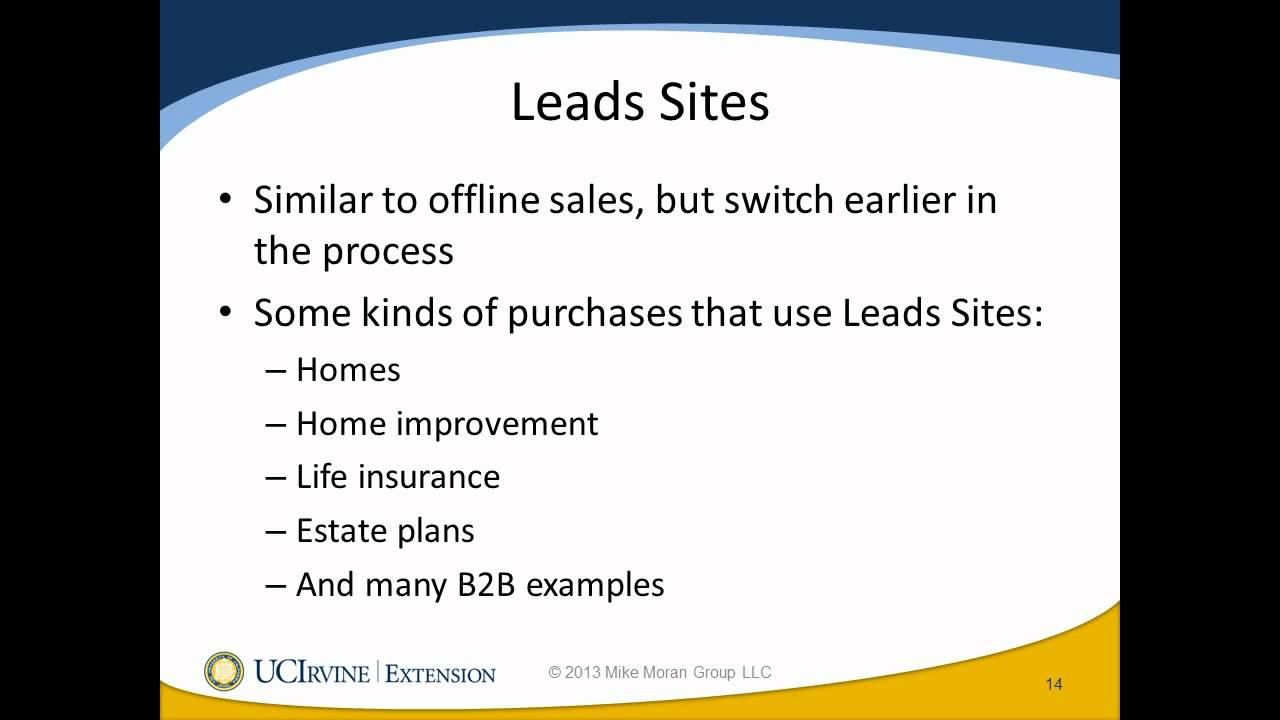
Now, offline, it's really hard to have perfect information because you'd have to go to every store to see what their price is. But online, it's a lot easier, and there are price shopping sites that let you— that let you see exactly what it is that you're buying from different sites and what the price is, and they can all come up on one screen. So you get much closer to the economic principle of perfect information online than you do offline, which is why price competition becomes very important. But there are a couple of areas that emerge for differentiation online. One of them is content. If you have better content than your competitors, you may be attracting people to come to your site through search that might not find the other sites because you might have content based on what problems the, the item solves. And you also may have a better site experience. So you might, you might either through content or through other aspects of the site have a way of making it easier for the customer to make a decision, easier to make a purchase, easier to persuade them to— that this is the right thing for them. And so all of those things go into the salesmanship of the site, whether it's content that might persuade them or whether the, the ease of the experience is what persuades them. And once you're doing things like that, that gives you a way of differentiating that's other than price. And it's really important that there be ways of differentiation other than price because, as we said, price has only one winner. Content and site experience, you might be able to win in several important market segments even if you're not winning on price. The other thing that happens online is that there are far more impulse purchases than there were in the past. And it makes sense if you think about it. For you to get up off the couch, get in the car, drive to the store, and then buy something, it's a lot more effort. Buy something, it's hard to really say that that was an impulse. So impulse purchases in offline retailing typically have to do with things that you decide to purchase once you already came to the store to buy something else. So it might be the pack of gum at the register, it could be a candy bar, it could be a magazine, But it's usually something that just catches your eye, often at the register, but sometimes in other places in the store, that you say, oh yeah, we should have that too. I mean, this probably happens to you a lot when you're grocery shopping, that you're in the store and then you pass something, you see something's on sale, and you decide you're going to go for that. Or you see something that you haven't had for a while and say, oh boy, you know, we should get that. I should make that for dinner. And so those are impulse purchases because they weren't planned. You didn't go to the store intending to buy those things. Online, many, many more purchases are impulse purchases because you don't have to get off the couch. You don't have to get in the car. You don't have to drive to the store. And so the, the time between when you think, I want that, and when you could actually buy it is far reduced, and it allows you to act on impulse. Far more frequently. And so what we saw in the early days of web retailing was a dramatic rise in impulse purchases. From the studies that were done, it went from 25% to 40% in the first 3 years of the last decade. Now, I haven't seen any studies since then, but you can imagine that it's probably increased even more as online purchases have become more ubiquitous and even easier. Now, what do you do to take advantage of this? Because impulse purchases are just as valuable to you as ones that are extremely well thought out. So how can you not only take advantage of having all the content and site experience that allows people to make well thought out purchases, but how can you also help them make impulse purchases? Now, for some of you, this won't be helpful. Because people aren't gonna make an impulse purchase of a swimming pool, right? But if you do things where you're selling online, then a lot of online purchases can be impulse purchases. And so the question is, how do you do that? So there's several different things that seem to trigger impulse purchases. The most important one is a deal. It's something that Might have some kind of time constraint on it. You have to act within a certain amount of time. Might have a lower price. It might have a throw-in to the deal or a bundle that makes it more appealing. But it's some kind of call to action that causes people to want to do it now. The other thing you want to do is to make it easy. So As we talked earlier, your content and your site experience have a great deal to do with what your ability is to persuade people to buy online. One of the parts of making it easy is to take away all of the objections that people might have. You know that offline, a good salesperson knows how to knock down every objection. They know what kind of objections people tend to have, and as they come up, they tend to know how to be be able to circumvent those objections and persuade people who have those objections. And so those are the kinds of things that you need to think about online as well. What are the things that you know people have questions about? Do they have questions about your guarantee? Do they have questions about how easy it will be to return? Do they have questions about how the product works? Do they have questions about whether it's going to work in a particular situation? Do they have questions about what the cost of ownership is, not just the purchase price? What are the kinds of things that people are concerned about and how can you answer those questions to persuade them to buy. And we talked earlier about how your site experience is really important for impulse purchases. It's even more important that your site experience be extremely good. Don't rely on people using your site search engine to find things. Make sure that the things that you think are the biggest impulse purchases are part of your mainline navigation. If they come to the homepage of your site or indeed any other page of your site, they should be able to quickly see what other things are available on the site and be able to navigate to get there. If you do these 3 things, these are the most important things for really getting impulse purchases to happen. Now you might be asking, what does all this have to do with search? Well, impulse purchases are more related to search than to other kinds of navigation that gets to your website. The reason is because search is really fast. If someone is trying to act on an impulse they have, it's extremely likely that they're going to turn to a search engine to satisfy that impulse. If they're thinking, oh, I just saw that book review on Oprah and I want to buy that book, it could be that they're going to go to Amazon and go buy the book because they're a longstanding Amazon customer. But if they don't, it's really likely that they're going to go to Google. So they might come straight to a site. If they have a site that they know for it, but it's very likely that they're gonna come to Google also. And so if they come to a search engine and then they search for something, they find it, then they're gonna immediately try and follow through on their impulse. And so you— if you are trying to persuade people to buy on impulse, it's really important that you have the, the top search results for your site, because otherwise those impulsive people are gonna go somewhere else. Now, as web access becomes more and more something that we do on a phone or another kind of mobile device rather than exclusively on a computer, impulse purchases may even go up. Because if you think about all the times that people are out and about and an impulse hits them, they might see something, they might, they might see something in a store window, or they might— who knows where they're gonna see things, right? Or they might see an advertisement on a billboard, or it doesn't matter. All the offline stimuli that cause us to want to buy something. Now we're gonna have the opportunity to immediately, from our phone or from an iPad or from whatever other device we might have that's connected, we can then make that purchase immediately. And so mobile search might actually even increase the number of impulse purchases. And again, search is a critically important part of that. And so one thing that you can do to make impulse purchases more likely is to make your products more granular. And so what you're doing is you're dividing them up into smaller parts, which means that they are cheaper. The lower your price, the more impulsive a purchase will be. And so if you think about some of the things that have happened the last few years that have made products more granular, it used to be that buying and selling stocks was something that people didn't, didn't do all that frequently. But by being able to price things not as a, um, as though you have to have a broker that you're paying a big fee to and who is managing your portfolio, but instead you can have somebody who, who just logs on to E-Trade and makes one trade. And day traders do this all the time. They're very impulsive. People might get to see a tip and say, I want to go buy that stock. And by making the price of that trade really low, by making the relationship one that doesn't have to be as sticky, that causes people to be more impulsive. iTunes is a great example of this. So where 15 years ago you had to, you had to buy a CD and you had to go to the store to do that, you know, 10 years ago you could buy something on CDNow or Amazon where it was more impulsive. You could buy the CD and it would be delivered to you. Now, with iTunes, you can go onto iTunes, find the one song you want, not a $15 CD that has 10 songs on it, but a $1 song, and download it immediately. And so, that immediacy matters, but also the $1 for one song makes it something that seems very impulsive, like buying a lottery ticket. Um, it's something you just do because you just feel like it. You don't think about it at all, where you might have thought a little more about whether you want that CD or not. And so anything you can do to have offerings that are more granular, that are cheaper, if there's ways of doing that, that gives you an opportunity to do much more impulse sales. Okay, so let's look at another difference between different kinds of web sales sites. So we already talked about online commerce versus pure online, but here's another difference: retailers versus manufacturers. So they both might sell online, obviously they both might sell offline as well, or both, but even though they might sell some of the same products, a retailer might carry a manufacturer's products, They're gonna have different benefits to their customers. And so let's think about what those benefits are. So with a manufacturer site, its breadth of products is not going to be the same as for a retailer site. So a manufacturer is only going to carry its own products, and a retailer is going to carry products from many different manufacturers. And in fact, that's part of the value proposition. For a retailer is that if you know you want a DVD player, you can come to me and I can show you every different DVD player that there is. Whereas a manufacturer has a different value proposition where a manufacturer is going to talk to you about much more deep and detailed information about its own products than you would expect to find at a retailer. Now, the objectivity of that information, on the other hand, is something that you might be a little more concerned about. The manufacturer is going to paint its products in the best possible light, where it's more likely that a retailer would have objective information. Now, retailers are trying to get you to buy things too, so it's not as though their information is totally objective, but Their information is probably more even-handed than the manufacturer's information. On the other hand, it's probably less detailed. And also, if you think about how retail sites have started to evolve, it's much more likely that a retail site is going to have online ratings and reviews from customers than a manufacturer's site, although it's possible for each of them to have such a thing. And that information you would expect to be the most objective information. The other thing that you need to think through is that the frequency of return visits differ a lot between manufacturer and retailer sites. Retailer sites people might visit very frequently, while manufacturer sites not so much. Because there— if you think about how manufacturing works, you're unlikely to have the need to visit the same manufacturer as frequently as you might visit a retailer. You might go to Amazon.com 2 or 3 times a week, certain customers might, but it's unlikely that they would visit the same manufacturer 2 or 3 times a week. So what do manufacturing sites emphasize? They really emphasize branding. So let's take this example from Sony. So Sony style is really emphasized, and so the idea is that if you are coming to a manufacturer site, it's very likely that you have some level of brand loyalty to Sony. Or else you probably wouldn't go there. You probably would go to a retailer site. And the navigation is built around all the different products that Sony provides. And you can see just even from this page that there's deeper information and deeper choices about the product line than you're likely to see at a retailer site. And so manufacturers' websites, they have a shopping cart. You can see the buttons at the bottom, just like a retailer site does. But they're much more likely to be offering bundles, as we have— as we see here, that are bundles of their own products. Whereas a retailer site, those bundles might not even be offered. They'll sell you each of those things individually. It could be that the price that the retailer offers you is even lower than you get from the bundled price. I mean, it depends on the retailer whether that's so or not. But manufacturers are really letting you know that those things work together. So that's, that's another way that they're providing more information, whereas on a retailer site you have to figure out Whether the different games work on that machine, whether the controller works with that machine. Whereas if you go to the Sony site, they'll show you all the different ways you could use a PlayStation. They'll have different packages. They're guaranteeing that these things work together. Whereas if you're on a retailer site, you're kind of on your own with those kinds of questions. But retailers have choice. So if you look at Buy.com and you're looking for that same video game machine, you've got multiple manufacturers. You're looking at navigation within product categories across those manufacturers. And the emphasis is on deals. The emphasis is on how you can make your deal now, how this is the lower price. How you can get— and they have a bundle as well. It's not clear whether that bundle is all from the same manufacturer or not, but you can see that this is a different approach. Buy.com really doesn't care whether you're buying a PlayStation, an Xbox, a Wii. They don't care. And so they want to offer everything they have, and then you can figure out what it is that you're going to buy. And so someone could come to Buy.com intending to buy a PlayStation and instead end up buying a Wii. And Buy.com is fine with that. They don't care. Now, that is much less likely to happen on a Sony site. You'd have to abandon the Sony site to go to the Nintendo site if you were gonna go to another manufacturing site to buy a Wii. And so some customers use manufacturers' sites to research and retailer sites to buy. Others do all of their work on the retailer site. There are others who are more brand loyal that do all their work on a manufacturer site. But the purpose of looking at these things is to help you understand what kinds of things help manufacturers versus retailers to be persuasive. Manufacturers are not going to become persuasive by offering their competitors' offerings. If you go to the Sony site, you're not expecting to see them show you an Xbox. Whereas if you go to a retailer, you are expecting that. On the other hand, retailers could mimic manufacturers and try to develop more deep, detailed information. So they have the opportunity to do that. And they also have the opportunity to create bundles that they're promising will work together. And so a lot of the things that have distinguished manufacturer sites Are things that retail sites could emulate if they desire to. So let's look at offline sales sites. We spent a lot of time looking at online sales. So most offline sales sites also do sell online. You can see this from Circuit City. This is a couple of years old. This this screenshot, but it makes the point. Circuit City isn't, isn't around anymore, but the point is still there that what Circuit City was doing on the website was to emphasize not only that you can add something to the cart on the website, but also that you can have very fast in-store pickup. And they're emphasizing that in a couple ways. At the top, they're saying free shipping. They're also saying, or choose 24-minute in-store pickup. And so, and at the bottom corner you can see that it says, get it today, check in-store availability. So even before you're buying, you can find out if it is in stock in the store near you. And so, this is a way for retailers to take advantage of the fact that they have all these stores everywhere. They can allow people to shop online, to take advantage of the fact that the web is maybe a superior way to research purchases, especially in an area like this, like electronics, but also take advantage of the fact that people want things right away. And so they want to go to the store, pick it up, and use it right away. And so that's something that they can emphasize on the website. And so offline sales sites have the requirement that they figure out how to get the consumer to change channels and buy. Because now in this case you could buy online, but for, but for some people who do want to buy offline, you have to make it clear that this is how they can change channels and do what they need to do. Now lead sites are a little bit different, and they are typically sites that are like offline sales sites in that you do some shopping online and then you buy offline, but the switch happens earlier in the process. So you're typically in lead sites, you're pretty much trying to identify who you want to work with offline rather than going all the way through to identify exactly what you want to buy, and then all you have to do is purchase offline. So lead sites, you typically switch offline earlier in the process. So what are the kinds of purchases that use lead sites? So real estate sites. If you're out there looking at homes for sale and you identify 4 or 5 different homes, then what you're really doing is you're trying to figure out, okay, which realtor or realtors do I need to, to work with? And you might say, okay, well, I can call up a realtor, they can show me all of those homes. You might be saying to yourself, well, if 4 of the 5 are actually listed by a certain realtor, maybe that's the one to call up. You also have the same thing going on with home improvement where you want to replace the bathtub in your bathroom. You're basically trying to find out who you're going to work with. So you might be looking for plumbers, or you might be looking to see if Home Depot offers services, or Sears offers services along with the product that you may want to buy, the particular bathtub. Life insurance works the same way. So you, you might go to the site and see what kind of life insurance is available. You might even get an online quote. But you're probably likely to purchase offline, where you go to an agent or you call up on the phone. You can close life insurance online, but it's much less likely. Estate planning is another area where you might be looking for a financial advisor and someone who has that estate planning experience. You may not know whether you want someone with a financial background or legal background, or maybe you want to have A financial advisor and someone with a legal background. But all those things are things that you might research online, but then decide whose office you're going to visit. And these are— were all consumer examples, but there are a lot of business-to-business examples. Most B2B products are things that are researched online and then bought either from an in-person sales force or on the phone. Rather than being bought online. Many B2B products are— B2B offerings are for services. So those services are things that are delivered offline and often are customized. And so many of those things happen where you might be deciding which of the 5 companies I want to send an RFP to, a request for proposal, or which company do I want to have come visit me to lay out what they could do for me. And so those are the kinds of things that— most of those things lead to people identifying their website as being something that drives leads rather than what you think of as an offline sale. Because the people who you identify as leads are ones that will be followed up on from much earlier in the process. So you're going to qualify them. You're going to try and understand whether they are good fits for what you sell. And you're gonna have probably some kind of offline sales team that works that lead through the remainder of the buying process. So let's look at another kind of site where your customer gets off the website even earlier in the process— a market awareness site. Now, a lot of consumer products use the web just like they use TV commercials, so If you're Coca-Cola, if you're Kellogg's cereal, you definitely are using the web for brand awareness. You're not doing online sales. You don't think of these people as doing offline sales necessarily because the chances of them coming to the web to try and research what kind of cereal they want to buy is fairly low, or what kind of soda they want. Those are not decisions— those are decisions that they pretty much think they know how to deal with. And they don't mind just standing in the store and looking at things. It could be that there are some people that you could think of for offline sales because perhaps they're looking at what kind of food they're buying for health reasons, or it could be that they're changing their mind about what they've always bought, and maybe there is some element of researching for offline sales here. But for most of these kinds of products, you're really just trying to make people aware that you exist and put it in their minds so that the next time they're in a position to buy from you, They do. Movies used to be market awareness sites, although now some of them will sell the tickets online. So they're becoming more of a web sales type outlet. But a lot of movies that, you know, people go online just because they want to see the trailer, because they want to decide whether they want to go or not. So, if this is the kind of site that you have, and these are, you know, one way to think about this is if you were really happy with using television and radio for marketing, then likely on the web, you're going to be doing mostly the same things. You're going to be, you're going to be doing the same kinds of things to raise brand awareness that you were using television and radio for. All the kinds of marketing we've talked about for companies before this, they might have used television or radio, but many of them couldn't because it was too expensive. And so, those kinds of sites are much more focused on driving sales, whether they're online or offline, whereas these types of sites that we're looking at now are much more looking at the early stage of the process where they're just trying to make their customers aware that they exist. So social media is another area that has started to become important. So if you think about even putting your television commercials on YouTube as is, those are things that are happening, but A lot of these companies are realizing that if they focus things particularly for the web, whether it's video, whether it's Facebook fan pages, whether it's having events that they sponsor— I mean, a lot of beverages in particular, alcoholic beverages in particular, they also sponsor a lot of things. And so then they want to use social media to get those event sponsorships out there. So all of these kinds of things probably make a lot of sense for these kinds of companies. And so their websites are going to be devoted more to brand awareness than to anything else that would lead directly to a sale. Other kinds of sites, just coming to their site is plenty. So if you look at CNN, ESPN, any of those kinds of news, sports, information sites, they, they run based on advertising. And it's usually display advertising in which the site gets paid every time the ad has an impression. So every time the ad is shown to the visitor. And so they don't have to worry about conversions. They don't have to worry about getting people to buy things. They don't have to worry about Things happening offline. Now, it's possible that there are things that they want people to do offline. ESPN may want people to go to one of their ESPN SportsZone restaurants, or they may want them to buy ESPN the magazine. So there may be offline things that they want to do, but they're much more minor in terms of goals in comparison to the main thing they want to do, which is they want them to come to the ESPN site and they want to look at as many different pages as possible because on each of those pages is an ad that rings the cash register for ESPN. So entertainment sites, information sites, they often have that kind of model. So all they're looking for is to drive traffic. So from a search marketing point of view, they want to make sure that their news articles are showing up when people search for things, because that's how they're going to draw people to their site. And they also, and they also want to make sure that once they get you there, they're going to be showing you many other different things for you to look at so that you might read some more. So instead of just looking at one page, you might look at 10. And so all of these sites might have those kinds of upsell products that require conversions, that require people to buy things, but often the main goal is just to get them to come to the site. So I mentioned before, ESPN sells subscriptions. So I talked earlier about how they have subscriptions to their offline magazine. You can see on the screen where it has ESPN the magazine. But they also have something called an Insider where they'll highlight premium content to all their users. You can see the little IN logo next to a particular story, that's what tells you that you need to be an ESPN Insider in order to read that story. And sometimes they even give away some of this premium content so that they'll show you 1 or 2 stories, but then if you try and look at a 3rd one, then they'll say, okay, look, you have— now you have to ante up and you have to pay what the Insiders pay. And so Their model is that they do make a lot of money from the free advertising, but then they also want an upsell for you to be paying them a subscription fee each month. And so you can see how they— the way that they present the site, they'll have a story, but then they'll have this box of other headlines. And so for the ones that are not Insider headlines, they're trying to tease you to go to another page because that will trigger more ad sales. But then there's a few of them where they are showing that those are insider sites. And so they might be telling you, they might be giving you information that might be more likely to appeal to deeper sports fans or for people who work in the sports industry or for people who might be playing fantasy sports, people who really have a motivation to get every last bit of information they can. So they might be more willing to pay for a subscription. Another kind of site is a persuasion site. So here's an example from PETA, the organization that's trying to protect animals, where they have a site called furisdead.com where they're trying to attract people who would like to stop seeing animals used for fur. And so they have all sorts of information about what's going on. You can see that they have calls to action to donate, to join our activist network. So volunteering, donating money. I mean, so what is it that you're trying to get people to do? So it might be, as in this case, that you're trying to sway public opinion. Or it could be that you're trying to get them to support a charitable cause. But instead of just stopping at saying we want to persuade people, you have to really pay attention to what your conversions are. What are the things you're trying to get people to do? So you're trying to donate things, you're trying to volunteer, you're probably trying to get money. What is it you're trying to get people to do? And so you can see on this site it clearly shows exactly what they're trying to get people to do. And you can see that they have a number of different things that show how they're succeeding in certain areas, how they might be bringing some more updates for certain campaigns that they're running. And these are all the things that you can, that you can do on a site that's designated for this kind of business goal. So how do you persuade people? How do you sway public opinion? How do you support your charity? It all goes back to you having calls to action for the things that you're trying to get people to do. So those are what your goals are. So just like a business site might want people to buy, a persuasion site wants them to do something else. So no matter what kind of site you are, all of the things that we're going to learn about how to make a site more persuasive and most especially how to get search traffic to come to that site, they all go back to the same thing of you needing to understand what it is you're trying to get people to do.
So what—
now that we've looked at a number of different kinds of sites, we want to keep in mind that there are different kinds of searches. So we had talked earlier in the course about navigational searches, transactional searches, and informational searches. And so navigational searches usually have one answer. So people don't usually want to type out a URL, and so instead of typing out walmart.com, they're gonna type in Walmart and let the search engine find walmart.com. Transactional searches are when people are looking to do something like buying, and informational searches are when people want a broad overview of a subject, and there could be many different answers. And so each of these kinds of searches are searches that may help you as you're trying to, to drive traffic to your site. So let's look at each of these kinds of searches and see how they affect different kinds of websites, websites that have different goals. So if your website is looking to drive leads, for example, it might be really important for you to focus on informational searches rather than transactional searches. So you're not necessarily looking for people who are typing in a particular model number of a product because it's not something that you sell online. I mean, you may get some people doing that, and you might show that model number, and you might have information about it, but because your major goal is to drive leads and to sell offline, it's unlikely that that's going to be many of your searches. You might have navigational searches if people have a famous brand name or product name that they know that you offer. It could be that you're the manufacturer. It could be that you are a retailer or some kind of distributor or reseller for that product. But if they know that brand name, the navigational searches might be important. But informational searches are far more likely to be the vast majority of what you're driving for because you're looking to get people who are in the early stages of the process. Now, on the other hand, if you're looking for online sales, for example, transactional might be really high for you. And the same for even offline sales. It could be that transactional is really, really high. For market awareness, navigational is probably going to be the highest because they already know the name Coca-Cola or Kellogg's. Whereas informational sites, it's unlikely they're doing research about your product. It's also unlikely that you're trying to buy it online. And so whereas with web sales, offline sales, and leads, both organic and paid search might be good approaches. For market awareness, it's much more likely that they're going to emphasize paid because the, the organic searches are probably just going to be for their brand names anyway, and they probably already win those. So it's really the paid searches that are probably the ones they have to focus on. For information entertainment sites, they on the other hand probably emphasize organic search because they probably don't make that much money on ads as each person comes to their site. So they probably can't afford paid search because they can't afford to pay for people to come to the site. On the other hand, organic will bring people to the site for free. So it's probably very important that they get very good organic search rankings for each of those stories that show up. And so those informational searches where people are typing in some kind of subject or some, some person who's in the news, those are the ones that they're really going to want to emphasize. And for persuasion sites, they probably can do organic and paid depending on how valuable it is to get someone to volunteer or to donate. But they also are probably looking at informational sites. There might be some organizations that have such a brand name like the American Cancer Society where the navigational searches are important. But transactional searches are likely to be very low. People don't show up at a search engine saying, I'd like to donate money to the American Cancer Society. If they knew that they were going to do that, they would probably go straight to the site. So I've been talking a little bit— we've used the word conversions a few times. We've talked about website goals. And so what we really want to talk about is what your site is for. Now that you've looked at a whole bunch of different kinds of sites and you've thought through what they do, how they work, then the question is, what is your website for? So what are the particular calls to action that you need to have on your website? Now, and often you'll have more than one.
You don't—
it's not necessary that you only have one site, one call to action on your site. It is necessary that you have at least one, and you can have multiples. When I worked at IBM, downloading a white paper was a big call to action, and the reason was that there were many products that were fairly complex to understand. And so those white papers had a lot of information about technology or about consulting services, and these are things that could be shared with other people. So if there are more than one person making a decision, and a lot of times at IBM there was, then you could use this white paper to get people to move that marketing message through the organization. And so, every part of those websites was trying to get people to download white papers. You couldn't look at any different page on IBM for those consulting services or those very expensive hardware and software products without seeing a white paper that they wanted you to download. But that doesn't make sense for every company. For, you know, IBM was trying to drive leads for those expensive products, but you might be selling personal computers, and if you are, then you're gonna have a shopping cart on your site. You might be selling swimming pools, in which case you're trying to get them to fill out a contact form. So it depends on what it is that you're selling. That drives what it is you're trying to get them to do. And so you have to think clearly about what it is that you're trying to get people to do. Understand what your call to action is, or your calls to action are. And then what you need to do is you need to design your website so that it persuades people to respond to that call to action. And if you do that, then you're suddenly gonna find that it makes a lot of sense to emphasize search marketing to bring more people to your site to be exposed to those calls to action. And so that's really what the focus of this is. It might seem like all the things we're talking about now don't have much to do with search marketing, but in fact they do, because all of the effort and the resources and the money that you have to put into search marketing— the only way you can justify doing all that is if you really understand what the value of search marketing is. And so if If you aren't focused on whether your website is converting people and whether these calls to action are resonating with them and what the value is each time someone does one of these things, it's going to be very hard for you to justify a search marketing program. You are unlikely to be able to get the level of investment, the level of effort that you need in order to be successful. Because you don't know what the value is. You don't know what your return is on that investment. So let's look at what the math is. So how do you count conversions?
How do you get people to do things on your site?
So if you take a look at how many visitors come to your site, and then you know that you have a conversion rate of 1%, it means that you're actually getting 10 people to convert. And we're just using these numbers as an example. 1,000 could be the number of people that come every, every minute if you're Amazon.com. It could be how many people come every year if you're a small site. It doesn't really matter. What does matter is that those 1,000 people, they're the ones that you need to persuade, and the conversion rate says how successful are you persuading them. And so this becomes your base case. This is where you start. So wherever you start, you want to understand what are my numbers for how many visitors come to the site and how many am I selling? How many are doing that call to action? How many of them follow through by downloading the white paper or filling out a contact form? How many go to the end result on the web regardless of whether they eventually buy offline or not? And then you need to start with that. And then what you want to look at is whether the things you can do to increase your conversion rate— what can you do to make your site more persuasive? Now this doesn't have a whole lot to do with search marketing. It might have a little bit to do with which keywords people are using. It's possible that certain keywords have higher conversion rates than other keywords, and so you might want to emphasize those. But mostly this has to do with your site experience, with your content, with how persuasive your site is, with how good your products are, with how good your offers are. So it mostly has to do with other things besides search marketing. But nevertheless, this is a key thing to work with. If you can double the number of people that you're persuading, then you double the number of conversions, and that would be very good. Likewise, you can use search marketing or other techniques to increase the number of people coming to your site. If you double the number of people that come to your site, that's also good because now you're doubling the number of conversions as well. And these are really the only 2 things that you have to work with. Whatever you do in digital marketing, you can either increase the number of people that see it, or you can increase the number of people that respond to it. And those are the only 2 things you really get to do. So if you're doing things in digital marketing that aren't designed to do at least one of those 2 things, you're wasting your time and money. You need to focus on how they're affecting these numbers. You don't have to be a math major in order to do this, but you do have to be willing to make decisions of what things are working and not working based on the numbers. The best of all is if you do both of these things. If you could double the number of people coming to the site and you double the persuasiveness of the site so the conversion rate doubles. Now you quadruple the number of customers that you were getting versus the base case. And this is really where you want to be. How can you take actions that will improve how many people see your marketing offers and how many of them actually respond to those marketing offers? That's really what the basis is of measuring the value not only of search marketing but of any other kind of digital marketing that you do. So in a sense, we made it a little bit too simple when we were thinking about the conversion rate, though. If we think about conversion rate being the number of conversions divided by the number of visitors, that could be right, but it depends on your business. So if you're Toyota and you're selling cars, if the same person comes back to your site 3 times in 1 week, then it makes sense that they're only trying to buy 1 car. So it makes sense to divide by visitors. So if you know it's the same person coming back, then you want to divide by visitors and say that's my conversion rate. On the other hand, Amazon ought to divide by visits, because if you come to the Amazon site 3 times, you might actually buy 3 times. And so it depends on what kind of product you have, whether you divide for your conversion rate by visits or by visitors. And so you need to think about that carefully. Whichever you pick, as long as you stick with it, you're going to end up being able to compare your numbers from week to week, month to month, and understand when you're making your site better or not. And so it, it's a decision that you make at one point, but It's not all that important as long as you keep it the same. So you might be asking, how do you count all these things? Well, there's something called a web analytics system that you might already have installed on your site. There are many different kinds of web analytics systems, and all of those companies that make web analytics systems, they can all give you exactly what you're looking for in terms of counting the number of people that come to your site and counting how many of them buy. They can also tell you how many of those people came to your site from search engines. They can even tell you which keywords they typed into the search engine before they came to your site. All analytics programs can do that. Now, if you don't have an analytics program for your site, then the one to start with is Google Analytics, basically because it's free. So you don't have to justify anything to anybody. You can, you can add the JavaScript code to each of your web pages that identifies that this is a page whose activity ought to be reported to Google Analytics, and then you can just log into a website that Google maintains for you that nobody else will see that gives you a dashboard that shows you the traffic that you're having on your site, and it can also show you how many people are converting if you set up the conversions properly. And so this will give you all the information you need to do the math that I showed you on the previous pages. So you might be asking yourself, what are the metrics that matter? You probably hear a lot of conversation about different metrics, whether it's email opens or ad impressions or page views or all sorts of things. And so what you really want to know to evaluate any kind of marketing is whether they saw your marketing. So you'll see you can use tools that tell you whether they actually saw your ad in paid search or whether they saw your organic search entry on the screen. And then what you want to know is if they selected it. If they selected it, they will come to your site as something called a referral. And so your analytics system can tell you that. And if they bought, bought it, if they followed your call to action, then you will know that because you've set it up as a conversion in your web analytics systems. This is really what you want to know: whether they saw your marketing, whether they chose it, they selected it to go deeper, And then whether they eventually converted. And so if you can understand those things, you can understand what the effectiveness is of your marketing, and then you can know which time— when you should be changing things and what you want to be changing. Because you might have a problem that people aren't seeing it, you might have a problem that they're seeing it and they're not choosing it, or you might have a problem that they're seeing it, they're choosing it, but they're not buying. And that's what you then— and so then it gives you the idea of what to focus on next. So, how does a web metrics system work? I talked about how you have to put some JavaScript code on your page. And so, what really happens is that every time your page is shown, that JavaScript that you put on the page is doing— is pinging the metric server. So, if it's Google Analytics that you are using, the JavaScript knows what server has Google Analytics code on it. And so, it's pinging that server that says someone viewed this page.
So, how does that work?
And so a page view is then logged for that page. And so, but you do have some things that are a little harder to understand. You might not know what's on the page. So you might have a personalized page in which different calls to action show up on the same page. And so if you, if you have that, then you need some other kind of metrics to help you know what things are on the page. For search marketing, This is less important. For search marketing, you pretty much care about whether the page was shown in response to someone coming to you from a search engine and whether the conversion happened. But for other kinds of marketing, there's limits to how metric systems work so that you might need to understand what's on the page to help you understand whether your marketing impression was registered. So let's think through what people are doing on your site. So they might be learning about your offerings. They might be shopping, which means that they're putting a product together or customizing it, or they're placing a preconfigured product in a cart. And they're buying. So these are 3 big things they're doing. And you have to think about what kind of searches they'd be doing when they're doing each of these things. If they're learning about something, then they're probably focused on a particular problem. So they'll be searching for solutions to their problem. On the other hand, if they're shopping, it means they already know the name of the product categories. They've already made a decision that they're investigating whether to buy one of them. If they're buying, then they probably already know even maybe what a model number is, and they're trying to figure out who to buy that from. And if you think about it, you need different kinds of information at each of these steps. If you offer someone a coupon when they're learning, they don't care. If, on the other hand, when they're trying to buy, you're trying to explain how your product solves the problem, they don't care about that either because they're already past that step. And so each step of the buying process requires different kinds of information that you want people to find in search. So let's take a specific example. So suppose you are running the Intuit website and you are in charge of their TurboTax tax software product. So what are examples of search queries for each of these steps? So here they are. So if you're learning, you might be looking for income tax advice. Now, What kind of a page would be helpful there? It's probably not one that says buy TurboTax now. It's one that probably says there's a lot of different ways that you can do your taxes. You can use an accountant to do it. You can use a tax service. You can do it yourself. You can do— I mean, and list all the different things. One of them is to use tax software. And so by putting an article on your site or in other places in social media— it doesn't have to be on your website— that really explains things, that helps people to understand what their choices are, you can then at the end of the article say, if you're interested in doing it yourself, here's a way of making it easier for you by using tax software, and click here and you can come to our site. And so that's a way of attracting people. If on the other hand they've already decided they're doing it themselves and they're saying, I'm looking for income tax software, now they've gotten to the point to where they know what the category is of product that they want, but they don't necessarily know that they want TurboTax. And so now you have to tell them, okay, look, here's how we compare to other kinds of tax software. Here's why you should buy from us. If they're typing in TurboTax, then you have to understand that they've already decided to buy, but they don't know whether they're going to buy from the Intuit site or whether they're going to buy from a retailer. And so now you have to give them different information like, do they have free shipping, or how fast can they get it, or do they get some premium kind of service if they buy from you? What should make them buy from you? On the other hand, if they've already purchased from you and it's been shipped to them and they're waiting to get it. Now you might want to offer things that help them see, okay, here's when it's going to be delivered, here's how you can look at the tracking number for the shipment. And once they're using it already, this is maybe their favorite kind of search, TurboTax upgrade. Each year they're going to come back and upgrade TurboTax and make sure it reflects all the latest tax codes and whatever new and advanced features have been added. And so the reason that we draw this web conversion cycle as a circle is that you're hoping that each time it's going to drive people round and round. So this is a good example where TurboTax Upgrade actually helps them move from the Use step back to the Learn step where now they're going to find out why should they upgrade their TurboTax. Why can't they just use the same one they had last year? And so So you draw this because you're trying to get people to go round and round. You're trying to constantly get them to come back and buy something else. And so you might imagine with each of these different kinds of search keywords, there's different information people are looking for. So you can't just say, well, I have a webpage out there that talks all about TurboTax, because probably the only, the only of these searches that that's good for is if someone types in TurboTax. If they type in any other of these searches, they're probably looking for something somewhat different. From that catalog page, and you need to provide it if you're gonna satisfy them and keep them going to the next step. So now you have to think about what the web conversion cycles are for your site. So if it's a software download, every step is online. So they come, they learn, they shop, they buy, they're downloading it, which is, you know, a very Quick step of receiving it and then they're using the software. And so all of those things happen online and you can get them to go round and round. If it's an eBook store, there probably isn't any support needed.
There's no use step where they're using the book and they're not sure what to do.
If they did have a problem, they'd probably go back to whoever manufactured their e-reader device, like Amazon Kindle or their Sony. E-reader, they would go back to the manufacturer if they were having a support problem. So that's a really simple one where there's only 3 steps, and again, they're all online. For a bookstore, delivery is offline. So that get step is offline. But the rest of the steps can happen online. You might have other kinds of cycles for businesses, like if you have a consulting business where a lot of the steps are online. They may discover you online, but then Engaging you might happen offline to determine, you know, maybe there's a request for proposal that happens offline and then actually receiving the service happens offline. And so it depends on what you're doing as to how you are going to think about what your web conversion cycle is. You can see a content subscription site looks pretty much the same as a lot of the other online models, but they just have different names because we just use different names for what it is that people are doing.
So think about what your web conversion cycle is.
So we talked about some of them happen online, like online PC sales. Others, like we talked about for consulting, you might engage online, you might select and collaborate offline. We still draw them as a circle, however. And the reason we do that is because if you're collaborating offline and getting that consulting, the consultant is still going to be walking around providing Other ideas for what kinds of things that you might want to do. And when she does that, you're probably not going to engage with her offline. You're probably going to go back to the web and try to learn some more. And so no matter whether you're online or offline, all of these things result in activity that you need to understand and manage. And you need to think about how search is going to support that.
So you might be wondering how you track offline conversions. Because it's one thing to know they downloaded your white paper or they called you on the phone, but how do you know, for example, if they went to the store and bought?
Or how do you know what—
how do you track those things? So the real trick is to be able to track the web visit to a particular offline encounter. So the easiest way is if you contact the customer. So if, if they fill out a web contact form and you're contacting them, that's the easiest way. But often the customer is going to switch channels by themselves. So they're looking at your website and they'll just decide to pick up the phone and call you, for example. So one thing you can do is have a phone number that is nowhere else but your website so that if they call, you know that they called from your website. I know one company that has a different phone number for every page on its website, so they actually know which page you were on when you call. And so you can get down to that level of detail if you want to. Car dealers have this kind of problem. Car manufacturers want to track whether their website drove sales, and they don't know because the dealer sells the cars. So what they've gone to is a system where You see in this case, you build your own Cadillac. And Cadillac was the first one to do this several years ago. And so you, you pick what you're looking for, whether it's the exterior color or the GPS system or whatever it is you want. You print the thing out, you bring it to the dealer. And when you do, the dealer will then note that you came in with one of those configurations, and then they will mark down if you actually buy a car that you were driven there from the website. You could do this by having a coupon that a retailer picks up. So there are lots of ways of tying things from the web to your offline transactions. Now you might not be able to track offline. I mean, there are a lot of businesses that can't. So for example, if you're a pharmaceutical company, it's really difficult for you to know whether Some information you had on the website caused someone to go to their doctor and ask for a prescription. So you might need to do something else. So you might want to ask customers when they buy. So that could be a question for your call center team. It could be a survey that you run over a set of customers. It could be if your products have warranty cards to return, you could ask that question on your warranty cards. There's lots of ways of doing it. This isn't quite as good as if you can actually identify from sales how things work, but it's better than nothing. It at least gives you an idea of what's going on. So when we think about how we're going to understand the value of search, what's the return on investment from search, what's the revenue that search drives, what we really want to do is to use the web conversion cycle so that we can identify how many people search and come to the site, how many of them land on Learn pages or Shop pages or Buy pages, or how many of them progress from Learn to Shop to Buy, and how many of them actually check out and purchase something. And if you have offline conversions, you want to take your tracking offline as well. So you want to find out, of the people who completed your web conversion, how many of them also completed an offline sale. And by doing that, you can then find out not only what your conversion rate is, both online conversions, web conversions, and your offline conversions, but you can also identify what the mini conversion rates are between each step. So how many, what percentage went from Learn to Shop and from Shop to Buy, for example. And that can help you understand how persuasive your site is. But what you want to know for search is which keywords were driving those conversions and what the value of them were, because that shows you what the revenue is that search is driving. And so if you understand what the average transaction rate is and then you can track that all the way back to a keyword, you'll know what the value is of improving the amount of traffic that comes from that keyword. Because the thing that we have to remember is that search only drives traffic. So search really can't cause the conversion. Search can just bring someone to your site. The value of search is based on the conversions that happen. So for you to understand what the value of search marketing is, you must calculate both your conversion rate and the value of those conversions. So that can help you justify how much you're going to spend now, and it can also check that you're actually receiving that value after you start running your search marketing program. So you can see in this example that you can estimate how many more people are going to come to the site. You could— if you know what your conversion rate is on the site, then you can make calculations that show you what the added sales are and multiply it by your average transaction. That can tell you how much more revenue you'll get every month or every year. And that will help you say, okay, if we could then implement a program that could drive that many more people to the site, this is how much it would be worth to us. And that can help you justify the expense of starting a search marketing program, and it can also help you later to check to see whether you actually drove the value you intended to. Now, these are just relatively random numbers. If you have a much smaller business, then these numbers wouldn't, wouldn't be the ones that you would be using. If you have a much larger business, these numbers might not even cause people to want to make that investment. So depending on what your business is, these numbers are going to drive whether people are ready to do search marketing or not. So that's it for chapters 5 and 6. What we want to do in chapter 7 is to help you understand how you can use metrics to identify whether your search success is happening or not. So we started to get into that in the last slide a little bit. Because we started to show, hey look, you can figure out how many more people you're driving to your site. But there are a lot of other things that we want to measure in search to help us understand how search marketing relates to those website goals that we identified. So before we get into those measurements, let's take a look at what are the kinds of things that we want to do. So let's review. For organic search, there's 4 steps. First is to get pages indexed. So you might want to measure how many pages are indexed. Second is to look at keywords that users will use to find you, the searchers will use. So let's think about that step. Then we want to optimize the content by using those words we figured out on the pages. And then we want to create content that others will link to. If we look at paid search, the steps are similar. You identify the word searchers use to find you, just as before. Now you adopt a bidding strategy that allows you to be profitable. And so in order to do that, it makes sense that you would have to know how much it's worth to get a new visitor to come to your site and how much it'll be worth when you convert some percentage of those in order to make a purchase, because that's what's going to determine whether it's profitable. You want to make sure the searchers click your ads, and you want to ensure that your website makes conversions, as we've been talking about all along. So that's the 4 steps for organic search and the 4 steps for paid search. So you start by choosing your first campaign. So in the book, we brought in a fictitious company called Snap Electronics, and we wanted to choose that they were looking at digital cameras as their first campaign. So what we wanted to do is to identify how you look at which keywords people are using. And how you pick which ones are the right ones for you. So we're going to go kinda through a short version of the steps that you would do for an optimization campaign, because that's gonna help you plan the campaign that you want to undertake. So obviously a good search term would be digital cameras, but there, but there are a lot of companies that want digital cameras to be their number one result. So you need to look at other things. So one thing you might notice is that some of these terms have to do with competitors. So Sony digital camera, Canon digital camera, Kodak digital camera— those aren't really good matches for Snap. Now you might say to yourself, well, we'd like to get those people to buy Snap cameras too, and I understand that, but what you really need is to find the keywords of people who are interested in buying Snap cameras. Not trying to convince other people that they should switch what they're trying to do. It's much harder to do that. And so instead, what you want to do is to look at which words seem to be the ones that match. So some of these words are more for accessories than for cameras, such as digital camera memory. Now, there's nothing wrong with that as a keyword for Snap, but it's not for this campaign. So once you're ready to do a search marketing campaign for digital camera accessories, then this would be a perfect keyword to use. The circled words are ones that really fit Snap's brand image because Snap doesn't really sell cheap digital cameras, so they don't want that one. But they do sell very high-quality cameras, so digital camera review might be a very good one. Best digital camera might be a good one. Digital camera comparison— there's also one down at the bottom that isn't circled that says compare digital camera.
Those would all be very good.
So now, why are we picking these words? We're picking them because they need to— we need to understand where we are now in the search engines. And so if you look at this chart from back when Snap first did this, those names of the search engines were a little different than they are now, but the idea is the same. What you do is you understand where you rank for each of those search engines. And for some of them, you might find that you're nowhere. We put in a 100 anytime we didn't find it even in the first 10 pages. So it could be that the page isn't indexed or it's ranked very lowly. And so if there's no ranking or there's a low ranking, then those can be improved. And the improvement is what you're gonna be going for in your search campaign. And then that is how you're going to justify return on investment. So you also want to look at how much traffic you get. So as we said before, you use your web metrics or web analytics system to tell you what the traffic is from search engines, and that allows you to then project how many opportunities you're missing. So when we looked at what those keywords are, it shows you how many you can, you can bring in each month. And so if you, if you use the textbook, it'll show you how to use, for example, Google's keyword analysis tool to project how many keywords, how many times those keywords are being used in a particular month. Then you can see what your search referrals are and figure out what your share of the traffic is, and then see how many of those searches you didn't get. So you can do this for each of those terms. Now it's unrealistic to think that you, even if you were able to get the number 1 ranking for these keywords, that you would get all of the traffic. So it's not going to be 100%, but you will get some percentage of that traffic. And there's a table in the book that shows you how to estimate, given what ranking you think you can get, what your traffic would be. And so this is This is how you would do that projection. So you would look at what your current rank is, and then you would project what you think your new rank would be. And then by estimating what you think your referrals would be, you would go from— in the case of digital camera, you might be at 0.05% of the traffic for that keyword, and you think you could go from rank 45 to rank 10 And that would give you 0.5. So give you a tenfold increase in the, in the traffic. And so that would change your, your search referrals. And so that's how you work your way through this. These are all estimates, but that's okay. It's better than not doing anything at all, and it gives you an idea of where you can go. So snapshot digital camera, snap digital camera— no reason why you can't be the number one for that. Whereas digital camera, it kind of makes sense that you might not get to number 1 on that one. But maybe you could get to number 10 because you see that Kodak or other ones seem to be in that range. And so this is just a guesstimation that you go through. And so it has some amount of rigor to it, but it isn't, it isn't something that you can absolutely take to the bank and say, oh yeah, that's what we're going to be able to do. Then what you do is you look at what the value is of those conversions. So by taking those and by adding up all the additional search referrals, and you can take the same kind of approach for organic as paid. So for paid, you can estimate how many more, how much more you're going to bid, and then understand how much more traffic you might get from changing the copy on your ads and getting a higher click-through rate. rate, and you can do the same kind of calculation. And then you can add all of it up and say, this is how many more search referrals, how many more searchers we're going to get to come to our site. And by using the conversion rate that you've already calculated from your metric system, then you understand how many more sales you get, what the transaction price would be, the monthly revenue. So this is the same table that we showed earlier, but now you know how you're going to put together those added monthly search referrals. When we showed this a few minutes ago, it was just a number plucked out of the air that says, oh, we're gonna get 30,000 more. But now you can, you can see what the methodology is that helps you work up to adding a whole bunch of different keyword totals up to getting that search referral number. So then what do you do? Well, even after you've justified doing search marketing, you end up having to change things over and over again. So you possibly won't get the benefit that you hoped for on your first try. In fact, you're likely not to. And so what you then do is you're looking at your site and you're changing your site. You're changing all the things that make your site more persuasive to try to improve your conversion rate, as we've talked about earlier. But you're also changing things that have to do with search marketing. So for paid search, you're changing ad copy. You're also changing landing page copy for organic search. And by constantly checking and constantly changing what you're doing, you will figure out eventually which things seem to work better than others. Some of the changes you're making are going to affect your search rankings. So if you change your ad copy so that it gets more people to click through, that will start to, to raise you up in the paid search rankings. Likewise, if you increase your bid, that will move your ad up in the paid search rankings. For organic, by changing the copy on the landing page or by attracting more links to the site, that will raise your search ranking as well. By changing the title on the page or the description or the piece of content that is extracted from the page for the snippet, that will help affect click-through rate on your, on your organic search result. And so all of these kinds of changes are things that you're constantly monitoring to check to see how you're increasing the number of searchers coming to the site and increasing your conversion rate. So let's sum up. We looked at a lot of things in this lesson. 3 chapters worth in the book. And what we came out with is an understanding of how you look at your website and set goals. So how do you know what the goals are on your website? How can you figure out what those calls to action are? How can you identify what it is that you are trying to get the searcher and the visitor to your website to do. For a lot of websites, that takes some work. It takes you thinking clearly about what you're trying— what specific actions you want done. It makes you think like a direct marketer. And so you have to be able to figure out what kind of response you want people to get. It's not enough in most cases to just say, well, I wanted them to read about our product. Sometimes that can be okay, but most of the time that you're looking for them to do something more. We also talked about how you can measure whether you're actually effective in getting customers to do such things. So are you getting them to do what you need them to do? Are they actually clicking on those calls to action? And are they coming to the site from search? And so are searchers coming? Are they clicking? Are they getting where you want them to go on the site? And are they converting? Those are all things that you can measure.
Those are all things that help you understand the value of your campaign.
And so if you understand how many people are coming to the site from search, and if you understand how they are then responding to the persuasiveness of the site and taking those calls to action, and for offline sales, if they're buying offline and you know how much they're spending, so you know what the, for example, the average transaction might be. Then you can justify your investment in search marketing, both paid and organic, and you can also later check up to see whether the improvements that you thought you were making in search marketing are actually coming through. So that's it for this lecture.
Thanks a lot for the time you spent, and we'll see you next time.
Bye.









