5 Ways to Ask for a Pay Rise Without Annoying Your Boss
Mike Richards and Joe Grabowski share strategies for treasury professionals to negotiate salary increases. They cover preparing for pay discussions, handling objections, using salary surveys, and exploring alternative compensation beyond base pay.
Hello, everyone. I'm Mike Richards. I run the treasury recruitment company. And I don't know whether on your screens, Joe's above me or behind me or something like that. Beside me. Joe, explain who you are.
Yeah, I'm Joe Grabowski. I work with Mike. I oversee his U.S. operations for the treasury recruitment company.
Cool. There you go. That's easy. Great. Nice intro. Yeah. And I know a lot of you, anyway, face to face. If I don't, you need to come along to one of our sessions and come and meet us. And we do treasure Career Corner lives. I also do the podcast and we thought we would put this little mini session on. Not a big long webinar, just put a punch. You want to. We did it for our UK European audience the other day with Katie. Got to bring Joe on. We can just talk to you guys. We've met most of you, actually, at various sessions and things like that. This is about sometimes, if you're treasury professionals, you don't know how to negotiate your salary. Why? Because the last time you did it was when you moved jobs. Typically, treasury professionals don't move that often. You might stay in a role 3, 5, 7, 10 years sometimes, and then making that pivot each time and trying to ask for a pay rise when you're negotiating and you're with a boss that you're going to see the next day and not make, that can sometimes be difficult. So we're going to help you prepare for that conversation. Making your case for it, how do you handle objections? What if you get pushback from one of those guys? What if they say, actually, no, we can't, or what else? So also. So it's then exploring other perks. Maybe if you can't get a raise, if raises an option, and then timing when's the best time to ask for a raise and everything else. Joe, anything I haven't covered off on that?
No, just to touch on the fact, you know, it's entertaining that. Entertaining from an observer standpoint, that treasury professionals, practitioners, you guys speak money all day when it talks to. When it comes to company money and everything else. But then when it comes to your own money, your own compensation, it's a completely different ball game all of a sudden. There's a little bit of intimidation there. So that's why you and I came up with this idea. Figured it's worth addressing the elephant in the room.
Yeah. And I think we. At one stage, we did do a poll, but it didn't work so well because of technology. And so it wasn't Just me. It's actually Zoom, Q and A and stuff like that. It doesn't really like it a lot of the time. We'll make sure any of you guys can be allowed to talk on the side bit as well. So you can chip in with questions later. You can also, if you want to ask us in the chat, you can. I now made it to. Because I don't know why, but you can actually ask anonymous questions as well. So if you prefer that, if you find things like that. So first things, let's go to the next slide. Here we go. Yeah. Your pay journey. First of all, it's about preparing yourself. So if you're thinking about a pay discussion, is there a formal process in place for your company? Is that 6 monthly, is that yearly or is it informal? Because if it's not a set process, you might need to take the lead. If it is that case and it's not set in stone, ask your HR team, ask your manager. Okay, how do salary reviews work here? If they're not. They're not regular, you can make them regular. I would like to put one in the diary. I would like to understand this. Then also you can use. And we'll come back to our salary survey. But when you are then looking at preparing yourself, you need to check salary benchmarks. Now that could be for your role, your level. You can use LinkedIn a little bit, but a lot of the time the ranges are so broad as to be not worthwhile. Our salary survey will say that. We'll come back to that later. But it is brilliant because we have, we're just approaching 1500 treasury professionals. Also the AFP, they do a great salary survey, but that one is a little bit of the huge tone. That is because they go through all different levels. But I think it's really good as well. Other things. Yeah, having a. Having a number in mind. Before you go into that meeting, we're going to come in that and try and help you. Joe, what are your thoughts? Yeah.
With the HR process you mentioned earlier, it's important to understand typically when review processes take place, it's also important to understand, and they may or may not share this, any kind of caps and raises or I guess salary constraints when it comes to either yearly mirrored increases or if it's coming up to a raise or something like that, it's important to understand that if you don't have that information available, you should at least have a weekly, if not monthly, one on one with your leader. That's part of the prep process. Right. If You've been with the company for a couple of years. You might have previous reviews with stuff that you needed to work on. You can now show, hey, I'm not the same person that you reviewed last year. That's a good starting point. I know we'll get into it later how to actually go about that, how to track all of that. But if you're not doing, or I'm sorry, if you don't know, ask because closed mouths don't get fed. Right. So that's the idea here.
And then the second step is how do you prove it? You guys, and you guys do a really good job in treasury, but some of you are pretty rubbish at proving your worth. But this is how you do it. And I did this. I know a molar. I did that on this session for the New York Cash Exchange as well. You need to shout a bit about your achievements. Now, it could be revenue impact. Where have you helped bring a new business, optimize cash flow and help make the company money if you like, not necessarily selling more things or profit, but you actually make a difference on impact on the revenues rather. But then also the flip side, where have you saved cash? What cost savings have you done? Have you streamlined a process, improved efficiency? Have you taken out maybe some staff, Some staff costing? So actually we've implemented this system. It's reduced our straight through processing so we don't need that many staff. Fantastic. And then also have you expanded your responsibility so it's extra tasks, trained others, led a successful project. So any of those things, and again we'll. How do you record those throughout the year? That's one of the things in your black book. I'll come back to that later. But Joe, I know you and I have talked about this. What other things do a lot of the treasury guys need to do?
Really what you said, it's let the numbers tell the story anywhere that you've made a financial impact to the company. I know we talked about it in the most recent treasury career Corner Live, where Treasury isn't necessarily looked at as a profit center, but it should be. So if you are responsible for that profit, directly or indirectly for the company, that's something that you want to at least call out and make sure that you are being identified or, or that you're identifying, hey, I had a hand in this. I made a positive impact to the company. So you can't argue with numbers, you can't argue with data. Right. That tells a much better story than simply trying to come up with something that you did or something that you felt along the way.
And with that you actually come up with real numbers. So these are the three numbers, if you like. And I talked to on the previous one I did with Katie. When we place someone in a role, I will sit with them and Joe does the same as well. And we'll say one, what is your absolute minimum for making that next move? And that is what's the lowest number that you'll be happy with? Not that you'll be unhappy with because we don't do that, but what would therefore be your ideal? And this is even if you're in your current company, this is what you need to do. What do you think is fair based on market data, your contribution and what you've saved the company or made the company, as we talked about. And what would be your high end ask as well go for that, but stay reasonable. And typically and as again, I talked 90% of the time whenever I'm recruiting for my clients and my candidates, I get between what their ideal is. But most of the time I get a stretch and actually get the higher level because by doing it you can bring into that some of your performance reviews, project results, what feedback have you had from other members of the team, top and bottom, above you and below you and around you. So bring all that stuff together and then we'll come to market rates, which you're going to talk about in the salary survey. But Joe, what are your thoughts?
Yeah, just to add on to that, all of those numbers are going to be different, right? You have a different idea of what fair, what stretch and what minimum is than I do. Right. We have different standards of living. Obviously you want to be compensated fairly for the job that you're doing. You want to make sure that you're not leaving money on the table. But to your point, taking a more reasonable approach based on your own personal preferences along with what's happening in the market, trying to marry those two and finding a number that works for both.
Love it. And how do you know when I did this with my. And you can go to treasurynewsletter.com any of you guys, and you can actually download. We've got a worksheet in there and I've got another mini guide there and it helps you through this process because you might say, hang on, where do I start? Easy, you start with the worksheet. You download it. You don't have to sign up for the newsletter, we have just made it independent. So you just download it because you might get pushback. And I Said, so you go in armed with all of this, and someone said, oh, I'm going with your salary survey. I said, no, our salary survey is the last thing you bring in that shall jump to this is, that's the hook on this jab, jab, hook. You go in and you say, this is what I'd like. This is how, you know what, how I would like to be rewarded. A good practical life. Example, there was a client the other day who came to us, we want a Treasury manager in the uk. And they said, yeah, I want to pay, what was it, 55,000. I went, fantastic. Oh great. What do you think? I said, you want a below average treasury manager, right? And they went, no, I'd go above average. I said, okay, but you're paying 30 or 25 grand below the average salary. What, what leads you to bring this, this little known thing called our salary survey. And we, that's got real data from you guys. A lot of you guys here on the call have actually taken part in the salary survey. And we go, we show the ranges, we say the bottom paid treasury manager was this, top paid treasury manager was this. And you're paying down here that. Oh, I said, you've got a choice. You can either up the salary or down the responsibilities and maybe you get your senior treasury analyst. Oh, yeah, maybe we could do that. I said, that's fine, but there's. And that's where we're still going through back and forth actually on that discussion. And I don't think it was actually them being deliberately. We didn't want to underpay. I think it was just their lack of knowledge because they don't. It's the first treasury person they've hired in I think it's three and a half, four years. And the person's left to go to another opportunity. Not because of salary, they just happen to have grown out of that role. So it was a new thing for them that. Oh, okay. Can you tell us the salary? Joe, your thoughts?
Yeah, it's partially just being uneducated on the market. Partially is also, you don't really have a lot of reliable data sources, right? You have a salary dot com. I don't mean to put them on blast publicly, but here we are. They can be. They're not treasury specific, so they don't. The ranges are going to vary. And the only reason I bring this up is because we've spoken a few to a few clients over the last year that have used salary.com and said salary.com says I should be in this range for this location. And that's not necessarily what the market's telling.
Yes.
Yeah, that's. I'm from the Motor Cities, so we call it shopping for a Cadillac on a Buick budget. And you can put together your wish list and then you can pay for what's realistic.
And it also. That reminds me, I was approached by a guy back last year who said, oh, we do salary surveys. We've got this great technology. I was like, wow, okay, this could enhance ours. This is going to be great. And then he showed me actually what they did, and they were doing it for lots of different industries within recruitment. I was like, wow, this is fantastic. Then I discovered it wasn't. What they were doing was scraping data off of. Indeed, off of job boards, off of salary.com and things like that, and just scraping the advertised salary for various jobs. And then it was aggregating all the data and saying, oh, yeah, it says the job is between 40 to 60, so the average is 50. Was that. No, that's just a job advert. How many of those actually end up with this? And they were doing things for estate agents. They were doing a real tours, as you guys call them. And I was like, no, that's not a range. And I just was like, yeah, I don't think that we're aligned sort of thing. So, yeah, that was a different one as well. Other things. Yeah. So pushback. So, Joe, do you want to. You get. Someone gets a question, why is it now a budget? You're already well paid. How would you handle those things?
It's. If it's. If I'm answering it from my perspective, how do we get to this number? This is the number that I need. How do we get there? And then that kind of. You reverse engineer the process. This is where I want to be number one. Can you afford it? Because all you're doing is you're removing emotion. You're collecting data points at this point, if they're pushing back, you're understanding, all right, this is where the company sits. This is how I'm viewed. Can I be viewed differently if I'm able to contribute differently? If I can contribute differently, that increases my value. Not. Maybe it's not internally, maybe it's. Maybe it is externally. And I'm not saying that from a recruiting standpoint. You just have to take a realistic look at your career and your employer and determine whether or not it still aligns with from when you joined.
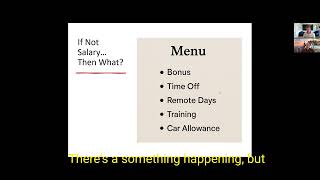
One of the key things I think about that is people say our budget is tight. And I'm just looking at some of my notes here and I said, okay, what other pushbacks can you have? You don't have to just go with salary. You could have. There you go. It could be bonus, you know, it could be actually. Could you be more flexible about me coming to work? Do I have to be in four days a week? Maybe it could be in two days a week because then you're saving some of the commuting costs. You're saving something like that. We proved now with working from home, you don't have to be in four or five days a week. Sometimes it's necessary, there's something happening, but you don't always have to be there. So again, remote days, time off, extra time off, maybe training budget, car allowance. That applies a little bit more to some of our UK and European. It isn't something that you really get in the us but that's. People said why do they do that actually in the UK and Europe you don't get. There's no bonus on a car allowance and there's no pension on it. People said that's not that. When you've got 100 employees. Yeah, that can make a difference. When you've got a thousand employees with a car allowance, that's a big number. So that's one of the reasons thing as well. But yeah, training, other things, Joe. And then, then we come on to timing as well, don't we?
If you're with a publicly traded company, maybe there's additional stock that can be offered. It's either long term incentive, but outside of that, I guess the whole idea with this slide is it doesn't necessarily come down to your salary, what you're being paid every two weeks, every month, every year. There are other levers that you can pull if you are happy in your role.
Yeah. And so the other things I was going to say takeaways we've got here. So do your homework. So go and do the research, get the data, be confident. And this is one of the reasons we're doing this chat is be prepared for them, say no. If they say no. Right, that's it, bang on the desk and walk up. No. Okay. You can request why is there? But also you need to understand what is driving that. Maybe the timing's wrong as well because this is one of the key things. What if the company is going through a difficult time as well? Maybe you've got layoffs. The administration at the moment, obviously a tricky time in the economy, people saying, oh look, we're a bit worried about this. Okay, that's fine. Oh, is it really? Yeah. But when, if not now, when can we set a review? In three months time and if they're not holding it, if your boss at the moment is in crisis mode, wait for a better moment time, timing is everything and it's, it's not going to be that you have to do it sort of thing. And we're going to go to Q A in a minute. Any other bits of advice there, Joe?
Yeah, Mike, just real quick, we talked about the black book earlier. Really what I want to do is readdress. What, what is that black book? How should we be, how should we be using that black book? And what does that mean to you?
So let me explain. So there's two ways of doing it. Firstly, it might be for you guys that it's each week. And again, I did this on this session recently. You need to look back at what you've done. What are your wins of the week, what have you achieved this week? And also for your team, I had Emma Haywood, she's an upcoming guest on the podcast and what she does is brilliant, actually. So she emails herself on a Friday morning and what she does sits down as a think back over what she's done, what she's achieved, more than that, what the team achieved, what have they done? So actually when a boss comes to her and they have a chat once a month or once a quarter, so how are you getting on? How are the team getting on? And I loved it. And actually two or three people have said she just sends this outlook email to herself, puts it on few quick questions, sends it to it and it sits in this box and then every month she just assesses it and just looks right, we've done this. These are the steps on the projects, these are the things. Because she gets overwhelmed, there's lots of stuff going on, but it's a way of making that much easier sort of thing. I mean, I love it, it's a great tip.
And I would do the same thing after you have a meeting with your boss, if you are having those one on one meetings, I would, I would also capture what you need to work on too because if it might help avoid any kind of, I guess you could say, curveball when you get to a review time where if there's something that has been mentioned and hasn't been addressed along the way, yeah, you're negotiating for your compensation, your pay rise and everything else. But you can also show, hey, these are the areas of opportunity for me and these where I've improved along the way. There's your action plan right there. You're getting breadcrumbs along the way. So as you can say, I've checked these boxes, I've worked on this, I've completed this. You're just building a stronger case for yourself. And again, if it's not internally, then it's externally and again, not pushing that as you need to go change jobs and you need to work with us to change jobs. It's just be realistic with your career.
I like to ask this. So again, please put any things in the chat. The Q A is actually open as well. I'm just making sure it is. Yeah. All questions, you can upvote, you can put questions in there and allow anonymous questions. So there's something in the bit. Was someone. The feedback from the European one we did the other day was a guy over. And so it said, oh, you've got to remind people that if you were to leave, it would cost to replace you. And this is what it was. And I went, no, no, I didn't want to do that. This is not a recruitment mini webinar. And us sitting here saying, oh, you've got to leave, you got to get a new job. This is us trying to give you as treasury professionals advice about handle, how to handle what can be a tricky situation and things like that. That's not our. That's not our intention. We'll stop the share and stuff like that. But, Joe. And there you go. People are still there. That's good. Get rid of that. Yeah. So any questions you guys have or any other comments you were going to make? Joe?
I'm good on comments. We'll see if we have any questions.
I have a question.
I'll go for it.
Say it than to try to type it in. So the scenario is right, as a leader in core treasury being given the opportunity to take on an ancillary area, something such as accounts receivable, in addition to existing responsibilities because another leader is retiring. In this scenario, do you recommend asking for a promotion versus a raise? The individual that is retiring is a higher level. Okay, what's your recommendation for this scenario?
So I would say ask for the promotion. Is the. Let me ask. Let me turn it back to you. Is that. Is the promotion something that's interesting to you?
Yes.
Then, yeah, I would start building your case. I would start having that conversation. If they're going to assign that responsibility, say you at least want to understand what's in this for you on the other end, whether that is Again, just gaining the experience and having to utilize that further on in your career or whether it's internal promotion and moving that way.
Yeah.
I would first raise your hand, let them know that you are interested and see if that's an option. And from there you just reverse engineer it to see what you need to do to secure that promotion. Mike, do you feel any differently?
No, not differently, but I was also thinking back to one of my previous podcast guests. We can't, I can't say their name because they're still in the midst of this promotion process and actually they, we were discussing it actually I quite an in depth chat about it, what they did and this might help as well. They, they interviewed the outgoing, I think the APAR and or it was insurance and things like that and they said look, I'm going to take on your area's responsibility. They were going to semi promote someone internally to take on some more of the operational stuff. But the problem is that operational person wasn't a leader, doesn't have very much managerial experience. So you're going to expect me to take on this management responsibility extra? Yeah, no problem. And I'm just going to do that. Yeah, no, we do. Okay. They're also going to save money because they're not employing a new full time head but they are actually going to promote one stroke two members of staff. They're going to up those so they'll take on some of the responsibilities and they, this podcast guest, they're actually going to take in some more responsibility and be given the promotion. But it was the way that then they were having to, what's the word? They were having to present it, present their case. So it was like if they were going to take on another job. So actually that's the thing to pretend you're taking this on as an external job. That was one of the key things I saw. Yeah. Cool.
Okay, thank you.
I hope that helps. There you go. And also do you know, go to treasury newsletter, you'll be able to download those bits as well. But I don't think there's anyone else, is there? No. You can also, if you guys want to just drop an email to mike@treasuryrecruitment.com or joe@ Treasury Recruitment if you want to do more individual advice as this guy did the other day sort of thing. And what I will do for all these people, it does send me this, I'll send you the, a link to this podcast or this webinar as well afterwards. Yeah, cool. Thank you very much and thank you Imola. That's it.
Thanks, everyone.
Great stuff. Cheers, guys. Thank you.
Thank you.
Bye.
More from Mike



Why Treasury Professionals Don’t Show Up to Events (And What Organisers Get Wrong)

AFP 2026 Las Vegas | Use My Exclusive DISCOUNT Code and Join My 2 Treasury Sessions

Treasury Technology, AI & Cybersecurity: Felix Meyer (ABB Capital) on TMS Projects and Future Skills




AI, Cybersecurity, and a Fast Track TMS Rollout with ABB Capital’s Felix Meyer