Mike Richards walks through how to nail a virtual job interview. Set up your tech properly, position your camera at eye level, and practice answering questions out loud before the call.
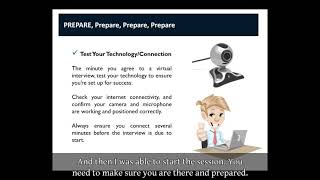
It's a new world, isn't it? Virtual interviews. But Mike, it's just like having a meeting with someone. That's just what it's like. It's not. You need to be prepared. And it's totally different in a virtual meeting. When you're meeting your colleagues, if you like, over zoom and everything else, no one's judging you, but in a virtual interview, you are being judged and the person on the other side is, well, it's good. They're going to accept or reject you to the next round. It's a little bit like, you know, the talent shows and things like that. Unless you impress them on that, you are out of the running. You're going for a new role. You're out of the running unless you make a positive impression each time. So what do you need to do? It works both ways. You need to think about how you're going to make an impression on them. They will be judging you about are you going to fit with the company culture? Are you going to fit with them as a team pre do your research. Just like I said for that interview right back at the beginning, what you need to do is look at their pain points and that's something you need to present in a virtual interview scenario. So when you're starting to talk to people, that's what you need to do. I'm going to give you some practical advice. I had one of my candidates. He was fantastic candidate, sort of senior manager, corporate finance, great guy, knows his stuff, technically brilliant and actually very good team manager and everything else. But virtual interviews, terrible. Really, really bad. So I went for a rehearsal and this is one of the things that you guys need to do. You need to film yourselves and we'll come back to some of the things, how you prepare. But I said to him, sat down with him, I've got to be careful not to say his name because it's confidential, obviously. We did a review before he was the final round, interviews with the global treasurer and a panel interview with a number of different people over zoom. And he was sitting there and he was good. He looked good on the zoom and everything else. I was, this is good, this is good. I started to ask him some questions and his answers were terrible. He waffled. He didn't get to the point. He had lots of value to add, but he never told me it. And actually we got. We did the first one. I said, right, can we just stop there? He said, what? I said, right, can you just jot down what are the top three things you did when managing your team. And he did that. So he jotted it down. I said, right, transfer that to a post it and I want you to put it on the side of your monitor. Okay. I said, what are the other things? The other pain points to this client. And they said, well, working remotely is difficult, but the way. Okay, how did you overcome that? Oh, well, what we did was each week we did a remote get together, which was more informal, over a drink and a coffee and stuff like that. We made it on a regular basis. I also schedules. Hang on, no, write that on your post it note. Great. Okay. And on an individual basis. Well, actually, I scheduled a regular one to one session with people to support them, you know, again, on a separate. To both. And part of the session was about work. Part of the session was about home. It was about mental support for that person. Write it on that post it note. You put it on the post it note. When he was asked all the questions, they said he was one of the most prepared candidates they'd ever seen. Some of his answers to the questions they'd never heard before. They thought they were so summarized. And everything else he had amazing value to add. But the only way he did that was by preparing, you know, and he had to make sure that he was prepared to reach through that glass, just like this person is doing here, this remote hand and doing that. So what do you need to do? And before test your technology? This actual session for today's session, I actually had to redo twice. I've got a green screen here. You'll see in a minute and stuff. I had to redo my treasure Internet connectivity. I had a problem with the cabling. I had to go and get new cables. It was a disaster. But eventually got it all done and then I was able to start the session. You need to make sure you are there and prepared. You need to check that your microphone works. I think the most overused phrase of 2020 is all of you. No, Mike, you're on mute. Luckily I don't because I'd already been preparing by doing all the podcasts. But a lot of my guests, I was like, no, you're on mute again. And trying to call them and get them going and stuff like that. Make sure you're prepared. This is one of the key things. Distractions, turn off your phone, make sure that people can see you. We. There was some road works the other day on one of my sessions. Couldn't believe it. Never had roadworks on our place at all. I was like, oh, my God. So what Did I do? Luckily, had a load of foam around in where I do the recordings. I actually was able to put that up and make sure. And also was very direct with my kids and said, look, Daddy is doing this. Stay away. And they're okay. All right. Sorry, dad. You know, they know when they do the podcast and things, just tell them, make sure that you're prepared for it. And as it says at the top of here, prepare, prepare, prepare for the interview as you would face to face. Now, that is a key one. What you need to do is probably video yourself. Imagine they've asked you a question, because then monitor your body language. You can go on zoom, or you can get your camera and it does a little mini video recording. Write down the question they might ask you. So the question will be, how have you managed a difficult team member, and what did you do about them? And then do it and answer it. Look about where you're looking into the camera as if you're talking to them in the real world. What you want to do is sit up straight, make sure that your chin isn't out of the frame. I had that with a live panel session. I did, and I didn't have the confidence, if I'm honest, to tell one of the panelists how far down in the frame they were. I learned from that the next session. I made sure and I did screenshot of myself with my chin just on the bottom of the. You know, I wasn't going to embarrass them just to show that actually, I had to be more prepared. That's what you guys can do. By the way, it's free. It doesn't cost you anything to be prepared. What's next? Dressing the part. You know, you don't have to be suited and booted. You know, I've got, you know, smart shirt on today. But what you need to do is feel prepared. Put yourself in that mindset. Get yourself ready for that. There's a lot of information for you guys, and you probably like, oh, brains are reeling. Don't worry. Gonna talk about how we implement some of this stuff.