ELIRE Remote chat with MR and KR
Mike Richards and Katie discuss treasury careers, remote work trends, and salary data from recruitment surveys. Richards shares insights on navigating leadership challenges and adapting to post-COVID workplace changes, with practical advice on career development and salary negotiation for treasury professionals.
Hello everyone. Great to meet you. Virtually though it is. Although we'd prefer to be in real life, we are slowly getting back to real life. Katie and I just spent the last week at the International Treasurers Conference. Great to meet you treasury professionals once again. Hope to meet a lot of you at AFP in a month or so. So looking forward to that. We're going to get into our main session, couple of slides, positioning slides if you like, for Katie and I to explain why we're here today. First of all, this me. Sorry about this. Big wide screen, you can't have everything. I've been a Treasury recruiter for 20 plus years. This just gives a bit of background. Recruited every level from Treasury Assistant through to Global Treasurer. We recruit for a wide range of clients and that's why I'm speaking to you today. And we're gonna go all the way through the presentation. Do take part if you can get involved in the Q and A. If you get some, you know, it's only by you guys taking part, you're going to actually get some value out of it. The other nice thing is I get to have share the stage, virtual though it is with Katie. Katie to you.
Hi. Hi. I look after the inside of the business with Mike. My background is slightly different, so I come with probably more like close to 20 years experience now, both in specialist agency recruitment, but also heading up in house recruitment teams in corporate businesses. It gives me both sides of the coin and my focus is very much building the networks across Europe and really giving back to the communities as well. Which obviously is something that Mike does quite a lot on a regular basis with. Treasury Career Corner.
Yeah, this is a podcast I host on that little known platform called itunes, also on Spotify. I started it just approaching four years ago now. I thought I enjoy talking to you treasury professionals, particularly treasurers as well, about how they develop their careers. You guys start in the same place, but then you go all these different directions. You'll do as I said at the conference the other day, everyone in the room had a lot of them had the same title, but they all did different jobs and the variety of what you do day to day. You might have FMCG company using different tools, as different industrial services and all the different things. That's what we discuss on the show. We talk about how treasurers have grown their careers, where they are now. We talk about the future as well, some of the issues. We talk about a recruitment, funnily enough, which we're going to talk about today. And working remotely and the world has changed. We're going to cover this now with you. We can do the main session, we'll do the Q and A. And there's nothing worse, I think, than wrapping up with some questions. Oh, where did we go to? So we're going to wrap up with a couple of tips for you guys to take away with you today that hopefully give you some more value. So moving on, the past three years, crumbs. It was February, I think it was two and a half years ago, and everyone said, oh, there's this flu thing coming over and everything else, and yeah, we'll be okay, and maybe last the next quarter, couple of months. Two years of working from home and now everyone has come back to work or is in the process in some kind of hybrid arrangement. It's also interesting if Carl, Katie and I have talked about this, Carly in the office as well. If someone had come to me five years ago and said, oh, I'd like some flexible working, please, I'd have been like, get out of my office now. It's the done thing, it's what you should be doing. And if you don't, you're going to lose out on people. Katie working remotely, what does the future hold? We'll get into this a bit more, but what are your thoughts? Just there.
Headlines are that it now becomes, if not the first, but definitely within the top three questions around what is the company's hybrid working policy? I think the future looks very different and I know by 2025, 70% of the global workforce will be working from remotely for a number of days per week. So it's the challenges that companies face to keep up with.
And part of that is the knock on effect to salaries and it's, we're seeing inflation. I was in the Wall Street Journal recently and they were asking me and it was lovely to be featured. But it was also about the fact that salaries are just taking off. Well, that's not just in the us, that's globally. The UK markets are going up, Europe's rising. I would say the US market a remote role versus five days a week in the office. Our salary survey, as you'll find out later, only says one in one in 20 people wants to be back in the office five days a week. So we've had clients say, oh, we want someone five days a week. And we're like, good luck with that because we'll have to approach 20 people for one, say, yes, please. I'll come back in five days a week. It's not happening. And Katie Will come back. Personal reputation, what are your thoughts?
As it says, their personal reputation was. Took years and years for your personal brand to be created and it took a long time to sustain that. I think these days with social media, but definitely with LinkedIn, you can build it and destroy it very quickly.
Yeah.
So it's important to have that LinkedIn profile for your own personal brand, but also for people looking at you who, as a person who works in the.
Business, I want to knock on your door and people say, oh, I'm not looking for a job. But that doesn't matter, a job will come looking for you. But let's keep moving on. So here for now, here to stay. These are some of the results, if you like, from our salary survey. We do this salary survey. The last snapshot we did was the end of Q2. We looked at six over 600 treasury professionals. We're actually just rerunning it. So go to treasurysalary.com you can take part, it's free. You also get the full result only if you take part. Now, when we talk to everyone at the end of Q2, you're looking there, some of the numbers, 39% working from home all the time, zero days in the office. That's starting to change, which Katie's going to go onto that slide in a minute. But again, this was what was happening. Starting to see people coming back in the office, but not the big numbers. We've got those. Katie, what we've seen employers wanting.
Yeah. So at the end of Q2, and again, it does look very different now to what it did then. There was still a lot of employers wanting, fully remote. But then you start to see the filter come through, or maybe two, two days in the office or something like that. And now, obviously it's changed significantly and.
Also we ask the question, so go through, ask your salary and that's fine. We also then ask about how you're feeling, whether you're happy or sad. We'll talk about that and how that relates to salary in a moment. But this is actually this working from Home and actually came through. My colleague Craig, when we were going to rerun the salary survey at the end of last year, said, oh, can we include these extra questions? I'm like, God, yeah, great idea. But what we started to do was say, how many days are you currently in the office? How many days, you know, does your boss want you to come in the office? But then the key question, if you like, is, what do you as an employee want? Now, this is the funny bit that actually people said, I've just done two years of working from home, I don't need to be back in the office. One of my clients, he was back in New York and they were saying, look, we're being dragged back into the office kicking and screaming, some of them now, for him, it was all right. He was in downtown, so actually wasn't too bad a commute. The CFO was the same and everything else, however, they had a couple of treasury managers that were doing a three hour round trip every day and they said, oh, we want to get back the team back together. Hang on, We. We didn't lose any profitability. No. Our profits didn't go down. No. We all work together remotely. Yeah, we want you back five days a week. Then I was saying, hang on, 15 hours travel a week. Are you going to pay for my travel now? No, but actually, as you can see here, over 50% of employees. So when we ask you guys, 50% of you want to be in, say, two days a week. Treasury, by its very nature, is actually a very sociable activity. You want to meet with your peers, you want to meet with your bosses, you want to meet with the people that work for you to coach them, to manage them. But one of the key things is, I was asked by a number of these, I did a conversation with the national nact, some of the top treasurers, Boeing, Caterpillar, some of the top guys there, and they were saying, oh, how do we make our teams happy? What do we need to do? I said, the key thing is to ask them. Because they were saying, actually, we're all coming back in the office a lot of the time. And we previously had these water cooler moments, virtual though they were. But actually now we're starting to come back into the office and it's great. Oh, we're back in. I said, okay, tell me about, how's your social time with your team? And they're like, actually, we're getting less of that. I was like, what do you mean you, you're now back in the office? Oh, yeah, we're meeting our suppliers, we're meeting the banks, we're going out to the business. I said, so. I said, so you're coming back into the office and you're seeing your team less like, yeah, there's a few people sucking, actually. Yeah. So they need to refocus on the team. Katie, before we move on to the other slides, what are your thoughts?
I think it's just getting the right balance because I think after two years of not being able to really have that face to face interaction. A lot of people are happy to go back to the office for a limited amount of time, but I think the balance that they're struggling with is how do they cultivate the culture of the business and remain attractive from that perspective, but give the employees the hybrid solution as well. And that's what comes in the next couple of slides around what that means for leaders such as all of you, basically.
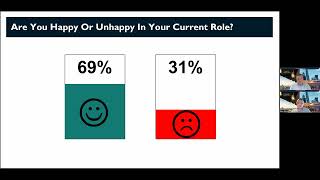
Salary survey, we talk about salaries now. Katie's going to come into these a little bit more than myself, but we ask people, are you happy with your role? Are you happy with your salary? Which is a key one. Now what I would say this is an overall slide, if you like. So this is everyone together. So we had everything from treasury assistance due to global treasurers. So this is everyone put together in the same bucket. It changes. And what we generally found is that treasury assistants and analysts, if you're watching today, we know that some of you are unhappy and in fact you're more unhappy or less happy, if you like, than some of the more senior people. Now, is that the money? No, you got more money. That's why it's actually not. When we've done, Katie will go through these. But one of the key things is actually you're told what to do less and less as you become more. So if you're a Treasury assistant, you might be told what to do every day, treasury analyst, every week, treasury manager, maybe every month or so. So you actually, you're getting into the role more, you're doing it. If you're a treasurer, you might be your cfo. And I've had this before, once a quarter. So actually you have more power. So you actually become happier from that. But there's also a factor of salary. But there are other factors as well. Katie, this slide or the next slide?
The next one.
Yeah, go, go.
Yeah. So I think it's there to see that the 69% are happy in the role and 31% aren't. However, as Mike said, that can change quite rapidly. And I think one of the good things about the salary survey that we do is to really home in on actually what makes outside of salary, what is it that makes each of the individuals happy and what makes them unhappy? And so I think the first thing to look at is what makes people happy in their current role. So if we take, yeah, the top four, a good boss and manager, good work, life balance, friendly, supportive team, and that the work is varied. When you look at the good boss and manager side of Things again, that means that companies really have to start looking at developing leadership skills, even at treasury manager level, where they've got a Treasury analyst underneath and they may be new to management, but actually it's the top thing that's driving people to want to leave a business. So you really do need to invest time in creating good leaders within the business and supportive leaders. And again, having.
Sorry, yeah, go on. I was going to jump. Just. Sorry. Just something we haven't discussed before, but we have discussed before, sorry, we've discussed previously, is that I talked to everyone on this Treasury Career Corner podcast was meant to last 10 episodes. We're at 240 plus. It's great treasury Career Corner, but the reason I'm saying that is I've discovered over time, we've talked about COVID throughout the times and everything else, but again, I've done these sessions and I talked to treasurers and I talked to some senior people that are out there probably now. And I say to you that you're accidental managers. So as you grow with your careers, you go from that treasury assistant analyst level, just as Katie's saying there, you become managers of big teams of people. Fantastic, Great. You're really successful, you're doing well, you think you're doing a good six, being successful at it. But then I ask, I said, I did this session with Euro Finance Big, some of the senior leaders in Europe, and we looked around the room and there are all these different tables and things the same about treasury technology in one and straight through processing and banking and all these different things. I said, look, if there was a table over there with treasury talent, you guys would be quite nervous because that's where you would all, you know, go to. And I said, look, how many here in this room manage team of 5, 10, put your hands up. All these hands from Amazon. Brilliant. Amazing. How many of you have actually had management training in order to be a good boss manager, to manage your team, be a friendly team manager if you like, and help people have that good work, life balance, keep your hands up if you've had it. And the hands all slowly drifted down, said, so you're being asked to manage amazingly talented, challenging teams in challenging times virtually. And they were like, yeah. And I said, how much management trading you had? None. So the key thing I was then coaching people on was maybe go talk to your cfo, go and ask if you're at lower down. If you're a Treasury manager and you're in your first management position, put your hand up, say, boss, can you Help me and. Or can I have some training about how to manage people? Jt, you join the next one as well. Do you want to kick off? Boom.
Yeah. And I think what makes you unhappy in your role is the obviously the lack of career progression and lack of recognition. And I think the lack of career progression is as simple as being able to show people the direction that they can take their careers in. And actually that falls in very much in line with you being a good boss or manager and having those leadership skills because you'll see the strength of somebody and then you'll start them on the journey to where they want to go to in terms of their career. I think achievements that aren't recognized, I think sometimes it's not. It's something that we just forget about. We get so caught up in, in doing the day job. And for you guys, over the last three years, you've had additional challenges with the likes of COVID So it's just about getting things done. And actually sometimes we do have to stop and say to the more junior people, especially, actually, we did good work here and your contribution made a difference. And I think this is where something as simple as a, as a recognition shouldn't be missed because it is important to those people.
And there was a further point that came out from this session with the senior treasurers. They said to me, what advice would you give me to keep my team? Everyone keeps on moving. Is it about the salary our survey proves and go back here. Competitive salary, 1 in 10 at that time, I think it is changing a little bit. As long as people are trying to keep salaries up, I think I'm seeing that move up the rankings if you like. People have got a re benchmark, but certainly that time earlier in the year, inflation wasn't quite so bad and everything else. But I said to this group of people, I said, all you need to do is ask your team four questions. All right, what are these? I said, they hold you, hold your horses. Hold on, guys. They were, oh, well. I said, so go to your member, team members, career progression. What do we need to do next for your career? What should we do to train you to get you up on the next level and everything else? What should we do to recognize your achievements? What else would you like us to do to help you? How am I being? Well, my life is a boss manager. Just maybe have a 180, have a coffee with them. Say that. Is there anything else I should be thinking about or doing for you? And. And how's the balance with the travel and coming back into the office, how are you finding it? And as literally as I said, that said, over 50% maybe of resignations at least, and or happiness of your team is going to disappear because people are actually listening. Sure.
And I think a lot of the time we are or you are all extremely busy and sometimes think, I don't have that time to be able to go down and sit to have a coffee. But when you then look at the alternative, which is having a resignation, where you're going to have to start training everybody up and get up and running again and doing the whole recruitment and perhaps having that gap within your team, that half an hour to dedicate to your team member is probably more critical than you actually think.
Yeah. And again, I've said it a couple of times to some senior leaders. I said, if you're calling me, you've made a mistake. You've not followed these. We're giving you the tips. It's a bit crazy. We're working ourselves out of the job in a way, but we're actually saying to you, if you dictate these steps, you will need to use us less. And we're not doing that because we don't want to work. We love recruiting for you guys. However, what we are doing is we want people to leave not when they're unhappy, but when it's the wrong time. There might be two, three years in a role and it's time to move up. Great. Or it might be time to move out, or it might be four, five, six years. You made two roles, you moved up. Great time to move, but that's not what we're there. We're there to support you throughout your careers. Yeah. Moving on.
We are.
Yeah, yeah. Oh, technology. It's all right, though, all of you guys. You heard a lot of technology. Illyria talking to you about this as well. You're all going to be replaced by robots, surely. I don't know why we're on this session. Should we just go switch it on and just. No, you're not going to be. I do see a lot of basic roles disappearing. I see there are some service center roles, they're disappearing. Treasury, by its very nature is an intellectual discipline. So what you are seeing is that there are. This is one practical candidate I had. Great guy, treasury analyst, reading through his resume, got through at the bottom and he said to me, oh, yeah. And there was buried this bit about Python. I said, what are you doing Python in there with. Oh, well, some of the basic processes I was doing every day were really boring. Was that right? So I did a Python course just off my own back, right? And he said, so then we did this cash management report, which then actually got rolled out globally. And I was like, right, and this is the, this is your interest and the last line of it. Yeah. I said, that needs to be. I'm not saying he was, didn't want to be a programmer, but he was using technology himself. And so you do need to understand what the programmers are doing. You need to know when to bring in technology to help you. One of the other bits was, and Katie, you and I talked about this was one of our clients, very close client, Jean Philippe Dweller from Johnson Controls. We, we sat down one day and I was about to give a speech actually about technology. It was one of the topics and I said, look, what do you think? It's made my life ten times, a hundred times better. We don't have to do all the basic stuff. Yes, it has replaced some people and technology has taken over. But I said, okay, so those are the pros, what are the cons? And one of the things that he pointed out to me, he said, look, if you're hiring a member of staff, I would expect you to do series of interviews, get to know people. So an rfb, rfi, RFP for your technology system. Fine. And then I would expect you to reference those people, those candidates coming in, you check with their previous, what are they? They really like this. But do you do the same for your treasury system? Do you do that? Do you go to past users of it? Do you actually go to other treasury teams? You're using this system. Is it exactly what it said it was on the tip? Is that exactly the way it should be? And actually a lot of people have said it's not. And actually they do more due diligence about the people on their team than they actually do about any of the technology. Katie, anything from you to add there?
I think when you go to conferences, and we did see it in Euro Finance last week, it is a hot topic and people are moving to it. If they don't have all singing or dancing tms, then they will to put that through. But I think you're absolutely right with the due diligence. A lot of candidates that I speak to, when you say, have you got experience of Chi Riba or whatever, the. They'll say, yes, but I don't like this and I don't like this and it doesn't do this and it doesn't do that and it's just because no, as you said, no one's really asking what needs to be changed. It's like anything, everybody. Everything needs improving. It's constant improvement. And that goes with people and with technology.
And I don't think, you know, there are other systems, there's quantum. There's a. We're not just knocking that. What we're saying is that you need to then support the implementation of that. And obviously, this is what you guys do, but this is one of the key things that actually, you need the support. It's not just, oh, let's plug it in, switch it on and replace the treasury team. It's not. It actually helps you do your job and at a much higher level, gives you visibility of everything. We're going to move on as well, because I don't want to run out. We're at 23 minutes and a little bit more as well. Covid. So has it affected. Of course it has. It's affected the markets. One of the things that Katie and I talked about, that everything shut down. As we. As we saw, there are a number of treasurers that perhaps looking. Maybe they're a later stage of their career looking to retire. They put those plans on hold. They didn't want to actually be. If you like, didn't want to be trapped at their houses, not doing anything, not actually able to. Yeah, to really engage with their teams. They were just doing their. So they were postponing their retirement plans, if you like. So what then happened was we're starting to see people coming back. We talked about people coming back into the office. They're in the office now, 1, 2, 3 days a week, and they're like, you know what? I'm not up for this. So I'm actually starting to see things moving. I think this new ways of working, of some people saying, we had this directive recent, General Motors, we want everyone back in, and everything else again. We're seeing it from other large corporates as well. You must be in the office. People saying, hang on, I don't need to be. So actually, I think that enforcing this return to work versus working with your teams, I think it's better in treasury because everyone copes so well. I think that's one of the key things. Covid affected. Katie.
Yeah, I think, you know, it obviously had an impact on everything. I think we've spoken about salaries. I think salaries remain stagnant, which is why suddenly this year there's been massive uplift, because they've missed sort of two years of pay rises. I think. I think the markets started to come back at different times at different levels. I think the whole hybrid working solution is again, very different in different markets. So, you know, if you look at the uk, it's still very alien to them, even though they've had two years of people working remotely. I think in Europe there was always that kind of option. But again, across Europe, it's more around finding the right balance that suits both the employer and the employee. And obviously about the States, they have had fully remote working as an option and we are seeing that continue. Yeah, I think there has been a lot more movement than perhaps we predicted this year. Definitely.
I want to keep moving with the slides because we're at 25, 26, so opportunities on the rise. Exactly. Compensation is trending upwards and in actual fact, we're going to do another snapshot of our salary survey in the next month or so, presenting some of the results at AFP. So what do we do? That said, go to treasurysalary.com if you don't. And everything else, Katie, other things that you've got there, it's salary is one thing, and benefits. And. Yes, what do you think?
Benefits are becoming more and more important and I think, again, that goes in line with hybrid working. I think there's the bonus, but also car allowance and just additional things, especially with the rise of the cost of living, the fuel charges, the utilities, everything going up. I think people want to see more benefits offered to them to compensate for that.
Yeah. One of the other things I wanted to mention here is I was just talking to a client today and we're talking about recruiting ahead of treasury for them. And I was saying, look, you've had two years of remote working. Ah, but our CFO wants to be back in the office. I was like, great. So I've got one CFO we worked with and we recently placed someone with, and he said, look, we spent two years, Mike, of working at our kitchen tables, working in our home offices. Why do we have to be back in the office all the time? Yes, it's a sociable thing, which is nice, but actually for efficiency and profit, our profits haven't gone down. Yes, we want to be back and seeing other people, but do we need to be in every day of the week? And I was like, no, obviously not. And what we've actually worked out with a couple of these roles that we've talked to people about. Guys, get your Q and A in here. We've given it 10 minutes and we've got one question which we're going to answer both online and offline, so don't worry. One of the key things we've got is said, look, if you were to have this person in the office one week a month, how would that be? And they were like, oh yeah, that, that could work because they can meet everyone they needed to. And in fact, Leanne Perkins, who I know she works for a very well known cycling company, will be on stage at afp. She said to me she does one week every sort of, I think it's month and a half actually over the offices in California, she's based in Texas and she said it's great, she gets all her meetings done, she still does her work and everything else, gets to meet everyone and then the rest of the time she gets quality time not having to travel, cost is better and everything else, but actually spends a little bit more time with her friends and family and it's not. You have to do this sort of thing. So again, it's here, it's people value time in the office and hybrid. That is going to be the way of the future, isn't it as well, Katie? Other words.
And I think, I think finally, as we've touched on before, I think there needs to be some focus on the whole leadership piece and getting managers trained in order to keep that retention and questions.
So I'm looking here and Maddie, you can jump in here. I think there's a couple of bits here we had about value, skill sets, negotiating, especially cases. The key thing I would say is when you're going for a pay rise, when you're asking your boss, I think that you've got to actually make your case. And what I mean by that is you're going to meet your boss and say, I'd like a pay rise. Okay. Why? Because the cost of living is going up. Yeah, it's going up for me too. I'm a CFO and there will be inflationary increases, but if you actually want a decent increase, what you're going to have to do is actually ask, what's the word? What? Show your value. It's like in your resume, if you like. When I see a resume, says I, a motivated, flexible individual. Yeah, so are all of us, thanks very much. What we want to see is what value have you added? Now, a number of the treasurers I've spoken to in recent times, when I'd advise them on their resumes, they've said, oh, I did this and I did this cash management system, I'm like, oh, brilliant. So what? So does every other treasurer. I did this when I Spoke in Chicago. And I said to the audience, I said, look, how many of you do cash management? How many of you do bank relationships? Great. So how many of you got it on your resumes? Keep it up there. And they're like, oh, yeah. And it's like all of you do the same job and you have the same things, but as I said earlier, you don't. You do different things. You use the tools differently and you get different results. Some of you will be cash rich, some of you will be debt laden. You'll be using different ways with. You'll be talking to different banks. You'll be doing this, you'll be still trying to get the same results. And whether that's to make cash or to save cash. So tell people, make it physical, make it real. Give. It's your so what moment. Yes, we renegotiated this or implemented this tms. Great. So what? So tell us what, did you make it better? Did you save money? Did you save time? Tell us the difference you made because if you don't, you're not going to get that next move. You're not going to get that pay rise. Katie, thoughts?
Yeah, I think you've cut. I think you've, you've covered it. Really? Because I think it is a case of you have to sell yourself again, but in a tangible way where they can actually visibly understand where you have added value to the business. I think also if you have taken on additional responsibilities or your role has broadened, that needs to be included as well. But again, how that's affected the split of your time.
Should we wrap up here? I'm going to take it to the final bit. I'm going to give you some. I've done this a couple of times. If you guys have seen it, bear with me. It's good fun. So here we go. Let's get it on there. Let's go to power of marginal gains. Now you. This is me telling a story and I like. I like a bit of a story turned up. Now you might know who this guy is. If you do, let's see if anyone know. No one's quickly putting their hand up and stuff. This is Sir Dave Browset. And you're still looking at me going, what? Who? He was hired by the British cycling team at a time when the British cycling team was atrocious. They were so horrendous. And I've got some of the facts and figures here before he arrived. One gold medal in the CYC in the Olympic Games in 110 years. That's mental cycling manufacturers wouldn't give them their bikes because it would affect their sales negatively. They were so bad. So what he did, he came up with this idea of marginal gains. Don't worry, there is a point to this story. I'll keep it short. Sweet. And what he did was he thought, actually, if we were to improve the performance of that bike or that rider by 1%, then each of those little 1% make a difference. And there is an app application to you guys, new treasury guys. So some of the things they did, they redesigned the seats so they were more comfortable, 1% improvement. They wore electrically heated shorts so the muscle temperature was exactly right. They took ideal pillows, small market margins. They took mattresses, took them around the world with all the riders and things because they wanted to win a Tour de France within five years. They didn't. They ran it in three and then they, well, won it in 20, 15, 16, 17. And this is 1%. Little things from a cycling team. Hang on. Your treasurers, what could you do? And Katie knows I do a business course that's been helping me improve and I, I find it tough to make the time for it. But a number of treasurers I spoke to at Chicago a couple years ago said, look, can you just put in your diary now 20 minutes, 15, 20 minutes on a Friday to look at your LinkedIn profile? Not every week, just on a Friday. And then the following Friday, could you maybe look at your resume following Friday, could you look at maybe reaching out to someone from your team inside? And one guy did it for inside one week, outside the following week. Do you know what? The feedback I got from some of those guys was incredible, because if you guys don't take care of your careers, no one else, Carly, Katie, anything else. I know Carly said a few other bits to me that certainly helped out. Would you say?
Yeah, no, I think, as I've mentioned before, I think your career is in your own hands. You are the only people that can drive that forward. And it is a continuous improvement and continuous moving. I always used to say when I was in HR that when you have an appraisal and objective setting is done, that is always a fluid document. And that's how you end up moving your career forward. But it's only you that's who's in charge. Charge of it.
Yeah. It's a start, not a finish. And I think that's the key.
Yeah.
With the riding bike and that. And if you guys want to get in touch with us, get more further feedback, there should be Katie's lovely photo there, but we're getting a change from Eurofinance. So that's it. Anything else? Is that good to wrap up on time?
No, that's perfect.
More from Mike



Why Treasury Professionals Don’t Show Up to Events (And What Organisers Get Wrong)

AFP 2026 Las Vegas | Use My Exclusive DISCOUNT Code and Join My 2 Treasury Sessions

Treasury Technology, AI & Cybersecurity: Felix Meyer (ABB Capital) on TMS Projects and Future Skills




AI, Cybersecurity, and a Fast Track TMS Rollout with ABB Capital’s Felix Meyer