Highlights of the 2022 Global Treasury Salary Survey
This is a YouTube video titled "Highlights of the 2022 Global Treasury Salary Survey" containing an English conversational session recorded in April 2022. The discussion features Mike Richards, a treasury recruiter with over 20 years of experience, and Ernie, who co-hosts the session. They explore detailed insights from a global treasury salary survey, covering salary trends, employee sentiments, benefits, work-from-home policies, career management, and recruitment strategies within the treasury profession. The content is aimed at treasury professionals interested in compensation data and career development.
So I've been a Treasury recruiter for 20 plus years. I know you wouldn't believe it. Who would have believed it? Yeah. Loving that green. Oh my God. Yeah. My face, it lights up my eyes. That's what it goes. Goes to my beautiful green eyes there. Thank you very much. Early. That's why he's done it. Joke aside. Yeah. I've been a treasure recruiter over 20 years and we're talking today as early as told you about the global salary survey. It was something I wanted to do early in my treasury career. I started off with that lovely Excel, you know, just doing this and 60 odd people. And then it got bigger and bigger and now we're up at 600. We're going to be over the next year or so rolling up to a thousand. It's amazing. We assess people from across the world and it's people we know. So I assess. Are you a Treasury assistant through to a global treasurer? Ernie's got the results here. But, you know, it's great fun and we, you know what we do as a business, we're treasury recruiters, so. So we're talking to people about if they're recruiting, they said, oh, we want to offer this salary. I'm like, you know, you're below average. And they're like, oh, no, we think we've got. No, no, your salary level. You're offering below average. You know that, right? And they're, oh, oh, how do you know that? And I said, well, we spoke, you know, we've surveyed 150 treasurers and you're at this level. Oh, okay. But do you want an average treasurer? Oh, we can get you one of those. This is what it'll cost you or right at the bottom, you know, so we give advice like that. So that's enough for me. Ernie, back to you.
It's your, this is your session, it's your session. I'm going to let you leave. I'm going to try and be quiet for a while. One of the things that is really I found particularly engaging about the survey is it goes beyond just the salary and what you're making and ask people their sentiments about why you're happy, why you're unhappy. And so we've got this thing going on, I know across the world, the great resignation. And so I think people are getting a little bit carried away with that. So I like the other parts of the survey. So it's much beyond that. I'll let you give a background Mike once we get there. So let me give the little Roadmap here and then, and then I'll let Mike lead the slides and I'll let him bring me in when he feels like I have something useful to say, which might not be often.
So I'll be in an hour and he'll be a lot.
Yeah, we'll do a survey overview and then, Michael, drive us through some really interesting salary data which you can't get anywhere else. I just want you to know if you're interested in this data, you should go to treasuryrecruitmentcompany.com, mike, I'll give you the address and take the survey. Just because we want to make sure that you are getting value from taking the survey. So we're not going to give this detailed information out to everyone. So please do that, help support the survey and what Mike's doing, benefits data, work from home, policies and trends. And this is where I really enjoy it, the employee sentiments. And so with that, Mike, let me go ahead and turn the floor over to you.
So, Ernie, thank you for that. It's not just a salary survey. It's not just about your salary. When I talk to people all the day long, they're saying, oh, you know, does someone leave just because they're not being paid the right salary? And later on you'll see about the sentiments. No, they don't. What they do do is they say, well, you know, and again, people don't leave because they don't like the cash management system, or they don't leave, they leave because they don't like you as a boss or maybe you're not paying them enough, but that's way down the list. It's about, you know, are you looking after them? Are they enjoying the work they're doing? Have they got career progression? Is it, you know, and we'll come back to working from home. Is it that prior to Pandemic, you were saying working from home, maybe flexible Fridays on an afternoon, and now you did two years of working from home and you're saying, right, guys, we're going back in the office for a few days a week. How many? What few days? Well, Monday to Thursday and Friday mornings again, like, whoa, whoa, whoa, that's not working from home. So that's what we go through. But this was exactly here. We've got overall fulfillment. The why about the salaries. Now, one of the things early just mentioned there, go to treasurysalary.com and we'll send you the full survey. If you take part, how much does it cost you? 2 minutes of your time? Money wise, it's free, it's amazing, it never closes. People have also said to me, just on there, when does it stop? Well, we keep running it, we're running it. We ran it end of last year, 2021, we're now in 2022. We're running it again, we're improving it, we're widening it, we're going to run it again later on in the year. It keeps on growing. We're at 600 now, we're going to keep going up to 800. We right the way. East coast, west coast of the us, uk, Europe, Asia, Pacific. Right the way. So it goes right the way around. One of the biggest demographics you've got here. Well, you've got all levels and in actual fact, these have changed a little bit, or are changing rather. In the next survey, what I am noticing, we've. We've created some other groups as well. You got the treasury analysts there and Assistant treasures. Those have gone up a little bit. We've got a massive group of global treasurers because, you know, you guys want to be paid. Right. We've also got treasury assistants, all of these. It's. It's a massive survey right across from Treasury Assistant to Global Treasurer and we split out some of them, but we can talk about that later as well. Sorry to interrupt the video for just a moment. We will be back with some more highlights from the amazing salary survey in just a moment. But as you know, or may not know, we only actually share the full salary data with the amazing treasury professionals that take part in the survey. So what I'd ask you to do is go to treasurysalary.com that's www.treasurysalary.com. i know, it's an easy one. Take part and we'll send you the latest and greatest global treasury salary survey that there is. So go there, have a look, take part, and we'll share their latest results with you very shortly once we confirm your treasury professional and we'll share them and send you this amazing salary survey. Many things.
All right, let's get into some benefits data. That's. People sometimes stop at salary and I don't think they. They look at the total compensation and sometimes it's harder to put a dollar value on the benefits, but people need to look at the total package here.
So. So what do you want? Yeah, here we go. So who gets bonus? Well, this was. Overall, we used to do this and actually split it out according to each of the levels, but he made the survey too big. You know, people were sort of saying, oh, you know, you know, group treasurers get this benefit, you know, treasury managers get this benefit. Do you know what, let's just do it across. Across the piece. You notice there, we've actually retire a couple of these. It used to be a big thing, people getting travel allowances, season ticket loans. They're going, they're mostly gone. So we're going to retire that on the next survey. But you got gym membership, that's quite a nice one. A lot of people have that. Obviously pension contribution, it's more prevalent in UK and Europe, whereas, you know, tend to give it more. But healthcare benefits, again, a big one in Europe, we, we may bring out some sort of splits between each of the categories, like UK versus Europe. We did that before. It was. What's the word? It didn't give us so much value. And that's what the survey is all about, value. So again, if someone's saying, oh, you know, can you tell me about this? Pick up the phone, we'll give you individual advice.
I'm going out of the box here and I always like to make things too complicated. But did you ever, and I don't know the answer to this, did you ever look at how many weeks of vacation folks get or is that baked in somewhere?
It's. Well, again, when, when we talk to us. Yeah, you know you get 10 days, right. In Europe you get three months. No, UK five days. Well, I know this is true. Well, I'm doing this big campaign. I was talking to one of the candidates the other day and he's on 35 days holiday and that's him, he's in Germany, he's doing a certain set number of hours, like 37 and a half or 35 hours. Can't remember exactly anything else he earns above that. He gets paid time off. So year before last, when he was still in the office or still doing some Covid and everything else, he, he got amassed like 42 days holiday on. And on top of that there were bank. I was like, I want to say, were you ever at work? I'm just like 40 odd days. How'd you do that? I wouldn't get my job done. Whereas you guys in the U.S. i think it is, you know, starting to change. I know you get a lot of public holidays, you still don't get anywhere near as, you know, UK and Europe. I think it, you know, people are a bit more flexible and I think actually one thing that Covid did and pandemic was proved, you know, you don't need to Travel so much, in and out of the office all the time. I think people are getting a bit more balanced in their life. So I think that's one thing that's come through.
All right, let's. Let's go into a little work from home and see. These are. This is interesting.
Ask me some questions. I'm bored of talking to myself.
Yeah, so, so, so working from home for me, I've been doing this a long time. So when you're talking to candidates, did you get any sentiments from them? Just from your conversations? Do they not like working from home? Do they like to be. I guess it might depend on the person. For me, I've always worked from home in the US We've always been against it, so I think it's changing. But just curious what you're hearing from your conversations. Employers and employee and.
Right. I want people to look at this survey and just imprint it on their, on their, their mind for a minute. Like, currently, you've got there 100% working from home at the current time. And we actually started our survey way back last July. And actually, you know, we. And we're updating the figures. So these aren't figures from July. We've updated them since then. But when we first started this, my colleague Craig, he said to me, mike, can we ask this working from home question? I was like, oh, yeah, okay, not thought about this. And he said, look, let's ask, how many days are they working from home currently? How many days can you go to the next slide, Ernie? We'll jump around a few more. Keep going. Boom. How many days are they going back in the office? That's being told to go back in the office. So if you notice that, yeah, it's the opposite way, you know, we should flip it around, actually, but remote and then keep going. Next, next slide. And again, where do you want to work? That's the question. Yeah, that's the, that's the. That's the doozy. So if you actually look at it, how many people want to be fully remote? You're talking only 15%. I want to not go back to the office at all. But people are, you know, the majority is. You got that? 50% of people are happy with one to two days a week.
Right.
One studies we seems about right. Coming in, collaborating with your colleagues and stuff like that. Go back a slide, if you would, back in the office. But how many people are asking them to go back in the office? You see, in this, there's a. There's actually a push factor, you know, Fully remote. Great. But there's actually quite a few people going back saying, well, 22% want or 60% want people back in three days a week. And they're like, whoa, whoa, whoa. So a quarter of employers just coming on saying, can you get back in the office, please? And I think there is a differential as well. I've noticed when I'm talking to us clients and companies and candidates, there, there's a, there's a, there's a head to head at the moment. You know, I've got one of my clients, they're in downtown New York and they were saying to me that they're happy to travel in themselves. The CEO, cfo, they're happy to travel in because they live there. Their treasury manager and one of their senior treasury people, they travel an hour and a half each way. And they're going, well, our CEO wants us back in. And they're like, well, we've just done two hours of not getting on the two, two years rather of not getting on the train. And now they're like, whoa, I've got, you know, a three hour commute, 15 hours a week. And already the treasurer's going, I've got some challenges here. So he's having to arm wrestle between, and be that filter between them and say, well, we can't go back all that way. And if you go back to the beginning, if you would, the next one before that as well, if you would. Ernie, which one? Yeah. And there you go. So, yeah, look at this. You're talking 40% in fact behind that. So if I put the 40, 45% of people at the moment, and how many of you are working, what, zero days, maybe one day a week back in the office at the moment? Is it really hurting your productivity that much? You know, are you, you saying we must be in two days? Why? You know, I have one of our clients in northwest part of America. Prior to lockdown, they were in the office 100% of the time. Lockdown came. 100%. Working from home for a year and a half, 18 months. They're coming out of lockdown, they're reopening the offices. And what are they saying? We want you back in the office. How? I said, well, hang on, how was the productivity and the HR director? She went up, Mike. So hang on. So they were working from home remotely and your productivity and results, actual results, monetary results, went up? Yeah. So what are you doing from that? You know, monetary result? They went, they want to be back in the office. So who wants to be back in the office. Well, the bosses, they like to. They're all traditional. They're like I said, they're all traditional, AKA broken, AKA stupid. And they want you to go back in the office all the time. Yeah, the results are better when you work from home. Yeah. We didn't recruit the job. We moved away. We were like, yeah, I don't think we can help.
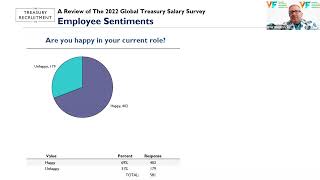
All right, let's talk about employee sentiments here. This is. This is what I find really interesting.
This is cool because if you look at it well, very unhappy and unhappy. 30% of people are unhappy or, you know, some people really unhappy. Call me if you're really unhappy. We'll help you. But generally, you know, seven out of ten, roughly. Yeah, seven out of ten. You're happy, you know, you're right in doing. You know, you don't mind it. Happy. Are very happy. 10 of you just coming on 10 or 9%. 10. Very happy. You're really being looked after. But the fact is, only one in three is going, oh, get me out of here. So it's not as bad as it is. I think it'd be interesting as time goes on about the work life, balance and base salary. That. That'll be selling over time.
It's one of my favorite ones.
Yeah. So if you like, a lot of the bosses out there are doing pretty good job. So, like, you're looking at that 80. So that's four out of five. You're doing a pretty good job. If you're one of the 20, maybe try and find out if you're one of that 20, what you're doing wrong. Someone asked me the other day, they said, well, how do I find out what I'm doing wrong? You know, confidential salaries, you know, confidential surveys. They're not telling me and stuff like that. I said, try and be them. I said, what would you like? What do you think, you know, they want to do, Have a. Sit down with them, have a coffee. Just. You can. You can find out from people if they're not valued or they're undervalued, say what frustrates them. So that's a good way of doing it.
Yeah, I mean, that's what I always tell people. It's like, I know it's painful, but the easiest way to find out is to ask someone a question. And then once you're on, once you're honest with someone, they'll be honest with you. So you have to be authentic to yourself. Or maybe you can say, you know, I'm looking for ways to get better. This Year I want to work on my professional development. What are things that I can do to offer more value in your thing?
I'll check in here as well. Ernie, is that. It's an interesting one because I do the podcast every week, so go to treasurycareercorner.com I speak to a treasurer. We've done 200 podcasts. It's amazing. Past two and a half, three. Well, three years. And I talked to treasurers and I said, right, now you manage this team. Yeah, yeah, yeah. And you've grown up your treasury career. You've done this 15, 20 years. Yeah, yeah, yeah. Great. And now you're managing a team of what, how many? And they said, well, 8, 12, 15, 30 people. How much management training have you had? None. I'm like, what, hang on, you're managing 30 people? High performing people, Individuals. You're meant to mentor them, lead them and everything else. Yeah, yeah. And you've had how much training? None. And I think there's a big gap there. So anyone watching today, that's an area to get into. But what I would say is that 4 out of 5 of you, 8 out of 10 of you are doing a pretty good job, you know, and this is through a pandemic, so I give yourself that pat on the back. I think you're doing pretty well, you know, to get through that. You know.
I take the other side of it a little bit. I'm probably causing friction, but I like to educate people on what they deserve. So that's the other, the other side of it here. This is another one. Are you happy in your current role? About the same. Right. As we saw with a little bit different.
I think it's 30% are unhappy, you know, and they were the people we're talking to a lot of time, they're actively looking.
Right.
But I got asked by a client the other day that we were talking about recruiting for them in the US and they were saying, oh, you know, we've done this on LinkedIn and da, da, da. And I said, you know what? You get the 10. I said, what do you mean? I said, you get the 10% of people that are actively looking for a new treasury role and they're out there, they're putting their resume, they're really banging on the door. I said, oh, yeah. I said, I don't talk. Well, I do talk to them on occasion. He said, who do you talk to? I said, I talk to the 90. The 90 that will answer the phone to me, that I will come up with a job opportunity. And I do that. You only you see me do this Windy City summit and various conferences. And I say, how many people in the room are comfortable if you are put your hand up. If you're looking for a role and 1 in 10 hand shows up. I said, okay, put your hands down. I said, right, how many people? If I came to you with the perfect opportunity and you know, great pay rise and this and a boss and this, da da da. And I said, how many of you would answer my phone call not saying you take the job, but how many? And you know, just I know some of you were sitting next to your boss, get your boss to put their hand up as well. And usually we get about 80%. I said, do you know what? You lot a lie. I said 95% you other people that put your hat, put your hands up. And we laugh and joke, but it's true. If the right opportunity comes up and you might be perfectly happy, but you'll still entertain the phone call because you know, if it's going to take you to the next level of your career, that's who we do. The passive marketplace.
All right, let's take a look at. This is also some.
That's amazing.
I really like about why you're happy and then you flip the script and the other side of it. But this is really always interesting to me.
So we are happy and unhappy through the happy bit. So it ain't about the money, you know, you can show them the money, but the fact that only 1 in 10, 11% are actually really care that much about the salary. It's about who you are, the work life balance that's obviously become key and you know, your team around you, the work you're actually doing. And then it comes on to salary, then it's about workplace. I think that's gone down. That used to be higher. But I think that, you know, that's what Covid stores that actually you don't have to be in the office, but that's actually quite nice and welcoming and your achievements and that, you know how you get on and developing. It's quite an even spread. But what I would say is if you're looking at 1, 2, so we're looking at 18, 60, 30, 50, 50, 60, 70 ain't about the money, it's about, it's about all the other conditions. That's why people are. And this is the happy gang. So if you're happy, let's look at the unhappy gang. You know, we used to have some smiley faces. I got rid of Those still like them. There you go. Why are. If you're unhappy, why. And you know what? It's not even on there. Competitive lack of salary. The weird thing is that it doesn't actually make that list. You know, it's actually less because it's. I don't. I think we've dropped it off now because it was like 1% were, you know, if you're unhappy, it was about the salary. It's achievements, about work, life, it's careers. You know, it's a quarter of people saying, you know, where are they going to go next? Over a quarter. So what's the next step?
You know, what really stands out to me here, which I'm going to. I got to write a blog about this. I get tired of seeing everyone say people quit because of their boss. It's. I don't think it's that. I mean, it's not unimportant. But look at that. It's 15%. Right? I know that. 372. But I don't hear that a lot from people. Right. I mean, I guess what you can say is you can blame your boss for the other stuff, right? But you shouldn't be blaming your boss because you have career. You know, some of that's on you. So I think that's, that's an issue that we have here in the U.S. i know. So, all right, so let's, let's, let's go for some key takeaways here. Give us some fine points.
We know the market's booming. It's great. Salary is rising. Is that just because, you know, the market is booming? That's enough. That's a factor on it. But it's a recovery post, Covid. So that is another thing. I do think that the legislation in America is rebalancing the framework slightly, not all the way there yet, where you're not allowed to ask someone that. Past salary. Past salary. You know, this is to, you know, redress the gender imbalance. But I do think it's also, there's also a flip side as well, because you're not allowed to. You can allow to say what your expectation is, but, you know, you bear in mind, keep it a realistic expectation. I just had a candidate the other day, and he, he said to me, well, I don't want to tell you my salary. What do you want to know my salary? I said, well, because this is in Europe, you're allowed to ask it, so we don't have to tell me your salary. That's fine. I don't Mind, I said, but I'll put you forward to the client, they'll make you a job offer. It might not be what you want salary wise. You weren't. He wouldn't even tell me his expectation at one stage. And I was like, I'm working blind here. And then I said, don't tell me. I said, but when you get later on in the process and then they underpitch you or you don't give you the right salary, don't complain to me. And do you know what he said? Oh, actually I know, I'll give you my cups. All I wanted to do, it's in my interest to place the guy. But actually what he did, it was quite challenging because he's then come in as well and he wants a 50 increase on his base at the moment and better conditions. I'm like, is this guy. No, it's not going to work because his expectation is too high.
Yeah.
And also competition is increasing. Now someone said to me, well, you know, there's no. But there are 300 applicants going for one of those jobs. And you know, you're not just what you're not, yes, you're an individual, but you're not the only one. You're one of everyone. That's one of the keys. Thoughts, Ernie? Are you.
Yeah, I mean I just, I think it's a, it's a nuance there. Right. There's two dimensions of competition. Right. Are there people that are really good? Right. Is it the number or is it the quality of people that are. And I, I personally, I did a Little survey on LinkedIn and it said a lot of people, I think it was 30 or 40% quit last year, will quit this year. So I think maybe in the past I thought the number was going up because it was easier to apply for LinkedIn but now I think the quality is also going up. So that's the point that I would kind of stress.
But also what you're seeing is, you know, I talked about the 300, but that was a completely remote job.
Yeah.
When actually we're getting jobs that location wise they want you to be in a couple of days and you know, and rightly so, because they want team, teamwork, they want some collaboration and stuff. And I applaud that. I think that's a good thing and stuff. But one of the things I was going to say that what's been happening is that as we went into the pandemic, you know, you'd see those adverts and they'd have 150 people. And then halfway through, it was 100 people, then it was 50, and now we're coming out of it. People have more opportunity and they don't have to walk through your door. We just had a situation with one of our clients today, and they said, well, I took a pay cut for my, my latest role. You know, I did this. I did this. And I can't say who it was, but the fact was we were like, well, more for you. Like, you took a pay cut because. And it was the right role for him at the time and everything else. But this is a rising market. Candidates don't have to take your job. They don't need. They vote. They vote with their feet or they don't move. They don't vote with effort. They don't go, oh, yeah, let me. I want 20 less. I've got my, My bills are going down, aren't they? No, they're rising. Yeah. Oh, okay. So. And yes, there might be an opportunity. Sometimes it's the right move. And you say, well, look, it's actually a move. I'll bounce and come up. That's brilliant. You know, if you've got that confidence, if it's the right move, great. But the fact is, you know, you, you guys need to make it attractive to people.
Right? Yeah. Just a couple other things, you know, which we saw, you know, people value the, I call it the flexibility. And companies in the U.S. you're a boss, you need to fight for your people because as Mike said, the productivity is going up. So, so, so don't be afraid to push back on that. As someone wants you to go in the office, you want to go.
Why?
And also kind of going in to a job or relationship, just really understand your value. Because if you, if you started a company and you're undervalued, you're never going to catch up. So make sure that you're going in at the level and you have what you want. Because once you're at a company, it's really hard to catch up. That's something that I experienced in my career. And I think one of the big things for me is that I think people are thinking about it, But I don't think those of us who talk to people stress this enough. There's more dimensions to your job. Happiness. Right? Think about what really matters to you. And I still see people jumping around in jobs, and I don't really think they're thinking through really all the dynamics. The grass is always greener. Look at our green thing here. Well, it's not so understand what you're getting into. Even in today's world, when there's an opportunity, there's a reason. Make sure you understand the reason. If you think you're not walking into a mess, you are in another reality, everyone, because there's a reason for that. So try and make sure that you are as informed as possible on that. So I would add that. So, Mike, what are the. So given all that we've talked about here, let's move away from compensation side, from just someone who's, who's positioning themselves right for a new role. They're opening to consider it. What are, what are the. What are the two or three things that people, you see they do wrong or flip side, what are the two or three things that people need to be thinking about all the time to make sure that they're getting these organic opportunities? So how do I get a call from Mike, even though I'm not looking, you know, what am I doing that that's getting your attention and sets me apart. Maybe that's a better way.
Only you and I started in an age. Yeah, long, long ago, in a galaxy far, far away. But anyway, let's not get into that. That's. Yeah, that's Star Wars, Star Trek. I'm not doing that. Yeah, we'll talk about that. Totally different. But joking aside, we were pre linked when I started. I started to connect with treasury professionals from a directory. That's how I got to know them. And you had to go to conferences, not to virtual forums, to conferences face to face. Now you can go to virtual forums like this and get all the other value from the LinkedIn session. You've got all the other stuff and interviewing and all that stuff. And I'm not just gonna, you know, beat the drum for that. But the reason I'm making that point, it's like you've said there, Ernie is. Someone said to me the other day, another client, and he said, oh, I'm looking for my next opportunity. I said, well, that's fantastic, but you don't exist. What? No, I'm here. I said, yeah, but people aren't coming knocking at your door, is that. Well, no, no, because I don't really do social media. Right, but you don't exist. How can someone find you? Well, you know, they network with me, they talk to my bankers. I said, yeah, because they're really going to find you and they type your name in and there's nothing there. I said, unfortunately, you know, rightly or wrongly, LinkedIn is there. So you need it as A shop window. And it needs to be a decent shop window. Not that's dusty with the blinds down and everything else. It's a sales tool for brand you. And both Ernie and I have talked about this, that if you have a decent LinkedIn profile and it doesn't have to be OTT and everything else, you know, you go to our website, treasuryrecruitment.com we've got TreasuryTV, and again, we've got bits about doing your LinkedIn, doing that. You've got the rest of the forum, you know, Ernie's got some great sessions here and you've got to make that powerful. And then when someone comes to you and says, oh, can we have a chat or could I have a look at your resume? Have a nice resume. And again, you'll get tips on that. So it's all a sort of a pipeline. And then when you go to the interview, I know Ernie's done a session about interviews. You've got to have all those things in the line, you know, you've got to have that pipeline worked out because if you don't, your colleague who's looking at the same job will get that job ahead of you. Why? Because they've got a good LinkedIn profile, they've got a decent resume. When they went for interview, they had a good story to tell and they get the job offer. And how did they get the right job offer? Because they take part in our salary survey. And how did they do? Well, they said, actually, I'm at this level, I want this. Oh, and it's amazing. And you talked about competitive salaries there and you said about getting in a job, Ernie, and saying, well, you didn't have, you know, maybe back in that day and now bring it up today. If you'd had our salary survey, you could have said to your boss, boss, you know, all these other people, well, what's your independence? Well, it says this, said about getting in a job, Ernie, and saying, well, you didn't have, you know, maybe back in that day and now bring it up to date. If you'd had our salary survey, you could have said to your boss, boss, you know all these other people, well, what's your independence? It says this, and I'm not even at the bottom rung of this. Oh, okay, well, and that's where we help. So, you know, those are the key tips. I would say. Think about brand you and getting out there in the universe. Your thoughts, Ernie?
Yeah, exactly. So let me just, let me just wrap up the session here with a few comments. One of the things that I've tried to do over the past couple of years is be more supportive in terms of career management. And so that's not my thing. So what I'm trying to do to you is get you interested in career management and give you some good content. If you really want to take control of your career and manage your career, you should go to the treasury recruitment website, www.treasurerecruitment.com. you should talk to Mike and you should talk to Katie. So I'm trying to give you exposure to what matters. Make time for it, make the effort. You will, you will be happy. You'll take control of your career. And so, Mike, this is our last session. I want to thank you for all of your support as being a thought leadership partner of mine and I sincerely appreciate you sharing, being open to sharing and collaborate with me and help help everyone take control of their career. So thank you, Mike.
My pleasure. Thank you, Ernie.
All right, everyone, make the rest of your day. Great. And until next time, my friend.
More from Mike



Why Treasury Professionals Don’t Show Up to Events (And What Organisers Get Wrong)

AFP 2026 Las Vegas | Use My Exclusive DISCOUNT Code and Join My 2 Treasury Sessions

Treasury Technology, AI & Cybersecurity: Felix Meyer (ABB Capital) on TMS Projects and Future Skills




AI, Cybersecurity, and a Fast Track TMS Rollout with ABB Capital’s Felix Meyer