Kathy Fields' Inspiring Career Journey: From Sports Enthusiast to VP Treasurer at Hitachi Digital
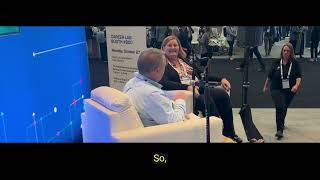
Interview between Mike Richards and Kathy Fields (VP Treasurer, Hitachi Digital). Kathy recounts her non-linear career path from a sports-focused youth and exercise physiology studies to accounts receivable at Allergan, then a 25-year progression at Western Digital (AR → credit → treasury), and now VP Treasurer for Hitachi Digital where she manages treasury, credit, and insurance across multiple operating companies. Key themes: the power of cash/forecasting, continuous education (earned an MBA while working), deliberate networking and saying “yes” to meetings, building honest bank relationships, remote team management (weekly one-to-ones, Monday staff meetings), mentoring/STEM outreach, pragmatic adoption of AI tools for productivity, and advice for early-career treasurers to expose themselves and learn broadly.
Chapters
Good morning, Boston. Third time. Come on, you're away. Thank you very much. So let's do some of the admin stuff, first of all. So you're gonna have an amazing session with Kathy here. She didn't, luckily, didn't fall off the stage, which was the one thing we didn't want her to do. So we're lucky. But Kathy Fields is joining us. She'll explain who she is, her role and everything. What we're going to do this morning is we're just going to talk through Kathy's career journey. She's going to teach you guys about how to become a treasurer at an organization like Hitachi. But I'll let Kathy explain, first of all, your role, who you are to the audience, and then we'll go back to your history. Okay.
I'm Kathy Fields. I'm the VP treasurer for the Hitachi Digital group of companies. Our parent is Hitachi limited in Japan. We manage treasury for a group of companies that are owned by Hitachi Digital. We created this company, Hitachi Digital, a couple years ago by moving all of the corporate services groups, tax, treasury, legal, HR facilities, internal audit into Hitachi Digital as well as all of the traditional shared service structures. So Hitachi Digital is truly a shared service organization. We Support right now 4. 3. Three operating companies, soon to be four. And we are doing this with no additional headcount, as you can all appreciate.
So when you and I had our pre chat, you and I talked about how you started in Treasury.
Yeah.
And it wasn't a natural first start in Treasury. You explained how you do it with some of the girls. You do community staff. He talked at various schools. How did he first start?
Yeah, what Mike's talking about is there's a women's organization that my mother is part of, has been for several years in Southern California that sponsors a STEM program for eighth grade girls in the surrounding school districts. And about 20 years ago, they put together this program that brings women into a local university. And we bus these girls in and they have an opportunity to meet about 40 different women in different career and any type of career you can possibly imagine. We've had FBI agents. My daughter's actually participating now, too. She's in interior design. We have had nurses, we've had children, geologists, you name it. And these girls have an opportunity to hear our story of how we came to be where we are today. So I will share my story with you. Growing up, my passion in life was sports. And so I thought, okay, I need to find a career that's going to keep me in that sporting environment. So I thought, you know what? I have so many educators in my family, I'm going to be a PE teacher. Why not? My aunt's a PE teacher. Great mentor. So went to school, went to Michigan State. Go Spartans. And first couple years, it's all science, it's all analytics, it's all science. You're basically the same program as pre med students. Third year is when you get into teaching and you actually have to go in front of children. And the first semester I did okay. I was dealing with 3 and 4 year olds with gymnastics. That was fantastic. They just want attention. They want to be in love. You keep them busy, you're doing great. Second semester they gave me seventh and eighth graders for ice skating. I said, I can't do this. I am not made. I'm not cut out to be a teacher. But I still loved sports. So I changed career paths and went more down the scientific aspect of sports. Ended up getting a degree in exercise physiology. So what do you do with a degree in exercise physiology? You manage a health club for a couple of years. It was a great club though, because it involved a lot of local athletes. There were physical therapists on staff. And I realized then that I wanted to do more. So I went back to school because I wanted to be a sports medicine doctor now. And so I went back to try to get a second Bachelor's in Biology, get ready for the MCATs. Ended up getting married, had my daughter within a year. I was a single mom. So my whole career path stood up on its head and I had to stop and think, is this going to be fair to my daughter if I continue to pursue this career? And so I immediately changed paths, walked into a temp agency and said, give me a job. And I landed at Allergan Pharmaceuticals in the AR department, which is tangent to the credit department, which is tangent to the treasury department. In a very short period of time, I realized the power of cash. And I could see how cash is really the blood that flows through the company to make the company work and be successful. And it just clicked in me. I'm like, this is where I'm supposed to be. I actually had a friend who was at Western Digital. I'm from Southern California, by the way, in case I didn't tell you. Had a friend who was working at Western Digital. They had an opening in their AR department. So I went in, interviewed, hired on the spot. I was with Western Digital for 25 years. I started as an accounts receivable clerk. Worked my way up into the credit organization. I did domestic credit, then international credit, and then from there. Timing was perfect. The assistant treasurer was moving on. So I worked very closely with her to make sure that I was positioned properly to take over her role. Because for me, that was the most natural fit. Because the one thing that I loved, credit helped me really learn about the company, how everything works. Because everything we do as a company touches how cash flows through the company. And so you learn all of your important key stakeholders. It just, it was just a natural flow. So treasury was just the most natural flow for me. And I managed the treasury organization for the last 15 years. That was with the company as the assistant.
You also stress to me as well the importance of study. That's one of the things you did as well. Yeah, yeah. So.
That'S true. When I realized that I had to change my career path, as soon as I joined Western Digital, I pursued my MBA in international business. So as a single mom working full time, went to school at nights and weekends and within two years had my mba. So again, I just, I knew that this is where I needed to be. So education was, we tell the 8th grade girls every time we talk to them, education is probably the most important thing you can do in your life because with a good solid education, you can do anything you want. I had to practice when I was preaching.
And you said to me again that the light bulb switched on for you when you realized forecasting accuracy. They just made you light up. Why is that such a passion for you?
For me, it was simple math. You can't spend more than you get. And so if you take things down to very simplistic levels in understanding how the cash flows through the company, you see very quickly the metrics that you need to be paying attention to and how decisions that are made within the company affect how that cash is flowing through the company. And that's where again, you see very quickly what drives a lot of the forecasting, where you can have that influence. And it just, again, for me, it was, it just made sense.
And then how did you get into Treasury? How did you find out about the treasury role or what?
I love networking and I love making sure that I'm connected to people that my stakeholders, I have to know who my stakeholders are because those are my partners. Having those relationships is so important because you depend on each other, especially when you're in a large organization, you have to know who you can go to if you have questions or issues. And I always make myself available as well. That's another key thing. If someone's usually coming to me asking me questions, if I don't know the answer, I will get the answer for them because 99% of the time, I probably know where the answer sits. So, again, I just make sure that I was really embedded into the organization, knew who the key players were, and they knew who I was. That was the other thing, too.
No, you say that. So. But how did they know who you are? I know you. You're a really good marketeer.
And I'm really tall.
I know. And she's quite scary, lady, believe me, on the call on Zoom, I was quite scared. But joking aside, you said about how you marketed for yourself, and I joke with these guys as well, that, you know, they're some people. Some of you guys are really good at marketing for yourselves in the nicest way. Some of you stink, and you need to work on it. And this is an example of how you work on it. So explain how you got out of that.
And again, it's about saying yes. It's really about saying yes even to outside vendors. I had a very large bank syndication when I was with Western Digital, and there were banks that I knew I could never do business with, but I would never turn down a meeting because every conversation, I learned something from everyone that I talk to. So my philosophy has always been just say yes and make time. Make time to meet people, make time to hear what they have to say. I actually have an interesting story I forgot to share with you, but there was a gentleman. I didn't know this at the time, but he was very new to his position, and I made the time to see him and let him come in and share his message with me. Again, I learned something from him. Unfortunately, I could not use his product at the time, but again, I was very grateful that he shared the information with me. Two years later, I ran into him and he came up to me and said, thank you. He said, you helped me get the courage that I needed to be able to move forward in this job and to be successful. So you never know how you're going to impact someone else either. So I take that very seriously. And my message is just always say yes, like, take a risk. Like how I got into Hitachi. I actually took a risk taking this job. I was not hired in as the VP treasurer. I was hired in. I went from a senior director position to a senior manager role. So I took a risk because I saw an opportunity here that was going to allow me to make a massive impact in a very Short period of time, taking all of these skills that I have learned over the years and bring them to this company to help them succeed. And it has paid off in spades. I've had opportunities here I never would have had anywhere else.
You've also talked about building these strong bank relationships, but if there's. This is a room full of bankers and somebody, maybe even if yours, how do you, if you know you can't use their services, how do you facilitate that? Or these guys in the room might be thinking, hang on, we've got nothing to give that bank, we can't use them yet. Yeah, how do you do that again.
Say yes to the meeting. Be very transparent, though. I am very honest and they know that they can count on me to be honest with them. And a lot of times I have bankers that will just come in and bounce ideas off of me now because they know that I will be honest and very transparent. If I think that the product is something that makes sense and could be valuable to other people in the treasury environment, I would let them know. If I think it needs to be changed or I have an opinion on it, I won't change, share it with them. So I think that's the one thing they know that they can count on from me, is honesty and transparency. And I will always say yes.
Back to your team and running us. You've got a global team, but it's small, perfectly formed. But explain to us, if you will, how do you make it work across all the different time zones and locations without losing your mind?
I make time for my team members. I talk to my direct reports for at least an hour every week individually. I also have a full staff meeting every single Monday so that we start the week together and we talk about everything that's going on in the company. Anything that's critical, anything that they need to know. We make sure that we've shared critical information within the group because there's a lot of crossover. I, not only do I handle Treasury, I also handle global credit and insurance and there's a lot of things that cross over in those three disciplines. So again, we, we communicate every week. I actually meet with my direct minus ones every other week. I give them time as well. Every person on my staff is unique and I need to understand what motivates them, what's important to them, how can I help them be successful at what they do? Because the way that I look at it, as the leader, I have to make sure that I have given them the resources, the skills I've given them an opportunity to take risks, which I strongly recommend to be able to pursue their careers. That's my job. Because if they're not successful, I can't be successful. And that's just the way that I look at. That's always been my philosophy. Not everybody agrees with me, but it works really well. I have developed really strong teams over the years. I'm still very close to the team that I build at Western Digital. We still estate in touch with each other. The team that I have now, my assistant treasurer just celebrated his 10 year anniversary on Sunday. So we've worked together for 10 years now. The majority of my team, we've been together for eight years and that's really hard to find in Silicon Valley, I will tell you. But we worked really well together as a team.
And you and I, we were both speaking in Budapest Euro Finance. You were particularly focusing on AI. It's on everyone's lips, if you like. How do you filter through the hype? How do you deal with it?
That's a great question because we've had so many these hot buttons, these hot words. We've been hearing about blockchain for how many years now? It's over 10 years and we're finally seeing solutions for that I think is absolutely moving a lot faster, but I'm not seeing any. What I would say that magic pill, that magic button, it's not quite there yet. As far as broader treasury functions, I think as tools to improve your individual productivity, absolutely. There are things out there that we can start taking advantage of. One thing that I encourage my team to do is they need to get in, they need to use Copilot, they need to do something that at least two or three times a week that helps them either create a PowerPoint, improve a message in an email, improve some type of a document, document review a document. They need to start embedding that into their daily process so that they get comfortable with it. Because I do see that absolutely being a huge opportunity for us as individuals to improve our productivity. As far as the tools for us to do our job, I think we're in the path, but we're not quite there yet.
Development and we talked also about banks embedding the AI tools and as well.
And I always leverage banks. I have always pushed banks to be better and to provide those tools. If you think about it, they have all of our data, they have all of our payment data, they have all of our receipt data. They know more about us than we probably do. And getting them to give us access to that data has been a huge effort on my part over the last five to 10 years. I will tell you about 20, 25 years ago, I put a challenge out to all of my bankers and said the one bank that can come up with a solution that allows me to manage my company with one bank account per currency will get my business. And it's taking us a long time. I think we've made strides in that, but that means talking to regulators. The banks have to stop, start working together. They have to be the ones to help advocate on our behalf so that as a someone that works in the multinational, you have those tools available to you, business can flow easier and it's a huge ask, but they're the ones that are positioned to be able to do that, not us. So you really. I've always leveraged my banking partners to the best of my ability.
And let's just go back to your team ethos, if you like, in management, I know you do your weekly one to ones, you get to know what drives each person. Talk us through that a little bit more again for the audience.
Yeah, we're still remote. I don't know if a lot of companies can say that, but as part of COVID we liquidated, I would say probably 60 to 70% of our office space. So we don't even have offices for people to go to anymore. So it's not like we can mandate people back to the office. So we're still remote. So again, the connection with the team is so important and staying close to them and I think my team over the years, they value that because they know that I trust them, they know that I know they're going to get their job done. If there's any issues that come up, I have, most of my staff has younger children, school age children and they love that ability to be able to do what they need to with their kids, take them to school, pick them up and they're still getting their jobs done. So again, that, that level of trust and empowerment that I give them, it comes back to me in spades. It really does. Because their performance, they. They do what I ask them to do and it's been great.
So I'm going to come out and get some questions from you guys in the audience in a moment. But whilst I'm doing that as a, you also mentor younger treasury professionals and through the STEM program and everything else. What advice are you giving to those guys? And maybe some of the people in the audience today, they're early on in their treasury careers.
What advice would you learn as much as you can. Educate yourself again, be open to everything that's out there. Talk to people, say yes, expose yourself. There's so many different things out there and there's so many different things you can do in Treasury. You don't have to. There's so many opportunities, but you just need the exposure. Get yourself out there and learn.
Right, let's go out to the audience without falling off the stage. Never looks good. Right, so come on, you've got a global treasurer here. Let's get some hands up. Who wants to ask Kathy a question? Come on. Anyone. Wake up, you lot. There you go.
So you talk about leveraging that you need with a bank outside of competing them against each other. If you're just going after single one. Oh, I actually after 2008, I will probably never put all my eggs in one basket from a banking perspective. So we have a very diverse strategy with our banking partners. It's more of a regional strategy, but again, we've picked banking partners that could do business for us anywhere in the world if we needed to move things around. But yeah, 2008 was a bit of a learning lesson, I think for all of us. But yeah, it's. I do diversity, I do diversify.
And I saw another question. Agnes. There you go.
Hello. Hello.
Are you.
Good morning. I would like to know what kind of hearts you can skills and soft skills you're looking for in your direct reports. Was that hard skills and soft skills? That's a great question. The funny thing is I usually when I'm interviewing people and again my, my knock on wood where my team is not turned and I really want. But I would say it's really the soft skills that I look at more example, the last person that I added to my team, he's a math major, knows nothing about treasury, nothing about economics. I can teach those things. But he had the analytical skills and the problem solving skills and that ambition to learn. And so those are the things that I probably look at more than anything. I can teach people treasury, but there are certain things I can't teach communication skills as much. There's just an inherent amount of natural personality that I look for. Yeah, but that's probably soft skills are what I look at more than anything. But I thought that his math background would also come in handy because he. He's also an IT kind of person, as most people in his generation are today. And that's one thing that I didn't really have on my team and I have been able. We've now designated him as our internal IT support person, because we all go to him now if we have questions, but that was just a happy byproduct.
A couple more questions. You've got time.
Good morning. My name is Mark, senior Treasury Analyst. My question revolves around what you mentioned about saying yes, but being open and transparent. It seems a lot of individuals who reach out to me, their goal is to make a sale. Hey, check out our product. Now, to your point, say yes, I'd love to speak with you, but we are not interested right now. So can you expand on how to approach that? So I don't, for lack of a better term, antagonize or scare this person away, but they also know you are not going to sell me anything.
Thank you. What I typically do, if there's a vendor that I think at some point might come in handy, I have a few of them. I'll send up reoccurring calls with them. Like, we'll meet every six months just to do a quick check in to see if anything's changed. If nothing's changed, I'll talk to you again in six months. But that way I stay up on their technology. I stay up to date on whatever it is that they're developing and they're aware of exactly where I'm at with respect to the projects that we're working on or the opportunities that we might have together. So again, you have to be open. You have to be willing to hear what people have to say because you just never know. You never know what's around the corner. You never know that next person that walks through the door could have that magic pill that you've been looking for and you wouldn't know it if you hadn't said yes. So that's just, that's my philosophy on life as well. You have to be open and willing to learn and see what the world has to offer. That's how we grow as individuals.
So we got a good closing question for you and I in a minute, but I'm just going to throw in another one. What's your favorite thing about being in a global treasurer?
The people I get to meet. I think that to me has been. I've had so many, so many amazing opportunities. Like I said, if I hadn't said yes to this opportunity, even though I knew I was taking a risk, my parent company, I was the only non Japanese person asked to participate in the implementation project for a global treasury management system. They sent me to Singapore for two years. And so again, I would not have had that opportunity if I had not said yes to this particular role. So you just never know. And you have to be willing to take those risks, be willing to say yes. And smile. Life's short. Enjoy it. You gotta smile.
So you and I on our original call, took that we both talked about being treasury geeks.
So I'm a huge Treasury.
We love it. What's the one thing that you still, you know, to close today that you still geek out on about? Treasury.
I think treasury is the best thing in the world because again, money moves the company. We manage the blood of the company. Without us, nothing happens. And I like that. Maybe control. Free. Not just a Treasury.
She is. Yeah. She's told me how to sit here, how to cross my legs and the end. But. But big thank you to Kathy. Put your hands together. Thank you very much.
More from Mike



Why Treasury Professionals Don’t Show Up to Events (And What Organisers Get Wrong)

AFP 2026 Las Vegas | Use My Exclusive DISCOUNT Code and Join My 2 Treasury Sessions

Treasury Technology, AI & Cybersecurity: Felix Meyer (ABB Capital) on TMS Projects and Future Skills




AI, Cybersecurity, and a Fast Track TMS Rollout with ABB Capital’s Felix Meyer