Mastering a Virtual Interview Preparing Executing Earning An Offer
Mike Richards, CEO of a treasury recruitment firm, shares strategies for nailing virtual job interviews in finance. He covers research tactics, communication tips, and how to maintain momentum through the hiring process to land an offer.
So I want to thank everyone for taking the time to join us for our webinar today. We are going to give you some great information. We're also going to make this a fun experience for you. So with me, I am humbled and honored to have Mike Research, the CEO and founder of the treasury recruitment company, here with me. Mike, welcome to the webinar. It's a pleasure as always, my friend.
Well, thank you, sir. And yeah, well, you can see that Ernie's completely branded up. I mean, yeah, I thought we're going to do virtual backgrounds, but now you see, I've just green screened. He's like got his treasure webinars. He's actually. Exactly. Look at that. I mean, globes on there. I'm the face of the business. Business. So look at that.
All right, cool. So just, just a few little things for those of you that aren't really familiar with Mike and I yet. I don't. I don't know why you wouldn't be. We're pretty good at marketing, so at least I think so. What we're trying to do is empower career success of the office of the CFO via virtual events. And also I'm honored to work with Mike this year. I want to spend more time on professional development, so I think that's a piece that we really don't get in the treasury space at all. I think everyone knows I think I put the fund in the treasury and finance and I was a practitioner. I worked at afp. And this topic here is near and dear to my heart on many levels. But I used to manage AFP's career center back in the day. So that's why this is near and dear to my heart. Now, Mike, I'll let you give a little about Mike so I don't make fun of you. So go ahead, my friend.
No, that's all right. So I run the treasury recruitment company. We recruit all of the people hopefully watching today who are in the treasury profession, from treasury analyst to global treasurer on a global scale. So obviously we're post pandemic. The world has been weird when people are asking me, what's it like out there? Well, look out the window. It's in lockdown. We can't even go to the pub yet. But when we can, it's going to get a lot better. And you know, each week I talk to treasurers and we'll do a Treasury podcast. Absolutely love it. 45, 000 downloads, plus just talking to treasures about their lives and things like that. So tune into that but as you say, Ernie and I were going to put up sessions like this and we thought, this is good. Anyone, you know, I was saying I should do LinkedIn and things. And Ernie went, no, Mike, people are saying to me about presenting themselves and how do we find jobs and things like that, being more active. So, yeah, and he was in charge. I was like, yes, sir, we'll do what he says for a change.
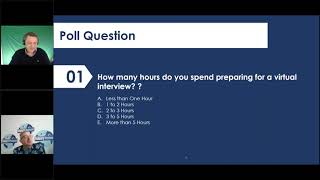
All right, thanks, sir. A few housekeeping items. Those of you who are interested in receiving CTP credits for today's webinar, you have to answer all our polling questions. We're going to have a few more than normal because we want to make this interactive. If you have any questions regarding CTP credits, please send an email to Ernie TreasuryWebinars.com Again, that's Ernie TreasuryWebinars.Com don't send me nasty CTP credit emails because you don't get it in five minutes. I cry. I'm very sensitive, so please be kind. And we appreciate everyone's consideration in taking a short survey at the end of webinar today. Because Mike. I do, and I know Mike does as well. We always want to improve the roi. We offer you for your valuable time. We really appreciate that. Here's our agenda. So we're going to kick off with interview preparation. And this is kind of the same, right, whether you're virtual or in person, but I'll take a stab at that. I am very organized, and so I hope you go through this process the way I do. And I think I'll give you some things that you probably haven't thought about before. And then I think I'll actually let Mike talk. Mike's like, I can't wait for that to start. That's kind of hard. So Mike will talk about what do you need to do before the interview, during the interview and after the interview. So I think this is incredibly important for me, where I missed. You have to be prepared, be over prepared, be comfortable, be yourself. During the interview. You got to put your best foot forward. There's different things you need to think about and you should practice. You should watch yourself on camera. You should watch yourself doing these things. Then after the interview, how do you keep that momentum going? I think that's incredibly important. Sometimes people don't know what to do and then how to nail that. The offer deal. But also, we need to know from Mike, when is it time for me to give up? Right? I'm badgering these people, right? So how do I not, you know, not make myself desperate? For me, the reason this is so important for me is for me, whenever I had a job interview and I thought I just completely nailed it and I would, I would have bet maybe one of my dogs that I got the job. I didn't. But then the ones I didn't think I did real well and I ended up getting, you know, getting, getting the job. So you have to keep your yourself level set and just kind of move forward and be positive. So what about interview preparation? Oh, everyone is so excited to have their first polling question here. This is a curiosity for me as well and something I'm interested in. So I'm asking you to shoot. How many hours do you spend preparing for a virtual interview? And, and be honest, we're not going to tell. And also if you're on here, we're not going to tell your employer that you're on here either. So is it less than an hour, one to two hours, two to three hours, three or five hours or more than five hours? I know it depends on what the job is, but I'm just kind of get a sense and I'd like to get Mike's thoughts on this, on you. What do you think? You know, is. Seems to be the right fit and it might be just for you, where you stand depends on where you said. But I think this is going to be interesting for us to take a little bit a few minutes on. So I'm going to go ahead and leave the polling question up for another 5 or 10 seconds so my CTP people don't get mad if they don't get the answer. And then they send me a nasty email. I'm sorry I'm gonna have to joke about it, but the CTP stuff, But I don't do this to offer CTP credits. I love it that you give me a chance to earn your viewership. And I know I do that every time. So I'm happy to give you your CPU credits, but, you know, give me. Be a little patient with me. All right, let's go ahead and close that. Let's go ahead and take a quick peek at the results, Mike.
Nice.
Yeah, no, I'm, I'm actually pleased, you know, that we've got, let's see, 50 of the people are two hours or more. That's fantastic. Those of you that are less than an hour, maybe you're the, the greatest virtual interviewer ever or maybe you're very, very seasoned. I know, Mike, it depends a little bit.
They don't want a job in the nicest way. If you're spending less than an hour preparing for a virtual interview. Okay, maybe they're taking it that they're thinking about one specific role and they're only going to do a little bit of research and they're gonna, they're gonna bang this out. You know, I get asked when I do presentations, hey, do you rehearse? I was like, yeah, like, well, how many times do you know, you're really natural on stage. And Ernie, you're the same. And we get this. You and I have talked about this before. I do. I rehearse that speech, you know, when I do my Chicago speeches, 10, 15 times. I'm not saying someone has to do that for a virtual interview, but to. To get really smooth at it, you have to do it again and again and again to someone that's coming up to me saying, yeah, I just did an hour and, you know, then I went straight in the virtual interview and I winged it a bit. You don't want the job. You know that you don't. You know, you don't obviously don't need the job, so why bother? You know, And I'm not criticizing those 1 in 10. I'm just saying maybe think about it a bit more deeply. And yeah, it's, it's. That's hopefully what. You'll get some more tips out today. So over to you.
Yeah, right. Mike also, as Mike said, you want to prepare and be really prepared. And some people it'll take you longer to prepare.
Right.
So you want to be ready. Right. So some people, it's not. You have to feel comfortable, you have to be prepared and you have to feel comfortable. So anything. The more you practice, hopefully that'll make you less nervous and more authentic. And so, you know, you should spend at least a couple hours. In my mind, you should probably practice, you know, practice that. I think for me, I'm still not good at it because I'm so used to have my camera on. I. Hand gestures and things are important. And just your facial expressions, which my wife warns me is like, you have some weird facial expressions. So you do want to take a look at that.
You.
I'm kind of funny looking. At least that's what. That's what Mike tells me all the time. So let's go ahead and talk about in person interview and both virtual. And so you really need to look at this. I look at this as like a research project and think about how important it is for you to work at the right place. Right. You need to invest in this. And when the interview this comes out to a good interviewer. Do you understand the company? Do you understand your future job? Right. What is it, what is it that they want me to do? And then when you research the company, you can also see things that you think might be issues there. Unfortunately, if you're getting a job, more often than not, there's a big problem, right? You, you need to know what you're getting yourself into. You want to understand your future boss. And then we don't want to stalk people, but I'll show you how to do that. Understand your future teammates. You can do that. Understand your direct reports. Are you a manager? Are you the treasurer? Let's find out and understand your potential interviewers. Let's go out there and see who you might be interviewing with. And then importantly, you need to be able to communicate your value proposition to each potential interviewer. Is it someone that will work with you above you? Is it the HR person? How do you focus on saying, I get your company, I get the culture, I get your value proposition? And so you have to have just a little bit of a different take. But Michael, talk about, you know, how to do those things. Yeah, Mike.
Ernie, I just want to ask, you know, for the people again, that they're watching, listening and things. You're going to share these slides out. How are people going to get hold of the slides or the information after? Do they drop you an email or what?
Great, great, Mike. Yes, I forgot to mention, if you'd like a copy of the slides, please go ahead and send an email to me@erniereasywebinars.com and then we will be, I will be using the recording, and so we'll go ahead and upload the complete webinar recording and you might see this information through other channels. So we really want to get this content out across the world. And so anyone that wants to consume it. And also if anyone has any questions we didn't cover, and we'll talk about that later. You know, we'll, we'll be happy to take those. So thanks, Mike. All right, so let's go ahead and dive in a little bit. See, I got too many screens open here, right? So, so, so let's dive into actually how to do. Wouldn't you like to be on a webinar where they actually show you how to do something that's like, amazing, right? So, so I'm not telling you to do this for this company, but me, my background is a Treasury manager. So I thought, okay, let me go on LinkedIn and see, you know, what jobs open. And so there's Uline as Treasury manager job in Chicago. One of the reasons I chose this was that I work in manufacturing. So this would have been a job that I would have wanted to look for back in the day. And so you look at the, so you look at it, okay, how am I a fit? Okay, have I done this before? Budget research, recommend actions, minimum requirements. And so I'll let Mike talk and just a minute, Mike, I'll ask you to weigh in here. So usually the position responsibilities, they're. They just want the world. So it's not necessarily crucial that you have all those, but you need to speak to them. And the minimum requirements, again, it depends on the employer. For me, I look at the place, where's my weakest spot. And for me it would be issuing amend letters of credit. So I'd make sure I go on Google and I've blown up and I know the language or if I haven't had foreign, foreign currency exposure language. Right. I can probably get through that as well. And then if there's a, if there's a requirement, I don't me and they dive in on that, then I'm going to say, oh, I don't, I don't have that. But I have this. But I have this. Anything you want to add there, Mike?
I think you're exactly right. Well, I think. And on that is, and we'll come back to it later, is what questions are going to ask you. You know, you just said there, Ernie, you said, you know what, if you've only got six years experience in managing treasury teams, but you manage them in a finance role before, so you've got seven plus years not managing treasury ops teams, but maybe you've done a different role and everything else. And are they going to say, well, no, you haven't done seven years in a day now, of course they're not. If you're the right person, you might only have three years of managing team, treasury teams, but you've got other things. But they will ask you the question, be prepared. We'll come back to the preparation, but back to you because I love this section. So carry on.
Right. And then you want to understand the company. So there's kind of, there's different ways to do that. I started on LinkedIn, right, and then if you go through LinkedIn but you go to the company webpage, right, and go to the about session, just, just browse all the sessions. Right. Learn as much as you can what makes Uline unique, that's their value Proposition, that's really important. When I worked at Franklin Electric, we had these. We had the five key pillars of success. Quality, I should know them. Quality, availability, whatever they are. But if you know those and you can convey those, it's amazing. And then also look in the careers webpage because you're going to be interviewing with different people, right? So the company webpage. Let's look at the career web page. Look, they have a finance section. I definitely want to go into the finance career section. And they'll, and they'll give you great advice. So if someone can see, wow, you've done all this research, right, on the company, you're putting your A game forward. So let's make sure that we really leverage that website. And then I also found some spots you want to see. This company looks great. If anyone from Uline's out there, I probably work for you. This is amazing. All the things they do, get an understanding of their benefits, right? Not just the salary. Look at these great things they have, they have financial, they have health, they have paid time off, they have, they tell you how they're going to train you. That's really cool. They have wellness programs, they do socializings. And so, you know, understand the company and see how they value their employees. Really important in, in today's world that companies are investing in your mental health as well as your physical health.
Mike Ernie, you were, you were, you were prepping for this. You were looking at that job and you were looking around their website. Did it take you less than an hour, do you think? I don't think it did.
Absolutely.
Yeah. But what I mean is, you know, those guys that were wanting a job there, you know, then they said on that line, you know, 1 in 10 that said, oh, you know, only one less than an hour just doing this, you know, if you want the role enough, you're gonna, you know, it's not gonna tell you that much. You know, you can sit there, you look at a couple of YouTube videos and stuff like that. We're not saying, you know, do two, three hours every time with a job. I'm busy and yeah, of course you're busy, but it depends if you walk in there and exactly as you said in your previous role, if you knew the five pillars and you were going for that job with you, you know, when you're at Franklin and things, how impressed are they going to be? They're going, oh, I don't even know this. I work here. You know, it's like, so, yeah, back to you.
I'm Sorry, I have to say because I'll get yelled at me if I didn't get it. Quality, availability, service, innovation, price. Our CEO. Our CEO used to walk around. This is a true story. He'd walk around every employee. He would go up to your desk and say, what are the key factors of success? And you better know what they are. And walking down the hallway. And so this. Manufacturing companies just seem to have a better. For me, I worked and they really seem to value their employees. And so that's important. If you look at industries as well, understanding your future job. So ask yourself these questions and then as you get to know people or connect with your boss, ask them, right, Uline's Cash Management Operations. What is that? What's their global footprint? Right. How many countries are they in, how many currencies? Oversee weekly cash flow forecasts and reporting. See if you can get some sense on how they do it. Right. How are they doing these things? Right. How often are they, do they use LC's and why? Right. You may be able to, if they ask, say, oh, I see. Use letters of credit. You might yet know what you're talking about. But you might say, just kind of curious. I've used LC's. What else do you guys do to help, you know, facilitate payments? Again, the exposures, treasury related systems and interimal controls. Ask questions and that way you can show your knowledge and say, oh, just, you know, one of these requirements was treasury related systems. Can you share with me what systems that you're currently using? Are there areas of internal controls you think might need some work? And then you can get your expertise there. And then the relationships, right? Maintaining relationships. What are your banks? You know what banks you use? I've used xyz. They have some good technology and so this is important. So you know, if someone dials you here, here, here, right. And then the more the relationships again for me, I used to do letters of credit, but I didn't know a lot. It has its own language so you at least need to have a little bit, you know, on the verbiage side of things. So let's go ahead and understanding your future boss. Now you don't want to be a stalker too much, but on LinkedIn they can't tell if you're a stalker. But it's cool. Identify who it is. Right? LinkedIn sales navigator. So what I did is I did a little search here. I had, I used, I have LinkedIn sales navigator. If you don't have it, please invest in it. It's like game changer Time. Right. For you. So understanding your boss, identify who it is.
Right.
I have some search criteria. Search strategy manager. Is there an assistant treasurer, Director of Treasury. Is it a treasurer? Right. I put Treasury. Go ahead, Mike.
I'm just going to say you don't. Just for some, some of the guys. Hang on. I want to have to invest in Sales Navigator. Yeah, yeah. That is a good thing to have. You know, it definitely helps you in your role. But these treasury professionals guys, you can just find this on a LinkedIn free account. Yeah, yeah. And it doesn't. It just takes a few more clicks. You know, that's one of the things with, with Ernie, he's just like, boom, you know, show me all the connections there. But it's like, you know, it doesn't take long. You click on the company and then you go to the people section, you put in treasury hit return. You know, that was typical in it. Treasury return. Oh, and, and it also shows you. And only one of the other things I noticed, you know, you're talking about why does this role exist? You know, someone left from it, where have they gone to have been promoted? You could probably see that from the number of people in the department. So yeah, that's a good way of doing it. So back to you.
Yeah, absolutely. And then you can also do a little bit, understand who they are. And so don't everyone go clicking on Margaret's LinkedIn profile. But I'm connected with her there. Wow. Isn't that a bonus? She might be my boss and I'm connected to her. So you can dive right in there. Right. Look in their profile. Click in their profile. I don't want to show all Margaret stuff on there, but look at her profile. Go on Facebook. I mean, if she's out there, go ahead and look. See what you can build a connection with her.
They.
Maybe her kids are runners. Maybe she's a runner. Maybe she likes and you can softball that in. Maybe she plays golf. Maybe he plays golf. Incredible. You can do a Google search and just see what's going on. And then you can also kind of get an understanding of how they manage. Connect with the direct reports of your future boss and co workers. Right. Let's take a look at who we might be working with here. So, so for me. Oh, Jennifer. Right. She's a Treasury analyst. Okay, well, let's see if I can connect with Jennifer. Maybe Jennifer will share, you know, hey, I wonder, I wonder if Jennifer, you know, she might be going up for the position against me. You don't know, right? That Might be an internal thing. So you want to be a little bit careful there, understand your teammates. So I did this one a little bit more broadly. I think I found Jennifer. But then there's also cash application, like Mike said, you can figure out the department. And I believe they also had a lot of accounts receivable folks, so it seems like they have a cash app issue. So you can lean intelligence. I'm like that.
So.
So again, try and understand your teammates. See if they'll connect with you. Hey, I'm just looking at opportunities out there. Looks like an interesting company. What do you like working there? You know, I mean, go for it. I mean, you know, let's understand your direct reports. So, so this can be interesting. So let's just say that you're lucky enough to get the job. And you see, Jennifer would probably report to you, right? Treasury analysts. Okay, let's see what's going on with Jennifer. Okay. What does she do? She volunteers. I can build an instant connection with her on day one. And when I walk in the office, right, I want to engage her. And one of the first things you want to do with your people that are reporting to you is alleviate the fear, right? When I had a couple people, you walk in the door and you're like, let's just sit down with them as a human being, right? Make a connection with them. The first thing, the best thing you can do is build trust, and that starts right out of the gate. So I want you to know this is my philosophy. I, I, I work. I work. I'm very open. I'm very honest. If there's anything I can do for you, let me know. Are there things that I'm walking into here? You know, I, I want to help you. And basically I say to people, your success is my success. It's our departmental success. So, so, you know, the more, the more you share with me, the better. And then you can also see areas, right, where Jennifer might not be involved in, that she wants to get involved in. Right. Maybe Jennifer wants to get into training. Maybe that means she wants to talk at an AFP of it, right? So you can. There's incredible information in here, right? Any thoughts, Mike?
Just exactly what you said. You know, I'm not going to add much more to that. I think, you know, just by know, just gaining an idea from, you know, it might be Jennifer might be her boss. It might be, you know, look at people. What have you got in common? I think that's a. And that'll also be when you go for the Interview and whether that's virtual or real or whatever it might be when we get back to that, I think just by having that commonality, people sometimes say I'm the resume. Should you have interest on it? Yeah, of course. Because it's a hook about what people want to talk to you about. And it you just talked about volunteering there, that might be a big thing or there might be something else. And then if you're pre briefed, you can think that through. Now you're not going to get into it maybe in depth in an interview, but you're going to have things in common and that's what you want to do. You want to establish a relationship and that's going to help you.
Yeah, I actually got my job at Franklin Electric just because I picked up on something in the CEO's office. So this position was so hard to fill. The hr guy spent 45 minutes preparing me to interview with this guy. So he was tough nut to crack. And so Mike knows me, he's like, man, I don't. That's not a good situation you have. No. So there was, there was a boat inside a bottle with all these intricate strings and everything in there. And I said, well, that's really interesting. Where did you get that? And he's like, yeah, I got that. I kind of like to build. And then I'm like, oh, my dad used to build those and my mom was pregnant with me, he built that ship. And then bam, I had them right there. And then the guy told me, he goes, he, you had it right there. As soon as you did that, that was your connection and that's what got you in the door.
Building connections, Relationships.
Right. So we talked about this potential interviewer. So let's broaden our search. Whether it's LinkedIn or Navigator, you know, what are, who are the people you might work with or work for? AP, AR, CFO, HR Controller, VP of Finance. So just trying to see who you might be interviewing with and if you're lucky, you might have a direct connection with them. Right. And so it's all, it's like, it's like intelligent.
So go ahead. And it's added in there. You know, one of the things you notice there are some of the people there. What you can also look at is if one of your friends or one of your connections is connected to one of those people. Right, right. You know, ask your friends and say, okay, is it possible? I don't want to get, you know, I don't want to get in by the back door. You Know, I don't want to do that but if there's any advice, say Vanessa could give me, you know, or is there anything. Could you just reach out and see if there's anything sometimes I might say, yeah, actually I can give you a call. I can tell you what we pay me being through. Oh, I've got to know them. Yeah, It's a great introduction and you can do that by LinkedIn as well. But do as a warm intro. There's nothing worse than can you introduce. I get sometimes is oh Mike, you're connected to this person. I'm connected to 10,000 people. Yeah, all the time. But you know, and you want to help people but you know, sometimes, you know, I might have recruited for them 10 years ago. So, you know, it's a long lost connection sort of thing. But, you know, that's one of the things you can always ask.
Yeah, I guess kind of what I'm getting into here in the, in the prep stages, you want to look for every competitive advantage that you have. And so you're being willing to invest in this. Right. Is going to give you a competitive advantage. You have to be able to communicate your value to interviewers. Michael, talk about this. What's your value to the company, right. Beyond your role, what's your value to their depart to the department, treasury, finance? What's your value to having them. Right. Having you makes them look good.
Right.
I'm in on the top of my field. I do this. Maybe it's they like communities. I'm active in the community. So this is, this is a lot about the interview stage. I'm sorry I took so much time, but this is, this to me is. This is a critical part that I don't think that's where I think people missed out. So let's go ahead and break it up with a polling question here. And hopefully this will give Mike some, some insights right. On where to focus, maybe a little bit more. Asking you to share what your biggest challenge is. Is it the preparation stage? Is it the live interview itself? Is it what do I do immediately after the interview is over? Is it how do I maintain momentum? Or for me, I'm charmingly aggressive. Right. Knowing when to give up after an interview. So knowing when to kind of call it a day and just kind of move on to that next opportunity, put that in the rearview mirror and, and move on and learn what you can then realize.
Right.
When it's time. When it's time, it's time. Right. Don't get yourself caught up. I can't believe I didn't get this job. That's probably the hardest part in the job search for me, is keeping your momentum, keeping yourself positive. Right. That's really hard. You have to let yourself have some down moments, but you have to time yourself. Okay, I get. I get a half hour, pal. Maybe you need a day off. I need a day off. I need to recharge. But if you have negativity or you're worn down, that comes across in an interview and you don't want to be excited like me too much. But that really makes a difference in your. And people can. People can really sense that. So get yourself excited about your virtual interview. I don't. I don't care if it's like, this is not the only job. I want you better act like this job is really important to you when you are in that interview. And I think people don't do that as well. So let's go ahead and close. Let's take a quick peek. Mike.
Yeah. The live interview, that's not. Not that much of a surprise really, is it?
Right.
You know, people think, you know, but, you know, people get worried about interviews. We're going to do the prep as well and stuff. Yeah. We'll go through each of these areas. You know, how to keep momentum going as well. That's an interesting one. And know when to give up. You know, there's, you know, one in ten people just over that, you know, similar situation. I think, you know, we'll give that. Yeah. When we go through the advice.
All right, cool. All right. What everyone's waiting for. Earning to be quiet. Mike, go ahead.
There you go. That's a. That's a nice. Give everyone a rest early. Just like, you know, rest your jaw just for a minute, everyone. I'm not going to talk to the slides, but the key thing is look at the picture. You know, people have said to me before, you know, one to one meeting versus an interview. Are they pretty similar? No, they're not. They're totally different. You are. You know, we have a thing in the UK with Judge Rinder, and he's judging you, he's looking at you and stuff like that. You have a. Talent shows, you know. Exactly. If you don't get through each of those auditions, you're out the room. I spoke to Forest Sebold, really great guy on my podcast recently, and what he said, one of the things he's done with his interviews, he said in the past, is that he wants them to give them no reason to reject them from the. The Process. Each time he's done the research, just like Ernie talked about there, he said that's the first thing you can do. And if you listen to Dave Forest, good to, good to hear from you. But the fact is in a virtual interview, it's just like that, you know, you have bad one to one meeting with your colleagues. Sorry about that guys, was having an off day and stuff. Have an off day in a virtual interview. You're out the process, you're done. That's it, you know, you're not getting that job. You know, that's what it's about. It's. And it's more difficult for you guys with a virtual interview. You've got to reach out and grab their attention. I wrote an ebook a few years ago and I was trying to get it across to people that I'm a massive fan. Guilty Seeker of. Aha. That's right. The best band in the world. They're still going, we love them. Yeah, move on. Ernie, don't. Yeah, don't do that to me. But joking aside, you reach out, just go back to that and go back a slide. Yeah, like when you know that's it. So when you've got that bit from, you know, a horror and take on me and the guy, you know, he's reaching out and he's grabbing the girl, you know, that's what you've got to do. You've got to reach out from your screen. So there's. And you've got to get someone's attention, you know, so you're sitting there, you're having a virtual interview and you want to make sure they want, you know, you, you want to be judged and you want to get through to the next round. So each time think about what you're doing. So keep going. Sir. We go, Ernie, that's lovely technology. Now before this and everything else, we test the technology and you've got the lovely backdrop here. That's why we put that up because it's really rubbish behind there. So it looks all right, you know, it's not the best. I love Ernie's background. You know, I'm going to steal that but I'm not going to work for webinars. But make sure you check it, you know, make sure we were online 15 minutes before everything was working, was worried about the sound. Make sure that works. If it doesn't, you've got time. Have a backup go in. You know, I've got another PC. If we dropped out, I'd be offer two minutes, I'd be straight on an indoor PC. Make sure it's all working. Get yourself positioned. Look how hard. Oh, great. That's right. Yeah, they're looking good. Are you? No. How long. How long does that take, for crying out loud? It's like. Yeah, it's just like. Get yourself ready. Right, here's my phone. It's off. Boom. There you go. See? Switched off. Like, switch it off. Get rid of the distractions. Say to the kids, lock them in the house. Just say, look, give Daddy an hour. You know, come back, do, you know, bring me a cup of tea later. But that's it, you know. Again, you've got optimal lighting. I'm gonna do this one. Here we go. That's it. You don't want that. You know, you like guys just like this. And I've seen so many. In fact, I'm gonna switch these off for a minute and just to show. Boom. Like this. Do this. How bad does that look? Really? Look. That's really difficult, isn't it? Oh, my God. Guys, just switch on some lights. Look, I've got little lights here. We've got some backdrop lights. Let's get that back on. Sorry. Yeah. You're gonna see my face again. Can't have everything. Look at Ernie's. Ernie's is better. And look at him, he's well lit. He's got nice branding and stuff like that. We're gonna get some more branding here, but lovely. Go to webinars. Doesn't allow you. But again, ensure the right environment, limit the distractions. So we switched off those. Go monetary. Body language. I made a note here, Mike. Nose rub. Yes. It's not code, this. I do this. It's like, no, I don't have a habit. No, I've stopped that. I've never had that habit. No. Shut up, Ernie. Joking aside, I have a habit. This. I have to sit with my hands sometimes when I do panelist things and not rub my nose. So when you're meeting someone online, make sure you're there, smartly presented. Monitor your body language. You're watching, they're watching you. I'm looking in the camera. Not doing that. Not doing this. Not slouching. Is it really that hard? It's like. It's not, is it? You know, so, you know, communicate. Sit up straight, look as much as possible. If you can, rehearse this before, you know, get yourself. Do what? Think and answers the questions. Talk about this. I've done this many times with Ernie and stuff, but do it before it doesn't take you. That's just three or four or five stages. It's easy and it. Do you know what, it costs a lot, doesn't it? Oh, that's right, it's free. Right, sorry. Just winds me up. Anyway, next one, dress the part. There you go. Yeah, look at that. You could, you could wear a jacket like that. But he's won the, he's won the bet. Don't worry, there's a lot of dollars in his bank account for that. It's great actually with, you know, you look at Ernie, you're gonna. Next time you're gonna see him at conference, you're gonna walk up to. Oh, you're that webinars guy, you know who he is. So dress the part for me. My industry smart shirt. Boom. Sweater. I've got, I've got a casual top over there. You know, I knew you guys are going to be watching. I took that off, put it in the corner. It's not happening. Right, next, sit down prepared, be sell yourself. Look, these are things called notes. It's a notepad. As I'm going through, I'm writing questions. Review your career history, anticipate questions. Now I'm going to go into that one. Just a. Not too much detail. I give a practical example. Third round interview for one of my candidates. Great guy. I did a rehearsal with him. So we said, oh, could we do rehearsal? Of course we could start to do this rehearsal. How can I put it? He was atrocious. He was the worst video interview I've ever seen in my life and he's a great candidate. And I literally had to say to him, look mate, this has got to change. And I said, look. And we went through and went through some of his answers and actually when he got to the end of each of the answers, look, treasury team wise, you did some really good stuff and give me this long two minute answer. I was sitting there going, oh, we'll make this stop. At the end of it, he gave like three bullet points. They were amazing. He was demonstrating his value. So what I did, I got him. I haven't got any post. It's here. But to write on a post it, boom. And I said, right, you know the bit about teams write the top three tips from. He put it on his monitor, just to the side, lovely, boom. And did it. And he had it all the way around when he. After I got the feedback after that third round interview, they said he was the best prepared candidate they'd ever had for a virtual interview. And the reason was he prepared the questions. Ernie, you've been in that situation, what's it like for you? What do you think?
I mean, for me, if you don't have them, but if you do, I have. Right now, I'm not in good shape now. I have multiple monitors open, and I have notes right in my purview. So I can just kind of dart my attention. Just. You can get a lot of stuff that you can read on a document, and you have to be natural practice, but you could read. I know I have to say this, like those five key factors of success, whatever that is. Ooh, this guy loves golf. In bold, in red. Golf, golf, golf. Can you have all these grand ideas when you're ready? Right. But when you get in the heat of the battle and maybe someone throws you a curve and you're like, I need to say that so it makes you feel comfortable.
You got to hear about selling yourself. I'm going to come back to that in a minute. So I know we've got. We don't want to take everybody's afternoon, but we've got some of the biz. Here we go. This is it. Perfect candidate. Strengths, weaknesses, motivations. Now, when you're leaving your current role, even if you are struggling with your boss in your relationship, we don't want to hear negative stuff. Yeah, be nice, play nicely, talk about your strengths, and focus on the future, not necessarily all the past. There are so many times you say, I don't like him, I don't like her. This is wrong. Blah, blah, blah. What are they gonna. Oh, yeah, they're a real strong team player. No, they're gonna come in and you know that. You can obviously talk about it. Say, I've struggled in my relationship. I've tried to do this to beef it up. It's not worked out. I am moving on. If that's your reason for moving on, obviously, you know, look at your strengths and, you know, as you said earlier, look at your weaknesses. You know, when you've got a practical job, there were weaknesses in it. And actually, so make that. You know, I haven't managed this number of people, but I have managed this number of people. I have done in this way. Concerns as well.
Mike. Mike, let me hop in here.
Sorry.
We got a question I think fits well here. And I've been in this position, not surprising to anyone. I have been terminated several times. But how do you. How do you communicate that? Right? How do you make that into not a negative thing, if that would be your concern? I'm on the call. I recently lost my job. They asked me why, how do you kind of tiptoe around that? I know it's a long question, but kind of.
I think, number one, you answer the question.
Okay.
There are so many people that don't answer the question. Yeah, well, I think you might be bitter and twisted about it. I mean, I know you can. Everyone can see this on camera. You're a bitter and twisted man. You're not.
Yeah, that's true.
No, can. It's not. You're not. You. You've taken it on the chin and you've learned from it. And you say, look, do you know what? It wasn't the right place for me. Reflect on the positives and don't ignore the negatives. But, you know, you can take that and, you know, I've got. It was. I had it with a candidate recently, and she just berated her previous employer. Do you know what? I'm meant to represent her. And I'm thinking, wow, I'm gonna have to coach her before every. Not to. Absolutely. They did this. Did this. And I actually did give a coaching on that call. And I said, look, I think you need to, you know, address that and, you know, and get over it, you know, because the fact is why you want to join the new employer, you know, maybe some of the, you know, and you can look at the weaknesses also being not strength. I hate when they say that. But if there are parts of the new role that you're going to go to, saw the role that you demonstrated earlier that attract you, say, look, do you know what the. These things were missing from my previous role. Say there wasn't enough team management. There wasn't progression. And actually share that with them, you know, because that makes it into. Not a weakness, just something Progression as well. Growth.
Just let me. And I asked this in my mock interviews at Purdue, and people always get stumped. I ask someone, why do you want to work here? That's. That's the exact answer to that. Right? I would like to do this. I'd love. How are you going to make yourself better? But if someone asks you, why do you want to work here? And you don't have an answer, you might as well hang, you know, beep your butt. That's my opinion. I mean, that's a. That's a tough one. They never put that in all the interview questions that I see. But I've been kind of stumped on that myself. So.
Yeah.
Kind of interesting. We're going to move on and we stay and stand on that one.
Keep going. Yeah, because we. We want to keep These people awake. I've had a strong coffee, so they're all right. You know, keep them going. Right. First impressions, first four minutes. Whoa. Yeah. They do form in the first four minutes, but they're actually there for the first 30 seconds. You know, that's it. You know, if you're. We talked about body language, we talked about, you know, all those different things. We talked about the lighting. You know, it's like if, you know, if I'm stupid enough to do this and I'm not prepared enough how, you know, as a Treasury professional. Professional. Put my teeth in. Now, am I going to be judged? You know, be prepared, have questions. You're not going to ask them straight away, but they are going to talk through your resume cv. They're going to do this. So that's their first impression, actually. If this person's throwing a curveball, if it's a challenge, they're going to be able to deal with it. You know, that's one of the things there is that balance, confidence, arrogance. I think that's an interesting one. You know, you want to come over this. Yeah. But you don't want to become over this. Yeah. In your face. Boom. You know, look at me, I'm not. Great stuff, you know, that where. That's where it comes into. And I've written it here and it occurs all the way through. What did you achieve in your role? You know, that's one of the things. Not what did you do? And that was one of the things you mentioned earlier, Ernie, you know, and again, you talked about some of the things that you did in your previous role, but you were also focusing, naturally enough, because you're a great sales guy at this. But what you achieved, how did you improve things? Where did you take it from? And to. You went into a company that didn't have a Treasury management system. You did an rfp. Rfi. Rfp. Boom. Went through, implemented this system. Okay, you implement the system, right? Yeah, that's it. No. How much money did you save? Did you save the. The time. Yeah. That. We rolled it out globally.
Oh, wow.
So you save. How much money did you save that company? Well, I saved my wage, I saved my salary. Yeah. 10 times over in the first six months. Wow. That's what you achieve. I mean, you've got that as well, haven't you, Ernie? I mean, how do you balance that confidence, arrogance thing? What would you say?
I would say I'm arrogant too much. But, yeah, I think that it's kind of. To me, certain people are more and less Sensitive to confidence and arrogance. So, like you said, I think it's better if you know you're a little bit arrogant. You might want to. I usually have to dial it down a little bit. You have to know yourself. Right. And so, you know, you might think, oh, I better kind of. But me. My personal opinion is, if you know what you're talking about, it's confidence. If you're. If you're talking out of your rear end. So sometimes if you take a bridge too far and someone nails you, if you're going to be confident, you better know what you're talking about, otherwise you're arrogant. Arrogance without the. Now what? I didn't say it right. Arrogance is when you don't have the goods to back it up. That's.
That's the way, the knowledge. Yeah. Next one. Yeah. You've earned the right to be in that room. You're the right person for the job and I think that should give you a certain amount of confidence if you've been invited for interview, believe me, there might be, as you see on LinkedIn and things, there's sometimes 150 applications. You will be one of maybe five, 10 people being screened. You've got a right to be there, so sit forward. You love this. You know, we talked a lot about Critical Lawyer. I'm not going to get into that too much. We've talked about it. Just be constructive, looking at your past stuff and look at what you know, what. What strengths did it give you, how did it help you and things like that. Are you interested? Right. I wonder if. And I do this on some videos again, our website, treasure recruitment.com, we've got an interview section and one of the things is, are you going to be asked questions now? I. One stage, I was having to run our junior treasury desk a couple of years ago. My colleague, she was going on honeymoon and I was like sitting there and she. She came back from holiday and I went, have your desk back. She's like, what's wrong? And I went, they're driving me mad. Why? I said, I've got these junior candidates and they keep asking me these questions. And he's like, well, yeah, they ask. I said, no, no. They asked me questions like, oh, well, they asked me questions at the interview. I. I'm like, yeah, that's what an interview. So I actually recorded some videos about this. They're going to ask you questions, sit in their seat, literally do it at home, you know, sit. The preparation time, you know, we talked about the naught to one hour. Well, this is the interview, this is your one to two hour bit. Sit down just as we were doing and I was listening to you, Ernie, and hurts my ears. But you know, but I was writing down some questions. I was like writing down here, I was prepping before this thing, what questions might we be asked by some of the candidates, you know, in the sidebar. So do put questions in with Ernie in the chat box and stuff, you know, so I actually ask questions. So. And what questions are they going to ask you and what questions you're going to ask them? And you know, you came up with that great thing, Ernie, that you were looking at, you know, the YouTube videos about finance careers and demonstrate that you've done your research. You know, don't overdo it. But the fact is, oh, I looked on your website and I saw you've got finance development program. Does that mean in two years I'll be expected to rotate out of this role? Or do you want to keep me for three or what's the. What? You've looked at our website. Wow. And you've, you've watched that? I haven't even watched that. Some, you know, some of the managers will say, so yeah, do that. It demonstrates interest.
Yeah, let me sneak a question in here. So, yeah, because I want to keep them a little bit fresh. So. So Mike, this is a long answer, but then maybe we can crisp it. What's out there? What is, what's the skill set? Right. You get to ask this all the time. Is it cpa, is it mba, is it fpa? What are people really seem to be focused on? On the, I'd say on the technical side. The other things are soft skills. But any thoughts there?
It goes back to one of the things you said earlier. You showed the group treasurer there of that company where you were demonstrating early Uline and things like that. Who are they? Are they a cpa, Are they afp, ctp? They're qualified. In the uk we've got the ACT qualifications. Have they done that? Things like that. It's, it's about where they're coming from. You know, what, you know, they got an mba, you know, I, I was being asked recently by U S Canada, they said, look, should I do ctp, should I do cpa, should I do mba, what should I do? And things. And I said to him, I said, number one, what job do you want to get? Or in fact, where do you want to go to? I said that's a personal choice. But I said further to that, it's about the person that's interviewing you, you know, and again, this is after the interview. But, you know, think about your audience. You know, that's for the interview. But more generally, what am I being asked for? It depends on the job. A lot of the role, you know, is it more analytical? You know, is it more accounting focused? You know, it's, you know, then you'll get more of the accounting type. You know, they want a cpa, you know, if it's more treasury focused. Ctp. Yeah.
Okay, great. Let me hop in here. I'll take one of these here. So someone is asking, how do you control the rhythm of the interview so you're not talking over people? And that's my. One of my biggest weaknesses is I talk too much. So listening is a weapon. Listening is absolutely a weapon. People will say. So I would say, don't be afraid of silence. So when someone asks you a question, just don't blurt out the first thing that comes to your mind. And so I would say, I need to do this. There's classes on how to listen. So I think listening is absolutely important. Now. Don't be afraid. So this is an old CEO of mine. He would sit there for 30 seconds until you kept talking to him. So, you know, so don't be afraid of the silence. And so I'd say air on, you know, leaving a little bit of air. Mike, do you have anything even better than that or agree?
I think alongside that, I had. I said to Joe, who works with me, I said, my biggest weakness is when I'm dealing with clients who I'm friendly with, which I hope to be friendly with all of my clients. But if I'm meeting a client for the first time, I'm perhaps slightly more formal. I'm gathering information, I'm scribbling down other, you know, I'm really like this and da, da, da. If I'm with a, you know, a mate and we did a briefing with a client the other day, I was taking the mickey. I was like, oh, here we're having a bit of a laugh and things. We. I got to the end of that interview and I said, you know, I controlled it. And again, so you're going to meet someone, interview, you're getting on really well with them and things like, control it, think about your behavior. Don't let your guard down. It is. They are not your friend, they are your interviewer. They are expecting to see you tick certain boxes. Yes, you can be friendly. Yes. But don't let it, you know, you've got to be careful and this comes about after the interview, but also during the interview as well. You've got to just think about that, you know, because again, you know, just think about. Well, they think about where they're sitting. Exactly. So after the interview, should we dive into that one? Sure, yeah. I think, you know the key in here.
Right. Any thoughts, Mike?
Just exactly what you said. You know, I'm not going to add much more to that. I think, you know, just by, you know, just gaining an idea from, you know, it might be Jennifer, it might be her boss, it might be, you know, look at people. What have you got in common? I think that's a. And that'll also be when you go for the interview and whether that's virtual or real or whatever it might be. When we get back to that, I think just by having that commonality, people sometimes say, I'm the resume. Should you have interest on it? Yeah, of course. Because there's a hook about what people want to talk to you about. And you just talked about volunteering there. That might be a big thing or there might be something else. And then if you're pre briefed, you can think that through. Now you're not going to get into it maybe in depth in an interview, but you're going to have things in common and that's what you want to do. You want to need some work and.
Then you can get your expertise there. And then the relationships, right, Maintaining relationships. What are your banks? You know what banks you use? I've used xyz. You know, they, they have some good technology. And so this is important.
So establish a relationship. And that's going to help you.
Yeah, I actually got my job at Franklin Electric just because I picked up on something in the CEO's office. So this position was so hard to fill. The HR guy spent 45 minutes preparing an interview with this guy. So, you know, if someone dials you here, here, here, right. And then the more the relationship. So he was tough nut to crack. And so Mike knows me. He's like, man, I don't. That's not a good situation. You have no. So there was, there was a boat inside a bottle with all these intricate strings and everything in there. And I said, wow, that's really interesting. Where did you get that? And he's like, yeah, I got that. I kind of like to build. And then I'm like, oh, my dad used to build those. And my mom was pregnant with me, he built that ship. And then bam, I had them right there. And then I told me, he goes, you had it right there. As soon as you did that, that was your connection and that's what got you in the door.
Building connections, relationships.
Right. So we talked about this again. For me, I used to do letters of credit, but I didn't know a lot potential interviewers. So let's broaden our search. Whether it's LinkedIn or Navigator, you know, what are. Who are the. It has its own language, so you at least need to have a little bit, you know, on the verbiage, people you might work with or work for. Ap, ar, cfo, HR controller, VP of finance. So just trying to see who you might be interviewing with side of things. So let's go ahead and understanding your future boss now. And if you're lucky, you might have a direct connection with them. Right. And so it's all, it's like, it's like intelligent. So.
And also go ahead and there, you know, one of the things you notice there are some of the people there. What you can also look at is if one of your friends or one of your connections is connected to one of those people.
Right, right. You know, people you might work with or work for. Ap, ar, cfo, HR controller, VP of Finance. So just trying to see who you might be interviewing with. And if you're lucky, you might have a direct connection with them. Right. And so it's all, it's like, it's like intelligent, so go ahead and it's.
Added in there, you know, one, you.
Don'T want to be a stalker too much, but on LinkedIn they can't tell if you're a stalker, but it's cool.
Ask your friend, say, is it possible? I don't want to get, you know, I don't want to get in by the back door. You know, I don't want to do that. But if there's any advice, say, Vanessa could give me, you know, or is there anything. Could you just reach out and say if there's anything. Sometimes I might say, yeah, actually, on the things you notice, there are some of the people there. What you can also look at is if one of your friends or one of your connections is connected to one of those people.
Right, right.
You know, ask your friend and say, oh, is it possible? I don't want to get, you know, I don't want to get in by the back door. You know, I don't want to do that. But if there's any advice, say Vanessa could give you a call. I can tell you what we pain we've been through. Oh, I've got to Know that. Yeah, it's a great introduction and you can do that by LinkedIn as well. But do as a warm intro, there's nothing worse than can you introduce. I get sometimes is, oh, Mike, you're connected to this person. I'm connected to 10,000 people.
Yeah.
All the time. But you know, and you want to help people but you know, sometimes, you know, I might have recruits. Forgive me, you know, or is there anything. Could you just reach out and say if there's anything sometimes it might say, yeah, actually I can identify who it is.
Right. LinkedIn sales navigator. So what I did is I did a little search here. I had, I use, I have LinkedIn sales navigator. If you don't have it, please invest in it. It's like game changer time. Right.
Give you a call. I can tell you what we pain we've been through. Oh, got to know that. Yes. A great introduction 10 years ago. So, you know, it's a long lost connection sort of thing. But you know, that's one of the things, you know and you can do that by LinkedIn as well. But do as a warm intro, there's nothing worse than can you introduce. I get sometimes is, oh, Mike, you're connected to this person. I'm connected to 10,000 people.
Yeah. Yeah. I guess kind of what I'm getting into here in the, in the prep stages, you want to look for every competitive advantage that you have and so you're being willing to invest in this. Right. Is going to give you a competitive advantage.
And you want to help people. But you know, sometimes, you know, I might have recruited for.
You have to be able to communicate your value to interviewers. Michael, talk about this, what you're doing.
To the ten years ago. So, you know, it's a long lost connection sort of thing. But you know, that's one of the things you can always ask.
Yeah, I guess kind of what I'm getting into here in the, in the prep stages, you want to look for every competitive advantage that you have. And so for you, so understanding your boss, identify who it is.
Right.
I have company. Right. Beyond your role, what's your value to their depart to the department, Treasury, Finance. What's your value to having them? Right. Having you makes them look good. Right. I'm in on the top of my field. I do this. Maybe it's they like communities. I'm active in the community. So this is, this is a lot about the interview stage. I'm sorry I took so much time. But you're being willing to invest in this Right. Is going to give you a competitive advantage. You have to be able to communicate your value to interviewers. Michael, talk about this. What's your value to the company, right? Beyond your role, what's your value to their depart to the department, Treasury, Finance? What's your value to having them? Right. Having you makes them look good. Right. I'm in on the. This is. This to me is. This is a critical part that I don't think that's where I think some search criteria. So it's treasury manager. Is there an assistant treasurer, Director of Treasury? People missed out. So let's go ahead and break it up with a polling question here. And hopefully this will give Mike some. Some insights right. On where to focus. Maybe a little bit more. Asking you to share what your biggest challenge is. Is it the preparation for my field? I do this. Maybe it's. They like communities. I'm active in the community. Is it a treasurer? Right. I put Treasury. Go ahead, Mike.
I'm just going to say you don't.
So this is. This is a lot about the interview. Stage. I'm sorry I took so much time, but. Stage. Is it the live interview itself? Is it what do I do immediately after the interviews?
Just for some. Some of the guys. Hang on. I want to have to invest in Sales Navigator. Yeah, yeah, that is it. This is.
This to me is. This is a critical part that I don't think that's where I think people missed out. So let's go ahead and break it up with a polling question here. Dover, is it how do I maintain momentum? Or for me, I'm a good thing to have.
You know, it definitely helps you in your role, but these treasury professionals, guys, you can just.
I'm charmingly aggressive, right? Knowing when to give up after an interview. So knowing when to kind of call it a day and just kind of move on to that next opportunity, put that in the rearview mirror and. And move on and learn what you can then realize right. When it's time. When it's time, it's time. Right. Don't get yourself caught up. I can't believe I didn't get this job. I. That's probably the hardest part in the job search for me. And hopefully this will give Mike some. Some insights right. On where to focus. Maybe a little bit more. Asking you to share what your biggest challenge is. Is it the preparation stage? Is it the live interview itself? Is it what do I do immediately after the interview is over? Is it how do I maintain momentum? Or for me, is keeping your momentum keeping yourself Positive. Right. That's really hard. You have to let yourself have some down moments, but you have to time yourself. Okay. I get. I get a half hour on this.
On a LinkedIn free account. Yeah, yeah. And it doesn't. It just takes a few more clicks.
You know, maybe you need a day off. I need a day off. I need to recharge. But if you have negativity, I'm charmingly aggressive. Right. Knowing when to give up after an interview. So knowing when to kind of call it a day and just kind of move on to that next opportunity. Put that in the rearview mirror and. And move on and learn what you can then realize.
Right.
When it's time. When it's time, it's time. Right. Don't get yourself caught up. I can't believe I didn't get this job. That's probably the hardest part in the job search for me.
That's one of the things with, with Ernie. He's just that boom, you know, show me all the connections there.
But it's like it is keeping your momentum, keeping yourself positive. Right. That's really hard. You have to let your.
You know, it doesn't take long. You click on the company and then you go to the people section.
You put yourself, have some down moments, but you have to time yourself.
Okay.
I get. I get a half hour, pal. Maybe you need a day off. I need a day off. I need to recharge. But if you have negativity or you're worn down, that comes across an interview. Yeah. You don't want to be excited like me too much. But that really makes a difference in your. And people can. People can really sense that. So get yourself excited about your virtual interview. I don't. I don't care if it's like this or not. The only job I want. You better act like this job is really important to you when you are in that interview. And I think people don't do that as well.
So let's go ahead and close treasury hit return. You know, that was typical in a Treasury return.
Worn down, that comes across an interview. Yeah. You don't want to be excited like me too much. Let's take a quick peek. Mike.
Yeah. I've been to you. That's not. Not that much of a surprise really, is it?
Right.
You know, people think, you know, but, you know, people get worried about interviews. We're going to do the prep as well and stuff. Yeah. We'll go through each of these areas. You know, how to keep momentum going as well. That's an interesting One and know when to give up. You know, there's, you know, one in ten people just over that, you know, similar situation. I think, you know, we'll give that. Yeah. When we go through the price.
All right, cool. All right, what everyone's waiting for Ernie to be quiet. Mike, go ahead.
That's a nice. Give everyone a rest early. Just like, you know, rest your jaw just for a minute, everyone. I'm not going to talk to the slides but the key and the. And it also shows you. And only one of the other things I noticed, you know, you're talking about why does this role exist? You know, someone left from it, where have they gone to? Thing is, look at the picture. You know, people have said to me before, you know, one to one me who they've been promoted. You could probably see that from the number of people in the department. So yeah, that's a good way of doing it. So back to you.
Yeah, absolutely. And then you can also do a.
Little bit seeing versus an interview. They're pretty similar. No, they're not. They're totally different. You are. You know, we have a thing in the UK with Judge Rinder and he's judging you, he's looking at you and stuff like that. You have a talent shows, you know. Exactly. If you don't get through each of those auditions, you're out the room. I spoke to Forest Sebold, really great guy on my podcast recently and what he said. One of the things he's done with his interviews, he said in the past is that he wants them to give them no reason to reject them from the, the process.
He each time understand who they are and so don't everyone go clicking on Margaret's LinkedIn profile.
He's done the research just like Ernie talked about there. He said that's the first thing you can do. And if you listen today, Forrest, good to, good to hear from you. But the fact is in a virtual interview, it's just like that, you know, you have bad one to one meeting with your colleagues. Sorry about that guys. Was having an off day and stuff. Have an off day in a virtual interview, you're out the process, you're done. That's it.
You know, I'm connected with her there. Wow. Isn't that a bonus to she might be my boss and I'm connected to her.
No, you're not getting that job. You know, that's what it's about. It's. And it's more difficult for you guys with a virtual interview. You've got to reach out and grab their attention. I wrote an ebook a few years ago and I was trying to get it across to people. I'm a massive fan. Guilty Seeker of. Aha. That's right. The best band in the world. They're still going. We love them. Yeah, move on. Ernie, don't. Yeah, don't do that.
So you. You can dive right in there, right? Look in their profile. Click in their profile.
But joking aside, you reach out. Just go back to that gurney. Go back a slide. Yeah, when you know that's it. So when you've got that bit from, you know, a horror and take on me and the guy, you know, he's reaching out and he's grabbing the girl, you know, that's what you've got to do. You've got to reach out from your screens that are there and you've got to get someone's attention.
I want to show all Margaret's stuff on there. But look at her profile going Facebook. I mean, if she's out there, go ahead and look. See what you can build a connection with her. Maybe her kids are, you know, so.
You'Re sitting there, you're having a virtual interview, and you want to make sure they're runners.
Maybe she's a runner. Maybe she likes and. And you can softball that in.
And maybe she wants, you know, you. You want to be judged and you want to get through to the next round. So each time, think about what you're doing. So keep going, sir. We go, Ernie. That's lovely technology. Now, before this and everything else, we test the technology and you've got the lovely backdrop here. That's why we put that up, because it's really rubbish behind there. So it looks all right. You know, it's not the best. I love Ernie's background. You know, I'm going to steal that, but I'm not going to work for webinars.
Golf, maybe. He plays golf. Incredible. You can do a Google search and.
Just see what's going on, but make sure you check it, you know, make sure we were online 15 minutes before everything was working, was worried about the sound. Make sure that works. If it doesn't, you.
And then you can also kind of get an understanding of how they manage.
Connect with the time, have a backup go in. You know, I've got another PC. If we dropped out, I'd be off for two minutes. I'd be straight on an indoor PC. Make sure it's all working. Get yourself positioned. Look how hard. Oh, great. That's right. Yeah, they're looking good, are You. No. How long, how long does that take? Crying out loud. It's like. Yeah, it's just like, get yourself ready.
Right, Direct reports of your future boss and co workers. Right, let's take a look at who we might be working.
Here's my phone. It's off. Boom. There you go, see, switched off. Like friend, they are your interviewer, they are expecting to see you tick certain boxes. Yes. You can be friendly. Yes, but don't let it, you know, you've got to be careful. And this comes about after the interview, but also during the interview as well. You've got to just think about that, you know, because again, you know, just think about whether. Think about where they're sitting. So switch it off. Get rid of the distractions, say to the kids, lock them in the house, just say, look, give daddy an hour, you know, come back do you know, bring me a cup of tea later. But that's it, you know, again, you've got optimal lighting. I'm going to do this one. Here we go. That's it. You don't want that. You know, you like guys just, just like this. And I've seen so many, in fact, I've got. So after the interview, should we dive into that one? Sure, yeah. I think, you know, the key switches off for a minute and that just to show. Boom. Like this. The thing is, you've got here, call the consultancy, drop a friendly email, you know, say really enjoyed today, would love to. Maybe you can, if it's appropriate, connect to them on LinkedIn. You know, sometimes be careful about doing that because it just seems a bit desperate, you know. Oh, yeah, I want to be this. How bad does that look, really? No, that's really difficult, isn't it? Oh, my God, guys, just switch on some lights. Look, I've got a little. Your friend. Oh, thank you for the interview. Can we be friends now on LinkedIn, I would be careful. If they've given you lights here, we've got some backdrop lights. Let's get that back on. Sorry. Yeah, you're going to see my face. To go to the business card and email address. What I would do is before you leave the interview, say, would it be okay for me to drop you an email with any further questions I have and things like that? And again, go and show, you know, you might not get it. The one thing you don't want to be do is come over smacks again, can't have everything. Look at Ernie's. Ernie's is better. And look at him, he's well lit. He's got nice branding and stuff like that. We. We're going to get some more branding here. But lovely Gotowebinars doesn't allow you. But again, ensure the right environment, limit the distractions with here.
So. So for me. Oh, Jennifer. Right. She's a Treasury analyst. Okay. Well, let's see if I can connect with Jennifer. Maybe Jennifer will share, you know, hey, I wonder. I wonder if Jennifer, you know, she might be going up for the position against me. You don't know. Right. That might be an internal thing. So you want to be a little bit careful there.
Desperation, you know, so to go, you know, says, you know, consider phone in the person. So we switched off those go monetary body language. I made a note here, Mike. Yeah. You know, if it's an agency like ourselves, a consultancy. Yes. You know, try and get some constructive feedback. We've got it for the client. We've got a client at the moment. They're actually particularly slow in coming back. We want to give that feedback to people. But frustratingly, I think sometimes. Nose rub. Yes. It's not a code, this. I do this. It's like a. No, I don't have a habit. No, I've stopped that. I've never had that bit. No. Shut up, Ernie. Joking aside, I have a habit, this. I have to. Clients are nervous about doing it. That's one of the issues. Yeah. Next one. Oh, God, look at him. Yeah, there you go. Well, there you go. Don't be overconfident now. Just go back to that one. Don't be overconfident. And you're seeing that. I say, don't be an ass. Because there's nothing worse than one of those, you know, showing loyalty.
Some of those understand your teammates. So I did this one a little bit more broadly.
Sit with my hands sometimes when I do panelist things and not rub my nose. So when you're meeting someone online, make sure you're there.
I think I found Jennifer. But then there's also cash application. Like Mike said, you can figure body.
Presented, monitor your body language. You're watching, they're watching you. I'm looking. Videos. Yeah. They're done as a bit of a Mickey tape, but it was. It came from when I was saying my colleague, she went off on honeymoon. I was getting all. All these basic questions. Should I dress up? Should I do. Yes, you should. Yes, you should, you know, repeat a lot of this stuff. But, you know, go on there, go on the website and you'll see that.
Next I got number one down mandress to Kill. All right. About the department. And I believe they also had a lot of accounts receivable folks, so it seems like they have a cash app issue. So you can glean intelligence unlike that.
So offer stage. Right. I should go back a stage just before people read this and, you know, go there. I don't want them to read all of this because they won't be concentrating on me. Danny, go back to the blue slides. Quick. Right. Things to consider before an offer. Right. So you've got through two or three rounds of interview. You've got this brilliant. I've said to people and people have asked me, you know, oh, you know, do you get people rejecting your offers? Generally not. 99 of the time. And again, we will send these slides out to you. We don't get that. Why now you can go on with Ernie and because.
So again, try and understand your teammates, see if they'll connect with you.
Hey, I know what candidates are looking for. Why? Because I asked them.
Just looking at opportunities out there. Looks like an interesting company. What do you like work?
It's really difficult. I asked a candidate, say, look, you're coming in on this, you're seeking this. And I said, what are your levels? Know, what's your minimum level? Where it says their minimum. What, you know, what are you happy with? What's your next step up? And I sometimes get someone, they might be on a hundred thousand dollars. They're Really, I want 100 in there.
You know, I mean, go for it. I mean, you know, let's understand your direct reports. So. So this can be interesting. So let's just say that you're looking in the camera.
I'm not doing that. Not doing this. Not slouching. Is it really that hard? It's like. It's not, is it? You know, so, you know, communicate, sit up straight, look as much as possible. If you can rehearse this before, you know, get yourself. Do what? Think and answer the questions. Talk about this. I've done this many times with Ernie and stuff. But do it before it doesn't take you. That's just three or four or five stages. It's easy. And it. Do you know what? It costs a lot, doesn't it? Oh, that's right. It's free.
Right.
Sorry. Just winds me up. Anyway, next one. Dress the part. There you go. Yeah. Look at that. You could. You could wear a jacket like that. But he's won the. He's won the bet. Don't worry. There's a lot of dollars in his bank account for that. That Was great actually with, you know, you look at Ernie, you're gonna, next time you're gonna see him at conference, you're gonna walk up to. Oh, you're that webinars guy. You know who he is. So dressed apart for me, my industry smart shirt, boom sweater. I've got, I've got a casual talking.
Enough to get the job. And you see, Jennifer would probably report to you. Right. Treasury analysts. Okay, let's see what's going on with Jennifer. Okay. What does she do? She volunteers. I. I can build it.
$50,000. Yeah. Good luck. You want a 50 pay rise? Yeah. Yeah. Okay. Which market are you living in? That's not happening in today's market. And people say, but I'm worth that. And I know in America you can't ask people's past salary, but we as a consultancy can. But also we don't base it on that. What we're basing on is help over there. You know, I knew you guys are going to be watching. I took that off, put it in the corner. It's not happening.
Connection with her on day one. And when I walk in the office, right. I want to engage her.
How much your skills are worth in the market also competitively. Right. Next, sit down prepared.
And one of the first things you want to do with your people that are reporting to you is is there.
Someone sitting next to you? There's only going to ask for $120,000 versus you coming over 150,000. So it's about management of that. But generally when we go through that offer process, I know, you know, managed it said, look, it also is not.
Just about create the fear. Right. When I, I had a couple people, you, you walk in the sell yourself look.
These are things called notes. It's a notepad. As I'm going through, I'm writing questions. Review your career history, anticipate questions. Now I'm going to go into that one, just a not too much detail and give a practical example. Third round interview for one of my candidates. Great guy. I did a rehearsal about this. I think it's on the next slide as well. Ernie, let's keep going with him. So we, we said, oh, could we do rehearsal? Of course we could start to do this rehearsal. How can a poll question. Sorry.
Yeah, we don't want to miss that. Well, while I have a poll question up, let's go ahead. Let's go ahead and take an audience question.
Yeah, go for it.
Just a few quick tidbits on how tips for interviewing with the HR person Dora. And you're like, let's, let's just sit down with them as a human being, right? Make a connection.
Put it, he was atrocious. He was the worst video interview I've ever with them.
The first thing, the best thing you can do is build trust. And that starts, right, a scene in.
My life and he's a great candidate. And I literally had to say to him, look, mate, this has got to change. And I said, look. And we went through and went through some of his answers right out of the gate.
So I want you to know this is my philosophy versus the treasury hiring manager. What do they do to make it work? I'm very open, I'm very honest. If there's anything I can do for you, let me know. Or they'll take an impression on the HR side.
And actually when it got to the end of each of the answers, look, treasury, team wise, you did some really good. Well, how do they make a good impression on the HR side? What do you mean?
Oh, so I'm. So they're trying to say, what's, what's my difference in tactics? So for me, I would say you need to focus on the company.
Give me this long two minute answer. I was sitting there going, oh, we'll make this stop. At the end of it, he gave like three bullet points. They were amazing. He was demonstrating his value. So what I did, I got him. I haven't got any post. It's here, but to write on a.
Post it me in the culture. So you need to change your mindset a little bit, how you can be a team player. So kind of, you know, what, what is it that they want to do differently? Maybe a little bit and focus a little bit more.
Boom. And I said, right, you know the bit about teams write the top three.
Tips from or if it's the HR person. I think that's the gist of it.
Yeah, I think you're right. I think cultural fit is a key thing. I'll go back to what Forrest said, actually, I'm going to steal his words. Some of the things, things that I'm.
Walking into here, you know, I, I want to help you and basically I.
Say to people, he put it on his monitor, just to the side, lovely. Boom. And did it. And he had it all the way around when he. After I got the feedback after that.
Third round, well, your success is my success. It's our departmental success.
So.
So, you know, the more an interview.
They said he was the best prepared candidate they'd ever had for a Virtual interview.
The more you share with me, the better. Then you can also see areas, right, where Jennifer.
Basically, he said, make it hard for them to say no. You know, so I know.
Be involved in that she wants to get involved in. Right. Maybe Jennifer wants to get into training. Maybe that.
The research phase that you talked about earlier, you know, what kind of an environment is it? What, you know, what are things doing? You know, what are. What are the key things that people are looking for? You know, the HR person, you know, it might be more with the treasury person. It. You know, the reason was he prepared the questions. Ernie, you've been in that situation. What's it like for you? What do you think?
I mean, for me, if you don't have them, but if you do, I have right now, like, I'm not in good shape now. I have multiple monitors open and I have notes right in my purview. So I can just kind of dart my attention. Just.
You can get a lot they're seeking. Can you do this treasury management system? What's your technical expertise? Can you manage the team? Team HR person. Is. Is this person going to be a good fit for around the building? You know, like you said, that's stuff.
That you can read on a document and you have to be natural practice. But you could read. I mean, she wants to talk at an AFP of it, right. So you can. There's incredible information earlier.
Any. Are they gonna, you know, remember the. The core pillars and stuff? Is that the kind of person they are? So it's culture fit versus functional fit. Back to you.
All right. No, I have to say this. Like those five key factors of success, whatever that is. Ooh, this guy loves golf in bold and red. Golf, golf, golf. You have all these grand ideas. Great. And let me go ahead and I have the polling question up now. I'll give you another 10 seconds in here. Right. Any thoughts, Mike?
Just exactly what you said. You know, I'm not going to add much more to that. I think, you know, just by, you know, just gaining seconds or so.
And then we'll go ahead and pivot a little bit.
Mike and I were an idea from, you know, it might be Jennifer. Might be her boss. It might be, you know, look at people.
I want to take the question. So Mike and I are probably might go over a little bit. So I hope you find it valuable to stay with us. If we. If we don't get to all of your questions, please reach out to us.
Can you not give the guys the results yet? I just want to Talk through something when you're ready.
Right. But when you get in the heat of the battle, maybe someone throws you a curve and you're like, I need to say that so it makes you feel comfortable.
You got to hear about selling yourself. I'm going to come back to that in a minute. So I know we've got, we don't want to take everybody's afternoon, but we've got some of the biz. Here we go. This is it. Perfect candidate strengths, weaknesses, motivation.
Yeah.
Just on this, on this polling question, these. Now, when you're leaving your current role, even if you. What have you got in common? I think that's the. And that'll also be when you go for the interview and whether that's virtual struggling with your boss in your relationship. We don't want to hear negative stuff. Yeah, be nice, play nicely, talk about your strengths and focus on the future, not necessarily all the past. There are so many times you say I don't like or real or whatever it might be. When we get back to that, I think just by having that commonality, people sometimes say I'm the resume. Should you have interest on it? Yeah, of course. Because it's a hook about which people want to talk to you about. And you just talked about volunteering there. That might be a big thing or there might be something here. I don't like her, this is wrong. Blah, blah, blah. What are they gonna. Oh yeah, they're a real strong team player. No, they're gonna come in and you know, you can obviously talk about it, say, I've struggled in my relationship, I've tried to do this to beef it up. It's not worked out. I am moving on. If that's your reason for moving on, obviously, you know, look at your strengths and you know, as you said earlier, look at your weaknesses. You know, when you've got a practical job, there were weaknesses in it and actually so make that, you know, I haven't managed this number of tips and then if you're pre briefed, you can think that through. Now you're not going to get into it, people. But I have managed this number of people. I have done in this way. Concerns may be in depth in an interview, but you're going to have things in common and that's what you want to do. You want to establish a relationship and that's going to help you.
Yeah, I actually got my job there.
I am moving on. If that's your reason for moving on, obviously, you know, look at your strengths and you know, as you said earlier, look at your weaknesses. You know, when you've got a practical job, there were weaknesses in it. And actually. So make that. You know, I haven't managed this number of two people, but I have managed this number of people. I have done it this way. Concerns as well.
Mike, Mike, let me hop in here.
Sorry.
We got a question I think fits well here. And I've been in this position, not surprising to anyone. I have been terminated several times. But how do you. How do you communicate that? Right. How do you make that into not a negative thing at Franklin Electric just because I picked up on something in the CEO's office. So this position was something. If that would be your concern. I'm on the call. I recently lost my job. They asked me why. How do you kind of tiptoe around that? I know it's a long question, but.
Kind of fit, I think, number one, you answer the question.
Okay?
There's so many people that don't answer the question. Yeah, well, I think you might be bitter and twisted about it. I mean, I know you can. Everyone can see this on camera. You're a bitter and twisted man. Any. You're not.
Yeah, that's true.
You're not as well.
Yeah. Mike, Mike, let me hop in here. Sorry. We got a question I think fits well here. And I've been in this position, not surprising to anyone. I have been terminated several times. But how do you. How do you communicate that? Right. How do you make that into not a negative thing, if that would be your concern. I'm on the call. I recently lost my job. They asked me why, how hard to fill. The HR guy spent 45 minutes preparing me to interview with this guy. So he was a tough nut to crack. And so Mike knows me. He's like, man, I don't. That's not a good situation. You have no. So.
You. You've taken it on the chin and you've learned from it, and you say, look, you know what? It wasn't the right place for me. Reflect on the positives and don't ignore the negative.
There was. There was a boat inside a bottle with all these intricate strings and everything.
But, you know, you can take that and, you know, I've got. It was. I had it with a candidate recently, and she just berated her previous employer. You know what? I'm meant to represent her. And I'm thinking, wow, I'm gonna have to coach her before every. Not to. Absolutely. They did this. Did this. And I actually did give a coaching on that.
Calling in there And I said, wow, that's really interesting. Where did you get that? And he's like, yeah, I got that. I kind of like to build. And then I'm like, oh, my dad used to build those and my mom was pregnant with me. He built that. How do you kind of tiptoe around that? I know it's a long question, but.
Kind of I think number one, you answer the question.
Okay.
There's so many people that don't answer the question. Yeah, well, I think you might be bitter and twisted about it. I mean, I know you can. Everyone can see this on camera. You're a bitter and twisted man. Any you're not.
Yeah, that's true. And then bam. I had them right there. And then you're in the door. Guy told me, he goes, so look.
I think you need to, you know, address that and you know, and get over it, you know, because the fact is why you want to join the new employer, you know, maybe some of the, you know, and you can look at the weaknesses also being not strength. I hate when they say that. But if there are parts of the.
You had it right there. As soon as you did that, that was your connection and that's what you.
Role you're going to go to. You saw the role that you demonstrated earlier that attract you say, look, do you know what these things were missing from my previous role? Say there wasn't enough team management. There wasn't progression and actually share that with them, you know, because that makes it into weakness. Just something progression as well. Growth.
Just let me. And I asked this in my mock interviews at Purdue and people always get stumped. I asked someone, why do you want to work here? And that's. That's the exact.
You. You've taken it on the chin and you've learned from it and you say, look, you know what? It wasn't the right place for me. Reflect on the positives. I don't ignore the negative. You in the door, building connections, relationships, right?
So we talked about this potential interviewer. So let's broaden our search. Whether it's LinkedIn or Navigator, you know, what are. Who are the answer to that, right? I would like to do this. I'd love. How are you going to make yourself better? But if somebody asks you why do you want to work here? And you don't have an answer, you might as well hang, you know, beep your butt. People you might work with or work for, ap, ar, cfo, hr opinion. I mean, that's a, that's a tough one. They Never put that in all the interview questions that I see.
But, you know, you can take that. You know, I've got. It was. I had it with a candidate recently, but.
But I've been kind of stumped on that myself. So.
Yeah.
Kind of interesting.
And she just berated her previous employer. Do you know what I'm meant to represent?
Controller, VP of Finance. So just trying to see who you might be interviewing with presenter.
And I'm thinking, wow, I'm gonna have to coach her before every.
We're ready to move on and we stay and stand on that one. We're ready to roll.
Keep going. Yeah. Because we. We want to keep these people awake. I've had a strong coffee, so they're all right. You know, keep them going. Right. First impressions, first four minutes. Whoa. Yeah, they do form in the first four minutes, but they're actually there for the first 30 seconds. You know, that's it. You know, if you're. We talked about body length and if.
You'Re lucky, you might have a direct connection with them. Right. And so it's all. It's like, yeah, not to.
Absolutely. They did this. Did this. And I actually did give a coaching on that call.
And it's like intelligent. So.
And also go ahead only to add in there, you know, one language we talked about, you know, all those different things we talked about the lighting, you know, the things you notice there are some of the people there. What you can also look at is if one of them said, look, I think you need to, you know, address that and, you know, and get over it, you know, because the fact is why you want to join the new employer, you know, maybe some of the, you know, and you can look at your friends or one of your connections is connected to one of those people.
Right, Right.
You know, the weaknesses also being not strength. I hate when they say that. But if there are parts of the news, like if, you know, if I'm stupid enough to do this and I'm not prepared enough how, you know, as a Treasury professional. Professional. Put my teeth in there. Am I going to be judged? You know, be prepared, have questions. You're not going to ask them straight away, but they are going to talk through your resume. So if you role that you're going to go to, you saw the role that you demonstrated earlier that attract. You say, look, do you know, ask your friend and say, okay, is it possible? I don't want to get. You know, I don't. They're going to do this. So that's their first impression actually. For this person's throat. These things were missing from my previous role. Say there wasn't enough team management and a curveball. If it's a challenge, they're going to be able to deal with it. You know, that's one of the things Want to get in by the back door? You know, I don't want to do that. But if there's any advice say Vanessa could there wasn't progression and actually share that with them, you know, because that makes it into give me. You know or is there anything. Could you just reach out and say if there's anything. Sometimes they might say yeah, actually no weakness. No it's just something progression as well. Growth. Give you a call. I can tell you what we pain we've been through. Oh, got to know them. Yeah. It's a great introduction.
Let me. Can I ask this in my mock.
Any reason Purdue there is that balance, confidence, arrogance. I think that's an interesting one. You know, you want to come over this. Yeah. But you don't want to be come over this. Yeah. In your face.
Boom.
You know, look at me. I'm a gray stuff. You know that where that's where it comes into and I've written it here and it occurs all the way through. What did you achieve in your role? You know, that's one of the things not what did you do? And that was one of the things you mentioned earlier.
People always get stumped. I ask someone why do you want to work here? And that's. That's the exact and you can do.
That by LinkedIn as well. But do as a warm intro. There's nothing worse than can you answer to that.
Right. I would like to do this. How are you going to make yourself better? But.
You know, and again, you talked about some of the things that you did in your previous role, but you.
Were why do you want to work here? And you don't have an answer. You might as well hang, you know.
Beep your butt Also focusing naturally enough because you're a great sales guy at this. But what you achieved you introduced I get sometimes is oh, Mike, you're connected to this person. I'm connected to 10,000 people.
Yeah.
How do you improve things? Where did you take it from and to you went into a company that didn't have a Treasury management system. You did an rfp rfi rfp. Boom. Went through all the time. But you know, you want to help people. But you know, sometimes, you know, I might have recruited for them 10 years ago. So, you know, it's a Long lost connection sort of thing. But, you know, that's one of the things you can implement this system. Okay. You implement the system, right? Yeah, that's it. No. How much money did you save? Did you save the, the time. Yeah. That we rolled it out globally.
Oh, wow. Opinion. I mean, that's a, that's a tough one. They never put that in all the interview questions that I see. But, but I've been kind of stumped on that myself, so. Yeah, kind of interesting.
So you save. How much money did you save that company? Well, I saved my wage, I saved my salary. Yeah. 10 times over in the first six months. Wow.
That's what you're going to move on. And we stay and stand on that one. We ready to roll?
Yeah. Because we, we want to keep these people awake. I've had a strong coffee, so they're all right, you know, keep on going. Right. First impressions?
Yeah, I guess kind of what I'm getting into here in the, in the pre prep stage.
I mean, you've got that as well, haven't you? You know, Ernie, I mean, how do you balance that confidence, arrogance thing? What would you say?
I would say I'm, I'm arrogant too much. But yeah, I think that ages. You want to look for every competitive advantage that you have. And so you're being willing to invest in this. Right. Is going to give you competitive advantage. It's, it's kind of, to me, certain people are more and less sensitive. You have to be able to communicate your value to interviewers. Michael, talk about this.
What's your value to this first four minutes? Whoa. Yeah, they do form in the first four minutes, but they're actually there for the first 30 seconds. You know, that's it. You know, if you're.
We talked about body language, the confidence and arrogance. So like you said, I think it's better if you know your language.
We talked about, you know, all those different things. We talked about the lighting. You know, it's like if, you know, if I'm stupid enough to do this and I'm not prepared, a little bit.
Arrogant, you might want to. I usually have to dial it down a little bit. You have to know yourself, right. And so, you know, you might think, oh, I better kind of. But me, my personal opinion is if you know what you're talking about, it's confidence. If you're, if you're talking out of your company, right beyond your role, what's your value to their depart to the department treasury fund rear end. So sometimes if you take a bridge Too far and someone nails you. If you're going to be confident, you better know what you're talking about. Otherwise you're arrogant arrogance. Without the now finance, what's your value to having them? Right. Having you makes them look good. Right. I'm in enough.
How you know, as a Treasury professional. Professional. Put my teeth in. Now am I going to be judged? You know, be prepared for my field.
I do this. Maybe it's. They like communities. I'm active in the community.
Have questions. You're not going to ask them straight away, but they are going to talk through your resume cv. They're going to do this. So that's their first impression actually for this person's throwing me.
So this is. This is a lot about the interview stage. I'm sorry I took so much time but I didn't say it right. Arrogance is when you don't have the. The goods to back it up. That's.
That's the way the knowledge. Yeah. Next one. Yeah. You've earned the right to be in that room. You're the right person for the job and I think that should give you a certain amount of confidence if you've been invited for interview.
This is. This to me is. This is a critical part that I don't think that's where I think people missed out. So let's go ahead and break it up with a polling question here.
Believe me, there might be, as you see on LinkedIn and things, there's sometimes 150 applications. You will be one of maybe five, 10 people being screened and hopefully this.
Will give Mike some, some insights, right. On where to focus, maybe a little bit more. Asking you to share what your biggest challenge is. Is it the preparation?
A curveball. If it's a challenge, they're going to be able to deal with it. You know, that's one of the things there is that balance, confidence, arrogance. I think that's an interesting one. You know, you want to come over this? Yeah. But you don't want to come over this. Yeah. In your face. Boom. You know, look at me on a gray stuff. You know that where. That's where you've got a right to be there. So sit forward. You love this. You know, we talked a lot about critical lawyer. I'm not going to get into that too much. We've talked about it. Just be constructive, looking at your past stuff and look at what, you know what, what strengths did it give you, how did it help you and things like that. Are you interested? Right. I wonder if. And I do this on some videos. Again, our website, treasure recruitment.com We've got an interview section and one of the things is, are you going to be asked questions Now? I one stage, I was having to run our junior treasury desk a couple of years ago. My colleague, she was going on honeymoon, where it comes into. And I've written it here and it occurs all the way through. What did you achieve in your role? You know, that's one of the things. Not what did you do? And that was one of the things you mentioned earlier, Ernie, you know, and again, you talked about some of the things that you did in your previous role, but you were stage.
Is it the live interview itself? Is it. What do I do immediately after the interview?
Is also focusing, naturally enough, because you're a great sales guy at this. But what you achieved over.
Is it. How do I maintain momentum or for me. And I'm. I'm charmingly aggressive, right? Knowing when to give up after an interview. So knowing when to come.
And I was like sitting there and she came back from holiday and I went, have your desk back. She's like, what's wrong? I went, they're driving me mad. Why? I said, I've got these junior candidates and they keep asking me these questions. And he's like, well, yeah, they ask. I said, no, no, they asked me questions like, oh, well, they asked me questions at the interview.
I'm like, I'm going to call it a day and just kind of move on to that next opportunity. Put that in the rear view mirror.
Yeah, that's what an interview. So I actually recorded some videos about this. They're going to ask you questions, sit in their seat. Literally do it at home. You know, sit. The preparation. How do you improve things? Where did you take it from? And to. You went into a company, they didn't have a treasury management system. You did an rfp. Rfi. Rfp, boom. Went through, implemented the system. Okay, you implement the system, right? Yeah, that's it. No. How much time? You know, we talked about the zero to one hour. Well, this is the interview. This is your one to two hour bit. Sit down just as we were doing. And I was listening to you, Ernie, and hurts my ears. But, you know, but I was writing down some questions. I was like writing down here. I was prepping before this thing. What questions might we be asked by some of the candidates, you know, in the sidebar here. So do put questions and.
And move on and learn what you can then realize right. When it's time. When it's time, it's time. Right. Don't get yourself caught up. I can't believe I didn't get this job. That's probably the hardest part in the.
Job search for me with Ernie with the chat box and stuff, you know. So I actually wrote ask questions. So. And what questions they going to ask you and what questions you're going to ask them. And you know, you came up with that great thing Andy, that you were looking at, you know, the YouTube videos.
About finance is keeping your momentum, keeping yourself positive. Right. That's really hard.
You have to let your demonstrate that you've done your research. You know, don't overdo it.
But the fact yourself have some down moments. But you have to time yourself.
Okay.
I get, I get a half hour.
To cop is, oh, I looked on your website and I saw you've got finance development program. Does that mean in two years I'll be expected to rotate out of this role or do you want to keep me for three or what's the what You've looked at our website. Wow. And you've, you've watched that? I haven't even watched that. Some, you know, some of the managers will say, so yeah, do that. It demonstrates interest.
Let me sneak a question in here. So yeah, I need a day off. I need to recharge. But if you have negativity, you're worn down. That comes across an interview. Yeah. You don't want to be excited like me too much. But that really makes a difference in your. And people can. People can really.
How much money did you say? Did you save the time? Yeah, that we rolled it out globally.
Oh, wow.
So you save. How much money did you save that company? Well, I saved my wage, I saved my salary. Yeah. 10 times over in the first six months. Wow. That's what you achieve. I mean, you've got that as well, haven't you, Ernie? I mean, how do you balance that confidence arrogance thing?
So get yourself excited about your virtual interview. I don't, I don't care.
What would you say?
I would say I'm arrogant too much. But yeah, I think that it's kind of to me, certain people are more and less sensitive. Like, this is not the only job I want you better act like this job is really important to you when you are in that interview. And I think people don't do that as well. So let's go ahead and close the confidence and arrogance. So like you said, I think it's better if you know, you're a little bit arrogant. You might want to. I usually have to Dial it down a little bit. You have to know yourself. Right, let's take a quick peek. Mike.
Yeah, the live interview.
I want to keep them a little bit fresh. So, Mike, this is a long answer, but then maybe we can crisp it. What's out there? What's the skill set? Right. You get to ask this all the time. Is it cpa, is it mba, is it FP and a. What are people really seem to be focused on? I'd say on the technical side, the other things are soft skills. But any thoughts there?
It goes back to one of the things you said earlier. You showed the group treasurer there of that company where you were demonstrating early Uline and things like that. Who are they? Are they a cpa? Are they afp, ctp? They're qualified in the uk, We've got. That's not. Not that much of a surprise really, is it?
Right.
People think, you know, but the ACT qualifications, have they done that and things like that. It's. It's about where they're coming from. You know, what, you know, they got an mba. You know, I. I was being asked recently, but.
And so, you know, you might think, oh, I better kind of. But me. My personal opinion is, if you know what you're talking about, it's confidence. If you're. If you're talking out of your us.
Canada said, look, should I do ctp? Should I do cpa, should I do mba? What should I do? And things. And I said to him, I said, number one, what job do you want to get? You know, people get worried about interviews. We're going to do the prep as well and stuff. Yeah, we'll go through each of these areas.
Rear end. So sometimes if take a bridge too far and someone nails you, if you're going to be confident, you better know what you're talking about. Otherwise you're arrogant. Arrogance without the N. You know, how.
To keep momentum going as well. That's an interesting one. And know when to give up. You know, there's, you know, one in ten people just over that, you know, similar situation. I think, you know, forgive that. Yeah. Or in fact, where do you want to go to? I said that's a personal choice. But I said further to that, it's about the person that's interviewing you, you know, and again, this after the interview, but, you know, think about your audience. You know, that's for the interview. But more generally, what am I being asked for? It depends on the job. A lot of the role, you know, is it more analytical?
You know, I didn't say that. Right. Arrogance is when you don't have the goods to back it up.
Is it more accounting focused? You know, it's. You know, then you'll get more of the accounting cut when we go through the bus.
All right, cool. All right. What everyone's waiting for earning. That's.
That's the way I have the knowledge. Yeah, yeah. Next one. So, you know, they want a cpa. You know, if it's more treasury focused. Ctp. Yeah. You've earned the right to be in that room. You're the right person for the job. And I think that should give you a certain amount of confidence if you've been invited for interview.
Okay, great. Let me hop in here. I'll take one of these here. So someone is asking, how do you control the rhythm of the interview? And so you're not talking over people? And that's one of my biggest weaknesses, is I talk too much. So listening is a weapon. Listen. Be quiet, Mike. Go ahead.
That's a nice. Give everyone a rest, Ernie.
Just like listening is absolutely a weapon. People will say so I would say don't.
More from Mike



Why Treasury Professionals Don’t Show Up to Events (And What Organisers Get Wrong)

AFP 2026 Las Vegas | Use My Exclusive DISCOUNT Code and Join My 2 Treasury Sessions

Treasury Technology, AI & Cybersecurity: Felix Meyer (ABB Capital) on TMS Projects and Future Skills




AI, Cybersecurity, and a Fast Track TMS Rollout with ABB Capital’s Felix Meyer