Navigating Treasury Leadership Edwin Koopman's Journey from Zalando to Lufthansa
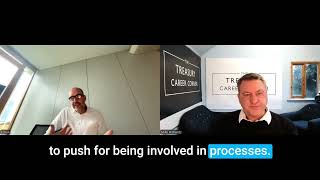
Podcast interview on the Treasury Career Corner where Mike Richards speaks with Edwin Koogman, who joined Lufthansa as Group Treasurer in July 2024 after several years at Zalando. The episode highlights the much larger scale and scope of airline treasury (currency exposures across 30+ countries, aircraft financing and hedging, major fuel cost sensitivity—about one third of costs—where a $10 move in Brent changes P&L by roughly €750m), leadership challenges when managing long-tenured specialist teams, the growing, practical focus on technology and AI (especially forecasting and TMS gaps), evolving bank partnerships, and people/talent issues as AI changes early-career learning opportunities. The tone is pragmatic and advisory, with concrete examples and career takeaways.
Chapters
Welcome back to our Treasury Career Corner podcast. So you have just heard the story of Edwin Koogman's. When Edwin and I last spoke and I've known him for many years. He was previously the head of treasury, as you've heard, at Zalando, the retail group. But we're picking up his story now. I can't believe this. Actually, looking back, we last spoke back in 2021. A couple of things have changed. Edwin is now the VP Corporate treasurer at Lufthansa. Lufthansa, everyone knows it, but just in case is an aviation group with operations worldwide plays a leading role in its European home market with over 101,000 employees. But what we're going to do is go back to Edwin and talk about what we lasted. Pick up the story if you would. When we last left you, you were at Zalando. What's happened since over to you.
Yeah, Mike, first of all, thank you very much for having me back on your show. Thank you. I can't believe four years have already passed and we talked about this a few times to continue the story. And so I'm really excited to, to be back. Like you said, four years later. I'm now the group treasurer for, for Lufthansa. I joined in July 2024 after having spent three years with, with, with Solando. And you wanted to know how that is different.
Yeah.
One of the big things that, that I say to everyone is that the numbers are just different. There's a zero behind everything that you do. We have exposure, currency exposures in over 30 different countries that we, that we have large exposures to. We buy obviously we buy planes. We're looking to see how we hedging both the currency and the interest rate for those planes. We manage large pension plans, strategic assets and the numbers are just very large. Makes it really interesting and super challenging.
And you and I were just talking before the show and you just said it also makes it wider if you like your role insofar as geopolitics. Everything has an impact on the business and on your role as treasurer and makes you always busy from the sounds of it.
Yeah, absolutely. I started off my career in banking and I was working on the dealing room and I time I felt it was like really cool. I had four screens in front of me and with all the different charts and you know exactly what's going on in the world when you're working in, in the banking on a dealing room environment. And I've been to a lot of companies, a lot of I've Been to a few companies afterwards. And things that happen in the world obviously will have an impact, but it's normally a little bit delayed. Right. So when something happens, unless it's something really big like the financial crisis or a war or something like that, but the impact is normally delayed. The impact to Lufthansa is direct because we fly to different countries in the war situation, we are no longer able to fly there anymore. Oil prices are very volatile. Euro dollar has a very big impact on us. So it's really being in a department that is impacted by everything that happens on the macroeconomic geopolitical front. Right.
And you said that you've got, again, you've got a strong team, but how do you came into this new fresh team? And you said it was a good team to take over inherit and things. What was your ethos as you walked in? What was your checklist or did you write? There you go, there's the seat, off you go. What's it been like since you've joined?
So the people that are working in my team, the people that are reporting to me, all of them have more than 20 years of experience within Lufthansa. So they know the company very well, very well. Not just in one department. Lufthansa is offering opportunities to also go there, rotation programs that, that a lot of people are on. So you have opportunities to see different areas, but they know the company very well and they also know what they're doing very well. So it's not directly coming in where you're bringing added value because things better. I've just talked about fuel hedging. I fully understand how it works and what different dynamics are, but I'm not an expert. The person that's driving, leading that team, he's an expert in that field, very capable in that specific area. And that is also somewhat of a change that I personally had to go through with the people that are working in my team because they're the experts. And I'm now more of a generalist in an expert type of field leading these people, but then also looking at how that is actually something that, that I can build out with my experience, how that can benefit the group by looking at things maybe a little bit differently, not from the product, but more from a structured type of perspective on how you do things. And initially, I think it's when you come into an organization, at least for me, it's two, two ways of doing things. You want to learn, you want to learn as quickly as you, as you can, but you also obviously want to add value. And you need to try to find that balance because the more expertise you have already in your team, the added value is not on the topic specific aspects, but more other things like, like I said, creating structures or looking at processes or comparing things, how things have been done from one company to the other and then evaluating these type of things. So sitting back and look at it without being slow in your process, I think is very important to, to get into a role like this.
And you and I, we recently caught up at Budapest at the Euro Finance Conference and as you say, lots of different ways of looking at things from a Treasury perspective. Are there ways that you've brought that into treasury as well? And because you've had experience across a number of companies, as you say these guys no Lufthans inside out treasury and you're that functional expertise. What have you brought to it or what have you seen that is coming along sort of thing.
If you, if you're looking at a company like Solando for example, my previous employer, the treasury team was relatively, was relatively new companies knew. So treasury is initially starts focusing on, on cash management and then looking at, at how you can actually build out the cash management, then funding asset management and those type of things come into, come into play. And in a role like that it's very much okay. So how are you looking at enhancing the team, bringing them to a different level. Certain type of products we didn't do or transactions we didn't do or hedging strategies we didn't have in place, helping build that out. Based on, based on, on my experience for Lufthansa, they have very sophisticated Treasury Department. But because people have worked there for a long time, it's also helpful to come up with different ideas saying okay, this is how other companies look at certain things or identify how treasury for example, can, can play a bigger role in the, in, in the overall organization. So where see to what extent we can have a more proactive role than a reactive role and look where we can really add value in different teams. That's already done to a great extent. So it's more polishing up things and making things better. But there's always room in any organization to improve things. And so that's what you're focusing on now rather than trying to get the team to a different level. What I was focused on before.
So you and I have talked, I've been at many conferences, I've seen you at Budapest. And one of the key themes from that I've certainly seen at some of those Conferences is if someone talks technology and then they just put AI at the end of the sentence, you fill the room. And I know you and I have talked about technology, and it's a theme for me. Where do you see technology? I mean, a few years ago there was blockchain, there was all the big, you know, the big thing that's gone away a little bit now. But where do you see, you know, technology going, AI and all that sphere of things? I know it's a big overall question, but over to you, you.
Yeah, I, I agree, Mike. I participated in several round table sessions and other just presentations as well. And if you're looking at which sessions have the most participants, it's those sessions. Yeah, but I, I see a little bit of a difference between, you know, conversations like this two years and maybe even last year and, and, and this year, where before it was much more education people, you know, some people didn't know the difference between applying AI and using TMS systems, and they considered that as being one and the same thing. So before it was much more education and having some use cases explaining how you could deploy AI. Where now I think most everyone is ready to deploy it, but they need tools. They don't need to know how to do it, you know, whether to hire a consultant or what the best way is, where to start. And they're looking at others as well to see, okay, so how have you done it? But most companies, what they're focused on is on forecasting, getting better at forecasting. When I started my career 25 years ago, forecasting was a problem. It's still a problem. And I think a lot of companies are relying on AI in order to improve this. And as you and I also talked about, that has been around for quite some time, but it becomes now much more of a focus point on, on, on, on doing this. I also feel that there's a little bit of a difference between companies, if you're looking at tech companies versus corporate, other corporates, tech companies. And also that's kind of like an obvious statement, but they're well ahead of other corporates. But the other corporates are all kind of in the same situation where they're looking to see how to start where tech companies may be well ahead. The other thing that I see is that the front of the house on the commercial side, AI is heavily deployed for a lot of different companies. Lufthansa, but also at Solando, really advanced ways of using this type of technology in order to get data or to improve sales. Where then in the supporting business units, it's still not there. And you know, I don't want to say the TMS is Excel for a lot of different companies, but there's definitely quite some cases where, where that is lagging significantly behind. So there's a lot of room for, for, for improvement. I do see that this could be a tool that in the next few years can be really expanded and taking away a lot of operational activities. Whether that's on the cash management side, whether it is on the forecasting side, but also on the trading side, once it gets adopted and people are able to start and start deploying it.
And you and I talked there again, you've got these relations. Banks are now coming to you guys and we were just talking about various bits and they're really wanting to talk to you and I know that's a key thing and they're coming with new tools and new things. Are you seeing that they're trying to help you with that or is it just again, adding to the complexity?
Yeah, it depends a little bit on which bank. Yeah, you know what, what's important for I think for everyone, both on the banking side and the corporate side, is that this, the time that is spent adequately, you're not wasting anybody's time and resources. And I think the way that we're being served with by our banks, most of them will not pitch anything unless it's something that really adds value and they've done their homework in order to see and there's different things that are out there that are of interest and looking to see how things are changing and where certain type of directions are going in the future. And some of the banks have really good, good information on that and are developing really good products.
And you and I talked on our previous podcast about learning and developing as a person and how have you learned and developed or evolved, if you like, as a treasurer. You know, since we, not just since we last talked, you were in this new role, how would you look back and say, oh wow, these are some of the. How have you changed?
I think in companies where I've worked for treasury was, has always been supporting the company. And we really, in different teams had to try to push for being involved in processes. So there was an M and A. Maybe treasury should be one of the first ones around the table to make sure that there's enough funding available in order to do that transaction. And in a lot of other companies, I really had to show what the expertise is of treasury and why we had to sit to have a seat on the table. That's not the case at Lufthansa. Lufthansa is very aware of the capabilities of Treasury. Obviously, Covid had a very big impact on Lufthansa and the Treasury Department. I wasn't part of that, but the Treasury Department played a very big role at the time and did some really great things in order to keep the company afloat. But not just that, but also, if you're looking at what our exposures are, one third of our cost is fuel, and that is very volatile. At $10 of movement in the Brent price has a 750 million impact on us, either positive or negative. Right. So treasury is out there. So it's. They know what we're doing and how important we are. And I'm just talking about a few aspects. Right. Planes and need to get the funding and all of those type of things that are really important for us as a company. So the biggest change is to get from a role where you're trying to show what treasury does, your treasury can do and how you can add value that is already accepted but now becomes strategic and making sure you're helping, making the best strategic decisions for the company. And there's a shift, and I think it's the really great shift because that's ultimately what you want to do as a treasurer.
And. Okay. Following on from that, I've sometimes talked about the spotlight beyond treasury, particularly when it's times of crisis. We've had Ukraine conflict and war and we had all that things. And obviously, particularly, as you said, that really shines a light. But then, you know, things calm down, people get over that. But how do you then. It sounds like treasury is at the heart of things and Lufthansa, which is fantastic, but how do you then keep on adding value? Or how do you keep the spotlight? Or do you just say, actually, it's quite nice to have the spotlight go away for a bit so we can get on and do other things? Or what's your view?
Yeah, I think it's not being in the spotlight to be in the spotlight. And because that's a very important aspect, you have to add value. And there's. Because it's a big company, there's a lot of different exposures. Also things that you find out are having impact on the company, either from a balance sheet or from a P and L perspective, and then proactively take an approach of how you can resolve things, come with a solution, rather than identifying a problem. And it's not always possible, but if that's the way that we are doing things. There's a lot of different things that you know. That's mitigating volatility. So I think one of the things you and I talked about is there's a volatile market.
Yeah.
How can you reduce that volatility in the market? And building strategies in order to make sure that you don't get caught by a single move and flatten out that risk, for example. And doing that on the proactive basis rather than just doing it to be in the spotlight and really identify what the problems are or the challenges are for a company and then contribute to a solution.
And going back to something you said earlier, you said about you've got established teams there, treasury teams that looked up. They've been there for many years. They know what they're doing. You've come in as a new treasurer. How have you learned and adapt. Adapted your approach? If you like. You've learned things in the past. You and I know each other well. You're a great people person. So you go with them. But how have you tailored that? Again, this is for the listeners. So they might have been in a similar situation. They walked in the door. I've had a couple of treasures I talked to recently. They said I have to manage someone that's got 30 years more experience than me. I'm like. And I'm their boss. So it's quite an interesting dynamic. How have you managed that?
Yeah. I think that's really important to recognize. Right.
Yeah.
Because you cannot be the best in. When you're early in your career, you do something for a company. Say you're responsible for mitigating the VX exposure and you're the expert in the company and then you take that next level and the person that succeeds you in that role is reporting to you and you have that level of expertise. But at some point you cannot have expertise in everything the higher up you get in an organization. So you need to recognize that is the case and that you're not hired for being the best effects hedger or. But it's for other skills that you're. That you're hired for. So it's very important to accept that because it's a difficult aspect. Yeah. Being able to use the resources that you have in order to get to a better decision. And I think the way that I lead, at least that's my perception, you need to ask the people that are reporting to me whether that's also the case.
I'll do that afterwards. Yeah. I'll give my.
Okay.
Great.
And if they don't agree, don't tell me. And if they do agree, you tell me.
Oh, but I'll be telling you, don't worry. I'm sure they will be telling me.
So I think leading with humility is a very important way of doing things. If you lead with humility, you're open to, to getting both feedback, but also open to learn and you get a perspective on what the different qualities are of different people. I don't lead people the same way. I don't think if you're working in a processing environment where people have standard operating procedures, it's a different story than when you're working in an environment where we're working. So getting the right information and the right support from the teams that you know that are reporting into you and vice versa, giving them the right support back where they need it, that helps to, to get to a position that you, that you're trying to create the best of both worlds. You don't have to be the best, you just have to get the information and then see how you're using it in order to benefit the overall objectives of the company.
Cool. And the. When you and I, when we do each of the podcasts, we go through the treasury career and we've done that again and brought it up to date with you and we've touched on it a little bit about technology and AI, but what other things do you think before we get to the end of the show? But what is on your mind, if you like, what are you planning for the next two to three years that people should be thinking about? Obviously you touched on technology there, but what else do you see as being the challenges coming along that treasurers need to be thinking about?
I think technology, slash, you know, employees right now goes hand in hand and maybe even more so than, than years ago. What I think is a big challenge is that a lot of graduates don't have an opportunity to develop a certain type of basic level of understanding of how things work, because it's very easy at this point. It's going to change, but it's going to further advance. But right now, say the first year, five years of being out of school, what you would be doing, certain type of aspects that AI can take over, that opportunity will be taken away from a lot of graduates. And now this gap is going to be created because you need people at a certain level of understanding that do not have that, I don't want to say basic expertise, because it's not just basic, but the ground level. And then started to create A broader understanding. I think that's a big challenge. And also that gap will get bigger because AI will advance and then they will. There will be other things that AI is going to take over. And so how do you manage that process? At the same time, there will be different things at different areas where, you know, these people can be deployed. And finding what the right way is in order to put your resources at the right place and help your resources develop in that process, I think is really, really important and very difficult. I don't have an answer to how to do that. I think being aware of it is already and acknowledging that it is coming is already very important. I heard someone say AI is like driving on a dark road. You know that there's a road and you have your lights on. You only see for the first 50, 100 meters. You don't know what's coming beyond. Focus on that first 50, 100 meters because it can go a lot of different directions. And so rather than being able to say, okay, in five years, I want something to be here that here may be completely different than what you expect it to be. Ticket with. Be cognizant of the fact that it's coming, but take it with little steps into a direction that is the right direction.
Yeah, just clicking actually on the following up on our a previous podcast we had takeaways from there. We're going to put in your LinkedIn. Some people may have heard it, but we'll put the previous one. We'll, as I say, we have reintroduced yourself. What are your takeaways from today? We'll put your LinkedIn details in the show. Notes thoughts for again, more junior, mid level, senior or across the piece. What would you tell people out there?
I would tell them that yes, there's a lot of challenges. It's all kinds of different levels. But embrace these challenges and look at it from a positive perspective. Don't look at it that AI is going to take over your jobs, your job and become depressed about it. Right. If that's the case, then you will need to be agile and try to, try to change in a different direction. But it can also help in a great way. It supports you in a lot of different areas, so it can help you grow as an individual. And whether you're on an early career level or mid career level or more advanced in your career, I think it applies, that applies everywhere. It's a changing world and we have to adapt quicker than what, what we needed to be before. But don't close your eyes and look the other way and think it's not coming because it is.
And you as a treasurer, you move roles and things like that. For the more senior treasurers that may be listen, because we get all levels of people. What do you think those guys need to be? What was your advice to them? Maybe you would tell them over a coffee or something stronger over a beer in one of the conferences.
Yeah, it's always great to do that over a beer or a coffee as similar thing. There's so much more that you can do if you. If you deploy technology. And I heard someone speak that said an FTE is no longer an FTE like the way it was before. The FTE for their company is partially what can be covered by AI and what needs to be covered by the individual. And that's now the new fte and it may incorporate three different people of how it was before. So for also for senior treasurers, look at it that way. Look at it how you can. How you can take it as a positive aspect and deploy it and being able to do more than what you. What you did before.
Yeah, Love it. It been amazing to catch up with you. So you've given me. You're a very busy man in your new role, so thank you very much. And you look forward to catching up with you at another conference soon. We'll put your details in the show notes. So thank you very much, sir.
Great. Thank you very much, Mike. Bye. Bye.
Bye.
More from Mike



Why Treasury Professionals Don’t Show Up to Events (And What Organisers Get Wrong)

AFP 2026 Las Vegas | Use My Exclusive DISCOUNT Code and Join My 2 Treasury Sessions

Treasury Technology, AI & Cybersecurity: Felix Meyer (ABB Capital) on TMS Projects and Future Skills




AI, Cybersecurity, and a Fast Track TMS Rollout with ABB Capital’s Felix Meyer