The Treasury Career Corner Live in Luxembourg
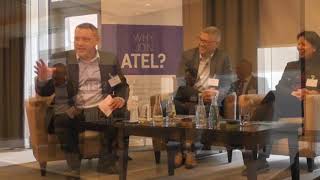
Mike Richards moderates a panel with treasury professionals Beno Skoltissen, Winky Choi, and Johan Claudeau discussing their career paths and experiences in treasury roles across different companies and regions.
Good evening, Luxembourg. Okay, right, we'll do that again, shall we? Good evening, Luxembourg. All right, we are away. That's it. Just checking. Firstly, I want to say thank you very much to our panelists this evening. Without this motley crew, this evening wouldn't be happening. We wouldn't be hearing all about their careers and how you can copy them. Basically, that's what this evening's about. So my name is Mike Richards. I'm a global treasury recruiter. I know many friendly faces. No unfriendly faces. Quite nice. We've even got Francois here. Thank you very much, Francois, for hosting us. Many round of applause for Francois, please. So I'm going to actually allow the panel members to introduce themselves rather than me, talk through or paraphrase their backgrounds. But I just wanted to explain to you why we're actually doing this event. Basically, I've been talking to treasury professionals for the past 20 plus years, and I love talking to them all about their different careers, about how you all do the same job. You're all de risking your company's money and looking after your company's money. But as we were talking to the panelists before, everyone in here has this similar title, treasurer, and you do it all in exactly the same way, with exactly the same tools, in exactly the same fashion. No, you don't. Everyone does it differently. And it's fascinating to me. And we were just talking about some of the differences there as well, and what I wanted to do was bring it to life. So actually I started to do a podcast, weekly podcast, called the Treasury Career Corner, where I interview treasurers from across the globe about their treasury careers, how they got started, how they see both themselves and the treasury profession going and developing, and the future for treasury, if you like. And that then led to bringing it to life a little bit. So we did an event in London and a couple of people I've seen here actually attended it. Really good evening. Explain these people how they got their careers and what happened and now thought, bring it to Luxembourg. And we're taking around other places as well, to the States as well, to see how different Treasuries operate, things like that. So, as I say on the podcast, that's enough of me talking, let's get on with the show. Perhaps if we start to my left, just introduce yourselves where you work and then we'll jump back into the beginning of your careers, just when we get to the end and stuff.
So, okay. Beno Skoltissen. I'm a group treasurer for Aparam. Aparam is a stainless steel producer based in Europe and South America for industrial facilities and a distribution network around the world. It's a turnover which is depending in the year and the volumes and the price of raw materials in the area for five or six billion dollars or world your equivalent. And we're about 10,000 people in the world.
Hi, good evening everyone. I'm Winky Choi from Amazon. I am the head of EU treasury here in Luxembourg. I don't think I need to explain much about what Amazon does. It's like everything, anything you need to know. You probably can look into the website to know what our size. But we do have a very large space and employees around the globe is about five, almost 600,000 people around the globe.
Good evening everyone. So I'm Johan Claudeau. I'm working for Blackstone Real Estate Europe. I recently joined them two weeks ago to be frank, heading the treasury team. It's a new function here in Luxembourg and basically I oversee all Europe and Asia operations. And basically Blackstone is, they call them as the largest real estate fund in the world. Basically we focus on operations and Blackstone in the US or in the UK are doing, let's say acquisitions and investment for short term and long term views, depending on the portfolio. And here in Luxembourg we really do, let's say the follow up and the administration of all the flows that are managed by Blackstone on.
So what we're now going to do is just go through some of the early careers and how these guys got into treasury and how they've grown and developed and things like that. So Benoit, you originally started with Umicore, is that right?
Yep, correct.
And how did you get into finance, graduated Umicore and then discover Treasury. How did it work?
Yeah, well, graduated and started actually a few months as a professor assistant at university and then went to Umicore where actually I did my thesis and I was happy to join them because it was part of what they call a management training program, which was a series of short term assignments and I was more focused on community trading at the time and I did one of these short term assignments in treasury which I found very interesting. So it's a combination of treasury and company. Trading was excellent and then this is well the first step, let's say in treasury at that time.
And it was an accidental step or you planned it or you just.
No, no, no. I was part of the finance department of the group and it was a natural move to go in treasury focusing more on foreign exchange risk management specifically.
Do you get your first start Winky. You had a very planned start into Treasury Seb before it was the thing you said right from the day go or how did it happen?
Totally accidental. So I was actually started with the systems group supporting our treasury and accounting finance. Basically that was never thought of much of treasury other than the fact that I because I was able to talk in a language of both business and systems. So I helped them to rebuild. At the time back in the US I was working for PayPal. No, actually even before that I was working for back then called Federated Department store which is now called Macy's. It's kind of pretty large department stores in the US So I'm working for the financial services. I had run the system script and the databases development, run the actual imaging systems for the benefits group at the time and set up a new call center of 200 people in Bangalore, India remotely from Ohio. And so that was where I started. And then when I moved over to PayPal I was put into to support because of my also I have a dual degree in finance and systems. So I was able to kind of help to support the treasury as far as finance. Finance happened to they run into an issue with the money market fund systems and I kind of. That's where I kind of joins in and helped them to build it out. But as we learned they don't quite understand how to talk to the engineers. And I was able to translate two things and kind of able to bridge the gap. And at the time the treasurer basically said that we probably want to put her in because she understands the background as well as the front end and able to kind of articulate back to the business folks. So that's how I started back in.
The US Johan So basically I come from a financial background, but I fell into Treasury a bit by accident also basically I wanted to, you know, when you exit university you don't know really what is the business world. And I wanted to work for corporates. I am from the region, but I didn't want to work for banks. I wanted to work for corporates and to be faced against really real life or real activity where I thought banks will not bring me that. So I started my career in consulting business for ENY and basically I stayed there one year. After one year quickly discovered it wasn't for me. Basically I was not steering my career the way I wanted and basically I left and I had the chance to work for RTel with Francois where basically I was very curious about treasury, but I didn't know anything about treasury about what was the content? And basically I started really as a junior and then grew in the department by doing projects and learning what is a Treasury Department. And frankly I've been doing so for almost 15 years now and really I love it. So it's really there is a combination in this role that is very, very interesting and that's why I'm still in that field.
And why was it so interesting? Why was it treasury that got you?
Basically there is this. You can be considered as an internal banker, but it's more than just banking. You need to make the bridge between the internal needs and your internal partners, but also with the external partners and you need to kind of balance this to provide the service towards basically your company and your internal partner first. And basically there is this mix of business understanding it, let's say negotiation because you have also a lot of negotiation with the banks and it's quite, quite mixed. So it's what I enjoy basically.
And wiki you talked about then translating treasury, those non systems and finance into those treasury guys. How did you go about it? You know, you're relatively early in your treasury career to perhaps talk to, you know, older treasurers or older treasury staff. How did you get through them?
Well, it's common sense, you understand what's important to them. So from treasury perspective they look at a lot of time it's risk and economic and then from a technology side also looking at risk. So as long as you understand what's important to tell you, you kind of articulate what's, how to get to what you need and then at the end of the day if a decision needs to be made, if you lay it all out pretty black and white, I think it makes it very simple for everyone to understand how the decisions, how do you come about the decision? So whether it's technology or it's finance because ultimately if you look at the numbers they both are saying they could be saying opposite things. But if you're saying hey this is the opportunity cost here is X and this is Y, then if they can't compromise, someone about them will be able to make a decision. And that oftentimes I find it pretty easy to communicate as long as you understand that you find a common ground when you speak the same language. And that's where I kind of started with how to pro shot take that approach. Starting from a risk perspective. Yeah. And quantify it.
A similar question to you, Ben. Well, you know, you started in treasury and then moved on and got a good promotion to Mattel. Mattel, you say it Better than I talk us through that role or that progression.
Yeah. The last assignment at Umicore was more, as I said, on commodity trading. And I had an opportunity to join Arcelor, which was the first merger actually. And there I focused much more on financing, which was something pretty new for me and was a huge restructuring to be done. As you can imagine, when three large groups are merging together and I mean, it's been a very, very interesting time. A mix of culture, Spanish, French, Belgium, German, merging all together, you can imagine then in terms of culture, it's pretty different. We've been very successful at the time. And after that assignment I had an opportunity to build up something new for Ocelot, which was not existing in relation to community trading. And then I moved to Paris to develop their community trading desk, which was something which was inexistent and basically it was a fantastic experience. And we've been growing and growing. And then the second merger happened with metal to create Arsenal and a new culture came in and a complete change of mindset. Much more financially driven than engineer driven as it used to be in the former steel companies in Europe. So all in all it was a fantastic experience. And maybe to complete what John was saying, I think we are at least internal banker, but more than this, and on top of what he said, we are very strong advisor, business enabler. We advise the business on what are the best solutions. With a different mindset as a banker, obviously, which is more technical and more efficiency driven than, let's say, making money basically. And in that sense, the job of treasurer is something that you invent yourself every day, basically. There is no one single day which is the same. You more or less try to, you know, to improve, to develop new things. And this is, this is really enjoyable and I love it as well.
You did seven years then in that role.
Yeah.
And then you were just talking and we were just mentioning about banking. You were then tempted to the dark side. You went to join Dexia. How come you made a move to banking?
Yeah, well, there was a mix of personal reasons and professional reasons.
We'll stick to the professional ones.
Yeah, yeah. Well, you know, it was at a time when, well, many banks wished to be in the community trading business because it was driving a lot of value and generating a lot of opportunities of new business on the corporate side, also on the private side, all kind of structured product. And Dexia at that time was still considered as one of the safest bank in the world. It happened not to be the case, but it was one of these bank, which was still growing and growing. And then I proposed them a project and we started the project. Unfortunately, the timing was not super good. It was in 2008 and as you can imagine, it's been very tough. So somewhere I had a chance to live the bankruptcy of the bank, which is something which is unique in a professional life and which is plenty of knowledge to keep in mind all the time that this trust that was existing between the banks does not exist anymore and that your credit can deteriorate extremely quickly. As a treasurer, this is something which is very, very important to always keep in mind.
I was going to ask. You made the moves and then you switched back as we come onto into corporate. But what was the difference in culture like? I mean, you've touched on it there.
But yeah, well, the thing in a bank you are very, very specialized. You focus on one line of products and you focus on this and this and this. And basically, intellectually it's much less interesting, to be honest though, than working for corporation. So I had an opportunity. Arcella Metal had decided to spin off its stainless steel division. And this is probably also a once a life experience is to create a corporate treasury department from scratch, exiting from a very large organization, ArcelorMittal and to create everything to provide the same kind of services to our internal clients, but with different means, obviously. And I must say it's been a fantastic, fantastic experience. I will not come back on the entire history of Apparam, but. Well, it used to be a low credit company, now we're an investment grade company. It's been a journey which was fantastic. And from, from a Treasury perspective, from a high leverage company to a very low leverage company, touching plenty of financing products and plenty also of hedging structures. So it's been a fantastic experience.
We talked there. You obviously work for a lot of European groups or based in Europe and things, but with your career winky, You've worked with PayPal, Amazon, as we talked about. But how have you found the sort of progression you got to. You started in the US, then you made the transition with PayPal to Europe. Talk us through that move if you like.
Or that was also accidental. That was at PayPal. I was doing a lot of projects when I got into the treasury, which includes also the big ethics engine at the time they were looking for.
More from Mike



Why Treasury Professionals Don’t Show Up to Events (And What Organisers Get Wrong)

AFP 2026 Las Vegas | Use My Exclusive DISCOUNT Code and Join My 2 Treasury Sessions

Treasury Technology, AI & Cybersecurity: Felix Meyer (ABB Capital) on TMS Projects and Future Skills




AI, Cybersecurity, and a Fast Track TMS Rollout with ABB Capital’s Felix Meyer