Top Tips on Creating a Powerful LinkedIn Profile
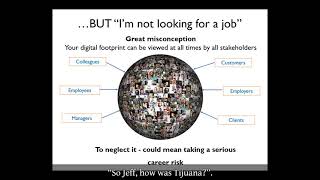
This is a YouTube video titled "Top Tips on Creating a Powerful LinkedIn Profile" created in February 2021. The content features Mike Richards delivering a detailed talk on how to build and maintain a strong LinkedIn personal brand, emphasizing uniqueness, professional photos, recommendations, networking strategies, and showcasing achievements to enhance career opportunities.
Your LinkedIn profile. And we're going to go through some top tips here. And, you know, one of the key things, when I first started a number of years ago now, LinkedIn was in its infancy. So, you know, still out there, you're, you know, treading the balls, meeting a number of treasurers and getting to know people and things like that. And here we go. You had a personal brand, but it wasn't actually that. It was actually originally your reputation. You built it up. You go meet people, they get to know you, they'd ask you about the different work you've done and everything else. Fantastic. Now you can build it up in seconds and you can destroy it in seconds. I mean, you've seen it a number of times, I think, you know, someone puts out a tweet, ill advised tweet or something like that, it, it's, it's destroyed. You know, someone who has been, you know, doing a great job for 20 years, puts out one tweet, you know, ill advised or anything else, it can be ruined. So you need to be careful with it. It needs to be protected. And if you no longer have a person, you know, if you no longer have a personal brand, you have to make it powerful. But how do you make it powerful? What do you need to do? You know, I'm not looking for a job, Mike. I don't need a job. Well, no, that's fine. It's not about just having, looking for a job. Everybody can see your personal profile and you could take a career risk because what you want to do is. I've had a number of times. Chris, who was one of our guests on our show in the past, he was actually heavily involved in the afp. Chris, great treasurer. He wasn't ever looking for a job, but what he did was he built up his profile on LinkedIn. And then opportunities came knocking for Chris and he, what he found he was a treasurer and then he was approached by a law firm. They said, look, we want a cfo. And he's like, well, look, I'm not actually looking for a role. They said, no, but we've seen your profile. What we like is we want to make sure, you know, we want, we want you on board with us, we want you to come and join us. So the job came knocking for him before the Windy City Summit. One of the years actually started. I was at one of the evening parties and we remember meeting a number of the interns that were going to help us with the sessions and everything else. And there was one of the interns came up and I said, oh. And he was saying, look, you know, I'm all right, I've locked everything down. I'm careful on my Facebook now. I'm looking for big roles with some of the big corporates. So I'm all right, I'm absolutely fine. I said, oh, okay. Could you do me a favor, Jeff? And he was, oh, yeah, yeah, of course. I said, could you go get me a beer? Would that be all right? Just grab us a beer. Oh, yeah, yeah, no problem. She went off, queued up, got a beer, came back two minutes later. I said, jeff, how was Tijuana? He's like, what? Tijuana? I was like, yeah, yeah. Was it good last year? He was like, yeah, how do you know that? And I said, I use a little known search tool called Google. And he was like, oh my goodness, how did you find this? I went, I just did a search. And he was like, oh God. And what had happened is he'd been tagged in some photos by one of his friends. We have to go back to his friend. And you have to be careful because it is a public media, so it's social and it's out there all the time. Okay, so let's focus in now a little bit on LinkedIn itself. It is not just a job site. Yes, there are jobs there and it is one of their major revenue streams, but it's actually a professional networking site. That's one of the key things. What you need to be thinking about is a great sales tool for yourselves. And this next slide comes from a guy that you probably never heard of, Mr. Bezos. And he actually said that, I think he did actually, as one of his phrases. And I agree, it's when you're not in the room, this is what your brand is doing for you. And people will see your brand via LinkedIn, they'll see what you represent. So you have a nice photo, good profile and everything else. And we'll come on to the different elements about it. And it says here what you're not, you know, what people are saying about you. But I think it's more than that. And this is one of the key things. It's what people are thinking about you as what they believe about you as well. So they're talking about you, they're thinking this, it's more ingrained than that. So you actually, when you're seeing a good strong profile or you know, perhaps you're going to one of the conferences, you will be checking that person out on LinkedIn before you're seeing them as a speaker, you'll be thinking, actually, do I want to watch this session? And you'll be making a judgment call. If you like, you'll be thinking, actually, yes, this is a person I want to listen to. So let's go through the elements of your LinkedIn profile. As I said, it needs to be powerful and it needs to be strong, so you create a powerful headline on there. You're all treasury specialists, so don't have it on there. What I want to see is some uniqueness. What I want to do is see why you stand out. We actually did this and we looked at passionate and creative and I did this show of hands. How many people have passionate in the audience and loads of hands. How many strategic. These are the most overused words on LinkedIn. And actually, when I was showing people, they were like, ah, right, we came up some alternative words they could use and things like that. Well, actually, what it came down to was a little bit more granularity, if that was the right way to put. Was about this. It was about definable stuff. So it was about if you're really good and how much you might have saved. You know, we go back to achievements and things like that. This is one of the key things. It's, you know, bringing out, if you like, what makes you different. So what have you done in your job? So taking a moment, and again, you might be sitting there, you know, at your desk now, if you could just take a moment, pick up a pen and just try and jot down what you. How much money have you saved for your company in the past year? Just take a moment. Just take a moment and think. If you're coaching members of t, members of a Treasury team, what did you help them achieve in the past year? So have they grown? We've been working. Everyone's been working from home, a lot of the time working remotely. How have you got through that? Just take a moment. Just. Just a few there, just a couple of words and things like that. Put Those into your LinkedIn profile, make yourself stand out a little bit. So these are your. So what moments now, this is when you're thinking about as well. Can you hand that piece of paper, say you're a Treasury manager and you work alongside another treasury manager. If you were to pass that piece of paper across that treasury manager, could they say the same thing? If they can, then it's nothing, it's worthless. We want you to be showing your uniqueness. What's your individuality? Why are you special? Why are you different? To the person next to you. Well, Mike, because I, you know, saved this. I implemented a new system and it was mine. And one of the key things I heard about, actually, was one of my clients. There were, again, this talks about the social aspect of Treasury. They were by the water cooler, they have a coffee, and one of the people was talking about, you know, that they were doing this daily cash report, and somebody else said, oh, I know about those. No, we know about cash reports. No, no, I know actually a way of automating that a little bit with a, you know, AI bot that I saw recently at a conference. All right, so next thing you know, they've actually implemented this AI bot, and they implemented it for their treasury team, and then they rolled it out globally to their eight treasury stroke cash centers. So every day it was taking one person in each of those centers every single day, about half an hour to an hour some of the time to produce this report and to get it out and then share it globally. They implemented this AI bot. It shared. It saved the time, rather, for all those people globally that eight hours to click, boom, click your mouse. Boom. Automated Went out to everyone, a snapshot of exactly the cash position. A little bit of tinkering here and there, but probably taking a couple of minutes every so often with any glitches solved. So everyone had a clear cash position for that company globally at any one time. Incredible information, but the time saved. And that was two treasury professionals. So one implemented the idea. One came up with the idea. Brilliant. Put it on there. Okay, so the next one photo on your LinkedIn profile now, should you have one? Yeah. There you go. It's your virtual handshake. Had this at one of the conferences. One of the guys said, look, I'm not very photogenic, Micah, I don't really want a photo. I said, when was the last time you walked into a bank meeting, turned your back to it, back to everyone and all the people in there and said, hello, I'm Patrick. Hi. Look at me. Da, da, da. You don't do it. What people want to do is they want to be welcome to you. So they want to actually, you know, know who you are, know what you do, and actually go, do you know what? That's someone I want to work with. And this is your first impression. And you only get one chance to make that first impression, as you know. Now, squash head. Look, let's just go for that. When you put your photo up, it's really difficult, I know, to put it up via a PC or laptop. Get it up on there. Great. And then how hard is it to pick up your phone and look at your own profile and see. Oh, hang on. It's resized the wrong way. My head has gone all squashed. Ah, no, it's not hard at all. It takes you 10 seconds. And there are so many that I've seen either squashed or turned at 50, turned at 90 degrees, where the person's at. And I'm thinking, really? And these are professional people. Your first impression is a negative impression. Absolutely bonkers. We don't want to see that. What we do want to see is a professional photo. You know, there's only so much you can do with it. I know. Rather than, you know, seeing me drinking a beer, you know, we'll. We'll do that when I'm next over in Chicago. But that's actually not for here. We don't need that. Okay. I want to keep going. I know there's a lot to absorb, so we will be sharing all these slides and things like that. So next one. Friendly, approachable. Sorry, not having a laugh. Beer. Ask the recommendations now on your profiles. We have actually recently ourselves been pushing out, doing a lot more testimonial work. We've been saying, look, we want to get these. And why. Why have we been such a big push on it? Well, I did this Joe, who works with me in my office, and I said, joe, because he couldn't really understand. He was struggling to get his head around it. I said, joe, do you. Have you ever used that, that website called Amazon? He was like, yeah. I said, you know, when you go to my product, have you ever looked at the star rating? Yeah. And I said, I know there's a lot of problems with bots and stuff they're trying to clean up. And he said, yeah, yeah, I always check those. Always look at it and stuff. Like, I said, great. Have you actually met the person that done it? I meant, no, it's not right. So. But you trust what they're saying is that. Yeah, I do. I said, so that's what you need to do. You need to actually get out there and make sure that you are, you know, getting recommendations because people trust them. Now, when you're getting recommendations, what I would say is don't get them from your colleagues as such, you, the colleagues sitting next to you, because hopefully they're going to say something positive about you. And unless you've not bought them lunch recently or something like that, what you might like to do is get from, say, an ex boss, something like that. Someone Working above you and what you were like and to coach and to train or vice versa. Someone that's worked for you and what are you like as a boss? But people have said to me, why should they build a network? Well, these are some of the reasons this networking grows with you. It provides you more opportunities, more people see you. If you look at the new treasury management system and you've got a great powerful network of 10 people, you're not going to be able to ask too many people about it. Ask 100 people, ask a thousand. It's going to make it a lot easier for you. And access, as it says there, to industry news and everything else. Now, who are you going to connect with? Can they help you and can you help them? If it's someone that's randomly connecting you to nothing to do with the industry, don't worry. If you reject them, they don't get any notice about it. They basically, I only connect to people I feel within the treasury industry or related industries because it means that I'm going to be able to provide value to them as a person. If you're going to reach out to people, how do you do it? First of all, personalize the message. So you've met someone at a conference and again, Chris, who I mentioned earlier in the show, he actually, whenever he would go away from talking to someone or meeting someone, he'd grab their business card and he'd say, oh, I met this guy at Windy City. Oh, it's his daughter's birthday and she's just about to go to Northwestern. Oh, I went to there. Oh, I could tell her, you know, maybe look at this district of Evanston where you might want to live and things like that. Amazing. Also might be, oh, actually that guy, I want to build up a further relationship. Maybe you could meet for coffee. Drop that in the email. Say, bob, great to meet you, Windy City. Love to connect. Good luck to your daughter and, you know, maybe we can meet next time you're downtown. Amazing. Great connection request. Personalize your message. And why? Because if you do, don't do it like this and you just do a generalized one. It's actually going to get you barred. You know, people, actually, if you tend to send too many impersonal invites, it's basically going to say, no, thank you very much and give you a bad thing. So these are the people you might want to connect with, people you meet at conferences, networking recruiters. Feel free after this to connect with me. I'd love to help you. Someone you might admire, current colleagues, former colleagues. It's good to build your network and just do it on a regular basis. Again. We'll come back to that later on the show and what would you do within that network? Again we're going to skip through share your content, keep, you know, acknowledge someone changes their status. A good way to do it. Just oh well done. If they've got a new job and everything else it just elevates you a little bit. Don't forget showcase what you've done. You guys I'm sure have done a lot of presentations in the past. You can take out confidential information on there but if you presented about an implementation, if you presented about how you've expanded, how you've managed a team, put it on there, put up the PowerPoint, it looks great and it actually shows people what you're doing as well. You're the chief promoter of your career. No one else is going to do it for.
More from Mike



Why Treasury Professionals Don’t Show Up to Events (And What Organisers Get Wrong)

AFP 2026 Las Vegas | Use My Exclusive DISCOUNT Code and Join My 2 Treasury Sessions

Treasury Technology, AI & Cybersecurity: Felix Meyer (ABB Capital) on TMS Projects and Future Skills




AI, Cybersecurity, and a Fast Track TMS Rollout with ABB Capital’s Felix Meyer