Treasury Career Corner LIVE in TEXAS 2024
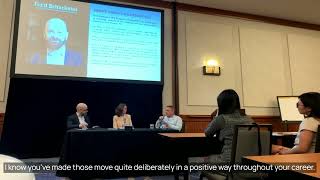
Mike Richards hosts a live panel with treasury professionals Tamara and Fred Shakny discussing their career paths, mentorship, team management, and advice for people in treasury roles.
Good afternoon, Houston. Oh, we are awake. Thank goodness for that. So, welcome to this afternoon's Treasury Career Corner Live. We've got an amazing panel for you. You see them here? Well, see them sitting here, but you'll see them big on the screen in a moment. Go through the structure of this afternoon's session. First of all, we have a few house rules. You're all very busy and I'm not picking on you, but you will see in a minute, anyone with a phone, you've made the trip here. I've come a few thousand miles to do it. So stick your phones on silent, put them away. Give yourself an hour for your careers because you've got two amazing panelists and a crazy English recruiter. Sorry about that. So who am I? Someone who can't pick up a microphone. So I'm Mike Richards. Sorry about the big head, but you kind of everything. So I've been a Treasury recruiter for 25 years. I recruit all levels, from treasury analyst to Global Treasurer globally. That literally is West Coast. So last week was in Vegas for Kyriba Live. Yeah. Didn't go to the slots. Don't worry, my risk management's better than that. But good conference did Treasury Career Corner Live. We're doing it this week and then do it on Thursday back in London. How did I come about doing this? That's the team. They're a lot prettier than me and less big heads. So I started a podcast back before COVID and these are two amazing of my amazing guests of mine. So I thought, let's talk to some treasurers about their treasure careers. I thought we'd do 10 episodes. We're now at 320. Yes, it's on those little known platforms called Apple. It's on Spotify. Everyone was asking me last week, 320 episodes, 150,000 downloads. Some of the best treasurers you'll get to meet. And we talk about their treasury careers, how they started, just like many of you here, the choices they made, and then they talk about some of the issues they see coming with Treasury. That's exactly what we've got here with Tamara and Fred. We're going to talk through their careers, some of the choices they've made. And as Tony Robbins says, success leaves clues. So try and pick up some clues from these very successful treasurers. This is how we're going to do it. They're both going to introduce themselves. I'll then quiz them a little bit more. There will be Q and A later on about 10, 15 minutes. From the end and then we'll give you some takeaways. So without further ado, I'll let my first guest Tamara explain who she is and what she does over to you.
It's a pleasure for me to be here sharing my career with you all. So I started my career as a really corporate finance analyst. I first did some FP&A. I did my post graduation in the UK. I'm originally from Argentina, that's where I was born and raised. I did my postgrad abroad, Argentina. Came back and I started working in a very, very large company. And I from day one and I cannot thank you enough, my manager at the time and mentor, but she exposed me to very senior management from the very beginning. I work in capital markets, long term financing, structured finance, hedging and I really enjoyed and with that company I came to the US essentially as a CFO of our subsidiaries here the companies grew. I was doing with as a CFO, investor relations, project financing, CFO, implementing ERPs, overseeing and that was the ERP systems. It was a real stretch. Our company was a European company, oil and gas company headquartered in Europe. So it was a stretch from every angle that you can imagine. And I again cannot thank for that opportunity to the group CFO that promoted to that role. As the role and the companies and the businesses here expanded, I became the regional treasurer and I continued growing, setting up, I mean a trading floor, natural gas trading floor, power trading floor, which was really very, very interesting. I then moved to Alikid which is my current employer. And with them I grew geographically. I oversee, I'm the regional Treasurer and the VP of M& A. So I oversee both functions for all of the Americas, which means from Canada to Argentina, 11 countries. The Americas hubs represent around 40% of the group revenue, the U.S. 38%. And in that journey we did career implementations, very large integrations of treasury integration, change management. And now two years ago I was promoted to also oversee M and A which is finance but more business like and I'm enjoying it very, very much so. Really looking forward to the conversation and to Fred and really to your questions as well.
Fred, over to you. Fred, over to you. Brill.
Fred Shakny. It's nice to be here with you all. My treasury career started in high school. I was the class treasurer my sophomore year. I don't think I knew what treasurer meant at the time, but my good friend was running for president. He said you should run for something. I said what's left? There's treasurer's left.
So.
In College I was interested in economics, not because I knew what economics was prior to taking economics class, but it seemed kind of nice. I liked the graphs, the charts and all of that, and it seemed cool. So I knew I wanted to go into finance, economics, markets. I had an international background which led me to a bank trading floor overseas. And so I spent the first five years of my career in a trading room and a couple of years trading Spot fx, which was exciting, like bids and asks and you know, all day all along, but kind of monolithic, kind of narrow in scope. And I also spent two years on corporate sales, so talking with treasurers and I thought it was really interesting all the different things that they were doing. And so that prompted my interest in kind of moving from the banking world to the practitioner world. And so after graduate school mba, I shifted over into corporate treasury and I worked for various companies in different industries. Lucent Technologies, formerly Bell Labs, then Alcatel, now Nokia, and was there for kind of the top and the bottom of the roller coaster and lived through another roller coaster, another company, another industry. Constellation Energy went to Hilton after that and spent 11 years there. And it was a fantastic stretch of time which ended rather abruptly with COVID and now with Technip FMC here in Houston. So I have, I've never gotten, I would say, any level of depth in the industry knowledge of any company that I've been a part of. You should say like 11 years, you should know something. But I bounced around industries a lot however, and that has its positives and negatives. I thankfully have seen companies that are private and public, companies that are high yield and investment grade companies that are going through M&As and going through spinoffs. And so coming away from all of that, I take away that the fundamentals across the treasury principles across all these companies is exactly the same. Also, every company that I've ever worked for has the exact same snowflake syndrome of thinking we are so unique, no one else can possibly have the challenges we have. And what I also have taken away is that the. Well, if I look at my career in context of going from sort of trading floor to treasurer, I went into the trading floor because I didn't want to have to deal with people. I just, I am an introvert. I like numbers. I wanted to only work at numbers. And I realized that like you can get some success out of just learning how to manage positions, data, numbers. It took about three, four, five years to realize that just managing the results wasn't going to get you everywhere. I had to understand the process, what was upstream and downstream, how to manage the information flow and how to optimize all of that. And if you do that, you can kind of like every, you know, carry everyone up and down with you. And that worked out kind of nicely for a couple years as well. And then I realized eventually that that's only getting you so far as well. And that to really succeed in this, in this game is it's. Is about managing people and, and that's. It took me a while, excuse me, to appreciate the importance of communication and the importance of culture and all the other things that kind of make for a successful team. And that's kind of where I've kind of come full circle in realizing, like, I don't want to spend my time looking at numbers and spreadsheets. I'd rather, you know, but I'd much rather have the opportunity to kind of like, give others that opportunity and bring the team together.
So I was going to say, both of you heavily involved in AFP and education, we're going to just explore that. But before we do that, I wanted to come back to something you said, Fred, because I know that you did this when we spoke on the podcast, and then I'll pass it to tomorrow as well. You said you bounce through industries, you know, and some of the people in this room will go, is it time for me to make moves? Should I go somewhere different or should I see out a role a bit longer? I know you've made those moves quite deliberately in a positive way throughout your career. How would you. What recommendations would you give to the people in this room? And then we'll ask tomorrow?
Yeah, absolutely, do it. I mean, it's literally not that hard at all to shift from a Treasury job in one industry company to another. Again, the rules, the fundamentals of the principles of managing cash and debt and liquidity and risk are all exactly the same. They've been the same for hundreds of years and they will remain the same. You just need to under. You need to go into it understanding how to, how to appreciate the circumstantial differences. Is it a B2B or a B2C type of a business model, as well as, is it a high yield or investment grade balance sheet that affects how you think about managing liquidity? So understanding the circumstances is the key. But when you can, when you can, when you can understand that you can apply the exact same set of rules.
Same, I think. I mean, if you have the opportunity to balance industries, and this is one of the beauties of Treasury. I mean, you need to understand the underlying of the industry. But you know, we are agnostics in terms of how we manage cash, how we have visibility over cash, what we streamline working capital, how we issue a bond. I mean really the process and the expertise is the same. The underlying business will be different. But that's. And that's what you need to learn. I mean how to grasp that underlying industries. And then there are easier move. I mean if you are in oil and gas, petrochemical is not that different. I move from oil and gas in general to oil and gas upstream to then, you know, industrial gases to understand the cycle. I mean it's capital intensive. If you go to petrochemicals or chemicals, it's not that different. So that's the beauty of Treasury. Absolutely bouncing. It's great.
And if I can add one other thing on the back of that is that's the upside is it's not that hard. The downside is you still at some point need to understand the business and if you've grown up in that industry, that can be a lot easier. I still wouldn't go so far as to say that I am an expert in what Technip FMC does. I still have a lot to learn. It's highly complex and the markets are complex. But the other as a strategy for coping with that, you have so not only know it yourself, but surround yourself with people who do. And so as one example, my assistant treasurer came in from FP&A and from financial Operations and he has spent his entire career in the company and the industry and he does have that knowledge. So. And yet he's coming in treasury fresh. So it's a sort of a complimentary skill set.
And just on that about, we talked thereabouts, we've got a room full of people who are getting CTP credits for coming along here. I know you're both very pro afp. You've been on the board, you are on the board and everything else. Looking back at your younger selves, obviously a couple of days ago, not very long ago, but joking aside, your successful treasurers and that this is all very well for you guys to say, well, your treasurers, yeah, pro ctp, pro study, education, qualifications. I'll go tomorrow first and then Fred, you know, why do you think so powerful with maybe your more junior members of your teams as well?
I am very much pro ctp. I took it when I just arrived to the us. It was a way also to certify my knowledge here. And besides getting to Know people and to, and to network. But you know, in the universities, in the school, there is not a Treasury. So really, I mean the CTP in this case, it is a way to get more hands on really the technical knowledge. So I think it is important. I think I did my career very conscious of the north that I wanted to have and it was a very much vertical specializing. Specializing and getting seniority in that today. I might say move around, get out of Treasury. Treasury can be very highly dependent. You want to be in treasury first and you stay in treasury for all your life. But I think that kind of moving around, getting into sales, getting into FP and a, for example, it's really good, you know, having the north and coming back to treasury or moving around, I think it adds to the wealth of your treasurer profile.
Yeah.
Also very much pro ctp. I will admit that I took the CTP myself after joining the board of the AFP and I was sort of nudged and saying hey, you probably should, should look into taking this. And I did. And through a misfortune of bad planning, I had about two days to cram to take this thing, which just a bad planning on my part. But what I, look, I learned from it is there was a.
What we will say, Fred, is we're not recommending that to the roof.
Yes, that's a, that's, that's not a recommendation strategy. Yes, definitely do not do that. Thank you for the clarification. But I learned there's a hell of a lot I didn't know. I had spent at that point, I don't know, 20 something years in treasury myself. And there was a lot that I'd never even heard of before, frankly. And there's one of the big advantages of learning is learning what you don't know. And you don't have to know everything. You don't have to be an expert in all aspects of treasure Treasury. But the more that you know about, you know, what kind of questions to ask and to be aware of and to go to someone who does have the expertise is very, very essential in terms of being able to rise up the ladder.
And I think for recruiting as well, I mean I, you know, somebody I'm looking into treasury, somebody that has the certification to me, you know, it's a differentiator.
Yeah. Up on the list here we've got from education, what's been key to your success? Mistakes, challenges. One of the key things. Not an advertorial, but for the podcast. Someone asked me the other day, they said, look, you interview, you Know you were going to do 10 episodes, you're on 320. How do you keep it fresh? And I said, I don't need to you guys, as treasurers do, because each of you. And we were. I was at Euro Finance a couple of years ago and someone said, well, how do you. I said, look, we've got 10 treasurers within 10ft of me. Oh, yeah, I said, they're all the same, right? Well, no. So no. Said one's debt laden, one's cash rich, one's a private company, one's a different. And you've all taken different routes to success as it is now. I'll come to Fred first and then back through tomorrow. Looking back over your careers, any points that you would, you know, bring up that you think that this audience maybe mistakes you made or things you wouldn't want to repeat again, and maybe recommendations you've given to your team. Fred first.
I mean, the one thing I would not recommend from my own past is being as, as sort of narrowly planted as I have been. So, so I started out, I mentioned, on a trading floor fx. I have never, with the exception of maybe a year, not had some association with foreign exchange. I would recommend to anybody at any stage in their career, bounce around back and forth, you know, spend a year or two here and then there and then there. Learn a lot, Learn enough that you can speak with some authority on it. But I would recommend, unless you're super dedicated to it, don't get planted into one single thing.
Overdue tomorrow.
A little bit the same. A little bit. What I said I would recommend to move around, even get out of the functions. And the earliest you do it in your career, the less costly it is if you made a mistake to move to another function. When you are a senior manager or an assistant treasurer and you cannot handle it or you don't like it to come back, it might be more difficult instead. I mean, when you are starting your career, really you can move, understand, I mean, get connected and then bring all of that to your treasury career. I walk it through. Like, I mean, okay, you have to be analyst, manager, director, vp. That career trend, I think in today's world is less usual. You don't want to be just identified and you can only do treasury and then you cannot move and you are locked in and the treasury profession is more smaller, so getting, you know, really, really tight. So, so you, you need to find a way. You need to show your companies that you have the flexibility to handle different problems from different angles.
And if I could Add one other point to that is there's something to be said for knowing a little bit about different functions. I think there's also something to be said for being able to operate in different types of teams and for different leaders and overseeing different teams. As I'm sure many of you I have worked for people who knew how to do my job better than me and who didn't, had never done my job and likewise have had peers and teams with different levels of and being able to adapt to those different environments is very key because as a matter of career progression, sooner or later you're going to be in charge of stuff that you've never done before, never heard of before, and having that ability to react and flex to oversee somebody who's done something that you've never done before and be able to add some value to what they do is an important skill.
Thank you. Come to tomorrow. About this we've talked about you've embedded your treasury team members across different regions. We actually have one of your Vivian here today. I know we talked about this on the podcast as well. How have you made that work? And again, this might be any of the treasury people here practitioners thinking, oh, should I put my hand up for that move? What should I do? Should I be open to it? What would you recommend? And then again we'll go to Fred after.
And I think, I mean nowadays with all shared service centers being located in different geographies, it's something that it will happen. I mean the matter is one, being able to work with your team all located in one place and directly what is going to happen if you're working on a global company or even if you are indo us that it's becoming more difficult. So on one end it was a global initiative to create the shared service centers, but I took it to the point I took the opportunity to go even further than what the company was really looking for. And we generated essentially two different teams, one center of excellence more for advisory corporate finance matters. And you know, we have our cash, Pure Cash management is located now in Argentina and the teams are now in Colombia, in Argentina, in the U.S. certainly. And you have to manage that. It's interesting. It's exhilarating. It's very challenging because obviously you are adding to cultural differences. I don't think that anybody here working in the US will have a challenge necessarily to do that. But obviously you need patience. You need to, you know, communication. To Fred's earliest point, communication is essential and you know, misunderstanding are more frequent. But I think that setting and Guiding, setting the goals, guiding the conversation, setting the level of expectations. So everybody really can be up to that is the same whether you are working with one team located in one geography or you have your team spread out.
Fred yeah, we have a very geographically dispersed team in 12 or so locations in just the treasury piece and is part of the evolution that we're going through right now. And as a takeaway and every Treasury I've been in has had some level of that, but as a general takeaway, I would say your people largely are going to be where they are. That's the decentralized piece. Your financial positions, your money, your debt needs to be as centralized as you possibly can be for a financial efficiency. What holds all that together is your information and your data. Your information has to be ubiquitous, global, you know, omnipresent all the time so that everybody knows what's going on all the time. And that's just a system problem to solve. What we are doing in right now is going. So we're coming from a very decentralized approach to a. What we're evolving towards is really five global functional themes. Capital, liquidity, financial market, risk, credit, insurance and infrastructure. And so the end state is that we've got people, all different countries who need to be able to act globally. And that presents, as you all know, a bunch of challenges. So policy is the easy thing to fix. Then you've got legal entity authorizations to map through. Then you've got tax substance presence questions to sort out as well, as well as just kind of what you can do with one banking environment or another. So there's a lot of complexity to that puzzle. But the goal is, is to get to an environment in which you can operate globally. I mean, it's, it's kind of suffice to say it's not a scalable model to have everything fully decentralized at the country level, nor is it efficient or nor is it in the benefit of everybody's career interest as well. So we're trying to build something that's better for our employees and that more career opportunities to kind of act on a global basis and get involved in stuff. But there is a lot of tax, legal, government, you know, regulatory puzzles to figure out on the way.
So you are both treasury leaders, but who has had an impact on you? Again, we'll go to tomorrow. First I've again I had Karen Van Denische, amazing treasurer over in Belgium, many years ago she said to me we'll have her back on the podcast about having a mentor now for her, it was one of her ex bosses and the thing that she loved about it was her words, not mine. She could be crazy. She can come up with what felt like a crazy idea, but in a safe environment. And it was, you know, I remember doing that podcast and just thinking, wow, this is great. That's one of the things she found with having a mentor. She could then rehearse different things. She come up with crazy, what seemed like crazy ideas, but actually underneath that they weren't stupid ideas. They were just like, if we were to do this, you know, we've got AI coming along, lots of different things, things. Have you had that experience yourself? And, and maybe then also the second part of that and you as mentors. So maybe reflect on both, you know, split it up maybe.
So my mentors, from my first manager, that she did it without really explicitly understanding or, or, or really saying, you know, this is something important for your career. But she, she realized that I have the technical expertise. I come in young. It was a company that was just privatized. So she came from the old state owned environment. I came fresh from, you know, college, etc. So we have a good blend. And she could really read the tea leaves of the changing times. At that time, my former bosses, most of them have been my mentors and they have pushed me to, to come here and I reach out to them. Even if they are in Argentina or in Spain, I sometimes, I mean, keep in touch with them. So I have been able to find mentors in my current working company at the time. And then I have this couple of friends, women professionals, senior executives. And that's kind of your board of directors, just conversations that we have. And there have been a great support to your point on, okay, I would like to do this or what do you think? And they really challenge me. So I think that what essentially you need is somebody that can challenge you and push you to really do your next steps or present a certain project. I think we need to get out of our comfort zone as much as possible. Do I mentor? Yes. I mean with our company, I was also very much active in the women's professional network in Houston. And we also have networking for women or within the Elikida Alwyn women networks. And we also have mentoring there. So very active on that. But I definitely think that mentors are good for you all throughout your career. And you need to look for those people which are different than sponsors. Sponsors are then more strategic. Those are the ones that are going to say, I want this individual here within a company. So you need to look for both, actually.
Fred.
Yeah, I have had the opportunity to work for a number of very bright treasury professionals. I think I've worked for at least four or five, maybe more alumni of General Motors treasury, which produces a lot of talent. And they kind of go. So lots of very, very bright people. One name that really sticks out and sadly, because she recently passed away, Denise McGlone was a boss of mine at Lucent for a number of years, and she. I would credit her with help. She saw things that I was doing that I didn't realize I was doing good things. She saw in me stuff that I didn't see in myself and really helped me appreciate more of how to grow and how to become a leader. So I really credit her and thank her for that.
So we're going to come to. Not. We're not a Q and A yet. We've still got a bit of time, but I want you in the audience to really reflect on what you've heard so far. But also, how often do you get to ask two amazing treasurers these questions? You can ask me, but I won't come up with good answers. Just ask these two. Okay, but. So I will be going to that in about 10 minutes. But how do you both keep yourselves motivated? Maybe you start with Fred this time to take off. You know, an advice for the audience members on motivation is it just. Yeah, you just go up and you just do your treasury job every day. Because I know straight after this, you've got a dash offer, you know, board meeting. And you know that there's. It's a heck of a. Heck of a lot of responsibility.
Yeah, yeah, you feel like that it's not a board meeting, but I'm dancing with something else. You know, it's a subject of motivation that I've talked about quite a lot with my direct team and broader team as well. And, you know, we spend a heck of a lot of time talking about KPIs and KSFs and goals and objectives and. And how it all ties together to shareholder value. And you got mapping through it all because we're all finance people ultimately. And that's important for everybody to know and understand and be able to internalize and communicate. But at the end of the day, no one really cares. I mean, that's not why you get up in the morning and that's not why you fight, because, like, you know, it's living through the days that I know you all live through as well is a fight. And you don't do that because you're like, I got us like marginally closer to another penny a share. You do it because of your colleagues, your comrades, your friends. And you do it because, you know, like, if you're trying to improve, you're trying to make something better, you want your colleagues and your friends and your teams to benefit from that too. So it's really about a human connectivity, which is why, you know, realizing post Covid the value of just face to face engagement with people you, you know, as much as teams is great. You can't build that without all of the synopsis that get built, you know, offline. And that's when you really appreciate kind of the value of what you're, what you do and what they can do for you.
And Tamara, I think it depends on, you know, at which level of you are in your career. At the beginning, motivation should come from a desire to learn and do more complex or sophisticated projects, to be part of a function, to add value to that function. And then it goes, okay, becoming a more strategic player at the table and be able to influence others and see how that evolves, how you, you can learn something new. I'm working now with a lot on project financing, which I did back in my career, and now it's all coming again. So I have these motivations. Oh, wow. I mean, now it's different, but it's the same. It's complex. So that keeps me motivated. But I think as a team is continuous changing, continuous doing it a better job. But really, you know, getting connected with other and being able to, to bring value and to influence and share. Right. So sharing.
And you both touched on the evolution of the workplace. I mean, the past five years has been crazy. Yeah. So, you know, way back in that February, it was like, well, we're coming into the office five days a week. This is what happens. March happens. Right. You're staying at home in your basement. That's it. That's what everyone. And we're 100% remote. And then back into the office and then remote again, then back and forth and now, and you know, hybrid used to just be a car and that was it. And everyone was like, wow, hybrid, what's that now? You know, everyone is still, I think, still struggling to get, you know, used to it, you know, without it being a conflict with your company organization. How do you organize it with your treasury teams? And again, we'll go tomorrow then, Fred, just to give you a break. But it's like, what was it like before, during and after? How does it work?
So before we Were in the office after. Yes, we have moved from totally remote or 3,2 remote. We are now actually now, I mean coming still 3,2 in the office but with two actual company wide days in the office. Everybody, we have lost a little bit of engagement and we want everybody to be able to work. And there is a lot of people that have never worked, I mean full time, five days a week in the office and they, you know, there is more struggle there in terms of what I don't need. I mean I've been doing my job like this for three years now. But there is value of being together on being able to be more efficient. Obviously now that we have our more geographically distributed teams, remote helps because it makes levels up for everybody to be able to connect with your boss or with the boss of your boss. So that I think it's an advantage. What I really think that we should not do or we need still to learn how to to do is to maximize those resources. It doesn't make a lot of sense to go to the office and have I mean zoom calls all day long like if you were in the at home. So I think that we haven't yet not you know, learn how to okay, what do I need to do when I am with everybody and how can I do the most? And then when I am home, okay, it's my individual work, it's my catching up. So I think that still most of us, we are just replicating in one place or the other the same way of working. And that's. I think that we all, no matter which companies really still need to learn a better way of working.
Before I pass straight to you, Fred, we actually discussed this New York cash exchange last year had three great panelists and one of the guys, Steve, the treasurer of Broadridge Financial, he talked about they'd gone through exactly this as a treasurer and one of the things he'd noticed they'd all come into the office one of the days he went out, got his coffee at lunchtime, closed his office door, got to the end of it, went hang on guys, why are we doing this? You know, this was post, you know, as we start to come out of it, he said actually let's stop doing this now. He actually, he said he prefers, he's got quite commuting. He prefers to work in the office because he can get a lot of focus work. But they've got and I think the. I'll have to look back at the notes. Planned intentionality I think it's called. Or he came up, they came up this phrase. It's if you're going to come into the office, come in for a reason, have some meetings with people. Not just zoom meetings. Yeah, you can have a zoom meeting here or there, but do it to be with each other. And I think that's one of the things we're seeing. You know, I've been seeing text mode, like loads of people in the room. It's like, whoa. It's quite weird. You know, you've got used to small groups, you got that. It's suddenly we're back into networking and I think it proves that people want to be back together. Treasury, by its very nature social. Fred, what are your thoughts?
Yeah, I absolutely agree. There's a number of truths here that are difficult to reconcile, but each individually powerful. And so I remember it was probably about February of 2020, so in my prior role I had a commute that was pretty hellacious and I was kind of leaving the house early every morning, getting home late. Not long ago my son actually said to me I wasn't sure if you lived at home those first couple of years and but I remember it was like literally just before COVID hit and I was on the way home one night at like 8 o' clock at night, I was like, I can't do this anymore. This is ridiculous. Like something has to change in my life. And thankfully, you know, it did. Like so I spent a lot more time at home with my kids now, which is great and that's fantastic. And that's not to belittle at all the powerful benefit to us as human beings of that family time or whatever time it is for you. But you know, yes, I mean like the in person meetings are so incredibly valuable and I do think we've forgotten a little bit of that now for, for us at TechNefmc, we are an engineering company, manufacturing really complicated stuff. I don't know if the word obeya means the same, you know, something to everybody here, but it is very much integral to what we do as a company. So everything is kind of organized in this way. It's a sort of a way to bring people together. So we're kind of moving that way with, with, with all of the corporate functions too. In fact, I don't even have an office anymore, so it's the. But so as much as I know how powerful that in person, face to face meeting is, at the same time, you know, if you think back to like pre Covid, we, a lot of us probably didn't necessarily know what our international colleagues even looked like because you didn't. You weren't on video calls with them because you didn't need to be. And so now, like, you know, the great thing about COVID and teams and zoom and all that is it's great equalizer. So whether somebody's like down the road or across the world, you have the same visual of them on the screen. So while, you know, screen is not as good as face to face, screen is a heck a lot better for somebody who's around the world. And I think it's been, it's really, really benefited the globalization of our communities.
We're going to come to questions just after this question from me to both of you. We're talking about. Many of the audience would love to have had careers like this. Any advice as you reflect back to your younger selves? I know we've touched on it two or three times, but just sort of summarizing, maybe we'll come to tomorrow first, that you look back and you've got junior colleagues and say, right, this is just my advice. You don't have to do it to take it. But if I was to relive it or do it, what would you say?
You have to be a team player. You have to be a good listener. You have to want to be able to be challenged and get out of the comfort zone. I think the more we learn is when we get these roles or these opportunities that really stretch us. I don't know what I'm going to do. Really difficult. But those are the moments where you really learn to manage organization, organization or senior management or so I really think that, you know, getting exposed, it's not comfort, you know, but if you really want to grow, I think you need to show others that you can really manage that. I think that's. And then be open to technology. I think a lot of things are going to change, but it's going to be for, for the best and we need to be prepared.
And before I pass the Fred, I was just talking to my panelists before and just to let you guys know, I hate public speaking. Everyone's like, oh yeah, of course you do. But I was just explaining that I was in Chicago a few years speaking at Windy City, and I was going to get people to share their one secret about themselves that people might not know. And I said, I don't enjoy public speaking. I've become much better at it. I've got, you can see I've got millions of notes this gives me. And you know, and then I've got better through talking to amazing treasury professionals like these two and many more on the podcast. Because I love talking Treasury. That's where, you know, my comfort zone. But then to actually do it on a stage, that's where I got out of my own way and, you know, and presented. And I've got better and better at it. But I was saying again earlier, I can, I get nerves, I get this. But tough, just get over it, because otherwise you're going to stand in your own way. Over to you, Fred.
Yeah, I mean, likewise. Ditto to Tamara. Ditto to you. Mike is. I have found various opportunities to speak at various events and intentionally because, like yourself, I don't. I'm not a public speaker. I don't not. This isn't my safe space at all. And. But I knew that the only way to get better at it, to get more comfortable, is just practice and just allow yourself to make mistakes and say stupid things. Not again. So to recap a couple things, I would definitely recommend experiencing different functions earlier in your career. I would definitely recommend think about the leaders that you want to work with and for, and you can learn different things from different types of people. Think about, you know, at the next step of your career evolution. What do you want to look back on in a year or three and say, I accomplished that, you know, and build those stories. And then, you know, in addition to kind of pushing yourself, like Mike said, the last thing is just kind of be somebody that people want to work with. And that's kind of the key to wanting others to include you in their, in their spheres.
And again, to pick up on that, you said about practice, this. When I was first doing some of my speeches as well, I stood there in the hotel room in Chicago, and I'd seen an interview actually with Jimmy Carr. He's an English comedian, very, very funny guy. And someone asked him, they said, oh, do you practice? So what they're like, oh, what? You don't even. Of course I practice. He said, I do this, my comedy routine, 50 times to myself. That. Wow. And he said, because then if I. It becomes rote. And he said, then he can freestyle, then he can do other things. And I was doing some of those speeches 10, 15 times. So again, if you're thinking about doing it again for sessions like this, next year's text bow and someone says, will you be on the panel? Say yes. When I approach people for to be on the podcast, what's also interesting, I think there is quite a difference. I noticed that actually in the U.S. but actually, let's start with Europe in the U.K. i'll ask someone, do you want to be on the podcast? I mean. Oh, send me the details. I'll think about it. Now the great thing here and you'll hear a lot of us treasurers, they have a different, you know, ethos. It's like, yeah, I'll do it. Send me the details. And it makes it much easier because then we share about the profession and community and everything else. Now we're going to come to some questions. Now I was going to plant a couple but I thought that's just too easy. So I'm not, I didn't Questions from the audience. Oh I love this. And I hand up straight away this is a man that I could work with.
So I have a question for all three. Have you noticed the management and the role of the corporate treasurer? When I say that like that certain organizations the corporate treasurer may report to the vp, reports to the cfo. If so, you know you don't have that power and influence and if so, even if not, what tips do you offer to build a business case to help the organization see that the treasurer deserves in my mind a more prestigious profile in organization.
Who wants to answer it first and I'll answer it third?
Well, I've seen it both ways I see it. I mean tax taking treasury or as you mentioned the vp. I mean overseeing VP of finance overseeing Treasury. But I also seen how the treasurer has become more strategic player and has a voice on on the table. So I think we that's what really matters. Does it report? I also have seen treasury ticking on tax so I cannot say that it has been diminished but I think it depends on how strategic you are able to become. And I think that when we look today and forward and the importance of markets and liquidity and speed and that forward looking thinking, treasury is really the one that can drive and help. It's more than FPA because it has the whole market and banking relationship and bankers view and it's more comprehensive, more holistic than just tax or other functions.
Fred yeah, I think it is. It's something I've seen myself from time to time and I've seen it vary by company and industry and circumstance. Where I think the role of treasurer I've seen as being most valued has tended to be in companies with leadership at the CEO and CFO level with a capital allocation mindset and where that exists and it does exist in some companies more than others. Not that it shouldn't exist everywhere then I think it's an easier path where it doesn't exist, I think is to help the leadership build that capital allocation mindset.
And where I've seen it. Well, I was asked this a while ago to give a distinct, very definitive answer. They said, what do you think? And I said, well it depends. Oh, thanks for that. I said, no, it depends on the cfo, you know. So what is their attitude to Treasury? You know, some may have been treasurers and I've seen that more and more. Well, I've Also seen is CFOs that see treasurers as their visionaries. They say them, oh, blockchain a few years ago, what are we going to do with this? How are we going to, you know, AI, how are we going to implement this? And on top of already busy schedules that treasurers have, they've been used by their CFO as like the sort of route master. Can you go out and check this technology, filter it for me and bring it back. And a very distinct example. I have to be careful, I don't say the name. But one of my treasurers, loving his job, great visionary. He was like this CFO changes, CFO walks in. Right, so you look after the cash. Right. So yeah, that's it. No, that's what my previous treasurer did. Yeah, and that's what you do now. And the next day his resume gets on my desk and I'm like, yeah, that's what will happen. Treasurers will vote with their feet. So that's where I've seen it in recruitment terms. So who else? Right, we'll go first here and then we'll come to Jeremy.
Thank you.
Hi, I'm, I mean the bnb, it's, it's a bank that a lot of different countries.
So I, both of you have managed teams that are all over the world.
How do you retain good talent but.
Also encourage your global team to upscale.
And, and further their career progression?
So thank you. And it's a very, it's a very good question I think. I mean what Fred is working. It's a way of really giving opportunity of people in different countries to have an equal opportunity. We've done it by centralizing and so smaller teams, more strategic roles. And I think that was a way to also to retain recognize. I mean when we moved to the, to the service center and to the coe, we really eliminated the treasure role in every country of our geographic region which was, you know, a big, big, big change. I mean a big change in the mindset. However, you know, some of those peoples were, you know, now I'm in a Regional role, not just a country role, not just more operational role, but, you know, now on a much more regional strategic, more exposure to the regional management. So I think that's how we allow, I mean, more career opportunities and then can we take that to the next level and do it at the global level? Well, that's a little bit. We're not there yet. But I think that from my perspective, treasury is a centralized function, in a sense, and allowing global functions of treasury be located in different places. That's how you allow really good opportunities for everybody.
Fred?
Yeah, I think the. So we have seen as well, coming from a very decentralized organization, a lot of people who are, you know, the country CFO or the country treasurer. And we have lots and lots of. And it breeds a, I don't want to say this in a demeaning way, so it breeds a mindset of like my goal, my path to career progression is to be like the biggest fish in a small pond. And what we're trying to do and inverting that is to say here's an opportunity to develop expertise at a global level, be it cash, credit, fx, whatever, and be able to operate at a global level and be able to sort of hop out of different. I lost my analogy. Different ponds, if you will, still located wherever you're located, but operating outside of just that. And it is not, it's a challenging thing because some people embrace that and get it and like, that's fantastic. But some people still want to be kind of the, you know, the biggest fish in the small pond, if you will. And at some point, part of the strategy is you have to part ways and if not everybody wants that same goal, that's okay, you know, and it's just being respectful and helping them find the right decision and, and find a way out. Because, you know, the development for, in terms of career development, talent development, I have said this not out loud, but in public, sorry. In private sessions, my goal for everybody in my team is career development. And if it's not with this company, it's with some other company. So I want to set you up for success so that, hey, if I can't promote you to whatever and you get promoted somewhere else and you leave, you know, bad on us, but good for you, you know, and I'm glad that I have helped help you along the way.
Time for one more question with Jeremy. Some good but great takeaways from our panelists.
Jeremy, it's been a interesting session. Quick question. I think treasury has typically been, I would say the Educator of the enterprise about cash management throughout the entire from business operations to so forth. And treasury, the treasurer is usually the right hand man or woman of the cfo. So the question is that treasury does not typically it's not something you just study in university. You kind of fall into it as you're on the way to the C suite as you have designs on the cfo. So since that you've been great treasurers, would you say that this is your final destination or would you like to go to the CFO position to then also help educate the entire enterprise as well about the importance of the treasury position?
That's a great question. Well, I, you know, honestly, you know, I have spent my entire career in Treasury. I find it fascinating personally. Would I like the larger challenge of a CFO role? Probably would. But I maybe I'm being too transparent. I have no yearning desire that that's what I need myself to get to. But I agree with your assessment there. There is a bit of education which comes with the job. The territory of like outside world to inside world. And I like you're taking that step forward of like, you know, shouldn't that be what the CFO does too? Totally agree. And so maybe in light of the way you're characterizing it, maybe I should rethink how I think about my own role. But I've also talked to other treasurers, lifelong treasurers, who are perfectly happy being treasurers because that's kind of where their passion lies.
Tamara, you know, CFO treasurers, it depends of what I mean cfo, smaller, more simple company, private equity, is it treasurer of a larger public, more complex company. So I think that yes, clearly there is, you know, the willingness to continue growing but for example in my case taking on M and A. So it's opening other opportunities. So, you know, yes, treasurers have and will continue to be the key position for capital markets and for cash and liquidity. I clearly see that more and more there is more CFOs coming from the treasury track than the accounting truck. I don't think that we are there yet, but clearly there seems to be an evolution and it is this connection with markets, with analytics, with rating agencies. So that bringing that outside view to the company that that really helps those CFOs that are very much coming from the accounting track more, you know, inside looking and very strong on internal controls and audit. So I think yeah, the opportunities are there and it depends really for which company.
I would say our panelists have got some great takeaways way so I Don't want to run out of time. We've got three minutes or so. So we've got a minute. Well you can actually yeah. With a minute you can maybe pick out two or three or which are your favorites.
I I talked in the past about the non you know getting out of the comfort zone and I would like to close on my and being a a curious and a team player but I really would like you all to reflect on technology and technology is here. I think treasury will and treasury talent will need more data science and more data science based skills and it is our responsibility to understand I don't think that AI will replace our jobs. What I do think and this might be provocative for your next podcast that somebody with good AI understanding.
Yes.
Will replace you. So so on all of that I think that continuing learning and understand the current state of the art is part of your responsibilities and you have to be good at.
Yeah I've seen it as well becoming much more part of the toolkit of treasurers. You've already had these massive toolkit kits anyway and it's just replacing some of the ones that you perhaps are outdated used to use this actually this will replace four or five of them.
Yeah and it makes sense. Yeah the general profile of coming from finance and doing Treasury. I think obviously we'll need that more you know generalist but I think that we really need to complement with you know solid understanding of so tomorrow it.
Also has work from home is great personal connections essentially. I've also got that on mine. I didn't copy it from hers although I did see it but it was I think that's a key one which I'll reflect in a moment. Fred for yours.
So yeah, first of all, ditto to all of that. I agree with what you're saying and kind of that's what the first four bullets are sort of getting at the I'm going to jump to the last one which is so be yourself every day. It's kind of it is to some degree comment on diversity in that for our organization to be successful everybody has to not only feel included but want to contribute. It is so recently had my direct reports together for three days and we spent the first half a day just talking about psychological safety as a concept. How do we promote that and live that ourselves Because I'm sure that not one person in this room doesn't understand that the concept of imposter syndrome. And if you you know, if you come to work and you're afraid to ask questions or you're Afraid to make a statement because you think somebody else might not think it's the smartest thing to say. That's how organizations, you know, become decrepit. And so to have that, you know, to be. To grow as individuals and to grow as a team, we need to bring ourselves to the office every day and feel comfortable. And as leaders, we need to make sure that we, we promote that type of climate environment and mine.
Well, connecting, you've seen there's a lot of the business cards out there. So do connect. But actually, I think one of the ones that I've liked at each of the sessions, Vegas we'll do in London later this week is actually being here. It would have been easier to watch a virtual session. It would have been easier not to travel to Houston. But you've made the effort, so give yourselves a round of applause for that. In a moment, In a moment. Wait for it, Wait for it. I know you don't get out of here yet. Yeah, you can do the questions if you've got individual questions. We'll be around afterwards. But one of the other bits is about taking notes. And that is one of the things about. And again, what our panelists have talked here about is making meaningful connections. Now that's not just with us. And we'll be doing this, actually, afp about networking and how to effectively network. So when it's out there, what you might want to find is if you're talking to someone this evening, if you haven't had too many margaritas. So quite early on at Tommy Bahamas, you'll meet someone, they'll be of interest to you. Think, actually I've got something in common with them. Don't just immediately, oh, quick, that's LinkedIn. Why? You don't know them. Get to know them. And Chris Fulton, very good friend of the business. He is. He says he's not a master networker. He's wrong. He's brilliant. Because what he does, he will take a business card. Let's see, this is a big example. So to chat to someone and then sometimes you drifting, he'll say, sorry, can you give me a second? And he will make a note on each one of these. And I've recently had him. Also, Dana laid hold on the podcast in New York and they are very, very good networkers. Not deliberately just doing it or just for their careers, as both Chris Cocaine and Cochin and Dana said they were getting all their jobs. Not through me. I had to go at them. We're not doing that anymore. I said, they've got to come to me. But joking aside, they got it through their networks. So don't underestimate the power of the networking here. You've made the effort to come here to textbook, to get to know people. Now you can put your hands together for these amazing panelists and then chat to us.
More from Mike



Why Treasury Professionals Don’t Show Up to Events (And What Organisers Get Wrong)

AFP 2026 Las Vegas | Use My Exclusive DISCOUNT Code and Join My 2 Treasury Sessions

Treasury Technology, AI & Cybersecurity: Felix Meyer (ABB Capital) on TMS Projects and Future Skills




AI, Cybersecurity, and a Fast Track TMS Rollout with ABB Capital’s Felix Meyer