Treasury Career Insights with Hans Ljøen | Lerøy Seafood's Treasury and Investor Relations
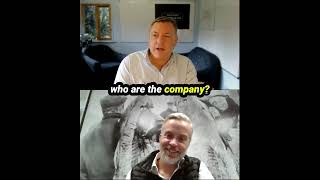
This is a YouTube video titled "Treasury Career Insights with Hans Ljøen | Lerøy Seafood's Treasury and Investor Relations" published in October 2024. It features a detailed interview conducted by Mike Richards with Hans Lewin, head of treasury and investor relations at Lerøy Seafood, a leading seafood corporation. The conversation covers Hans's career journey in finance and treasury, insights into treasury operations, risk management, technology adoption, and advice for treasury professionals. The discussion is professional and focused on treasury career development and industry trends.
To this week's Treasury Career Corner podcast where I interview treasury professionals about their treasury careers. Each and every week I talk to treasurers about how they've built their careers, where they are now, where they see both themselves and the treasury profession. Go to next. In this week's show I'm joined by Hans Lewin, the head of treasury and investor relations at leroy Seafood. Leroy Seafood is a world leading seafood corporation history going all the way back to 1899. The core business is production of salmon and trout white fish processing, product development, marketing, sale and distribution of seafood every single day all year round. Employees deliver seafood corresponding 5 million meals. It's mental extensive range of healthy products served up 80 plus countries. Main office is in Bergen. They have fishing vessels and operations entire coast of Norway. But I'm going to get Hans to explain a little bit more about the corporation a bit later on in the group. Hans, I know we had a nice pre chat the other day. If you would take us back to the beginning of your career, how you first discovered finance and then Treasury. Over to you sir.
Yeah, thank you Mike for the very kind introduction, for the invitation and the way you explain Larry. You could work in investor relations at Larry, definitely.
It's vacancies in between podcasts.
I'll do it. Yeah, exactly, exactly. And even your pronunciation of my last name. Very good. So yeah. Okay. Anyways, back to your questions. How did I get into finance? I used to study finance for a starting point. I have a master's degree in finance from the leading business school in Norway. But my interest in perhaps not finance but in business, it started much earlier than that. At the age of say 13, 14, I started reading business newspapers and I found that interesting. And I've always had an interest in both saving money and earning money. That's always been an interest for me. So my way into finance in school, the topics that were of analytical nature interested me the most. When I graduated, my first idea was banking. Banking might be a good starting point and when you're a student you don't really know that much about work and what it's all about and. But my first job ended up being in PW as an auditor and in consulting. It turned out to be a very valuable experience also for pursuing a career in finance and banking later on. It wasn't my favorite job to be honest. Auditing is a bit backward looking for me and consulting was a bit too much processes and boxes and arrows but still very valuable lessons. And being able to read financial accounts and understanding how they are prepared and learning different businesses and meeting with people in finance functions has turned out to be valuable in later roles in finance and in Treasury. So that's how it all started.
Yeah, it was a good start and then you did a few years there and thought time for the next move or how did it come about that you knew you were going to be move up the partnership route there. What happened next?
Yeah, what happened next? So yeah, again my first idea was that banking is probably for me and I'm very much fascinated by the role of banks in society as infrastructure in the same way that treasury is infrastructure in a corporate, in a corporation. Banking banks are infrastructure in society. And it's a lot of the work you do in banking is very analytically oriented, which resonate very well with my skill set and my interests. And I had the opportunity to work for some clients that were also clients of Nordea bank, the leading Nordic bank. And that was my way into banking. I started as a credit analyst with in the shipping offshore division of the bank, working with some of the same clients I had in auditing and consulting. So being a credit analyst and for large corporates, it's a role where you really learn core skills that are useful. In treasury, you learn to do financial modeling in Excel, you learn to analyze PNLs and balance sheets, you learn to analyze markets. Corporations understand risk management, you learn. It turned out later that the framework on how you approach risk management and how you learn and understand the company is very useful in treasury as well. But the key is to not get stuck in a very specialized position. And I worked exclusively towards shipping and offshore and that is a niche. But the framework is more applicable across different functions in corporations.
And you were there for quite a while. You did sort of nine years or so in an interesting period. So you really got into it and understanding. Did you start to see get to know treasurers, finance teams and things really understand it?
Absolutely. After a couple of years I transferred into a relationship role. So managing the relationship between the customers and the bank and that's a bit different role from being an analyst. You become a discussion partner for the typically for the CFO if it's a medium sized company or a group treasurer if it's a smaller company, you get to learn their priorities, how they think and how they work, which is also very useful if you want to transfer into a role on the other side of the table. You learn negotiations, you learn to carefully read loan agreements, you learn the different banking products that are used by corporates, also very useful. So I think if Banking is a good platform for entering treasury, but with a big but. And that condition is that you work in a role that is sufficiently broad. If you have a very narrow, focused role, that might not be the best way to transfer into treasury at corporates later on.
And you and I, we spoke about this before that I was saying that if I get someone from relationship side and they want to move into treasury, that's great because they have a better understanding as long as they're not too senior. But a lot of the time I get, say a cash management guru, someone really knows cash and ins and outs of payments and said, I want to move into Treasury. I went, okay. When did you last do a Treasury management system? When did you last understand what the levers were for a Treasury? And they just don't understand sort of thing. But that's a challenge. And so then you made a bit of an entrepreneurial leap, if you've liked. And you as. As well talk. Talk us through the next couple of moves because interesting sort of steps that you then took.
Yeah, yeah. So the next stage in my career was one that you can't really plan for. I got an opportunity that I at that stage perhaps didn't deserve and that's called luck. I joined a startup, a bank startup that is a online bank, no physical branches. At the stage where this was not a bank, they had no equity, no banking license. It were basically 15 PowerPoint slides and a group of people. So that had to go well. Right. It was an interesting journey. I joined as Chief Risk Officer and compliance. Again, I didn't deserve it, but in a matter of years I did deserve the position. I think what I learned from joining the bank, and there are many things I learned, but one thing is that you don't have to be an expert at everything. You can still cover a very broad role because what you learn at school and at work is a way of solving problems and that's universal. So you need to trust your own skill set and you need to use your network to your advantage. Discuss with people that you perhaps think have knowledge about the problems that you need to solve in your role and that way you can develop into covering perhaps a more broad and much bigger role than you first anticipated. So don't be afraid to pursue opportunities when they arrive. Being on deep water is a good way of learning.
Yeah. And you learned a lot in the challenging times you went through there as well. How did that then prepare you for your latest role or talk us through the sort of. The transition sort of thing?
Yeah. Okay. Yeah. Before we get there. So what did I learn working for a startup? And I learned a lot of things and one thing I already mentioned, so the ability to solve things you thought you were unable to solve. Everything has a solution. There's usually not a perfect solution, but you do the best you can with the resources and the time we have available. I was exposed to a lot of different situations and matters during the five or six years I spent at Mono Bank. And if we focus on the finance side, I did anything from mergers to mergers and acquisitions. Listing the company on the stock exchange in Oslo, entering new markets abroad, raising equity capital, raising bond capital and so on, cost cutting, expansions and a lot of things that businesses are exposed to. So that gave me a very broad platform. And I also had appeared as CFO and CEO of the company where I led a restructuring of the company. But anyways, broad experience which has been very useful later on. So my current role is. It is a step down, it's a step down the career ladder. And why, how did that happen? And that's definitely by choice. So we have this thing called work life balance. And the people who talk about work life balance are usually people that don't have it and the companies that talk about it as typically workplaces that don't have work life balance. That is, it's unbalanced for a startup. You work a lot. It's a lifestyle. It's not a job in a normal sense, it's a lifestyle. And I wanted to spend more time at home. I wanted to see the kids and my wife more but still have an exciting workday. And I decided that treasury that would be such place for me. So that that was my motivation. But actually transferring from sea level position and down into treasury, that was quite difficult because what I met when I applied for jobs is that the employer seemed to have a sense that perhaps this wasn't the end game. Yeah, this was just a stepping stone. But now, four years later, I've proven that I really wanted to do treasury because I really love the field and I love that part of banking as well. So that, that was basically the transition.
Yeah. Tell us about Leroy. I touched on that a little bit earlier. You're head of treasury and investor relations. I'm not trying to steal your investor relations. You can keep that piece, that's fine. But talk us through what who are the company well known Norway size and everything else.
So I think you, you cover it very well in your introduction. But what I can, since we have the audience we have, I Could talk a bit about the financials and the balance sheet. So yeah, please be a treasurer and not talk about balance sheets. Right. Turnover of around 2.5 billion euros annually and EBIT of say 250 million euros. Balance sheet of 3.5 billion euros, something like that listed company on Oslo Stock Exchange 50 ratio. So if you look at the debt side, it's green financings and non green financings, it's bonds, it's your regular revolving credit facilities, long term facilities, overdraft facilities and factoring and so on. So we use the entire suite of banking products and capital markets as well. Yeah, so that's.
Yeah, that's you. And then when you made that transition again, is there someone three years before you, if you like, they're doing that transition now. They're moving from. You're. You're a bit more unusual than a lot of people. They're coming into that. What was it like for you joining. What tips would you give to someone?
Yeah, so these are perhaps a bit generic, but that's worked for me at least is to hard work that really works. And you hear a lot of talk about working smart and not harder. It works even better if you work both smart and hard. So that's been the key to my success has been hard work and throw yourself in deep waters, that's when you really learn. Being curious. Curiosity is. It's a fantastic trigger for learning, I tell you.
I wish I had, well a pound for that every time I've heard it on the podcast. I think we've done 330 out of 330 pounds. I think it's mentioned every time that I think if we were. We will look at doing some ebooks at some stage based on the. I think it's just going to be called the Curious Treasurer. I think people might take it the wrong way, but it's true. It just gets you into so many interesting situations.
It does, it does. And one last thing, again a bit generic, but if you get an opportunity, pursue it. So don't hesitate, don't hesitate digging a.
Bit more into that. You've had this relationship side of banking, if you like, as well in your back pocket, if you like. When you're managing your relationships, your banks, do they roll their eyes as you walk in the door? Hang on. He knows exactly what we do. Do you? Because you've got that understanding of the other side of the table. Do you really find that helps you as a treasurer, would you say?
Yeah, it definitely does help because we speak the same language. So it Definitely does help. But what I often do, because sometimes the bankers, they assume I know everything because I've had the roles I've had in the past, but that of course is not the case. So, like earlier today I had a meeting with a Dutch bank on cash pooling. And cash pooling structures can sometimes be a bit complex. So although I know some of the structures, I'm not an expert. There are people that knows cash management and cash pooling way better than me. So I said assume I know just a little. So give me a one on what you're proposing and how it will affect me as.
Yeah, as you say, coaching them in a good way.
Exactly. Yeah, exactly, yeah.
And you've come in, it's been three years. What have you seen? What have been key to your success, if you like. And again, we'd had this conversation before that there were a number of questions I usually asked, but there are some really good ones in here. Key to your success, Career highlights so far, what has it been like?
Yeah, I'll let the CFO of Larry decide whether I've been a success or not. But at least I can tell a bit about what I've done and what we, as we at treasury, are a bit proud about. When I joined lere, I early discovered that our risk strategies and how. Yeah, and measuring Expo risk exposures aligned well with best practice. However, the execution and the processes leading to measuring risk or managing risk were less than perfect. So we used to be very much spreadsheet based and we are still to a quite large extent spreadsheet based. However, we have taken some import big steps towards systems supported treasury functions. And this might seem like a strange priority, but I, in fact, I did not start with a TMS project, which might seem like the very obvious thing to do when you're very spreadsheet based, but I actually, I didn't do that because I realized that we spent a lot of time on the, say the number two risk we manage. I would say in treasury it's always liquidity risk is number one. The number two risk for Larry is currency risk. So given that we have global operations, we have Norwegian kroner cost base, but our income is in foreign currency.
Yeah, everything.
If you plot euro. No, sorry, the Norwegian kroner against the basket of key currencies, together with our share price and together with our earnings, you would see a very strong correlation. So managing FX risk is really key. Yeah, a long answer, but I'm getting there soon. Mike?
No, it's lovely. It's the meat of the show sort of thing. And that's what I think other treasurers might have diversified risks in different. In Asia Pacific, that's a big thing for them or stuff like that. As you say for you it's more, you know, the meat and potatoes is actually, you know, FX risk and the currency because as you say, you trade so globally.
Exactly. So what I wanted to do is to change the process of how we manage it was very manual based and we do a lot of trades every year. So every time we sell seafood on longer term contracts in foreign currency, we hedge that contract back to back in the past, that process involved several systems. It involved people. Every time we did an FX hatch it took something like 50 fields in systems that needed to be populated. And it also meant that treasury had to be available close to 24 7. So we can close the gross margin for our salespeople. So then I start to look into is there any way we can do this smarter again? I used to work for Neobank, so I took with me the mindset of. So the first thing we did then was to understand the entire sales process and in particular how the FX process really works. And when the process only then you can design the optimal process that you want to support with the system. Right. When we found what we think was the optimal way of doing this, we looked into three different system vendors that has developed software sitting between the ERP of the corporates and the multi bank platforms where you trade fx. We ended up with an agreement with Seal fx which is a Swedish fintech in the FX automation space. And today the salespeople, when they sell fish at the click of a button they can be their own treasury manager. So basically push of a button they have traded the FX so they know in our local currency what their earnings are. So it's quite fascinating. So if we sell seafood in Japan, which we do a lot with weekly deliveries for 52 weeks in five seconds and one click we trade 52 forward contracts or 51 forward contracts and a spot contract in five seconds.
But you've then acted as the, you're not as the manager, you've guided them to this. They manage the risk if you like, or you're managing the risk holistically, but they're actually sorting it out and doing the, the actual. The work in a way.
Yeah. And the next thing, and this is a topic that I find very important and that is when you speak with software vendors, they say there's no risk because people are not involved and people make mistakes and systems don't and that is correct. And it's entirely wrong as well. It's correct in the sense that systems don't make mistakes. They make mistakes because we ask software to do other things than we intended to. We have error in our programs. Right. Our task is different now. We manage processes, we oversee systems and how they work. We validate inputs into the systems, we validate the output of the systems. So instead of spending our time executing an FX trade, we create business rules in the system to prevent errors from happening in the first place, for examples. So how do you prevent people from fat finger mistakes? Their intention is to trade €500,000, but they ended up typing in zero too much or they input a wrong currency, or the sign is the other way around. So how do you manage that type of risk? And that's an operational risk. It makes us an operational risk manager more than a financial risk manager. We manage systems. And then you need to understand how systems work and how you manage them.
And also how you reference them. It brings me back. I had a meal ages ago with Johnson Controls, great guy. And he and I were talking about me giving a presentation, actually that year's Euro Finance. We were going through about lots of different things about employees, candidates, and we were talking about that and I was talking about his team and he said, mike, in a separate way, he said, look, if you're hiring someone, I'm hiring someone he has done through us. I'm going to reference them through three or four of their different employers or people they've worked with, make sure they're, they're 100 on task and everything else. He said, do we do that for our systems? He said, do you go and talk to three or four of their past clients? Maybe you should. You go and do your rfp, you do everything else. And then actually do you then check in with. Okay, tell us, are we represent these three other companies? Fantastic. What, who, what's been their experience? You've been through the similar thing as well?
Absolutely, yeah, yeah.
Systems that obviously we've got lots of stuff in the future. Where do you see treasury developing? Obviously there's lots of stuff. And then we're going to be at Euro Finance together. And actually just on the TMS thing, we had Dirk, a recent guest on the podcast, and he was actually saying, mike, it's all very well, everyone's going to be talking there about AI and automation and robotics, as I said, but some people don't even know how to switch on their tms. Some of them don't use all the modules, it's not properly implemented. Maybe we should go back to basics before we do the advanced class. I'm so. Okay, what do you see as coming up or what are the things that you're thinking about?
I think it's an interesting perspective. By the way. Back to the basics. What are your building blocks basically? And you do you have your building blocks in place before you pursue AI and cash forecasting? Right. It sounds fantastic and it, and I'm sure it can be fantastic as well. But how do you manage your building blocks? So you should always start with infrastructure. Sometimes I think you can easily be a bit fascinated by what the vendors are telling you. It's possible. Right? And who doesn't want to use machine learning and AI? And you could say the same about robotics, although I would say robotics is. When do you use robotics? It's basically when systems don't speak together. So it's a symptom of a failed system landscape more than something to brag about. But it, it could be cost efficient. It's not really, it's not really the perfect solution. But anyways, back on, on topic. Yeah, I know it's. I guess my view is quite conventional here. It's. I guess all of us, we journey on how to automate and how to have system support for key processes. But what I think is really important is to do that, step back and think carefully through where you can really add value to the business. And that's another topic which is very popular at these conferences. You should start with looking at the processes that can not only save you time, but which will be perceived by the business as valuable. And that was also an important motivation when we looked into automation of FX risk because what we got in return is a sales force which is much more happy with how treasury manage FX risk. It has value to the business because they can lock their gross margin. So yeah, business orientation, that's a trend and that will continue to be important. I'm very curious about how AI can improve treasury in particular. Where I think it will have big value is in short term cash forecasting. I'm less optimistic about longer term forecasting because that process is less homogeneous. But short term driven by account receivable, accounts payable. That is perfect for machine learning. And of course anything on connections between us and using the AI. Yeah, where we haven't, where we do not have a lot of use cases is on predictive analytics. We spend a lot of time on putting numbers together so you can get a nice table with some frequencies and some Trends. But how do we use that information to make predictions that can be. That can make recommendations for what actions to take? And that part, I think, is we're on a less mature stage.
Yeah. And that maybe that will come in the future as well. Go back to treasury itself, and what do you find that you enjoy most about Treasury? You've been there, as you said, you've got that balance back. But when you're in treasury, what's making you go, I love this. And you, I know you've got a sort of team of 10 people, so when you're talking to that team, what are you coaching them on? What are they enjoying?
Yeah. What gets me up in the morning, and I think that goes for much of the team as well, is improving the business. It's improving the business. And that goes back to what we have just discussed on the technology journey that we. So many of us are on that journey. Yeah. That's the big motivation, improving the business with focus on where we can add business value.
We're not quite at the end of the show, but you know what, again from that, if someone's listening today. And again, we talked about it before the show, you've got more junior people across all stages. But why would you say that? People. If you reflect on it and we had some time, why should someone pursue a career in Treasury? Why is it so much fun?
Yeah. So I like to start with, why do we exist? Why do we exist? Because I feel at least it's a big motivation to work with something that is critical for the business.
Yeah.
And treasury is critical. Infrastructure. Unless you have a good treasury operation, unless you manage your liquidity risk in a proper manner, you will not be able to withstand bad times. And if you can't pay your bills, there's no business for the owners, there's no business for us as people working for the business. So that's one motivation. And it puts us in a place also to pursue investments when our competitors are not. That's how, if you manage your balance sheet carefully, you can invest when opportunities are really there. So that's the treasury part of it. And the second part would be, if you like technology and if you want to make an impact on a business, look no further, because that's exactly the journey that you're on in treasury, applying new technology to improve our business processes.
It's interesting. Sorry, we talk about collaboration in Treasury. You and I talked about how treasury is collaborative with hybrid working and everything else, but actually, that's a new one, actually. I'm not really thought about treasury and your competitors that actually your treasury team, we're going to be meeting up and there's going to be lots of shared value with lots of different treasurers. But it's an interesting one. If you've got a more efficient treasury, you're going to be better than, say you're in two telecoms companies. One's got a really efficient cash system and everything else and one's got inefficient payments and everything else that could actually hit the bottom line. I don't think it's been as linked as it. It's becoming, maybe. Would you say so? Yeah.
Makes sense. That makes sense.
Okay. Time wise, we're approaching this, so we're going to put your LinkedIn details in the show notes so they can connect to you and again, they'll see you at Euro Finance and some of your sessions. What tips are you going to give to people or what are the takeaways that you think? If you were listening, you've had a couple of shows yourself, what are the things you think people should be focusing on?
Yeah, if you're referring to making a move into treasury or moving up the ladder, interest, I would say that goes back to the tips that we discussed a couple of minutes ago. So work hard. That's number one.
Be curious.
Yeah, be curious. Make sure you develop your technology skills. If you don't know how to program, at least make sure you learn how systems work and how business processes are designed. Your analytical skills that you will always. That you will always need. Make sure you don't specialize too early. Yeah, make sure you don't specialize too early.
Those are for the junior guys, but for the more senior treasurers and you again, we're going to be in a room with 2,000 of them. What are you thinking they need to be thinking about? I've sometimes spoken to people and they're. We've touched on fx, we touched on different things. What do you think they should be preparing for some of your peers as well, that maybe they're not doing so well and you think actually, guys, you need to be looking at this in your rearview mirror as well.
Yeah. At least two things. One thing would be your team and the composition of your team. What type of skills do you have? So I heard a guy at, I think it was last year's, your finance, if it wasn't Treasury360 saying that your next hire should be a data scientist. And that resonates very well with my thinking. So that's basically a new skill set which has been coming increasingly important in our field. And the second would be to when you modernize your treasury, take, take a step back and look at all the critical financial risks you manage and carefully review your process and don't dive into automation too early. Understand the processes and make priorities. You can't do everything at all at once. Sorry. At once. Yeah.
Yeah, that's cool. Okay. And any final words? Just the closing sentence. Sometimes I, I don't want it to be from me. I want it to be from my guests. Any final tips from anyone listening today?
Yeah. So my final thing would be to enjoy the learning experience. Enjoy the learning experience while we are improving our companies.
Fantastic. Amazing. Great to me to chat to you and I'm going to see you in real life in a week. So yeah, look forward to seeing you over a beer or seven. Several. All right. Thanks very much. So it's been great to chat.
Thank you for having me.
Thanks.
More from Mike



Why Treasury Professionals Don’t Show Up to Events (And What Organisers Get Wrong)

AFP 2026 Las Vegas | Use My Exclusive DISCOUNT Code and Join My 2 Treasury Sessions

Treasury Technology, AI & Cybersecurity: Felix Meyer (ABB Capital) on TMS Projects and Future Skills




AI, Cybersecurity, and a Fast Track TMS Rollout with ABB Capital’s Felix Meyer