Video 2 How has your treasury career progressed?
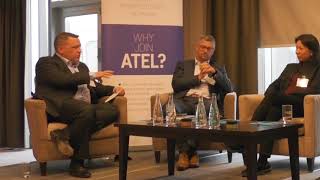
Mike Richards interviews treasury professionals including Johan about their career paths across industries and geographies. They discuss moves between corporate and banking roles, mergers, and how treasury culture differs between the US and Europe.
You know, you started in treasury and then moved on and got a good promotion to Mattel. Mattel, you say it better than I. Talk us through that role or that progression.
Yeah. The last assignment at Umicore was more, as I said, on commodity trading. And I had an opportunity to join Arcelor, which was the first merger actually. And there I focused much more on financing, which was something pretty new for me and was a huge restructuring to be done. As you can imagine when three large group are merging together and I mean, it's been a very, very interesting time. A mix of culture, Spanish, French, Belgium, German merging all together. You can imagine that in terms of culture it's pretty different. We've been very successful at the time. And after that assignment I had an opportunity to. To build up something new for Ocelot which was not existing in relation to community trading. And then I moved to Paris to develop their community trading desk, which was something which was inexistent and basically it was a fantastic experience. And we've been growing and growing. And then the second merger happened with metal to create arsenal of metal and a new culture came in and a complete change of mindset. Much more financially driven than engineer driven as it used to be in the former steel companies in Europe. So all in all it was a fantastic experience. And maybe to complete what John was saying, I think we are at least internal banker. But more than this, and on top of what he said, we are very strong advisor, business enabler. We advise the business on what are the best solutions. With a different mindset as a banker, obviously, which is more technical and more efficiency driven than let's say making money basically. And in that sense the job of treasurer is something that you invent yourself every day, basically. There is no one single day which is the same. You always try to improve, to develop new things and this is really enjoyable and I love it as well.
You did seven years then in that role.
Yeah.
And then you were just talking and we were just mentioning about banking. You were then tempted to the dark side. You went to join Dexia. How come you made a move to banking?
Yeah, well, there was a mix of personal reasons and professional reasons.
We'll stick to the professional ones.
Yeah, yeah. Well, you know, it was at a time when, well, many banks wished to be in the community trading business because it was driving a lot of value and generating a lot of opportunities of new business on the corporate side, also on the private side, all kind of structured product. And Dexia at that time was still considered as one of the Safest bank in the world. It happened not to be the case, but it was one of these bank which was still growing and growing. And then I proposed them a project and we started the project. Unfortunately, the timing was not super good. It was in 2008 and as you can imagine, it's been very tough. So somewhere I had a chance to live the bankruptcy of the bank, which is something which is unique in a professional life and which is plenty of knowledge to keep in mind all the time that this trust that was existing between the banks does not exist anymore and that your credit can deteriorate extremely quickly. As a treasurer, this is something which is very, very important to always keep in mind.
I was going to ask. And you made the moves and then you switched back as we come onto into corporate. But what was the difference in culture like? I mean you've touched on it there.
But yeah, well the thing in a bank you are very, very specialized. You focus on one line of products and you focus on this and this and this. And basically intellectually it's much less interesting to be honest than working for a corporation. So I had an opportunity. ArcelorMittal had decided to spin off its stainless steel division. And this is probably also a once a life experience experience was to create a corporate treasury department from scratch, exiting from a very large organization, ArcelorMittal and to create everything to provide the same kind of services to our internal clients, but with different means, obviously. And I must say it's been a fantastic, fantastic experience. I will not come back on the entire history of Apparam, but well, it used to be a low credit company, now we're an investment grade company. It's been a journey which was fantastic. And from, from a Treasury perspective, from a high leveraged company to a very low leverage company touching plenty of financing products and plenty also of hedging structures. And so it's been a fantastic experience.
We talk there. You've obviously worked for a lot of you European groups or based in Europe and things. But with your career winky, You've worked with PayPal, Amazon, as we talked about. But how have you found the sort of progression you got to. You started in the US, then you made the transition with PayPal to Europe. Talk us through that move if you like.
Or that was also accidental. That was at PayPal. I was doing a lot of projects when I got into the treasury, which includes also the big ethics engine at the time. They were looking for folks that they're also building out a bank in Europe, in Luxembourg specifically. And so they need to build out the team. I was employee number nine in Luxembourg and kind of bring the knowledge and culture to here in the new corporate office. And at that time we are a bank, but it's with a bank within the corporate which it means we are essentially setting up new, a lot of new financial products for our customers. So it's not like a bank but we still have the banking regulatory requirements reporting that we have to support. Which helps me to understand from a bank perspective what the constraints are. But never left the corporate challenge and the workload that comes with it. So that's really how kind of that transition comes along. And that was supposed to be a two year assignment as an expat, but eleven and a half, almost twelve years later, I'm still here, not as an expat, but as I'm local.
And how does it contrast between the US culture of treasury, treasury culture and the US approach to treasury rather to European and the approach over here?
I think the biggest difference for us is that corporate America still sees that the center of universe is still in the US which means that you will have depending on what time zone your corporate is, you're going to work late hours. Decisions oftentimes still defer back to the US So you will have to work extra hard from over communication making sure they understand what's happening. They're not quite understanding the difference, especially in Europe because there's so many different countries while they have a single currency they don't understand every country might have a different requirements especially even as simple as opening bank accounts or the kyc. There's a lot of documentation. So someone from the US have never exposed to the process procedure in the European the Eurozone. They're going to have a culture shock and you will have to explain to them why things would take longer time and why there's so many holidays. Those are things that it would take time to get used to. But it's a learning, right? So you manage expectation. I think that's important. It is our job to make sure that your headquarter understands what to expect and why. And you constantly need to challenge on your side can things done quicker, more efficiently as well.
And then you made the move from PayPal into eBay or how did that come about?
That was because I was kind of done with the banking side and they see that I have. I don't like to take no and answer. So apparently that fits very well in the corporate ebay culture where they want to get things done and it's kind of always In a challenging mode. So I tend to kind of push the buttons quite a bit and they want me to head over the corporate side. And that just happened to. I was there and then we kind of shared the same office because eBay was. PayPal was part of the ebay family. So I had the. Basically the. From the PayPal. Actually I went into ebay, the corporate for Ymir and then heading international when we split between eBay and PayPal. So I took over the EMEA as well as APAC as well. So that talk about work hours that you start from the morning and for apac and then you got the European time and then you have the evening to catch up with the us. So that was actually quite challenging. Yeah, yeah.
And Johan, you made the move, rtl, entertainment industry and TV and all that stuff, and you made the natural move into building services. So how did that come about? Or was it just. Hang on, it's just Treasury. It doesn't matter what industry. I mean, how do you feel about that Amongst the other panelists as well?
Indeed, it is rather treasury. Basically, the industry is key because you need to understand it. Being a treasurer, because the service. I like to say that we provide services. The service might differ, but there is some routes, let's say really routes that remain, but you get to adjust to the business workflows and services which are required. Yeah, I made the move not because of the industry, because I wanted to add a nice opportunity with a new challenge and basically I wanted to grow as well in terms of responsibility and new projects. So that's the main reasons why I moved at that time. Not because I was particularly interested in the industry, I wanted to remain in the corporate environment. But yeah, so it's true that it's not a natural move. I didn't move to a competitor, but I remain in treasury nevertheless.
More from Mike



Why Treasury Professionals Don’t Show Up to Events (And What Organisers Get Wrong)

AFP 2026 Las Vegas | Use My Exclusive DISCOUNT Code and Join My 2 Treasury Sessions

Treasury Technology, AI & Cybersecurity: Felix Meyer (ABB Capital) on TMS Projects and Future Skills




AI, Cybersecurity, and a Fast Track TMS Rollout with ABB Capital’s Felix Meyer