DAY 15 of Building a $1M Business in 1 Yr
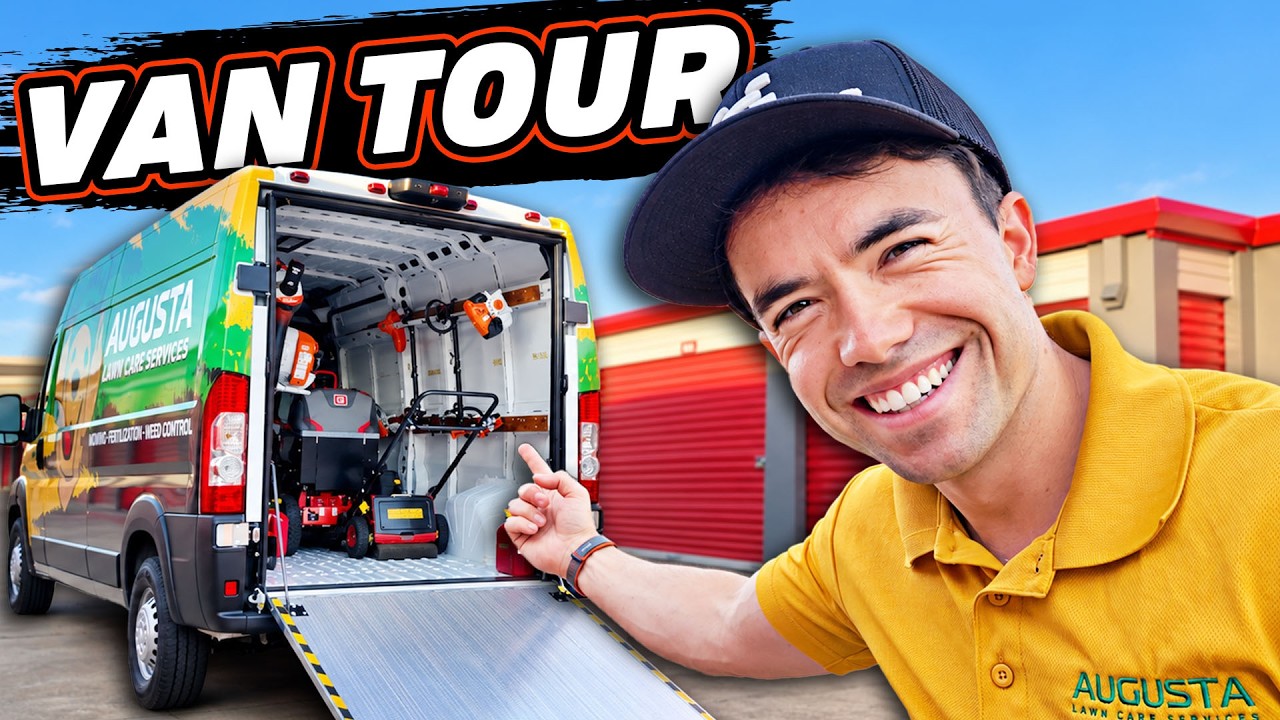
In this vlog, Mike Andes documents the acquisition and outfitting of a $85‑per‑month outdoor storage unit that will serve as a depot for his lawn‑care fleet on the south side of his market. He walks through the van’s interior layout, equipment storage, blade‑sharpening station, and safety modifications, explaining cost decisions and future expansion plans. Throughout the episode he shares his management philosophy of giving technicians decision‑making authority to unlock discretionary effort, and reflects on past micromanagement mistakes. He then shifts to marketing, detailing how he optimized the Google Business Profile, set up product listings, and leveraged Facebook retargeting ads to improve lead quality. Mike reviews his HomeWorks estimate‑follow‑up automation sequence (emails, texts, phone calls on days 1‑10) and explains why a “decline” button is crucial for maintaining clean pipelines. He discusses pricing concerns, lead‑ghosting, and the plan to add Google Ads. Interspersed are personal anecdotes about his supplement routine, meals, and the surrounding neighborhood amenities. The vlog blends operational logistics, team culture, and growth‑hacking tactics aimed at reaching a $1 million revenue target within a year.
Chapters
I moved across the country to build a $1 million lawn care business in 1 year. Today we're getting a little storage facility just to make sure we have a little bit of a depot on the south side of our market. So I'm gonna walk you through, give you a tour, show you why we're doing this, and tell you exactly how much it costs. You can actually run different ads. You can actually be like, hey, I know you came to our website. I know you need your lawn care done. If you like actually had a collision with someone in front, you do not want this mower going through the cab. It was a little bit expensive for me. Oh my gosh, we gotta cut prices. We're probably too expensive. If you allow them to, to Take action on their ideas, they will deploy more discretionary effort. If it's gonna take me more than 4 hours, just the labor, it's better for me to buy it. Dude, I got— I didn't finish my supplements. Okay, so this is day 1 of Michael having way more supplements than usual. I've been on the same supplement kick for years, like 10 to 15 years. I have the same, like, 2 capsules of creatine, 2 amino acids, and a multivitamin. Man, Charlie hit me with like fish oil. Who's Charlie? My coach. Vitamin D3, twice as much creatine. When Charlie— when I got signed up for Charlie, she asked me what like foods I really like. I basically just pleaded that I have a spinach omelet on my food plan because I've had a spinach omelet basically every day. Sometimes I have 2 a day. For years, years, same exact way. So you put the cheese in first. Don't put the cheese in afterwards, 'cause then that'll cause it to melt through the spinach. You don't want that. Put the cheese on first, then you put the spinach, then you crack the egg. Don't let the egg yolk break. Just let it all sit there. Cook basically the whole thing. But then you flip it right at the end so that all the white gets cooked through. But the yolk leaves just a little bit yolky, whatever that means. You need to do a tutorial tomorrow. I'm telling you, like, it'll change your life. So if Charlie does not give me that on my food plan, my meal plan, I will be so sad. It's the only thing I asked for. Literally, she's like, what foods do you like? I'm like, just give me a spinach omelet. It has everything you need. It has cheese, spinach, and eggs. That's it. Pack it on, baby. It'll play her ass. Yeah, let's go. Salt of the earth, brother. It's biblical. Straight out the book. The good book gave me permission. I took my blood panel. The only thing I was actually deficient in was vitamin D3, probably because we live in Washington. So these bad boys are supposed to cure that. I don't know how it's supposed to do anything. All I know is that fish oil, dude, I can taste it like a few hours later. Oh wow. You know, when you start at 1 and you're like, oh my word, I'm in the thousands. We're gonna be a while. Okay, so this is outdoor storage. We did not want indoor, mostly because of cost, but secondarily because we would like to sharpen blades out here. So this will serve as a spot for us to meet with the crew once a week. All right, now we're up to 1,200. We're doing good, we're going good. You know, it's just the first time where you gotta find stuff. Oh, it's a little dark. Can't see that far. I think it's back in there. Let me see here. I just wanna say this Promaster 2500 is so nice to drive, dude. Like, we— I was driving through traffic this morning for rush hour. It's nice to drive and it has CarPlay. Like, I feel bad my wife doesn't have CarPlay in her car. All right. Dude, no, no, no, turning around, this is not gonna be fun. What do you mean? Oh man, we are in the wrong spot. We are in the wrong spot, ladies and gentlemen. Oh, now we gotta back out of this stuff. Okay. See, it's easier to drive backwards, honestly, than forwards, so you might as well just back up this whole thing. So the actual cost on this was not bad. $85 a month. That's not bad at all. Oh, 10 by 10 sitch. Okay. So yeah, this is all it is. It's super basic. This will be kind of like, um, we'll probably have fuel in here. We obviously make sure we run it by the storage facility company. Likely just backup cans. Mostly though for blades, blade sharpening, et cetera. But what we will do, 'cause we got lots of space in here, this is like perfect. There'll be lots of space for the guys to be able to pull up in here and just have like kind of a 30 to 60 minute powwow each week. So we don't have an office space. We don't have a place where they meet up every morning. We don't even have a start time. They just got to complete the jobs that is allotted to them each day. But once a week for the sake of culture, because the biggest downside of having the vans go to the houses is there's the lack of like culture and team. And I saw just how important the tech training that day that we had with them was just to create and foster some of that camaraderie. I'm ready to start tomorrow. They need to know you lay the law. They can't come to me. You're making money. I'm making money. Making money, he's putting it back into the business. We're going to be more efficient. You're making more money. I'm making more money. It just goes around and around and around. This happens. That's okay with me. Thank you. But then on a weekly basis, the ability to come here, have everyone's vehicles, we'd swap out all the blades. We'd give everyone extra belts here. Anything like that maintenance-wise would be happening here once a week. So I'm happy to sacrifice that extra hour a week with the whole team just to have the culture, the camaraderie. And that's when we'd like check up on their trucks or their vans, their equipment, make sure everything's dialed in. We'd also just go wash the vans from here. So our thought process is like weekly wash vans and blades and any sort of backup stuff we can fit here. This also gives us room to put like, for example, the Z sprayer could fit in here, any sort of spray. Or fertilizer. We don't need a lot of space because the vans are big. Like, they already have— for everyone, they probably have a solid like 4 by 4 of space just for storage inside the vans, in addition to all their equipment. But this allows just a little extra and a spot to warehouse some of the backup blades and supplies, especially fertilizer, etc. So if you're going to use a storage facility for Fertilizer, you do need to check in with them what you're storing. Depending on the type of ingredients, you got to be very careful because some of it's flammable. And so sometimes they will not allow you to store certain things. Same thing with fuel. So you just got to ask them and make sure it's the right facility. You're not going to want to be putting that indoors, etc. So just make sure you talk to them. Don't just be like, oh, I'm going to like throw a whole bunch of fuel inside of a little storage container and it blows up and then we got a problem. So this is the facility, $85 a month, not bad. We will likely, as we continue to expand service area and number of locations, we'll probably get one of these ever so often so that the groups can meet up. So I anticipate next year getting another one of these on the north side of our facility, or on the north side of our service area. But right now on the north side is kind of where we have that coworking space. Now on the south side we have a meeting spot, and that's gonna be this storage facility. I anticipate in the future though we will get another one of these up north just so that no one has to drive 30 minutes to get here from the north side. But that'll be once we start the second location. All right, so this shackle we put on here— at the end of the day, if someone wants to get into your van or trailer, they're going to, whether it be the side or here. Even if you have a shackle, they can just shear this aluminum and get in, no problem. So what we trained the guys on is just parking this back up against a garage or a post or a wall, ideally, so that no one can open up the ramp. That way, at least the zero turns aren't going anywhere. A couple quick notes on it. We still got to put the rubber stoppers on the bottom here so the wrap doesn't get messed up. So those are on order. Like, once we get the, the rubber stoppers on the back here, We'll put 4 little discs of rubber. It doesn't matter if it's off a little bit. Um, this hinge is strong enough to be able to— even if one— like, I backed it off on this one spot where the hill was going this way and only point was touching here. The ramp itself was just fine. It's very, very rigid. Um, it's mostly a matter of I don't be scraping up the wrap underneath here. Yeah. And that's the big key. So we'll have to drill some holes through this, do 4 of them, put the little disc on here just to preserve That back part of the ramp. But I wanted to walk you through the back of the van because last week, this is the very first van that is fully set up inside. There's a couple little things we still gotta do like the rubber stoppers, but I wanna show you through the full racking. Quick note, if you ever did get a ramp like this, one of the owners, Thomas, shout out, out in Virginia, he had a note and these little, I don't even know if these are air pistons or whatever these are called, These help move the— make it easier to pull the ramp up and down. He said it'll work just fine with just one of these, and so he actually takes one of them off as a backup in case someone gets— someone hits them. I will say we're probably going to try not to do that, mostly because we only have 32-inch mowers. We do not have 48 or 52-inch. If you're getting a 52-inch mower between this, you have such a small margin of error that it is likely you're going to hit one. And so I would definitely recommend getting some backups. Or at least taking one of them off. Thomas said it works just fine with one of them. Also, I was struggling the other day to like close the latch. He said some WD-40 on there, he said it like works wonders. So shout out to Thomas. All right, so inside, this is all 100% John's doing. I didn't do anything when it comes to the setup inside of this, and I'm sure we will modify it, we will adjust it. For example, we only right now have one line trimmer. We'll probably just get a second one right here down the road. There's plenty of space for it on this rack. But let me give you a tour. Again, this is not finalized, but we're trying to just get as close as possible to functional so that next week we can start mowing. Okay, so right here we got the weed whacker line. Over here we've got a hook. So they got those huge massive cages for the blowers. It just extends out how far this goes. It's expensive as all get out. And right now, if someone was to hit this, whoop-de-doo. If you got a big old cage on this and it's all, you know, up against onto the racking, now all of a sudden I'm— I could break something. So just a hook. And yes, if you hit a massive speed bump, it could probably come off on a speed bump. Unlikely. If you're driving that fast, shame on you. We got gas cans down here in the bottom right. We just put a little bungee cord on these up on the side. Will this be improved and changed in the future? Yes. But we made sure we drove this thing around a ton, or John did, I should say, and nothing moved. And so he really drove it hard, braking hard, driving fast, turning hard, and nothing was moving. I do think There'll be a few edits we'll make to fuel cans, position of things, et cetera. When this ramp comes up, it basically pins this push mower directly in place. So it's almost perfect. It's like an inch behind this thing. So we don't have to strap it down at all, which is very nice. And it doesn't move left to right because these grooves in the floor here. And so some people have asked, like, are we going to do any sort of flooring or like grip or wood on the ground? We're not going to for now. I do see if it got really wet why things sliding around would be much more of a problem, or if you get a bunch of clippings in here. We do tie down the ProStance 32 with this bad boy. And so we are going to long-term probably build kind of a 2x4 situation across the bottom here in order to be able to make sure it never goes through this. But right now, like, we have— I have braked on this thing very hard and there has been no problem with it like going into this. Like, this will maintain some impact, but If you like actually had a collision with someone in front, you do not want this mower going through the cab. And so this Zap Strap or whatever it's called, this will work great. Ratchet strap to just keep it from moving this way. And then it's kind of pinned with that other mower behind it so it doesn't go backwards either. But I do think the real test of this one's gonna be on a wet day with a bunch of clippings. Does this thing move around at all? And then we'll have to adjust from that. Now on this, on the side here, We went ahead and got these caps. They're like a dollar or 2 a pop. So I think we paid like $40 to get all the caps, but that way all the clippings don't get down into the grooves. And so these vans, some of them are used for like refrigeration trucks or they're used for even like van life people living in here and they'll run like water lines or electrical lines all in behind here. But what I don't want to happen is a whole bunch of clippings getting in here. And then it just rots, it smells, and it's just gross. So we did put caps on all the little holes around the edges of the base of the van. So that's really it. Up top here, we got— you wanna come around here? We got first aid kit. We got— what is this? I think this is the— yeah, this is jumper cables. And if their battery's down, it has a bit of a battery inside of here. And then we got a tool bag. So the essentials. And a drill, et cetera, is all inside there. There's plenty of space up here. So like if someone, if one of the technicians wanted to store like a knife up here for the trimmer line or any sort of little tools, great little spot for it up above the cab. But there's so much space. Like even with both the mowers, there's so much space to walk around. I'm really happy with it. Yeah. Because if you had a 50, you could probably get a 48 or a 52 in here. But you wouldn't be able to walk around the mower. You'd have to step on the deck. This is just super comfortable. And it only really works because we have mostly smaller lawns. And so our ideal lawn is like that 4,000 to 8,000 square feet. 32-inch works great for that and allows us to get in the backyard gates because most gates are 36 inches. You can get— most of the time you get a 36-inch deck through a backyard gate that's 36 inches, but it is tight. Yeah. Like you are touching both sides. It's very finicky. Just play it safe. We're doing the 32s to make sure we get into the backyards just fine. So that's it. We do have this backup 21-inch mower, and a lot of people had asked about, are you only having the one mower? Ideally, we're using that 32-inch ProStance, uh, the 32-inch for probably the majority of lawns that are larger. But sometimes even putting a 32-inch stand-on on a smaller lawn that's really small, like a little tiny front yard, Still, it's too big. So then that's when we would use the 21-inch commercial Toro. I've never used the commercial Toros, but they're very similar to the Exmarks, honestly, is in their overall build, this front bar, their color. But they look very, very similar to the Exmarks I've used in the past. So that's the basic setup. It's not completely finished. I do think we're gonna need more than the 2.5-gallon tanks so that way the guys don't have to fill up every single day. But it's a matter of like fuel storage in general we wanna be careful of. But there's plenty of space on both sides up front to put a 5-gallon or some backup tanks. Where could you see the guys running into issues with this van? I guess we'll find out. Like everyone wants it perfect from day one. John has a lot of experience in this local area so he kinda generally knows the properties. He knows the dealer where we got all of this. But even him, he is like, okay, we gotta see what comes to us in terms of clients. And then we can adjust. I think the problems I see with this setup right now, I only see it being like we don't have a ton of fuel. So we might need to get another couple fuel tanks up front there or like some 5 gallons so they're not stopping as often. But typically when you have the guys having their own vans, like they're gonna take a lunch break. They're going to stop and go to the bathroom. So like they can fuel up then. We don't wanna keep tons of fuel in a van in the back of this thing. And I would like, what I'm really interested in is to see the ventilation on this thing. Like they already have some ventilation that's built into this, but the thing we talked to the retrofitter, the person that does like the upfitting and they sit around here, no one really does solar fans up top or side ventilation, like passive ventilation. Most of our other owners of Augusta, they have done that. They have cut into the sides, they've cut into the top, done a little solar panel up top that allows the fan to keep ventilation going up and through, which makes a lot of sense to me, honestly. Yeah. I would have done that right away. They were like, "Yeah, it doesn't really move the needle and don't do it." Like, okay, well let's try it. But also in the back of my mind, I'm like, I feel like if I had some passive ventilation going up the top, like where it's hottest, that would help with bringing the temperature down back here. But they didn't seem to think that's a popular thing to do. And you know, cutting into this allows for leaks. It reduces the value of the van in the long term, etc. So we'll give it a shot. I don't necessarily buy that logic though. Um, see, you got a tool here, the store. Um, but anyways, well, I guess we'll find out. Like, I, I generally believe whether it be the ramp or these mowers, you do not know until you're a few months deep into the technicians using the equipment. And that's why I'm not, I'm not like all in, this is the best setup ever, because I'm sure we will change 3 or 4 things. We'll tweak it, we'll adjust it, and I'm not afraid to say like, I don't know if this This is the perfect setup right now. Rolling, good. All right, so originally we got— went to Lowe's and got stickers for the sides of the van. I will say this, this is my personal preference. I hate the reflective backing of vinyl stickers. It looks— makes it look cheap. It doesn't integrate well with the design of the van. So instead we got these from Amazon. All of this Each of these was $8 or $7. So this is gonna have 8 of every single letter and every single number, which is exactly what we need for 4 vans, 'cause I wanna do V1 and V1 on both sides of the van. And this is really just to keep track of everything. So like on the keys, which mowers are on which vans, just keeping track of the equipment. The decision I gotta make is where are we gonna put these? I would've realistically liked white, And I probably would've put 'em like right here, but they're black. So they're gonna have to go probably on the driver door. Also, we gotta keep space for the pesticide license. They have like a little round blue badge. So we gotta keep a spot for that open as well. Just trying to think what would be easiest. Yeah, honestly, unfortunately, I think I'm gonna have to do it right here. So I've already decided the V1, van 1, is gonna be John's van since he'll be doing most of the treatments. He'll probably have the Z-Sprayer on that van, et cetera. It'll be kind of like the backup in terms of all the equipment. So I'm gonna be V2, I believe. Let me just make sure. We had made this in our Google Doc. So just so you know, in terms of how we keep track of stuff, we have a shared Google Drive folder that has all sorts of planning documents, all of our insurance. Basically everything for the business is one Google Drive folder that we share. And then inside of that I have a password stock. We also use 1Password just to keep everything secure. But things like this that we do for planning, I just keep in the Google Drive. So this one, so yeah, I'm V2. So this van is gonna get V2 treatment. So we'll use it for keys, equipment. Also it does give us a way if someone is reporting someone speeding or something, they know exactly who instead of just being like, it's a yellow van. It's like, well, they're all exactly the same. So I wanna clean this off if I can. I can. We're gonna have to use socks. That's just, that's just what's gonna have to happen. The socks gave their life today to make sure that this sticks nicely. Ideally, I would have had the decal guys do this, but I just got these in the other day. But they would obviously be much steadier hand than I. Okay, V2 on this side is done. Do it on both sides just so that way regardless of what side of the vehicle you're on, You can still see it. People out here using socks just for their feet. What are we doing? Multipurpose. All right, so now we're gonna head over to Home Depot, get a workbench so they can do grinding on the blades. One bad thing that happened so far today— or not bad, just thing I've realized— uh, the manager here at the storage facility said we can't use the power, the little outlet that's right next to the storage space. John already knew that though, so he's gonna be ordering a generator as well as a blade sharpener. I'm gonna get the workbench. Fortunately, Home Depot is literally right across the street. Perfect. Home Depot across the street, Walmart across the street, and it's right next door to a car wash. Like, you could not ask anything better. And an oil change place literally right next to the storage unit. It's perfect. Shout out John. This is a great spot. Like, the fact that we're going to be meeting here on a weekly basis for equipment maintenance, fueling things up— like, it is right here. Like, right next door is an AutoZone, an oil change place, a tires and brakes spot, and a car wash. Right across the street, there is a Home Depot and a Walmart. Basically everything we need in one spot. It's beautiful. And better yet, that oil change place, Take 5, is a preferred vendor at Augusta. So we get an additional, I think it's like 15% off or something like that. It's perfect. One quick note is that this is actually the first time I have seen all the equipment and the van setup in one spot. Jon did everything, choosing the dealer, choosing the equipment type, the deck size, the brand, where everything was gonna be laid out in the van. And the reason I do that is because I believe that when you give someone decision-making power, a budget, the authority to make decisions, they deploy more discretionary effort. Now, 5 years ago, I would have been in the weeds wanting everything ran by me, getting my input on everything, and that's fine. I have found that especially managers, but any great team player, anyone, if you allow them to take action on their ideas, They will deploy more discretionary effort. Discretionary effort is weekends, evenings, when, when they're in the shower and they're thinking about stuff, are they thinking about the business and making it better? And I have found that people, when you give them their ideas and let them just run with it, they deploy more of that discretionary effort. And so I've seen that from John as we've been trying to dial in the vans, et cetera, and taking him home, figuring it out. Even his wife getting involved, like help move the vans around because it's all kind of spread out where the installers are at for the ramps and the wrap and all this other stuff. And so shout out to him. Also realize that when you do that, yeah, there might be some mistakes, but ultimately John is the most qualified person to make these decisions because he knows this market, he knows the dealers, he knows the demographic of the customers here. I'm new to this area, so I'm really relying on him. But we will optimize and we will make this setup better as we actually get real-world experience. And I think sometimes people will, like, we're day 15 here of the challenge. And next week we start mowing lawns and actually getting customers. I think some people, instead of 3 weeks, they'll spend 3 months or 3 years trying to get everything just perfect instead of just taking action. 'Cause progress is far— well, you get so much more results from progress instead of trying to get everything perfect. And so just taking action, we'll get the technicians out here, we'll see their feedback, we'll adjust the layout as needed. Going back to 5 years ago, was there consequences to being involved in every step? Consequences are that you don't have as much bandwidth in terms of time, You can't do as much because you're so in the weeds of every little decision. The other— the biggest downside though is you discourage and frustrate your best people because they have the ability, the skill, and the experience to likely go start their own thing. And it gets very tempting for them to do so when you're constantly either micromanaging them or you want every decision ran through you versus like, hey, I trust you. Don't tell someone you trust them and then tell them like, I want every decision you make To be ran by me. That's basically saying I don't trust you. And so 5 years ago, I would've probably discouraged someone that had the chops and the capability and the ability to be able to make these decisions. I would've frustrated them just by having everything ran by me. So you lose your best people. The other part of it is attracting great talent. Everyone's always heard if you find a great person, Like you do whatever you can to possibly hire them. A great person has options and they will talk to people in your current team and ask you, how much micromanagement does this person do? Or do they actually empower you and let you do your job? And so if you wanna attract better people, make sure that when they talk to your current people, the report is, hey, if they empower you to do something, if there's a KPI or an objective they want you to hit, they give you full resources and decision-making power and they won't look over your shoulder every 10 seconds. In terms of employees making mistakes, look, I'm gonna make mistakes. And so this god complex of like, I started this business, everything's gotta run through me, I'm gonna look at every single detail and every minute tiny thing. I think a lot of times we'll kind of gravitate to one or two stories of entrepreneurs that have run big businesses that get into the weeds. But usually what that is actually a product of is them zeroing in on a very specific part, but then they zero back out and they focus on other things. And so there might be times when there's a problem in the business, you zero in and get really in the details. But if you stay there too long, you will frustrate your technicians, you will frustrate your managers, and your best people will feel like you're stepping on their toes. There'll be times that are uncomfortable where you do that, but you've got to then zero back out, in my opinion, to be able to lead the organization and allow your people to cook. Like sometimes you just got to let them cook. And if you change, you always are changing things all the time, it gets people worn out and it just makes them feel Less confident in your ability to lead and make decisions. And so sometimes you gotta zero in, get all in the details, but then let them cook. Step back for 6 months, 12 months, let them cook. See what improvements. A lot of times, doing nothing and making no changes allows them to optimize the current process and you get more bang for your buck compared to like, you renovating and changing everything. It's always the little fine details that really make the difference. And if you have great team members, they'll come up with those on their own. Decisions that are a revolving door. In other words, you can go backwards, make those as fast as possible. The ones that are like one-directional, those are the ones I get very involved in. So for example, like I was very involved in like what services are we going to offer? What's our pricing going to be? Like we're not going to offer landscaping services and hardscaping. Like I was involved in those because they're one way, like you got to go get up, like it changes the whole direction of the business. When it comes to like the fine details of like what equipment we're going to buy, what generator we're going to get, What type of mower are we going to have? Like, that's where it's just like I give more freedom and people will make mistakes. But like, I make mistakes too. And if we're honest with ourselves, like, we all make mistakes and we all have to figure it out. I happen to believe someone will just put more effort in if they're figuring it out without me constantly interfering. And even if they— if I disagreed, unless I knew it was going to hurt the business, I'd prefer them to take action and then learn from their mistake, ideally. Now if it's gonna sink the business or you can't financially afford that mistake, then yeah, you're gonna have to get more involved. But people make mistakes. Like, you know, people leave you. People do dumb stuff in life and then they have to, life events happen, they gotta move on. Just part of the deal. Alright, we're getting Workbench. Usually they're up front. What? No, dude. Not really. We would like sometimes dress up or like do like carving pumpkins occasionally when we were kids. More festive. Yeah. I don't get the decoration thing, dude. I do not get that. Dude, you know, it's the storage, bro. I don't understand storing something for like 11 months out of the year. All right, hopefully there's a workbench over here. Okay, we don't need anything fancy. Important tools for the job this time. I just really want a spot though for them to store some tools and be able to get a bench they can anchor a— this is pretty good. They can anchor a unit for sharpening the blades onto. Might be cheaper to just build one. Cheaper to build one? Who's gonna do it? Who's— who are you gonna pay to do it? I don't know. Well, you think about the fact that we charge $100 per hour to the customer, so this is 4 hours worth. If it's gonna take me more than 4 hours, just the labor, it's better for me to buy it. But yes, I could probably build one. It would take me at least 4 hours and $150 to $200 worth of materials realistically, and it wouldn't have electrical in it. Like, this is a whole electrical— dude, these are pretty cool. That little mini toolbox, that is dope. I don't know what you'd fit in here besides like some screws. One phone down. But this is cool. This looks like a little lunch pail. I thought it looked like an ammo box. Yeah, actually, that'd be a great use case. Yeah, dude, I like this. I'm going to work. Make sure John's good with this, then we'll get out of here. All right, well, let's head to that direction and I'll just make sure he— what I like too, I think it has locks on it. Yeah, wheel locks. Cool. Dude, I can put this in the back of the van and it just becomes like my mobile office. Oh, wait a second, these ones are cheaper. But no, see, I couldn't mount anything on this. I want to be able to mount the, uh, like have a desk-mounted or table-mounted blade sharpener. All right, invalid scan. Please rescan your last item. Oh. Customer needs assistance in self-checkout. Why do you do self-checkout if every single time you scan something you need help? That make no sense. Customer needs assistance in self-checkout. I need assistance, all right. I need someone to fix this thing so it's useful. It's like, you never go to Home Depot. Why? This is a scam. Send me a text message. Verify. I think my card was not letting it go through, so I had to do a security thing with my bank. All right, see, third time's a charm. Choose your payment type. Suspicious activity on your Visa credit card available. Verify now. All right, let's do this thing. Yep, cool. Yeah, it sees Home Depot suspicious Yes. All right, we're good. Thank you. All right, let's assess the damage. So $398. Weku is my bank. Oops, sorry. And decline. Did you authorize? Yes, I did authorize this transaction. Stop blocking my card. That would be really nice. It'd be fantastic, actually. I was thinking about it for so long. The inner child inside of me. All right, one quick thing I was going to share that I did on the weekend. So last week we finally got the Google Business Profile verified, the address. So I've been cautious right off the gate, right off the rip, to make a bunch of edits. Because sometimes if you make a whole bunch of edits to your Google Business Profile, those randomly ask for verification again. So I let a few days go by and then I started making the modifications. So if you have not gone on your Google Business Profile and just made sure it's fully optimized, I highly recommend doing so. It takes like a few minutes and it's free. So the first thing I did was create products. If you— we have small, medium, and large mowing prices and we have small, medium, and large fertilization and weed control packages. And so I was able to make 6 products on Google My Business profile. And again, you're just trying to give Google as much data as possible. And those prices match up with my instant quote on my website, they match up with my FAQ section on my website. So it's really good for SEO. But more importantly, like Google loves data. And so just give it as much as possible. Products, make sure that's updated. Services, make sure that's updated. Make sure hours of operation, Make sure you're posting on a regular cadence. So like the media team posts 3 times a week for the page automatically, but just spend 15 minutes and optimize, like add a logo, add in your cover image, just optimize your Google Business Profile. It literally is free and it will likely set you apart from 90% of the competition that doesn't even claim their Google Business Profile, doesn't verify their address, doesn't put a logo on there, doesn't manage their reviews. Just take care of your Google Business Profile because it's free. All right, let's see if we can't get this up here. I'm gonna pretend like I'm doing this myself, but really, Terrell's helping me. That was actually not so bad. All right, dude, it's gonna fit perfect. Let's go. All right, let me lock the wheels. Yeah, it's only 2. Okay. Well, we're just driving across the street. Make sure John's good with this. Oh, John just said they're working with a— he's working on a fleet deal with the car wash. Let's go. And we have an account set up at that oil change place. Yeah, so Take 5 is already preferred vendor. He's working on this car wash place. Be like, yo, can we just like have an account so the guys can show up, all wash our vehicles without scanning our card 10 times? Whew. All right, what's that? Probably discretionary effort, John, because he's a beast. All right, like everyone will judge all the technicians here, or like the general manager, or myself, but like in general, for me personally, like I never criticize people that are in the arena getting it done. And in this field specifically, lawn care, landscaping, home services, a lot of people, like, they've had a tough background. Tough. They were brought up in a broken family, or like, they didn't come from money, they didn't come from education, dropped out of school. And so to think that everyone's gonna be like perfect and like have their words put together just right and be all just perfect for social media is crazy. And if you come from that background and you're trying to be in this industry, you realize you're gonna have to hire people that are different than you, and you have to learn to work with people that are different than you, and realize that people might have had a past, they might have done something in the past they weren't proud of. But if they worked through it, if they were able to overcome those things, like, I am all for giving those people a chance to kick butt. And yes, you occasionally— you'll try to help someone, or you kind of put your neck out for someone, and you'll get burned. But it is worth that. That happens occasionally for the times you see someone be able to use your organization and the business you built as a way to, like, turn their life around, get ahead in life. Reach their goals, make more money for their family, provide for their family. It's just so worth it. All right, let's get this workbench back to the storage unit. So Amanda is the manager at Home Service CPA, the accounting firm that I have, and so she also does all the books for all the businesses and the holdco and everything. So I just sent her a message like, "Hey, I'm sorry, I used the wrong card." So then we have to reconcile it all out. But unfortunately, the card I was trying to use here, the bank was blocking it. Wrong card transaction. Hi, Amanda. This transaction I had to put on the franchise Amex because my other card was not working here in Texas. I got it cleared up with the bank security, but just a note, it is gonna be on the wrong credit card. All right, so there's the Car wash, also known as an auto spa. Carnation Auto Spa, right across the street from the storage. So like literally it's perfect. We got a pharmacy, CVS, Chick-fil-A, a car wash, a tires and brakes spot, an oil change spot, Home Depot, and Walmart, all within throwing a stone's throw distance. Oh, and an Aldi. Like it's perfect. This little storage facility, $85 a month is such a steal. We'll get a generator, this workbench, and be solid. That workbench is not tied down as good. Hopefully it doesn't topple over. Actually, that's the main thing. A little top-heavy. Go a little slow around the corner. All right, one thing I wanted to share. So generally how the vlogs are probably gonna go for the next 6 months is in between doing quote unquote interesting things out in the world, of the world, like Home Depot and picking up workbenches and buying equipment and getting vans wrapped, I'll just try to share things that like I've had to figure out over the past 20 years of running a lawn care business, and hopefully it's helpful for you. Oh yeah, I'm like, I'll do like the pro move. I was having this when I was single and scooping it up with cereal. I'm gonna put it in a bag. You peel the peel though. I don't think I've opened up one of these things in years. I use Instacart. I'll just try to share things that like I've had to figure out over the past 20 years of running a lawn care business. That method was crazy. What method? Oh, getting this open? Yeah. Oh, is there a better way? That's so unsanitary. Oh yeah, unsanitary. And I think the biggest thing is the reason I love home services is because you don't have to do anything like that's rocket science. You just have to do the basics because so many people don't do the basics. And so like your Google Business Profile, basic. Another thing is Facebook ads. If you're running Facebook ads, there's one key that's low-hanging fruit to be able to get way more And that would be retargeting ads. Let's just say you're spending $100 a day on Facebook ads. Go ahead and create another campaign or another ad set and just do retargeting people that have already been to your website. And it doesn't have to be a high budget. Like, we're talking if you're running $100 a day on Facebook ads, do another one for $20 a day, $30 a day. But the fact is, it's like when you go to a website, you go to a website and you're looking at a product, right? And then all of a sudden everything you see on Facebook ads is that product. And you're like, man, how'd they know? Because they put a Facebook pixel on the website to track any traffic that hits their website. So put a Facebook pixel on your website. As you're running Facebook ads, you're driving traffic to that site, the pixel is marking them, and then they go back into Facebook and see more of your ads. So this is a way to be able to, for example, drive a whole bunch of traffic to your site with an ad, and then reduce your marketing spend, but get just as many, if not more leads. Because you might spend $100 a day, you're driving a whole bunch of traffic to your site, people are interested, not really the best quality traffic. But then you turn that $100 off or let it keep running. And then you spend $20 a day, on retargeting just the people that have been to your website. Almost always your lowest cost per lead will come from the people who have already been to your website, you know they're interested. And so it's like the warmest traffic. People have already been to your website, they've already clicked on an ad, they've already potentially asked for an estimate. So if you're running Facebook ads, make sure you're spending money on a retargeting campaign. It's definitely your best cost per lead. Okay, so I have a question. Boom, that's all she wrote. Well, what's cool is you can do— now that you know they're interested, they've clicked on your website at least once in the past, you can actually run different ads. You can actually be like, hey, I know you came to our website, I know you need your lawn care done. Like, you can change the type of ads you show the person that's already been to the website and already shown interest versus a cold audience where you're just kind of like, you know, hoping they need service, you're just trying to interrupt them on Facebook. That's the move. Okay, so over the past week, we've been running very small amount of ads, probably about 5% of our ad budget that I was hoping to spend. But we did that because the vans were behind, the equipment was behind, the wraps were behind, etc. But it was a good time to be able to just see what's working, what's happening. And I'll be perfectly honest, like We got about 10 leads, 12 leads maybe, and we didn't close any of them. Quick question for you. Is there a reason why you wanted to move forward with someone else? Totally fine. I just love to put a note here for it. Okay. It was a little bit expensive for me. And so at first, first instinct is like, oh my gosh, we got to cut prices. We're probably too expensive. And I'm going to wait a little bit longer. I've also talked to a local owner of Augusta and he said like they had to bring their price down a little bit lower and they started getting good traction. So that might be the case. But before we change anything, I want to give it a few more days. I know I'm on the higher end a little bit on price. We're definitely not on the low end for sure. But I want to, I want to give a little more time, especially given the fact that we have, we haven't even spent $1,000 in ads yet. And so when you first get started, it's very natural to have a higher cost per lead because your ads haven't been running for a while. And more importantly, it's very common to second-guess yourself when it comes to your pricing because the first few leads aren't closing. And so right now what I'm doing though is I'm going to make sure that it's not price. And so for the next week or so, I'm going to do the follow-up phone calls. Now inside of HomeWorks, you can actually see, let me actually go to my estimates page. I want to show you Because you can actually see if they decline and if it's because of price. And this is the part where I'm just making sure I slow down a little bit because when I see the reason for decline, I'm seeing, let's see here, we got estimates. Here we go. So none of the ones that have been declined have been because of price. It's mostly just people kind of ghosted us. I have a feeling this is because we really only spent money on Facebook ads. And we just got low quality leads as we first got the ad set up. And then we'll refine it, optimize it, see what's working, what's not working and get it dialed in. That's what I'm guessing. Because most of these people have just ghosted us, which I hate. We're going to make sure we follow up with them. And so I'm looking over our follow-up process right now. And in the automations, These are called sequence automations. I'm going to show you what we currently have set up. And then I might make some tweaks to this, to this process this week. But before I do that, even before I play with it, I want to make sure I'm doing the follow-up phone calls so I can actually talk to clients and see exactly what they're, they're saying about their bid. So okay, so this is inside of HomeWorks. This is what's called a sequence automation. And you can see here, we are doing actions on day 1, 2, 3, 4, 5, 7, 10. Now where it says email employee, that's actually usually going to command center. I'm going to be taking those. And that is basically an email saying, hey, give this person a follow-up phone call. So let me actually show you what that sort of email looks like. I will open up our email here. This is the type of message I'm going to start getting. This has been going to Command Center, but just for the next little bit, I want to talk to the customers and see exactly what they're feeling and what they're saying. And so let me cover up this person's phone number, but just so you can see what exactly they're seeing here. So this is the email. I cut off some of it. On purpose here. But basically it's like, hey, give this person a call back, make sure, you know, ask them if they got any questions, but more importantly, push for the close. And so before we make any adjustments to the pricing or to this automation sequence, I wanted to do like at least 20 or 30 follow-up phone calls, talk to customers and see what their objections are so I don't overreact to the knee-jerk reaction of like, Oh my word, we have our ads, they're running, and everyone's saying no, I should lower the price. Maybe. I know I'm on the higher end right now in this market. But we're turning on Google Ads this week. And with Google, there is intent to buy, whereas with Facebook, I'm interrupting their feed. And so sometimes it takes us a little bit longer to dial in Facebook simply because you're interrupting people, they have lower likelihood to purchase. And especially because we are giving them instant quotes on their website, on our website, they might not purchase as often. But they're definitely ghosting us, and I want to figure out why. So I'm gonna be doing quite a bit of follow-up phone calls this week. And the reason I do this is because a couple years ago, we ran this study at Augusta, we took a whole bunch of locations, we tracked it for about 3 months. And the difference between someone who did got no follow-up phone calls, and the people who got follow-up phone calls after they got their estimate was staggering. It was about 32% close rate on— sorry, 34% close rate if we did no follow-up phone calls. It was almost 68% follow-up, uh, if we did 3 follow-up phone calls, the close rate on those estimates. And so I'm gonna be doing the estimate follow-ups this week on the phone, knowing that in the long term I won't be doing it, but I want to see Are people mentioning the price? Is that something I need to address this early on? Because I don't think so. And I got to be more patient and wait for Google to do its thing, especially because we just got verified on Google on the business profile. But that's going to be the plan. But if you look at our automation here, I'm going to go ahead and edit this thing. And you can see here how we have this set up. So estimate is sent. The condition is— let me bend this back I'll go ahead and build it for you. If a customer does not have a tag, making sure that it's not a lights estimate, so that way we can segment between Christmas lights and our non-Christmas lights. We don't have Christmas lights, so it's not a big deal, but these are the standard automations we bring into all the locations at Augusta. So then you can see after 1 day we email the client with a specific email template. Also after a day, John's gonna be getting this email for the follow-up phone call. This is the one I'm gonna be changing to me, so that way I'll get the follow-up phone calls. And then we got emailing the customer after 2 days. We're also texting the customer after 2 days with these templates. And I've made all these templates and made sure it's all dialed in. And then this one also is another follow-up phone call. I'm going to change that to myself as well. So I will also get another follow-up phone call. And let's see what else we got here. Day 4, we got texting the client. Day 5, we got another follow-up. So this is the 3rd follow-up. So let's put this to me as well. So 3 follow-up phone calls, 3 text messages via text, and 3 emails. So it's pretty, it's pretty stacked. Like we're doing a lot of follow-ups, 3 texts, 3 emails, and 3 follow-up phone calls within 10 days. And I know some people, they're gonna say in the comments like, oh my word, you are completely overloading people. I would immediately block you. The proof is just in the fact, if you look at any data, the more you follow up, the more you'll close. And we don't put pressure on them. We just, we just want to know like, hey, we did the estimate for you. If you don't want it, that's totally fine. Just let me know. I'll mark it as, as lost. And you can see here inside of the homework sequence automation, this, they get automatically taken out of the sequence when the estimate is accepted or declined. So it immediately stops it. This is like the sequence automation ender. And this is why Jonathan Potosnik and I talked about this a couple weeks ago on the podcast. This is why we made the conscious decision inside of HomeWorks, in the estimate, in the estimate part of the customer portal where the customer is looking at the pricing, we give them the option to decline. I'll actually pull up an estimate to show you exactly what it looks like. But we did this very intentionally. So a lot of times there's other softwares that do not have a decline button, there's just accept. But the problem with that is you don't have the confidence to follow up with the customer religiously and relentlessly if there's no way for them to like take the exit ramp and like say, no, I don't want this, stop contacting me. That's why we have the decline button there. So we can keep following up knowing that if they don't want the quote, we don't have to keep harassing them. We don't— if they don't, if they feel like we're harassing, they just decline. Immediately they stop hearing from us. So let me pull up an estimate and actually show you what it looks like in the customer portal. And you'll see some of the thought that went into the product side of HomeWorks, because when we did this, it increased the close rate, like the number of customers closing jobs inside of HomeWorks dramatically. It was huge. Some people saw like 50, 60% increase, but we saw like a 30% overall increase in just the close rate by adjusting where these buttons were. On the estimate. Okay, so here's an example of what it looks like inside the client portal. And I'm just not showing the left-hand side because the address and customer's information is shared. But we attach a video from Command Center and agents just basically saying, like introducing the client, saying, hey, go ahead and click the button that says accept. Otherwise, if you have any questions, let us know. This, this button infrastructure right here is so important. The ability for them to decline Obviously, we're not trying to highlight that. We don't want them to decline, but we have it there so that way if they click on it, it takes them out of the sequence automation. Also, what we're really trying to highlight is like request changes, because a lot of times people, even around price, they'll ask for request changes to modify the bid. For us, we require a card on file. So we put accept and add payment method. So when they click this, they know they've got to put a card on file in order to get scheduled for service. And what's interesting is this client actually— this one I'm looking at right now— accepted the quote today on our instant quote on our website, but they did not put their entire card information on file. So that's why it's still saying it's not accepted. As soon as they put that card on file, then they'll get— then it'll say accepted. So Command Center already reached out to them, it looks like a couple hours ago, and just said, hey, thanks for accepting your estimate. We need to have the card on file before we can put you on the schedule. It happens a small percent of the time, but sometimes what happens is someone will go on the website, they'll see the price, they'll put all their information in here— like, we have everything except the price— and they just won't put their card information in. So we just have to reach out, be like, hey, you got to put a card on file, then we can get you scheduled for service. 7:55, closes at 8 o'clock. Then we got to go to Walmart to get a bunch of food for my meal plan that starts tomorrow. Lots of people around here drive with their windows open and their wind— and their music blasting. It's crazy weird. I just got to return these stickers. I got the receipt here. You have a great evening. You too. Thank you very much. The original. The original, perfect. You have a great evening. You too. Thank you very much. Oh, that looks good. It is. Banza, we got $35. Basically, we're making money and it's the weekend. Every time I make a return, I'm like, yeah, I just made money. It's true. Now, now we have money to go buy food. That's right, that's what we do. We, we are out here providing. We're literally bringing home the bacon. We walked into Walmart. And what? Come get me sweet potatoes and grilled chicken and paella. And look what's right in front of the front door. Literally, that's the door, and right here. It's almost like they're trying to tempt me. And look at this, is like salty. Look at it, it's salty and oily. That's what you want right there. Well, it was nice knowing you. Let's do it. Creamy and sweet. Why are these better? Why are these better? Because they just are. They're just better. I think I got you on Faye, didn't I? I was having this when I was single and scooping it up with, uh, cereal. It's in the ingredients. Like, check this out. It is literally Milk and yogurt cultures. That's it. And if you get the 0% fat one, it's great on calories. Yeah. I would just get Catalina Crunch, little crispy things that are made out of protein, and just— I would scoop it out like, like guacamole. But I would get the little guys because I was single and I would not— it'd take me too long to get through a full big one. These are only $4. Fans, we're gonna actually make money tonight after getting food because we got $35 back for the stickers, and we're only gonna spend $22. We could have bought more avocados. Also, fun fact, I never had tap to pay until I met Brianna. Me too. Oh man. Oh wow. See folks, here in Texas, in the land of the free, the home of the brave, we don't have to pay for plastic bags. Back in Washington, we have to pay 8 cents So you know what you do, right? You take the cart out to your, your, uh— okay, I have to confess something. Back when I did actually shop at Fred Meyer, it was like a mile from my house. I would take these in my car and I would return them back and use them again. You would take them back? I know, I know, I know. I felt bad about it. I felt bad about it. But I was a loyal customer. That's insane. But I also, you know, in the words of Lee Park, it was a political protest because I did not want to pay 8 cents per stinking plastic bag. So— You need to be a good citizen and return. Oh, oh, yeah, yeah. Okay. You gotta repent. See, that's why I had to get married. That's why I had to get married, to become a better citizen. Return my carts, you know. Not double bag stuff into the environment. Save the turtles and the whales. And the butterflies.