5 Steps to Double Your Money in Real Estate | Capability Amplifier EP#158
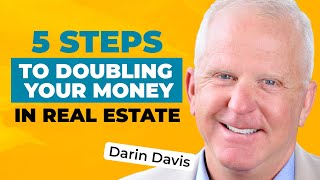
Darren Davis shares his 'no regrets investing' system for building wealth through real estate, developed after his wife's death in 2019 pushed him toward passive cash flow. He walks through multifamily development, triple-net leases with retailers like CVS, and his 5 Ds framework designed to double money in roughly five years.
Chapters
So I literally got seven, seven and a half years where the foundational business, passive cash flow real estate that we set up has carried us all the way to today. Not only did I not get wiped out financially, we actually grew. Now, could I have grown more if I didn't check out for seven and a half years? Absolutely. You know, that's. I have no regrets.
You got clipped in arguably one of the worst financial cycles ever. You got to make do when suddenly everything dries up. And just because there's a down cycle, someone's got a bunch of money in every cycle. So it's always a bull market. If you know how to create a.
Bull market, are you really building wealth? Because I can tell you right now, rarely. Because if you're chasing deals and if you're not vetting deals and there's not a plan, you know how to build that wealth, roll that wealth, grow that wealth, you know, then you're going to be struggling for decades, you know.
Hey, everyone, this is Mike Koenigs and welcome to Capability Amplifier. I have a really special guest today. He's been investing for almost 30 years. He's been through three down cycles with the third being right. This guy is brilliant because he has a very simplified way of looking at building wealth, investing and getting amazing deals. Darren Davis is the creator of the no regrets investing system. And what you're going to walk away with today is a total download of the mindset of a great investor. This is genuine time compression. And he's going to share some really, really smart ways to break down, reduce risk and make smart investments. And if you have any interest whatsoever in real estate and alternative investments, you're going to love this episode. We're going to cover his top strategies, how he works with his clients to go from making money to creating wealth, how he sources deals, his investment principles for vetting and due diligence, and something he calls the five Ds for doubling your money. Now, Vivian and I have been working with Darren and he's been absolutely invaluable with his advice on our real estate development in Pescadero, Mexico. Now, Darren also has an incredible transformational origin story. He's a values driven man who's put his family first in ways most of us will never experience. So without further ado, this is my friend, Darren Davis. So, Darren, great to have you today, my friend.
Thanks, Mike, I appreciate it. This is long overdue.
I know.
We've been trying to get on the calendars for four or five months now.
Yeah, we definitely have. And the good news is we've spent three days together, so we've been able to really, really deep dive. I feel like I've had an MBA in investing and investments. And I was telling you this before the camera rolled, that there's a couple things that we can never fake, which is character and charisma. And you've got all that and more. And you've also got a real educator's mindset. And I genuinely feel, and so does Vivian, that you've just been there for us and you give and you give and you give, and just being around you is. It's a huge multiplier.
Well, thank you kind. But, you know, it's really from my heart.
And we.
We'll go through the story, you know, we'll go through the story and, you know, you'll kind of see some of the trigger points that actually kind of launched me into what I'm doing today.
And why I care so much about it.
Yeah, for sure, for sure. Well, maybe the best place to begin before we get into your backstory, is why don't you talk a little bit about your expertise, because that, I think, will frame our listeners, our viewers, into what to expect before we get into, like, the meaty how to in the mindsets, which I think, for you, you know, as I age, one of the things that Dan Sullivan always talks about is it always begins with mindsets. Yeah. And you've got that in spades. But what's your specialty? What do you do? How have you been creating wealth for the past 30 years?
So I'll kind of go back there, been about, you know, I started investing.
In real estate really about 26, 27 years ago.
And I was just a. I'd call me, you know, an entry level retail investor, but I realized by definition, what.
Is a retail investor?
I just, you know, it's somebody that, hey, I want to buy a single family home and I want to rent it out. You know, sounds cool. There's a lot of things about it, but it's a first good step. You know, you got to start somewhere.
Right.
As things started to grow, I started to see that, wow, there's something behind this. And still didn't know enough about all the details of real estate, because we're talking 99, 2000, 2001. I mean, it was books on tape. You had to go get a cassette player and a tape, and the information to develop and grow was just not there. I mean, you had to do a lot of trial by fire. But as I started growing into it, I realized that I needed to get bigger, faster. And really where it started focusing on was how do I get from a single family to five single families to a duplex, a quad, to multifamily. Yeah. And I ended up thinking, you know, it makes common sense that housing is always needed. There was tax advantages from the government for housing, there was good debt for housing. And it really just took us down a path of multifamily. So when people ask me, hey, what all do you invest in? Well, I invest in a lot of things, a lot of alternative investments. But my expertise, my wheelhouse, my fairway is multifamily. And then as a kind of a little sub thing for that. If you look at multi tenant or other types of real estate, triple net, which we'll talk about later. Yep. And storage, which we'll talk about later. Those are really the three that I focus in on today. And there's, and there's, there's reasons, there's defined reasons why I'm in all three of them.
Yeah. And that, you know, now that I've been like, I've been investing for decades.
That doesn't mean I've been successfully investing for decades. Because right now, like one of my pains is. And I get lots and lots of VC deals thrown at me all the time because my expertise is, of course, small business, running businesses, which is where I migrated. And instead of getting into real estate sooner, huge mistake. And I still to this day have got, you know, a big seven figures tied up in VC deals, some of them going back over 10 years, I had one that just paid off. Finally, this last year, after 50, 15 years, and unbelievably, I got a payout. But I vowed I'd never do that again because it's like zero. It's high risk, zero interest loan for an indefinite period of time with no control. It's just crazy. So I've been super excited to learn from you and be mentored by you. And without further ado, before we get into the big, like I say, the big meaty chunks, I think your hero's journey, your journey defines and explains why someone would want to do what you do. Because the no regrets investing system is about setting yourself up and your family for life, especially when you have unexpected things show up. So let's just dive right in to your story.
Well, you know what I can say I am incredibly grateful for family, friends, and God to get us to this point. I've truly been blessed. And sometimes I go like, why am I so lucky? But.
When I Met my wife. We were in San Francisco, and we both had decided we wanted something more. And we both agreed that we were going to find a way to be entrepreneurs and we were going to leverage real estate to do that. And it was passive income growth, appreciation, tax advantages, all that stuff. And we. And it was good that both of us were wanting to do it at the same time because it wasn't me going one direction or her going another.
Yeah. And you both had jobs.
We both had jobs, yeah. And we quit them. Okay. Now, we started off, we still had jobs, but we realized this is what we wanted to do. We quit. I mean, and I would not recommend everybody just quit. Okay. But we were fortunate. We were. You know, this is the back half of the 90s, and this is dot com. So we were doing pretty well. You know, you got stock options and you got high compensation, and there was just. It was the wild West. I mean, it was the gold rush all over again. But it was technology and the dot com. But to kind of fast forward what we wanted out of this. And if you. And we'll go through this a bit later, but we wanted. We both came from working class families. Both of our dads were in the military. Her mom was kind of a work from home, you know, sold trinkets and gifts to, like, conference people. You see all that that we still see today. My mom was a schoolteacher, so the mentality was of a job, you know, and it was like, you know, the same thing that Robert Kiyosaki says all the time. You know, get an education, get a job, die, you know, retire, die. And we're just like, we're not doing that. So we started putting this plan in place. And at the time, we were living in San Francisco, but we knew that we were going back to Texas. So we took a couple flights out to Texas, started looking at some real estate. Austin, Texas, where we decided to locate. Both of us are from the Dallas area. But we went in and we started looking at what do we do, how do we do it? And it just happened. We relocated to Austin. We started that plan. That plan, by design, was to give her free time with kids. We were expecting to get married and have kids. We wanted control. We wanted passive cash flow. We wanted something that would stabilize us and grow and appreciate and all that. So we put that plan in place. Well, we get married, have two kids. She gets to stay at home. We're in control. We start building a really nice life. I'm able to go to every kid event. She's Able to go to every kid event. Things are going great. And then in about 2013.
She started experiencing some uncomfortable health issues. And here's a woman that is mid-30s, organic, doesn't smoke, doesn't drink, exercises all the time. And she kind of just got dismissed by the doctors. It's in your head, you know, And I kind of, you know, hindsight, I didn't look into it as serious because she just pushed through everything.
Yeah. No one sees the signs. Pushed through everything. That's what happened to me. I didn't see the signs.
They were screaming at me, yeah, yeah, yeah. I mean, and you're going, I got it, I got it, I got it. You know? Well, and then in 2000 and March of 2015.
We finally said, there's something wrong. And we went to about the fifth doctor, maybe sixth, and ended up being a friend. Acquaintance of mine. So we got, you know, he didn't really act like a doctor. When he came out of the. Out of the room, he looked at me as a friend and just started crying.
And I knew it wasn't good.
She had cancer. Okay. And he said, I don't know where it is as far as the level, but it's not good. So fast forward best I can. It's stage four colon cancer. And it had been missed by five other doctors. You know, they just didn't.
Didn't think she would have that because of her age and everything else.
Yeah.
So I know that.
I know that ride.
You experienced it too. So.
We then decided, what do we do? And I never once had to think about, how do I pay for this? I didn't realize it at the time because I was in shock. I just immediately said, we're putting a plan in place. Right.
And how much time did the doctors give you at that point?
Well, yeah, when we got the first oncologist to look at Tiffany's scans, and they said two to six months. Yeah. Now, at the time, we have a third grader and a fifth grader, and both of us just. That's where our mind goes. How do we keep her intact for them?
And.
It was interesting. And I don't wanna get into the insurance component of this, but.
Most doctors and most people are controlled by the insurance companies.
Yep.
Sick care system, whatever the insurance companies will approve is typically what the doctors will provide. Well, we were fortunate enough that we didn't have to follow that model. We were able to private pay stuff that insurance wouldn't cover. And to really kind of get to the point of this.
The private pay Allowed us to do three different clinical trials. And one of them, I know, added a year to her life, if not more. But she made it four years versus six months or two months.
And, you know, and quite frankly, we spent a lot of money. We spent almost a million dollars of cash, but not one time, not one time did I ever think about it. Because what we had set up just to build a lifestyle for ourselves was now saving our lifestyle.
Right on.
I mean, it was literally. And nobody sets something up for a life event like that. You set it up so that you can travel and hang with your kids.
Buy your time back.
Yeah. Buy your time back.
That's right.
Yeah.
So.
I'm just so thankful that what we did then has now been able to give us today. My kids and I, we're fine. You know, and this no regret system investment system we're talking about, I have no regrets. We did everything we could. You know, it's not like there was something else I could have done. We did a lot. And my kids are starting to realize that now they're 17 and 19, and they're looking back going, what the hell? How did you do that, dad? What did we do? How did we get through it? Because at the time, they didn't really know what was going on. But.
And I want to interrupt you here, because, I mean, you set out to buy your time back, and what you're really able to do is buy more time, you know, and if you asked anyone right now, especially if they've lost someone, if you could buy an extra hour, a day, a week, a month, or a year, what would that be worth to you? And most people would say, everything I got, okay, in your case, a million dollars. And you not only bought that time back, but you bought time for you to spend. To grieve and spend time with your kids after the fact. And how long did you. Were you able to not have to do anything because you could focus on the people that mattered most?
Yeah. You know, hindsight, looking back on it.
From the date that we found out she was stage four, which was March of 15 until she passed in May of 19, I probably spent 60 to 70% of my time with her and the kids. Okay. I still worked a little bit, and I had to. And she wanted me out of the house. Like, get away from me. I'm fine. Leave me alone. I'm hovering over her. You don't need anything? Are you okay? You know, but, you know, I was, by the way, I had a great partner, great team. Everybody chipped in Two great grandmothers. So it wasn't just me. You know, I had a support group big time. The schools, every, you know, there was just. It wasn't just me. Even though we were going through it directly. Yeah. But, you know, and then I go and I'm gonna bring this up to current date. It was that four years, and then it was the next three years, so seven. And then I didn't really feel like I was ready to walk away from my kids and the grieving process and get into it full time until about seven, eight months ago.
Yeah.
Yeah. And so, I mean, that's fairly current.
Yeah.
So I literally got seven, seven and a half years where the foundational business, passive cash flow real estate that we set up has carried us all the way to today. Yeah. And it's not only did I not get wiped out financially, we actually grew. Now, could I have grown more if I didn't check out for seven and a half years? Absolutely. But I'm in a great position now. Yeah. I'm, I've, you know, that's. I have no regrets. Yeah. At all.
It's amazing. Well, and, and I think, you know, we talked about this a lot, that the, the greatest enemy is no control.
Oh, yeah.
And, you know, you came from a no control world where your parents had no control and you built this set of safeguards and then it gave you really total freedom. And, you know, if someone said, you know, what do you wish you could invest all your time in, it's going to be your kids. If you're sitting on your deathbed and talking about regrets, it would be like if I could have just bought a little more time. Right. If I could have had more control. So within the fact that you've had the resilience, the grit, thank God for being able to put all this together. Why don't we talk about the system you devised? Because when we met, it was shortly after you had been like, you know, getting back in the game. And I remember hearing your story and Vivian was like, holy cow. She asked you your why and you had shared. This is the first time I've ever told the story before. And I'm like, my God, do you know how many people not only deeply resonate with this? I don't know anyone who doesn't want to know the system. And the fact that, you know, you've developed and evolved this thing, you've got a team, a system, a process, and it just flat out works. So can you just dive in and give us the, you know what? I'd like to do or do. Let's deconstruct some of your deals. Cause I'd like to understand that your types of investing. Then we'll go into the mindsets and then we've got some great takeaways and full disclosure for everyone watching. We have put together a master class that goes into even more detail. So we're not only going to give you great exposure to this, we're going to go into great detail. And there's a whole bunch of giveaways and tools that we're providing, including we've been working on some AI resources as well. Pretty excited about that. Me too.
This is.
It's really astonishing. So with that, why don't we. I know we've got. The Retreat is one of them. Is that the one we're going to start with?
Yeah, we can start with Retreat.
Okay.
Yeah, let's just start with that. But you know, before we jump into that, I cannot stress enough that, you know, you have those trigger points and pain points in your life that just launch you one direction or another and then becomes a passion for you. For sure. I did not ever know that I would be so passionate about people taking action and getting control of their lives. Because at my age today, if you were in an audience of a thousand people and you look to your left and you look to Your right, statistically 50% of the people at the age of 60 are going to go through something like what I went through.
For sure.
Yeah.
Yep, absolutely.
You do not want to let that wipe you out, especially when you're further down the timeline. So anyway, let's get over to Retreat. Retreat was my business partner. I was the first multifamily deal we ever did. And.
It'S got some color to it. I can say that A lot of ignorance. When we got into it, however, we had done. I had done some land development, entitlement of lots, and I'd done a condo conversion with my business partner. Some spec homes that we had built. I mean, I knew enough to be just brave enough to step out and do a 240 million, I mean 240 unit multimillion dollar apartment complex. But yeah, we went in and pieced the land together. We got it all set up. And for you guys that are old enough to remember 2008 when the world felt like it was crashing, well, we had our equity lined up from this is a friends and family deal.
We had gotten our takeout letter, our debt letter, had gotten the general contractor pulled together. So we were ready to go. And I Remember getting pretty nervous because the markets were starting to implode. And I get a call from GE Capital.
And they say, Mr. Davis, yes. And it wasn't even my rep, my broker, we just want you to know we're withdrawing our offer or our term sheet for your construction loan. And I said, whoa, whoa, whoa, whoa. I've got like 700 grand in this thing. And I go, what do you mean you're withdrawing it?
We don't care. Worth a pig.
And they said, well, we may not be in business tomorrow. And sure enough, GE Capital did not survive. So we're going, okay, what the hell do we do? Nobody's lending. All the equity is scared like you and me.
I mean, all of our friends were.
Going, I'm not investing anymore. I'm done. And quite frankly, we. You know, I mean, I hate to say this, I would never encourage anybody to do it, but I felt comfortable. But, I mean, I had to sell my house, you know, and I had.
To live off that money and go rent.
And you talking about having an upset.
Wife with two young children.
Yeah, that's a good old fashioned kick in the hoo hoo. Yeah.
Oh, man.
But, you know, it's.
She was very rational and she understood. She said, hey, that's the life we chose.
That's the business we picked.
I'm on board with it, you know, but that happened and we got through it, but we ended up getting real creative. We ended up contacting the city of Austin. And the reason we did is that Austin had started the growth boom. Housing was at a premium, and they had just passed a bond where there was $50 million that was available for affordable housing. So we went and applied for the money and we rewarded the money. However, that was just enough to carry us through. We still had to get the debt. Well, the only people that were lending then were the lenders that were insured by hud.
Right.
Okay. So the lenders are going, oh, if this guy fails, at least HUD insures the loan. Well, hud, the government liked the fact we were doing affordable housing. So I got introduced to a HUD general contractor, a HUD lender. Got it all pulled together, we built it, became a phenomenal success. Our investors, actually, it's probably one of our best performing assets, was number one. Now, we. We developed this one with a business plan for cash flow.
Yep.
So this was not what they call a merchant build, where you build it, stabilize it, sell it, and you're out in four or five years.
Right.
We wanted long term cash flow because My business partner and I at the time had said, this cash flow thing's working, you know, it's working, let's do another one, let's figure it out, let's keep going.
And this is where I want to jump in. Because it'd be easy for someone right now to go, oh, yeah, well, that's lucky because right place, right time, mood during a growth moment, it's like, no, actually. All right, you got clipped in arguably one of the worst financial cycles ever and.
You had to risk everything. Right. And you really didn't know what you were doing. You're still learning then. And for the few things that went right, there was a thousand that could have gone wrong. And I think this is a really big lesson which you'll get into some of the core principles and the mindsets is.
What I've really learned from you is if you're going to work with someone, you better find someone who's worked through one, two or arguably three down cycles because everyone goes scared and the herd is going to do stupid stuff. And the herd does a lot of stupid stuff all the time. And what you've repeatedly done over and over again is made the most of what went on. So, you know, you wouldn't normally say, hey, yeah, go get a government grant because the government's not a good partner in real estate. I know that. And talking to your partner, right, There have been all sorts of shenanigans that take place, but you gotta make do when suddenly everything dries up. And just because there's a down cycle, someone's got a bunch of money in every cycle. So it's always a bull market, if you know how to create a bull market. So feedback before we move on to.
The next step that comes with experience. And where I was going to go with that, I would never do what we just did again.
Right.
Yeah, I mean, I would have done that. But what I learned in those lessons has propelled me to do much better deals. That experience, going through that market with that type of product, working with the government, working with a hud, I mean, there are certain things I will never do again, and there are certain things that I absolutely love. So. And that was a great learning lesson. But, yeah, it's one of those that I'm glad we did it because it really put me in the thick of things and I had to learn quickly. There was a lot at stake.
Yeah.
You want to talk a little bit about the.
Yeah, well, I think one of the things that I've got is we've got A bunch of case studies and we're going to go into really detailed versions of case studies in the masterclass. So why don't we pick another.
Real estate one? Let's do triple net and let's do alternative investing and then get into the. The mindset. Because I think that's really what folks who listen to Capability Amplifier and watch it want more than anything. And again, I'll just tell you, watching, listening. Right now, you can go to D. Davis, Dot is it investor. I gotta make sure I remember the domain. And I'm gonna double check right now because. Yeah, no, it's actually D. Davis Investments. That's the website where you can get the masterclass and a workbook, the AI playbook and also an opportunity if you want to talk to Darren also. So with that pick, pick another case study. Well, let's go.
Let's go to the triple net, because you mentioned that.
Oh, hell yeah.
I love that one. What's triple net? First of all.
I've heard it before, and Vivian and I were involved in a reit, which still is doing well, and we've been in it for like 12 years. But this is a much better. Well, YouTube.
Well, it's a completely different strategy. And you and I have talked enough about this. I have buckets of money. Okay. And not full, but I mean, I have allocations of money.
Yes.
And I have some that are for development, some are for acquisition, some is for insurance, some is for triple net. Some, you know, so I've got it spread out for reasons.
Triple net is at its simplest form is typically a building. Let's pick one like a CVS or a Walgreens. I don't know what y' all have.
Out here in California.
Yeah, we've got Walgreens, cvs, Rite Aid. We got all of them.
Yeah, you got. So CVS is a single tenant in a building. All right, well, CVS is not a real estate company. They are a pharmaceutical and trinkets or whatever, I don't even know what you call that. But they want to focus on their business and not the real estate. Well, real estate investors like you and I will come in and we will buy that and they will lease that building back from us for five years, 10 years, 20 years. So you've got a tenant locked in for an extended period of time, paying down your debt.
Yep.
You're getting some debt, pay down a little bit of cash flow, and you're getting some appreciation in the real estate. Incredibly simple to own. Now, here's why triple net is really, what it stands for at the end of the day is that the tenant pays for. Pays for the lease, all the payments.
Yep.
All the insurance, all the maintenance, you do nothing. It's amazing. Nothing.
Breaks. They fix it. If there's snow in the street, in the parking lot, they clear it. I mean, whatever it may be, you sit back and you collect your check. Now, what people like about this, it's not. They're typically not grand slam cash flow deals, but they return 4 or 5%, 6%, but you get some depreciation, which we may talk about later, and how that impacts tax advantages, tax advantages. You get some cash flow, you get some appreciation.
You'Re getting a long term investment, a long term play in real estate that's really safe and secure.
Yeah. Plus you've got the advantage of during an upswing.
Refi, so you can pull out some cash and create some leverage or you've got a leverageable asset. So, yeah, it doesn't look great on paper until you understand all the other benefits. That's what I learned from it.
Yeah, yeah, yeah. And so once you're appreciating and paying down the debt, you're getting that spread. Yep. So by year six or seven, you could do a refinance. And let's say you pulled, you pull out $2 million and you pull that 2 million out and it's against your debt. So it's not taxable because it's debt. So you just. Let's say you put in 5 million or 4 and you've already pulled out 2 plus the cash flow over the last seven years, where your cash flow is taxable, cap gains or income. And depending on when it came out. But that 2 million or million, you may have pulled out on the refi, not taxable. There's a lot of people that live that model decade after decade after decade. I know one guy, all he's done in his entire Life is four apartment complexes in New York. Unbelievable refile. He's had four for 35 years.
Yep.
He just, he's got them set up on a laddering system. He just refiles them. Pulls out a couple million every four years. So.
Yep. Hey, action taker Mike Koenigs here, and I just wanted to interrupt for a second and let you know that if you're ready to reinvent yourself and your business. Go to connecttomike.com to learn more and book a conversation with me right now. All right, back to the episode. One of my best friends.
If you'd meet this guy from Minnesota, him And his dad, you'd be like first impressioner, what a couple of simpletons. Until you find out how many units they own and they own. They have very specific investment styles, you know, like 400 unit apartment complexes. And the way they buy them, it's exactly the same every time. They followed the exact same formula for over 50 years.
Simple.
So it's like, and I ask myself sometimes, it's like I deserve a public beating for creating the complexity in my life that I have over the years of all the companies.
I don't do it anymore. But I did. Yeah, absolutely did.
No, and I love that. So.
So I'll tell you the story about my triple net.
Yeah, yeah, let's do that.
So. And I gotta, I may take an extra minute because this is funny.
Yeah, it's a great, great origin story also. And I think it illustrates the mindset and thinking. Yeah, so it's. This is how deals are found and made in very non obvious ways. So take it away, maestro.
So no, I was kind of looking at the market in Austin. I could see it was expanding and the three main arteries that were coming into downtown Austin, two of them were pretty much developed out. Well, there was one on South Lamar that was still kind of just garages and old, old retail stores and barber shops and all that. And I kept looking at this one corner and I said, my gosh, that, that part of the land on that corner sits up at the highest point on South Lamar and about a half a mile, unobstructed view of downtown. I said, I want that corner. And I don't know what I'm gonna do with it, but give it some time. And if the city of Austin cooperates and they want all the housing that they want, this is gonna be worth something. So what I did is I tried to find the address of the owner. Well, it was a P.O. box.
Oh, yeah, yeah.
And I was going, well, that does me no good. But I said, I'm gonna write a letter. I started writing a letter. I wrote one about every two months for about a year. Nothing, you know, then I said, okay, second year's coming around, I write another letter. I'm writing one about every quarter and nothing's coming around. And in the third year, I get this phone call and I answer and I, you know, put my number on the letter and I get this phone call and I'm going to try to do his voice. He was an older gentleman. He says, it's Darren. I said, yes, this is Darren. He said, bobby Jack Lemmon. I Said, I'm sorry, who? He goes, bob Jack Lemmon. And I can tell this guy he's not young. I said, sir, I don't understand. He goes, boy, you keep sending me a letter trying to buy my property. Oh. I said, oh, Mr. Lemon. Like that. And so I kind of flustered. I'm going, God.
He called me.
And I said, oh, yeah? And he goes, well, he goes, well, I'm ready to sell. And I said, oh, okay, so let's set an appointment and I'll come over. And he goes, I'm not setting an appointment. And I said, what do you mean? He goes, if you want it, come over right now. And I said, well, come where? And he goes to my house. I said, your house? What's your address? And he gave me the address. He lives one block from me. One block, you know, And I'm going, are you kidding me? After over two years trying to get in touch with this guy. That guy had been walking his dog in front of my house twice a day. Every day is for that two years. And I'm writing him a letter. He's not responding, and he's literally 100 yards from me. Not even 100. So anyway, he literally said, we're cutting the deal right now. And we wrote it on a piece of paper. We did some owner financing on it.
I was adamant that his two children, which are about my age, I said, I want them to be aware what's going on. And worked through all of that, and they were fine. He was fine, but ended up buying it. Ended up putting a bar on it, which is a very popular bar in South Austin now in South Lamar, meaning.
A bar for a bar, drinking bar. Yeah, we got pictures of this from.
Like, a local pub. Yeah, it got really famous really quick, and they do some fun things here. I'll give it a plug real quick. It's called Gibson Street Bar on South Lamar. I'll help the. The guy that runs it. He's a. He's a great guy. But, you know, here we are now, that and I. The model we just talked about, the refi model on the example we gave for the cvs. I've. I've been able to hold that property, cash flow it the whole time, refinance it twice, and pull out a lot of money. And I still have a couple million dollars in equity in it right now, and I'll probably, you know, let it run its course for another year or two. And then the density that I was talking about earlier is now building up all around it. And I'll end up going vertical with a condo complex with a rooftop lounge and unobstructed views of downtown.
Papa Bear got himself a bank. Yeah. Nice job. Nice job.
Well, and what I like about it, if you saw the photo of it, it was literally a grease monkey garage. And that thing where you would have never thought was worth anything, will probably be one of.
My best retirement vehicles. Not retirement, but, you know, one that I can pass down to my kids. It'll pay us a lot of money for a long time.
Yeah, it's one of your never have to work again strategies. So let's quickly do alternative vehicles because that's one of your others. And again, I want to stress for anyone who wants to go deep, deep, we've got the masterclass. And then what we're going to do is cover some of the mindsets and that'll be like rapid fire again, the. I think what I want to do, I want to give people exposure to you, your mindset and thinking, and then send them off to the masterclass@d.davis.investments.
So you've got other strategies as well. So we got basically real estate, and that is commercial rental, primarily apartments, et cetera, which on the surface sounds really boring until you get into it and you're like, damn, this is brilliant. There's a million great things about it. And then triple net, let's get into your other big strategy and then let's get into mindsets. Okay, sure. All right. Hit it, Hal.
So when we talk about strategies, I absolutely am more of an expert in the multifamily and the triple net in the storage. Okay. That's what I really focus a lot of my time on and for our, our customers as well. But I also realize I'm not an expert in some other areas. I'm knowledgeable, I can ask right the right questions. But I end up working with other sponsors and I, and I vet them from experience. I vet them from, you know, their success rates, their references, relationships. I don't just jump into something. It's very common that I may take a year or two to get to know somebody, really get to know who they are, because everybody can shine for a minute or two.
Right on.
You know, it's. It's the Sprint versus the marathon. But I'm in, man, I'm probably in a dozen or more other investments where it is a passive income to me investment. I'm a limited partner, but it's hotels, car washes.
I'm in a software company that's not so much cash flow right now, but I'm feeling pretty good about it. So I'm in multiple things, and that, to me, broadens my exposure, broadens me to other talented people. And by having that access to deals and sourcing of deals, and just as long as I've been doing this, I built up some pretty good relationships over the time. I mean, mobile home parks, a lot of that. So that is really between my deals and the alternative investments that I have, that has played out very well for me.
Yeah. Well, one thing I know about you is you're a great simplifier and you just don't let things get too complicated. And with that, that's a great way to transition because the two big mindset ideas I wanted to talk about are your five Ds for doubling your money. And then let's hit the first three or four of your big mindsets, and then everyone can go to the master class and get everything, including the downloads and the tools that we put together. So let's hit the 5Ds and how you approach and look at. At those. Is that cool?
Yeah. Let's talk about how. I'll tell you one thing. As I've grown into this.
You know, in the beginning, and I don't think. I think everybody has their own pace. But where I am in my life today, when I evaluate deals, I evaluate them as double my money. Okay. Right. I mean, I don't want to make 6% of my money because the same amount of time and capital that I would put over there, I now want to figure out, and I've got enough experience and knowledge and all that to figure out how to do that. Do you have any certain order here?
Well, we've got. The first one is dynamics and market. What is that and why is that important?
Well, and so on. On the dynamic side, you really want to start looking for trends. Okay.
So I think growth in Austin is.
A trend, trends analysis. What types of jobs are coming, what types of companies are coming, what type of people, what education level? And then you're going, okay, do these people, what do they do socially? What do they do for business? Where do they want to live? So you start looking at the trends of what the market is doing, and then you start analyzing. Okay, if this is happening, this is the type of product type that we need to focus on. These are the type of amenities that we need to focus on. And because you want the biggest bang for your buck. So we do a lot of just the dynamics of the market. What's shifting? Where Is it going? Why is it going there? Is it transportation? Is it taxes? Is it schools? So we do a lot of that.
Analysis on the front end.
Great. And then demographics is your next one. That means how do I know what demographics are? But how does it relate specifically?
Yeah, big, big here, because this is where you start getting into, you know, from the apartment side, when you start getting into, you know, affordability of rents and the demographics. What, what is the level of employee that's in that area? Is it somebody that's a $15 an hour person or is it somebody with a master's degree? Okay, so we start looking at the job types. Do they commute? Can they work from home? Do they commute one day or they commute four days? So a lot of that. And we have a lot of analysis on that. Education level, job levels, types of jobs.
We've had a massive migration. My neighbors on either side of me today are both one retired from California and one relocated from California. And so they. And it's funny, when I met both of them, they both wanted to tell. Tell me, I promise I want California. You're Texas. So they were, they were like, we're here for a reason. But, you know, we're getting a lot of people that have different needs. You know, these people grew up in California. They're wanting certain things and there's a lot of those people.
So, yep, it makes a ton of sense. And I've got an oh, by the way, which is one of the other little goodies and giveaways we put together, is we put together an AI tool to help do these evaluations. So some of the ways of looking at deals, we've got a killer downloadable tool, and that's@d.davis.investments also. So there you go, another shameless plug for you. I hope you don't mind.
No, okay. Love it.
Deal structure, sir. Deal structure.
This is. This, this is so important. And I'm going to be really. I'm not going to get in the weeds on this one, but this is the way a deal is structured with the sponsor. Okay. Can determine the difference if you make 10% of the deal or 50% of the deal. I'm a big, big proponent on performance. Right. I do not like deals that.
The sponsor is paying himself first.
Yep.
Okay. Yep.
The splits and the profits, I want the equity. I mean, the equity is putting up a tremendous amount of risk. Okay. So looking at the way the waterfall means the distribution of funds, who gets paid first, you know, how they set it up from a tax perspective. That matters. Yeah. So the way we structured the deal, and I tell you, I've been ignorant early on and let a lot of money.
Leave the table in the other direction, where I could have easily tweaked it a little bit and done much better for myself. But that's a big one. And we're really, I guess, detailed about deal structure.
Yeah, well, I've seen that personally because we had you look at our contract that we've gotten from our developer and it took you about not even 10 seconds. You're like, there's two things I see already. So. And we're ignorant, you know, we really are. And I. This goes to show that like when you're working with your clients, whether they're, you know, you're doing your one on one where you're bringing people deals, you're helping them do the finance, you're helping them do the negotiation, you're doing the research and showing them how to do it. You know, you think about that. That could easily have saved you, you know, from the time you really started rolling in it, six, seven years later. You could have shortened it by years. You know, what's that time worth? What's that money worth? What's the extra million dollars you lost worth? And speaking for myself, I wish I had the courage to ask for help a lot earlier because the truth was, I wasn't coachable. You know, I thought I knew better. I thought I could learn it myself or figure it out or I was penny wise, pound foolish. I was time foolish, foolish, more importantly. And I can never buy that time back. And then you've got groups and syndications. You do. And then you also work with founders to help them allocate their time, money, resources, pull money out and build wealth instead of sitting on illiquid like I did. I had my first two exits. Each one took me 10 years. I had no liquidity. On the surface, it looked like I was rich. The truth was I didn't have, I didn't have a pot to piss in. You know, it was tough.
So one thing that I would really, I see this over and over, and I was guilty of it too. Okay? There is people that do transactional investments for money. Okay, that's fine. All right. But at the end of the day, are you really building wealth? Right? I mean, are. Because I can tell you right now, rarely, because if you're chasing deals and if you're not vetting deals and there's not a plan, you know how to build that wealth, roll that wealth, grow that wealth you know, then you're going to be struggling for decades. You know, I mean, I spent the first 10 of my 10 years I was chasing deals. I got lucky on a few, which allowed us to do well. But at the end of the 10 years, I'm going like, okay, what's next? I'm not going to chase deals again. I got to build a plan. And we're really going to work through this and we're going to build the buckets of money and then we're going to, you know, how much cash flow do we coming in? And if it doesn't hit a certain number, we're not doing it. So we're going to find something that does it.
Yeah. And I look back at my mistakes now. You know, there were mindset mistakes more than anything. But, you know, you've. The younger you are, the more time you think you have. And it's amazing how fast it goes away and you don't take into account. Oh, yeah, well, it's just a matter of time before one of these disasters is going to hit you, whether you like it or not, inflict it upon you, or it's through your own ignorance and stupidity or right just wrong place, wrong time, whatever it may happen to be right.
And the idea of value of time. And the richer you get or the wealthier you get, okay, there's a difference between rich and wealthy because you can still be ignorant and rich versus wealthy and wise. But when you are like, I want to buy all my time back, when you really, really understand and value that, when you've got kids or you're aging a little bit and these start to give or whatever it is, it's like, oh, yeah, you know, there's more behind me than there is in front of me. All right, so let's. We'll dive into the number four here, demand and supply. I don't want to do all the talking.
Yeah. So supply, demand, I mean, and everybody knows the basic concept, economics, 101, 9th grade. But it truly is something that you need to be looking at a forecasting model because there's a lot of research groups out there that have historical data. There's only a handful that have future pipeline data.
They really, from the demographers to these companies. I mean, where the migration is going, where the jobs are going, where the supply is coming. You know, I'll give you an example for Austin right now. You know, back in. We started the whole conversation in 2009, 10, you know, we had a. We were really low on housing and so our supply was nominal, our demand was massive. So we got caught in a really, in the crosshairs of housing period today over the last, well, back up over the last three years because of the still high growth in Austin. We've had this just, I mean, massive amount of housing coming online.
Yeah.
And it's coming. And we're going to have more supply than demand by the back half of this year and probably all of 24.
Hmm.
But however, about six months ago, housing apartment starts, construction starts, has been cut in half. Yeah. So we're going to flip the coin and flip the issue by 2025. Okay. And we're going to be at a problem again.
Yeah.
You know, so we're going to have this ebb and flow. And as an example, we have currently four project. One project in lease up. We have three in construction and one breaking ground. Well, we're going to be at the perfect time at the end of 24, beginning of 25, that our products are coming out of the ground. Now we haven't started anything new in the last nine months and we won't, you know, for a little while. But that's a supply and demand metric. I think we got a little lucky there. But, you know, we've had a little experience. We kind of could kind of see the seas, you know, where the choppy waters were. But, you know, supply and demand models are big.
Yep. For us. That's good. Well, the last of the five Ds is D squared, which is a unique to Darren Davis. Darren Davis, D squared, ladies and gentlemen. But what exactly is that? Why is it important and valuable?
Oh, you know, and I said it at the beginning. I'm at a point now where I evaluate every deal that we can literally double our money. Okay. Because I, I, you know, you just talked about time. Okay, well, time is important to me right now in the time that I spent with my kids, not along with my age. You know, I mean, the next 10, 15 years are probably gonna. I mean, that's my, that's my big time. Yeah.
Yeah.
Right.
Yeah. So gotta make sure the parts work.
As long as possible. That's the, yeah, that's the race. I mean, Vivian and I talk about it all the time right now, which is. Okay, how many years do we have to travel? Like we've been traveling.
It crazy that we even talked about time now. God, we're all just even 10 years ago. I wasn't talking about time, but here we go. So the way there's kind of that X factor you kind of Know when you've been doing this as long as we have.
Deals all look the same. But you know, based on those other things that we just talked about, this one has the X factor because it's in a growth market. We know that. We have the foresight, we have the experience, we have the relationships and we are getting, the more we get into this, the better we get. And we're still growing. I think we'll always grow. But it is literally to double your money in five years.
And I'm not giving you pie in the sky numbers. I mean if you average that out, that's 20% annualized a year. So that's not a grand slam. But man, I tell you what, if you're going to do it, really evaluate what the time it's going to take you and what the return is going to be. Because you could find another deal that could take that same amount of time, that could be twice the return. So deal chasing we don't do anymore. We really evaluate them and all the stuff we talked about earlier and sponsors and everything that we'll talk about even later in more detail, it allows us to be very confident and comfortable working towards a D squared.
Well, here's where what I want to do is make sure we have this in enough of a bite size piece here. So what I'm going to suggest we do is let's send everyone over for all of the investment principles because there's 10 of them, the top 10 and they really get deep into the partners, how you evaluate the partners, the mindsets, and then there's some AI tools as well that we're giving away. Let's send people over to the site to get those. And I want to talk a little bit about some of the things that you do for other folks. So first of all, again, to get all the goodies that we've talked about, it's ddavis.investments and I just want to be careful about time. So don't go too far over and make this too long. But there you're going to get the masterclass I promised the workbook, which is a killer slide presentation with all the backstory here. You're going to get his AI playbook, which is how to use AI to actually evaluate the investments. Killer content. Killer content. That'll help you research demographics, evaluate deal structure that alone you should be selling for a lot of money by the way. And then if you're an accredited investor, you want to talk to Darren about working with them, that's where he either Works with you and helps you source the deals, figure out the deals and negotiate with you. So you learn this really, really quickly. And you can take advantage of his team. I'll ask him about that in a second. There's an opportunity to work in a group fashion where he's got a syndicate, a syndicate, and that's where you're actually with other investors. Great way to get immersion. And then the third strategy is working with business owners and founders where you effectively coach them, help them achieve liquidity sooner, help them build their wealth. I wish like hell I had that, but I kind of spilled the beans for you. But can you talk a little bit about how you work with people and.
Why you decided now to build this and not just create wealth for yourself, which you could just keep on doing and you'd be a very, very happy rich old guy, right?
Yeah. Yeah. You know, the reason that I'm doing this and the reason that I want to help is that I'm at a point in my life right now. Well, like you said, I mean, I could keep doing what I'm doing and be just fine.
But if I can help somebody take that 10 years that it took me to kind of figure it out. And the million dollars of money I kind of just messed up with on investments. But I learned a lot of great lessons. You know, if I could take that 10 years and cut that down to two or three, and instead of losing a million, maybe you only lose 200 or maybe nine or, you know, and you're investing that money, you know, I mean, you may lose it if you don't come with me, but. No, I'm kidding. Yeah, yeah, but it is.
You're a hard seller, I'll tell you.
Yeah, but it's, you know, I'm at a point right now where there's the opportunity is there, the experience is there, the skill set's there. I've got a great business partner. I'll be pulling him in sometimes as well. I'm part of a pretty nice, not exclusive, I think a very high end investment group. And I'm learning so much from these guys now. These guys are like, I'm going like, wow, you know, these are some big dogs, you know, so I'm getting a lot of exposure. I'm still getting educated too. Different ways to structure deals, different types of deals. So, you know, the opportunity is there. I want to do it, I want to help. And especially what my family went through. I don't want to see any. I got to tell a quick story. Okay, go for it. I didn't really tell this, but. And I'll be really quick. When my wife was getting treated, there was another couple that was being treated about the same schedule we were. And the point that I want to bring out is that that couple had jobs. Okay. And.
They didn't really have money outside of their income. And I saw them slowly just break down emotionally, financially, kids about the same age. And it got to a desperate point. And I said, that is the saddest thing I've ever seen. I said, they didn't know, you know, they weren't prepared. Nobody is prepared for this, by the way. We weren't. We wouldn't have been if we hadn't done that. But I don't want anybody else to go through that. You know, that was one of the most devastating things I've ever seen. And we were with them treatment schedules for about a year. So you talk about trigger points and pain points. That was so painful for me. I'm going when I'm ready, when I'm ready. And I know that I can go out and deliver a quality product and add value. I'm going in with both feet. And I'm now taking my three decades almost of experience and bundling it, and I'm ready. So I'm ready to help people.
Yep. No, I. I love that. That's. I think, what I remember when Vivian met you, that was her first impression. She pulled me aside that night and said, I want to learn from this guy. And it was universal because we were. We met at a group.
Yeah.
It was the first time you had told your personal story. And I was there teaching and training. We're around some other wealthy individuals and.
And you know, you get a lot of hand raisers in a room. And you know, when people are like, will you show me you've got something there? And I'm. I'm just super excited because you got the right character and personality, you got the right product at the right time. And, you know, going through the cycle like we have been right now is the best time to do this.
Oh, yeah.
Because there is still a lot of dry powder and there's a lot of fear. And this is why, when the best deals are going to be made, if you know how to negotiate them, if you know how to spot them, if you know how to source them, and if you know how to take advantage of the tools that we have right now, I mean, this is really a fantastic time. So any last words before we send people off again to D. Davis Dot Investments? All Right. Go for it.
Well, I'm going to tell you, I want to just kind of reiterate what you just said there. What, what we're doing now is we are building a war chest. You know, we're telling most of our investors we've got a couple things that are active now, but they know we know we just, we're building some cash. There's going to be some great opportunities next 12 to 24 months. I mean, not good, but great.
There's a lot of debt issues coming on, a lot of floating interest rates.
That are now going to double. So there's a lot of good stuff about to happen. Yeah, you know, we're tracking it and I would just say if you're, if you're. I'll tell you this, if you're thinking about it, I'm not your guy. If you're ready to make a commitment and execute, I'm your guy.
Right on.
Yeah. I mean, I've been there, I've done it. And I think one of the characteristics or personality traits that people say about me is that when I say go, we go 2x3x. I mean, we go.
Yeah. And that's unquestionably just because I've been down this road before. If you are serious and you want to learn fast and earn fast and save yourself an enormous amount of time, this is the best way to go. It's either get a private wealth and investment coach or who's an experienced accredited investor who's been doing this for a long time, or get into a deal doing syndicates. Or if you're an owner and a founder because you're in a unique place where you're illiquid, There are a whole bunch of strategies to save yourself a bundle in taxes and by reorienting and redistributing that you're not going to get from a CPA or a traditional financial advisor, wealth manager. You got to get someone who's actively doing deals like this. It's a very, very different style of education. So that's my absolute shameless plug for you. So with that, any final, final words before we let everyone go?
I just have to tell you, if you've even thought about doing this and if you think about the position you would be in today with this passive income and with building wealth, not just chasing cash deals or money deals, it is. I'm at a point in my life because I did that and everything that we went through, I mean, it was a show. Okay. I mean, I am at one of the best places in my life I could possibly be, because I know that we did the right thing in the beginning, totally. We did the right thing in the middle. And I'm now able. I didn't get wiped out financially or emotionally, you know, and that's where the no regrets come from. I think when you and I were talking, my biggest thing was I want to break the cycle. And we did that. We wanted to get out of that kind of mentality of a job. And there's nothing wrong with a job, but you can have a job and do this someday. You can just do this. But we just wanted to break that cycle and have no regrets and just go. And.
My greatest success is my children.
I watch the way they look at.
Me.
And I watch the way that they are in awe and they don't know why they're in awe just yet. They're starting as the older they get, they're going like, how do we do this? How did you do it? And they're starting to ask those questions at 17 and 19. And.
That'S that whole hero thing. So that's my, my closing works. It's. It's a big deal.
Yeah, yeah. No, it's.
Living a life with no regrets takes a decision first. So with that, what I'll do is to you watching, listening, I think your first step is if you have a spouse, this would be one of the most valuable, important episodes that you can share with them, get them on the same page. And what do you. What kind of plan are you going to make right now to live a life of no regrets and.
Find an exit and a great mechanism to buy all your time back? And the best place to go is head over to ddavis.investments right now. There you can get all the other goodies that we put together for you. We put in days of work, three solid, hard days of work to put all these goodies together. And we've been taking Darren's wisdom and knowledge and packaging it and he's giving that away. Okay, so that's a huge, huge, sweet deal. And of course you can choose to. If you're an accredited investor, you can schedule a conversation with Darren or someone on his team who will walk you through some of their offers they have and see if you're a right fit. You can apply to work with him or get involved in one of his syndicates. And if you really, really want to pour on the steam or you've got a partnership opportunity with them, head on over and apply. So this is capability Amplifier My name is Mike Koenigs. I hope you had a great time. Make sure you subscribe to this podcast, you like it and you share it and you comment. Because I read all of them. Dan reads all of them. And it is always a pleasure to spend time with you. Thank you very much. And let's say goodbye, Darren.
Bye, guys.
See you, everyone. Thanks for watching. Listening. Bye.
Bye.
More from Mike


The 3x3 Framework That Changes How Entrepreneurs Think | Mike Koenigs & Dan Sullivan








Why Your Business Gets Harder As It Grows | Michael Walsh on the Hidden Danger Zones of Scale
