#68 - Ed Rush - Turning on a Dime - When Your Plane is About to Crash
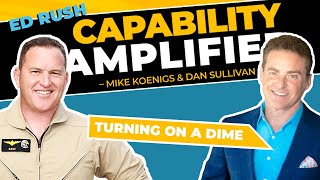
Ed Rush, a former F18 pilot and entrepreneur, uses a real engine-failure incident to explain staying calm under pressure. He pivoted his live-events business to virtual during COVID, ran 90 days of daily livestreams, and doubled post-event sales with hybrid formats. He shares how to get on radio and TV.
Chapters
Hey, this is Mike Koenigs, and welcome to another episode of Capability Amplifier. I want to start this out and imagine yourself a thousand miles away from land, piloting or flying an F18 fighter jet. You might not be a pilot, but as an entrepreneur, you're dealing with lots and lots of variables all the time. So your engine is failing. There's only one engine inside that. What are you going to do? We are talking in this episode about agility, about being able to turn on a dime, being able to change what you're doing, what your focus is in order to survive. And that's the kind of climate that we are all operating in right now as business leaders and business owners. My special guest in this episode is a very, very good friend who I've worked with for 10 years. His name is Ed Rush, former F18 fighter pilot and entrepreneur, business coach and so much more brilliant guy. And we're going to be diving deep into all sorts of interesting stuff, including turning on a dime, doing regular content and shows, events, and how that whole climate has changed. And we're also going to talk a little bit about politics and getting attention in this crazy time. Not the kind of politics you're thinking about, but politics and media. So all that and more in this episode of Capability Amplifier.
Ed, how you doing, my friend?
Katie, it's good to be back in the studio. Dude, you, you just gave us about a 14 hour show we're going to do in the next 20 minutes, so I can't wait.
No, I know.
Talk about speed, man. This is. It is a Mach 1 show we're going to do.
True that, true that. Always, always, always. I'm excited. First of all, thanks for coming in in our crazy time. So let's begin. We got to fulfill on the big promise. Thousand miles away from land, you're flying a jet. Tell us the story and how's that relate to everything else we're talking about?
In my F18, I'm flying with five other F18s. We're behind a tanker, an Air Force tanker. We're going from Hickam Air Force Base, which is on Hawaii, all the way to Guam, which is about 2, 500 miles away. Essentially the distance of the width of the United States of America. About halfway between both of those places. I hear a sound. Sounds in the F18 typically are bad things. The sound went like this, do, do, do, do. That means I have a problem. And then I saw a light. The light was on my cockpit display and it said L E N G pr which stood for left Engine, oil pressure. I had an issue. So I immediately did the first thing I had to do, which is to pull my engine back. And I looked, of course, at my engine everywhere else.
So there are actually two engines in this. All right, that was my message.
Yeah, there's going to be one here in just a second. So you were right. You were right. There's going to be one. And what was happening, I didn't know it at the time, but what was happening was my left engine was literally in the process of eating itself. It was, it was tearing itself apart. Something had come down it and it was beginning to fall apart. And the oil pressure spiking is the beginning of the indication. Now, unless I did exactly what I needed to do in that moment, what would happen after that is the engine would eat itself, the airplane would catch on fire, it would soon explode. Hopefully before the explosion, I would eject, I would land in water. That was about a two day flight for anyone to come and pick me up. And it's one of the most shark infested waters in the world. So there's, there's nothing good about this scenario. So I immediately pulled my engine back, actually put my engine completely off, did the emergency procedure, and then realized I'm now a test pilot. The cockpit Planner in the F18. If you look and try to find how much gas you need to go to go on one engine, it stops at 200 miles. I'm a thousand miles away from Hawaii and a thousand miles away from Wake island, where I was going to go. It stops at 200 miles because the test pilots thought, who in their right mind would fly more than 200 miles with a single engine? I mean, there's a major issue. You, you land at the closest airport if you have a single engine in an F18. And here I am a thousand miles from either, either place. Well, here's what you do in this situation. The first thing you do is you take a big deep breath. Because pilots over the years have made their biggest mistakes by reacting too fast. You take a big deep breath. The second thing you do in the cockpit, believe it or not, is you smile. When you smile, you tell yourself everything's gonna be okay. And the third thing you do is the next most logical thing to get yourself to the destination. And for the next two hours, you suck the seat up into your butt. No. So for the next two hours, literally all I did was breath, breathe, smile, and make the next most logical step to get to the destination. Breathe and smile. And I got some more gas and I flew a little lower and I flew a little longer. And I flew a long time until I got to an airfield at Wake island where I was talking to the control tower at 25 miles. I was talking to the control tower at 20 miles. At 15 miles, I asked for clearance to land. I said, wake island, this is a Bearcat 3. One looking for clearance of land. And they said nothing. At 12 miles, I asked for clearance of land. They said nothing. At eight miles, they asked for clearance of land. They said nothing. Seven miles, five miles, three miles. Now, just so you know, it is completely illegal to land an airplane unless the control tower tells you you are cleared to land. You could lose your wings and you could never fly again. If you land an airplane without clearance to land. Two miles, asked for clearance to land nothing. One mile, asked for clearance to land nothing. And you know what I did, Mike? At zero miles, I landed the airplane. You know why? Because I had no other choice. And it was interesting. At 15 miles, making it the worst day ever, right? The entire entirety of Wake island had a power failure. It was like they knew I was coming. You know, here comes this guy with this problem, and I landed. The control tower guy drove out in a truck and said, thank God you landed. We still won't have power for the next two hours. Now, my point there is sometimes life just deals you a problem after a problem after a problem, and the tendency is to just throw your hands up and you want to quit. But if you simply breathe, smile, and take the next most logical step to get you to the destination, you can get there. And we live in a world. I mean, we're in the middle of 2020, for crying out loud. We're in the most volatile and versatile business year in the history of business years. You know what now's a great time to do? Breathe, smile, take the next most logical step to get you to the destination. Because there's going to be some major winners that come out of this year.
Yep, no doubt. I. I've been saying this for a while, which is my prediction is some of the first trillionaires are going to be created in this insane time right now, and it's going to be half faster than you imagine. Everything is going to be on sale as at the time of recording, let's say either right before, right after the election. And the greatest opportunities, the greatest wealth transfer, certainly the greatest shift in power. And I'm not saying good, bad, right or wrong. These are just. Is right.
Yeah, it's good or bad based on what you make of it. And the amazing thing, Mike, right now, so for the last 10 years, we have been communicating to a world that is essentially fallen asleep. We've got two parties that have droned people into submission. People have been watching things that are essentially bored them to death. And all of a sudden, In March of 2020, the world woke up. And I'll tell you, man, I sold more. I've sold more products and training and coaching and events in the last two months than I have in the last two years combined. And it's because people are finally like they've broken out of their stupor. Because when times are certain, when times are certain, people get complacent. And when times are uncertain, people invest in speed. And this is where we're at right now. So if you're a business owner, smile, because the opportunities presented to you when you can adjust quickly, are incredible.
Right on. I couldn't agree more. And, you know, I've said this for a little while. The whole pandemic has been great for my business because people need change, they need fast action, they need results, and they need to reinvent. As I say, the world has been about digitizing, virtualizing, dematerializing. But let's frame this up a little bit, because some of what we're going to talk about today are really an entrepreneur's commitment to agility, speed, and change. And I think that story illustrates it. Also, there's a few things that you've been doing that I want to get into and ask about. One of them is the fact that you started doing daily shows on YouTube, Facebook, Periscope, et cetera, broadcasting. You did 90 days straight, and then now you're doing two days per week. So I'm going to just talk a little bit about what you've learned through that process, what's worked, what hasn't worked. Also, you, like, I'll just say, like, strategic coach. A lot of people in the business world had a commitment to. A lot of your business revolved around live events. Suddenly, no live events, you've walked away. You had to pivot really, really quickly and virtualize. But also, you did do some level of physical events. Let's talk a bit about that. And then one of the things that I want to talk to you about today is you have started one of your dreams, and one of your visions has been to run for president of the United States. And you started radio and tv. Yeah, exactly.
Right.
So people always go, why do you want to run for president? I go, because I want to win. So, yeah, Run and win. Good. But back.
Yeah, yeah. So without. Let's just dive right in because these are all interesting. And let's begin with the daily shows. So just to frame this up, you call it ed talks. You broadcast every day at 10am why don't you talk a little bit about what your goals, your outcomes were and what your biggest learnings are. And I have a couple sub questions to ask. But just curious, was it good for business? Was it worth doing? And what would you do differently?
Yeah. So I mean, to put it into context, roughly 80% of my revenue historically has come in from, from live events. That's the sales from the tickets to live events. But more it's from what occurs at the event. Product sales, coaching, sales. People end up more engaged. That's where most of my revenue has come from. So in March of 2020, I am on stage, I'm actually at. A mutual friend of our, Bill Glaser was having an event in Dallas and I'm on stage teaching when the world is shutting down. I mean, when I got on the airplane, the airport was full and when I came back, the airport was empty. That was, it was literally when the States were all of a sudden shutting everything down. And I'm thinking to myself, so first of all, I have an event coming up at this stage in a month that I've got over a hundred people that are already registered for over $70,000 worth of money already in my bank account that I was looking at potentially refunding. And I'm looking into the future. And I'm like, this is not good, man, for a person who does live events and who generates most of his, most of his revenue from that space. And frankly, that's my environment. Anyway, I love being on stage. I love teaching and training and seeing the change in people's lives and engaging with an audience. That's my zone. And I'm like, I'm not gonna be able to do this. I thought for two months. I mean, it was way longer than that, by the way. And I thought then this, this whole world is about to change. Okay, so go back to the beginning. You're faced with an extreme environment. A lot of business owners in this moment curl up into a ball and wonder why, why is it so hard? And I'll just tell you, you're allowed to do that for about 30 minutes. I have a friend of mine named Joe Madden who used to be the manager of the Cubs, took him to the World Series and won. Now he's with the Angels and he's he has a rule with his players. And the rule goes like this. You can win hard for 30 minutes, and then you. Or you could lose hard for 30 minutes. In other words, you have 30 minutes to be happy with what just happened, or you have 30 minutes to be upset with what happened. And after that, it's time to get ready for the next game. And so I'm on the airplane flying back, and I'm thinking, it's. I can be upset about this. And I was. And I'm not happy with the government. I'm not happy with our leadership. I'd committed to not taking any money, any stimulus money from the government. That's not the way that I roll. And I'm like, we gotta make some changes to this. And as I'm doing on the airplane back, I realized the model has to completely change. The belief I had, Mike, was that the live event environment was my environment, and that was how I was going to generate revenue. The truth is, business is nothing more than solving problems. The media is agnostic to that. Whether you write, whether you're on video, whether you like to do it on social media or not, the place doesn't matter as much as the results that you can get in someone's life. And so what I did was I committed to doing 90 straight days of live streaming, one hour, one single hour a day of live streaming. I also committed to taking that content and distributing it in shorter form across Facebook, Instagram, Twitter, and LinkedIn. And I also committed to fulfilling with what I. What I told my people that I would do with my live event, actually turn that event into a complete digital event. And instead of having a refund, all those people that signed up, I got another 70 people. I ended up doing the digital event, like, for 170 people instead of 100 people. So I was like 70% growth simply by transitioning it into an environment, frankly, that I wasn't at the time, perfectly comfortable with, but I am now. So that's kind of the big picture of what happened in those first few months. But the lesson going back to it again, lose for 30 minutes, man, be frustrated about the world that's happening, and then quickly adjust. Dan Kennedy, who we both have known for years, said something, and it was in my head when I was on that airplane. He said, you choose what side of the cash register you stand on. I thought, man, this is the time to do that as a business owner, entrepreneur. Right now, it's your. Your chance to find the side of the cash register. The thing that Dan Kenney didn't say is the cash register is always moving. And so you always have to continue to adjust your space because the cash register is moving.
Right on, right on. So I'm just. From a purely.
Logistical perspective, you're, you're not a super technical guy, but you've adopted, you've been using technology and I know one of the tools you use for broadcasting. We just did a broadcast right before we did this. We use a system called Streamyard that allows you to broadcast to YouTube and Facebook and all that other kind of stuff. When you did your live event and you did both performing and you also broadcast live online and did interactivity, just from a logistics perspective, how did you handle that and how do you keep people engaged on the floor also online? Because a live performance and an online performance are different.
Absolutely. Yeah, it's completely different. So if you're in front of an audience, they're looking at you, laughing, engaging. If you're in front of Zoom, you don't know if they're watching something on some video over on Facebook or if they're actually engaging with you. So, so there's two components to that. You and I have done a lot of live streaming together. You know as well as I do that when you're with a virtual crowd, you need to have their eyes and their ears and their hands all working in unison on, on your platform, right? So you get people engaged in chat. You want them to be reacting to you while you're teaching to them virtually. Whereas in a live environment, you can take all that for granted because they're already looking at you. You can tell that. All right, so, so what I did, this was. So you gotta love asking your customers questions, right? So, so I've got all these people registered for this event. This is an in depth training. I'm teaching people how to essentially share their message, get paid to share, share their message. So, so I have all these people registered for the event. I thought, you know what, let's just find out if they would prefer to do a live event or if they would prefer to do a virtual event. This is April, right? So this is about a month after the lockdown started. So I sent a survey out to say, hey, what would you rather do? Live event, virtual event, how would you like to do it? What are you concerned about? I started asking typical survey questions, Mike. Half, half of the audience said, look, Ed, if you did a live event right now, I would come. I don't believe in any of this stuff. I think it's a bunch of Baloney. That's half. Okay. The other half. I will not come to a live event until there is a vaccine. I mean, you could not have split it. It was like a perfect representation of the country right now, right? Yep. So. So half of the people were convinced that we should do a live event. Half of the people were convinced that there's no way we should do a live event. And now I'm faced. I thought I would get an answer right, and now I'm faced with, like, oh, my. Like, either decision. Either decision. I'm going to have people that are unhappy. So what I created was what I consider the first hybrid event of 2020. It was a live event in a live event venue. By the way, we separated the tables by six feet. We had Clean the room every hour, you know, like, full protocols, all the stuff that you. Nobody wore masks. But we did everything the way that we were supposed to, including that. By the way, there was no rule for that at the time. And at the same time, we did a full virtual event on Zoom. I'm telling you, in the back of this incredible studio, in the back was a screen that was the size of the entire back wall. That was the entire Zoom gallery. You could see everybody on Zoom. And I told my speakers, and I did the same thing, too. I said, the Zoom people are as important as the live people. So every time you talk to a live event person, you look at the Zoom people. We had a special camera that we would look at. I would only focus on the Zoom people. Every time we talked to someone, someone gave feedback in the live event, someone gave feedback in the Zoom event. We had the Zoom people reacting. If they. If it was a good point, I usually have my audience go, does that make sense? If it does, say Hoorah, which is a Marine Corps thing. My audience says Hoorah. The Zoom people would raise one hand or two based on how much they were engaged in the point. And so literally, you would see 70 people on Zoom with their hands up in the air every 15 seconds. Mike. It was like they were. They were responding back.
So you were doing a.
You had a single camera that was plugged into Zoom. It wasn't a crazy, complicated production.
It was. It was. It was three cameras.
Oh, you did? Okay.
We had one main camera. We had an audience camera, and then we had one dedicated directly. Directly to us when we were talking to Zoom. So we actually had a production person specifically on the Zoom side. But then, like I said, we were fully including all the people in Zoom. Now, this was. This was more complicated than I would recommend. But. But the point is, I would never, I would never, up until this point, I would never have done a stream of a live event. I mean, you and I tried that before with very, very little success. I mean, it fundamentally didn't ever work well, but when forced into that environment, you're forced to adjust. And it was crazy. I had twice, two times, two times the sales at my event, the post event sales. Twice as many came from the Zoom people. And there were about even number of people in both of those places. Crazy. And that was because they fully felt engaged into that event. And it was created out of a simple question. What do you want to do? Live event or virtual event? When it was 5050, I realized we had to create something completely new. And my point is, a year ago, if one of my clients came to me and said, should I do an event where I stream it live and do it? No, make do the live event. Forget this other thing. But, but we were forced into a place where we had to create something new. And the something new was so much better than either a live event or a virtual event could have been on its own. It was so much better that we actually created something amazing simply because of the pressure of the marketplace that had been put on us. It was awesome.
That's great. You know, and one thing that has happened, so there's a lot of people have been doing the. Some variation of hybrid. Even Tony Robbins recently did upw, which he had said for years and years and years, I always said, hey, how to try doing live events? He's like, there's no way. This is. It has to be live, physical. It has to be. And so when forced to. And I, I know all the numbers. I can't say because I don't think I have permission, but let's just say their sales were way, way, way, way, way down for the year. And what they managed to do is they did something called a challenge. They had 300,000 people attend that. And that was purely a Facebook thing. And I can't remember a small buck, but got people involved. And from there sold UPW, which the average ticket sale is 600 bucks. Okay, pretty good, 22, 500 people. And they did a hybridized Zoom thing where everyone got to be on there. And Tony had walls, 16 foot walls on his front, in front of him and behind him. And he could see all the top 3,000 people. So depending on what tier you bought, you either had inner circle. There were 300, 3000 who he could see and you could see him and then everyone else was invisible to him but you could see him. Right.
So basically if you paid more you could be on a wall, digital wall closer to Tony.
That's right, that's right. They created a simulated experience. Now I love it, man. Again, I can't say I know the numbers but they sold their primary upsell from there is Business Mastery which is a $10,000 sale. And I will tell you the numbers were quite impressive and they learned a lot from it. But it just goes to show that to the best of my knowledge, that's been the largest event I'm aware of that was. It was four days a multi day experience and multi speaker the whole ball wax with and they figured out a lot of engagement along the way. So my, my friends Blue Mel Neck and Barry Baumgartner here, I think you've met them before, they helped produce this along with a couple other production companies. But I mean massive event, they have like emojis on sticks. So that's how they did reaction responses, dancing and feedback and all. You know, it's like typical Tony thing, the usual jumping up and down. You just couldn't massage each other. Anyway, it's great to hear that. And so if there was any other big takeaways, like what do you feel made, contributed to the moment of a transaction and why you had double the sales online versus half in person, what made that difference and what was a trigger experience or event.
Yeah, I mean the first thing is if it stinks for you, there's a huge opportunity there because it stinks for everyone. And so you go back to my event or Tony's event. The reason why people's response was so good is because right now more than any time, people want to answer, want to find an answer to their question why? That's number one. The second thing, this is really important. People want something positive in their life. You cannot have a conversation, you can't watch the news, you can't engage in a national discussion right now without piles and piles of negative turds being dropped on you every moment in your life. I mean everywhere you turn it's awful. I mean you can't, you can't feel good about yourself or the country or the world by looking at anything online right now. And if you provide something that's got a optimistic, positive outlook, which by the way, I'm very optimistic and positive, positive about the world in its future and our country, by the way, if you can provide that for someone, not only will they love you, but they will stay and engage with you every single day. I have a group of people who have watched. I've done 76 episodes now you and I just did episode 76. I have a group of people that have watched every single minute of every. I wouldn't do that. I wouldn't watch 76 hour long every single minute. And it's because of the optimism and it's because of the fact that they can't get that anywhere else. So that's the first one. The second one is what I said. Take an opportunity from your own discouragement. So if you're sitting there right now frustrated about the world, well, there's an opportunity there for you as well. And the third one is the one I said which is, which is you engaging people online like you would engage them live. I'm talking like you're doing a. If you're doing a stream or a zoom or a live event that you're going to hybrid event. You got the people someone sitting at home needs to be communicated to end treated as though they were sitting right next to you in your office. And people know that, man. They know that. And I'll tell you, you have. I could see people sitting there for full three days looking right into the camera of their, of their, of their screen is amazing.
Yeah, no, it's great. Now, one thing that I'm going to add and I'm going to give it to our folks back home right now. One thing that we've just started doing on the show is if you'd like a transcript of this show and the previous episodes as well, I'm going to put this up on screen right now and.
You can text it. So pull out your phone and text the word CA to 858-43-45316. Now that's a system that I've been using that allows us to do two way interactive mobile text. I will actually receive that in real time. But it's a way for you to get the transcript, you get the links and show notes from this episode and previous episodes as well. That's something Dan and I decided to do. So one more time, that's 858-43-45316. At least try it out and just text the two letters CA and you'll see this. Okay, so back to you, Bob.
When you respond in the next 30 minutes, you actually get two transcripts from the show. Right? Two for the price of one.
They're free. Yep. So let's talk a little bit more about show business. Okay. Which is presidency Running for that. But, but here's the reason I'm asking this. You and I haven't talked about this yet. We're going to talk about it during lunch and an opportunity thrown my way from Joe Polish. And I'm going to be advertised on radio to 10 to 12,000 radio stations over a period of about three to four weeks. Huge campaign that drives people to a live event and then from there we do an upsell. So it's basically helping business owners through this process, coaching them, advising them and giving them solutions to grow their businesses, even in crazy times. And I'll end up having you as one of the stars on that.
I accept.
Yeah. Thanks.
You're welcome.
And. And I don't know what it's going to do other than they've been doing similar things to this. So the background and the business was this company had been doing this for stop smoking, smoking cessation as well as weight loss. And they were doing live events all over the country and they'd sell like a $400 experience. This one's going to be a thousand dollar offer, but it drives people from the ad to a page. Costs 50 bucks to attend this webinar, which is going to just be a couple hours of really high value content and then the offer. And they've obviously virtualized it immediately. But I haven't done radio in a long time. Haven't done TV in a long time. And on one hand, at least for a lot of people, it's dead. You know, so many people are cord cutting. However, the 55 and older are still rabid television and radio listeners.
Yes.
And you've done a considerable amount of radio. So back when you made your political goals, you went out. So why don't you talk a little bit about getting on radio, getting on tv because you did Fox, you did a lot of local, you did some national stuff. But talk a little bit about what that experience is because I really want the reason I'm asking this, it's about messaging, getting the general populace interested in. And then, you know, I just want to learn a little bit more about that. So why don't you talk about what your experience was.
I'll go a couple places. First of all, as you're listening to this, I will tell you that even if there's no one listening on the radio, which I've done some shows, like I did one called Voices of Montana and I think it was just me and the Voice of Montana, you know, but even if you, even if it's just a couple the benefit to radio, to your brand and TV for that matter. Being on tv, your overall brand is actually pretty helpful. So I'll go into some why. But I will tell you, if you're thinking, gosh, I don't even know what I would say. Don't worry about that. You can say whatever you want. No one cares. The second thing is, if you get nervous, don't worry about that. You shouldn't be. And the third thing is getting on radio, TV or media is so easy right now. There are so many shows and there's so many producers that have no place to go. They're going back to old guests all the time, somebody new, no matter your background, no matter your experience, they're very interested in. So I've got plenty of resources when it comes to that. But I can tell you I'm going to go back to the why. So I started, Mike, it was about six years ago. You and I were actually working together at the time. And I go back to this idea of when you're faced with difficult circumstances, there's two ways you can go. You can turn it to frustration, discouragement, worry, doubt, fear, or you can turn it to optimism and a choice to try to make things better. And it was probably about six years ago that I was looking at our country, maybe it was eight years ago, and I was just very discouraged at what I saw. Our national conversation, and we're here in the United States, by the way, if you're listening overseas. But our national conversation is based in fear. It generates anger, and it's. It's the lowest form of dialogue you can have. And just so you know, I'm not a Republican, I'm not a Democrat. I'm. I'm not even centrist. I'm an entrepreneur. I'm. I'm a person who thinks that the solutions can be created entrepreneurially to our problem. And so I'm looking at our national dialogue, and I'm like, you know what? This is going to go to a dangerous place. And I said that six years ago. When you have, like, for example, Mike, if you have two, if you have a kid that shows up who's 6 years old and he's playing with your kids, if that kid screams at your kids all the time, you can know for sure that his parents scream all the time. Like you, you can see it in the, in the children. So what we're seeing in our country in terms of the violence is a natural result of our leaders acting the way they do. The children are only acting like the parents, okay. And so, and literally we have emotional children on the streets of our, of our country right now trying to figure out how to enact what their, what their leaders, what their parents have been doing. I saw this coming six to eight years ago and I, and I realized we need to have a solution to this. But the solution can't be one of the two parties, because if it is, that's only going to contribute to the national.
Extreme discouragement that's happening. And so it was at the time I decided, I'm going to start a third party movement. I'm going to raise up over 400 leaders across the country. These are not partisan people. These are good people, people of character that care about the country. Not perfect, not people without a mistake or two in their past, but people who truly care. And my goal was really simple. If you talk to a politician, their four priorities are, number one, what will get the money. Number two, what will get them elected. Number three, we'll get their friends money. Number four, what will get their friends elected. That's their priority. And they say it openly now. And my goal was to, to, to recruit people whose priorities were what's moral, right and good, and what's best, Number two, what's best for my country, number three, what's best for my state or my region, and number four, what's best for the world. And by the way, that's not in order. Those are all together in the highest priority. In other words, you can have all four of those together. Uh, and when I started to do that is when I started to go on radio. And I did it. I, I did. Actually, when I first did radio, I started doing it because I just wanted to learn. I wanted to be able to practice getting asked questions that I didn't know the answer to and see how that worked. And I really like the part where they would have people call in, because you would get people from all walks of life, you would get people who would call you an idiot, literally right on the radio, which I think is so much, so much fun. And then you would get people who would agree with you, but then engage with you on your ideas. And I really like the idea to just kind of go with the flow and try to see what people are asking and try to answer people's questions. And so I started to do that. I did it just to learn, but then I eventually did it because I thought, man, this is such a great way to communicate. And I've done everything from like shock jock morning radio to like drive time On Sirius xm. Some of my, some of my best stuff, by the way, is on Sirius. The last show that I did on Sirius, I looked at my Twitter and I'd been followed by a US Senator like within seconds of me being on the show. It was really cool. Anyway, getting on radio is not hard. So the first thing you should know is there's probably a hundred radio networks in the, in the 20 mile square radio shows, 20 miles square where you are, including local TV. Okay, let me take it to the local TV producer. CBS, ABC, NBC, Fox. These are people. Last time I was down at my ABC affiliate, I asked the morning producer, I said, how many shows do you typically do a day? She said that, she said six. This is six mike before two in the afternoon. This isn't even the night shows. Six shows that she has to find something interesting for. Are you kidding me? Six shows every single day. I mean, like I couldn't believe. And she was so thrilled that I would take the time to drive down and simply talk to their viewers a little bit. It was, it was when we had that issue with Iran back in January, back when we thought that was like the biggest issue we were going to face this year, you know, and anyway, my point is they need you, right? So the way that I started this is I just started connecting with the local people on LinkedIn. Find your local TV networks, find the producers. There's usually two or three of them. Connect with them on LinkedIn, tell them, here's my expertise. If you ever need need me, here's my number. I will tell you, within a week you'll be texting that person and you can get on their show. Now, are you going to get a million subscribers from your local ABC affiliate? No. But what you are going to get is a video that you can put on your website and you will. I tell you, every single time I go on local tv, I always get text messages and Facebook hits from friends of mine who saw it. I don't know what they were doing watching the TV six o' clock at night, but they saw it. So that's, that's tv. Radio is even easier. Radio requires you to have a phone and for you to be able to answer a couple questions. And I always tell people, don't worry about the questions. People always get nervous, like what if they ask me a question I don't want to answer? This isn't the Kavanaugh trial, okay? They did no research on you. They simply want interesting content. So if they ask you a question that you don't want to answer. You just say something like this. Well, actually, the real question is. And then you say the question you want to answer and you. They don't care and you don't care. What they want is something interesting. And so that's what I started doing, TV and radio and it's been a blast. It's been crazy. Talking to truckers in Montana and, you know, people who hate Trump or people who love Trump from Alabama, you know, it's like, it's been awesome. And it's so interesting just to engage with America. And I've gotten leads from it. I got leads, I got. People bought my, my books and came to my courses and stuff. So it's been fun, right?
No, and I think that's the, the big takeaway. You know, both of us are in the business of amplifying messages and getting people packaged and positioned to have better conversations. And the secret to all this is, first of all, finding a way to make what you do interesting to the outside world and interesting to a broadcaster. And what they need are interesting guests who have interesting stories to share. And one of the other things that I will add, because I know for you getting on a bunch of these shows, you started working with a pay to play broker.
Yeah.
As well. And why don't you just explain what that is for people who are like, oh, yeah, I'd love to do a little bit of TV or radio. Other than I think the LinkedIn strategy that you mentioned is a duh obvious one. Same thing when you want to get published. Just go on any website and find a writer and connect with them on Twitter, Facebook or LinkedIn, send them a message and say, I've got an idea for an article that I think your readers are going to like and give them like three headlines. So just talk a little bit about how you craft a quick headline and get someone's attention. So they say, yes, first of all.
I mean what you just said about the writers. So in today's day and age, most of the writers for even things like New York Times are required to spend about five articles out a day. A day. That's the kind of content that they're required to produce. It's. And it's all based on clickbait. The media world is completely different than it was even 30 years ago. The bottom line is they need you. They badly need you. So as content experts, as thought leaders, as people who have courses or products or trainings or a message to share, we feel like we're interrupting someone's day. If we send them a message and go, hey, you want me on my own? You're making their day. They badly need you. And your willingness to reach out. They're usually thrilled by that. So, like I said, LinkedIn's a really great, great place to start or read someone's article, tell them you've been reading their column, say you've got some ideas on this. I'd be happy to contribute if you want to. You'd be amazed at how many people would take you up on that. The second one is I have a. I have a guy that I've. I've worked with for years and years who essentially I pay him per media. So if he gets me on the radio, I pay him a little, not much actually, to get on radio or TV or podcasts. And I just tell them the range of shows that I'm looking to be on. I tell him, look, I don't want to be on all, like, the conservative shows, put me on everything. I want to talk to everybody. And he does that. By the way, you're welcome to reach out to me. I'm happy to make an introduction as you're listening to the show. If you want to get some more media, just. Just email or hit me up on LinkedIn and I'd be happy to make that, that connection for you. But those are just a couple of ways to get on media. My point is it's not hard. You just have to have the willingness to just reach out and just be able to share your content. Now, remember, that person's not interested in a jv. They're not interested in promoting your products. They don't. They're not interested in your landing page. What they're interested in is you sharing your expertise. And the reward you get for that is they're going to ask you about your landing page so you can tell people to go to where you want them to go so that they can get some free information from you and eventually be on your list. Right?
And I think that's something that.
I look at is I recently.
Interviewed an actress on the Big Leap. Her name's Milana vayntraub, and she's an actress. She's. She was in the Ghostbusters movie. She was the at&t girl on a bunch of commercials. She's a very funny comedian. And when I asked her about what her Upper Limits challenge was, she says, it's getting permission from Hollywood to get on a channel somewhere. That's really what it's all about. So I think the, the thought process you have to get into isn't. It's. It's two. First of all, what will be interesting to the audience that that channel focuses on, that means you have to do your research. The second thing is what will make the gatekeeper look good and sound good and take away any work they have. And I think that's the capability. This show, after all, is capability amplifier. The capability that this forces you to learn is how to think through those two lenses, which is, number one, the audience crafting a message that's going to be interesting to them. Number two.
Getting past the gatekeeper. In this case, they have their reputation on the line, so you can't make them look like a jackass. And a lot of the people that I work with these days are in the financial services business. And as I like to say to everyone in the financial services, first of all, you're selling moldy white toast. It's about as boring as boring can get. And how are you gonna make that interesting? And compliance forces you to be even.
Moldier and more boring. You know, it's like, ugh, who wants that? It's like you can't have a direct conversation with anyone because you can't tell a transformational story. You can't rely on testimonials. You've got to find another way and become interesting. And that is a great exercise. With the instance of Charlie Epstein, for example, this guy I worked with, we crafted a one man show for him.
Yeah, that was cool.
And that's an interesting new way of thinking about overcoming the challenge. So that would be.
His one man show is called Epstein did not kill himself.
That's true.
That I won't even go down that path. So I have a friend, his last.
Name, he may be alive by the time this show airs. He may come back.
You never know his last name. His name's Jeffrey.
It's Madoff, not Madoff. Okay. And that's something he has to write. It's like no relation. We say it differently.
I remember when I was in flight school when the Oklahoma City bombing went down, and I remember thinking, damn, I feel bad for the Timothy McVeighs around the world that are like, oh, my name. All of a sudden, now it's Tim. So good.
Yeah, there you go. Well, anyway, so the point is.
Everything right now more than ever before is about crafting great stories and.
Deciding. And this is really. It is a binary decision. Are you going to succumb to the world of clickbait and outrage or are you going to keep things on the up and up and play the long game. And the long game now is that of gaining permission to the channel, the audience you want to get to. And you have to realize that first and foremost, you are in the attention getting business. It's part of the reason, I think if there was a theme that we had here is we did this in reverse order. But it's your commitment to doing daily shows, for example, that was one of them. Getting on and broadcasting every day using easy technology and having something to talk about. Number two, it's being able to go outside your comfort zone and learn a new capability, which even though it'd be like TV and radio, it's like, yes, practice, practice, practice. You gotta hone your conversation and you just gotta go out there and be a jackass in front of an audience potentially, and fall on your face a few times, be okay with that. Yep. And then the third one was, when it comes to monetization, what you did with pivoting, literally, and I remember when Covid was just starting and you were doing this event, and I'm like, ugh, what a rotten business to be in. I remember telling you that. It's like, oh, yuck.
Well, it was, it's a huge. It was a huge liability. But interestingly, the liability forced me into action, which is what I appreciate. You know, it's interesting what you were just saying. When I say radio and tv, people get excited. But when I saw Joe Rogan sell his podcast to Spotify for a hundred million dollars, bam. I realized if you want a show, you could have a show just like we're having right now. This is. This is radio. You know, a show on YouTube where you're streaming every day is TV. In the eyes of a consumer, that's TV. Okay, so as you're thinking about this, just remember you are your own media company nowadays and, and you can do anything you want as long as you do the opposite of the moldy toast analogy. As long as you're interesting, as long as you have a take on your topic that enlightens people, maybe gives them something a little bit positive. I mean, I call my show the most positive place on the planet for insanely implementable ideas. And I literally have people who go on vacation for a week and come back and email me and say, I've so badly missed the most positive place on the planet for insanely people. People engage with stuff like that. As long as you can be interesting and positive, you can change the world.
Right? I couldn't agree more. So, well, let's Wrap this baby up. And first of all, for people who want to learn more about Ed Rush and join you, follow you. Obviously they can head on over to edrush.com but yeah, anything else that you want to add?
Easiest website in the world to remember. Ed rush.com it's not Timothy mcveigh.com or Jeffrey Epstein. Because very simple. It's edrush.com so when you go there, there's a little box where you put your email in and you get my weekly, what I call my weekly flight brief. This is a single email I send out every week that's got some very powerful stuff in it and you'll love it. And so go do that the other place. I'll send you if you want to check out what I, what I've written recently, it's edrushbook.com that, by the way, when you get there, you'll see my number one bestselling book called 21 Day Miracle. This was at one point Amazon's number one business book. I literally have the screenshot of me above Tim Ferriss and Seth Godin. That was awesome.
Boing.
It was the number 22 book overall, that particular window in Amazon. I was right behind Hillary Clinton's what Happened Book of that screenshot too, which is pretty cool. But it's, it's a, it's been by far my most popular book across the world. And you'll love it. It's fast and it's fun and it will make you laugh. And I'd love to just engage with you there. Plus, I have a free bit of training for you as well. So it's either Ed Rush, which is the easiest website to remember, or edrushbook.com, which is the second easiest website to remember. Hit either of those and make sure you hit me up on the socials and say hello.
Boom. All right, and next up, this is for you at home. Remember, if you'd like a transcript of this with all the links, all the information in it, you can just text CA to 8, 5316 and also, as usual, if you've enjoyed this, please think of one or two people that you can share your link. You can do that right from within your podcast app and also like and comment this podcast. Dan and I enjoy all the feedback that we get. And you can also always head over to capabilityamplifier.com and there you can leave an audio message for Dan or I, or you can again do it through that text message when you text CA to 85843. All those text messages actually go directly to me and I'll engage with you as well. So any ideas, suggestions, recommendations you have for this podcast, we always, always, always love them. Let me know what you thought about Ed today and check him out as well. So that's it. This is Capability Amplifier. Dan Sullivan and I really, really appreciate the time you spend with us and every episode. And of course, it's been an absolute blast with you, Mr. Ed Rush.
So it's good to be here.
Let's wave to everyone at home. If you're watching the video on YouTube and this is the show. Thanks for watching.
Bye.
More from Mike


The 3x3 Framework That Changes How Entrepreneurs Think | Mike Koenigs & Dan Sullivan








Why Your Business Gets Harder As It Grows | Michael Walsh on the Hidden Danger Zones of Scale
