AI Personal Growth: How AI Rewrites Your Future Self
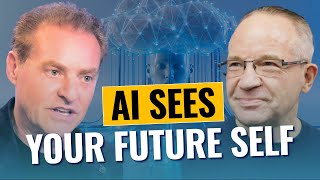
This YouTube episode ("AI Personal Growth: How AI Rewrites Your Future Self", Apr 14, 2025) is a conversation between Mike Koenigs and Dan Sullivan about using contemporary AI tools as active team members and capability amplifiers. Mike demos practical tools (OpenAI Operator, a ChatGPT "ChatGPT01Pro" deep-research mode, InVideo synthetic-video tool, and Perplexity) to automate research, synthesize creative assets, and produce personalized stories; Dan situates these tools philosophically—arguing human consciousness and future-self formation remain primary—and highlights AI as a mirror that helps people discover and will their best future self. The episode emphasizes practical productivity gains (faster research, content drafts, campaign creation), therapeutic/self-discovery uses (story-based identity work, “future self” amplification), and concerns about energy/cost and limits of predictability.
Questions this video answers
April 14, 2025
Operator
ChatGPT01Pro (with a "Deep Research" button)
"One in five teenagers are suffering from mental health issues and depression."
Chapters
I found that as I've increased my capabilities, I haven't let AI make me less busy. I've just become more effective. I can do a lot more things that used to stop me or cause procrastination. What I'm finding is my ability to ask better questions and get more help. It's been probably a couple weeks that OpenAI came up with something called Operator. The big promise is it's like a little robot that you can give an instruction and you can make these things do a lot of things. I gave it an instruction. I said go on Amazon and capture all of Dan Sullivan's books and the descriptions of the books and the top 10 most positive reviews and put them in a Google document. What I love to say is now when I come to my creative team, I've already fleshed out my ideas enough that they can polish them and make them real the final way. And teams love it. When you come prepared, you know, and you think about the power of the impact filter or the fast filter, you demand and require it of everyone. It's reinforce to think about the impact.
Welcome to another episode of Capability Amplifier. I'm Mike Koenigs. I'm here with my good friend co host Dan Sullivan from Strategic Coach, my greatest mentor in chief. And today we are doing an episode called AI is your new team member and it's using AI tools to 10x your product. I'm going to show Dan some of my favorite tools. But this episode takes a strange twist because we ended up realizing that this is also your future self amplifier. And Dan, why don't you talk about what you got out of this, what you observed and saw as we went through this process together.
You know, I've been now that we've done this podcast and I've said that probably the biggest difference that I am, you know, in the world of coaching entrepreneurs is that I insist on them going back and finding out what's good about their past and continually reutilizing past experiences, past lessons. And I say, you know, the more you can transform your past and could gain value from your past, the more you know about your future. But you just showed me a project that you were doing which basically captures that with the help of the latest technology. And I think what you're creating here is an amazing breakthrough in the area of people becoming mentally healthy in a world where there's so much that can confuse them and undermine their sense of confidence. So that's what I think.
It's a profound shift. Something I completely didn't Expect. So dive in and let us know what you think about this episode and make sure you share it with anyone you know who wants to find a better version of their future self. So this is Capability Amplifier. I hope you enjoy watching it as much as we enjoyed making it for you. All right, Dan, this one's going to be a little bit of show and tell. We were talking about AI as your new team member for 2025 and it's how to use AI tool to 10x your productivity. And there's a couple mindsets here that we're borrowing from your arsenal, which the 10x multiplier mindset teams. And you're working on a great new book about teams and also vcr, which is vision capabilities and reach. So what I want to do is show two tools.
Say it again, shout out to Dean Jackson because, oh yeah, we got to.
Give Dean big, big kudos for that. Yes. And so I wanted to show you two tools that were recently released that I think are not just profound in the sense that they're working and they're active and they're doing something now and I'm using them, but it shows the direction and speed by which AI is doing really, really useful stuff. And I'm thinking a lot better. So before I do the show and tell, do you have anything to add or any questions? And I'd really like you to outline from your point of view how you think about teams and what you want out of an AI team member.
Well, I think that humans are the great teamwork species, you know, so, you know, as I watch technology develop, I'm also watching, you know, how humans are finding new ways to collaborate. And there's a statement I would like to make because a lot of people draw the wrong lesson about the news every day about bad things happening. I said, you know, the thing that I find most remarkable about the world today is just the sheer amount of cooperation and collaboration that goes on, given that we're each individual human beings and we, you know, we're mainly self interested, have to be because we're the only, each of us is the only person that we actually have direct access to. And so my, my sense is that as the technology for collaboration and communication increases, I think that the.
Extraordinary intelligence of human beings about collaboration is going to develop in, in pace with the technology. You know, and what things I've noticed about when they do the comparison of technology and human intelligence, technological intelligence.
The dynamic part of it is always the technology that it's advancing and evolving. And they always treat human beings as though it's a static thing.
But it's actually the evolution of human intelligence that had created the technology.
Yes. You know, I spent a lot of time thinking about that lately, because I spend just as much time being afraid of AI and how fast it's moving as I am completely captivated with it. And I found that as I've increased my capabilities, I haven't let AI make me less busy. I've just become more effective. And I can do a lot more things that used to stop me or cause procrastination, and now procrastination doesn't get me any longer. What I'm finding is my ability to ask better questions and get more help.
So it's really my mindsets that stand in the way of being more effective.
The other thing I will observe, I mean, we knew each other at a certain time, but we've only really been fully engaged since we started our podcast. Podcast. And you joined Free Zone. So we had those two things. And I think you're a lot happier. Oh.
I think you're just a happier person.
Wow.
And that's because. What do you. What do you attribute it to? I'm. I'm.
I think your. Your intelligence is advancing as fast as the technology did.
Oh.
I think happiness is a function of having really, really good intelligence.
Yeah, I. I think. I think you're right. I'd never thought of that.
Like, contextual intelligence, huh? That you're understanding how things fit together.
Yes. I. I like. I really, really like learning new things and having new capabilities and being more useful. And if that equates into being happier.
I think that's. That's true. Well, that's good. That was super useful and insightful. So let me show you something really cool that excited me a lot. Let me frame it first.
As of right now, it's been probably a couple weeks that OpenAI came up with something called Operator and Operator. The big promise is. And it's easier to show it than talk about it. It's like a little robot that you can give an instruction and you can make these things do a lot of things. And they're still pretty dumb and not that great, but they're smart enough that they're pretty impressive. So I gave it an instruction. I said, go on Amazon and capture all of Dan Sullivan's books and the descriptions of the books and the top 10 most positive reviews and put them in a Google document. So what it did is it. It logged into Amazon and when it needed to wait and ask me to prove that I was a human. It let me take over for a moment and it, there's where it said it waited and, and it had encountered a captcha so I entered those and then it went out and it searched and it started finding and this thing's moving around and clicking and then it logged in to my Google account and, and it's going through each of the books copying, pasting, grabbing information, grabbing the descriptions and, and the, the, the top.
10.
Comments and if we go to the end here you can see and watch it actually run. So it's, it's basically built a virtual computer in a virtual AI. It's operating, it's looking at the screen, it understands commands, it's reading and doing what I instructed it to do. So and it's possible to create four windows at a time so four agents. And I've used this to log into websites and capture information and summarize it and you can give it very complex commands. So it's now at the point where operator also I'll open up a separate window here. Some of its built in agents that it has is you can say hey find four tickets, you can have it go on recipes, you can have it shop for you and do travel and delivery or go out and do news. But you can also have it do fairly complicated tasks and then you can schedule them to occur on a daily basis. So if you think about.
Depending on whether or not you like to do it or not.
You have a routine that you do every day on how you look at news and you search for things you're interested in. Now you could say hey, right before I get up I want you to do this and organize it and give me a Google Doc with the kinds of things that I like as a starter.
That's great.
So yeah it's pretty powerful. And what I'm learning is the hardest thing for me to really pay attention to is where the highest points of friction lie that I don't enjoy those that I have the most joy because I enjoy the process and really understanding my systems mindedness as well is trying to create the most leverage which I think most entrepreneurs have. Why do we join Strategic Coach? It's we want access to amazing tools. So to me this is a profound tool. I'm showing you a really limited kind of stupid example. But if I were to log in in the background you can see the Google document up here that it's copying and pasting into as it's gathering this data and I could have given it a more complex task. But I wanted something that would be running in real time that you'd be able to see. So. Yeah. Any comments, questions, thoughts on that? Overall?
Does it think I'm a pretty good guy?
Yes. You have a great reputation online and that would be a different prompt altogether. And if you want to see, I can actually, you, as usual, you gave me a good idea for another prompt that I'll use and I'll, I'll share with you. But. Yeah, AI thinks you're awesome.
Yeah. Yeah. Well, you know, that's. I'm feeling good. I'm feeling good all over. But about what you're doing, I want to tell you a triple play. I did and.
Okay, tell me about it.
Well, here's, here's my sense.
Is that.
I came up with a new book title. Okay. It's one of my quarterly books. So I've got a list of possible titles for my quarterly books which are fewer than 60 pages of content. And I, I chose that because Borders, the big, you know, the major bookstore before they went bankrupt, was doing a good job of tracking readership on their ebooks. Okay, can't do that with physical books, but you can do it with ebooks. And they discovered that if it's, and I'm talking about non fiction books here, not fiction books.
That if a book is more than 200 pages at best, you get a 2% complete readership. Where the 2% readers start the book and they go through and they finish the book. So 98% of people don't. And if it's more than 100 pages at best you can get is about 10%. 10% of people. Yes. And it's got to be a really good book of more. 10%. But if your book is less than 60 pages, you get 80% readership.
So that was my, you know, I just picked that up. So I said, what do you want to write a book that 2% read the whole book or 80. 80% read the whole book. And I said, I just want 80% readers. Anyway, so the, the big, big thing is that the book I'm reading or I'm writing, and I sketched it out and I really, really strong reaction to it. And that said that.
Technology is trying very hard to keep up.
Okay, that's the title of the book.
Okay. All right.
Okay, tell me more.
What is technology trying to keep up with? Okay. And so I did a triple play to explain what technology is trying to keep up with. One is that the human brain is the most complex organism in the universe. There's nothing to match the combination of synapses. There's just nothing. If you put all. If you put all the galaxies and stars in outer space that we can detect together, it's not as complex as an individual human brain. Okay? So that's one part of the triple play. The next part of the triple play that when humans are using their brain to the fullest extent, they're using amount of electricity equal to 150 watt light bulb.
Oh, yeah.
Okay. So it's complex dynamic organism in the world, and we're using up 150 watts an hour. Okay. And the third thing is that.
Human thinking at the level of consciousness is totally undetectable.
Because completely subjective.
And I was talking about big data, and I said big data at its very best is capable of predicting what happened yesterday.
Okay.
The reason being is that our consciousness is constantly producing new aspirations and new motivations on a daily basis in response to what's happening in the world that is creating tomorrow, while big data is predicting yesterday.
So what I'm saying is that all the technology that you're using, Mike is trying very hard to keep up with Mike, huh?
And that every day you're creating brand new stuff that's not detectable.
And this is the way it was 200 years ago, this is the way it is today, and this is the way it's going to be 2,000 years from now. It's never going to. It's going to try harder and harder and to keep up with you, but it's not going to keep up with you. But it's going. But you're going to find it more and more useful.
Yes.
So I'm going to pose in a thought.
And I've been thinking about this a lot, which is.
And we talked about this briefly in our past episode about this notion of synthetic data, because AIs run out of stuff to train itself, because it's kind of swallowed up our human knowledge, or at least what's published and accessible, and now is producing some of its own. And as a result, it's able to make some leaps, some intuitive leaps. I'll just call it that, whether or not humans own intuition or not. And as an example, they're finding that AIs can create dynamic models. So there can be drug tests that normally would take many, many years and do them virtually instantaneously. It'll speed.
Our ability to create new drugs and probably prevent disease and cancer a lot faster.
And I've been. The way I've thought about that is there's like an AI Container and then there's the human container. And I totally see that with. You know, and you think about power efficiency. I hadn't thought of it through that lens, which is, okay, 150 watts an hour versus.
They can't match that.
No, we're profoundly efficient.
Can't beat nature because the amount of energy that AI chips, processors, and just the stuff making it and it's being subsidized, the cost to do some of this stuff that we're getting for, quote, unquote free. It just goes to show we're all the product again. Just like when Google and Yahoo did its number. It costs at least hundreds of dollars to run really simple prompts. It's being subsidized.
Yeah. Big Blue. Deep Blue. Big Blue. I forget the name. It beat Gary Kasparov. Yeah, Gary Kasparov was only using 150 watts per hour. And Deep Blue, they. I mean, it was dimming the lights in New York City and. And it had about 20 humans that were maintaining it and everything else. And here's this, you know, Russian with 150 watts per hour. And it was. He lost. He lost. But chess is ultimately a predictable game, but life is. Life is ultimately not a predictable game because it's being created.
Yep.
Yeah. Yeah, okay. But. But I enjoy the.
Digital frustration of technology. Trying to keep up with your thinking about how you're going to use the technology.
Yeah, well, I'll show you. I'm fine.
I'm betting on you, Mike. I'm not betting on.
Well, it's what I like the idea of.
And you're getting happier, and I don't sense any happiness in the technology.
No, it's just I was blown away the first time I moved from writing in BASIC to Pascal with a tool called turbo Borland, Turbo Pascal. And then version 2.0 came out, which revolutionized the editor, and suddenly I was three times more effective. And that was. I was still using floppy disks. So let me show you the upgrade from what happened two years ago to right now. And I'm going to flip over to a new model that's really, really smart. And this is again, I'm using ChatGPT, which is a new brain. It's called ChatGPT01Pro, which has reasoning, and there's a button on here called Deep Research. So I'm going to show you the prompt.
Which again, is super useful because I found it to be a great creative first draft companion. But if I said, what's the writing style? And I just said, influencer. Dan Sullivan from Strategic Coach. Please create a comprehensive guide to writing like him, especially in books and social. And this is what I use when I want to even understand my own voice. I learned a lot about its interpretation of who it thought I was based on what's out there.
And then what I love about this says okay, to create it, I'd love to get some clarity on. Are you looking for guidance on book writing, social media or both? So I could say book writing.
All.
Yes. And then and I'm going to say website and known books. Okay. So whatever's been digested now, it's not. It won't be grabbing your copywritten book material that hasn't been allowed to be, you know, grabbed. But so it starts doing its research and what's really interesting about it is it goes about and it's acting like I would say in way beyond a B.A. probably an MBA level researcher, asking questions and researching sources and citing citations inside of about four or five minutes. And I'll show you what it produced. So you can see it saying, I'm piecing together Dan's conversational tone, structured frameworks, key themes. Okay. And here it said it's finding key themes like unique ability and free days, storytelling methods.
And there it's finding a variety of things. So just imagine someone did its deep research on you and you got a great researcher. But this is what it produced last time. And know that every time's a little different. You can see it took 5 minutes, 26 sources. Over here we can see all the sources that it drew from.
A lot of UK stuff interestingly. And then here's the summary. The tone and voice, optimistic and encouraging.
Readers often describe his work as insightful and inspiring. So it's synthesizing what other people say as well. And conversational and personal. Absolutely true.
Intimate, trust building tone, authoritative yet friendly. And it, I would say it understands you. Really light humor, irony. That's good.
There we go. Going through divorce and bankruptcy on the same day. That's a classic Dan tone. But the structure and language.
So what I've been finding, when I did this for me the first time.
I found.
That it found stories I haven't told in 10 or 15 years that are exceptionally powerful that I'm going to start reusing and repurposing. So as a result of this, when I got the conversational tone, I used it as a vehicle to feed in something I had recently written. I said, I want you to rewrite and examine this using this information and give me 10 ways I can make it Even better. And I've managed. And I told this story at Genius Network this last week. It was at Strategic Coach Free Zone event that I was sitting with Joe and.
Another member having a conversation. I was describing a problem I had and Joe told me, oh, you got to do the thousand dollar cup of coffee. I'm like, what's that? So while I was sitting there, I crafted three campaigns that I got done in about 20 minutes that easily would have taken me and my team two weeks to do in the past that were fully executed. So I think getting back to what a great way to synthesize either what you already have or help you see things that you don't even see in yourself. So it's a great reflection tool.
Obviously boosting your capabilities. This notion that you can have an MBA level researcher do two days worth of work in five minutes and then be able to build on top of that and get something done outside of your unique ability. And what I love to say is now when I come to my creative team, I've already fleshed out my ideas enough that they can polish them and make them real the final way.
And teams love it. When you come prepared and you think about the power of the impact filter, the fast filter, you demand and require it of everyone. It forces you to think about the impact. And I like to have the idea fleshed out. So I'll get a pretty good idea if this is a good idea because I've been able to iterate several times over.
It's really interesting. Of course I operate at a much lower of skill and capability as regard AI than you do. But I did some interesting, I did some interesting perplexity searches. Okay. And perplexity is just.
You know, it's, you can have a show stopping dog or you can just have a mongrel dog that you really like. And I find perplexity is just sort of a, it's a good dog, you know, it's a, it's dog. But I asked him to analyze my books in relationship to Plato philosopher Plato. You know, if you what are 10 differences between the philosophy of strategic coach Dan Sullivan and the Greek philosopher Plato and said, well, first of all.
Dan Sullivan is very optimistic and he's very encouraging and not manipulative at all. But Plato is actually very manipulative. And, and, and Plato knew nothing about entrepreneurism. Dan Sullivan is considered one of the authorities on entrepreneurism. So I was reading it really interesting and I said I like the sound of this because I never liked Plato, you know.
And I don't know if perplexity is picking up on my motivation, but it's just sort of saying, you know, if, if I had to go drinking, drinking, I'd much prefer you, Dan, over the philosopher Plato. You know, I, I probably, he says, probably because you'd pick up the bill, Dan. And Plato went, you know, anyway. But the thing I find interesting is that the biggest thing I've gotten out of my, you know, again, in comparison with your.
Deep dive into AI is that I'm, I'm liking the person.
That'S emerging from the standpoint of who I am. I really like that. I think I'm a good willed person. I think that, you know, I'm really, you know, I'm really, really interested in what other people have to say. I'm really, really interested and being useful like you. I think what we share in common is that we both really want to be useful to other people. And it was funny because I did a live intro today and I've been gathering this sort of sense about how I come across over the last five or six months. So we had about 200 prospects on a Zoom call today and that, and I took them through a little exercise and all my team afterwards were saying, Dan, you're so chilled. But you're, you're, you know, you're, you're, you come across as just being totally supportive. And it was basically the same things that Perplexity was telling me. So I'm getting this sense of who I am and my sense is of AI is that humans are going to discover just who they are by interacting with AI if they want to. You know, that you have to be motivated to actually, actually do it. But it's like a infinitely dimension mirror that you're looking at and you're getting a sense of who you actually are. And I think that that's a good thing.
I, I love that. It reminds me of another prompt I did a couple weeks ago and it was.
We were at tlc, which is Jack Canfield's group and Jack is, you know, he's 80 also and he's still got the mind of a beginner's mind, but fascinating guy, a lot of fun and you know, so that's more of a touchy feely kind of a group, a lot of personal development folks. But I crafted this prompt that it was after the GPT would gather information about you. I'd like you to create a future paced version of me and.
I'd like you to look at my past history of successes. So of course you have to have an imprint on the Internet and then give me 10 recommendations and suggestions on what that is and how I can make it true. And I could not believe how accurately.
It saw some stuff that I, I hadn't faced myself or I don't frequently visit.
And it was a pretty simple prompt that again, the great thing about this deep research is it asks you a lot of clarifying questions before it does its, its number. And I, I think that as a companion and, and.
Enhancer again it's a capability amplifier. It's just my way of completely agreeing with you is your ability to have a pattern recognition partner at any time and reflect back to you.
Again, to me it's history because we forget, we often forget all of the knowledge and wisdom we've accumulated.
And we are like you, you are constantly creating new tools. Every like you create a tool a week and four books a year and are doing lots and lots of workshops and spending a lot of time living in the future and yet basing on your past. But there's some of your super effective stories that you may have just gotten tired of.
And you never know when 2.0 or 5.0 is going to be profoundly useful because there's a shift in politics or science or whatever and I think you're particularly good at it and recognizing it because of your brain. But I don't think most other people are.
But I was thinking there's a development that happened late 19th century and early.
Throughout the 20th century and even more so today that I think are a dead end diversion from people getting to know themselves. And it has to do with that. I don't think psychology is a science and I don't think sociology is a science at all because neither of them have any predictive power. All they can do is explain how things happened up until now. But they have absolutely no predictable.
And for me, science, one of the main attributes of science is based on what you know. You can make predictions that are accurate predictions. So if you look at the great.
Probably the four great thinkers from the mid-1800s to the mid-1900s, the four main thinkers are Karl Marx who created, you know, Marxism, Darwin, who created the, the idea of evolution. Freud who created the notion of the, the subconscious and and, and Einstein who created the basis for understanding the universe based on certain primary laws. Of the four, only one of them is a scientist and that's Einstein. Because you can use Einstein's knowledge and make predictions about the future because of this is how things are structured. You can make these productions and Einstein, I won't go on too long with this, but I just want to get across the point that you don't know yourself unless what you know is actually you can predict the future with it. That's what science is. That's really science. That it's true. Science is predict gives predictability. You know, it allows you to know that if you turn on a light switch, the lights will go on. Okay. And. Okay, yeah, there's no variation. Marx has no predictability to it. It's not turned out any way that he predicted it would. Darwin, there's all sorts of holes. And based on your understanding how an organism actually developed, you can make absolutely no predictability about how it's gonna, how it's gonna evolve in the future. And Freud, I really haven't the foggiest idea what Freud's talking. Talking about. So the big thing is I, I wanna bring this back to what you just did with your deep dive, your deep search. That.
My understanding what my style and tone of writing is, is very useful to me because first of all, I like everything you came up with. And therefore I'm going to will this onto the future.
This great description of, you know, I'm supportive, I'm encouraging and everything like that. That's the way I want to be in the future. So I can actually make predictions about who I'm going to be in the future based on your deep search. So I think this is much more interesting to me than psychology.
Yeah, well, you love tools.
And you love better, better future based on your past. And that's where.
The 10x, it's a 10x multiplier. So I want to share with you one more thing. I'll just play the first part of it, but it's the storytelling aspect. I'm gonna. I didn't have time to prototype it today because honest to God, truth is, I didn't know we were going to be doing this episode until we started doing it.
But that's called Life, by the way.
Oh, it is, it is. I like improv. Improv is best.
Improv is life at its best.
It is. So I'll frame this. I'm just going to play a couple moments of it to show you something that is a true game changer. And it's a tool I've been using since it came out. It's called invideo. And basically what it lets you do is feed in just some information. So, for example, I could create a prompt and I'd say I want you to give me a script about Dan Sullivan's life story and make a mini documentary about him and the work he's done and a couple other things. And I could feed that in. And this tool can build a completely synthesized synthetic story. So I'll. I'll show it to you and. But I'll set up what it is first, which is I did this. Vivian's been working on a new podcast idea. She calls it the Bad Mom Podcast. And it's about how you feel like a bad mom, no matter what decisions you make. And then when your kids do stuff, you feel like a bad mom. And for her, she wants to really have a conversation about mental health, specifically with kids and technology. And we've dealt with our own mixture of it with our own son. So all I did is fed in.
The transcript of a pod of the first episode that we did together. So we did it together as parents.
And then it went out and did a ton of research on Vivian's backstory. So again, I'm going to play the first part, but I want to tell you right up front that every single thing you see here, the voice, the music, the characters, the video, are 100% synthetic. But what it does is it creates consistent characters, which has never been done before. This is a brand new update. So again, I'll just play the very first part and let you see it.
Oh.
I'm. I am. I'm having a.
Let me try this. I'm going to try one thing. It's possible that due to some technology thing, my audio got jacked up. And if it doesn't work, I'll insert it and I'll just tell you a little bit more about it. So I'll give it one more shot. Pardon me.
I like the story you're telling.
Okay. All right. Yeah, exactly. Here we go.
Do you hear anything?
No.
Okay. Damn thing. All right, well, I'll tell you about it, and then you can say nice things and I'll have it insert edited. But it basically starts out and opens up and it tells Vivian's story about how our son was born with a collapsed lung. And it looked her up and it made a character that looks kind of like her walking through the hospital feeling impossible and what that meant. And then how she had back to back miscarriages. So it's got this crying character, consistent looking. And then how she started, just like my child foundation, it made a logo that looks like hers with a character that looks like hers. And then about the work she's done around the world. She's got videos that look like this. And by the way, you can see this little computer. It even put a logo JLMC on the back of the computer. Yeah.
Goes on. And she talks about the statistics, how she traveled to Uganda. Look at this. That looks like her in Uganda with the kids. How she built a school, it synthesized a school with a banner on it.
And then talked about the work she's been doing and how this has shifted her focus into dealing with kids and mental health. And one in five teenagers are suffering from mental health issues and depression.
And then what she's doing now about what's missing is grit, but it just. And then how she's doing her, her podcast and what she chooses to do. So I mean, it's just. I found it mind boggling and this took 20 minutes. So this thing does animation, cartoons. And again, getting back to what I love about it as a filmmaker, you've been involved in documentaries. We love Nick Manton, but the notion that we can create a couple first drafts and then lay down the stories so we can just be better versions of ourself.
More so now than ever before. This is a major capability amplifier.
Yeah. I really like the direction that you're, that you're going on. Here's my sense about.
Mental illness.
Mental illness is where you're being asked or demanded to be a future self that does not exist without any knowledge of your past that'll make you mentally ill.
Now let's explore that a little bit further.
I'd like to understand the gap of not understanding your.
So in other words, enormous pressure, visual pressure, narrative pressure is being asked that you be a certain person in the future, but you have absolutely no knowledge of your past and it just sort of tears you apart.
And let's, let's explore that through a 20 year old's eyes. So I'll echo what I observe and I hear because I talk to a lot of parents and Strategic Coach and some of our other groups who, their kids, especially young boys, but they are. Failure to launch is the term that gets used. So they're sitting around staring at their phones, playing video games, avoiding. And they fall in a dark place. So.
They certainly don't have an awareness of their past because they just haven't created one. And when you and I talk about our pasts, some of your most engaging stories about how engaged you were with adults, how much time you spent walking through the woods, exploring, and how, you know, in a lot of ways you were your own best friend and you weren't interested in people your age. You, you took on an adult mindset very early on and knew who you were.
I think that's, I think that's accurate. Yeah, yeah, yeah. And I, I can tell when I'm with my siblings or much less infrequently when I'm with, say, high school, you know, people I knew in high school, and that is, they have almost no memory of their past. And I have hundreds and hundreds of incidents and situations that I can remember really quite clearly. And I can remember conversations that, that, that people, people had. And I consider this all valuable information. Okay. And it was very. So some comment was made at Genius Network last week, and I don't know who Joe was quoting. I think Joe, Joe is the one. And he said that if you're not embarrassed who you were a year ago. Yes, you're not. And I said, I really like who I was a year ago. I like who I was 10 years ago. I like who I was. I like who I was 70 years ago. I like that person. And you know, because, because of the person I was then, this is the person I am now, you know, and I, yeah, I have this. And. But I think you're onto a major.
Tool for people. I mean, we have all the profiles like Colby and Strength Finder and Print and you know, we do disc and everything else, but I think what you're onto is more powerful than all of them put together.
That's what I, that's what I think.
I mean, you talk, I mean, your specialty is marketing, but knowing how to be who you actually are is probably the best marketing in the world.
I think you're on onto something very, very big with this.
Because you, you've allowed people to be predictable about who their best self is. That can guide every day as they go forward. I, I think you've created a major, major new tool here.
Ah.
So the, the idea of, well, here's the way I think about the process that we have. And I want to see if, if, if I'm understanding what you're saying. So when I do what we call the Superpower accelerator, we've come up with a framework and the first thing I do is discover, you know, I spend a lot of time finding out about someone's past, so I really want to focus in on their past successes and their greatest wisdom and tools that have got them there and bring it down and say, hey, there's a five step or a ten step process that'll recreate what you've accomplished. Because that's usually, you know, people want, they buy their perception of, of the. The outcome that you have. Right. That's what a good product is. It's a good offer. And that there's a step by step system in getting there. And I like to collect proof. And then we create an offer, a pitch deck, the messaging and the attractive character that can achieve that. The character being the brand, but you're the messenger. And the output is we create the pitch deck, the offer, the stories, oftentimes the book. Give it a name. You're all about names. It's one of Gene Dan's great greatest gifts is just naming things which I like to think of a name or a brand as a brand promise. It's an outcome or result or benefit you can have by doing this. I think that's very in a line. And then we go in studio and perform in character that.
Result as a story that the listener also feels like a participant in. And that's what a great marketing system is. To me it's the equivalent of the TED Talk performance that gets people to raise their hands and say yes. So these tools are a way of articulating that story faster and more effectively in a hyper personal way. So am I interpreting what. Yes, go ahead.
The other thing that you have is that you have the actual person there who, who is making judgments. Well, that's not quite the way it was. And this is everything like that. And I think being very true. In contrast, what you're doing in a matter of hours and days with someone being in therapy for 25 years and knowing less about themselves today than when they started.
Yeah, yeah.
The.
I think for the, you know, when I go back to the first. When we created Charlie Epstein's what became Yield of Dreams, the breakthrough when first of all one of the comedians who crafted the story and reinterpreted Charlie's life as a performance said. He just said yielded dreams. And we. And like Charlie choked up. He was like that's it, that's it. He just needed a word. And I have had people say because we've done over a hundred of these over the past six years or so. And people say this beat 20 years of therapy.
Oh yeah.
I think I needed to rehear that because I walked out a different person. And I think the best brands that ever get created have great leaders. It's why Jobs is still alive in a 4 trillion dollar brand. And Elon Musk will be the first trillionaire with I for all practical purposes, probably the most valuable company in, in the world. So okay, I hadn't thought about it through that lens, Dan, that was extremely helpful.
Yeah. I think this is, you're pulling together.
A lot of things that have been attempted to, you know, other people have attempted to do, but because of the tools that you have available to you, you can make rather than it being a therapist and a patient. You have two creators who are putting together a, you know, a story and one of them has all the experience to verify what you're doing is true.
That's really, really helpful. So this is your, it's like your future self amplifier, but it's your future business maker.
Yeah.
And this.
I'd say tripled to quintupled the volume of useful stuff we can produce now that simply wasn't possible before.
So. Yeah. Oh, that's, this has been not what I expected.
Either.
Yeah.
Yeah.
All right, well, why don't we, why don't we wrap this up and I'd.
Like to hear and get a lot of feedback to this podcast.
I think so. I think so. And I'll think about more ways to articulate it and maybe a way to front end capture this as well. So. Well, why don't we, let's leave it like this. So hopefully you've enjoyed this as much as we have enjoyed making it. Any last words before we wrap up this episode, Dan?
No, I'm, I'm very, very excited because.
This really deals with philosophy, you know, and psychology in the best sense of the word. And I think the biggest, what I would say, anxiety that people are having today is that with the speed of change of technology.
I'm losing all sense of who I actually am as an individual. And I think you've created a corrective. I think you've created a major corrective.
Oh.
Well, that feels good. I like that.
Yeah.
And this is one of the best therapeutic sessions of capability amplifier I've had. So thank you for that. I hope, I hope we get a bunch of people.
Well, you have a project, you have a project that I, you know, that we agreed to a month ago or so that you would go back through the six companies. And what I would, you know, like to suggest that you do is that you pick up who you were during the six companies that's come forward and do a video on it like you've done with Vivian.
Okay, I will do that.
And it's something that gets better and better as you refine it. You know, it's, it's, it's a never ending project. But the who, the best that you've been in the future becomes available you in the present to, you know, inflict upon the world.
Yes. Isn't that. Yeah. With. With.
What's the. I'm trying to find the right words with the right kind of intent. Right.
Yeah.
With the contributory. Attempt. Attempt.
Yeah.
Intent.
Yeah.
Good. Good job. That's a great assignment. I will take it on and I'm going to make it.
So.
Another great episode. Thank you, Dan Sullivan. Thanks for watching. Thanks for listening and make sure to share this with some. Some of your friends. Bye now.
Thank you.
More from Mike


The 3x3 Framework That Changes How Entrepreneurs Think | Mike Koenigs & Dan Sullivan








Why Your Business Gets Harder As It Grows | Michael Walsh on the Hidden Danger Zones of Scale
