Big Leap EP #20 - This is How to Discover Your Life Purpose
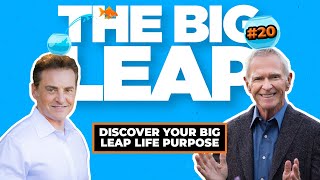
Mike Koenigs and Gay Hendricks discuss how they discovered their life purpose. Gay describes a transformative moment that led him to three words: expand daily in love, creativity, abundance. Mike frames his purpose as amplifying other people's superpowers and helping them reinvent themselves quickly.
Chapters
Well, hello and welcome to the Big Leap. This is about discovering your Big Leap life purpose. So, Gay, you've got a great story you're going to be sharing.
Yes, I am. I'm going to tell you the moment where I finally figured out what my life purpose was and then how it affected every moment of my life since then. And it's always got a kind of a aura of illumination around it for me as one of my turning point in life. And so that's what we're all about here, is giving a forum for people to talk about and learn about how to make those big leaps where you go from one field into another field or from one way of seeing the world into another way of seeing the world. So what was going on at that time? And how can we use that to help everybody on Earth make their big leaps? So that's what I'm up to.
All right, so I'm going to be sharing some of my big leaps and also my reinventions that I've gone through throughout my life, because for me, I haven't had just one big leap. I've had a whole bunch of them. And our goal is to give you the tools, resources, and the guide and the guidance to get there. So all that and more on this episode of the Big Leap.
All right.
Well, here we are. Hi. Gay Hendricks.
Hello. Mike Koenigs. How are you today?
I'm darn good. Darn good. Just got off of a big run through the canyon in San Clemente Canyon this morning has been absolutely beautiful, and it's nice to be here with you. So if I look a little schvitzy, I'm still a little schmitzy. But, well, we're talking all about big leap life purpose today. And I know for you, you had a big crisis that defined you and what you're. So you want to open up and share that story? Sure.
It happened at a time where from the outside, it looked like I had it made. I had kind of jumped to a new level. But as I point out in the Big Leap, oftentimes when you have a big upsurge of love or money or fame, it trips old mechanisms inside that brings up fears, and then you shut yourself back down. And so what happened for me was since I was about maybe 15 years old, I took a fix. I wanted to be a college professor, a university professor. And I didn't know exactly what I wanted to teach, but that was always my goal. But suddenly I got bitten by the counseling psychology bug when I was 22 years old and went back and got my master's degree in counseling. And then I applied to Stanford and got into my Stanford PhD program. And this is all taking place around 1970, about 50 years ago. And so at the time, I worked my way like crazy through Stanford. Hardest work I'd ever done in my life. And I got my PhD and I was about to start my first job as a university professor at the University of Colorado. So that's what I mean, it looked like I had it made. I'd made my dream come true. And yet, about a week before I was supposed to start my new job, I'd already moved to Colorado and rented a cabin out in the woods and really was having a great time commuting. And I had a panic attack one day when I realized, oh my God, I know all of the textbook stuff, but I don't know anything in my heart and soul about what it takes to have human beings transform their lives. In graduate school, I'd learned umpteen dozen different marriage counseling techniques and umpteen dozen different anxiety treating techniques and all of the techniques, but there's something different about. I'd never really had a person sit with me where I did my own natural work with them. And they changed. And so I knew there was something down in there I was missing. So I had this once, once in a lifetime experience though, where I. I realized, you know, I've always asked those kind of questions of professors or authority figures. Why don't I just ask myself and the universe? I was standing out in the woods at the time I came across this idea. And so I just said out loud to the universe and to myself, what is the essence of human transformation? What is it that we need to do to transform ourselves? And I phrased it the backwards way. I said, what is it that we keep doing that in darkens ourselves rather than enlightens ourselves. And so it was those questions. And I just stood there for a little while and felt the question rather than trying to circulate through my mind. Then the magic happened. I got this amazingly powerful roar of energy through my body that seemed to come from the ground up and went all the way up through my body and my mind. It was like kind of a freight train of white light, I might call it. But it felt good. It was not a scary thing at all. It was this rolling wave of energy that passed through me. And after it passed through me, I realized that it had answered my question.
And.
What I mean by that is the information it left behind was the following thing that the one thing we do wrong as human beings that keeps us stuck is we resist what's going on inside ourselves and we resist feedback that's coming in from the outside. So we take a stance of resistance toward the world. And out of that stance of resistance, our experience roughens up. Life starts to treat us more harshly simply because of the closed downness of ourselves not being open to learning at that particular point. And so it's that defensive posture that keeps us stuck. And then I had this other realization that said, how would I deal with that? What is the only way to transform that? And then the rest of the information came through, which is the only way to transform ourselves first, is to let ourselves be exactly where we are and love ourselves for being there, instead of judging ourselves for being where we are or shaming ourselves for being there. When I realized we need to simply first just feel where we are and then love ourselves for being there, and I did that.
I simply wandered around and kind of staggered around, frankly, out in the woods for a while, just loving all the parts of myself that I'd never been able to love before until that moment. And so I'd had medical problems with my thyroid going back to the day I was born. That made me a fat kid, and I was busily loving that. And then feeling losses in my life, like my grandmother who raised me, losing her when I was 21 years old, which was a big moment of my life. And so going back through all of those things that were hard to love in myself and just loving those systematically. And then what happened at the end of that was I ended up in this beautiful state of being both open to myself and open to the world around me. I was standing in the woods and I was feeling these beautiful sensations of liberation in myself and also listening to the birds tweet and appreciating the golden glow of the aspen leaves that I was standing amongst. So it was this magical moment of being completely free of my programming and having no expectations of the future, just being. And that left behind a meta tool for transformation in me, so that when I started to work with people again, I would encourage them to feel their way into where they were, not to try to talk them out of it in any way. So to feel and understand why you might be depressed, or feel and understand why your anxiety is a natural thing for you to be having, then we can begin to change it. But it's the act of opening up and accepting ourselves and loving ourselves as we are that opens up the space to Move into something new, like a new conscious commitment about what you want to be doing differently in your life. And so that became a touch tone moment for me of actually feeling for the first time in my heart and soul what it really took to make human transformation take place. So that was a moment for me that changed everything. It led to a more precise definition of my life purpose. But I want to tell that part of the story after I've checked in with you, Mike, and find out how this is resonating with you.
Well, it's interesting because.
I expected something kind of different, and it was delightful because a lot of this has to do with really who you are as a feeler, as an educator, as author, as a creator, and how you look at life. And when I wrote my notes for what I was going to talk about, you know, my breakthrough moments. Because first of all, the title of this is discovering your big leap life purpose.
You know, so much of my life purpose had to do with not just discovering who I was, but what I was great at and where my value was. And so much of my life had to do with.
Understanding what was valuable in me and what the world saw as valuable. In other words, what I could exchange either my time, my intellect, or my beingness for money in order to survive. You know, that was a huge part of my primary driver because I grew up without financial resources. It was like I started working the first day I turned 16 on my 16th birthday, full time. And it was always, how do I improve and increase my value so I can make more and have freedom? So my search has been in freedom and in time freedom, money, freedom, creativity, freedom, expression freedom. But it began from a financial perspective. And so I think the core thing is, I was delighted that as I listened to you, I started thinking through a completely different lens and re examining how I was going to react and respond and. And tell my own story. So I think the question I have for you then is if you're going to look back at all of these things and boil it down and say, as Gay Hendrix, my life purpose is X. What would you say to that question? And what would you say your highest value is that you provide to other people by being in your most being est state.
Yes. Well, what I teach all my students is that the space you come from is the main thing that does the work for you. Not the things you do in that space, but just the space you come from. And for me, I put it in one sentence. My life purpose is to expand every day in love, creativity, and abundance. As I go about inspiring other people to do the same, so take it down into its separate beats. So I expand. That's my verb every day. That's my by when I expand every day in love, because that's, to me, the most important thing. Creativity, hugely important. And abundance.
As I go about teaching other people how to do the same. So I want to live a life and have been greatly blessed and privileged to live a life certainly for the last 40 years, where I get to do my life purpose every day. I get to spend my days and nights thinking about exactly what I want to be thinking about, and it's always about what can I be doing in my work or in my writing to assist people in expanding their experience of love, their experience of their own creativity, and their experience of abundance to the extent that they want. Some people want to live a very, very simple life, and bless their hearts, I have a big life. I enjoy a big life. I enjoy living in the house I love, and I enjoy having the car I love, and I enjoy being able to do everything I want to do. It was freedom that got me started as a university professor, because I knew that at the University of Colorado, the last class was on May 15, and the next one wasn't until latter part of August. So June, July, and most of August was my time to write a new book or my time to go trekking in the Lake District of England or hiking in the Himalayas or whatever I wanted to do for a few months. But it was freedom. And so one of the high values for me is to what can I do to create more freedom for me and other people? If I'm doing that every day.
That'S my life. I created a job I would never want to retire from. And literally, I hope to be doing exactly what we're doing now in one form or the other, when I go, you know, conk and they come and escort me out of the room.
All right, I love that. I love that. And that was super powerful, by the way, as you were describing that, I quickly started writing a few notes because you've obviously thought about the statement before. And what I want to share with our audience right now, everyone who's watching us, is think about this through your lens. If you were going to create your big leap life statement, you know, if you're discovering your big leap and look for the patterns that have existed since you're young. So what I'm going to do right now, gay, is I'll tell my story as briefly as I can, because again, it comes From a slightly different perspective. And I encourage you to just jump in at any time. But I'll break periodically because I'm curious what you see in it and also what your perception is as well. Just to see if my own self perception is accurate because I also think that that's important is there's a distinction as we grow the difference between what's delusional and what is accurate, observationally accurate, or what is a future paced version of yourself. So here goes.
So when I look back at my life, one of my breakthrough moments, because I wasn't good at school, I didn't like it. I never liked going to school. I was raised a Catholic and spent through 12 years of parochial education and never once did I resonate with the message or the environment. It was very anti freedom, like anti creativity, anti innovation to me. And so that's number one. So when I was about 14 years old, I always loved technology, taking things apart. I was very hands on oriented. And one of the best things about growing up is my dad had a lot of tools and we had a huge environment. So I started, you know, he gave me a band saw when I was 5 years old. Thank God I've got my fingers. But I mean, and I loved fire and blowing things up and taking things apart. So some people would call it destructive. I like to explore expansive properties of things. So I, I innately learned quite a bit about chemistry, biology. We had guns. You know, it's like we. I was outdoors a lot. But around 14, a neighbor who knew I loved technology.
Came over and we didn't have money for a computer, but he loaned us an Apple II computer while he was away for a week and I taught myself how to code. And at that point I was so bad in school that our math teacher wouldn't let me have access to the computer room. So the only way I was learning how to program and do technology stuff is at a buddy whose father worked for, he was a professor at the university. And we'd go up and play games on the Apple II computers or get access and I'd hang out with college kids and just learn through osmosis. Well, what happened over that period of a week is I taught myself enough code that I started writing games and, and I got dangerous. And my dad started telling clients at the barbershop. My dad owned a barbershop and he'd be cutting hair and he'd say yeah, my son's programming computers and stuff. And someone in the chair eventually said, hey, we just got computers at our office. Do you think he could come over and show us how to use them? He says, well, let's give him a call. So dad called me up and at this point, like, I'm 16 years old, already working full time. He says, I'm sitting here with Roger. He's got an insurance, a Prudential Life insurance company and a secretary and then just got a computer. Do you think you come over and help them figure out how to use it? And I'm like, yeah, what would you charge? I don't know. And I must have said 10 bucks an hour, 15 bucks an hour at the time, whatever it was. This is back when minimum wage, I'm sure was like 4 bucks an hour, 3 day, 385 or something like that. So I went over and just got immersed, started figuring stuff out, and one thing led to another. But what it led to is I really started to figure out human psychology, computers. But I also. Right around then the movie War Games came out. I think it was around then. But I got really inspired by the idea of hacking. And I taught myself how to hack. So that turned into one thing, turned into another. So if you fast forward. So the theme here is hacking and technology. If you advance a little bit further. I got my first real job writing code for a company in my hometown, and I was about 18, 19 years old. That lasted for a few years, but in the meantime, what I really wanted to do, if you'd said, what do you want to do when you grow up? It'd be like, I want to write video games. So at the time I was hacking and figuring out how to remove copy protection from video games and started coding a little bit. And I met a guy who said, I know a guy who runs a game company and he's very. He'd be very interested in your hacking skills. But we ended up having a conversation and this guy gave me a challenge. He says, if you can write me a prototype video game in 30 days, I'll hire you. And this is when the Macintosh first came out. So I had a Mac, taught myself how to write, and I wrote a little video game.
Now, is this before games like Pac man and that kind of thing?
Yeah. So this is. Pac man was probably in like the 70s, the late 70s. This would have been in the. In the later 80s, mid mid 80s, so called around 88, 89, that area, you know, 87, 88. So it was 10 years after PAC Man. But it was like when there was. It was. Video games were still huge. And it was the earlier days of Computer, video games, you know, before there was an Xbox and consoles, that kind of thing, you know, it'd be like later ones, but it was Mac days. So what, what happened though is.
I learned later on the guy who started this company not only created video games, he created software that removed copy protection, but he also created copy protection. He was on all three sides of this game, right? And he liked the fact that I liked that too. And we could talk on. And he was very, very esoteric. This guy knew a lot about everything.
And, and he never, I don't think he ever even graduated from seventh grade. He grew up in an as an engineer. His father owned a machine shop. So we had a lot in common because we both considers ourselves unemployable, uneducated louts. And so where that drove to though is along the way I met a guy named Dean Hires. Dean and his brother John had created and made five feature length science fiction movies before they graduated college. And they used stop motion, they use Super 8. And of course they were influenced by Star Trek, Star Wars. So we're total nerds. And the other thing that I was doing at the time is I had a MIDI studio, so I had early synthesizers. And I loved audio engineering. And I wasn't a great performer. My dad was a very good performer, a guitarist and singer and that kind of thing. I always played a company and meant instruments, but I knew computer music, I knew how to assemble it. So here's this guy. And I also was doing computer graphics, really early computer graphics. So I had a little studio audio, you know, animation. And I was like a dream come true for Dean and his brother, and they were a dream come true for me. And we started collaborating and writing concepts for video games and movies. And we got, we ended up meeting through some chance meeting the guy who was the Coen brothers first executive producer. Producer. His name's Dan Bacanner. So the very first.
Coen Brothers movie was a horror flick. Can't remember the name of it off top of my head. I'll look at blood. Simple blood. Yeah, I think it was blood. Yeah. Was it? Yes. And anyway, this guy would meet with us every week or every other week at a little Jewish diner and review our scripts with us and tell us what was good and what wasn't good. And along the same time, the video game company I was working for got bought, so that went away. Dean was working as like a social worker basically. He had like a background in psychology, so he just had the worst job ever. And we both hated our second Jobs that we had and we got laid off from those like within day of each other. And my previous wife, at the time, my first wife, my starter wife, worked around and in the ad agency world doing pre pressure. So and I met some of the clients and some of the people who had these things because I always went over there and the truth was that was one of the hubs for pirate software. So you know, again, I still had this huge hacking background and I knew everyone in the underground and one of the main guys happened to work at this place and he introduced me to a whole bunch of potential future clients. So Dean and I started doing animation work and Photoshop work before there was even a full Photoshop program for ad agencies. We picked up a couple of gigs through my wife's business and suddenly we decided what if we could combine filmmaking, animation, gaming and creativity in one place. And that became one of the very first digital marketing agencies called Digital Cafe. If you fast forward a little bit. So here's the theme. We started hacking advertising and marketing and adding new technology and.
And you know, one thing led to another. I started getting on some of the earliest services like CompuServe and Apple Link and Delphi, some of the really early, early trying to think of some of the other ones. Prodigy. So before there was an Internet there were these services and I got on there and I started just chatting with people and uploading some of the products we were doing. They were like basically video games that demonstrated software. We did stuff for BMW, we did movie promos and we start getting gigs in Hollywood. So again, fast forward. We ended up doing a video game for Chex and General Mills that got shipped in 8,6 million boxes of breakfast cereal called Chex Quest. And again hacking, putting all these things together. Well, the net net is when that company got bought, Dean and I ended up making a feature film together. We raised some money, did a feature film, it was called Bill's Gun Shop. And I started studying online marketing, hacking again, hacking search engines that turned into two software companies. I met Ariel Ford, learned the publicity world. But if you fast forward, when Amazon started doing books, I figured out how to hack the publishing platform. So if you fast forward through everything, the common theme is shortcuts, hacking, applying technology. And really what I do now is I help people hack their own reinventions, you know, because ultimately everything is about how do you craft and create a message, get it heard by the greatest number of people, package you effectively and use technology. And if you learn how to hack, it means you're bypassing the status quo, the way things have been done in the past. And, you know, like you, I've. I'm kind of working on my statement, but I'm going to stop here for a moment and just say, what did you hear? And do you have any questions or thoughts about the.
Yes, it has to do with the why underneath it all, you know, like, I was just.
Had the poignant experience over the past week or so of mourning the death at age 87, after a remarkably full life of one of my great mentors in my life, who is a professor at the University of New Hampshire named Dr. Dwight Webb. And Dwight Webb was one of the first human beings I ever met who was fully in touch with his emotions and could have a peaceful conversation with his wife about some conflict they were having. But, you know, it was such a different way of being than I'd ever seen before. Nobody ever shouted at each other or threatened to. I was in and out of his house all the time because that's the way he was with his students. He would invite you over on Thursdays to hang out at his house and have a kind of a round table. But anyway, now, 50 years later, what I really appreciate about him and how he changed my life so much, he was the first person to really look at me and say, hey, why are you doing what you're doing? You. You want to be a professional in the mental health field, but why. What is underneath that? And, you know, it's interesting.
Because you and I come from. I didn't even realize this until this moment, but for me, why I do things is I really like to find the quickest way through something. You know, that what can. What's the single quickest thing I can do to help this person move through their depression? Or what's the single quickest thing I can do to help this person get their anxiety out of their body, this moment? So it's a form of hacking, in a way. A way. When I first started in the field, there was only one form of therapy and, you know, psychoanalysis, and it took years and, you know, these studies about. Or stories about Woody Allen, who'd been seeing the same therapist every day for 25 years. But, you know, when you look at Woody Allen, you say, did that really help? And so I got interested in finding.
Out, is what it sounds like. Yeah, sorry, it sounds like an addiction.
Very much so. I think. An addiction to avoiding something, probably. But I became fascinated with what I could do in the shortest amount of time to help people and myself move through Things because like, even at the time in my first marriage, which lasted about four years, was from 1967-70 or 71 long and there. Even in my first marriage, I was very young, I didn't know anything about relationships. But I, I figured out pretty soon that if you didn't do something different, you kept recycling these same problems over and over again. And after, in a, I probably had the same argument with her 58 different times. And so I realized after a while that arguments all come from the same place. They come from something inside we don't know about, we don't understand, we don't have to communicate with. And so you start blaming the other person instead of finding out what's going on inside and figuring out some way to bring it out in a healing, helpful way. And so once I figured that out, I really lost interest in having marital arguments. And as soon as I lost interest in that, that relationship broke up. Because I think that a lot of relationships are based on a why. That's not a very good why. It's not a sustainable why. You know, the why of many early marriages is to, you know, work out something with your parents. So you end up marrying somebody that's, or getting together with somebody that's just like your parents or the complete opposite from them. And so it's kind of a reaction to them. So there's all sorts of troublesome whys. And so that's why I was asking you what the why is underneath hacking. Because I have a feeling it's helping people or helping find a shortcut through something that would normally keep people confused for a very long time.
Yeah. So here's, here's my answer. I think the first thing, it came from a pain which was bad at school, wasn't great at sports. I had to find something I was good at that had value.
And I didn't have the patience or the character to follow the step by step rote process. And frankly, I just decided despised all forms of authority because at the end of the day I didn't respect most authority. Like I, I looked down at most of my teachers and thought they're just a bunch of ignorant sheep. And, and, and also like, you know, I, I hated going to church. I thought, why? It's sort of, to me this is going to sound. Well, I don't care how it sounds. I'm past caring. Which is to me the idea of pure hell is going to Disney World or Disneyland. There I'm going to be in an uncomfortable hot environment, standing on pavement, waiting in line. And generally speaking, this will sound judgmental, just as it is massively obese, heavily tattooed, ignorant people talking about stupid stuff, and they're screaming sticky children, and there's horrible food. So why would I stand in line around a bunch of pigs? You know, that's my judgmental self. Okay, so I know we could unpack that, but it's just. That's how I react to it. I don't like lines. I don't like crowds. I find them excessively dangerous. It'd be like if someone says something dumb or walks around with a gun. I don't want to be around the stampede. So I have all forms of crowds with what I. I feel are crowds of people I don't have any connection with. So there goes.
There goes our Disney sponsorship for our podcast, by the way, as of right.
Now, they're having bigger problems than you and I could solve. Or.
Or.
But. But you get the idea anyway. And again, I know that may sound like whatever it is, but I don't need to be unpacked. I'm totally good with who I am. The net. Net here is.
So instead, when I. If someone said, well, in order to get to here, you're gonna have to get certified, you're gonna have to go through all sorts of training and education, I'm like, how about I figure out how to get there fast and bypass all of the BS and everything is hackable and provide the value instead of, you know, feeding someone else's process? I. I think it's just. I like breaking stuff. You know, it's like, I like taking it apart and putting it back together. And also, I love working with the person, not with the system. Right?
Yeah.
And so if you ask, like, what's my statement? Here's what I know I've been fascinated with, is how and why.
People decide what they decide, what influences what persuades them. And what I've arrived at is it's all about a story.
And that is what is how can you tell a story with the fewest number of words that captivates someone and makes them say, I want you in the shortest period of time with whatever medium is possible. So, you know, I've dedicated my life to figuring out how to persuade with audio, with video, with text, with copy. So in every medium possible, and you and I were talking about this before we started today, it's like, how do you create.
A movie that you'd love to watch about your own life or someone else's life?
And I'm fascinated with people's Superpowers, their unique abilities. I really do believe that we are expressions of God.
And as a human being, an incarnate ego in the flesh. We're just, we have a. An opportunity, a responsibility to find our unique value and express it and be able to help other people. So mine is elevating and amplifying someone else's superpowers or their unique abilities and packaging them in a way that they're more valuable than they've ever experienced before, and helping them craft the story that gets them the attention they really deserve, that can help other people. And then I also believe that entrepreneurship is an international language of peace.
I do, too.
Yes.
I've had the top brass of ebay in my office working with them here. And they see it the same way that, you know, I said to them before I started working to them with them, let's talk about the why of why you're doing this. And I said, in my opinion, ebay does more for world peace every day than a thousand politicians do, because having people at the other end of a trading platform, who's going to want to blow up the other end of their business? You know, and so, yeah, I totally agree with that. On another, on an upcoming podcast, we're going to get into this whole movie thing and talk about everything from what is a movie that you'd want to see about yourself? What's the end point of it? What's the punchline of it? Where is it going? And look more closely about some of the movies and books that have turned Mike and me on and brought us to where we are here today and that we'd like to talk about with you.
Yeah, yeah, I'm looking forward to that one. That's going to be a blast. We did a little bit of prep, so here's. Let's give our viewers, listeners an exercise to do, because if I looked at it, the key things that I took away and as I listened to you on, on all sides was, first of all, look for the common theme. What who were you at your core growing up? And how is that unique ability, that superpower, just shown up over and over again? You know, mine has been hacking. It's just been breaking into and figuring out how to bypass the. The system or the authority in order to get to an endpoint with the fewest number of steps. And for you, gay, what would you say your recurring theme has been that shows up over and over again?
It's how we go about getting through the stuck places of life. It's about finding new Ways to efficiently move through things that normally take a long time. And I've discovered that.
The healing power really is love and consciousness. That when we can invoke consciousness into ourselves and also learn to love things that we haven't loved in ourselves and other people, then a whole new path through life opens up. That it's a path about you awakening your powers then. And so I think our superpowers are very much connected to the things we most love to do and particularly to the things we most love to do as children, because they will give you a real insight into your genius zone now.
Great. Now I have one more big idea for everyone to contemplate. So when I was listening to you talk about that, I realized my one thing. So I've eliminated pretty much all drama from my life and complexity. And after being married now about 20 years, Vivian and I have definitely figured out how to have a really high quality marriage with love and understanding and compassion and empathy. We just don't argue about much at all. But I do have one, and I was exploring it as I was listening to you, which is I hate being misunderstood. So here's the circumstance, and it's going to turn into a little exercise. The thing is.
I'm going to have some medical treatments done this weekend. I'm leaving with a stem cell doctor, some advanced stuff that's just life extension, all that. And she said, are you. Are you still going? And I'm like, I've been. I've been scheduled for four months. How did you possibly misunderstand that? And we even made a video for this doctor and the video. So here's, here's the challenge. It came down. I made a video saying, hey, I'm just checking in to see if I'm still going to get this treatment. This treatment, this treatment, this treatment. In addition to what we had scheduled, her perspective was she thought I was saying, I'm not going unless I get these things. I thought I was really clear that I'm going no matter what. But I'm trying to get these other things that we talked about. But, like, after four months of it being on my calendar, there was a misunderstanding. And as I was listening to you, I was like, I have to take. My weak point is, like, if I don't feel like I'm heard, I just get mad and angry. And I realize I have to take full responsibility for being understood and heard and operating with absolute clarity if it's important to me. And I can't make it anyone else's responsibility ever. And as simple as that sounds. That's like a major rewiring I had just while we were doing this episode. So that's the. The extra exercise I'd like to give to people, which is what is a common thematic source of pain and frustration and anger, misunderstanding and conflict in your life that you see over and over again that you can take absolute responsibility for so it never can happen to you again. And I'm curious if you have anything else that you'd add on to that.
Well, that sounds pretty darn good. I think also, it just boils down to, again, something I'd really like to leave people to think about, too. And that is the why of why you're doing what you're doing. Is it an expression of you at your essence? Is it an expression of your love and your singular ability here while we're having our short visit to this planet? Because I know from working with thousands of people, particularly in the business world, that you never get deep satisfaction until you can bring all of that stuff you love to do online and bring it up in yourself so that you're operating every day in a way that does increase the amount of love and creativity in your life.
It's beautiful.
Beautiful.
Thank you. So here's what we should do for all of our listeners, which is we've got more great episodes coming up. Gay and I are just delighted to work with you and for you. And we have a couple of asks. One of them is we have the big leap year planned and you can learn more@bigleappodcast.com but that's where Gay and I will spend a year with you, elevating you, helping you get from where you are to where you want to be. And all you have to do is apply for it. So head on over to bigleappodcast.com and that's a fantastic way to learn more about this program that we have planned. You'd be coached, advised by the two of us applying our superpowers to you. And that's number one. Number two is if you've enjoyed this podcast, make sure that you head on over to itunes. Give us a comment, some feedback. A star 5 stars is great. And share it with someone that you know as well. And, Gabe, you have any. Any other asks or recommendations or suggestions for listeners at home, be on the.
Lookout for our app. Want to tell them a little bit about that?
Yes. Yeah. So we've got the Big Leap app. It is as of the time we're recording this, it has been published on Google Play. We're waiting for Apple's App Store. They have a longer approval process, but chances are by the time you hear this, it will be up. That is a tool that will allow you to communicate directly with Gay and me. Also, you can.
You can watch us. You can listen to us. One of the things that we have planned is we are going to start broadcasting our recordings as we do them live. So you'll be able to interact with us, too and provide feedback, suggestions, ask us questions. We're going to incorporate a level of interactivity. And of course, we're going to be delivering the Big Leap Year experience through the app as well. It's going to be a really great way to have a, a real time connection with Gay and I as we advise you and we coach you and guide you through your own Big Leap Year, helping you overcome your biggest challenges, limitations, and help you accelerate and amplify who you really are.
That's what I got, Gay.
Sounds good to me, Mike. Thanks, everybody, for tuning in.
You got it. Well, we will see you soon. And once again, thank you. Thank you for joining us. Whether you've been watching us, listening to us. This is the Big Leap. I'm Mike Koenigs, that's Gay Hendricks. And we'll see you in the next episode. Bye.
Bye.
More from Mike


The 3x3 Framework That Changes How Entrepreneurs Think | Mike Koenigs & Dan Sullivan








Why Your Business Gets Harder As It Grows | Michael Walsh on the Hidden Danger Zones of Scale
