Comedian Kevin Nealon’s Big Leap from Stage to Canvas | The Big Leap EP#81
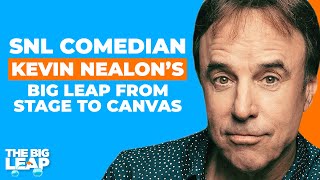
Interview episode (The Big Leap EP#81) featuring comedian-turned-artist Kevin Nealon. Hosts Gay Hendricks and Mike Koenigs discuss Nealon's move from Connecticut to Los Angeles to pursue stand-up, his breakthrough moments (first improv appearance; Tonight Show with Johnny Carson), and his transition into visual art—especially his caricature book I Exaggerate My Brushes With Fame. The conversation also covers his YouTube series 'Hiking with Kevin', musical interests (banjo, guitar, piano), family (wife Susan, son), collaborations, and where to find his work online.
Chapters
And I was just hooked on it right then. I knew I had to get on that stage. That was my sole goal in life, is to become a stand up comedian. And that's why I made some sacrifices. I went to Los Angeles.
You've definitely been on, you know, national television, national stages. You've gone through an evolution.
It's enough time talking about things. Let's start doing things that you really wanted to do. That's the way I work the deal. That's the way I. That's the way I get these people and get the best deal. How do you think I ended up on your podcast?
Welcome to the Big Leap podcast. I'm so excited for this session because it involves a person that I've really loved his comedy for many years, but have recently discovered his art and Mike too. And so we're going to do a session with Kevin Nealon today and we talked about a broad range of subjects. But. But one thing I really want you to.
Pay attention to is how he made his big leap comedy wise and also his big leap art wise. I think you could learn a lot from that. Yeah.
And one of the things that I really enjoyed here is you really get to learn a lot about the evolution of an artist and how he's constantly reinventing himself. And also something really impressive about Kevin is he is a hands on, do it himself kind of guy. You're going to hear exactly what and why that is, and you also hear a funny joke that he tells as well as about how he met his wife.
So, Kevin, yes, you will hear that joke. You're right about evolution evolving. I think everybody's always evolving and hopefully it's.
In the area of what they love. And I think that's probably true because that's the area you want to evolve the most in. And for me, as far as my comedy and my drawing, I'm constantly evolving and I'm enjoying that. I'm always looking for something new to just push it along. And I think that's hopefully what everybody does to get the most out of what they love.
So join us on this episode of the podcast for a great interview with Kevin Nealon.
Hello and welcome, everybody. I'm Gay Hendricks and we are thrilled today to have somebody that we've known and admired from a distance for a very long time. The great comedian and now artist, Kevin Nealon. Kevin, welcome. Thanks, Gay.
I'm very excited to meet you and to be on your podcast.
Well, thank you very much. Well, Mike and I are huge comedy fans and he and I Can. Just to let you know, I do my own version of the Subliminal man. Sometimes it's usually under the influence of cannabis. So I'm not going to try here in my straight podcast Persona. But anyway, we're massive comedy fans and we talk about big leaps here. When you look back through your whole career, what was your first big leap as a comedian?
My first big leap was leaving my hometown and driving to California to become a stand up comedian. That was a huge leap for me because, you know, I come from a very loving family and to walk away from that was very difficult.
And an area of the country that you called home. I forgot you're from Boston.
I'm from the east coast. Connecticut.
Oh, Connecticut. Okay.
Bridgeport.
Yeah. Well, just to get it. Really.
Or were you driving as you made your big leap?
That's a good question. I was driving my grandfather's old Pontiac Grand Borough, I think it was called. It was a sedan and had about a hundred thousand miles on it, which was a lot back then. And it broke down in somewhere in Oregon. And we, you know, we're almost here and we brought it to. I came out with a friend of mine from college and we brought it to a gas station, a body shop, and they fixed it and we cruised into Los Angeles about a day or two later.
My breakaway from the east coast was in my tiny Volkswagen Bug 1970, packed with my entire earthly belongings pretty much in the backseat. And I motored my way across country on Marlboros and donut shops. That was pretty much my diet at the time. I've cleaned things up since then, but.
And where was your first gig where you actually got up on the west coast and addressed an audience?
Well, this is in 19. Around 1978. This is back in the 1900s and.
And I went directly to the Improvisation in Hollywood on Melrose Avenue because I had known about that place and I was very excited to go there and meet the owner. And he just happened to be there that afternoon and he invited me in and no one else was there, of course, so he gave me a tour and I could tell he was very proud of this club. And then he brought me into the back room and I remember seeing that room in the stage and I was just in awe because this is where all the comics that I.
Envied and they were my role models performed. And I was just hooked on it right then. I knew I had to get on that stage and that was really the first place I ever performed on an open mic night. But I remember when he left, he walked me to the door and he said, come back and see us again. And I did for 30 years.
That's fantastic. Well, bless him. Yeah. Mike, I know you had a bunch of questions and I want to get to a long review of Kevin's new book here in a moment, but. Okay, take it away, Mike. I know you had some stuff you wanted to talk to Kevin about.
I do, because so what I'm really interested in is the transition. So, I mean, you've had a really fascinating career. You've definitely been on national television, national stages. You've gone through an evolution. But what I'm really curious about right now is your evolution, where you're doing art. The art behind you, for example. And I know gay's going to talk about that. You've got a show on YouTube. You clearly spent a lot of time in the business. Let's say this has nothing to do with money.
But what really lights you up right now? Where is your brain in terms of what motivates you, gets you excited, gets you to jump out of bed every day and want to create? And what do you most love to create? Just talk a little bit about the evolution from the grind to what I believe and I'm projecting on you right now. But it's your freedom that you have and what you've earned, right?
Well, first of all, you're right. It has nothing to do with money because my wife comes from old crypto, so we're pretty well set.
So. I.
Enjoy so many things. So when I'm laying in bed, like this morning I got up at 3:15 because I just couldn't stop thinking about this thing I was editing on my computer. I do this hiking show, like you said on YouTube, it's called hiking with Kevin. And I hike with a different celebrity every, every week. And I posted just every other week and.
And I'm.
Right now I'm working on one and I'm just laying in bed thinking about cuts and edits and I just couldn't sleep, so I had to get up and of course I'll be taking a nap later. And then I wake up from that nap thinking, okay, what am I going to do with the end of that tape? So for me it's a lot of different things, Mike. I enjoy art, I enjoy music. I play the five string banjo and the guitar and I'm learning how to play the piano and I'm learning Spanish. I take that twice a week. I think when I hit my 60s, my 60th birthday, I thought no, it's enough time talking about things. Let's start doing things that you really wanted to do. So that's. That's what I'm doing now, and I'm excited about all that. And also, time is precious for me with my family. I like. You know, that's the thing I want to do most, is spend time with my family. So, you know, when my wife is busy doing something or my son's at school, I delve into all this stuff that I like.
You know, speaking. That's one thing I really. Yeah, that's one thing I wanted to really salute you for, Kevin, because I've known a lot of people in your specific line of work and musicians and actors and that kind of thing. And one thing that you've done, which I really admire, is you've created a really wonderful family. I have the pleasure of meeting your wife a while back, and I don't know if you remember the old Danny DeVito movie where he says, you can tell everything about a man from his house, his car, his wife, and his shoes.
Know anything about your house or your car or your shoes. But, man, did you hit the jackpot with that amazing wife of yours, Susan. Thank you.
Yeah, I love her so much. She's the best. I got so lucky with her.
Did she? By the way, if you. If you haven't seen Susan in a while, audience, you probably may remember her best from Parks and Recreation, where she played this wonderful character called Jessica Wicks. And she's played lots of other things in lots of other shows, but a lot of people remember her from Parks and Recs. You knew her before that, right? You knew her back in early. Early 2000s, right?
That's right. That's right. I met her back then, and she just started doing Parks and Rec in the early days of our dating, and she's been really busy since then. You know, she's. She has a podcast out now called, um.
Financial Firecrackers. That's right. Financial Firecrackers.
You'll pay for this later, son.
Oh, yeah, yeah. Nice job.
Nice job. Well, like I said, I got a lot of things on my mind going on.
There's only so much room in my mind for things that other people are doing besides what I'm doing. But, you know, you're right. You could tell a lot by some of the shoes they're wearing. I remember I worked in a sporting goods store. It's one of my first jobs I had. And there was a one guy there who had, like, the most polished shoes. Every day. And I'm going to find out. He had been in prison for a while, and that's what prisoners did. They shine shoes or, you know, they. The wardens or the guards would leave them outside their. Their jail, and they would, you know, polish their shoes, have them in the morning. So that's how I know now somebody has shiny shoes. They were probably in prison. As Gay looks down at his shoes.
I want to get to this big leap, and that is the book called I Exaggerate My Brushes With Fame. And it's dozens and dozens of amazing caricature paintings like the one. Well, I've always loved Harry Dean Stanton. I don't know if you guys can see this on YouTube or not. I mean, that's pretty much exactly. That's not even really a caricature, unfortunately.
No, that's exact, exact portrait.
And I want you to go down to your nearest bookstore. This is not one you want to. You want to order it maybe on Amazon, but go down and check it out in person, because it's this big book. And it's not just the pictures, too. It's stories about each of these people, some of whom, like Dana Carvey, obviously you know really, really well.
And.
But I really want you to go get a copy of this because it'll give you a real insight into Kevin's personality, because his personality is woven through all this. So now that I've blurbed your book for you. So tell me about the big leap that got you into even doing something like this. Like, I. Back when you were doing Hans and Franz, were you doing art?
I've always been doing art, but not to this degree. I. I've always loved to doodle, and I never really committed to it, you know, Gay. I would just start drawing somebody, a little sketch of somebody, and I would never kind of finish. It would be a quick pen and ink thing, or even pen and. And napkin or a pen and anything. You know, sometimes pencil, sometimes crayon.
But.
But I've been doing it all my life and, And. And different forms of it, but when I was on snl, but I remember growing up, there was two character paintings, one of my mother, one of my father hanging over the dresser in my bedroom. And. And every night when I lay down, I just had to see it. I would look at it, and for years I would just be studying how that artist exaggerated my parents. And I don't think my parents like those too much, those characters, especially my mother. But that was my real big lesson right there and then as I Got older. And actually when I was on Saturday Night Live, if I wasn't in a sketch during the table read, I would be sketching the person across from me, whether it was Chris Farley or in a carvey or the host that week in the margins of. In fact, one of them is in the book that I did of.
I forget Jeff Daniels. It was. And so. And then after that, I just started drawing more and more. If I was in the comedy clubs, I'd be drawing the person who was on stage, in the corner on a napkin, and they'd always want that, they'd want to keep it. And I didn't know why, because it wasn't that good. And then before the pandemic, about a year or so before the pandemic, I started getting more serious about it because I knew the pandemic was coming. Guy.
All I did was sketch maths back then. It was just fast for some reason.
Funny about that, isn't it?
Yeah, I was kind of psychic. And then, then I started following different artists on Instagram. And these people are really, really good. And I've become friends with some of them since and they become mentors to me. I actually found one that I really liked that lived in England. He was offering a course, like a 10 week course. So I would Skype with him an hour a week for 10 weeks. And he taught me, he taught me a lot about digital drawing and caricatures. Yeah. And then, like I said, I became friends with these other illustrators and artists around the country. Now they've been so helpful to me. Like I'll text, you know, I'll email them to say, or text them, say, is this nose big enough? Does this look right? The eyes, are they too close together? You know?
Well, that's good. I never knew there was until I started reading this book that there was this whole culture or subculture of caricature or artists around the world. And so you're picking up on a grand tradition there. So you had a bunch of people you admired and then one guy was particularly in mentoring you. And could you describe the process of doing one of these from the get go?
Right. Well, what I do is first I find a picture that I like, a reference picture. I'll go to maybe Getty Images or go online. And it could be somebody that I admire or somebody that was in the news recently, or somebody who there's just a really good picture of High def that I could work with. So I find that, and then I'll do a rough sketch of them. On paper and maybe make it a little bit better. And then I'll transfer onto my Wacom, it's called, it's a digital tablet. And I will start doing that there, going over the sketch I did and use color and then when I'm finished with that, I'll paint over it. I'll put like different textures of paints over it and that's basically what I do.
That's interesting. Yeah, it's the process from sketch to finished product. About how long would one of these take?
Oh, it takes a long time. It takes a long time.
I'm serious. If I was paid minimum wage for the amount of time I worked on these, they would probably be $20,000 each.
So it's, it can be a couple of weeks, you know, five hours a day, six hours a day. But I'm getting quicker at it now. The more I do it, the quicker I am.
That's 15,000.
Well, may you be well paid for these someday. Paid commensurate with the hours.
True, that is.
Fortunately, you get better pay for your stand up hour, that's for sure.
And I enjoy doing that too. People ask me if I still enjoy doing stand up, but I really do. It was really first and foremost anything I ever wanted to do. That was my sole goal in life is to become a stand up comedian. And that's why I made some sacrifices. I went to Los Angeles, California and I just started hitting every open mic. And I've been working on my act and watching other comics and I remember there's a point. I mean, you talk about leaps. I remember that I was maybe out here for three or four months doing open mic nights and I was running out of money. I think I only brought thousand dollars, maybe that's all I had. And I lived in San Diego for about a month. I did that and then I drove up to San Diego and I started hitting the open mics, went back to the improv, which terrified me. I would, I would take a, a step every day. It's actually in my book. I would, first I drive there, I'd be too afraid to go in. I sit in the car across the street, just watch people going in. The next Sunday I would go there and maybe I'd go hang out in the bar area in the front until it took me like a month and a half to work my way into the club, into the showroom where Bud Freeman, the owner had showed me when I first moved out there to get on stage at like 1:30 in the morning when hardly anybody was there. And that was perfect for me. But getting back to what I was saying is I got to Los Angeles and I was sleeping on couches, I was staying with friends, and I had about enough money to get back home, to drive back home and. Or I had enough money to make a, to be renting an apartment that was $135 a month.
And so I didn't know what to do. So I called home and I told my mother and father, I said, I'm homesick. I don't know what to do. And my father said something that really moved me and, and I, this is why he's such a great dad, he said. I said, dad, I don't know what to do. I have enough money to, you know, drive back with the money I have or enough money to pay for the rent. And he said, gab, you're a big boy now. You stay out there and give it a good shot.
And I know how hard that was for him to say because I know he wanted me home, but he knew how much I wanted to do this, and I just needed a little. And kick. And that's what he did. I'm so grateful that he did that, as much as it probably hurt him. Wow.
Oh, that's great.
Blessings to your dad. That's fantastic. How wonderful to get a great piece of advice like that at a key time like that.
Yeah, I remember when I hung up, I just cried. Yeah.
Yeah.
I didn't hit pay dirt when I got here in my Volkswagen either. In fact, I ended up doing a couple of those jobs that you sometimes wonder who does jobs like that. Like, I was a telemarketer for blind and handicapped products for about a month. And so I was the guy that called you at dinner time and said, Hi, this is Mr. Hendricks from Blind and Handicapped Products. Could I interest you in one of our blind made brooms or ironing board covers? And then I'd have to deal with. It was good training for a psychologist, though, because I would say so.
Yeah, yeah, yeah. I mean, you know, we, we take these jobs if we're really passionate about the career we want. I worked for Manpower, which is a part time job agency, and they would send you on the worst jobs ever for minimum wage. But you could pick the days you want to work. And it's perfect for a standup because I could work maybe three days a week. And my, my rent was only $135 a month and I was splitting it with another comic, so it was 67.50, I think each but, yeah, they were horrible jobs. They were jobs like cleaning battery acid off of these battery terminals in a big building. It was, you know, shoveling dog crap out of a muffler place in the basement where they had a guard dog, you know, and. But, you know, we do that because we have. We have a vision and we have a goal that we want to get to.
Yeah, anybody that manages to live by their wits, as you've done, or I've done, or Mike's done, I want to salute us all, because it's one of the great pleasures in the world to know that you've been able to live by your wits for 40 years or 50 years or whatever it is to.
Be doing the thing that you're passionate about. I know so many people. Most people aren't doing what they're passionate about. They're working a 9 to 5 job, which some of them is. They're fine with that, and they get their vacations and, you know, maybe they like what they're doing. But I sure can't think of anything that I would rather be doing than what I'm doing now.
Well, that's what I did when I was in my 30s. I invented a job I would never want to retire from. So here I am, 50 years later, and you're the same thing. You know, you're.
All my friends are retiring now. They're all retiring. I said, why are you retiring?
Yeah.
I've got another one if I can, and ideally, too. So one is think about your evolution and interest in comedy. So I'm curious what you think is funny now. And that's both the end game, meaning the punchline as well as the structure, the framing compared to as a younger comic. So I'm curious about your composition of comedy and what you look for, what you think about and what you're performing now.
Well, I'm sorry. I wasn't paying attention. Mike, what did you say?
First of all, I think the funniest people are children, because it's real what they're doing, and it's innocent, and it makes me laugh so hard. But that is something you can't really recreate as an adult. I. I loved a lot of comics growing up that I would. I would read the. The back section of the Parade magazine. It was my favorite jokes, and then whatever the comic was at the time, the popular comic. So I would memorize these. Those and go to parties and. And they were basically structured jokes with a setup and a punchline. And so that's kind of how I learned how to.
Create my craft is to follow that, that pattern.
Yeah. 70s and 80s.
Yeah.
Even into the 90s, for sure. I get it.
Yeah. And even still to this day, I mean, there's a lot of people, comics out there that are solid joke writers and, you know, they're great at their stand up. So I watch a lot of people and I learn from a lot of people. And back then, when I first came out here, I was influenced by Andy Kaufman a lot because he was so unique and original. Same with Albert Brooks and Steve Martin. They all, to me, they all presented something that was very unique to me. And as time went on, I kind of kept that in mind because all of a sudden there's a zillion comics out there and a lot of them are doing the same thing. So I'm thinking, what do I need to do to stand out amongst those comedians? And I think you have to come to the terms with the fact that you can't try to change who you are to become something to other people. You have to stick to the stand up that you do, that what you think is funny and how you're. That's what you do the best. So that's what I've done. I stayed with mine, which is kind of a cross between what a lot of people are doing now, which is a little more alternative comic comedy, which is more venting and more attitude instead of crafting a joke and, you know, like, you know, a joke that works for me really well. And I'm kind of embarrassed because it's such an old kind of a setup and punchline. I talk to the people in the front row and I asked them where they met and they tell me online or at a bar. And then I said, yeah. I met my wife at a costume party one Halloween. She came as a slinky. That was her costume, and I think she made it herself. She was very creative and I thought she's really interesting. But I remember the first time I saw her, she was coming down the stairs. She was.
And how'd she knock out? And stuck on the bottom step. I never would talk to her.
The audience loves that. But for me, it's sort of like.
It's not like a routine like a Dave Chappelle would do, who I'm not. And I don't try to emulate him, but it's, it's my style. It's. It's what I, what I've learned, and that's what I've kind of become good at.
Jonathan Winter was my comedy God When I was growing up, he was. He was the off the wall one for my time. I had the pleasure of meeting him later on in his life. It was a great thrill for me. I. I know we're kind of getting a little tight for time here, but I want to also get back to the subject of the book again.
Okay.
And.
Oh, actually, I did. I forgot one question I want to ask you before we kind of finish with the book. Was there a moment where you realized, I can do this thing, I'm going to make it, I'm going to succeed here, or, you know, like getting on Saturday Night Live or. What was that moment for you?
Oddly enough, it was the first time I got up at the improv.
Oh, yeah.
That hooked me. And I thought, I could do this. I want to do this. And that was the beginning of a domino effect, snowball effect, where one thing led to the next, and I was. I was determined to become a successful stand up. And I knew I could do it. But I did give myself two months. And if I didn't see any kind of forward movement in it, I probably would have gone back, but I knew I could do it. And it just. Every time I got on stage, I loved it, and it made me come back. It's like every time you have a good hole in golf, you want to come back again. You want to keep doing it. But I think the biggest thing that changed me was doing the Tonight show with Johnny Carson for the first time. It was. And I talk about that in my book. And there's a painting I did of him, too, because he was such. Such a monumental part of my career and getting.
Skyrocketed from that after doing that show. And I remember never floating in air so much after that. I mean, the natural Hyatt that I had, I haven't been able to reproduce that. Yeah. Except when my son was born and of course, I met my wife.
So that was. That was a really major thing for me. And to this day, I still think about it and remember, as scared as I was standing behind that curtain about to come out, I knew I had to do it. I couldn't not do it even if I.
Bombed or I forgot my act, which I did on the way out to my spot where I'm supposed to stand, I totally went blank. I couldn't remember my actual. And that's after three or four days of going it over ad nauseam in my head. I could be talking to you now and I could be going this, but really, I'm going over My act in my head, but luckily it came back to me after the last clap.
That's fantastic. And also, just one other quick question. Lorne Michaels is one of the more intimidating people I've ever run across. What was it like to, how did you audition for him? Or what did you do some kind of particular act to get that job?
To be honest with you, I don't even remember what I did for him. I know there's some people that have their auditions on tape, and I don't know if mine's on tape, but Dana Carvey was a friend of mine. He is a friend of mine and he got selected to be on that show because he's a. He's a good character actor and does impressions and accents and those sorts of things. So he went off to New York that summer for that coming fall season. And I was so excited for him. I was so proud of him. And. And two weeks after he's gone, he calls me, goes, kev, I'm out at War Michael's house. I'm in the back bedroom. Guess who's in the kitchen? Bill Murray. I'm like, no way.
He goes, yeah.
Anyway, Lauren is looking for one more cast member, and I told him about you, and I think he's going to want to see your audition tape. I'm like, bill Murray's in the kitchen. You know what I mean? I wasn't even accepting that other information because I knew I wouldn't get there because I knew I didn't do characters, I'd just be rejected. So I was more excited about Bill Murray. And so I sent my audition tape in. Anyway, what's it gonna hurt? Two weeks later, another call from Dana. Kev, I'm back at Lauren Michaels house.
Guess who's in the kitchen?
Steve Martin. I'm like, no. He goes, yeah. Good news, Lauren. Like your tape. I think they're gonna fly you in for an audition. I'm like, Steve Martin.
Anyway, I fly into New York. I go to 30 Rock. I walk into Studio 8H where they tape that, and I immediately got really tired because I used to fall asleep watching that show. So it was an association thing, right? I do my little audition. I think I did something I did from the Tonight Show, Johnny Carson. Just some stand up. And then Dana and I used to. We shared a house together for a while in the Hollywood Hills, and we would stand in the driveway, just kind of, you know, jam on different ideas and characters and things. And then it kind of started getting me thinking about characters. So I did my audition. Then two weeks later, I find myself sitting in a high rise in Beverly Hills across from Laura Michaels, and he's offering me a job and SNL. And I said, well, thank you very much, Mr. Michaels. Let me think about it over the weekend.
That's the way I work the deal.
That's the way I. That's the way I get these people and get the best deal. How do you think I ended up on your podcast?
It's all about the money, baby. It's all about the money. Okay, if I can. Do we have time for one more quick question?
I have until 2:00'. Clock.
Okay.
Okay, great, great.
So here's.
I'm curious.
All right, nice, nice. So we're. And you kind of did a setup here, and you mentioned a few of the things when you talk about your art, but I'm really curious about your collaborative mind.
When and where do you collaborate? Like, when you're doing comedy right now and you're preparing your act, like, how long does it take for you to have an act that you can take on the road? And I know that varies depending on, you know, every comedian is a little bit different, but I'm curious about, like, where do you choose to collaborate? And are some. Are there some collaborative projects you're working on? Because if you're doing your YouTube show, for example, it's more of a walking interview. Your art, you said you've got some people you ask questions as you've been evolving and you're taking lessons right now. But I'm just curious about what's your process, what's your experience, and what's been your big leap in terms of your creative evolution, your collaborative evolution.
The act I'm working on right now comes from over 40 years of working on, because it's not just the material. It's the presence on stage, it's the confidence and it's the delivery and all that stuff. As far as collaborating with people, I love to go to the comedy clubs in town because there's so many creative people, funny people there that, I mean, that's how Larry David and Seinfeld hooked up to do his show. They knew each other from the club and they just started throw some ideas around. So I like doing that. I like when Gary Shandling was a very good friend of mine. If I was on the road doing a corporate gig, say I would call him. And I say, gary, I'm doing this gig for IBM and I need some jokes about printers or copiers or the head of the company, whoever it was. At the time. And so we would. We would spitball on the. On the phone for hours and just kind of jam that way. And if I'm writing a book, I'll be working with an editor. So we collaborate a little bit. Then, like, you might say, I think you need more of this here, more of that there. I said, okay. And I've written screenplays before with people. I wrote the Hans and Franz movie, you know, way back when with Conan o' Brien and Dana Carvey and this guy Robert Smigel, and that was. Yeah, yeah. And did a sitcom recently. I wrote with this guy Danny Zucker, who used to wrote. Right. For Modern Family. So it's all about really finding the people you connect with and you have that synergy with.
I love it. I love it. To the subject. Energetic thing.
Go ahead.
Yeah, sorry.
Yes. Well, I want to call everybody's attention to the book again. It's. I exaggerate my brushes with fame. Full of amazing caricature paintings and a lot of interesting commentary and stories from Kevin. So, Kevin, congratulations on living by your wits for a whole bunch of years and also entertaining the world in a lot of different ways and giving us something really interesting to look at here. And do you plan to do more of these, by the way?
I do, actually, I do. And I know this is the first pass at it, and my art is still evolving, too, so I know all of this will probably. I'll look back on one day and go, oh, I was so green at the time. So I look forward to my artwork changing and developing into something else, too.
Good, Mike.
I love it. Well.
I think ultimately the big question then is where should people go to get more other than we'll put in the show notes, your website, your YouTube channel. Is there any big ask that you have for our audience? Because you never know who's listening or watching that you need support, help, or of any sort. What would that be?
My biggest ask for someone that would help me.
Wow. That's a good question. I'm so. I'm so used to not asking for help that. That is.
Crypto. More crypto.
Where can I get more crypto?
How can I touch it? How can I put it in my hand? I think. I think just what makes you laugh. But I. I could ask everybody that, and hopefully it's the same thing that makes me laugh.
Well, so far, you're doing a great job of it, and you can find a lot more information about Kevin on the web. And look for. Look up his website, Kevin Nealon.com and. Or is it just Kev Nealon?
Yeah, Kev Nealon. My website is Kevin Nealon.com Kevin Nealon.
Okay.
Yeah. And my Instagram is Kevin Nealon. And it's for my artwork, it's at Kevin Nealon Artwork. And for my photography, it's Susan's photo sessions.
Oh, by the way, I forgot even to mention that. If you're on Instagram, folks, check out Susan Yagley's feed, because she has the most amazing photographs. And I didn't even know you were the one until recently that you were the one that takes those photographs. And so, by the way, that's a collaboration, too.
That's a big collaboration for us is, you know, because she's so good at styling and finding the right areas to shoot in. And I just come along, push the. Make sure the light is right.
Yeah.
So, yeah. So she actually. Those pictures, her website is Susan. Susan at Sukiyegli S U K I Yagli.
Yes.
Fantastic. Well, we'll put them all in the show notes so everyone have hot links and then we're going to promote to our lists as well. So my goal is to help you fill up all your events, your comedy events that are going on. And as of right now and recording, Kevin's on the road performing. So make sure you see him. I'm going to see which cities. I actually missed you in San Diego. We were talking about that before we got started.
Oh, my God.
I was so funny.
Yeah, but what are you going to do? So anyway, this has been an absolute pleasure, Kevin, and I love your evolution. Congratulations on just being able to pursue your passion.
Thank you.
And yeah, just your curiosity, how you're taking on so many new skills and talents as well. It's fantastic with multiple mediums. Very, very impressed and happy for you.
Thank you. The clock is ticking.
Thank you so much. Thank you.
Thanks, Gay. It was great meeting you guys.
All right, everyone, thanks for listening. Make sure you like you comment, you follow Kevin again, everything you need to know is in the show notes. So we'll see you in another episode of the Big Leap soon.
Bye.
Bye.
More from Mike


The 3x3 Framework That Changes How Entrepreneurs Think | Mike Koenigs & Dan Sullivan








Why Your Business Gets Harder As It Grows | Michael Walsh on the Hidden Danger Zones of Scale
