Creative Compression with Dan Sullivan | Capability Amplifier EP#114
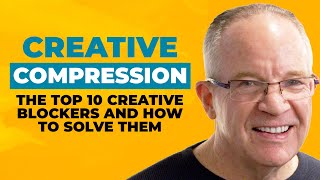
Dan Sullivan and Mike Koenigs discuss creative compression, a concept for breaking through creative blocks and boosting productivity. They share personal strategies and stories about how constraints and focused thinking can unlock better ideas faster.
Chapters
A lot of people feel that they're not justified in just doing things because they want to. What I realized there's the deadline, in other words, when everything has to be finished. And I was always going on that deadline to motivate myself. The reason I want.
To achieve the deadline is because somebody else, a particular someone, is depending on me because they can't do their part until I do my part.
Well, here we are. Dan and I are going to talk about the top 10 creative blockers and how to solve them. But really after we went through this, because we're recording this intro after we recorded the actual body of this work. It's an idea called Creative Compression, which is how do you solve virtually any creative problem and get more done and stay in your unique ability all the time? Dan?
Yeah, I loved it because every one of your stories triggered a story that I had. And I said, well, I got a big story, but what's the lesson from each of the stories? So I would hit the ping pong ball back across the table to you and you would come back. And so we did far more than 10.
Yeah, we did. In fact, that one is start an interesting conversation and ask questions is a great way to have Creative compression with a time limit. So that's number one. Let's get into all the rest of them. This is a really useful set of questions you can ask yourself to solve virtually any problem, either by yourself or in a group. This is Capability Amplifier. This episode is Dan's top 10 creative blockers. And as usual, maybe there will be 11, maybe there will be seven when we're done. We don't know yet, but I thought what we'd do is talk a little bit about some of the ways that you either unstuck yourself.
Reinvent an idea, or stop Any kind of a creative blocker and concept behind this came from. I revisited a product recently called Roger Von Oaks Creative Whack Pack. And he had a deck of cards, 64 creativity strategies to provoke and inspire your thinking. And to this day I just like the idea. I just like the tactical side of it. It's like holding a good book sometimes versus the Kindle. And he's got all these little ideas.
So one of them is look somewhere else. Where else can you look for ideas? Dig deeper. What good ideas are just below the surface? What's the second right answer? I think really successful creative people have a built in operating system once they get rolling. When you talk to really, really great writers, they just don't get blocks any longer. Maybe not all of them. But.
I'm just curious from your point of view. Brainstorm with me a little bit. I'll brainstorm back. Where are you getting your inspiration? And how do you get unstuck when you have creativity challenges, if any?
Well, those are three. That's, like, three questions.
I wanted to give you some auras to work with here.
Yeah, I would say that a great.
Solution.
That I probably came across in my work in Strategic Coach.
When I started producing the quarterly books. So I set a goal when I was 78 years ago that in the next hundred quarters, so it'd be 25 years, I would write 100 small books.
One idea book. So each of the books is just about one idea. And first one was called wanting what you want. The distinction being that most people want what they need, and their whole life is about wanting and achieving what they need. But they never venture into the territory of wanting what they want because.
They feel. It doesn't sound right to other people that you would just do things because you wanted to. You very definitely have to have a justification for wanting something, and therefore you explain it. Well, I really need this, you know, And I noticed somebody said, well, you know.
Why are you still working? They said, well, the grandchildren's college. I really, really feel obligated of creating money for my grandchildren to go to college. Well, that was made up on the spot. That's not the reason. You're doing it because you want to, but they want to. Okay. So that was the first book. I'm just explaining. It was a one idea book. And then it's 40 pa with cartoons, and I have audio and I have video, and it's a little package. And I'm just finishing quarter 31. And I've done 31 books. Okay. And what I learned there, it's a fundamental breakthrough. And, you know, this is one of those things that you wish you could time travel backwards and establish this insight way earlier in life. And what I realized, there's the deadline, in other words, when everything has to be finished. And I was always going on that deadline to motivate myself. So if I wasn't near that deadline, I wasn't motivated. So what I did was I broke the final deadline backwards in terms of teamwork. Deadlines. Teamwork with Shannon Waller, who interviews me. All right? I've got. Right from the beginning, I have deadlines of getting the first three sections out of 10 sections down in outline form. So Shannon can really do a good job of interviewing me. And then I've got my cartoonist deadlines teamwork with my cartoonist. And so what I realize is that the reason I want.
To achieve the deadline is because somebody else, a particular someone, is depending on me because they can't do their part until I do my part. And that, that took away all the angst of the final deadline.
Right. So that's, that's good.
I'm a typical, you know, add high, quick start sort of person. And, you know, until you're, you're almost in the realm of impossibility in getting something done, do I really, really get motivated? And I used to do that, but it put incredible pressure on other people.
Yeah.
That'S.
And I just don't want to put that. I want working with me to be a pleasant experience, not a, not a, you know, not a anxiety producing experience.
Agreed. Agreed. Okay, good. Well, I've got one for you.
So mine. One of my best creative.
Breakouts is paying clients. It's other people. And I see that in you. The fact that people show up for Strategic Coach and you ask questions that you don't know the answers to, and that gets your wheels spinning and you're able to not only create ideas, but refine them. But I'm going to give you an example what happened last week. So I had a client in her name is April Jones. She just started Strategic Coach. By the way, she's an attorney, very successful, with a great backstory. And we modeled this Roger Vano creative whack pack. And she has pivots. And one of my favorite pivots, and by the way, the way we got these is I interviewed her kids, she has three kids and her husband and some of her co workers to get ideas about, like, what makes her a super effective leader. And one of them, one of her sons said to my mom, nothing is impossible. And I was like, well, what does that mean? He says, well, my mom would ask questions, so I'd walk up to my mom and say, I want to fly. And she'd say, well, what would it take to make that true? That was the core question. And, you know, so it'd be like, well, hollow bones or a jetpack or something like that. But that turned into a regular exercise. Another one that the family did is anytime something turns sour, she'd say, let's go on an adventure. She reframed the rotten thing and made it an adventure. And then the third, which was treat problems like puzzles, so it's effectively creating a reward system. I thought those were really, really clever. And for me, the biggest benefit of the client work is in three days. I usually have 70 to 115 pages of content that's drawn from someone's core life experience. And I've just noticed that my ability to think through problems has.
Increased dramatically over the past few years. Again, thanks. Because of your suggestion to do this in the first place.
So.
So there you go. That's.
What else you got. Let's play ping pong.
Yeah. I think one is.
That create all projects as part of a growing process. Okay. So if you look at, if you look at my work.
I create new tools for workshops. And I have workshops.
Usually four per year.
With a particular group. And it goes by quarters. So we have, you know, it goes by calendar quarters, you know.
But if I just thought about the project itself, of creating a new tool for the next workshop.
I'd be kind of saying, yeah, I don't have any ideas for this. I don't have any ideas for this. And what I realized, well, what's the process created so far? If we review the last two or three workshops, where have we gone and what have we done? And I'll just itemize that this is what we've achieved. And right off the bat, I say, oh, you could do a lot more with this. Remember, you had the idea for this and it sort of flows, and so the project.
Isn'T connected to anything. But when I see the project of a tool. Yeah, it's in this workshop. And there's four workshops this quarter. And this is part of an ongoing program. And some of the clients have been in the program for 30 years. I've seen them every quarter. So what's next? What's next for Somehow it takes the.
Being sort of isolated with just a project that removes me from the isolation. And I said, look, I said, think of everything you've created. I mean, you've been creating this. You've done 130quarters in a row. You've never failed to produce something new. You've had some quarterly workshops which are exceptional, but most of them people liked, and they sign up. I had one client, it was really funny. She's in your number 20. And she said for the first 19 times I renewed, I didn't even like the program.
Really. I said, so what was her reason for re. Re enrolling?
Well, she said, this is not for me. She's an engineer and she's a manufacturer.
And so she says, what's all this marketing stuff and what's all this other stuff? And I said, well, you know, yeah, but I said, there must have been something valuable for the first 19 years where you didn't like it, but you renewed.
Yeah, that's the question of the day.
And I think what she came to is that if she goes to engineering conferences or manufacturing conferences, she doesn't really learn anything new.
But being in with.
IVF doctors and being in with.
Artificial intelligence people and being in national real estate networks and everything else, she learns a lot because she has to say, gee, what would that look like in my world?
So my feeling is crossing boundaries into other worlds is very good for creativity.
Yes, that's very good. That's very good. Okay, I've got a matching one that's sort of similar. I call it small container, short tail. And I can't remember, have I told you this philosophy? Have we talked about it at all? Okay, so here's the basic idea. Small container is.
What do you get in a limited amount of time. And the short tail is with little or no follow up required. Because what I found about.
Working in general is I don't like homework and I'm two on follow up, follow through on the Colby. So. And when I think about, like, where businesses frustrated me in the past and for that matter, any kind of work, it's where there's a lot of homework or follow through required versus creating now and getting it done right now. And in the past, when I would do advising and consulting, I'd talk to someone about a whole bunch of stuff and then we'd agree to do stuff after the fact. And then once we got rolling, I'd be like, why in the hell did I create a job for myself that I hate? And that's when I decided with the new model, we get everything done in three days. And the net result is we have to pull off literally what would appear to be a miracle to most people in three days. The business idea creative deck. A sales pitch and offer all the messaging, a whole bunch of content, articles, interviews, and.
Writing emails and copy. And it requires having a team that's lined up to do it all at once, which isn't the way most people work. But it forced me into a constraint. And I think the real answer here is you said deadline. And it's similar, but where you stack the rules to fit your Colby profile or your unique abilities, your zones of genius, and rewrite the rules of business or whatever the activity is to match that inside a really small period of time.
That has made all the difference. And I've been able to say now the way I reframe the experience is my job is to create another rich Playmate or.
You know, how do I make this whole experience incredibly fun for both of us? And again, it's very, very similar to what you said. Make working with Dan a pleasant experience. But in the challenge now I get to create businesses I never have to run. That's another way to gamify it.
Yeah, I think that's a really great one. I can think of some quotations. George Harrison said that the Beatles used to get together and say, what do doing today? And said, let's write ourselves a new swimming pool.
Yes. Yep. That is definitely one of the best.
Quotes for sure.
Nick Nanton has a regular schedule where he shows up in Nashville with a bunch of musicians and they're there for two days and each day they got to start from scratch and by that evening they've got a recorded song with the.
Yes.
With the music and the singer. And that's a recorded song and it's ready to send out to everybody who needs to know about the new song. And they do that two days in a row. And he said it's one of the greatest energizers of his life that happens on a systematic basis. You know, it's in the schedule and they don't know what they're going to. I mean, he said we all have ideas and we know we're going to have to show up so we try to get our mind ready. But he said it never turns out the way that we anticipated. It always turns out to be something different, you know. And. Yeah, and the other thing is I have another.
Rule that goes along with your three day sprint and it's that today's new idea is always better than yesterday's new idea.
That's very Dan. Very Dan. Which is always a positive, moving future.
I love that. That's very good. So you should hear here's the list that I have of Danism so far. So it's.
The next 100 quarters. Write one book per quarter about one idea.
And that really equates into its deadlines, the hard deadlines. Another one, which I don't know if you explicitly meant it for one of these, but I think it's a really good one which is make working with Dan a pleasant experience. And you know, the other thing.
My deadlines are teamwork deadlines.
Oh, okay, There you go.
I've committed to an individual that I'll be ready so that they can do what they need to do. So everything they need to do, I'll be ready with my part so that they can do their part. And the deadline doesn't do anything for me, but the commitment to another person that everything they need to do, what they need to do, I'll be ready. I'll prepare that for them.
That's fantastic. Okay, so that's a separate one then.
And I think you probably do that with the individual who's coming in for the three days.
Oh, hell yeah.
Your commitment is totally to the individual.
Yes. And my other promise, very similar to make working with Dan a pleasant experience, is we're going to have fun and we're going to get more done in three days than you'll probably ever get done with anyone else in anywhere from three months to three years or probably never. Just because there's such a specialized team here that is capable of doing such unusual things.
Then. I like the notion of create all projects as part of a growing process which if you go through and we stack all of our strategic coach binders on a wall and look at all the tools. There are some of the common tools that.
Your strategy circle or an impact filter, for example, that you use all the time. But then there are other ones that are.
Thinking tools.
In coach, we call it tool belt, toolbox, and tool shed.
In other words, there's tools that you have to have at hand at all the time that are on your belt. Then you have a box you bring with you, and you might need those, but you never. You never can tell. So you bring the toolbox. And then there's some things which you know you've used in the past, they've been valuable, probably not today, but you have a tool shed and you know where they are. In the tool shed. Yeah. And I tell people that, and they say, well, I don't use all the tools. And I said, guess what? I don't either.
Yeah, I think, oh, that's great.
And they say, well, I want to master all the tools. I said, it's not about the tools. It's what the tools do for your thinking. What you're after is a certain way of thinking. If the tool helps you use the tool, if you can do it without the tool, do it without the tool.
That's great.
Well, that's another one. We already have five.
It's about your thinking. Most people can't think about their thinking. All creativity comes from thinking about your thinking. The moment that you can get yourself into a realm where you're a spectator to what's going on in your own head, you're in the creative zone. Okay? But most people, their time and attention during the day, first of all, they're thinking about things. Okay. And I've gone to parties where somebody wants to use up an hour of my time to tell him about all the new things he has cars, you know.
Stuff on the walls and everything else. Not interested in other people's things. Okay. And then Mark Zuckerberg took advantage of this. A lot of people spend their whole day thinking about other people. You know, what other people are doing, what other people are saying, what other people aren't doing, and everything else. So probably what other people are doing with their things. So it's things and people, and then there's other people who spend all their time thinking about other. Not their thoughts, not about their thinking, but other people's thoughts. And without those people, we wouldn't have a university system.
Yeah, yeah.
There's a great quote that.
I bumped into and I cannot remember who said this. It was on, I think, a Lex Friedman podcast where it's, you can't tell someone what to think. You sure can tell them what to think about.
And if you looked at a idea, virus in motion, that is.
Our university system is a grand example of that for sure. When you think about how you can infest a society.
Yeah. Well, you know, I mean, it's nice. It's. Obviously it exists because it's necessary, you know, but. But.
Smart means something else when you're smart about other people's thoughts from people who are smart because they have access to their own creative thinking. I mean, you know, and I always thought that, you know, and I was struck right from the beginning that we really remember Steve Jobs as an iconic figure and probably will remember Elon Musk as an iconic figure because you had a feeling that.
A lot of their time is just spending observing what's going on in their own head and kind of saying, gee, that's really neat. I hadn't seen that really before. I never got that feeling with other so called high tech icons who just seem to be.
Kind of, you know, utterly not very interesting in the way they think about things and talk about things.
Not to name names here.
Yes.
No, I mean, there's people who are very famous and, you know.
They have charismatic personalities, but if you actually listen to them for an hour is other people's thoughts. They have no thoughts. There's nothing original there. They haven't really, you know, they've got an ear for what's popular in other people's thinking right now and they can mimic it.
Yeah. Or somehow wrap it into a product. For sure.
Yeah.
Good. Okay.
Well, that's Not a block. But.
I don't think that you.
Have creative thoughts that actually turn into.
Significant breakthroughs.
Unless you're really risking something. Unless you're really fearful that you're going to. There's got to be a fair amount of risk and fear to really trigger great creativity. I think you got inside of yourself. You have to have a sense of fear about it that you can't turn on the autopilot and deliver.
New breakthrough thoughts. And I'm sure in your three day session, there's times where you're. You're experiencing real fear that you're not going to pull it off this time.
Totally. Yeah.
No, it's.
It's what, What I found is by creating that environment, I solved my. Some of the greatest problems in my dreams. Like I will go to bed on the second night and pop up.
Oh, you mean you got to sleep during the three days?
I do. I do.
That's almost like. That's almost like cheating.
Yeah. Oh, yeah, yeah. Well, it's for other people. Not for me. It's for the other people. Hey, this is Mike Koenigs. Sorry to interrupt the podcast, but if you're an action taker and ready to transform and reinvent yourself and your business, go to connecttomike.com to learn more and book a conversation with me right now. All right, back to the episode. All right, so I've got another one.
That stems from another danism, which is never leave Dan alone. I love that because again, it's a deadline. It's also surrounding yourself with talent that enables you to stay inside your zone of genius. Right. So if Dan gets to spend his time as a quick start simplifier.
Magic happens. And with an audience, even better.
So the multiplier that I realized is when I think about every product, every service, and what inspires someone, whether that's creating new purpose. That's another thing that's popped up that you and I have discussed in the past is the hero's journey. And I think you can create a hero's journey to solve any problem, just like you can write a great sales letter. So the foundational principle is, once upon a time, there was someone just like you who had all the problems and challenges that you have, and you tried and you failed. You invested a lot of time and energy and money and just felt confused and overwhelmed and lacked clarity or a good plan. But along came a wizard. It could have been Yoda or Jesus or Muhammad or.
Harry Potter. Who cares? Who showed you a couple shortcuts, couple strategies, and you Realized that the problem was you. You had a dragon in you, a dragon outside of you. So you slayed the dragons, you rescued the princess, or met the prince, and then found that holy grail that you didn't even know really existed and lived happily ever after until the next problem comes along. But that's the structure. And I'm always trying to create a hero's journey that can be told, that can solve any problem because our brains are just wired for story. So.
I thought that that was.
And for me, my team, my toolkit, is to have Abby, my unicorn, who is the note taker, grabbing structured notes. And you have the equivalent of your Abby the unicorn. I like having a designer present. When I think about Dan's books. You've got Hamish doing your those.
Hamish.
Hamish.
Sorry, Hamish. Yep.
And then I always have a keyNote or a PowerPoint designer who's able to interpret these things and find like images and graphics and stuff like that to fit into the story. And we have the structure. I have a writer present. Because we create derivative content and then we perform content behind camera. I found that that act puts the client, the subject, in a place where they have to perform. They literally adopt a new identity. And there's a massive amount of reprogramming that can show up when you have to make an ask that you're uncomfortable with for you or your business. And you are more willing to ask for something that historically has been comfortable if you become a new character. And that happens on the third day after we practice and role play. So a lot of what we're doing really is let's pretend. And then I have a videographer photographer who captures scenes that are engaged and creates authority. So you walk away feeling like an authority. You feel like someone who's had a transformation and gone on a journey, your own hero's journey. So a big part of this that I can't always tell people is we play a lot of let's pretend.
And you'll get an operating system upgrade or a reboot or an identity reboot. So that I found there's a lot of little ones in there. But I'm curious what your take on those are.
Well.
One of our podcasts in our previous year, I don't think it was this year, but it was certainly maybe even two years ago, we went through the six businesses, the one you have now being number six. And it was fascinating to me because I love hearing the history of entrepreneurs. And my question is the three day structure and process you now have. If you had had that at the beginning, would you have needed five other companies?
Oh, I.
So no. But I needed the other companies for training.
So the question is, you could only have this three hour, this three day session because you had the five other companies. Yeah, yeah. It's like strategic coach. I did 15 years of one on one coaching where I tried out 50 different approaches. And then one day.
Well, first.
Like the first eight years I was doing it, and then one day a process emerged called the strategy circle. Okay. And then I did 100 different strategy circles with 100 different people. And one day a workshop came out where you could do the same process, strategy circle, process, with six people in the room, 15 people in the room, 30 people in the room, and we've had as many as 130 in the room. And you get the same result, everything. So my sense is there's a. I call it creative compression.
Oh, hell yeah.
There's a creative compression. And you've gotten to the point now where everything you did good over 25 years you have access to in three days.
Yes. Yeah. And a team with the who's to make the ideas happen because that's.
The team represents who you were once.
Not doing it as well as they can do it right now.
Yes. Yeah. Yep. Yeah. There's technology amplifiers, there's people amplifiers. And also what I found, and this is probably, if I were to give my.
Better another way, is about the notion of simpler and less isn't, or simpler and fewer isn't less.
Which basically means like, what are the fewest number of things you need to reinvent yourself, your business, or create the most valuable product or service with all the marketing material you need in three days. That is what I've realized. The problem I figured out how to solve in a short period of time that seems impossible, but it came from reducing what used to feel like 50 moving parts into seven.
And so that's the other fun thing. And being able to test it basically three times a month. Now.
I haven't for sure figured out how to do it.
In a group fashion like you do. There's a lot of personalization. I think we can do the front end, but some of it does require immersion, like a studio immersion and.
A buffer of sorts.
You know, I was thinking, because I was thinking what a great video this would make, you know, if you could. And it doesn't have to be one, it doesn't have to be one person. It could be a lot of different people, but you just show the stages, you know, and in the video you have like title slides that tell you this is stage one, stage two, stage three, and then you have a variety of on the spot feedback as people are going through it.
So here's what I believe that you can do in a group is you call the group session. Getting ready for the three days.
Yeah.
Okay. And what kind of thinking? Well, first of all, what do they have to do with their schedule? What do they have to do with any other obligations they have just to get totally free so that they have the three days like that, that you can do.
I could see how you could just say, now you're going to be. Have to be at your best during the three days. And yeah, here's what my definition of your best is. There's five qualities that you have to be. So you take them through, you know, group exercise to make sure that they're not bringing their.
They're not bringing in their resistances into the. Into the session.
Yes, for sure. Yes, yes. So there's two big ideas, which is. It's the suspension of disbelief. It's like breaking the fourth wall in a movie where you don't ever talk to the audience, but you kind of have to at a point to shortcut the story. But the other one is.
Let me see, I gotta remind myself what the heck popped up while you were talking about that? Well, again.
The things that block you are something I call a transfer of certainty. So if I stand in front of you as a leader in a convincing tone, it's like when you were telling the story earlier about when Jack Nicholson said, you don't wanna know the truth. Right. But he said it with such authority. Great actors, great leaders walk into the impossible and they fire up the audience and suspend their disbelief and get them to believe in something that couldn't possibly be true. But when enough people think it's true, it becomes real. Like fiat money, for example. I had to pick on that. But the whole idea or democracy. Democracy, the United States of America, is just an idea. As long as enough people believe that it exists, then it exists. Yep. The dollar. Yes, precisely.
Yeah.
Yep. Yeah, we've got them all bamboozled.
Why does everybody use the dollar? I said because everybody uses the dollar. That's right.
They believe it's valuable.
It's like English. Why should English be the number one most used language? It's not the most used language as a first language, but.
It'S the most used second language. Everybody's got a language and then they've got English. Okay? There is no other second language except English.
Good. Old fashioned American storytelling.
Yep, yep, yep. Yeah.
Well, good.
Well, you know the, the thing that really strikes me is this.
Creative compression is I think, a very, very powerful idea.
I think that should be the title of this episode.
Yeah.
So I think this is.
Yeah. Because we're taking decades and decades of experience and coming up with.
Zaners. The other thing is.
I never fall in love with my ideas until my clients do.
Well, gotta test it against that Paying audience, paying customers.
Yep. It ain't real unless check writers say it's real.
Yeah.
And check writers say it's real by writing a check.
That's right. That's right. Oh, good. Well then I have one more.
I know people. I know people. You know, they have this idea and they're developing it for two years and you know what they're afraid of? They love their idea and they're afraid others will not love their idea.
So true.
Their baby, Their baby is going to get mistreated.
Well, so here's what we call this during our vision days. I call it baby murdering. Just to leave a huge impact.
Yeah, well that's a concept. Right now that would work.
Yeah, yeah. No, it's definitely harsh. But we call it, we have two versions. One of them is murdering your babies, which are your ideas. The other one is murdering. Because what I have to tell most people, they're like, I just don't understand why our sales aren't effective. And I go, I know exactly what it is. You teach too much and you talk too much and when you're doing those two things, you're going to sell a lot less.
So all you got to do is tell me a story about someone just like me.
Who slays the dragon and rescues the prince, lives happily ever after, or the princess. I mean, that would be a little weird, at least for me. I have one more. And again, this came from something I heard recently.
It's a guy that wrote the fiat standard and also the bitcoin standard. He's an Austrian economist.
And it's all about paying attention.
To the quality of, of what you pay attention to. In other words, the quality of our lives is directly related to the quality of the attention and the things quality that we're paying attention to. And you often say we pay attention to what you pay attention to. But that little quality distinction.
Is so simple. And when you look at people who have low quality lives, obviously if they're staring at their phones and looking at Facebook and TikTok and Instagram all day, I rest my case.
So.
But all right, well, Any other big closing thoughts here? Because this was so far one of my favorite episodes.
Yeah.
I think.
This is just a bit on the attention piece. You know, the rule of thumb with social media or the Internet.
If they say it's free, it means you're the product.
Oh, yeah.
Yeah. You're what's being bought and sold here. Yeah, yeah, yeah. I think there's a lot of this. You know, there's a lot of.
Extreme simplification and creativity. I mean, Peter Diamandis don't know if it's him originally or he's quoting someone, but he said everybody talks about creativity as a function of getting out of the box. And he says, actually if you really observe how you do it, he says, you're actually getting into a smaller box. Yeah.
No, I mean, you're taking three years or three months and turning it into three days. That's not getting out of the box. That's getting into the smallest possible box.
Yep. Yeah.
It comes from the compression. It doesn't come from expansion, it comes from compression.
Yes. And I will tell you that until I spent a lot more time living inside what I often call the operating system of Dan, which is. I've installed a version, which is what would Dan think? Or what would Dan say? I've had to become a simplifier, even though I naturally have lived in multiplier world, because as a multiplier, I would make my life hellacious by making commitments outside of my.
Yes, absolutely. And it'd be like I'd see all the possibilities and potential and just I'd say, yep, I could do that. Yep, I could do that. Yeah, I know someone who could do that. Well, knowing someone and knowing I can doesn't have anything to do with getting it done and the unbelievable resentment and frustration it creates for yourself and others around you. So.
No, that's fantastic.
I've got one story. It's about.
Who I think may be the greatest.
American musical composer of all time, George Gershwin.
But it was a team. It was George Gershwin who was the composer, and Ira Gershwin who was the lyricist. Ira Gershwin, his brother. And they used to operate between Broadway.
Writing stage musicals and Hollywood writing film musicals. And they would take a super deluxe train across. People didn't really fly in. This is the 1930s. And so George, they would get on, they had a suite. And, you know, George would just sit there. He had a notebook and he'd be writing music all the way from Los Angeles to New York. In this case of the story I'm telling you, they and you know, it's two, three days, you know, with sleeping cars and everything. So they get to New York, Grand Central Station, and, you know, there's a hustle to get off the train. And they get to. And. But about three hours before they got to the station, Iris said, let's see what you've got. And George handed him the notebook. And they had been working together so long is that Ira could almost, like, instantly see the words that would go along with the music. Okay. And so he's sitting there, he says, boy, this is great. This is really great. This is amazing. He said, this is amazing and everything. And so they get to the station, there's this hustle bustle. Get off. The porters come on. They grab their bags, and they get to their suite. I think they stayed at the Waldorf Astoria. They had their own suite. And an hour later, Ira's saying, I can't find the notebook. I can't find the notebook.
And so George said, well, call the concierge and ask them if they'll call the station. They probably found it on. On board, the eminent comes back, frantic. Ira, two or three hours, no notebook. And he goes in, he's just so crestfallen. And he comes to George. He says, I'm sorry. He said, I must have dropped it. I lost it. And George said, oh, well. He says, it's more where that came from.
Yes.
My only correction there is, if you have that ability, don't die at 37.
Yes. Yeah. Or 27. In so many more cases, 27 is the magic number. But that's a great story. I love it. That's a good place to end.
So.
I have 1, 2, 3, 4, 5, 6, 7, 8, 9, 10, 11 from you. And I came up. I had 1, 2, 3, 4 that we discussed, plus some integrated stuff. So we got a lot more than 10. And this has been the top 10 creative blockers and how to solve them. But better yet, creative compression. Great new phrase, worthy of further discussions. Dan, anything else that we should say before we wrap this episode up?
No, I've really enjoyed this because I had no thought whatsoever about any of this before.
We launched it, so. Yeah, but that was creative compression. We got 25 minutes, half hour, whatever, to get ourselves a podcast. And, you know. Yeah. And we could have gone on, but we won't.
Nope. I think what we have is our equivalent of the creative whack pack. We'll call it the Creative Compression Toolkit. And their ideas to spur you into how to create faster, more effectively. That gets more done in less time and allows you to stay in your unique ability all the time.
More from Mike


The 3x3 Framework That Changes How Entrepreneurs Think | Mike Koenigs & Dan Sullivan








Why Your Business Gets Harder As It Grows | Michael Walsh on the Hidden Danger Zones of Scale
