Dave Asprey Studio Tour with Mike Koenigs
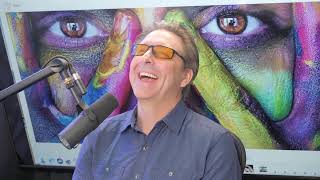
Mike Koenigs shows Dave Asprey around a professional podcast studio, breaking down the gear: Rodecaster Pro and Shure SM7B mics, multiple cameras with a Blackmagic ATEM Mini switcher, NDI over Ethernet with BirdDog adapters, and Stream Deck controls for live switching.
Chapters
Hey, guys, I'm Dave Asprey, filling in for Dan Sullivan, if such a thing is really possible, because he's such an awesome human being. Here with my dear friend, Mike Koenigs.
How you doing? And we can look at that camera now. Whoa. Yeah. Yeah. So I'll let you rock and roll and talk about what we're going to talk about.
You're going to teach me about your ridiculously impressive studio because I kind of have a little podcast and I have a whole big closet full of gear, but it's always the wrong stuff. So you're going to tell me how you make yours look as good as you do.
All right? Okay. So this is right now, we're looking at the PTZ camera, the pan, tilt, zoom, and I'm going to move it around a little bit, and you can see right behind you. This is kind of like a DJ thing, I guess.
You got 1, 2, 3, 4, 5 control panels, 3 keyboards, and then one for video and one for audio.
Yeah. So the gear arrangement that you see, some of it I'm not using right now just because.
There are different applications, different situations. So what you see here, and I gotta think if I've got the. Yes, the PTZ is right now pointed down. This is something called a Rodecaster Pro. And normally when I'm doing stuff not as where we don't have such a timeline as we do, it's a little bit cleaner here. But this is a Rodecaster Pro, which you have. I had told you to get that.
Oh, you told me a couple years ago. Changed my podcasting game on Bulletproof radio for sure.
Yeah. It's such a high quality gadget, but you can plug in multiple microphones. We are using. These mics are the Shure SM7BS. They're about 500 bucks each. They sound great. Plus, it's the Michael Jackson Thriller microphone. I don't know if you knew that. Yeah, yeah.
I did not.
Yeah, yeah.
So I bought one of these when you told me two years ago. I always appreciate your advice. So I've got the Rodecaster Pro.
Yep.
And I run through Shure SM7B on a cool microphone mount because the mount actually matters. You get it where you want it to be.
You have the yellow, if I remember correctly, which are great. They're high end. They're like 5, 6, 700 bucks.
It was expensive because the blue wouldn't quite get where I wanted to go in my setup.
Yeah.
Okay. So. But after that, I have a camera on a tripod that goes into an HDMI conversion thing into my computer and I got one camera. And how many cameras do you have in here?
Okay, so at any given time, if you count at the moment. So this is what's known as the medium shot. So that's camera one. Camera two is on me. Camera three is on you. Today I have this camera, which is the pan tilt zoom, which is at the moment, camera four. I also have a fifth camera here that I normally use, which is my main rig. This is a Panasonic Lumix GH5. I only have it because it's kind of legacy. These are tanks. They're really good for anything. They have removable lenses. They're DSLRs. They're about two grand each.
So you have about $10,000 worth of cameras, not counting PTZ.
Yeah.
What's the PTZ run?
They're anywhere from like you can get them now. They're cheaper, two grand, but for a while they're like 15 grand each. When I had my big studio, you know, the nine set one a while ago. Ye.
Okay, so that's, that's something most people probably don't need as a ptz.
No, no. And, and, and so from the camera to get this put together, you have.
The switcher. Now there is a couple of them. I brought a couple up for you to take a look at today. This is one called the blackmagic ATEM Mini Pro. So most people. And this is something I just told you you should probably get. So this is the smaller one. And then the bigger one I have right here, this one has four inputs.
These are HDMI inputs. So four HDMI go in, one HDMI goes out. What's special about it other than that?
All right, so what's special about this is it can run your audio, it can do picture in picture. So let's say, for example, you wanted to do a drawing, so you hooked up your iPad and you wanted to use the tablet. So you could actually run HDMI out of your iPad and into this. Then you could have a small head of you, and then you could have the big iPad and toggle between the two and switch between those. But here's what I love about it. It has a USB out. You plug it into your computer, and then this acts like a webcam. So you can use it for zoom. But then you can switch 1, 2, 3, 4 inputs. The bigger one down here, which is the ATEM Mini Extreme, lets you have up to eight inputs.
Isn't that kind of a contradiction of terms, Mini Extreme?
Yeah, it's total Total, totally nuts. I'll tell you one other thing, we're getting uber nerdy here, but for your editor, this is pretty cool. So it's got a network input and what that means is it can be controlled on the network and there are ways to do it remotely as well. So your guy could be switching you with a multi camera setup remotely. And the other thing that's pretty cool is.
It has something called an ISO feature. ISO, which means each of the camera inputs would record to a separate file. So you'd hook up what's known as an SSD drive. Solid state drive. Yep. And it would record each of the channels separately and the program feed. So in this case it would be five to the hard drive with an edit decision list that could be loaded into Premiere or Final Cut, which means if for example, the production was screwed up and you miss switched or he missed switched, you can go back and fix it. And it's a little bit higher quality.
So that's really useful. Here's what I'm doing right now, in fact. You're going to tell me which of this gear I should get.
Yep.
So I've got, I don't use the Lumix, I use Canon EOS 5D.
Totally fine, great cameras.
And it's got the auto focus, so it's all fuzzy behind me and all that. I use the Rodecaster Pro SM7B and usually I'm recording. Sometimes we use eCamm. We're usually using Zencastr for remote stuff with a video setup.
Yep.
And then I upload all the files when necessary. But we do all of our video editing in post. I mean, it's 250 million downloads, you know, top hundred show, Webby nominated kind of thing.
Oh, go on and brag a little.
But it, but it's actually kind of a cheesy setup is what I'm saying.
No, it's great.
I'm using the power of contrast. Mike, you taught me this in one of your courses.
It just comes down to it's all.
About the content show. But I'm feeling a little inadequate.
Okay.
Because like I have kind of a shitty text set up here. And what I'm thinking here though is if I went out there and I bought, you know, two more cameras, I get side angles. How much do you actually use a side angle on your side?
Well, honestly, most of what I do is in here during the day where my monitor is facing me. I've got a GH5 above it, just like the PTZ, which I'm pointing at myself.
GH5 is the same as Lumix, Panasonic.
It's all the same thing. GH5 is kind of the. The rig, but it's different than ghb.
That's what I was all.
It's not the ghb. Definitely not. It's not for. It's not the Bill Cosby substance. Okay, ladies and gentlemen, they'll be here all day.
But that's what it is.
Now tell me you use some. Some kind of switch here to edit yourself out when you said that.
Yeah. Oh, yeah, totally. I totally, totally bleep that out. There's no Bill Cosby jokes here at all for the rest of the day, but so what I do, which you can train your brain to do. It does take a little while, but we'll get uber nerdy. Here is, I have this gadget which is a Bluetooth foot pedal, and I'm switching us live. So when you speak.
Hello.
There we go. And back to me. And then back to this. I'm actually using my feet right now to switch between all these cameras. And this is a Bluetooth switch. So it does take some.
Training, but I'm impatient as hell. I don't like waiting for post. And usually the time it takes for me to communicate what I want in post production from an editor takes longer for me to do it myself.
Because you're good at knowing what it should look like.
Yeah, that is true.
Here's the conundrum. This is what I really want to ask you. Okay. I used to do all my own tech setups, so before a show, I'm calling the guest and then we're making sure the cameras and lighting and their mic is pretty good and all that sort of stuff. It sucks. So my guy Chris, who's fantastic, he's done very high end audio editing for audiobooks. He edited my audibles.
Yes.
And so he now handles that, which is great. But then once the interview starts, what I want to do is be the world's best interviewer. So get in the zone and be fully present. If I'm screwing around with little tech things, I feel like it takes me out of the moment and that the quality of my interviews doesn't work as well.
So.
If I were you. So, first of all, the reason why I built this the way I built it is because I work in my studio. I can turn on every single light here. And as someone can see, Got the panels, I got Bluetooth. It just looks good all the time.
Super cool.
Yeah. And over on the wall, I Have an AC unit that's separate for this. So the room environment is always good. So the short answer to your question would be if you set up a permanent rig like this is all the cameras are mounted. I've got my medium shot so I can open right over here. I can go to camera two, then you can speak on camera three. And then I varyingly might have the PTZ so I can move around and do this fancy stuff like this, you know. So I'm pushing the button right now.
And so you can zoom in. You have preset shots. So it. Yeah.
So there's the light and the.
In the rigging and so you don't have a lot of. I guess you do have lights on your front so you have a hair light behind you. You also have three hair lights. If I was this a 6, 7 light setup, I only use three.
Yeah. So this is for maximum fill and for guests it's just built for flexibility. But you could have your editor switch for you live. And I think if you wanted a more dynamic experience for your viewers. Plus what I would do is now the gear itself doesn't matter so much. But I've got. This is the Hero9. Yeah. You could do an overhead cam and anytime doing products then you can have them set out like I do here. And you know, the camera would be above looking down and it'd just be a hand shot.
Can you hardwire those?
Oh yeah, you can absolutely hardwire them. Uh huh.
One of the things that intrigued me is that every one of your cameras is hooked into Ethernet, not wireless. Because with this kind of bandwidth it would overwhelm it. So what is the device that lets you do that?
Right, Great question. So I'm using a combination of hardware. So this is where we're getting again super nerdy. But when you're getting into a more high tech.
Yeah.
Situation where you want maximum flexibility. And I will get to the remote control part of this, but I have everything hooked up into this is a bird dog mini NDI adapter which essentially what it does is it allows all your cameras to suddenly be on your ethernet. And.
This is another one. This is one. It's actually a Chinese company, but it is a five in one.
So you can actually the Chinese remote government viewing.
Oh, it totally does. Totally does. And it injects massive amounts of illegal activity into your data streams. So the FBI is going to show up knocking on your door in no time.
Well, it's cool. The NSA has a feed out of that.
Totally. Oh man, these guys have got it all figured out. All right, so NDI enables us. And I'm going to show my user.
Interface how the foot panel works. Because of ndi, right?
Well, technically you would need a device and again, until recently, a multi input switcher like this was not affordable. Thousands of dollars, very complicated. Totally. Now this, they're $400 to about 1200 bucks for this, this one. Now.
I'm using some software which I'm going to actually show it on screen here. It is called livestream software. Now it's going to look kind of wild, but this is what I'm switching with. So if I go the inputs and.
So you can see. Oops, sorry. Let's see here. There it is. Okay, this is the. Known as the program feed, but that's us together. And I am, I've got all these feeds coming in. But NDI enables software to talk to all the cameras anywhere in the network. So you could theoretically have like, let's say you're switching a gamer show and you had a hundred gamers playing. This is how they do these big gamer tournaments. They are all connected with the Bird Dog device and then they can switch literally hundreds of gamers and do picture in picture or whatever.
Wow.
And you can have multiple. Totally.
Okay, yeah.
And it is. And with the livestream software, it talks to all the camera devices. So for example, again, this is uber nerdy, but ecamm, for example, the software you use, you can switch, but then you don't have to have any hardware computer come connected to your computer. It's completely wireless, which is in, in here. What you don't see in the background is. Well, you kind of do, but there are mounds and mounds and mounds of cables in the rigging. Okay, there I'm showing it on screen right now. But you know, it does this removes the complexity, provides immense flexibility. And there's one other cool thing. So behind me again, I'll demonstrate this. Let's see. I gotta switch over to camera. Okay, so the monitor behind me, for example, I have an Apple TV connected to that and I'm running a special kind of software.
Was it a 55? No, 65 inch.
65 inch. Now what I really want to do now is get like an 80 so you'll never see any edges.
But my 65 didn't work for me either. 80 you have to have if you want no edges.
Yeah, it's. Yeah, it's crazy. So. But I have this software I found that costs about $100 that allows me to pick an NDI input that runs.
On the Apple TV itself.
On the Apple TV. So for example, now I'm sending the PTZ signal. Infinity, infinity, infinity. But I also have. Thank you. Thank you for that.
That's a compliment.
Thanks. But I can pick any source, any camera, and I've got two computers on the network which I use like keynote. So again, the whole goal here is absolute flexibility that I can remote control. And what I was starting to say earlier is you can bring in. You could have your editor.
Remote control, a switcher and push the buttons for you to get a final program so you have no post production. And with a little bit of setup. Again, I'm gonna turn on the nerd here. This is a gadget called Stream Deck from Elgato, the same company that makes a. The green screen, which by the way.
I'll show that I ordered one last night.
Oh, you did? Okay. The cat Elgato. So this is my chroma key green screen. I could pop up at any time. Again, maximum flexibility. This is like 250 bucks. I think it wasn't it like 250.
It was 350 Canadian, which means about 250.
Okay. Oh, Canada.
I'm not Canadian yet. I'm still American.
I say get that. Just do some sort of a deal so you never ever have to hear that hideous.
Theme song, that Canada. The oh, Canada song.
The one from Super Troopers.
Did they sing it in there?
Probably.
Okay, well, it's just the. It's the. Their version of Osakin, you see.
Oh, yeah.
With a national song. It's just. I think it's the worst national song I've ever heard. I have this weird song and I love Canada.
Just, just for the record, I totally love Canada. I have this weird software running. It tunes out all nationalism. So there's just like a gentle hiss whenever those songs come out.
Dave, I want to be you when I grow up. All right, so here's what this little doodad does. It's simple. It sits on your desk. And I don't have it lit up right now, but each of these buttons is programmable. It's got little macros. So you can program a button, for example, that would switch a camera and then throw a lower third on screen, start and stop a stream. Control all your zoom. And this is again like 250 bucks. And there are video nerds out there. It takes a little setting up.
It looks pretty complex. I looked at it last night. Okay, yeah, I mean, but so it's complex to set it up. But if you always want to Have a bottom third at the beginning of your show, you press a button and it turns on and off, right?
And again, it does take some time. I have some video guys who worked for me for years who came and set this up per my design because frankly, I don't like dealing with the gadgetry any longer. It's just not fun.
It drives me nuts. I mean, I'm a computer science guy. I used to just love this stuff and it sucks. From my focus on the interview.
Precisely.
I watch you do this and man, you switch without even thinking. And see, I can read and talk at the same time. People don't know I'm doing it because I develop those neurons eventually after a thousand interviews. But somehow you got the same stuff going on where you can do this with video instead of just audio. And it's fascinating. You're the best in the world. I've seen that. How long have you been doing this?
Well, I've been. Believe it or not, I've been in production for over 30 years now, which is kind of sick.
That explains it.
The but is I used to be the guy behind the camera all the time. And then I realized after a little while, it was during the pre YouTube when I did the Internet infomercial toolkit.
Right?
I studied the infomercial giants and I learned how to pitch and sell. And I'm like, all right, I know coding, I know tech, I know marketing. I better learn how to pitch too. And I love to sell. I mean, if all I did was interviewed and sold stuff, that would be. That'd be 99% in my superpower. Right?
All right. And I'm in a bit of a different mode where I want to learn and educate and I'm happy to sell stuff that matters.
Right?
And you're the same way. You're not going to sell garbage because why would you like. That's, that's unethical. I have another question though. I've added a live studio audience on Bulletproof Radio. Yes, there's sometimes live, but there's all this weird government mandated stuff that changes every five minutes. So we'll call it a live remote studio audience. I usually have about a hundred or so people. My mentorship group is called the Upgrade Collective. I'm teaching all of my books over the course of a year and all of my other work, big community. So I'm like, guys, come on in. You have exclusive access to Bulletproof Radio live and you get to ask questions and all that. So now I've got a complexity where I'VE been trying to figure out, how do I get those guys up on a screen behind. Behind me so that when I'm on camera, you can, oh, look, there is a live audience. Because right now, I never cut to them. How do I do that?
Okay, so the way.
There. There's. I'm gonna give you the easy way and then the slightly harder way.
Okay.
And you know, like, when you look at someone, like what Tony Robbins has done with this big studio now, they've got a lot of complex stuff going on behind the scenes. It's insane. And then a friend of mine who's got a studio in Las Vegas can bring in 250,000 simultaneous viewers with the audio from the audience and fully interactive and, like, you can point at someone and call them up just like a touch and swipe, full augmented reality situation. Okay, I want that. Yeah, that $22 million, plus it would probably cost you about 150 grand a day for the team. All right. So, yeah, it's just good old concert days.
Yeah, we gotta find a few billionaires who want to do that.
Here's the thing. The thing is making tons of money for them, but let's get back to answering your question. So the easy way would be. And how many simultaneous viewers in the audience might you have at max?
Oh, with the way the Upgrade Collective is growing, I could easily see 500, but right now it's around 100.
Great. Sometimes it's 12.
It depends on the time of day.
Okay. So the easiest way to do it would be you'd set up a zoom channel that they could be in on. I'd set up as a zoom meeting.
Okay.
And you'd have some rules which would say, hey, look, if you're going to be part of the audience, I want you visually present. So you'd have a story for them about, I'm going to bring you on screen. I'm going to be showing the audience. I want you to look good.
Right, right.
And we want to. We want to get. Create excitement. So you got to get into the psychology and add some leadership. But then I would do what we have here, where you'd have a big monitor behind you, and I would consider getting some 4k LED panels like they have in concerts now. They're a lot less expensive. The. The. These are. Wait, they're the wall panels that set into. They're like 4K. They're like this big frame.
Yeah, yeah.
Instead of a big old tv, and you could just get a big old tv.
Well, it's gonna be A lot more affordable than the tv. So at the new coffee shop we opened in Victoria, I put one of those up on the wall and it was probably about 60, 16 grand for four 55 inch TVs all integrated together. All right, that was 16 Canadian. It's only 12,000American or something.
Yeah, it's down now. Where the panels that. When you see the huge wraparound screens and stuff like that, those things are down now. Where you can get a pretty big rig for almost the same money.
Interesting. I was thinking maybe two 80 inches kind of at an angle behind me. Might be kind of cool.
It'd be fine. It'd work great. So here's what happens. And using something like the ATEM Mini Extreme, you could have multiple panels, everything rigged through there, or NDI switching, which is what we're talking about. So you'd have a dedicated computer running Zoom and you'd have someone who's managing Chat plus toggling between them, but they can remote control the feed. And then just like I'm doing behind me here, you could use this, an Apple tv, an NDI controller and airplay the display. And that way everything is routed and flexible.
So I can control what people see behind me easily.
Yes. And then you can also bring in their audio and either mute all, unmute all, and say, hey, make a big chair or whatever. You know, you could have someone in the background saying, okay, Dave's about to take a little bit of show flow, but yeah, it's manageable.
Let me ask you this. This took us a long time to solve when we probably did in a weird way.
Yeah, I did.
So when I have a. No, trust me, when you hear this question, roll your eyes at me. So we've got a Zoom audience.
Yes.
And then sometimes I also broadcast on Clubhouse where it's audio only and getting it so that I don't get an echo and no one hears an echo. How would you go about doing that?
Great. So built into your Rodecaster Pro is a feature called Mix Minus.
Okay.
And that will mute anyone when you are speaking. So it's like your signal overrides and compresses down. And that's like one switch inside the control panel will turn that feature on. So there's a capability inside the RODE to hook up your phone using the TRRS cable.
That's what I do.
Correct. It's right here. Nerd cable. Okay.
That's incredible when you do that.
Yeah.
Because you're. Now you're getting your sound on Clubhouse through your Bloom or your Shure SM.7B mic and you'd sound better than everyone else. And you can record right there. So I've got my.
It's radio. It's full on. This is radio.
Yeah. So everyone on Clubhouse ought to be doing that, but they don't need all the video stuff. So I've got some video, but when someone on Zoom asks a question, I want to route it through to Clubhouse. What I ended up doing was mixing the signal and having my producer call in on my channel and be my guest. So then we get both audio, both my audio and the guest audio come through. They don't see the little icons on Clubhouse. That was the best I could do for Clubhouse and still have the upgrade collection guys on Zoom who are paid members.
So basically what would happen then is you'd have your computer, you have the video routed through ndi, and there's software to do that. You don't even need hardware.
Right. And then software was live streamer eCamm. Right.
It's actually there. It's. It's called NDI monitor. It's free software that turns your video display into video that goes through the network killer. Okay. It's pretty slick. I prefer hardware just because it's more, you know, anytime you got dedicated hardware, it's a lot less flaky. But then you can route the audio from your. Your computer. So you just run it from your headphone jack into the road.
Okay.
And then you. It's. It's an input into Clubhouse or whatever you want. And if you've got earbuds in, I have. I can go get these really fast. But I'll get again.
What are the best earbuds? I actually want to know that.
I use the ones from my phone plugged into my Rodecaster. But I probably look like a nerd. Yeah, look at that.
Check this out. So I've got a hot link for it that is. It looks like a hearing aid or an IFB, and it cost $25. It's a little Bluetooth.
Earpiece. And again, if you go to paidforlife.com ifb I created a short link because I tell people all the time to get these things. So you just stick it in your ear and it will route audio. But look at all. It's basically invisible.
Yeah.
And it's flesh colored. And if you have different colored flesh, you could just take a Sharpie that's close to your flesh color. But for 25 bucks, I've got two of them and they're USB charged.
You don't worry about nuking your head with USB all day long.
Look, I'm sitting in a radiation booth here.
I was sweating a little bit right now just from the emfs.
It's just because there's so much love in the air.
Love is in the air.
I don't worry about it too much. I try to wire everything when I can, but if there's a little bit of Bluetooth going on, like, what are.
You gonna do, you know, at the end of the day?
Yeah, that's a deep, deep, dark rabbit hole.
Yeah.
Okay. I know. I had one other thing I was gonna show you here. It's the teleprompter. Really?
Oh, yeah, that thing is.
Okay, so let me. I'm gonna find the preset that I set up in my PTZ here. Oh, there it is. Okay, so what you see on screen, you can look up at the monitor. I've got a little tiny 7 inch display plugged into an Apple TV. That's correct. And I'm using some software, you can kind of see it scrolling up here called Prompt smart, which is voice controlled. So I can say foot pedals, cameras, and it will automatically scroll up. Foot pedals, cameras, panels, lights and grid. And it scrubs automatically. But these are all the notes I took. And now a really good teleprompter is in a box right in front of your camera. But if it's far enough away from you and you have it close to underneath the lens, it's fine. Again, in this case, I want pure flexibility. So not everyone will be able to see this. Let me zoom out a little bit. I can go up. Okay. So I've got another TV or another monitor above the camera. That's where I display. Go ahead.
To be clear, this teleprompter is not plugged into the camera. Even though it's a camera display from Lilliput, it's going through an HDMI into one of those Cat Macs. What are they called?
NDI adapters. Yeah, this is kind of the opposite way. So I have an Apple TV plugged into that little display, straight into an Apple tv and then that way I can use my NDI software to display any signal. So if I go back over to it right now.
You'Ve got four Apple remotes there.
I do. So this one here and I talk to this so I can push the button. And I don't know if you'll be able to see it or not, but there it went back to whatever the Apple TV screen is.
So you're watching Transformers now?
Totally.
Disney plus Most watched.
So this is the Sienna TV app, which I can pick any camera. I could say camera one. Okay. Which is our medium shot. Let me see.
If worse comes to worst, you just get a shot of what everyone sees. You can have your final production shot there. Yeah. If I. If I have my Chris and he's doing remote switching, I could actually see what he's doing during the show. Like a live camera feed on that same thing if I need to.
Totally.
That's cool.
So again, I can choose any. Anything I want and say, hey, look, I want to display my. This is one of my computers. And it's the same feed that I have behind me, and I can toggle between different branding. So if I go back to my main shot here, what you see. So when I am doing the big leap show, I got that up. If I'm doing the capability amplifier show, I've got that up. So again, I can tell any signal from any device in my entire house to display in anything.
All right, I gotta ask.
That's way techie. I know.
That's super cool. How much time do you spend screwing around with stuff when it's not working?
Yeah, great question. Right now, I would say.
For the most part, I never screw around with anything unless I'm getting something new or there's like an operating system upgrade or something breaks. But now I. I'm really focused, despite all appearances, on simplicity and elegance. And set it up once and never touch it again.
I like that. The.
The but, however, is like, if I get a new piece of gear, like, we didn't even even talk about this today, and I gotta go in a second. This is a little wireless gadget that's a. It's a rode. Go to. It's a wireless microphone system that can also be set into, you know, a real handheld gadget. This thing can act like a regular audio input in your computer. Oh, that's freaking awesome. So, you know, I had to figure that out and screw around a little bit. Here's another one. Again, this is kind of uber nerdy. This is an adapter for the camera that lets me run XLR audio in. There's naturally some delay that might get into the system due to when you plug an HDMI source into a switch and then you plug your audio directly into your computer. The audio is a little bit faster than the video, so there's about a third of a second delay. While fixing that is ridiculous hard. It sucks. Okay, well, so I spent a lot of time figuring out, how can I write my audio So I can make up for that little shift without depending on software, which is sometimes unreliable. And it's just like, invariably you're. Let's say you're doing a big webinar. You got 500 people on and your audio's off, and it's like. And, you know, you wanted to make a permanent recording for an automated webinar that sells for you. Well, now you got to go to post production. It's just like, I just don't need this crap. So it's little noogie things like that that I do deal with occasionally. But, you know, I figured it out. I talked to production people in the network. But I would say for the average Joe, for you, your best value is performing on camera, getting. Getting access to great guests and having a team that knows how to switch professionally to make your shows look like tv. And that is a great investment.
All right, I know we're running out of time. I've got a little bit of gratitude both for you and Dan. You guys have been helping me with Bulletproof for years. You're my go to source for tech stuff and just video marketing. I call you all the time to ask for stuff. And Dan's training has been just profound for me, so I owe you guys both lots of true, true things.
Thanks, brother. Well, it's been. You know, it was. I'm grateful you came to town and thought of me on the. On the way through, and. And let's. Let's just do more of these.
Of course, you've just encouraged me to drop probably 20 grand to get a good setup like this. About right?
Yeah, why not?
There we go.
You got money, spend it.
All right. It's a deal.
All right.
Thank you, brother.
You got it. My pleasure. So we'll say goodbye. See everyone.
Okay.
More from Mike


The 3x3 Framework That Changes How Entrepreneurs Think | Mike Koenigs & Dan Sullivan








Why Your Business Gets Harder As It Grows | Michael Walsh on the Hidden Danger Zones of Scale
