Dr. Karen’s Heart-centered Business Growth With Military Precision
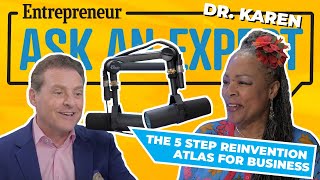
A YouTube interview (host Mike Koenigs) with Dr. Karen Wilson Starks describing her approach to "heart-centered business growth with military precision." Dr. Starks draws on clinical psychology training and experience as an active-duty Army psychologist to help executives and organizations through growth or turnaround situations. She presents a five-step "reinvention atlas" (clarity; opportunity; priority; culture; mindset), emphasizes culture and leader mindset, offers trusted-advisor implementation support (executive selection, succession, recruitment), and accepts engagements via www.transleadership.com.
Questions this video answers
72% in meetings; 6% with rank-and-file employees; 3% with customers.
Bachelor's degree in psychology from the University of Maryland; master's degree and PhD in clinical psychology from the University of Connecticut.
www.transleadership.com
1) Clarity; 2) Opportunity; 3) Priority; 4) Culture; 5) Mindset.
Chapters
According to a study by Harvard Business Review, CEOs spend 72% of their work time in meetings, 6% of their time with rank and file employees, and just 3% of their time with customers. That's a lot of time spent in the business instead of on the business. Now listen to this and see if it sounds like you. You're an executive, CEO, entrepreneur or business leader. You're working hard and maybe you feel like your resources and time are tapped out. You're doing the job of two to three people putting in 60 hour or more weeks and you're losing employees and you don't know why. You're feeling frustrated, overwhelmed and annoyed. Your teams aren't talking to each other and they're making expensive, unnecessary mistakes because important information isn't being shared between them and, and there's no accountability. It's becoming harder to attract and retain the right clients or employees. And the company culture has started to slip. You feel like your people don't care about work and aren't putting in a hundred percent because you're repeating yourself over and over and not seeing changes. You're so far in the weeds that you can't see the big picture. You're losing your confidence in making decisions, feeling stuck, and your indecision is driving your teams crazy. You might even question yourself. Are my strengths what the company needs moving forward? Now if this is you, you're going to love what Dr. Karen Wilson starks is going to be sharing with you today. She provides heart centered business growth with military precision. And you're about to find out why. So, hi, how are you?
I'm doing great, Mike. Thanks for having me.
All right, so I wanted to begin first of all with this idea of military precision. So why don't you talk a little bit about your education and your background in the military? Sure.
I actually went first to the University of Maryland and that's where I got my bachelor's degree in psychology. And then secondly I went to the University of Connecticut in stores. I got my master's degree and my PhD in clinical psychology. From there I went to the army as an active duty army officer and psychologist. And so that was the path that got me to the military. And it makes a difference in my life today.
All right, so that leads us to, I gotta ask you, how's the military helped you with the work that you do today with executives?
You know, it was actually while I was serving in the army that I really got interested in what I call the business application of psychology. Because we worked not only with individual soldiers. We also worked with commanders of units and, and we really looked at their leadership and we looked at how could they create the right culture so that those soldiers could be highly effective and in fact, high performance teams.
Okay, so the next thing that's very recognized about you, and I've known you for quite a while, you always have a flower in your hair. What's the significance of that?
Yes, and this is kind of an interesting thing because sometimes we have opposite parts that we bring to the table. So the flower part is actually all of my flowers are from Hawaii. So I go back and forth to Hawaii, I get new flowers and they represent the aloha spirit. So I see myself as bringing the aloha spirit into organizations, bringing that positive energy, that positivity that says we really can go to a different place. And I work predominantly with male leaders. Those leaders are corporate executives, they're entrepreneurs. They may be senior military leaders, as a matter of fact. And even in all of those settings, what I've found is that the men actually like the flower and it does sort of give them a pep and some energy.
All right, and one thing that before we get into your process, because you've been working with a lot of organizations for a multi decade career, I won't say anything more than that, but you get called in to work with a lot of organizations. You've got a system that can consistently produces real results. So what are the circumstances that you get called into organizations and how do you help them?
Yeah. Thank you. I think what I would say is that there are two basic reasons why organizations call me in. One is that they have a growth opportunity that they're pursuing or it's kind of what I call a turnaround situation. Something's not going well and, and they really need help. Both cases require a reinvention of where they are and what they're doing. And so that's when I come in.
All right. And one of the things that I know when you go through the examples with all of your clients, you sign a strict confidentiality agreement. So I'm going to ask you some questions. Some of the examples are of course going to be under that. So I'm going to respect that when I ask you the question. But I really want you to talk about the system that you've developed because you don't just create maps, you create what you call an atlas. So why don't you walk us through your five step reinvention atlas?
Yes, and I, and I call them maps because you really have to Understand the terrain that you're operating in. And this kind of goes back to military leadership as well. If you're a military leader, you are navigating a lot of land, a lot of terrain. You've got to understand what's out there and what's the map of that territory. And so a lot of times in today's world, we're really thinking about navigating by gps. And in order to do that, you know exactly where you're going, you're putting that coordinate in. However, what I find with my clients, they need to know what else is possible on the map so that they possibly could navigate to the, to someplace they might not even already know about. And so that then leads to the five step system.
Okay, so let's go through each of the five steps because you've got a process that you bring everyone through, and the net result is they walk out with clarity, confidence, courage, confidence moving forward, but also a plan on how to get to where they want to go. So what's step one?
Yeah, step one is about clarity. And clarity is really all about understanding the big picture. Because a lot of times when a company's in some kind of a crisis, people get lost in the weeds and they forget the big picture or they can't see the big picture. So a lot of what I do is help them pull back a little bit and get clear about what do they want to do, why do they want to do it, how is it going to be useful? So there's a purpose piece of that too. Okay.
And I know one of the things that you and I have talked about off camera and what your clients consistently talk about are some of your qualities, which is heart centered business growth with military precision. So why don't you talk a little bit about the heart that you bring to the big picture?
You know, when people are in crisis, they really want someone who's going to be there with them and who's going to walk with them through the difficulty, not just come in and drop off a map and say, okay, good luck, see you later. So I think what my clients recognize, I care about them. I come alongside them with tools, with resources, with knowledge, with information that comes from a variety of different industries and as you say, multiple decades of working with a lot of different kinds of businesses and companies. And what I think they value is that I'm going to walk that journey with them. If they're scaling a mountain, going up a hill, or whatever it is, we're going to do it together. And therefore it's going to get done well.
Very nice. So what is map number two after you go through the clarity map, map.
Number two is really about opportunity and it's really thinking about what are the different perspectives, the different options that are out there that they could look at and could potentially select and in terms of moving forward. Because a lot of times when, when people come to me, they have gotten narrowed in their focus and they don't always see the full panoply of opportunities that are out there. So it means what am I going to select to do? And also what am I going to choose not to do because I'm going to maximize the better opportunity.
Okay, and what are the key benefits of going through the opportunities? Like what are the key things, one or two things that you see people get right away once get them to look at the opportunities and sift and sort them and what value you bring into the table beyond that?
Well, one of the pieces is that it gets people talking together as opposed to operating in silos. I find that frequently when there are challenges, people have been in their silos for a long time, they actually have been not talking to each other. They don't see the big picture of what the collective opportunity is and what's the reason why they might be better off to talk together and co create together.
Okay, so what's the third map that you work on typically? What's the what goes next?
The third would be priority map because you've got to figure out what to do first and what to do second. And a lot of times a priority has to do with what I call the biggest levers for change. We want to select second, something that's really going to knock down a bunch of dominoes and head in the direction that they want to go in. Sometimes I find that clients are doing the wrong thing at the wrong time. Maybe it belongs in the map, but it's not the first priority.
Okay, so what does that ultimately support the leaders to do? What happens for the people that you're working for on the executive level? What are the benefits and results that they see?
Yeah, that frees up the executive executives to really focus on the vision and to focus on the strategy. And so frequently in businesses that are struggling, the executives have gotten mired in the day to day operations and into those weeds. And therefore they don't have the clarity about the what and the priority anymore.
Okay. And I know step number four in this map is the one that you've shared with me, you've had massive success with and you're well known for, in the industry and. And transformational leadership. But what is step number four?
Step number four is really the culture map. Because if you really want to dial in the kind of change and the kind of difference that my clients are looking for, you have to create a culture that supports those kinds of changes. And sometimes people don't recognize or see how the culture is really holding them back. And so I spend a lot of energy and a lot of time on that. So there's the corporate culture, and there's also specialized kind of cultures they may have to look at as well.
Okay, now you've got a super interesting background, and why don't you talk a little bit about your history, specifically your ethnic history, and how that has become extremely attractive to a lot of the executives who bring you in.
And.
And how that specialty, that insight you bring to the table, has actually expanded the reach, the sensitivity of the leaders, opened up their hearts, and made the environment significantly better to work in and operate in. So what is that?
All right. In my own background, I am actually both African American and also Cherokee. And my father grew up on a slave plantation. And. And he was the first generation to actually be able to leave the plantation. And on both sides of my family, I'm also Cherokee as well. So I actually relate to the Native American culture, the African American culture. And I'm always bringing information. I'm always bringing symbols or way of looking and analyzing a problem or thinking about it that reflects that cultural background. For many of my clients, they may not be coming from that level of diversity. However, people in their organization may reflect diversity that they're not thinking about and may not be mine specifically. However, I'm sensitive to it, and I can help them create the kind of culture that speaks to the people who are in their organization. And at any given time, I might even have on a symbol myself that represents something. So, like today, the earrings that I'm wearing actually are Native American. And then these bracelets here are actually from Africa, and they're from Kenya. And so there are those little subtleties, but each of those cultures have a way of communicating. They have a way of meeting together and getting work done, and we can learn from all of that. Okay.
And I know one of the things that you've talked about is just how that helps performance and retention as well. And the fact that you mentioned this earlier, you're working with a lot of, let's face it, they're white men who, in our culture today, there are sensitivities. And the fact that you're able to be and come in as a trusted advisor and be able to take on some very difficult conversations that, let's face it, are not always safe. But can you talk a little bit about that, too?
Yes. It's really about attracting talent, and it's about retaining talent. And if you don't attend to the culture and what people want to feel valued and to feel appreciated, you might attract them, but you're going to lose them out the back door. And when that happens, that's very expensive for organizations. So a lot of the conversations that I have with them about who needs to be here and how do you create an environment that attracts who needs to be here and also keeps them.
Okay, so step five is. I know another one of your favorites, and you're really amazing at this because you've got such a diverse background, you've worked in so many environments. Your military training has supported this. So what's step number five?
Step number five is all about mindset. And actually, as I'm working with a client, we're really dealing with mindset from day one, throughout the entire engagement, because here's what happens. Whatever mindset you have that will define what you're able to create. And so often when I'm working with a senior leader, what they don't understand is their contribution to the challenges that they don't like. So when they're complaining about, oh, my people are not accountable or my people are making all of these mistakes that are expensive for us and things like that, there's probably something that that leader is doing that's actually reinforcing that or something that they're failing to do that would be helpful to do in order to get out of the box. So part of mindset is actually helping the senior leader to model what it is that he wants to have done so that the organization can see it in action and also do it right on.
And just having that embedded inside the DNA of the organization is what everyone's looking for these days. So you start out on a strategic level, building the atlas and the maps for growth and opportunity for turnaround, or as you say, in reinvention and transformational leadership. But then from a tactical side, you get brought in as a trusted advisor for integration. So why don't you talk a little bit about some of the people that you work with as a trusted advisor and on the implementation side, too.
Sure. Very often when I come in, let's take a case that's more on the side of a turnaround. Okay. And this is a Scenario where maybe they might have outgrown to sort of like their infrastructure. Perhaps it's an organization that's moved from a large, small organization to mid size, or they've moved from mid size to large and they no longer have the right infrastructure to support the work that they're doing at this point. So that means thinking about who's on the team. So I often help them to think about who else needs to be selected, who else needs to be brought in in order to deal with the current work that gets the executive members very often out of the operations piece. And we get involved in developing the people who are already there, thinking about succession, thinking about, you know, what's going to happen the next day and really getting in there, coming alongside those teams and showing them what it takes. What are the skills that you need to be high performance, how do you do it? That's a lot of what I'm doing as well.
Okay. And I know as we were getting ready for our interview, you got a call from one of your clients. So you're always on demand, it seems. And when a trusted advisor comes, when there is a big situation going on, how do you deal that and how do you serve as a sounding board?
Yes, it's very important. I mean, I meet with my clients on a regular basis so we talk through whatever is going on and we're working through the their map and getting the results that they want at any given time. Let's say we don't have a scheduled meeting. If there's a crisis in that organization, my clients have my cell phone number, they call me and we will talk about, okay, how do you walk through this? I don't want them climbing up that mountain alone, without resources, without the tools and without their advisor, their guidelines, you know, there to help them navigate that terrain and get to safety where they're trying to go.
Okay. Now, I know you also have other resources and professionals you bring in. So what are the key areas where you find that's necessary that's made the biggest impact in the shortest period of time?
Yes. If I'm actually doing a major selection for a client and we're looking at bringing in executive talent, many times I'll have some partners, other consulting psychologists that I bring in so that we have a couple different lenses and a couple different eyes on the prospects, on the candidates so we can select the best hire we know. If you don't get the right person and you have to replace them in a short period of time, that is very expensive for an organization. Not Only financially, but just in the time that's lost and the organization feeling demoralized, that, oh, you know, we didn't have the right person and we've lost some ground. So I'll bring in partners for that and also for recruitment because sometimes we, they don't have a recruiting arm sometimes and they need to be able to look out there and find somebody else. Great.
I can see how that makes a huge difference. So let's talk a little bit about who's a right fit for you in the growth and opportunity phase of the business and who's a right fit for the turnaround phases. What are you typically looking for for the people who are going to have the most success? What's going on and what phases are they in their development and their growth?
Well, if I think about a growth and opportunity business, usually there's not anything specifically that's broken there. These are companies that have been very successful. They've gotten to a certain point, they're looking out the window and they're saying, you know, if we're going to continue to be successful, we might need to go into a new market, you might need to create a new product or a new service. And so they're thinking about what else is going to keep us on the cutting edge, what else is going to keep us relevant and that. So they're dialing in that opportunity side. Now what's challenging is that maybe they haven't figured out how to add that service yet or that product and perhaps they don't have the right people on the team yet to make it happen. So I'll give you an example. I have a one client I worked with that was a large foundation. You know, in the United States, a foundation, you'd recognize the name, they have a lot of assets and they make a lot of impact. And they were switching their business model from being an operating foundation to being a grant making foundation. So when you're operating your, your program managers, they're actually out there doing the work of the foundation. Once you move to grant making, there are people outside of the foundation who you give grants to and they're doing the operational work. Well, the job description from being a grant making program officer to an operating one is not the same. So in that organization, they had to think about who do we need to recruit now, who's going to be the best fit for where we're going. And, and some of the people who had previously been on the team, they chose to leave because they no longer fit that model. And in fact Some of them became grantees of that foundation because it could continue to operate.
Okay, and what about someone who's in crisis mode, turnaround mode, like the company that just called earlier today, before we started shooting? What's a right fit for that and what do you look for and who's the most likely to be respondent to and be able to implement your resources and tools and techniques?
It could be a variety of different people. However, here's what I would say. The leader recognizes that they cannot continue to do business as usual. They're looking for that win and that next step that maybe they haven't identified how to do it or what it is for them. And person who's willing to learn, a person who's willing to experiment, somebody who recognizes that they cannot do what they're doing without the people. So they're willing to invest in developing those people, invest in getting the right people on the team, and they're willing to partner with an outside advisor to co create. So it's someone who's got that kind of a mindset. And even if they don't have all of that, they can have some of it and we can develop and build the rest as we go along.
Okay, so I know the next phase for someone who wants to work with you and have a conversation with you to find out if they're a right fit and also go down the process of creating the reinvention atlas with you. Whether or not they're in growth and opportunity mode or turnaround mode, where do they go to learn more and register and apply to work with you?
Sure. They could go to my website, which is www.transleadership.com apply and that will take them to an application form that they can fill out. And then I will take a look at that and someone from my team will contact them if it looks like they would be a good fit for what we're doing, and then I'll schedule a call with them.
Fantastic. Well, I got to say, this has been awesome. Spending time getting to know you better, seeing what you have to offer, and you really have a really unique, interesting blend of experience, talent, expertise, education. It's been a pleasure getting to know you better. So thanks for being here.
Thank you so much. Mike.
Ra.
More from Mike


The 3x3 Framework That Changes How Entrepreneurs Think | Mike Koenigs & Dan Sullivan








Why Your Business Gets Harder As It Grows | Michael Walsh on the Hidden Danger Zones of Scale
