Gay’s New Memoir - “Loving Life. Tales of My Wondrous Journey.” | Big Leap EP#66
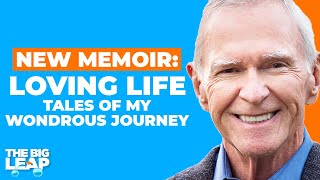
This is a podcast-style YouTube interview (Big Leap EP#66) in which Gay Hendricks discusses his newly completed memoir Loving Life: Tales of My Wondrous Journey with host Mike Koenigs. Hendricks reads and reflects on selected chapters—his childhood "secret birthday wish" for "eternal happiness for everybody," extended experiences with meditation and psychoactive medicines (LSD, peyote, ayahuasca, DMT/toad), a backpacking incident being thrown off a bus at the India/Nepal border, and a tribute to his mechanically skilled older brother—and connects those stories to lessons about happiness, relationships, and why people should consider writing their own memoirs.
Chapters
Back the year of 1979. Picture me as a backpacking granny, glasses, long brown hair. It was kind of like Darth Vader, you know, it was kind of like.
Toad likes you. And I said, I like Toad. Everybody else roared with laughter. I think it took that deep experience to really open up and kind of blow open a part of me that was able to let go of my purely male identity and see the world in a different way. If other people were securely in their minds and they weren't happy and didn't think it was possible to be happy, maybe being a little out of your mind could be pretty useful.
Should you write a memoir or why should you write a memoir? Gay just finished writing his memoir, which is coming out very soon. It's called Loving Tales of My Wondrous Journey. And what we're doing in this episode is we're talking about four of Gay's biggest chapters, at least the ones that we decided were going to be super interesting. One of them is a secret birthday wish Adventures in Non Ordinary Consciousness, which, yes, involves some psychedelics thrown off the bus at the border and celebrating my big brother. So, Gay, what do you think the biggest takeaway or reason why people should pay attention to this episode is, aside from just understanding why to write a memoir in the first place?
Well, I think the stories are interesting that I read because they're interesting adventures, but they're also things that make you think. And so I'm hoping to inspire not just people reading it for the adventure, but also reading it to learn more about themselves. I think the main value of writing a memoir or reading a memoir is if you read a memoir, you're seeing life from another person's perspective and you say, wow, how is that like me? Or how is that different from me? That's an incredibly valuable thing because, you know, it's true that the unexamined life is not worth living, you know, unless you begin to ask yourselves the big questions of life. Unless, you know, it wasn't until I started wondering about the bigger aspects of myself and life that I really developed something that I now call happiness. Because unless we have that self knowledge of ourselves, there's no possibility. I don't think of being happy because you don't know yourself well enough to give yourself that loving, compassionate understanding that I think heals us in life. And so it all has a lot to do with your turning the spotlight of awareness on yourself and learning to feel and see and resonate with those deeper aspects of yourself.
And in this episode, we also talk about how you went about writing the book and where these chapters came from and how you might go about writing your own memoir if it's something you'd ever consider. And if you don't, maybe you'll be given some good reasons to do that. So this is definitely one of the episodes that I learned a lot about Gay and how he thinks. And I really think you're going to learn a lot about the way you think and enjoy the entertaining aspects as well, because Gay reads. So all that in this episode of the Big Leap.
All right, I want you to think for a moment. If you were going to write your memoir right now, what would it be about, and what would be the biggest chapters in your life? And that's what we're going to talk about today because Gay just finished writing his memoir, and it's called Loving Tales of My Wondrous Journey. So what we decided to do today is Gay's actually going to read some passages from the book, and we chose some chapters from the book that represent significant chapters of his life. So, Gay, I'd like you to kick it off by first telling us, why a memoir, why now? And what did you learn by going through the process?
I learned a lot, and I want to put in a pitch to everybody to write a memoir or dictate it or make a video of it or something, because it enabled me to see my life in a whole different way. I could see it as this big, long sweep, you know, rather than individual little things that plugged in here and now, here and there. I have now 13 chapters in it. I may add one more before the end, but they range from everything from personal tales of mine to adventures I've had out on the road of life and interesting people I've met along the way. But I do want to recommend that as you listen to these stories, you think about, what can I learn from this? About what would I put in my own memoir? What would I focus on first? In my memoir, I focus on the first thing I could remember was it's called my secret Birthday Wish. And it's a wish that I used to make all the time for my birthday when I was a kid. And so I want to read you some of that, and it happens to be the very first chapter in the book. When I was a little boy, I always made the same wish when it would come time to blow out the candles on the birthday cake. Where I grew up, the custom was to close your eyes, make a secret wish in your mind, then try to blow out all the Candles with a big whoosh. If you blew out all the candles, your wish would come true. That was the procedure. And I took it very, very seriously. Here's what I did. Every year on my birthday, I close my eyes and make the following wish in my eternal happiness for everybody, including me. That was my wish every year. Eternal happiness for everybody, including me. Then I'd blow like mad to get those candles out. I didn't usually have any trouble extinguishing all the candles, except for one time when my brother installed fake candles that wouldn't blow out. They would keep popping back into light.
So the idea was that you were also supposed to keep your wish.
And I observed this every year up until one year. And I forget how old I was. I was probably maybe 12 years old or something like that. Oh, Yeah, I was 12 years old because that was the year I wanted a birthday. I mean, a BB gun for my birthday.
So what happened was I told Dewey I wanted all of us to be happy all the time. And he was absolutely flabbergasted. He said, hey, I know you want a BB gun and a bike. Why don't you wish for one of those? You shouldn't waste your wish on something like happiness. And besides, nobody can be happy all the time. Well, the budding psychologist in me had already figured that one out. I said.
I always wish for happiness because if I'm happy, then it doesn't matter if I get a bike or not. And if I wish for everybody's happiness, then I won't be the only one happy around. Everybody else will be happy, too, and the whole world will be happier. That was my point. And I had one other point. I said.
If you've ever felt even a second of happiness or a minute of happiness, that means you've got the machinery in you. And then it's just a matter of working it up. So you feel that way all the time. So Dewey wasn't buying it, though. He said, you're out of your mind. And I remember telling him that I didn't think that was such a bad thing, because if other people were securely in their minds and they weren't happy and didn't think it was possible to be happy, maybe being a little out of your mind could be pretty useful. So that was Dewey. He was my neighbor. And I started calling that the Dewey barrier because it's. It's the first one you're likely to run into if you decide you want to be happy all the time. You're likely to hit that barrier if you launch any other bold program of self change. The very day my friend Richard made a commitment to sobriety at his first AA meeting, two of his alcoholic friends tried to talk him out of going to the meeting. Fortunately, he persisted. He didn't let them. 14 years later, now, he's still sober and going to meetings. So expect that any time you make a bold commitment, someone will step up and tell you it just isn't possible. The person who tells you this is likely not to be a happy person. So if you can muster the courage, I suggest that you take the advice. Taking on happiness. Taking. Taking advice on happiness from a person who's not happy is like getting advice on vegetarianism from a person who's chomping on a pork chop. The same is true for relationships. Like my lofty goal for being happy all the time. I wanted to create a relationship with a woman where the flow of loving connection was always there. I immediately ran up against the Dewey problem there too. Just about every person I described my goal to told me it was unrealistic.
It took a lot of work and a willing partner for the last 42 years who was just as committed to that as I was. And eventually we created a relationship that ran on continuous positive energy. From 1980 onward, we focused on that goal, but it didn't pay off right away. Later on, it paid off big time. But it took us maybe 15 or 20 years to weed all the things out of our lives that were causing us unhappiness, patterns in our and circumstances of life, one thing and the other.
But it is possible because for the last 22 years now, we haven't had a single argument or even a cross word in the relationship between us. It's been a complete flow of positive energy. So it's worth all the work. So I'm going to pause there. There's more in that chapter, but it goes along those same kinds of lines. It all has to do with making big goals for your life. Like the goal of happy, being happy all the time and then putting in the work to make them happen.
Well, I got a couple things that I took out of that and also a couple questions. So the first one is.
When did you start making that wish? How old were you? You weren't totally clear on that?
Yeah, it was probably when I was in about the second or third grade, I think maybe when I was six or seven years old.
Okay, so very young. And.
What do you think? I'm curious about the. Because you wouldn't have had.
The mind at that age other than like, why happiness? Were you witnessing or experiencing unhappiness? Or how are you so clear that happiness was so important? What do you think that driver was at such a young age?
Yeah. The memory that comes to mind, Mike, is that I formed an opinion. I remember looking at a picture of my family all together. I think we were at a Thanksgiving dinner or something like that, and everybody was sitting around the table, and there were, you know, my grandmother, my granddad, my aunts, my mother, my brother and I, and probably a couple of other people there at this huge table in my grandmother's house. And I remember looking at that picture, and there were only two people smiling in the entire picture. Everybody else looked like it was a funeral, and I was smiling, and my retarded Aunt Cat was smiling, who had down syndrome. And to her, every day was a party, and she just didn't see the point of getting bummed out ever. You know, if she got bummed out about something, she'd just say, oh, well, you know, and change the subject. And she was kind of a Zen master to me when I was growing up, even though she was 30 years older than I was. I learned a lot from just her kind of Zen, like, presence and finding the happiness in any situation. But I remember that picture, and I remember saying, okay, I'm going to do whatever it takes to preserve that thing. I had, you know, that feeling of happiness and the fact that I was the only person smiling. I think I was probably, maybe. Yeah. That picture is when I was around seven or eight years old, so it was pretty early. And the Dewey conversation was later on when I was 11 or 12, though. So I had my secret birthday wish for several years there before I told anybody about it.
Yeah, no, it's.
So far, it's working great, too. Yeah.
Yeah. Well, I think the lesson is have a short attention span.
Right?
Exactly.
Yeah. So the longer you dwell on it, but it also reminded me, as you were talking about it, it's like the tallest poppy syndrome or the bucket of crabs. And how.
I've told you this before, but my new philosophy of staying happy and content all the time is testing something out by determining and feeling into whether or not I'm going to experience more than 5% aggravation from this person, place, or thing. And that determines whether or not it's a hard no or a yes. And.
It'S pretty.
You know, it makes for an easy decision, but it's. It really has allowed me to clear out negative human energies from my life, even some of them that have been Long standing and, you know, just deciding I don't want to have anything to do with these people anymore. So. That's really good. That's really good. I learned a lot from that one.
Yeah, I think a lot too. Especially in Europe and get up into your 30s and 40s, it's. It's necessary to do a lot of weeding out of your life of people that in the past, maybe you hung around with, but they no longer fit where you are. You know, like the guy I was just telling about who was going to his first AA meeting, but his drinking buddies tried to talk him out of it.
Yeah, right.
Around here we call that the upper limit problem.
Yeah. Yeah, well, and misery loves company, for sure. So.
That'S very good. Well, you want to move on to the second one. We chose another chapter from the book which is Adventures in Non Ordinary Consciousness.
Yes, let me. I'm madly scrolling through to find it here. Here we go. Okay, chapter seven.
Here we go. I've meditated every day since 1972, morning and evening. So the non ordinary consciousness I most enjoy now is the clear, serene, no thought state meditation creat. I've written in other books about my experiences with meditation. So in this chapter I focus on the non ordinary consciousness produced by psychoactive medicines of various kinds. The first time I remember encountering consciousness altering medicine was in a magazine article I read in high school. It described a journey into a remote section of Mexico where the journalist took psychedelic mushrooms and described his visions. The article also had pictures of the ancient female shaman that led him through his trips. I found it absolutely riveting and vowed on the spot to have those kind of adventures myself. It would take a couple of decades, but I would eventually come to have my own adventures with peyote and other consciousness expanding medicines in the far reaches of Mexico. In college, my roommate and I grew a couple of pot plants, but they turned out to be fairly puny specimens. The buds did very little to alter my state of consciousness besides inspiring me to devour a large supply of brownies and vanilla ice cream that we had on hand there. But I don't remember much of the psychoactive part of it. If my weed was a dud, my very first LSD experience was anything but. It made a powerful positive impression on me that continues to resonate in my life. One Saturday in Palo Alto Around 1970, I took a dose of blotter acid and stretched out on my bed to await through effects. I hadn't planned to record my trip, but as the effects came on I noticed a cassette tape recorder I had nearby. I clicked it on and was able to capture about 45 minutes of my excursion. For the first 15 minutes, all you can hear on the tape is my heavy, slow breathing, often with an audible ah. On the out breath. It was kind of like Darth Vader, you know, it's kind of like.
So finally, after about 15 minutes, I say my first words on. I have this breathy whisper, kind of like awestruck wonder. I say, there's a web that connects everything in the world. And then I go back to my breathing and my ah. So another 15 minutes go by and then I speak my final words on the tape. So I only spoke twice on the tape. Again, in my breathy wonder voice, I said, I'm going to call it the web of the world. And then I realized it doesn't matter what I call it. And I lapse off into laughter. And the rest of the tape is just me going, ah. Kind of like ecstasy sounds.
Yeah, yeah.
And then from that space, I felt another truth emerge that sort of came from my body rather than from my mind. I realized that we make our way through the web of the world by loving the things we encounter. Our progress through the world is determined by how much love we can give and how much love we can receive.
So, Mike, I had that in 1970.
It's unbelievable.
But it wasn't until.
That I could put all that together, you know, in our books like Conscious Loving and Learning to Love Yourself. That became where I tried to put that into words for the first time. And so I kind of worked that for 10 years. This idea of oneness and using love, when we encounter difficulty in the world, either in ourselves or in the outside world, to. Instead of judging and condemning the things we were experiencing, kind of like I was taught to do originally, I started just loving them as they were and welcoming them into the wholeness of myself. And I think that came a lot from that first LSD experience. And to this day, that's one of the most important things I've ever learned. I don't know if I would have learned it in some other way. Probably eventually through meditation. But that's the value of things like psychoactive medicines, is that if they work, if you get the dose right and the setting is right and everything, you can collapse learning. You can collapse time. Something that might take you to learn 10 years, you get it in kind of a big whoosh. Of course, then you have to actualize it in your life. It's not just about Having the big whooshes. It's, you know, learning to act differently based on the things you've learned.
Yeah, well, it's. It also is if you go back and really think about.
How much.
Psychedelics dramatically affected the 60s and 70s, especially how you are on the cusp of that, and how there's such an incredible resurgence and interest and now the legalization of these as tools and what the is and with the time that we live in right now, how useful.
It is. So I look at it as, you know, the 60s and 70s was about expansive group psychedelics. Now there's a lot of individual work being done. And when you look at the books that have been and are being written about it, like how to change your mind by Michael Pollan, for example, that was a big part of it. And then the work that's being done on.
Trauma and.
Our friends over who are doing all of the work.
They'Re local too. I can't believe I just spaced on the name.
I know the founder. It's having a moment, my own senior moment right now. But basically they're using mdma, lsd, psilocybin, and they've just proven beyond the shadow of a doubt how effective these are in either reducing or eliminating ptsd, depression, anxiety, et cetera. So I'm curious for you.
If you look back, was that the defining moment and more and most biggest experience you had, or is there another experience that had an even more profound effect on you in your learning or your understanding of consciousness, love, relationship, or the perfection of life in the universe and the unit? The concept of unity and unification?
Yes, I had. In that same chapter, I'll read another little section because it's about a medicine that's become very popular these days, ayahuasca. So I'll just read it to you. Ayahuasca has gotten very popular in recent years. But when I took it back in the 80s, I didn't know much about it. One Sunday afternoon I took the medicine and sat back to await the onset. After an hour or so, I began to have an irresistible urge to crawl around on the floor, emitting low, growling, sort of tiger sounds. It just seemed like the thing to do. And so I started doing it and Katie was sitting for me. And.
Pretty soon I was in full jungle cat mode. I felt like I was a jaguar in the jungle. And at the time I didn't know about the origins, much of ayahuasca, that it does actually come from down in the jungle and has a lot of that kind of consciousness to It. But pretty soon, instead of just crawling around on the floor, I was in full jungle cat mode. Making these stealthy movements around the floor. And these deeply satisfying, throaty roars. And after a few roars, I realized that if I got the sound of my roar harmonized with the vibrational frequency of this inner buzz I was feeling. I got transported into an ecstatic state. It was a new space that was beyond vibration. So I could kind of ride vibration into this vibrationless state of pure consciousness. And in that space, it was as if I could look down through all of my energy body. And see precisely the places I was still stuck. And from that perspective, I saw something that absolutely changed my life forever. I realized I'd always seen the world from a male perspective. Not surprising, because I was born a male, but that's natural. But in my state of heightened awareness, I saw how it was. Being a male was a severe limitation. Because.
I'm trying to find words again. I'm not just reading right now. I'm trying to remember the actual experience enough. It was like I had this moment of wonder where I said.
I wonder what it would be like if I didn't see the world from a purely male perspective. What would it be like to see the world from a woman's perspective? And the moment I had that thought, suddenly I was in this whole different world. I was in this tropical jungle where everything was pulsing and alive. And my job was to kind of listen to it and learn from it. And that was huge for me because I realized that in seeing the world from a male perspective, there's a way. I didn't listen to women. I didn't let their energy in. In other words, if I kept seeing the world the way I was seeing it, it kept me from appreciating their perspective. So in the middle of this medicine experience, I sort of decided to relocate. Relocate myself over into Katie's perspective and to see what it was like from a woman. And it was a huge learning experience for me because, well, the direct effect of it is I started listening to Katie and to women in a whole different way. Started, you know, like, I think, down unconsciously. In the beginning, I always felt that it was my job as a man to teach something to women to make them be more like a man. And I saw how absolutely ridiculous that was that my job was to really listen and understand. And that was such a huge change because I quit trying to talk Katie out of her feelings. You know, if she said she was tired, I would try to draw it out and find out what had made her. So rather than just kind of saying, well, why don't you lie down and take a nap? So I, I became a listener, I think in a much bigger way. You know, even though I had a PhD in counseling psychology, I think it took that deep medicine experience to really open up and kind of blow open a part of me that was able to let go of my purely male identity and see the world in a different way.
That's. I'll tell you what I got out of that is so you. And I have did a previous episode on my DMT experience which was profound and I've done only limited LSD and.
Psilocybin and I have not tried peyote. But where ayahuasca is called the grandmother, it's the feminine divine. The grandfather is peyote and mescaline, which is considered by many to be, you know, the Navajo have made it a big part of their spiritual practice. But if you fast forward again into let's say today's literature and movies, but yesterday's literature and movies. So you've got like Aldous Huxley and Alice Carroll, or is it Alice Carroll, whoever did Alice in Wonderland, Is it Alex Carroll?
Right. No. What was his name? James?
Gosh, I can't remember. But I know who you're talking about.
Well, if you look at the Lewis Carroll, that's what it is. Lewis Carroll.
Lewis Carroll, that's right.
So when you look back in older literature, but then if you go back and you start paying attention to the patterns left and behind by ancients, whether it's Tibetan, the Tibetan Book of the Dead.
All the work in magic, M A G I C K, and also.
The Knights Templar and any kind of hidden work that isn't populist or mainstream, you see the evidence and the tremendous obvious use that anyone who's had a psychedelic experience will immediately recognize whether it's patterns, architecture, how it surfaces from a fractal point of view. And then more recently.
I'm a total science fiction freakin fan and you look at how Dune very, very clearly was influenced by a lot of feminine psychedelic work and the importance of what were effectively the nuns, you know, the female order, but then also what was done with Star Trek. And not just old Star Trek, which was more on the psychedelic level. But if you fast forward to the latest shows like Discovery, Picard, which is on right now, they're all about.
Man'S search for meaning and you can really see the psychedelic origins there. Or Avatar, the movie Avatar, if James Cameron isn't a total DMT, 5 Meo, DMT and psilocybin fan, I would be really surprised. It's just so obvious.
So I think what I love seeing is these patterns emerge and just how, yes, you can access these distant places through breath, work and other means, but if you want to shave 20 years off and go right to the source, this is definitely a mainline. So I don't know if you have any other comments about that or what you've noticed beyond your own patterns, but how it's affected society, our understanding of the world and the universe and how it emerges in different forms.
Well, yeah, our society has a lot to learn from, you know, that everybody in previous generations felt okay about legalized alcohol, which kills a thousand people a day, or legalized tobacco, which kills 1,000 people a day. You know, both cigarettes and alcohol both kill about 300 and some 350,000 people a year. And suddenly, though, they get the idea of making pot plants illegal. The government comes down. And so it has a patent ridiculousness to it, people's response to that. But I think it's much healthier now. You know, we have psychedelic medications being used in medicine and psychiatry and all over the place. And so I think it's a very healthy thing that we' I think beyond psychedelics, it has to do with our attitude toward our own unconscious, our attitude toward the mysteries of ourselves. If you're afraid of the mystery of yourself, don't take psychedelic. You won't have a good time. Hey, though, you mentioned you hadn't taken peyote. May I read you a little peyote? It'll give you an idea.
I have a lot of friends who have. They loved it and still do, but. Yeah, and it grows everywhere. Like, I can walk outside and peyote is everywhere in the San Diego county area. You just have to tune your eyes to seeing it.
Yes, that's exactly the way it works. Well, my experience was down in the central Mexican desert, and there is a group of people called the Huichol Indians that have made peyote a part of their ceremonies for hundreds of years. And. And most of them live over on the coast near Puerto Vallarta in a little town called Topek. Now, they live outside Topek, but the place where the peyote grows is a couple hundred miles away. And in the old days, they would have a ritual pilgrimage there where they would all walk to the peyote grounds and picket every year. So that's what we did. I had a group of people, most of whom were native Americans, and I was traveling with them, most of them from the Huichol tribe and some from the Cora tribe nearby. So picture us bouncing around on a lot of buses through the central Mexican desert, traveling around little buses that had animals in them and that kind of thing. So it's way out in the middle of nowhere. So here we are out in the desert. We set up camp around the big tree that the area distinguishes. I should say they set up camp because I'm hopelessly unmechanical and easily stymied by complex items like tent pegs. Also, since we're on the subject of camping, I should confess a secret known only to my closest friends and family. I loathe camping. However, on this occasion, all the discomforts, like freezing nights, blazing hot days, tents collapsing on top of us in a midnight storm, those are all made worthwhile by one bite of roasted corn. Let me explain. The first day, we spent most of the morning hunting for peyote. It's a little round cactus that grows close to the ground and is notoriously hard to spot. I spent the first hour shuffling along, staring down at the desert floor, trying unsuccessfully to spot a peyote cactus among the other clumps of vegetation. The shaman noticed my frustration and came over to whisper in my ear. He said, you need to get on the cactus's wavelength. Just feel what it must feel like to be a juicy little thing living in a desert, something that makes people high and happy. And so I relaxed into that attitude of being a peyote plant, and immediately I spotted a cactus not a yard from where I was standing. So I got down on my belly and I lowered my head to the ground and just to see what the world looked like from that cactus's point of view. Suddenly I could see them everywhere, almost as if they were winking at me. There were at least a dozen of them scattered around within 10ft of where I'd been standing before, not able to see a one. So I picked all the ones I was likely to need, and I went back to camp to get the shaman's blessing for my trip. And this particular cactus likes to be picked because as soon as you pick it, it'll.
I don't remember much about the actual content of that first peyote journey, just an overall impression of opening up a new space in my mind that I call the celestial canopy. I remember something that didn't happen, though, along the way to getting people stoned. Peyote is famously known for making them vomit. The shaman told us that it only did so to the extent that you needed cleaning out, he said, if you'd been living a toxic life, the medicine had to clean you out before it could do its healing work. Well, thanks to my health conscious wife, Katie, I eat an extremely refined diet of mostly organic food. The peyote never gave me the slightest bit of gastric discomfort, in contrast to some of the other adventurers. When one of the indigenous men got violently sick, the shaman told him it was because he'd been living in the city, eating fast food. And between groans, the sufferer immediately confirmed, yep, that's what I've been doing.
That evening, around the campfire, the shaman offered us another exotic medicine. Dried toad foam excreted by a psychedelic frog. It contained DMT, a psychedelic that only lasted 15 minutes or so and was said to produce quite a ride. Of course, I was the first to raise my hand. The shaman offered me a pipe and lit the weird smelling powder. I took a few puffs and whoosh. The next thing I knew, I was stretched out on my back with my hands high above my head, receiving an ecstatic freight train rush of energy coursing up through my body and taking me out into space. Toad, as the shaman called the medicine, turned out to be a very short hop. One moment I was on my back, immersed in the far reaches of space, that pure consciousness beyond thought, feeling and body sensations. A few minutes later, I was born back in the now, appreciating the brilliant array of stars above me in the desert night, hearing the crackle of the fire and the soft conversations of my comrades in the circle around me. As I was sitting up again, the shaman came over, bowed to me and said, toad likes you. And I said, I like toad. And everybody else roared with laughter. These great little moments of conversation.
One final piece of magic happened that evening. Only three more participants elected to take Toad's wild ride, and after they finished, we turned our attention to dinner. It was an unusual one, only two courses. A huge pot of oatmeal mixed with brown sugar and corn that had been roasted in its husk over the fire. A tiny woman, a Huichol elder, was in charge of food, and as I later learned, she was on a quest to heal cancer in her body too. She had taken the peyote with us that day, so she took the charred pieces of corn out of the fire and handed them around. I'd never had corn roasted whole like that inside its husk, but when I took that first bite, I became a total convert. The smoky taste with some of the kernels Burnt and caramelized was a savory departure from anything. I'd grown up in the Deep south where you don't do corn like that. You kind of steam it and then you cover it in water. But this was just a pure thing grown out of the Mexican desert. So since then, Katie and I have served corn on the cob at lots of different backyard barbecues. And we always do it the which old Indian way by cooking it in their husks. So that's a couple of my stories from the strange encounters with various medicines. And I want to put in a plug for anybody who's had exotic experiences to that too. Write them down while they're still fresh in your mind because someday some people might want to hear about them. Whether or not you write a full scale.
Memoir or not, it's, I think, good to fluff these memories up. Things that made a big difference in your life.
I can't agree more. Looking back.
I just checked. It was episode 16 where we did the 5 Meo episode, and I was just around two weeks off of the experience. So it was still very fresh. And that was my equivalent of the memoir. Because you knew what kind of questions to ask. And as I say, we might as well put the standard legal disclosure in here. We're not in any way endorsing use of these products, are only to say.
If and when you ever should encounter them. My advice is, number one, only.
Only do such a thing if it really calls to you. That's one thing I've learned is nothing called to me. And when it did, I knew it. It was loud and clear. And also when it didn't, it was loud and clear. And the other thing is, make sure you find a shaman or someone to prepare you both before and after. Because what you discover about yourself and the universe in these voyages is very profound. And it can be disturbing at first or during at first or even after. I know Vivian and I, more than 18 laters later, still have very profound conversations about experiencing the toad or bufo or 5 Meo DMT, all of which are the same thing. So there you go. That's my little.
Well, good. Yes. Let me throw in my disclaimer too. Yeah, it could be that I could have gotten all those experiences without the medicine. People have told me that they've had similar experiences without the medicine, but I think it just accelerates your learning experience. But as Mike said, only do it if it's something that calls to you and with appropriate guidance. So that's my story or two. And Maybe I'll come back on another episode and read a couple more memoirs for you.
Well, if I could. Let me ask you.
One more. There's two more chapters in your book that really showed up for me. One of them is thrown off the bus at the border or celebrating my big brother. And if you want to do one, the other or both, I wanted to give you that choice.
Well, here, let me tell you the kind of the quickie version of throwing off the bus at the border back the year of 1979. Picture me as a backpacking granny, glasses, long brown hair, guy traveling around India and Nepal on $2 a day.
Unbelievable.
That was the goal back then. And so.
In that context, I was in Kathmandu, Nepal, and I wanted to go down to New Delhi, and I was finished with my time in Nepal, and I wanted to find the least expensive way to get to New Delhi, and I did. I found an old school bus that was going off to the border and then on to Delhi, and it was to take basically two days to go down there, but it only cost $10. So this was really something to get there. Any other way was, you know, like 25, $50. Or to fly, it would have been $100. So that was way outside my backpacking hippie standard at the time. So I got on this bus with my then girlfriend and we started off on the journey and we got down to the border by. It was coming up on midnight, I think, so it was definitely night. And we got on a long line of buses and we were trying to cross the border and everybody was tired and irritated and hungry and everything. And we were all. Once we got across the border, we were going to park the bus and have a meal and all that. Well, suddenly the door of the bus bursts open and a bunch of soldiers coming in with machine guns. And they come down the. And they're looking at us and studying us and everything like that. And they get into this huge argument with the organizer of the trip who was standing up beside the bus driver, and they were speaking in language we didn't understand, nobody on the bus understood. And so we didn't know what was going on. Finally, after this big argument, they dragged the bus driver, the owner or the bus, the organizer of the trip, the guy that had all our $10. They drag him off the bus and he disappears for a while. And so we're all saying, what's going on? Finally, a bunch of us got off the bus just to stretch our legs. After about an hour or so, the driver, the organizer, came back and said, there's something wrong with the bus. They're going to bust the bus. And so they threw all of us off and confiscated the bus.
And there was no other way to get. There was no like bunch of cars sitting at the border to take people or any other thing like that. The only way to get to the nearest railhead train station was to walk 10 miles or so through the jungle on this trail. And so we set off on the trail and it was a pretty good sized trail, maybe the size of a two car track, something like that. And so we're slogging through the, of the night in the jungle and it's all hot and sweaty and everything like that. And I noticed the bus guy really looks terrified. He's striding along and he's looking all over the place. And I said, what's going on? What are you so scared about? And he said, tigers.
That was a concept I hadn't really entertained before, you know, having to actually watch out for tigers. But he said, yeah, this is a tiger area and let's just walk along and make as much noise as we can and hopefully nobody's going to bother us. So anyway, that was my night of getting thrown off the bus. We ended up walking 10 miles and finally got to a place where there was a hotel and there was no train until the next day. But that was the main adventure.
Very good. Well, I was waiting for any number of things to happen while you were telling the story of, okay, was this going to be a second level shakedown or, you know, what was going to happen in the jungle? Because you just realize how exposed you are in a foreign country and how our imaginations get the best of us. Because the chances of someone, you know, really doing something horrible is pretty low. Usually it's pretty minor, you know, deception to shake down or they, someone will come along and scare you just enough to get what they want. But that was a great, great story. So do you want to finish with celebrating my big brother and tell that story?
Yes. My big brother, Mike, he is eight years older than I am, so he's 85 now. And in the recent six months or a year, he's been suffering from Parkinson's and has had various.
Disabilities as a result of that. But he is one of the greatest guys you would ever meet. And I just felt the urge to tell a quick little story about.
Mike because it'll illustrate what a fine human being is. One time I was on the baseball field across from our house where we all played ball and.
I got Hit in the head by a ball. And I started crying. And Mike was there, too. And.
Some other kids were laughing at me because I was crying. In my neighborhood, crying in public wasn't something that was, you know, that boys did particularly. And so. But my brother, he just swooped in and helped me off the field without any kind of shame or anything like that. And I just remember, you know, like, I knew he was on my side, and so I just want to read one little section to you.
Unlike me, Mike has a spectacular ability to build and repair things. I'm hopeless around tools. Mike is a wizard with them. As a kid, he built model airplanes, and in his teens, was always under the hood of some old car.
As a grown up, he's built three different airplanes by hand and flown them all over the country. A few years ago, when he was almost 80, he bought an ancient Piper Cub, took it apart piece by piece and fixed everything in it so it would fly again, and then sold it. By then he was too old to take it up, so he had to just sell it. And recently, when he was 84, he was talking to me before the Parkinson's came on, he was talking to me about buying another old plane and fixing it up to have something to do. So that's my brother. He's always. For many years, he ran a very successful air conditioning.
And if you live around Maryland, you see his 35 or 40 trucks buzzing around neighborhoods all the time installing air conditioners. But everything was always about building and repairing. And to this day, he loves nothing better than to come across some broken engine and see if he can fix it up. I took after the other side of the family. I don't do tools. I fix broken people. And not just broken people, but healthy people to want to be even healthier. So we're from very different worlds. But to this day, he stands out as one of the great influences on my life.
I love that. It's.
I don't know why.
I don't remember you, and I haven't talked about him before, but just seeing you have such a different.
Personality is him. But I'm curious.
You know, looking back, is his mechanical ability.
What you admire most, or what is it that you admire most about him? I'm always interested about big brother, little brother relationships.
I think part of it was not just building the airplanes and things, but something about steadiness, you know, being able to steadily focus on a task, you know, and just methodically repair something, you know, that was a. I don't like to repair things. But it was a study for me in how to focus and how you don't get anywhere in life until you start learning how to focus on one thing at a time. You know, that you can actually do something until it's complete. I think that was a lot of what I learned from him, the value of completing things.
And where did he get his.
Do you know who his greatest influence was, where he picked up in terms of both that character but also his skills and capabilities?
Well, he knew my father, which I never knew my father. My father died when my mother was pregnant with me. But my brother was there for six or seven years before that happened. And before my father died, I think he had six or seven years with my father before he got sick. And my father was great with mechanics, and my granddad was great with mechanical things. And.
I just must have gotten born with the wrong set of genes, which I'm happy about. Though I'd much rather be in my line of work than an air conditioner repairman. Even a rich air conditioner repairment wouldn't work for me.
That makes a ton of sense. Well, maybe to wrap this up, I'm curious through your lens, if you were giving someone advice now that you've been through the process of writing a memoir, how would you recommend someone goes about.
Starting, sticking with it, completing and staying focused?
Yeah, I think the mistake that people make in trying to write a memoir at first is to try to write it linearly. Where they say, I was born on an October day in Keokuk, Iowa. The weather was 42 degrees that day. You know, by the time you've gotten to paragraph three, you've lost the person. I recommend you write down the major stories that have changed your life and then weave together the memoir based on those kinds of things. That's the way I did it anyway, because to me, the linear aspects of somebody who cares, you know, if it took somebody two years to get through the second grade or six months to get through the second grade, they got through it. And so the. It never appealed to me. I just wanted to write stories that people would be interested in. And I probably started out with 30 stories and ended up with 12 or 13 trying them out on different people. Maybe I'll have a part two one of these days.
And did you do everything yourself? Did you have an editor present or someone to develop with, or did you just sit down and start writing and dictating? Like, what was on going your technique, strategy, or support network?
Well, I love writing, so I don't really. You know, it's probably my 50th book, so I don't really need a lot of support except later on in the editorial phase. So I don't use an editor until the very end. After I've gotten it the way I want it, then I'll turn it over to an editor and have them fix all the things that I didn't see the first time around. But editing is a very important process. I just don't use do it till later on. I like to have the original stuff all come out of me and then have it get tweaked later on.
Yep, that's good. That's good. Well, I've been very entertained. This has been a lot of fun and I do think going back to some of the other chapters because we we only picked four out of the 13 or so that you have right now and I think there this would be a good follow up. And for anyone watching, listening, if you've got some questions you'd like me to ask Gail, incorporate those in a subsequent segment. So is there anything you'd like to. Yeah, is there anything you'd like to say or ask for? Because you're the focus this time. Do you have an ask for our audience?
I'm really interested, wherever you are, in what your biggest possible leap could be this very moment. So as you listen to this, inquire into where do I need to take a big leap in my life? Maybe it's not writing a memoir or anything like that, but maybe it's just having a conversation with somebody you've been putting off, but somewhere in your life there's a big leap there.
Time to take it. That's good.
That's good. Well, I think the way we can wrap this up is first of all, if you've enjoyed this much as I have, make sure you like, comment, share the usual. You can also learn more about and be kept up to date on upcoming episodes by texting the letters BL2855-955-3958. And if you want to learn more about the Big Leap experience with Gay and Me, you can go to big leap podcast.com apply. So gay, as usual, awesome episode, great material, great content. I'm looking forward to our next conversation.
Thanks a lot, Mike. Great talking to you again. Right on.
More from Mike


The 3x3 Framework That Changes How Entrepreneurs Think | Mike Koenigs & Dan Sullivan








Why Your Business Gets Harder As It Grows | Michael Walsh on the Hidden Danger Zones of Scale
