How to Reinvent any Face-to-Face Business with Misty Lown, the Sara Blakely of the Studio Industry
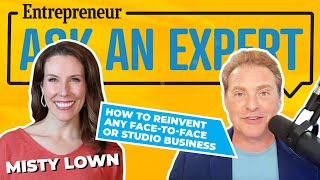
Host Mike Koenigs interviews Misty Lown (studio-industry expert) about stabilizing and reinventing face-to-face service businesses after COVID-era disruption. Lown presents a three-step transformational system—Rhythm Stabilizer (operational routines to reduce chaos), Community Optimizer (grow leaders, ambassadors, retention) and Value Maximizer (create ecosystem, multiple revenue/impact streams)—illustrated with studio case studies and a free resource bundle (Insight magazine + online course) at studiotrainingsolutions.com.
Chapters
How do you stabilize and reinvent your business now while becoming competition and recession proof in the future? Every service business that is dependent on face to face delivery, including the studio industry, retail and hospitality, has been decimated, Resulting in over 40 million lost jobs in the United States and estimates of 200 million worldwide. I read recently in the Harvard Business Review that here in the United States, 44% of the GDP comes from businesses with fewer than 500 employees, which represent almost half of American jobs. And most weren't prepared to pivot their businesses overnight. The face to face delivery industry and studio industry that's including dance, gymnastics, yoga, karate, pilates and spin studios and more, accounts for over $144 billion in revenue every year. And this is a major business opportunity or a complete disruption. So if you're in the studio industry, how do you stabilize so that you can not only fix this now, but remain competition and recession proof in the future? My guest today is Misty Lowen, who's been described as the Sara Blakely of the studio industry. She's a self made mogul who's developed a unique three step transformational system that can help any business owner in the studio industry create opportunities, leverage, and not only thrive, but grow in the new economy and new business environment. So, Misty, why don't you bring us up to speed on the state of the studio industry right now?
Well, Mike, first of all, thanks for having me. I appreciate you helping us get this important information out there for the studio industry and really all small business owners. We, like many others, we had our worlds upended overnight. I mean, in a span of a few days, we went from thriving in our physical environments to trying to figure out how to build a new virtual business. And many, many did that. And what we found is through that process, we're going into the new future with a brand new opportunity. We can continue over time to get back into our physical businesses and to serve those classes face to face. But we are not going to let go of our new opportunity to serve people on online platforms. And if we can get those two together in the right way, we really have a brand new business and unlimited opportunity ahead.
All right, so just for everyone who's watching and listening right now, why don't you give us a little bit about your background and what made you an expert in this business in the first place?
Well, like many studio owners, I grew up doing what I loved and I eventually wanted to teach and start my own studio environment for that. So I'm a dancer by trade and my graduate degree was in education. So it was a perfect fit for me to put those two loves of dance and education into the studio environment. And over time, what we built started to gain notice from others. I started teaching on a national circuit, writing for magazines where people would come and sometimes wait for hours in line or email, ask for visits, make phone calls and say, how are you? Striking what was kind of deemed almost impossible at the time. It was a triple win of we were making a good living, we were having a great impact on kids and we had a great lifestyle too. And that's when I knew that we had something unique. And if we could build a framework around it and use that educational background to teach others, we could help them as well.
Right. And so as a mom of five and an entrepreneur and, and you've been married how many years?
20 years now we just celebrate. It'll be 21 this month.
Okay, so none of this is easy. And you know, as every entrepreneur's got constantly on an entrepreneurial roller coaster. So I want to really get into your three step system. So the notes I have here is you've got your rhythm stabilizer, your community optimizer and your value maximizer. So do you want to maybe share some practical, tactical examples of some of your studios who are using your system and how they implement and use these to add value to their businesses and achieve greater freedom too?
Absolutely. And what I love about this framework is it really takes a logical approach. So when we were all building our studios or any service based business, we went through an initial process of stabilizing, right. We had all these pieces and we didn't know how they fit together. We didn't really know how to spend our time. So it was all about getting some stability. Well, once we had some stability about what we were doing and selling and how we were spending our time time, then it was about creating community around that, building a team and getting enthusiasm from our clients and support from our larger community. And once you do that, that next step is how do we create value for that entire chain, right? From the actual product and the business to the people that we serve and who serve with us, how do we add value to that? So the same way that I built my business is the same way that I'm handling the current challenges. In the same way our clients, our members of our coaching program, more than just great dancing, are facing their challenges and building their business as well.
Okay, so why don't you get into a couple examples again, some tactical practicals that are modelable by business owners both in the studio industry, and then outside of that as well.
Well, the story I've probably told more than any other story is of a good, dear friend of mine. Now, her name is Melanie Gibbs. She owns Boca Dance Studio in Boca Raton, Florida, along with two other locations, and she is member card number one. So she's running these three amazing studios, and she's been with our organization day one. But let me tell you about day one, Mike, because that's the fun part of this story. I was teaching for a conference, and she and her partner are sitting front row, and I'm telling about how we're able to have this maximized business. And they literally raised their hands and just say, oh, shoot, can I just come work for you? We crossed paths later in the hotel, and I said, hey, are you the one who put your hand up? And they said, yeah, just please tell us how you're doing, what you're doing. And I made a visit to their home, and in their living room, I said, this is what I'm doing, and I have this idea. And that if you follow the framework, we could find others who would do the same thing. So they really paved the way by starting with that stabilization. You know, they got their hands around the chaos of the business. You know, all of those things that are repeatable, predictable activities in business that we often just wake up and say, oh, what's next? What to do? Now, they put that into a rhythm stabilizer, and once they got that stability, they were able to tack on the other pieces of our. Of our framework, of that value chain, if you will. And that's how they ended up with three studios and having a profound impact not only on their own lives, but their community.
Right. So every business owner in the world has that constant conflict and that battle of someone else adding conflict to your life, giving you their to do list instead of your own. And what I really hear with the rhythm stabilizer is it's a really effective way to multiply time, reduce the chaos that all entrepreneurs have to face, and also create clarity and certainty, which I would assume make life a lot easier for your employees as well, giving them a sense of stability and certainty. And it really establishes you as a better leader, too.
Absolutely. And what it does is it creates breathing space for you to start. Look beyond the basics of the business. You know, the basics are never going to change. You know, we have a product, we figure out how to package it, we figure out how to serve it. We what it should be priced as, how we do those deliverables. But when you get the chaos around that and you put a lid on it, you put a rhythm to it, if you will, it creates breathing space to say, hey, how do I start optimizing what I have here? I have a community. I have a team. We have people we're serving. We're in a community. And that's where things start to get a little bit more exciting because we're getting out of the what we have to do to what we're able to do.
Okay? So that leads us down into the next step, which is the community optimizer. So why don't you talk a little bit about that and how that's been used inside your system and how your students and your clients have been using that.
I'd like to tell a story here. We have a great client. Her name is Anakia Boatwright McGee, and she's running Rebecca Padgett School of Dance in Savannah. And she's facing the same challenge that most studio owners, and indeed all small business owners are facing. How do we find the talent? How do we put people in place to do things so we don't have to do everything ourself? Right. You know, when you're in that stabilized mode, you're probably more of a solopreneur than an entrepreneur. And you start getting some systems around that, start getting your rhythms on check. And then it's like, okay, how do we get people? How do we build a team? And she couldn't easily find a team where she was located to do what she needed to do, so she decided to raise one up. She decided to build a community from the inside up. So she took those students and found the leaders who became junior faculty members, who later became teachers, coaches, trainers. She has the parents as raving fans and ambassadors out in the community. And the net net of that is she has a 97 plus percent retention rate in a market where previously she couldn't find talent to actually teach the classes that she had previously stabilized. So I just love this idea that you can optimize community by creating some breathing space to focus on.
It tingles with this one, because for every business owner, the idea of having advocacy, ambassadorship, turning your clients into the best referral partners possible and also giving them growth potential. So is Anakia finding that our customers end up becoming really good employees too? Because that's one thing I picked up on this is is she able to go out and find people who are really enthusiastic, they get to be ambassadors inside the organization, and do they come back and actually participate as new employees? Is this working in that way?
Absolutely. And here's what's so neat about this. So the people who are already in the organization get the organization right. So somebody coming in from the out, outside, they have to go through the handbook and try to get their hands around what the DNA of the organization is. But if you grow up in it, you have the DNA, you don't have to be transferred that value system. So these kids who are growing up, who become junior faculty members, who go through Anakia's training program to become trainers, coaches and teachers themselves, they have that inside of them. But not only that, they have a career path, they have an opportunity for growth. And both of those things are really important.
That is easily you think about how that can affect the growth of a business, the retention of a business, and also just the energetic shifts. And is she finding that.
Her customers end up becoming good employees too? I'm super curious if that translates into creating jobs and opportunities also inside the community.
It absolutely has, and here's a great example of it. So they started out with the primary service that they built stability around, which was the dance class. And then they realized that they had these people who were capable of teaching other things. So they built an entire prep school during the day that sits inside the studio facility. So by day this brick and mortar business is excellent minds prep school. And by night it's Rebecca Padgett School.
Of Dance, same teachers, very, very impressive. So let's move on to the value maximizer, the third step in your system. What is that and how does that work from a tactical perspective? Do you have a story there too?
Well, in a word, Mike, this is where we start to have fun. Because this is where you're working out of abundance instead of out of, you know, maybe that scarcity at the beginning where, you know, we maybe don't have enough team or time or resources or organization. And you kind of get into the. Well, we, we have enough now, but we're not sure how to make the most of what we have. And now we're into abundance. So we're about creating value for all of the stakeholders, for the studio owner, for the employees, for the teammates, for the clients. And here's a great example. So we have a studio owner named Shanna Kirkpatrick. She's down in Houston and she has multiple locations. But she said, hey, how can I serve the people, bring more value to them? So she said, how can I find ways to give full time employment to my team? So they're not just coming in and teaching a Class as a talent, but this is a career. How do we maximize value for the employees? How do we maximize value for the clients? Well, maybe it's about getting better deals for their gear and for maybe their workshops. Maybe it's about better relationships with the other places they're having activities like the high school dance team or the local dancewear shop. So when you start looking at your business as an ecosystem and you start trying to find ways to add value to everybody and to maximize the ways that we can all win, that's where business really becomes fun.
It's not just a job, it's not just a community. It's excellent product, it's excellent employment. It's awesome community that adds value to everybody.
And being able to package and create more value. It's bigger transaction sizes. The client and customer actually feels better taken care of. And a lot of business owners, I found, are afraid to ask for more money, but they don't think through the lens of how can I add more value? So how do you see this amplifying itself and multiplying itself inside your community with the other members for finding other ways? How does this get taught and repeated over and over again? What happens inside your organization with all the other studios that you're working with as a result of this?
Well, the fun thing is, is that everybody loves to learn by example, right? That's why we're sharing stories here. That's why when you and I just get together virtually, we have coffee, I say, hey, what's going on in your life? And you ask me what's going on in my life? Because we're learning from each other. So when you have a community like we do inside of more than just great dancing, they're not only getting a solid framework from our organization, they are getting those living examples from their peers. And it's. It's that vertical learning, if you will, in that horizontal confirmation and example that it really the power behind our network. We're here for the same reasons. We might be doing different things. I mean, we have people serving dance classes and gymnastics and karate and fitness. We're not doing all the same thing, but we're approaching it with the same solid principles and with inspiration from each other.
When I was preparing to interview you, I found this quote from Sarah Blakely, who's the founder of Spanx. And the quote is, don't let what you don't know scare you, because it can become your greatest asset. And if you do the things without knowing how they've always been done, you're guaranteed to do them differently. So I know your clients and your fans call you the Sarah Blakely of the studio industry, but how have you used this idea in your life and your business?
Our current environment is a great example. We didn't know how we were going to pivot when every One of our 300 affiliated studios had to close. I mean, how would it be possible to to serve dance without an actual dance studio? And my friends in the fitness and yoga and spin and all of those other spaces had to solve the same problem. So we had to do something that had never been done and we literally did not know how to do. And that's where the strength of the network came in. And we had the brainstorming and we said, hey, you know, what are you doing in gymnastics? I want to know what you're doing in fitness. And how can I learn from my friends in karate, in spin and in dance? And it is through that shared experience that we're doing things that have literally never been done. And guess what, Mike? We're better for it. I am now more confident about going into my 23rd season of business than I was going into my 22nd. Because in my 22nd year I only I was a one one path entrepreneur. We have classes in buildings and now I have many ways to serve. In fact, we're serving classes in five ways. And if you don't mind, I'd like to share that because I think it could be inspirational for the people who are listening here.
I love it. Go for it.
Thanks. We just said we're going to provide private lesson. Maybe there's people who aren't comfortable coming back to a large group environment or they really, really have benefited over the course of this time with the individual attention. We're going to do semi private instruction for people who want group environments, but they really don't want large groups yet. There are some people who just want to get back to the way life was. They yearn for the community of the group class. We have that. But in addition to those new ways to serve live. So we're not just serving live in one old way. We have three new ways to serve live. We're also going to be streaming classes. We're also going to have online libraries and pre recorded classes because we know now what we didn't know then is that we can actually serve very effectively our classes online. And that makes me excited for the 23rd year.
Here's what's great about this. Prior to this, any industry that did face to face, the studio industry doesn't matter what it is. If you would have said, here's the way you're going to have to do business three months, six months, a year from now, they would have said, no way. And they have been. And everyone resisted it. And as a result, we've made, in some ways, five years of progress in a few months, and everyone's had to rethink the way they fulfill. And think about it like this, and this is a question for you is have you seen the intimacy and the connection increase or decrease as a result of having to make these huge pivots?
So here's the thing that we've seen the most. As I said earlier, we have the content that we try to stabilize. That's the daily activity of the business. And we had the community piece. And here's what we noticed when we went online, that the community led over the content. So that's interesting to me because when we started, it was all about the dance class and making great dancers. And over time I realized, of course, it's about more than just great dancing, it's about community. And that really led the way in the online environment. People showed up because they wanted to see people, because they were tired of sitting alone in their house, because they wanted to see their friends, because they wanted to hear laughter and have a moment of joy. And then all we had to do was kind of back it up and figure out how to serve the actual content piece. For me, that's dance effectively. So it's been really fun to see how online for us, community has led the way in the physical environment. We started with, with the content, and I think we can do both, and I think we, we need both. You know, we're not going to say we have a dance studio without great dancing, and we're not going to just teach dance. We want to do more than that. And doing this both ways has allowed us to have the best of both worlds.
Very, very impressive. How integrated your approach is, how organic it is as well. So let's talk a little bit about the moving forward, because anyone who has a business, I don't care what it is as a business owner, an entrepreneur, whether or not you're in the studio industry, the rhythm stabilizer, the community optimizer, the value maximizer, all tools that anyone can use and implement. But one of the things that you've done is put together a free training system and some goodies for everyone who's reading, watching and listening to this right now. So can you talk a little bit about what you put together and what's available and where to go to get it.
Well, I sure appreciate this chance to share this with the industry. It is our heart that out of our abundance that we can share with others, we've really been able to do some neat things with our membership and we want to pay those lessons forward. We are stronger together as an industry and stronger industries create stronger economies. So we are really all about sharing right now. We have an awesome magazine coming out. This is our Insight magazine. In fact, this one happens. This is last year's. This features Melanie Gibbs, who is that member card number one. And this is pages and pages of tactical, practical information that you can use to recover and rise in the season ahead. So we're going to include last year's and this year's Recovery Edition. We're also going to make sure that you get your hands on an online course. Normally we'd value that in the 249 range, but we're going to make sure for your audience, Mike, because you've been so good to us to get this word out that we get that out to them free. There's also a Master Day class where you can talk to the authors of the articles and ask questions from people who are in the trenches like you and hear from their stories and learn from their experiences so we can go into this new season stronger than we came out of the last one.
I love this and I'm going to just share the notes that I had ahead of time. So the Rhythm Stabler, which multiplies your time, reduces chaos. That's what Melanie used to increase her clarity and certainty for herself and her business. So that's one of the modules. The second one is the Community Optimizer, which multiplies the relationships, loyalty and enthusiasm. And that's what Anakia used to create a pipeline of teachers. And then the Value Maximizer, which is about multiple streams of income, impact and purpose. And that's what Shanna used to create an ecosystem for her students. So all that's included. And once again, that's all@studiotrainingsolutions.com free. So, Misty, do you have anything else that you'd like to share.
Before we finish up?
As we wrap, I just want to ask everybody to stay the course and stay encouraged. I mean, you are frontline workers. You are essential workers in your community. You are providing jobs. You are providing inspiration and hope to your community. And you need to stay strong. And I also want to tell you that the framework here isn't just for today's challenges. It's for all future challenges. We are actually not in a business development cycle where, hey, you start out as a scrappy stabilizer and then you optimize and somehow you end up at this maximized and you stay there forever. It doesn't quite work that way. Right. Things break in our businesses. We face challenges and we are always in a cycle of going back and saying what do we have to stabilize this year in the season? How can we optimize what's in front of us and how can we add value to the entire ecosystem? So this is a framework. Yes. It's going to help you now with our current challenges, but it's reliable for all of the challenges and seasons ahead.
I want to just summarize one thing that you said that really had a lot of impact.
To me listening to you, which were stronger industries create stronger economies. So really, really wise and I can't wait to dig into your system and learn more and see what you put together. Misty, so I want to thank you so much. One more time to get the gift that Misty put together for you. Just head over to studiotrainingsolutions.com free, get her two magazines, get the free course and use this and implement it in your business as well. So thank you again and and I'm looking forward to seeing you again very, very soon.
Thank you, Mike. Appreciate you, your time and your audience.
Beautiful. Thank you.
More from Mike


The 3x3 Framework That Changes How Entrepreneurs Think | Mike Koenigs & Dan Sullivan








Why Your Business Gets Harder As It Grows | Michael Walsh on the Hidden Danger Zones of Scale
