Purposeful Productivity with Sophie Chiche | Big Leap EP#72
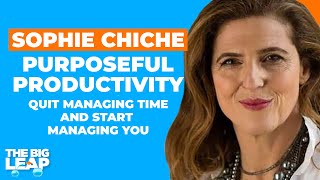
This is a transcript of Big Leap podcast episode featuring Sophie Chiche interviewed by Gay Hendricks and Mike Koenigs. Sophie recounts emigrating from Paris to the U.S. at age 25 (arrived around 30 years ago), founding Shape House (which she says grew into a roughly $10M company with about 12 stores), then shifting into coaching and developing a "purposeful productivity" system. Her approach emphasizes "quit managing time, start managing you": emptying the brain with an external system (she taught a Trello-based tool), identifying what lights people up, presence/body awareness, integrity as a foundational principle, and aligning work with one’s zone of genius. She works one-on-one and with corporate teams (typical one-on-one engagement ~4–6 weeks, weekly calls) and positions productivity as holistic (energy, beliefs, sleep, food). Contact: QuitManagingTime.com.
Questions this video answers
QuitManagingTime.com
About 30 years
25 (she said she left when she was 25, on January 1st)
She described Shape House as "like a $10 million company" with about 12 stores.
Chapters
I remember vividly, like, literally doing the knots of these shoes. Like, you know, it wasn't a pair of shoes, right? It was really was a pair of wings is what it was. You know, a lot of people achieve lots of things, but are you happy? Are you liking what's happening? Are you just checking out things? Are we. What's happening? If you say yes to something that you don't really want to do, what happens in two weeks when it's time to go do it? You know? And then people are like, I'm procrastinating. I'm like, no, you're not. You're just committing to things you don't want to do. When you are given an idea or thought of, whether it's like, I have to go clean my car or I have a new idea for a book, they're the same thing. They are. They're inputting somewhere. And so if we don't have a system inside of ourselves and outside of ourselves as a container, we cannot function.
Welcome to the Big Leap podcast. I'm Gay Hendricks. I think you all are going to really enjoy this session because we cover some things here that I predict you've never thought of before. Like, for me, the takeaway from Sophie's work is that time management and productivity can be done in such a soulful way that honors the essence of who human beings really are, that it probably shouldn't even be called any kind of time management. It's a different kind of thing. And I think you're really going to love what Sophie. Sheesh. Has to say.
There were two things that I got out of this. One is she talks about purposeful productivity, but also her. Her hook is quit managing time and start managing you. So this has every bit to do with the thing you think that you want to fix and then what you really get when you go through the journey with her. How about you, Sophie?
Well, it's funny because I would have gone for something outside of me, but something that so deeply touched me was to realize how much I was influenced by gay. And now I turn around and get to give it and be the one that sometimes, you know, shows a different light. And I to just realize that I get to carry that torch. In many ways, it just really, really, really deeply touched me. So there you have it. Good.
Well, one of the great things is you're also going to hear Sophie's journey as an entrepreneur from being an overweight French lady who came here and really reinvented herself and about what her personal journey was like with Gay. And Katie Hendricks as her coach. So gay. Anything else before we wrap up the intro?
Well, I love the way this session goes from the very practical thing you can do in the next 10 seconds to the very expansive thing that we need to do in all of our lives, which is to go more deeply into revealing the authenticity of who we are and let that be our main teaching in life. Right.
Well, join us in this episode of the Big Leap. We'll see on the inside.
Hello, and welcome to the Big Leap Podcast. I'm Gay Hendricks, along with my good buddy Mike Koenigs. And today we have a really special interview with an amazing person. And it's about a subject that everybody, I think, needs to know more about, and that is how to get more things done in less time. And so we're going to be focusing in on productivity. And so it has a lot of practical value. Plus it has some interesting metaphysical overtones, too, which I bet we'll get into with our guest today. So, Mike, are you ready to. I know you're already one of the most productive people I know, but would you be willing to have your productivity enhanced a little bit today?
I love. I love hacks like this, so I think if we can share some recipes and some formulas, I will feel very, very happy and excited and energized.
Well, let's welcome our guest. Sophie. Sheesh. Is a good friend of mine. And actually I used to be an investor in one of her businesses. I was so impressed with it that I put money into it. And actually, unlike what's happened with some of my other friends that I've invested in their wild ideas, I actually made a little bit of money off my one with Sophie, so she really stands out in my mind. But welcome to the Big Leap podcast, Sophie.
Thank you. Although all the relationships I have with you, one of my favorite one is the very first time we met, we had such a deep, beautiful, like, friendship connection that you, I don't know if you're going to remember, but you had this beautiful thing about how if you did have a sister, you would have wanted her to be like me. And I remember sitting there and literally, like, having tears down my face. So that one, even more than being my investor would be to be your little sister.
I would dearly love to have you for my little sister. I always thought I had a. For some reason, I always thought I had a sister when I was growing up. And I remember asking my mother, you know, did you ever have any other kids? She said no. Later on, a psychic told Me, I did actually have a sister somewhere. So who knows? But maybe you may be. But even if you're not, I adopt you anyway because I. I was so blown away with you when I first met you. So you have a very charming accent. Tell everybody your background and how you got over here to be on a microphone in America.
That's a good question. Straight from Paris. So I did. I was born in Paris. I lived in Barcelona for a while. I hear stories that I was an entrepreneur. When I was 4, I was given two pencils. I sold them for something, and then I got four pencils, and then I got eight. Something about the sandbox pencil lady very quickly. So that was always kind of the thing. And then what was it? Well, with you, I can be really full on transparent. I think I was just so miserable in Paris. I was. At the time I decided to leave, I was £340, £20. And the bridges you and I also have crossed together. And being really heavy in Paris is like, worse than everywhere else. It's like being £900 in America. And so I came when my brother was at Stanford, I came to visit him and I was like, oh, my God, this is what breathing means. This is. This is. This is like. Like you can live without judgments and without such a. I still don't have the word. And I. When I go to Paris, I'm there for a day or two and it's beautiful. And I'm like, why don't I like this place? It's beautiful. And then I'm there for two days and I'm like.
Drinking in. So the minute I was available to. My job was in. My boyfriend was, you know, and I was like, all right, do it now. And I was 25. It was actually January 1st, which I think is a good thing for beginnings. And I had bought a pair of Nikes when I first came here when I was 17. And that tells you how long that was because there was no Nike. Like, having a pair of Nikes was like a big thing because it wasn't as global, of course, as it is now. And I bought the shoes and I brought them home and they stayed in my closet and I did not put them on until I was ready to go. And so when I was able to buy my ticket and I was really ready to go, I remember vividly, like, literally doing the knots of these shoes. Like, like, you know, it wasn't a pair of shoes, right? It was a really. Was a pair of wings is what it was. So I. I left and I Had a friend who gave me a place to stay for about two weeks, after which, you know, I had to.
Come up with my own thing, which I did. It's a really sweet story, but let's. Maybe this is how I got here. Let's start here.
And you've been basically here for how many years now?
30. It will be 30 in a few months.
And it sounds like you were kind of a born entrepreneur.
And as soon as you got your feet planted in America, what kinds of entrepreneurial things did you do?
Well, that one is interesting because I wanted to be legal and I was French, not American. And so really the only place I could work officially was the consulate, which is technically being in France when you're there. So I did. And gay you knowing my personality a little better than Mike. You'll laugh at that, because my job was to check passports and make sure that everyone who wanted to go to France had some sort of bank account with some amount so that they weren't there, you know, to live and make money. And so my day literally was like, agree, stamp, agree, stamp, agree, stamp. And I did end up with a meningitis out of that, which tells you probably how miserable my brain was that that's what I was doing. And so until I was more official, I was a journalist. I wrote for a French magazine, so that was also official. I was.
A correspondent for a magazine called Psychology, which was a beautiful. Similar to Psychology Today, but in some ways more. A little bit more trendy in France. And so I. I traveled the country to find what was happening in the States so that we could report, which was kind of porn that was like. That was like. Like super cool. Like, meet really cool people, write about really cool people. It was great. It was a great first job. So that was not as entrepreneurial, but I'm sure we're going to get into others as we travel along.
I'm curious when you started making your entrepreneurial leaps and what was the biggest difference that you felt between being a French entrepreneur and one in the US in terms of work ethic, mindset, and values?
Well, I'll start you with the first one, because at five years old, apparently my father, God bless his soul, he's dead now, but he would have said, that's the story, I'm told. I don't know. I wasn't completely as conscious as I am now to remember, but my father said, people are like lemons. We should get the juice out of them and then trash them. And I was probably 5 because everyone remember my feet weren't touching the ground and I was still. But I jumped on the table and I was like, I don't want to microphone. But he was literally like, you are missing the whole point. And I had this like major like tantrum around this idea, which he reminded me when, as he was about to pass, you know, that I already had that thing in my DNA of, no, we care about people. And if nothing else, you care about them because they'll care about the company, which at the time, that's not the consciousness even. But even for that, for the practicality of it all, you know, just, it was, it was very shocking already to my very young system. So that's one big one. The other one is when I started the business that Gay was mentioning, Shape House. We opened our first store, I want to say, from my idea to opening doors, maybe three months, four months, like, I found a place and I got the thing and I was all. I thought about it for a while, so I knew what I was doing. And then I opened the second one. So my friend comes to visit from Paris and she's like, like, what did you do? Like, I was here five months ago, there was nothing and now there is a store. So then she comes again, like six months later. Her daughter lived in. In LA at the time. And so she comes again and now there's a second store. And she literally sat there and she's like, wow, like, if we were in Paris, you would not even have opened the first one. Like, not even, not even close. So the speed I think of things is very different. Like in la, when I opened the first one, I was. Because what I did was super innovative. So there really was no, what do we do for this? Like, it was in a massage parlor, it was in a regular gym. You know, it was something in between. And so I called whoever was the legal person to deal with this and they were like, you know what? Open your doors and then if we have a question, we'll let you know which. They came and they were like, yeah, that sounds legit. It's cool. You know, like the zero. In Paris you would have had like a three year process. You can even like, you know, put a name on it or something so that I would say that.
Values are interesting because when I first arrived here, I escaped from Paris a little bit. And so at first I was like, French people. Like, I was really not into it.
But then over time, you know, I healed a lot from all that and it changed. And I actually would say that my friendships, it's Funny, because I would have put Gay and Katie as, like, my most beautiful friendships here. And they certainly are of the best quality. I know. But Americans have a way of doing relationships that's a little bit different. You know, they. They go faster. Like, they like you, they love you, they want you in, like, right now, be me and be my best friend. And in France, it may take, you know, I don't know, 10 years. Generations, generations prove, you know, that you're a good person. And you have to. There's a lot of obstacles. You have to jump, you know, a little bit to prove. But then when they're. When you're in, you're in, like, there's, like, they will go to the. And my friends in France that I kept, you know, the ones. Because distance at the time, you know, there wasn't zoom and all that. It had to have a little more than, you know, we had to want together, and we would travel to see each other, you know, the good ones and the ones who stayed, my friends, I have to say, there is no one in the world that are close like that, and, you know, that would give you an arm if you needed one. So.
I'm lucky. I got both, right?
Yeah.
Yeah.
Really well, now, you went from Shape House, and I was very involved in that, and then I kind of lost touch with you for a while and. And then you emerged with this other thing. After we sold Shape House, you emerged with a whole productivity system, and I know a little bit about that, but I want you to start from scratch there. How did you get interested in that? And what are the key elements of your system that you teach now?
Yes. And before we do that, I would like to thank you officially that you also came to. To a documentary that I was producing that I am producing that's called War and Piece of Cake that had to do with our weight loss. And you very kindly came to the studio and we recorded, and you had my entire crew. When you left, everyone was in tears, which was very moving, you know, because we had really beautiful people. And for some reason, they to this day still like, how is gay? Like, oh, like, you know, the generation of the male that were. The producers were very like, I want to be like him when I grow up. I was like, me too.
I want to be like me when I grow up.
Well, how lucky then. So, yeah, so there was this. There was this worn. Piece of Cake is a story of, you know, losing weight is a big thing in my life, in your life, and in a lot of people's lives. And it's a complex thing. And so we had very deep conversations with a good amount of people, Kirsten being one of them, who was very, very funny when she came, as she always did.
So that was, that was in between. Then I wrote a book about it. And so that was. I'm a. What do you call these people? I tend to do multiple things at once.
Poly taskers.
You're a poly map.
Oh, yeah.
I'm actually not a multitasker because right now I'm with you. There's nothing else happening. That's part of the productivity thing that I love, that I teach now is when you're present and you're completely where you are doing what you're doing. Then when you're doing the next thing, you also are where you are doing the next thing. And so the productivity that I teach today has a lot. It's actually called purposeful productivity. Because I work with a lot of productivity. Yeah. Because, you know, a lot of people achieve lots of things. But I'm a little bit the kid on the, you know, the, the emperors has no clothes. A little bit like. But are you happy? Are you liking what's happening? Are you just checking off things? Are we. What's happening? So a lot of the work I do came out of being an entrepreneur for all these years and, you know, just leading teams of a large number of people and so understanding well how to get from point A to point B, which is pretty much anything. Is that like this call is that we started, we're going to do it, we're going to finish it, we're going to move on. That's a lot of series of that in life. And it just, it happens that it builds itself to a beautiful necklace eventually. Like, each one of the things we do are these little beads everywhere. And when you look at them one by one, it's just a bead, no big deal. But then when you put them all together, it's like, wow, that's my life. That's my life. And so I, I feel like I play a little bit of a wake up. And I obviously quote, you know, you every day, if not multiple times a day with the zone of genius. And what happens when you are in your zone of genius where time bends to your will. I mean, to your loving will. But you know, time is a very. And I'd love to hear some of your thoughts about time because they always make me drool of your wisdom and it, but it's, it's say so accompanying people through the process of okay, I've been doing lots of things, but are they adding up to things that I care about is the question.
And so, so it sounds like, and I, I'm happy to hear this, that kind of the, the center of your productivity system has a lot to do with being present and focusing on the now. I've, as you know, in the big leap, I talk a lot about what I call Einstein time, which is when you're doing what you love to do and what makes a contribution to other people, time disappears and rearranges itself to fit what you're up to. And that I think, you know, you've, you're working that same territory, which I really appreciate. So practically speaking, how does this get, get applied?
So I started with a tool that I developed because a combination of practical and head in the stars a little bit. And so there was always this desire when I was running Shape House and we had 300 employees, at some point there was a little bit of like, ooh, that's a different exercise to be able to, you know, carry culture when you're not in the same location with them. And we can't just go have tea across the street when we feel like there is a need for something. And so I developed a tool which I teach on Trello, although I'm teaching it on other platforms now because it's more of a mindset. But it has to do with identifying what turns people on and what lights them up and help them really put the priority on those. And often there is a process of people realizing that maybe they do deserve to have a life they like, if not love. And that's when I send them to read your book. All of them literally at different phases, depending on where they are. My little chickens. But I bring them along in the conversation of how do we, how do we make sure that what we do is not just because we're running on the treadmill so fast that we don't even look at where we're going. Like it's, it's a little crazy. Like there's a, I was thinking even some thoughts to this idea recently that the industrial era was simple. You know, okay, it seems like everybody on average can do 12 widgets in an hour, whatever the widget was. And so we can measure that, we can contain that. But now with this knowledge era, it's like the way we know that we did too much is because people start falling like flies and having burnouts and having, you know, quitting or going on six month leave, you know, to try to go to Peru and do something to recover. And so I'm interested in bringing a little bit of that in their life all the time, so they don't have that need, you know, to escape. So practically, I work one on one with a lot of executives. That's often where we start. And I do groups with some teams. I do corporate now because it obviously they are working somewhere. And then when I do what I do with them, they want to bring on their whatever and their sister. So it's been fun to kind of follow because I'm also very much inspired by you, Gay. I don't stay engaged very long when I don't feel my juices are up. And so when I work with people, what's beautiful is because I'm. I've become. And I wasn't that my whole life. I've really become myself. And so now I don't have. When I do a pretzel, I know that it's not me. And I'm like, but that's. Do you want to go and do pretzels for three weeks? It's like, no, I really don't.
So I've learned to identify and I've invited Katie to speak to some of my people as well. With the full body. Yes. You know, how do we learn to live our lives in a way or whatever? It starts right there. Like, if you say yes to something that you don't really want to do, what happens in two weeks when it's time to go do it? You know? And then people are like, I'm procrastinating. I'm like, no, you're not. You're just committing to things you don't want to do.
Yeah.
One of the things we say around here is you'll never have enough time to do all the things you really don't want to do anyway.
Yeah, right.
Well, it's. Right.
I've got a question along these lines. I don't know. Are you familiar with the term first principles?
Sophie from.
Tell Me a Little More.
Elon Musk talks about them a lot. Charlie Munger uses them too. And it's the basic assumption that cannot be deduced any further. So.
Aristotle is the first known to use the premise, but he says a first principle is the first basis from which a thing is known. So when you think about purposeful productivity, you have some guiding rules, some first principles that are absolutely true.
In terms of, like, in order for you to be successful with purposeful productivity, you have some rule sets or values that you feel someone you're working with or being coached, must believe for them to be successful and for you to be able to collaborate with them.
Which are those you want to know?
Yeah.
Wow. Well, I have seen so many people make 180s on what they thought they weren't.
You know, so my belief is that we really. Everyone can do it. It takes the willingness, of course, so maybe believe that it's possible, but even that, I've seen people that believe that it's not, and then somehow the belief shifts.
Well, I think part of that too, though, Sophie, is that in the relationship, you believe that it's possible.
Yeah.
And I believe I know a lot of them. Yeah. You know that it's possible because you've gone through this transformation yourself. And that's the way I. Well, to take the weight thing, you know, you now look like a regular, attractive, slender, healthy person, and I do, too. But at one point, we were both 100 plus pounds overweight. And then you discovered that that actually wasn't you. And as you brought forth who you really are, the weight had to go. And that's what happened for me, too. And to me, having someone sitting with you across the table that knows something is possible that maybe you don't know is possible, one, you know, that's a healing thing in itself. So that's a great first principle.
I think I would argue that you. You are, and you were, and you've been that for me, like, I would often come to you with, like, I feel like the world is upside down. Is it me or is it the world or. And you would always trust me and see me as a capable person. And I would say you were really one of the first ones in my adult life. There's a couple people along the way that was like, oh, she's not just a drug addict. That's 300 pounds and three, you know, smokes three packs a day. She's other things. And so. But you definitely. Well, if you were to have asked me, not you in the room, I would say you're one of those that sat across from me and said, hey, wake up a little over here. And taught me so much about integrity and a life of even. It's funny because even that, like, I would say maybe that is a principle. So I did have a client. Not. Not well, like maybe a year ago. It was a big, big contract. Like the kind that's a little bit like, oh, you know, but they do something horrible, which I don't even want to talk about. But they're. They don't have integrity. And I was making them be more productive to be even less in integrity and make even more money not being in integrity. And I could not move the needle. I tried, I tried to really direct the needle. So maybe at the heart of my work, one has to have that if they want to have me. They can sure be productive on their own. Certainly in history we have a lot, a lot of people that were very productive with no integrity.
So that is probably at the heart, it's become at the heart of my work because like without integrity, we. And integrity is a little different for me in France because integrity has. Well, it's true here too, but I don't think people understand it this way. But it has a mechanical aspect to it. You know, when something in France we use the word, which I don't think we use as much here, maybe, I don't know. But integrity of a thing, if you stop, you know, if you don't have the proper edifice that has the right roots, then the thing flies away. And so even the practicality of it. I often work with people with like the lying. It doesn't affect me, affects you. It's destroying your life, you know, not mine. So maybe that is my core principle as I'm sitting here. Yeah.
So could you walk us through a.
Scenario with a typical client who comes to you with what would be a typical challenge and you know, like, let's pretend either gay or I we're your client and we're a business founder owner and we are struggling with.
Either. We know we're not as productive high performing as we'd like to be. And I don't know if you can give us a scenario of a typical or an atypical scenario and then like what would you do and how long would it take for you to get some noticeable results? And I would suspect that as in any coaching scenario, there's the thing people think they're paying for and then there's the real breakthrough, which is a shift in identity and thinking that they walk away from that is truly the life changer. So. And if I'm not correct in those assumptions, stop me. But I'm guessing that that's sort of the, the scenario. But could you walk us through a typical day in the life of working with you?
Absolutely. Although it's a little bit like being an architect maybe, and you bring me in and you don't have a house, there's just land. And sometimes you bring me in there house, but you don't like it, or maybe there's a house you'd like to make an extension. So it's a little bit of depending on when I enter the scene a little. It calls for something a little bit different. But in general, yes, those that are sent to me, my reputation maybe has become that I do well. If you pre burn out, even if you post burnout. And I would say the first thing that we work with is the pillars of this work. Which one of them is if you. We have to empty your brain. We have to have a system that when you are given an idea or thought of, whether it's like, I have to go clean my car or I have a new idea for a book, they're the same thing. They are. They're inputting somewhere. And so if we don't have a system inside of ourselves and outside of ourselves as a container, we cannot function, especially at the speed at which things are going right now. Like, I used to teach this stuff 15 years ago, and I'd be like, like, it's a phase. We're gonna slow down. We're not. It's clearly not slowing down. I mean, unless we choose that. That's what's changed.
It's.
Before it was, you know, you chose a fast. Now you have to, you know, you have to be the one who has boundaries, you know, so you can arrest, you know, the noise and. And. And have tools, you know, like the. The full body. Yes. Is one of my favorite thing in the world because I've learned to sense my body. Like, oh, that does not feel good. And most people don't have that. So I would say that is where we start. Like, a lot of my work is to awaken a little bit of this. Some people I work with don't even have a sense that their life is their choice. Like they did. That's how it is. Oh, is it? Is it? So we kind of deconstruct a little bit differently where people are. But it takes four to six weeks to work with me as a one. As a one person. Usually, like I said, it takes to the team and all that. So it's a little bit more time. But we talk once a week. We start with those principles. One that a lot of what you think you're doing is right is not. You learned it from people that were like. If you think of teachers, bless them for all they do. But they do often, especially when I was a kid, like, they do. They teach the same thing for 40 years and they go to school at the same time, and they come home and they finish in June and they start In September. It's like, there's no entrepreneurial spirit in any of this. And so as a kid, the teacher says, okay, math is for Thursday. Why? Because I said so. It's like, oh, okay. So then, you know, you grow up with all these beliefs that are not true is the way I would call them. Like, you know, when a kid is seven, you know, he helps his little buddy, and that's cheating. You know, we grow up and it's like, well, no, that's collaborating. Okay, all right. So we have to re. Redefine those things. So I think that's where I start. I start with their beliefs. I start with their. What are they made of? You know, what makes them do what they do, what makes them not do what they're not doing that they would want to. Like, one of my really top executives. She's probably at the very top, big company, whatever, And. And she really wants to be a singer, and she's incredibly talented, but she, you know, she has this world that's. That's pulling her over there. You know, the. The sirens are, like, singing, you know, and all that. And the mermaids, I guess we call them. Here.
Is the word in French. See? And so, you know, some of it is, like, giving her a little bit. Like, it starts with a nudge, you know, like, maybe you could do a little bit more than whatever you've done with your guitar. And you put it over there in the dust. You know, maybe we start something or send me something, and then I listen, and I'm, like, in tears. It's so beautiful. And so that. That is what Gay was just talking about. It's like when someone. I've become someone like that for that just touched me so deeply. I've become, you know, a mini version of gay. And I wake people up a little bit that way where. The way you certainly so lovingly did with me. And so it's. It's. This woman sent me more songs, and actually my guy was in the other room, and I'm listening, and he comes running, and he's like, who's that? I want to buy this album. And you know the voice. You know, the show where you, like, press that thing when you like someone.
Like the Voice. Yeah.
And so I sent her a text, and that's all I said. I said, listen, we're here just pushing on that button, telling you that, you know, you really are super talented. And so I had this vision when I was a kid that we were all. It was like a musical chair, and we were raised Thinking that it's missing a chair. So we all running, like, to get to the chair, even if it's not your chair. And so everyone, like, a lot of people are sitting in the wrong chair. And so when you lift her and you put her on her chair, than someone else who really should be the executive over there, there's like a little like, re. Re mapping when people live the lives, you know, that Gay certainly teaches. And I now, you know, feel like I'm guiding people as well to live these lives.
So if you were. If you were to imagine.
One or two of your proudest success stories.
What are a couple significant transformations? Again, I like to look at both the.
The shift that happened that they wanted and was planned, but then the specific one that happened that was unexpected but truly transformational. You just talked about the one there. But are there any others that show up for you that you're particularly proud of that represent you operating in your true zone of genius and them you leading them into their true zone of genius as well?
Wow. The good news is many popped up, because I feel like I've lived my life really courageously. You know, just the first, even coming here, I had fifteen hundred dollars. My parents cut me off because they did not like my idea.
So that was already an incredible leap right there. Right.
My memory, the one that moved my heart the most when you were asking was at Shape House when this one. So we created this thing. I mean, I literally went to Gay and Katie when I had. I don't know what it's called, like, the.
The.
You know, the. The seed of the idea, really. And I remember. I don't know if you'll remember that, but you were like, oh, working out without moving and sweating without having to move. That sounds like it's gonna take, like. It sounds like a good idea. Which gave me, you know, the next level of. That's what I think happens is like, someone gives you the impetus, and then you meet someone else and they give you this impetus. And then, you know, if you listen to your heart, then you don't let people. Because I can tell you when I was sitting at dinner saying, I'm gonna build these places where people are gonna come and sweat and they're gonna give me money. People were like, like, you're a giraffe. Like, what are you talking about? And then, of course, it became like a $10 million company that had, you know, 12 stores and is. Is continuing to grow. So that one time, this one woman who I loved a lot, she. She would come and sweat regularly. And she had a condition, lupus, for her specific case. I'm not advocating it for everyone, but for her, she would come with, like, you know, when lupus is not kind, and it does this. This thing, you know, where she could not hands. And. And so one day she's coming to sweat and she's walking out, and she feels to me like she could use a hug. So I go over and I really like her. We've become friends, and so I hug her and I'm like, yeah, you good? Good. Everything's good. And she's like. She's like, holding me a little too long. You know, those hugs that I like her, like, it's almost like. And so I said, what's. What's going on? And she was just like, I'm just so grateful because of course, when she. She finished sweating, her hands would relax, you know, so she would. She could, you know, and so she said, I want to tell you how grateful I am because I'm gonna get home and be able to hug my children.
So that was like. That was a big. That was big.
Yeah.
Well, I'm really so glad that you moved from sweat to productivity, because I think you're making. You made a big contribution with Shape House, and now that's going to. To proliferate and. But I think you're making such a huge contribution by helping people learn to be more productive in a very unusual way, because, you know, if you hire a, you know, productivity person to come in, they'll work with your inbox, and they'll, you know, do all those kind of things, but oftentimes don't touch the bigger picture and to get to what's really, you know, because, like, when I used to do a lot of consulting with corporations, one thing I was always looking for, like, I remember a time back in the 90s when I would go down to Dell Computer and I would usually work with three people. Michael Dell, the president at the time, Kevin Rollins, or one of the other top executives, Mark Topfer. And the first thing I noticed when I came into Dell was I walked through the place and there was no paper on anybody's desks. And I didn't find out until I sat down and talked to him about it that they had a value around that, that they were striving to be 99% paper free. And that's what they were working toward. And so I encountered things in their culture that were.
Things that I had not actually ever experienced before. So it was a learning thing for me. But one of the main things I was after down there, I kept asking, what is the soul of Dell Computer? And when I first raised the question, nobody had any idea what I was talking about. But then Michael came up with something he said, I think is partly. He said what I've been doing for the last hour before I got to this meeting. And he said, I was down in the shipping and packing department helping one of our employees celebrate their 10th year here. You know, here's a guy who's worth, when I knew him, a measly 4 billion. And during the time I knew him went up to about 8 billion. And it's probably twice that now. But here's a guy with that kind of time stuff that thought it was valuable enough to go down and have a piece of cake with a guy that stuffs boxes all day long for 10 years, you know, and I was so impressed by that. That, and I've seen that in other places too. I remember walking down the halls of another Fortune 50 corporation with the CEO and watching how he stopped and talked to so many people and had these little, you know, heart to heart interactions. And they loved him, of course, you know, but I didn't realize until that day what it was. And so I'm really glad that you're doing what you're doing in the productivity department because it, it's, it's not just about the minutes and the hours and the ticks on boxes and things like that. It's about a soul connection with what you're doing and the other people you're doing it with.
That's so beautiful.
It is.
And it's funny because the, as you were talking, I feel like I do a good amount of like, here's the pasta, there's good spinach in there, but you don't necessarily see it. So when we did the sweating, we're like, you're going to look younger, you're going to lose weight, you know, so people are like, whoa, that sounds like really good. But really what was happening is people were being changed. You know, like the cell level, the healing, almost like actually I did a workshop once where I made them write all their fears and all their noise. And then we put them under the bed and like metaphorically, like sweat that out, you know, just get it out, like whatever way we have to get that out. And now I sell productivity still. Like corporations, as you, the ones you mentioning are hiring me because they see that the people are becoming more productive so they think they're buying the pastel, you know, but really the spinach is the soul. Because I don't think anybody wakes up in the morning and says, like, oh, I'm gonna have a horrible day, and I'm not going to contribute anything. It's going to be, you know, everyone. When you ask everyone, I mean, maybe not everyone. There's probably some that have some sort of, you know, mental condition, maybe. But I would say for the most part, people want to do a great job and people want to show up and. And it's. It's just the system. I don't think people are broken. I think systems are broken. And so somehow you and I have a commitment, but you don't have a system. Or let's say for the sake of that I don't have a system. And then you ask me to do something, and I don't remember because my head is, you know, full of yogurt by. And so when the time comes that you think I owe it to you, I don't deliver, because I don't. It's not because I don't want to. I feel horrible that I wouldn't give it to you, but I don't. I can't handle all this data coming at me, right? So then it. It affects our trust. Then you sit there going like, well, that's. So if you. Girl, like, she doesn't, you know, she doesn't do what she says. And so now it affects our relationship, and next time there's a meeting and you can throw me under the bus, you don't mind, because I'm not a trustworthy person. So we remove people's face and souls, you know, and like, we don't care. But who. Who have we ever met that doesn't care? Like, we all. Maybe some of us have found a way to heal enough that we can reveal our hearts. So they reveal their hearts to us, maybe. But to find. To find the whys behind these people and almost, like, go back there as if the hurt hadn't happened. Who would we be, you know, who would we be if we didn't get dumped by this woman or guy or whoever? And then we shut our heart a little bit, and then we don't think of reopening it. And so time goes on and, you know, then you meet. You know, of course people are gay. And it's like, oh, okay, yeah, yeah, okay, yeah, let me. Let me try. Let me reopen a little bit. And then it works, you know, because, of course, I think the universe rewards us being true to ourselves. Right? So as you were saying earlier, gay I think what I see the most in the magic I see a lot is when whatever that is, the insight, you know, where people are like, oh, you mean, I. I could have a different life or I deserve a really good life. I often do the thing where I tell, you know, the. The. That day you. You have in the book. But this idea that we have this much happy that we can be, and then if something happens that's outside of happy, we kind of like, we. We keep the same size and we really have to expand the size of how happy we think we deserve. Otherwise, something good happens over here and you start like, like hurting your body over here or you damage your relationship, you know, to keep it all the same. I mean, I talk about that all the time with people because it's a. It's just so deep in people that ingrained that they don't deserve or they don't. They're not good enough, or you have to prove something. Like, I often say that to people, like, they're these super top executives. They make so much money and they've so arrived somewhere. And I'll be like, who, Who. Who's grading you? Like, who. Who are you playing the monkey for? Like, what is this? You know, like, you could see they, like, so there's such a gap, you know, between what they're doing and who they really are. So of course they're suffering. Of course they're not very productive at times, you know, and procrastinating, like the big disease of this century, which I'm like, I think you should listen. It's like people that are very patient. I'm always like, what does that mean? They're putting up with. They shouldn't be paying. You know, it's not. Sorry, that's weird. But although.
So, yeah, there's. There's definitely a. There's definitely a culture shift that's happening because I used to talk to people about all of this, and people would be like, oh, she's nice, you know, like, nice, nice girl. But now it's like people are suffering. You know, there's a lot of suffering in these companies. And the way it shows is like, you know, people are leaving and we can't seem to keep our people. And I'm like, well, how about you actually change from the inside as opposed to, you know, putting up some sort of good slogan, you know, that people are gonna actually truly change. You know, a company is nothing but a bunch of people. So, you know, change one person at a time and hopefully it shifts the culture.
I was remembering a moment at Dell. One of the most impressive people I've ever met was the president, Kevin Rollins. And he at the time had been in the president for a year or so, but I don't think really people had really connected with him. And we happened to find out that he was a member of a singing group when he was growing up called Copperfield, you know, professional singing group, I guess. And so I encouraged him to sing at the next big meeting they had. And. And he did it. And I think it changed everybody's view of him so much. You noticed, see this guy that they respected and probably feared and that kind of thing. Suddenly, you know, he's singing a song that everybody loves. And those kind of moments, you can't buy them. You know, they're. They're just. They have to come out of people's willing to ex. Willingness to express themselves at the deep essence level that I want to call forth and you want to call for.
Well, thank you so much for joining us. Where can people get hold of you? Sophie, we'll have this in the show notes, but why don't you tell us where people can get hold of you at the moment?
QuitManagingTime.com is my world.
QuitManagingTime.com I love that.
And of course it leads to, well, then what do we manage? And it's like, well, how about you? How about you manage you. Your energy, your thoughts, your beliefs, your food, your sleep. You know, it's a very holistic thing to be alive and to be well, and it takes. So quit managing time and start managing you. That's my focus. Yeah.
Well, beautiful. Well, may just the perfect people find their way to you. And thank you so much for giving us a piece of your mind and a piece of your heart and a piece of your soul today to reflect on and to celebrate.
Truly my pleasure.
Yep, great insights. It was good to hear how holistic your approach to thinking is. And also, I. I didn't know how much you had been influenced by Gay's work. I knew he has always talked very highly of you and the connection you have, but this is super insightful for me too. But really nice having you on today.
Thank you. Thank you both. What a perfect day to spend a Sunday morning. Thank you.
Thank you. Long may we thrive.
All right, well, we'll wrap this episode up with. Hopefully you really enjoyed this again. Go to bigleappodcast.com the shownotes are both in the podcast portion and on the website. You can get all the links that we talked about. Here and some additional reference materials, transcripts, etc, and please share this episode with someone who you know it could benefit. And of course we always appreciate your comments and upvotes as well. So with that, thank you so much for watching listening to the Big Leap podcast.
More from Mike


The 3x3 Framework That Changes How Entrepreneurs Think | Mike Koenigs & Dan Sullivan








Why Your Business Gets Harder As It Grows | Michael Walsh on the Hidden Danger Zones of Scale
