Steve Distante Helps Founders Scale and Grow… With Trees
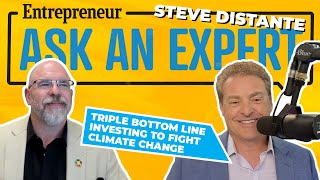
Steve Distante discusses World Tree's paulownia forestry program, which plants fast-growing trees on farmers' land that regrow multiple times. The Reg A+ offering targets 6 to 10x returns over roughly 10 years while sequestering carbon and supporting rural communities.
Chapters
What if there was an investment you could make that fought climate change, reduced our carbon footprint, cleaned the air, helped farmers build sustainable revenue, produced an important commercial product, and seeks to yield a 10x return on your investment every year? Over $46.6 trillion is actively invested on Wall street, but just 25% of that goes to investments that make a positive impact on the world. The impact investing sector has seen a 38% growth rate since 2016. I'd like you to meet someone who helps impactful entrepreneurs scale and grow. His firm, Vanderbilt Financial Group, has over $3 billion in assets under management, primarily focused on socially and environmentally responsible, ethical and impactful investments. He's a UN Ambassador through EO Entrepreneurs Organization, where he was able to advocate for entrepreneurs and connect entrepreneurship with the United Nations. So please welcome Steve Distante. Hi, Steve.
Hey, Mike. Thanks, it's great to be here.
All right, so why don't we get right into it and what is this investment opportunity and why are you so excited about it?
I'm super excited because it's helping people kind of tie into their values. You know, the concern over climate change is just so great and it's profitable and people are able to use their money in a very positive way. It kind of checks a lot of boxes.
All right, now I know you have a really cool prop. And what is this exactly? And show us that prop that you brought today.
Oh, it's not actually that heavy. It's a piece of wood held next to my head. This is a seven year old piece of paulownia wood. It's a very light wood and when it's growing, it's super heavy, but it dries up quite nice. And this is seven years. So if you look, these are the rings for each year and they usually quite grow to full growth at about 10 years. And inside the middle, that's where the water goes up and down throughout the tree. It's like its own little ecosystem.
All right. And there's something else really interesting about it that makes it very unique over all other trees. And what is that?
The fact that it eats more carbon than any tree on Earth. I mean, it's huge. It grows so rapidly. Mike, I think I showed you a picture.
I have it behind me right now. And I'll show it full screen for everyone.
Is, yeah, that's my beautiful wife Heidi. And you know, I asked people, what do you think the difference between this picture is? You know, the time frame people look two years and whatever. And it's a two week time frame. This tree grew two plus feet inside of two weeks and it will grow probably 20, 25ft in year one. It's got those enormous leaves on it. And the beauty of this is it'll grow back six to seven times from the stump. Unlike pine, which is not your typical tree that's going to grow back. And it also creates lots of nutrients in the ground with all that carbon sink that goes on. So part of the beauty of this tree also, as I said, it would be really heavy if I was holding a fresh piece. It's because it's waterlogged, it's got lots of water, which helps it become fire resistant and insect resistant. So it's kind of neat the way it's able to sequester carbon. So it'll eat tons of carbon. And it helps farmers because the first generation of these trees go to the investors World Tree and the farmers, but then the next generations belong entirely to the farmer. So it's just wonderful.
It's kind of like a miracle opportunity from the perspective of being able to do so many good things all at once.
I love it. And one of the things that you use is a term which is triple bottom line. So can you describe what that means and how that ties into something bigger than an investment?
Yeah. So people profit and plan it, you know, and I like to say farmer, profit and planet. Being able to help all of those things at the same time is pretty neat. It's, you know, I feel it's more than an investment, it's a movement. But the unique investment itself is that it seeks to provide a 6 to 10x return, 10 times the investment, typically in 10 years. You know, Mother Nature has her own agenda. Sure. And it's diverse. It's planted in a number of different areas, so it's not in just one particular region, but it's spread out amongst a bunch of different areas. And that's important for weather patterns. And, you know, the, the way these projections are made is they take a pretty aggressive mortality rate. They say, listen, 25% of these trees die and what would the return be? The truth is they're currently experiencing maybe a 10% mortality rate. And so when you're investing in a share of World Tree, you're investing in a diversified portfolio of trees because they're in a whole bunch of different areas. And so what ends up happening is this Reg A plus offering allows just regular investors to be able to invest as little as $3,000, which is super low. You know, probably one of the lowest out there. Usually the minimum investment, something like this would be 25, 50, $100,000. But this one, priced at 3,000, is a pretty interesting way of being able to make a difference with your investment.
Yeah, so what I again, I'm going to just repeat what you said because I think this is so important, because this isn't. Because it is rather a reg. A investment. It's accessible to anyone. We'll get into that a little more detail and talk about how this is structured. But let's get back to the people at Benefits, because I know you're super passionate about farmers. How exactly does this tree, this crop, this investment, help farmers?
Yeah. So World Tree collects and there's no shortage of farmers that are looking to be part of this. But they will plant the trees, give the trees to the farmer for free. All they need to do is allocate 10 acres or more of their property and they can benefit from the sale of the wood down the road, which gives them an additional stream of income that self generates because once they're cut down, they'll regrow six to seven times. Polonia trees, you know, are harvested and each board foot brings in Some significant revenues. 45 to $90,000 per retail acre is what we've experienced so far. The wood itself is worth so much more than pine, and the sustainability of it is so much better because of its properties, you know, that it grows back and it's able to be used in a way that allows all of these car. All the carbon to re. Energize the ground as compared to pine, which takes out or depletes the ground of all its nutrients.
That's very good. So how does the tree help the environment? You talked about the reducing or eliminating a carbon footprint, but what's the magic of this tree with regards to that?
So it'll take lots of carbon and they estimate it's tons of carbon. We like to go multiples, and it's many multiples of a regular tree. It's got these enormous leaves on them and it takes the carbon, puts it back into the ground, energizes the ground. The particular genome of this, the specific type, has not been genetically modified. It's a sterile tree. Right. It's not a grass. People go, oh, it's, it's bamboo. It's not bamboo. There are genomes of this tree that could be invasive. This is not one of those. And it plays well with other trees. They grow, grow it in varied locations. It's drought and fire resistant because it's so waterlogged. But the varied locations helps. You also to lower risks, because not every single area is getting hit with fires or storms and so on. It's one of the few trees that help with soil regeneration and it brings, again, carbon back down to earth from the atmosphere. So it's a pretty neat tree. It's actually a miracle tree to me.
It really, really seems to be. And one of the images that I'm putting up on the screen is the target market size. When people want to know, the investors want to know. Okay, so where and how is this thing going to be used? Some of the numbers that we have on the screen right now is we've got immediate and secondary market priority, and then beyond that, which we start with a $55.5 billion market priority. And you can see all the different ways that the trees can be used and then the secondary market priority. So can you talk a little bit about how this gets used and also some of the numbers as well?
Yeah. So the wood itself is used for. It's considered an exotic wood. And it's used for cabinets and vanities and high end moldings because it's very light, but it's harder than pine. So it's got properties like if you've ever seen a piece of balsa wood, you could use your fingernail to put a dent in it. This is not like this. It's a pretty substantial wood. They use it for things like paddle boards. It's very buoyant. Surfboards, canoes, kayaks, furniture. They have guitars that are made out of. If you ever professionally played or played a guitar, the weight gets to you after a while. So there's a number of applications that are just super interesting that people could invest in. And so it's a very good wood for those purposes. It's the type of thing that insurance companies have known about for a very long time. It's not impacted by the market. It's not impacted by a pandemic. The sun is out, the rain's shining. You know, the rain is falling and the trees still grow. So, you know, what insurance companies have learned is to plant their assets in the ground. And that's exactly what this investment is. The United nations predicts the demand for wood will increase by 40% by 2030 and double by 2050. And that's positive for World Tree because we're going to have all that wood available for those people to use.
Now, one of the things that. This is one of other types of investments you're putting together. It's one of the triple bottom line investments that you're specializing in. So why don't you talk a little bit about your firm's position on this and how you got involved in this in the first place?
Well, if you know me, I've been an entrepreneur all my life. But, you know, being able to help entrepreneurs scale and grow was part of what we had open with. That's a big part of who I am. And so for investors to be able to connect with unique deals that help them reach their goals of being impactful, their values and financial freedom faster while changing the world is just, you know, the way we want to be able to help have an impact on an investor's life. This is one of the many deals that we're focused on now and in the future. And we're guided by our set of core values, which is to be impactful in the world to allow entrepreneurs to scale and grow and do some amazing things. And this allows the investor to be involved. And most importantly is that Reg A or Reg A plus allows non accredited investors, investors who are not mega wealthy who do not meet certain criteria to be involved in something that they truly believe in.
Yeah, and you're a bit of an entrepreneurial success story. I know you've gone through all sorts of.
Experiences in your career, but how did you get involved in sustainable businesses and impact investing? How far back does this go for you?
It's my life, Mike. I mean, if you ask me, when I had my first business that I can recall, I'm going to say it was at 6 years old.
I used to live next to a horse trail and I would go up into the horse trail with my wheelbarrow and accumulate with my pitchfork some manure. And I would go to my neighbors. I remember Mrs. Barker especially. She was this English woman who's got these twinkly blue eyes and she'd see me and kind of get excited because she'd be tending to her garden and she'd look up at me and she'd say, hello, Stephen, I see you have some food for my plants. And she had these beautiful tomatoes and cucumbers.
And it was my way of communicating with her. I used entrepreneurship as my way to be able to talk with the world. And she'd give me a dollar and I'd smile and I felt like I did something positive. So being impactful in my life has been always a goal. I didn't know you could match the two of them. All my life, you know, you start with the, the profit and the oh my gosh, I'm going into business part, and then eventually you get to now, how do I do good? How am I going to be able to tie this into all of my values and not just be an entrepreneur who makes money and then sells the business and does all those things? So being able to empower entrepreneurs to scale and grow really taps into the essence of my why, that's great.
And then you've got a huge passion then for helping impactful entrepreneurs, and that's a huge part of the next phase of your business. So why don't you talk just a little bit about that?
Well, I don't want to be involved with things just to make money. It needs to have a higher purpose. It needs to have, as you said, the triple bottom line. Or more importantly, how do we solve world challenges? That's what I'm looking to do. How do we empower entrepreneurs to scale and grow in an impactful way? And I spent a lot of time looking at these companies using my degree in accounting, which I got because they didn't have entrepreneurship degrees back then, to really focus in on, okay, what is this company offering and is it real and how can we be part of that?
It's good. And you've got this business, a firm with over $3 billion under management and a large network of financial advisors and investors. So rolling this out is something that's very natural for you. Why don't you talk a little bit about some of the people that you've got who are excited about this too, who are extending and sharing this message right now.
Yeah. So we've been spending a lot of time talking with our advisors. We created this advisory council, and a bunch of our advisors, Joe Allen, Stuart Valentine, Gina Penn, Tracy Hunter Brownlee, Max Mintz, Bob Golner, Ellen Myerson and Mike Ward, just to name a few of them, have been part of the steering committee to help to really understand what they need for the clients as well as what we need as a firm to be able to have the most success with this capital raise.
So why did you choose World Tree specifically? Because at first glance, it's sort of like it sounded a little strange to me at first until you told me the story and about the wood itself and the fact that, you know, there's always a need for wood. It's such a flexible resource and all the benefits. But why World Tree specifically? What was it that made you say, yup, this is the one?
When you look at a company, the first thing I want to know is alignment of values. And when I met Wendy Burton, the founder of World Tree, I knew we had alignment in our values. And it was, how are we going to do some amazing things? And so Wendy's story is she's. I believe it's eight years old, and she's standing at the end of her driveway, and she sees these trees being cut down in a local forest. And she's crying. And her mother was there and said, wendy, what's your problem? Why are you crying? She said, the trees are crying. I can hear them. I'm like, wow, that's pretty impressive. She goes, yeah. And then my mother told me, the trees aren't alive, honey, they're fine. And she said, no, they are alive. And there was this early attachment to trees. And so she moved on in her life. She took a couple jobs and she tripped over a tree that she could truly believe in, which is the Polonia tree. So over the last two decades, she came up with a formula that created a win, win, win for farmers, investors, consumers. And she figured out how to grow and be an expert for these trees.
She tells a story how she got a phone call one day by a guy. I laugh. Named Morley Safer. And most of us know who morley safer is.
60 minutes. I grew up reading or watching that show. Loved it. And I love Morley.
He had that golden voice, right?
Yeah.
And he got on the phone with Wendy and He said, well, Ms. Burton, this is either the biggest scam or the biggest story I've ever heard of. And he actually did a mini documentary on her, which I thought was remarkable. It was great. You know, Bloomberg has done some work with him, you know, and you could find that online as well, and. Yeah, it's just a great person, a great offer. Sustainable. It checks all the boxes for me. That's great.
So why is sustainability so important to you? And why do you feel this is so important for the world?
Well, I think we're all interested in sustainability. No, I mean, our existence depends on it. That's the purpose of this offering. I can only work with people who are interested in being impactful in the work that they do. I don't have time for other people just looking to make money and whatever. It's not my thing. I want to take my time to do a deep dive. As Tony Robbins says, you immerse yourself in that company, and I immerse myself so deeply, I'm able to really understand the company from the inside out and then make my best assessment that this looks like something that's going to work and work well.
Okay, so you're involved as a UN ambassador, and this notion of SDGs. So why is this so important for the world? And what's the tie in there?
Yeah, so let's be clear. I work with the Entrepreneurs Organization. I'm not an employee. I serve on the boards and so on. And creating purpose and alignment through our businesses is really important. And what I got, I brought the UN actually to the Entrepreneurs Organization, where I became the EO UN Ambassador for Entrepreneurship. And we are the voice of global entrepreneurship for the un. The UN came out with a thing called the Sustainable development goals in 2015, and it's an agenda that goes from 2015 to 2030. It was thought of and brought together right after the Great Recession in 2008. They spent three years focusing on how can we be impactful in the world and how can we identify those areas in the world that need help? I have right behind me some of the SDGs or the Sustainable Development Goals, and there's 17 of them. No poverty, life below water, reduced inequalities, quality education, gender equality, just to name a few. 193 governments deliberated for three years, and in September of 2015, they came out with them. And it's a great guiding light for us as entrepreneurs of how can we be impactful with our businesses. Just amazing, amazing. Great guidance. And what I like to say is an evolved entrepreneur is like an artist. And we use our businesses as our canvas to be able to illustrate to the world who we are. And the SDGs are a great palette for us to look at as far as the different ways that we can be impactful.
Yeah, this is really, really visionary. I think that was one of the reasons why I wanted to interview you in the first place, Steve, is just the fact that you're found a way to integrate all of these things with your background and your past. It's a very rare ability to not only do that, but also attract the team that can make it happen as well. So how long have people known about this wood and why haven't we heard about it before? Because something like this that grows as fast as it does regrows six to seven times and has so many other positive effects, it seems like everyone should be using this. And what's the story there?
Well, it's not new to North America. It was actually fossilized in North America prior to the Ice Age, but they hadn't found it since. And it's grown in China and Japan as a sacred wood. And now in the US it's found in a few interesting places. So if you've heard of Jimmy Carter, President Jimmy Carter, he grew 19 acres, acres of this beautiful wood on his land. He was so forward thinking and still is. He just celebrated again his 95th birthday and he's created just some beautiful pieces of furniture out of his own presidential wood in his own backyard. These Polonia trees which he grew and world tree actually helped harvest not too long ago.
So, so good. Now tell me a little bit about Costa Rica too, because there's also some ways to integrate these trees in traditional farming as well, again all over the world. So what's happening in Costa Rica?
Yeah, so Costa Rica actually has in its mountains.
Lots of coffee bushes and those trees like to grow in shade and they'd normally use a eucalyptus tree and really that was sucking all the energy out of the ground. And they found that these trees, the paulownia tree, actually replaced those other trees and put them alongside the coffee and put nutrients in the ground and also provided another source of income. So these partnerships with coffee crop farmers is just fantastic in Costa Rica. It's a pretty neat way of being able to have a win win in this ecosystem of coffee and trees. And you know, you got another 70 years to run on it based upon a seven, at least a seven times growth cycle. Pretty neat.
Yeah. And it seems to me that for the coffee growers, not only another stream of income, probably one that could in fact be more valuable perhaps as well.
Without a doubt. Yeah, absolutely. Yeah. No, I love that. I love the way that the whole flow has been going with this. Yeah.
Big multiplier. So all around this sounds like a huge win for everyone. So why don't you describe what the offer the opportunity is and how that ties into Reg A, which makes this even easier and more accessible to anyone.
Well, what I love is that anyone can invest in this under a reg A. Reg A plus you don't have to be accredited and have this high net worth in order to do it. We're raising ten and a half million dollars, which may sound like a lot of money to many, but it's not.
And the minimum investment, listen to this, Mike, is $3,000. So a minimum investment of $3,000 and that plants one acre of trees, which is approximately 110 trees. And this is what I love to tell people, is this will erase your carbon footprint, so all the bad things you do will be forgiven. But maybe we could do good things all around in order to erase our carbon footprint in a more impressive way. And so we have about 90 days that we're going to be doing this capital raise. So if people have Interest. We have about 90 days for this.
All right, Steve. So for people who are interested, want to know more, get their hands on the application and the investor pack. Where should they go?
They can simply Visit my website, stevedestante.com tree and there you'll see some video and content and so on. And my firm is Vanderbilt Financial Group. There'll be links there as well, with links to all sorts of interesting things related to the tree. You fill out some of your information, short interview, make sure it's the right investment for you because we need you to understand what you're getting involved with and the rest will make it super easy.
Very good. So do you have any other final words while people head on over to. And I'll just Repeat that to stevedestante.com tree. We'll make sure they're in the link below and on screen. But what else would you like people to know before they head over there?
Listen, if you're an investor looking to have your investments tied to your values, your concerns, and make a difference with the money that you invest, this may be of interest to you. If you're an entrepreneur looking to make a difference, fund another entrepreneur, perhaps that could also be part of the solution.
All right, Steve. Well, here's what I will tell you. You and I have known each other for a while. We've talked before, but I'm raising my hand. I'm in. So consider me an investor in this. And I'm super excited because I'm gonna invest for my son and I want him to be able to share this story and also talk about it with his friends. And it's an honor to be part of this. It's an honor to be an investor now. And it's also really, I think this is a remarkable entrepreneurial story and an entrepreneurial success story and journey. And I hope a lot more people are inspired by this message to participate like you are with something that's got so many threads and connections and benefits so many people as well. It's really, really very future paced, very, very progressive. And I hope people really understand the depth of the thought that you put into this project.
Thank you, Mike. And I can imagine your son standing in front of his class sharing with them what he's done to erase his carbon footprint. And I'm certain he'll be proud.
Thank you, Steve.
Thank you, Mike.
More from Mike


The 3x3 Framework That Changes How Entrepreneurs Think | Mike Koenigs & Dan Sullivan








Why Your Business Gets Harder As It Grows | Michael Walsh on the Hidden Danger Zones of Scale
