Surfing The Leading Edge - Reinventing Yourself at Any Age | The Big Leap EP#78
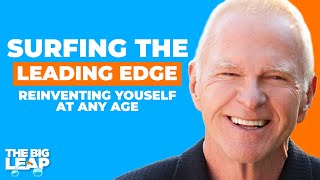
This is a transcript of a Big Leap podcast episode (Gay Hendricks with Mike Koenigs) focused on "surfing the leading edge": staying creatively engaged, reinventing oneself in midlife, and using new technologies as creative partners. Gay recounts client stories (Christine Marie Quiglas's menstrual-health program; an actress resisting ageism) and his own writing routine and upcoming day-by-day Big Leap book (a 365-day daybook planned for 2024). Mike describes collaborating with his 20-year-old son Zach to rapidly produce a book of top interview questions using AI tools (ChatGPT for research, Midjourney for line-art), and discusses industry/legal implications of AI-generated imagery and future text-to-video possibilities. The episode closes with practical encouragements: track what "lights you up," invest daily time in your genius, and consider AI as an amplifying creative partner.
Questions this video answers
Christine Marie Quiglas.
ChatGPT (research/rewriting) and Midjourney (image/line-art generation).
His son Zach, who is 20 years old.
A 'day book' based on The Big Leap (365 days of Big Leaps), targeted for release in 2024.
A mentee wrote a 240-page book by writing 20 minutes a day.
Chapters
There's so many people that I know are going into midlife in their 40s, 50s and 60s without really opening up to finding out what their real genius is for this stage of their journey.
I love the crossover now between, you know, all this technology with gaming and filmmaking and music making and marketing. You know, it seems like all these worlds are gelling.
Keep your attention on your lit up barometer because if you stop feeling that, look into why and what's causing that and what you need to do to get lit up again. Hi, this is Gay Hendricks along with my good buddy Mike Koenigs, and we're here on the Big Leap podcast and we've got an exciting one today because we're talking about our personal leading edges. I'm talking about some things that I did today, actually. That is right on my leading edge. And Mike?
Oh, yeah. Well, first of all, what lit me up was listening to you talk about what lit you up. And specifically, you have the great fortune of being able to coach actors, actresses, Hollywood entertainers and watching their evolution and development. So that was always great. I love hearing what you pick out of that. And I like that access, just that feeling of touching entertainers and entertainment. And then I spent a little bit of time talking today about a project that's lit me up, which is I've been co authoring a book with my son Zach, who's 20 years old, going to college. He needed to make some money, so we found a really creative way to collaborate together. And I'll talk a bit about how we've been doing that together. All that more with this episode of the Big Leap with Gay Hendricks and Mike Koenigs.
All right, today we're talking about surfing the leading edge. And this is stuff that's happening that really gets us excited. And we're not only going to talk about what gets us excited, we're going to go meta and talk about why surfing the leading edge is so important when you're making big leaps. So what do you got?
Well, let me just tell you about my day today because I had such a Surfing the Leading Edge day. I'd had a request a while back to have a meeting this morning with a woman from Freiburg, Germany. And I didn't know much about what she wanted to talk to me about, but, you know, when people come from a far away place, I certainly want to hear what they have to say. It turned out, first of all, that the Big Leap had really changed her life. And the second thing is she has figured out a way of creating a Program.
With Big leap principles and some of my other work in my relationship work about conscious relationship. She developed a treatment program to help women with various types of menstrual illnesses like PMS and endometriosis and things like that that were a very big problem to certain women. And what was very compelling about this woman, whose name is Christine Marie Quiglas, and the thing about her was interesting though, because she had had all of those problems herself, including surgery for endometriosis, and she had cleared all that up with this program that she had devised out of my work. And so I was immensely intrigued by this because it's not an area that I've ever done much research in. And so. And I don't end up usually treating it. You know, it's the kind of thing that people don't often come to psychologists for. They oftentimes go to a medical doctor or something like that. But anyway, she had been through all the medical stuff and decided to take it on as a self healing product or project. And then she started when it worked so well, she started doing it with other people. And so I gave her some counseling on how to present her work and how to keep getting grants and things like that. But here's the thing that really excited me. One thing I love more than just about anything else is when we find some new way of working with new problems, new situations that I hadn't ever thought of before. And that's happened to me a number of different times where a person has come and said like a guy came who was an airline pilot and said he wanted to finish being an airline pilot, but he wanted to treat people for fear of flying. And so he had taken some of our principles and kind of big leap of program on fear of flying. And to me, I love that sort of thing. Because anytime when you can take some new area of life and apply an old principle or create some new principle for it, that seems to me to be worth its weight in gold. Because you like with. I don't know, I haven't looked up how many people on earth suffer from things like PMS and endometriosis, but it must be in the hundreds of millions. And so if we can do something natural that provides relief for things like that, I'm 100% for it. So innovation, finding new outlets for things, that really appeals to me. So that was one thing that happened today. The second thing that's on my leading edge was I had an actress come up from Hollywood. If you live far away, you may not know where My town is. My little town is about an hour, hour and a half north of Los Angeles. So we get a lot of people that come up from the entertainment world. And this was a very fascinating person because she's just turning into her 50s. And the conventional wisdom is that actors and actresses in their 50s don't get as many calls as they do.
Yeah, yeah.
Up until 39. You know, 39 is the magic age. And if you ask anybody in Hollywood under the age of about 65 what their age is, they'll say 39.
Yeah, yeah.
So.
So here she is. She's been wildly successful in many areas of her life. She's, you know, got lots of stuff and all that and got a great relationship and family life and that kind of thing. But now what do you do if you come to a time in your life where the conventional wisdom, the outside world says essentially we're not interested in you anymore. So what do you do about that? So that's, that was another thing I worked on today was. And I'll probably see her a few more times too. But the, the gist of it is.
Not just for women, but for people in general once they get up into their 50s. That's a magic cutoff for many people because like one of my long ago mentors, Eric Erickson, the great developmental psychologist, said, you know, every Breath youh take after 50 is a choice between creativ or stagnation.
Yeah.
And so you can see, I even see examples of it from people I know in my own life that some people kind of give up there in midlife and decide to just go through the motions. And what I loved about my session with my actress person was how committed she was to not taking the conventional wisdom and falling prey to it. Because, you know, we were just talking about Jennifer Coolidge, who's a well known actress who just got an award for White Lotus. But for many, many, many years, she didn't get the parts. You know, she was plugging away, just a working actress going to. I have a couple of other actress friends that said they saw.
Jennifer Coolidge, you know, like 30 years ago. Just showing up for one audition, not getting it, showing up for the next one. So, you know, now she looks like an overnight success at age 60.
Yeah, right.
Really just down in the trenches. But the reason I mentioned this is so many people that I know are going into midlife in their 40s, 50s and 60s without really opening up to finding out what their real genius is for this stage of their journey. Because every journey, I mean, Every stage of the journey has different requirements to it. And, you know, like, in your 30s, you're kind of still coming to terms with yourself. You're getting out from under your old limiting thinking. You're trying to find out what your place is in the world. But that's very different from a person in their 50s, because by that time, you know, if you've made it, if you're having a pretty good go of it here, then you go into this other thing called ageism, you know, where suddenly people start treating you differently. And I, you know, I haven't had the problem as much because I write books. And so people are, you know, used to coming for advice to grizzled elders like myself, you know, and so it doesn't matter whether I'm 60 or 70, 78, as I currently am. You know, I'm the guy that wrote that book, and that's what they want to talk to me about. So I get a steady stream of coming people coming here for that. But not everybody is in that blessed category of having done something like that. And so many people are still kind of trying to open up to what their true genius is later on life. And I want to celebrate that. I think, you know, I've had people come in here who are 75 years old that were still interested in uncovering more about who they really were. And so. So I want to just put in a major plug for. Katie and I were in a PBS show a while back called Ageless Living. And it was so good to see so many people there in their 50s, 60s, 70s, and even up into their 80s that were leading these incredible, vibrant lives. But it all starts with this one question down inside. Am I going to get committed to expressing my genius here in the world, or am I going to just plod along, one foot in front of the other, going along in my comfort zone in some way?
Wow. There's a lot to decode there. And, you know, where I'm.
I was going is. So I think about this a lot because I've gone through a couple years where I've been perfectly happy not wanting a lot more. What I mean by that is, like, it's been a lot easier to relax and slow down where for a long time I was afraid, well, time's going to run out, and what if I don't.
Do this, accomplish this? I was just driven by being driven. And I don't think I was clear on what the why was and the purpose of it. And there are times where I asked myself, man, Things have been going so well. It's about time for something wrong to come along or, you know, like. And I couldn't believe I was actually saying that. You know, I was, like, embarrassed.
The upper limit problem talking.
Yeah, right. And then.
You know, just being happy with the simplicity of it all. And then I think about that a lot because I watch a lot of movies. I watch. I watch, like, we go through, you know, like it was Yellowstone for a little while. And lately we've been watching Carnival Row, which is a little bit of an Amazon fantasy series. All the.
Yellowstone shows, you know, along that line with Kevin Costner, which have just been fantastic, really good historical dramas. And last night we watched a movie called eo, which is about. It's a. It's a movie about a donkey that's not germane to this. But the point is we watch a lot of programs and I think a lot about those actors. And going back to when you're talking about the actress in White Lotus, and I know she had some significant health issues in addition to the fact she's older and she didn't make it and how unkind Hollywood is to people. And, you know, as it is, it pertains to our conversation today about surfing the leading edge.
So much of this is staying excited about something and staying lit up. And I watched, for example, my mom in particular, who's now. She's pretty advanced Alzheimer's. She doesn't remember, you know, minute to minute, what happened. I think a big part of what I observed in her is she didn't have a lot of things that excited her, that kept her engaged deeply. And I think that really contributed to the decline of her mind, quite honestly. I'm sure there's other genetic factors. So I didn't mean to talk about something dark, but when I listened to you right now, I was piecing together, thinking a lot about my thinking as you're talking about that. But I wanted to share something that really lit me up, a surfing on the leading edge thing that's been happening since our last conversation, in fact, which wasn't long ago. We did an interview last week, and.
Right afterwards, my son Zach reached out and he needed some money because he wanted to do something. And my rule is I don't just give him money. He's got to do something, right? And.
And there was something. He said, well, is there something I can help with? And I said, well, there is, as a matter of fact, there is. There's a project I've wanted to do for over five years and I think you can help me with it. And it's using some AI. And he goes, okay, well, show me. And here's the backstory. Gay.
Going back at least five years, maybe longer. I've always wanted to write a book about interviewing and interviewers and.
You know.
Going back as long as I can remember, I've always loved people like Johnny Carson and, you know, some, and I loved watching Walter Cronkite and I loved the show 60 Minutes. I used to just adore that. And then Howard Stern and, and, and, and, and Jon Stewart. You go through just the art of the interview and how great interviewers can just make anything so engaging and interesting. And then you combine a sidekick and what happens there with the dynamic where you've got someone to pick up and go back and forth. And even what we do as well, when we're doing either interviewing each other, we're coming up with all these topics. So how do you keep it engaging and interesting? So the idea I had was I wanted to find a way to create a book where I'd find the best interviewers who've ever lived and then gather the best questions they ask. And unfortunately, when I started deep diving into it and just doing the math, I realized it was going to be a massive research project that would be very expensive. And I don't particularly enjoy the fact finding process. I like the end result, I like dialoguing about the results. But doing the grunt work I couldn't possibly justify. So I just didn't do the damn book for years and years until I had done a couple experiments and I was on ChatGPT and I thought, I wonder, wonder. So I typed in what are the top 25 questions Tim Ferriss asks on his podcast as an example? And boom, nailed it. Spits them out. And I'm like, holy cow. So if I fast forward a little bit, here's the surfing on the leading edge thing that excited me. As I sat down with Zach and I opened up a document, I said, you and I are going to write a book. And it's going to be, we're going to do the top 25 television, magazine, radio interviewers of all time, and then the Top podcast and YouTube interviewers. And for each one of them, I want their top 25 questions. And to make a long story short, we're able to do the research and generate the content extremely quickly. I mean, it only took a few hours where again, it would have taken months and months. And then we used Midjourney, which is the image creation tool, to create Line art. And I created it so it'd be like create line art in the style of Atlantic magazine, in the style of New Yorker magazine, You know, that nice scripty line art that they have. And you know, so we got it for Oprah and Jon Stewart and.
Charlie Rose. So we basically have the first 25 done already. And the other ones, we could probably finish the whole book in the next few days. And so I'm excited first of all by the collaborative potential that really excited me. The other one is just the volume of work and the fact that there's this new creative partner. We all have access tool to help fulfill maybe some un met desires that we may have had from our years. So I wanted to end that with a question for you, gay, which would be like, is there a creative exercise that has been on the back burner that you wish you could do, but a part of you said, I don't have the right partner. It's some stuff I don't want to do. Or it's I don't have the right time, money, resources that now could be fulfilled with an artificial intelligence partner or muse. Does anything show up for you when you hear that?
No, but the question is fantastic, actually. I love the question. Let me do some meditation on that.
I'm sure I've got tons of stuff like that, but I just can't quite pull it up right now.
I actually got an un kind of a non fan letter the other day, which is very rare for me, taking me to task for whatever we said about AI on our podcast.
Oh, what was it? Do you know what it was? Oh, you know what the hate was?
Well, it was just. Why are you promoting this? You sound like you're only talking about the positive side. Let's look at the dark side. It's going to put everybody out of business. It's going to ruin.
So we had a bed crapper listening to our show. Yeah, Someone who just walks up and craps in your bed and then walks away. Thank you. Go away. How about that?
So anyway, that was.
I hadn't really thought much about. Oh yeah, the controversies. But I'm sure there are.
Oh, there's tons of horrible things. Tons of them. But I choose to look on the bright side of life. And you know what? Wasn't too long ago, those damn cars drove into town and. And my horse poop picking up job was robbed from me. Damn it.
So go out there and sling rocks. You rock slinging. Yeah. R Word. There we go. How's that? Okay.
Yeah. So I'm I'm all for looking on the bright side, too, and of course want to acknowledge all sides of this, but what you're talking about is really.
Very revolutionary from a standpoint of one's own creativity. Because if you think of these things as partners, as creative partners, you know, you think of it in a different way than you would if you're thinking about of this awesome Titanic thing that's washing over humanity. So let's put it in its place. Let's say it's just an extension of human intelligence for us to play around with. And if you think it's amazing this year, roll the clock forward about 10 years to what that's going to be like. I mean, it's almost unthinkable.
Yeah. So there's a guy who Peter Diamandis interviewed who started the company that basically created the engine that's used for creating visuals and artwork, and.
He'S getting a lot of hate right now because the way they trained these models is it looked at every possible image online and that includes jumped into old Getty, you know, it looked at all sorts of pictures now. And there's a legal argument they're trying to sue.
This company because they're basically saying, hey, everything is a derivative work and copyright infringement. Now, ultimately that's not gonn last because basically that would also mean if you take it to its nth degree, and I've looked at and heard enough arguments, so I'm going to make an argument that may or may not be legally sound, but it's an argument which is, look, if you looked at a photo and then you painted a version of that, you could say, well, that's a ripoff. But in fact it's a unique derivative work. And derivative works can have their own copyrights. So but the fact that they're looking at it through certain precedent, but at the end of the day, there's some problems there. But here's one of the big takeaways that was pretty mind blowing. So the tools right now that are being rendered, they've got it down where it takes less than a 60th of a second to create a image, using what's known as a text to image. So I could type in, create a photorealistic image of.
Gay Hendrix in the style of Pixar, for example, and it would know who you are because there's enough pictures of gay Hendrix and then it'll pop out a face. Okay, now what's about to come around, because this thing is doing it at a 60th of a second, it means it can generate real time images. And this is where the fear that Hollywood and the gaming world is looking at is. These things are going to be able to do text to movies. You're going to be able to type in make me a movie. And if this thing has access to your profile, meaning all your social stuff, which you've already given up, if you're on Google and on Facebook and on the social stuff, you long gave away all your privacy. These things don't need to follow you around anymore to know everything about you and predict you. So these things know enough about humanity and you to make a movie that you would like based on what you've looked at and clicked at for the past 10 years that you've given up willingly. Okay, but you know, these things write pretty good scripts already. It's, it's not great, but you know, we're only a couple years away and this guy's predicting that text to movie that's rendered in real time is as close as three years from now from us.
So that's, yeah, it's, it's mind boggling.
You know, I, I don't, I don't know the legal argument, but there is a certain, you know, like if you say to the chatbot, give me a cartoon about the big leap in the style of Jack Ziegler, famous cartoonist for the New Yorker.
To me, Jack ought to get something out of that.
Yeah. And yes, and, and there is, I listen to a pretty, there's a podcast I listen to pretty often. It's.
Called all in with four really big smart Silicon Valley entrepreneurs who really understand this. And they were basically making the argument that.
What we should have is a royalty, not unlike the way Google pays for its content network. So you know, right now they pay all their content providers. 70% of all the money they bring in goes to their content providers. And just like, you know, the way YouTube works, they, they pay out. Now YouTube doesn't pay that much. That's a minuscule amount and the same with the music industry. But for every stream that gets streamed out, a certain amount of that goes out to the, the creators. Now it all comes down to who's doing the heavy lifting. So in Google's case, they're selling everything for you. Now they got a platform for that. They built a multi billion dollar platform and they keep a lot of the money. All right, but there is a argument right now that whatever the original origination creative is, that they're going to tag that and then if there is derivative work there's going to be some little micro pennies paid and royalties will be. So these are some complicated legal things that who knows how it's going to be resolved. Because this is the wild west. They train these models and.
And then, you know, you might say, well, and it's again, no different than what the music industry did not that long ago. Or if you're a musician and.
The way musicians got paid for a long time, they got their advances and you had to earn it back. And then there was a record company that did all the marketing and someone would say it's a screw and it's just because it's a super risky business. And most of them failed. And the way A and R worked for so long and if you fast forward a little bit, they started making a bunch of movie when they released CDs, that's when artists made a ton of money because the record companies basically resold the old music and upcoming music on CDs and they had bigger splits with the artists. But streaming came along and destroyed that. Same thing happened to DVDs, streaming movies and DVDs. There was big money in the DVD releases. That's where the production companies would say, yes, artists, you get more money.
And now artists have to go out and tour again to make money because streaming doesn't generate enough. So you'll see these up and down fluctuations. I do think some of this stuff's gonna work itself out, but the fact of the matter is the lion's share is always going to go to whoever, the distributors, whoever's got the biggest and most money in the pipeline and the infrastructure that made this work because they gambled the most.
And I don't think that's good, bad, right or wrong, but that's just kind of the nature of the beast.
I've had conversations with big time musicians where I've said, have you ever gotten a really decent sized check from Spotify? No, no, no, not at all.
Not at all. There's nothing there at all. Yeah, for sure. And I do want to ask you, when you talked about who was the.
Artist you were talking about just a moment ago that you wanted to see a big leap podcast artwork done in the style of.
Oh, Jack Ziegler. A cartoonist named Jack Ziegler. Z I E G L E R. He's dead now, but he was my favorite cartoonist. I collect some of his original work here in my house. Okay.
I'm gonna do a little, little mid journey in the background here and I'll share that as soon as it Renders it for, for us. Okay. All right. So what else have has been lighting you up in terms of surfing, surfing.
The leading edge for the last two and a half months I've been putting in two or three hours a day working on my new book and I have pretty much finished it now I'm in the editing process. I'll be turning it in I think probably later on in this week. But it's a day book based on the Big leap. So you know like 365 days of big leaps and it'll be coming out for 2024, although it's not based, you don't have to start it on January 1st. Your big leap year starts whenever you want to start it. So. But it'll be coming out next year. I'm very excited about that because it's been fun taking every concept and idea in the Big Leap and putting it into something you could do every day. You know, some little bit size, bite size thing you could do every day. And it's given me a real, a lot of stimulating time going back into the basic ideas and translating them into daily leaps. So that's been lighting me up and is still lighting me up. Except it lit me up at 4am this morning. So by the time I get around to reading a doing a Big Leap podcast, I'm on my third day already.
Oh, that's interesting. Do you. So what was it specifically? This is. I, I want to ask the specifics. So what lit you up and what got you going that early in the morning? Do you remember what the thought was or the motivator? And I have a specific reason for asking that question.
Well, I.
I actually, I didn't wake up really any earlier than I normally wake up. I usually sleep from 10 at night to 4 or 4:30 in the morning. So I just pop open and if I remember correctly, my eyes just popped open and I looked over to see what time it was and it was 3:58 or something like that. But I actually did have one of my first thoughts. I remember was.
What I was going to be working on when I sat down to work on my book this morning. And so my procedure in the morning is I wake up early and then I meditate and get ready and Then by about 5:30 I, you know, just really go into my writing and I focus on that until about 7:30. So I'm good for about you know, two or two and a half hours of real intense focus. And then about that time my wife gets up and I like to hang out with her, make her a cup of coffee, that kind of thing. So after that, I don't really attempt to do much more creative writing during the course of the day. So that's my sweet spot. Most of the time, though, when I do wake up in the morning, I'm already beginning to think about the thing I'm going to be working on when I sit down to write. And so I. I was. I think it was like I was editing day 167, something like that. And that was one of the first thought that popped into my mind. Good.
Interesting. Okay, well, all right, I'm going to show something and we'll see if this.
Follows the look and feel. So it just finished rendering. There's a couple versions. So tell me, does that look like it might be in the style of Jack Ziggler?
Well, it looks a little bit more like Doonesberry to me.
Yeah, that's what I was thinking too.
Yeah. So it didn't, it didn't quite get Jack.
Okay.
I must say, though, his work is very subtle. And, you know, if you, if you said do it in the style of an Edward Koren cartoon, K O R E N, it would be much easier because his, his is very different style.
Okay, well, I'll. I'll try that in the background. But, you know, it's. It's interesting. This. It's still. Things are a little bit, you know, it's about the training models. Right. And like you said, it might have been too obscure and. But, but in the cartoonist, Edward Koren. C O R K O R K.
O R E N. Yeah, he's a famous New Yorker cartoonist.
Okay.
All right, well, I'll.
I'll just, you know, see what we come up with here. And.
Korean. All right. We'll just see if, if the next one's any better. All right. Well, I'm always curious about the, the creative process because I'm. I have found I'm really, really protective of my sleep. And I like my eight to nine hours and.
Like my best hours for creativity. But I'm more like just a grinder. My writing is performance. I perform my content. I found that that's a lot easier. So I will create bullet points, turn on the camera.
I turn on.
A transcription service and then.
Perform the content to camera because I find I can capture.
Energy. And then in the past, what I'd do is I'd take the transcript and then rewrite it. Now I actually feed it into chat GPT and have it rewrite it from there and summarize it, because oftentimes it'll do things that I wouldn't think of myself. I find it to be a lot faster and more effective. Or I perform for a muse, meaning I will have someone with me who will be note taking while I go through it.
But this weekend, I created all the content for a product I've been working on, really, for about a year. I showed it to you when we started out the this blueprint, and we've been getting it prepared for marketing, but we had to get all the videos. You know, there's like a. There's the physical product, there's the membership site, and it was just hanging over my head, and I just had to sit down and get it done. So on Saturday and Sunday, I.
Created a few bullet points, a couple of slides, and I just sat down in front of the camera and cranked it out, and I did nine videos, and every one of them.
One take with no mistakes. I don't even think I. I may have kind of stuttered once, and that was probably about five hours of recording, solid recording. So the point of the story is something that's been lighting me up is just the act of finding new ways to create with this creative muse, but also leaning into what works best. Because I'd like to say I get up early in the morning and do what you do. I really admire that.
But I have become more sluggish in the morning, and I just would rather sit underneath my cozy covers and sleep in a little bit longer. And usually I'm like a jump out of bed and I'm rocking and rolling, but now I take like 10 or 15 minutes, and I'm like, I don't know. How can I, Huh? All right.
Yeah, well, everybody has to find their own little sweet spot of their creative process there. Truly, I've never been a great sleeper, even when I was a kid.
Still not there. Looking at the artwork again.
Like Ed Coren.
Not at all.
Okay, now do a search for Edward Coren cartoon. You'll see what they're like.
Okay.
He uses a very shaky pen, and his people look very sort of woolly looking.
Okay, I'll find it here when my browser catches up. It's being a squirrel at the moment.
Well, in the meantime, let's kind of wrap up our consideration here of this particular subject. I've shared some of my. What gets me lit up big time. I think the bigger picture, though, is I sort of use staying lit up as my barometer in life. If I don't feel excited about something, I Take a real close look at why, because. Yeah, that's Edward Coren.
I love his stuff. I do remember him now. He's got great, great stuff. All right, good. I know I remember this guy now.
Yeah.
Huh.
Or a George Booth cat cartoon. Those are some of the best. A Booth cat. A George Booth cat.
Okay.
Those are fun do things with too.
All right, well, I'm gonna.
I've gotta find my.
Some reason my, my cursor's disappeared. So keep on.
Keep on talking here until I make this thing come back to life.
Well, let me put in my big plug for.
What I'd like our listeners and viewers to do.
Yes.
And that is take a real good close look. Even if you've done it a thousand, thousand times before. Look at what's lighting you up. Look at what you're enthusiastic about. Actually had another person come.
That.
Is another actor who is very tired of doing the role that this person has been in for a while. And that's a whole other issue that we ought to talk about like burnout and what I call rust out. Yes, it's not exactly burnout, but it's kind of a slow rust that gathers. And the reason it gathers is you're not reinventing yourself all the time. And if you're stuck in a acting role where you have to sort of be the same character for a while, you know, over three or four years, that can be a little bit stultifying to the creative process and. But keep your attention on your lit up barometer because if you stop feeling that, look into why and what's causing that and what you need to do to get lit up again.
Oh, that's. Boy, did rusting out really hit me. We definitely have to do an episode on that. I think that's a good one.
So mine, I know my greatest leading edge surfing historically and we've known each other a long time now, probably in the 20 year mark gay. And what always lights me up is whatever the newest technology is, has always been what's been interesting. So I remember the first real time I got exposed to a personal computer in person was a TRS 80 Model 1 at Radio Shack in like 1976. So I was, you know, young kid looking around in Nerd palace and I remember saw like a Spacelander program. And I thought, man, writing video games, that's what I want to do. That's what I want to do. And I really set up my mind to learn everything I could to, to get to that place. And eventually I was lucky enough to get A job writing video games for a period of time. But then, you know, along the way it was stereos and pinball machines and then many, many iterations of computers and, you know, later on it turned into marketing. And now, like, all of these things seem to be coming together with AI. I went through a crypto phase where that was interesting. It still is, but, you know, we went through the. The dark ages of crypto. So I think it's gonna be a little while till that baby bounces back after the FTX debacle. But I think anytime there's something new and finding new, creative, interesting ways to make it work in as many worlds as possible. And I love the crossover now between, you know, all this technology with gaming and filmmaking and music making and marketing, you know, it seems like all these worlds are gelling. And I love seeing the crossover with creatives as well. You know, it wasn't too long ago people were terrified of being on camera, and now it's as normal as carrying a phone.
I think, you know, more and more people have access to more and more tools to be more creative, and that really excites me.
Yeah. And a lot of it has to do with really making a basic agreement with yourself that technology is going to be your friend, you know, that you're going to be amplified by it. But rather than mystified or limited in.
Any way or deflated. Yes. Oh, good. Yeah, that was really good.
Well, when I think about how I like my. When I look back to 1973 when I was typing up my dissertation to get my PhD, everybody had to do a dissertation. Mine was 225 pages long. Song all types by these personal fingers and oh, man, I remember there was this one point where my professor said, I want you to go back and insert.
Now. These days that would take about 30 seconds, but I had to retype a whole section of it and stay up all night. So, boy, I'll tell you, I was the first professor at the University of. Of Colorado to get this new thing called email. I can remember other professors standing around me watching it and saying, how do you do that?
Oh, wow, look at that.
And.
I'm not really a techie or anything, but it was really kind of cool. What I am is an early adopter.
Yes, yes.
Anything that looks like it could help me, I'm in.
Oh, yeah, no, you're great that way. You've always been like, I've never seen an ounce of fear in you when it comes to technology, but that's just your curious nature. So yeah, that's really good. Well, let's wrap this episode up. This has been. I didn't know what to expect, but I know just for every listener and viewer, what happened today is Gay and I were doing what we always do and we check in before we create an episode. And I asked him, what's lighting you up and all once you. You just, like, really lit up. And he started telling me and I'm like, okay, let's stop there. I think that's it. Let's just dive in. I want to hear it, but I don't want to have you recreate what you're sharing. And I'm glad I did because it's been a. It's been a fun experience, just as usual, watching how your brain works and where you go. So. So with that, that, let's wrap this episode up. Anything final words or parting words before we end this one?
Keep your attention, folks, on how much time you're spending on your genius every day. It doesn't take much. One of my mentorship people this year wrote a 240 page book in 20 minutes a day. That's all he had time to express his genius. 20 minutes a day, 240 page book. So I know it can be done.
Oh, it's good. It's good. All right. Mine is just pay close attention to what lit you up when you were younger and also pay attention to any unfulfilled desires you have from your youth that you can create now that there's better tools and better resources, new versions of who's. Especially with this new wave of technology, I think you can accomplish and reconnect with those feelings of awe and wonder that you had when you were younger and explore feeling into that space. And I think you'll be able to activate new realms of creativity that you haven't touched or felt in a long, long time.
I listened to that.
All right, well, thanks for listening. Thanks for watching. Make sure you, like, share, comment and Gay, always it's a pleasure to be here creating with you and I'm looking forward to the next episode.
Me too.
More from Mike


The 3x3 Framework That Changes How Entrepreneurs Think | Mike Koenigs & Dan Sullivan








Why Your Business Gets Harder As It Grows | Michael Walsh on the Hidden Danger Zones of Scale
