The Charisma Amplifier
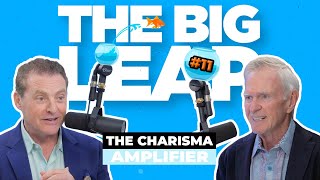
Mike Koenigs and Gay Hendricks discuss whether charisma can be taught. They cover specific tactics like metaphors, storytelling, and setting high expectations, plus exercises like improv and embodiment work to build charismatic presence.
Chapters
All right, this is episode 11 of the Big Leap, the Charisma Amplifier. This is Mike Koenigs and Gay Hendricks.
And in this episode, we take on something that a lot of people don't think is even teachable, and that's the subject of charisma. How do you develop it? What do you have to let go of in order to open up to the kind of charisma that makes people really want to be around you, even if you're not there?
Alright. And one of the things that we talk about, something I'm super interested in, is how can you turn on your charisma for. For stage, for meetings, for video, with enrollment, so sales and influence, while you still remain absolutely authentic and true to who you are, but also understand that all the world is a stage and you have to become and embody being a great entertainer if you want to influence people, if you want to create massive impact.
And it's not that hard, really. It's just a matter of commitment to get you started.
All right, so one of the things that we do is we go deep and we give you some very fundamental principles, but also share some great stories from our lives. And Gay and I discuss who we think some of the most charismatic people who've ever lived have been and why, and we deconstruct their core character attributes.
All right, well, that's it.
That's it.
All right. Get ready for the next episode of the Big Leap.
Well, here we are with another episode of the Big Leap. And this is the Charisma Amplifier. My name is Mike Koenigs and I'm Gay Hendricks.
And we are here to amplify your charisma.
Oh, yeah. So here's. I want to get this started because you and I are both super, super fascinated, interested in the idea of celebrity and also people who have that it factor. And I've heard this saying many times before of, oh, my God, when actress name or actor name walks in, they suck the energy out of the room, and you could feel them the moment they came in. And both of us have witnessed that. Our goal is to really get down and understand what it is. And is it possible to cultivate and replicate it? Because I know how I can activate mine. I know you've got that ability to charm and seduce as well. And this is seducing and charming on video, on stage, or wherever it would.
Be through a book.
But how do you turn that special thing on? Cultivate it, curate it and express it?
I think a lot of it has to do with not only what you're putting out into the world, but. But who you are inside. I have a colleague of mine named Leonard who told me an interesting story about charisma directly to the point. One time he went to a party with his wife. His wife is a nurse supervisor at a big hospital and he's a therapist. And he went to the party, a staff party, where he was going to meet a lot of people that his wife knew, but he didn't know them at all. They'd just been taken over by a new hospital or something. So he was going to meet all these new people and he made a decision before he went. He said, I'm going to. Instead of saying anything about myself, anybody I talk to at the party, I'm just going to listen to them and reflect back what they're saying to me and just put my attention on listening rather than talking about myself or anything like that. And so person after person in the party, he would just do that with. He would do what they used to call active listening. You know, somebody would say they were talking about something and he was. It sounds like you're enthusiastic about that. Tell me more. And so he just did that all. Here's the funny thing that happened. Leonard is not the most charismatic guy in the world. I mean, he just, you know, as far as looks and that kind of thing, you wouldn't pick him out of the crowd as a charismatic guy. But people on Monday after the party, people would come up to his wife at work and say, your husband, he really has something. You know, he's so charismatic and there's something about him that. So it was all based on a conscious move he made that allowed people to perceive him in a whole. And so I think what he was doing there is he was helping people reveal their magnificence rather than talking about his own magnificence. And as a result, they then projected that onto him.
Oh, that's interesting. So that, in a way is a sort of amplification of those around you, and that shifts the perception. And I'm going to give you another version because we're going to get to the meaty side about how charisma can be taught and some research that we've come across. But I'm going to tell you another story. And it's cultivating.
Celebrity. Okay. Which is different than charisma, but I think this is worth mentioning. So I personally find the majority of social media to just be.
Low frequency fluff and of zero interest. It's just turned into a cesspool of I'll do anything for a like or a comment, including.
You know, you know, whatever. Start my soul on fire. That's effectively what it is. And. And I'll mention him by name. A friend of mine who is really a fascinating character. His name's Tai Lopez. And Ty had interest in an online dating app and really studied that whole world for a long time, I'll say. The online seduction, online dating space. And I met him at a couple of my events back in around 2008, 2009, and I didn't know who he was. And he. We got to know each other pretty well. And then suddenly, several years ago, I'm going to say around five or six, he sprung to life and became very well recognized because he made a video where he's in a garage filled with cars, including a Ferrari, and holding his camera and. And talking about how knowledge is the secret to gaining wealth and it's more important than money. And he bought massive, massive volumes ofTraffic on YouTube. At first, it was really cheap because he really understood that world. His video played in front of tons and tons of millennials and then kids and everyone knew who Tai Lopez was, and he became a meme. And when he'd show up in places in la, he had a office on Sunset Strip, he'd always have photographers with him, surrounded with models, and he leased a big mansion and he started doing events there. And he really did the celebrity thing well, to the point where he built so much momentum that people recognize him as being a celebrity. He bought his way in and he had products and services, and he's really a brilliant guy. I know him quite well. And he has a photographic memory, so he's able to read materials and recite it and be able to communicate a lot of information. And he's built a pretty fascinating business as a result of that. But I set that up because we live in a world where, yes, it's possible to buy your celebrity. And I'm not trying to take anything away from him because he's done a lot of amazing things. But I want to focus on the energetic side of this, the part that is that unmistakable quality that you don't have to be a movie star to have, but when you meet someone, you're like, wow, what is that special something that it. That makes them so attractive and interesting. And intriguing.
Yeah. And our big question, of course, that we want to just keep returning to is, can this be taught? What do you have to do to learn that kind of thing?
Right on.
And there are also some people not Only that buy their way into that. But there are a lot of folks that got raised in a certain way that it kind of comes natural.
Yes.
To them. And that's a whole other thing because there's no way you can go back and change that or, you know, you were raised the way you were raised. So using the raw material that you have now, what do you need to do to bring forth your natural charisma?
Yeah, well, why don't you tell the Kennedy story briefly? Because I think that's relevant because that's sort of like when you're born into it and you're cultivated. It's sort of like when you meet royalty. They have a certain air about them. And I have some insights on it that I'll share with you. I'm curious what yours is, and then I'll give you a few observations and some learnings that I found after being in those environments and dealing with what I'll call upper crust society a few times and how I've navigated that, which, again, I think does fold into the charisma piece.
Yeah, I do, too. I think that if you think about what happens when you're being raised is you're creating a space. There's a certain space being created in you for a certain set of things to happen in. And some people get brought up in a way that a lot of people are kind of flocking around them or wanting their attention and that kind of thing, and that translates into real life. But the one thing about John Kennedy, now, he obviously had a great upbringing and very wealthy kind of person, but he also spoke in a way that, according to my speech teacher at the time, indicated charisma. And that was that he used gestures that communicated that there was a lot of power in reserve, that he didn't make big flailing gestures. You know, I was joking about watching Bernie Sanders on the debate the other day, and he's got this classic way waving his hands around in front of things. You know, it's his kind of like his shtick that Larry David impersonates on Saturday Night Live, but it's a different way of going about it than John Kennedy did. If you look at him, he's a tremendous amount of stillness inside. And the gestures he uses are very economical. He never waves his arm around. If you go back and look at his big inaugural speech, for example, ask not what your country can do for you, you never seem waving anything around. Everything is just incredibly tightly focused. And what she called my speech teacher, Dr. Drabik, called Reserve power and so I think it's a big question you need to ask yourself if you're interested in developing this quality in yourself. I know I've asked myself about what do I do that's communicates that I don't have a lot of reserve power. You know, what do I do that communicates that I still feel scarcity in myself? Those kinds of questions to get good at asking, those can really move things forward.
Interesting. Okay, so I've got a few notes here. Some observations. These are some things that are called charismatic leadership tactics. And I'll just describe each one. We can dialogue about them, and then afterwards I'm going to share.
I don't want to call it a system exactly because it doesn't come from an inauthentic place. But I know when I'm in a space where historically I've been able to provide a charismatic element, I become aware of what's going on in my body and my mind while it occurs. I'll kind of go through that and let's explore and build up some observations like we always do. So I'll give credit where credit is due here. Some of this information came from an article I found on Psychology Today, and it was called Can Charisma be Taught? And so what they found, and I personally think a lot of these resonated with me. At least they're components, but it still doesn't explain the bond. We'll call it the cosmic glue that makes this work. But the first one is using metaphors. So the example they said is we brought our competitors to their knees or we must change course. And the function, our metaphors are excellent in showing off how smart you are. So clearly a charismatic leader. And this isn't an always, because some celebrities don't come across as being really smart. But they're still interesting and intriguing. But I can definitely see how that works, especially in the political arena. So what's your perspective on that?
Yeah, well, I just had a. We were talking one of the other episodes about Steve Martin, the comedian. Yeah. And I once talked to a fellow who knew Steve Martin for a year before he was ever famous. Oh, yeah. And this guy said he had absolutely no idea that Steve Martin was a comedian or had any interest in making people laugh or anything like that.
He was shocked when he finally saw that he was a comedian. And so it's possible for people to be extremely charismatic in one area of their life and then have it not show up anywhere else. So that. That's one thing I, you know, I'd like to, in a way, go beyond the word charisma and invite us to look at what it really is. What is the thing itself.
It's a quality that makes people like you and want to be around you. And in my view, that quality is best approached by moving through and letting go of all the things that make people not want to be about around you. Now, a lot of people that are celebrities don't care about that part. Once they've. They've got their act going, they don't care what other people think of them. And so. But I know most of us, we want to show up with integrity in the areas of our life that we participate in. We don't want to. We do not want to be one way in one part of our life and another way in another part of my life. I want a kind of unity across all the areas of my life where I'm not having to be one way, one place, and one way, another. So I think we need to go beyond underneath charisma and find out how can you develop that quality of uniqueness, that quality of I'm the only one on earth who really knows how to do this particular thing called being me. And out of that, what can I contribute to the world, out of who I really am, down in the depths of myself? And I think a lot of people haven't asked themselves that question, you know, what is my real reason for being here? What is my contribution that I want to make above everything else? I've found that most of us have something like that under there, but we've just been clouded by so much programming that we can't get hold of what it is.
Okay, so as you were going through that, I was thinking about, okay, what are the qualities that I would say represent that? So some of the things is you said letting go of what's not attractive about you. But that comes down to character, integrity, congruency, authenticity. Those are certainly elements of great charisma. You said, what is my real reason for being here? It again, comes back to this recognizable.
Solid. And it could be like, you meet people who have got a lot of charisma, and they're crazy and all over the place and unpredictable, but that is congruent and integral. There is character, integrity, and authenticity to that.
Yeah, I think. Yeah, that's. That's a really good point. I think.
When I tune into, for example, myself, what is it about me that makes people like to hang around me? Or what is it about you that makes people hang around you? Well, one thing is they're going to get ideas that they may not have had before. So that's one thing. And in order to develop charisma, you have to be willing to be thinking of ideas that move people, thinking up new things about yourself that you can offer to the world. And I think that a lot of us don't get to charisma because we don't get to that level in ourselves. And I think that human beings also need to constantly look at putting themselves into situations that draw forth their best. And who was it that you were talking about that says you're the sum total of the books you read and the people you met?
It's Brian Tracy says, yeah, our lives are changed by the books we read and the people we meet. But yes, that is another way of putting it.
Yeah. And so if you ask yourself how can I be that kind of person that changes somebody's life as a result of being with me? One thing that you and I both have and a lot of other people we know have, that would be called charisma is we have a pretty strong conviction inside about what we think about and how we and our values and that kind of thing. We don't have to sit and think about it. You know, we've been thinking about it for so long. Like for example, I don't like to watch movies where children are being put in danger. And I don't know this, they just creep me out. And I don't want to support movies like that because kids have a hard enough time in the world without having movies being made about that kind of thing. And so I avoid that. I also avoid movies, interestingly enough. I always find out if the main characters in a movie I'm going to watch smoke. Because many members of my family died from smoking cigarettes. My mother and a couple of other people I loved put themselves in an early grave by smoking cigarettes. So I just don't put myself in front of that anymore. I don't hang around with people that smoke and. And I've sort of eliminate that from my life. That's one way to go about it. I suppose another way to go about it would be to invite a 50 or 60 smokers over some night and desensitize myself to it. But I'm not going to do that. Yeah. So the thing is that we've got to find out in ourselves what our absolute yeses are and what our absolute nos. Are. I believe we define ourselves in a three dimensional world by creating ourselves out of what are the three absolute yeses that you stand for. And what are the three absolute no's that you stand for? The yeses are your values and the nos are how those values get interfered with. And you don't want that. And so you create three absolute yeses and three absolute nos. That's a technology for clearing out a lot of the things that are in the way of your charisma. Yeah.
And then that's going to come down to finding out a super effective way to message that using whatever medium works best for you. It might be again, video, it could be a book, it could be television or whatever. And that really lends to being an incredible storyteller, anecdote teller. One thing that I've been studying like crazy lately are what are the shortest stories you can tell to create context, a sense of tribe or belonging and connection, and then an activator that gets people to raise their hands and say yes.
So.
For example, I heard this. This is Hemingway's shortest story he ever wrote. Have you heard this before? It's a six word story, for sale, baby shoes never worn.
That's brilliant though, isn't it?
So I started going down the path and I've been accumulating and building a library of six word stories and using, studying the patterns, the language patterns and the word patterns. Because my fascination stemmed from another story. I don't know if I've told you this. Did I tell you the one word offer story that I explored? Okay, so this stemmed from a conversation I was having with Dan Sullivan on our podcast. And the objective from this was I wanted to find. It started out, I asked him, what's the best pitch you've ever heard? Influence, persuasion. And he said, I'm not going to answer that question, but I'll tell you the best offer I've ever heard. It's a one word offer. So I'll tell you the brief story and where this grew because it's very relevant to this. So it's 48 BC. Roman Empire is the biggest empire in the world at the time. And the way they grew is by conquering other countries and nations, cultures, and they'd absorb them. So as soon as you got conquered, your boys would become trained to become Roman soldiers so they can continue on their conquering. And over a period of time, what Romans would promise you is as long as you survived and you were a good soldier, you'd be rewarded with 40 acres of land. And if you were given land, you had land rights. If you had land rights, you had voting rights. If you had voting rights, you had Human rights. And at the time, being a Roman meant you had a common currency, a common culture, you had roads and water and democracy. And it was about the best thing going at the time. Well, what had happened is they had conquered several large Germanic tribes and they hadn't been rewarded. So they were marching towards town. They're going to raise holy hell in Rome. At the last moment, Julius Caesar stood up and he shouted one word, civitas, to the group, which is the Latin word for citizenship. He granted themselves citizenship on the spot. Now, what's important about that story is it's the dominoes got laid. Everyone knew what being a Roman meant and what the benefits were. And it was the trigger word that opened up. So since then, what I've been doing and one of my goals when I work with people is create a civitized story that represents that them and their business, and then finding a way to create the second tier of the trigger, which is a one or two word brand. So when you think about Buffett, Gates, Oprah, they're all one word brands. You know exactly who they are. The Stones, the Beatles. One word or two word brands and it's possible to own a word and a brand in someone's head that multiplies and amplifies the value of everyone around you. And by creating that story, getting back to what you're talking about, the moral conviction, the right thing to do, the values, the absolute yeses and the absolute nos, they get triggered by many stories and anecdotes and that becomes part of your mythology and the character people get to know as you.
Yeah. And you never can tell what the trigger quite is going to be, I think, because you need to really study your audience carefully to find out how. What they need and what they want. Yeah, I love that though, Civitas. I was a Latin student and I never heard that story.
Yeah, isn't it powerful?
So another thing is creating a collective we. I think charismatics have a sense of creating a dividing line between the US and the them, the enemy and the righteous and. And also giving them power. Words and phrases of we will be stronger. And of course, every great politician has done that. You certainly think about Kennedy going back to him, you know, the moon race or the original. What Jobs did with Apple is be different. That different campaign or the 1984 commercial when it was us versus them with IBM versus Apple and being creative and expressive versus being a black and white character in a box. But that is another very powerful, charismatic builder. And again, my guess is a lot of these People.
When you meet someone like the Beatles, for example, they pounded the ground. They put in their 10,000 hours performing.
Before they're Humber nightclubs. There is no worse environment to be in because people are throwing beers at each other and that kind of thing. But to be able to stand up there and they would sometimes play three or four two hour sets, you know, and just go way into the evening.
Yep. So being able to proselytize, practice your messaging. Even comedians, you know, most great comedians don't find their voice until they've been at it for seven, eight, ten years, which is, you know, that's well into your, you know, your could be your 10,000 hour mark.
You know. I remember the comedian Rodney Dangerfield who was a client of a patient of a friend of mine, a doctor friend of mine. He had this great quotation one time, which I've always loved. I've got it on a, on a thing on my wall. It says if it weren't for pickpockets, I wouldn't have any sex life at all. But I mentioned I love his. He was the guy that always said, I don't get no response. Yeah, but the interesting thing about Rodney Dangerfield, he had a whole other career as a comedian with a different name. It was some odd name. I think it was Larry Love or something like that. But it. He had many years, he struggled as a comedian with this other person and then he suddenly reinvented himself as Rodney Dangerfield with a whole different act. And I was very impressed with that because very few people can pull off such a huge change as calling themselves an entirely different name halfway through their career. Wow, okay.
I'd never heard that before. And I was looking it up here. Jack Roy.
Was Jack Roy born Jacob Rodney Cohen, popularly known as Rodney Dangerfield.
Borscht Belt, Catskill Mountains. I'm just looking him up here.
But I had never heard that story before. So really, really interesting.
And I never heard it before. So that's really interesting. So another one that I see in this description here is.
Setting high expectations for yourself and your followers. I think that gets back to the values, being able to enroll people in doing that, stressing collective sentiments, we will all be stronger. It shows the audience that you're concerned about their welfare and this certainly applies to politics. But you can see how young singers do that when they're motivating young audiences and they become a meme, they get to practice. When you think about it, what's a great song after all, it's an awesome story with repetition and rhythm. It's the perfect programming mechanism, just like a great comedy act. And having a memorable catchphrase. I can see how all these can equate into that. And then confidence. So let's talk a little bit about that too.
Go for it. Yeah, I've talked about that a lot with a friend of mine, Jim Selman, that I talk about. He has a phrase he uses all the time called existential confidence that I've been thinking about. Because if you think about it down at the very root level of, of your existence, that's where conviction starts. That's where you decide what your basic intentions are for your life. And I think that charisma is one of those things that we could probably even just do without the word of. And look at what's underneath that. The ability to generate goodwill toward yourself without doing anything. That's a powerful part of charisma. The one great thing about writing books.
A lot of my students and graduates have written books of their own. And I always tell them that one of the great advantages of writing a book is that it puts you out there in the world as having expressed something cogently that a lot of people can't really put their ideas into words. Another great value of a book is it makes people like you before you get there. That's really valuable because I can walk into. I walked into a big auditorium in Houston a while back, and all the people in the audience had either read the Big Leap or Conscious Loving. And it was so different to speak into that kind of audience because they already liked me. They were already willing to give me the benefit of the doubt about anything.
I said, oh, that's good, that's good. Well, I, I again, I'm going to just back up and say packaging the right message into the right medium that's for your audience is. Is absolutely critical and necessary in creating that repetition, that opportunity of making their. Your idea theirs as well. So it gets picked up. There's that egoic release that, that naturally occurs. It's like having a catchy tune, right? How. What Better Way to Be Memorable? So here's another one I was going to ask you because this will help us decode some of these, which are. Think for a moment about the most charismatic people you've ever known, worked with, observed, and they can be from any walk of life. And I want to go through, and we'll analyze them a little bit. And I've got one that I have been paying attention to for a while that I find endlessly fascinating is Dave Chappelle, who at present time, I think he's the best living comedian. And it's because.
He has all of these qualities. He's incredibly smart, exudes enormous confidence.
He's got unbelievable body control. His timing is impeccable. His messaging is great. He really does make it look easy, even though he's put in the time in many years, and he took a good chunk of time off to contemplate and reinvent himself. But he has a great rhythm and cadence to his voice and a great voice, and. And, you know, he just walks up and he's just got this swagger that lightens up the audience. And, you know, men and women can look at him and go, hell, yeah, this dude's got that. It. But who pops into your mind? Man, woman, living dead, who just was like, holy crap to you?
The first one I ever met when I was 12 years old was Elvis Presley, and later I met his wife many, many years later. But the thing I noticed about him, first of all, was the amusement with which he was having everything. In other words, the fact that he held it all in a kind of an amused.
State where he wasn't attached to what was going on. I was very impressed with that. Even I recognized it at a very early age that there was this stuff happening around him, and he felt good about it, but he didn't get involved with it, all the stuff going on around him. And I was very impressed by that because he was in the wildest type of success you could ever imagine, because back in 1957 or 58. And so he was in the first flush of his career. The thing that I noticed also about Bruce Springsteen, Roll the clock forward another 20 or 30 years is he had that same quality of. He is very passionate about what he does, but he's not controlling at all. He doesn't try to micromanage things. He lets things be. He's so in there about what his gift is, and he focuses only on that gift. He doesn't try to be the best business guy, you know, he doesn't try to be. He has lots of people that can do that for him. But what he focuses on is making himself an open space for creativity and stays out of being involved with other things that detract from that. Wow.
Oh, that's a really good distinction. I really like that. It's just staying inside your superpower, amplifying only that and knowing where the boundaries are.
Yeah. And in a way, not being attached to the outcome. That's a big deal.
That is. That is A huge egoic leap for sure. And also I think the thing, I know for me, I actually, I can't stand Bruce Springsteen's voice. Never could. I don't like, I just don't like his music and I'm one of the few. I know, but I love his raw, his raw authenticity and what, what appears to be this openness, even though he is, and he freely says it in his last album. I did watch his last documentary where it's a one man show and a performance and you know, like his character is made up. He doesn't, he isn't who he appears to be and who he performs as. It's an alter ego. And that's amazing. The fact that he composed and created that back when he did is astonishingly.
Elevated and conscious and forward thinking for a 20 some year old to want fame and celebrity and all the things that go to it so bad that he'd create an alter ego. I know in my mind I didn't have the discipline or the ability to even comprehend it. And I used to, you know, without any tools, look and go, what is it about them that makes them so interesting and intriguing? And I'd watch Johnny Carson, for example. I still think for me is one of my favorite television personalities. And what he did in a non egoic fashion to elevate everyone that came on the show and be so funny and reserved. And he too had a, you know, that was an alter ego we were watching.
Yeah. And I feel, I'm glad people can do that. Although sometimes I see the other side of their lives, how they make a wreck out of other aspects of their lives because they're focused only in that area. There's a famous story about Marilyn Monroe. She was really big when I was growing up too. I was never a huge Marilyn Monroe fan, but she was probably the most popular actress at the time. And some friend of hers, they were walking down the street together in Manhattan and her friend commented and said, isn't it odd that you and I are walking down the street and you're the most famous actress in the world and yet nobody is stopping us or noticing? And she said, oh, that's because I'm not being Marilyn. And she said, watch what happens when I be Marilyn. And she did whatever it was to be Marilyn. And suddenly people were going crazy, stopping and whistling and you know, everybody was noticing who it was.
Yeah, that's pretty awesome in itself. Although once again I have to caution people that if you can do that, you gotta be very careful about that because that Means that you're not being yourself throughout your life, and that can cause serious problems.
Yeah, yeah. That gets back to congruence and integrity. And I know I promised I'm gonna go down one thing that I've practiced for a little while. Cause I love the fact that we've been deconstructing some celebrities, and I wrote down a couple more. But I'm going to tell a brief story about what I started consciously developing as seduction when I teach this. So for a long time, I media trained people so they'd come into my studio and I'd help them create their backstory and elevate them with their past and be able to create an intro. So by the time they were on camera, they'd be in a space of being elevated. And then from there, you know, wherever they could take themselves with their own stories, anecdotes, and performance. I guess you could say.
You know, it'd go where it would go. And, you know, one of the things is, you know, how you modulate your voice. For example, deep voices are definitely more attractive. And to men and women, you talked about containment of body language, not being out of control. We talked about John Kennedy. It seemed, like just a little bit reserved. So it was maybe like 70 to 80%, but not 100%. There isn't this. I know I've. Where I've lost people, for example, is I have a tendency sometimes to go, like, gesticulate wildly and go like, yeah, I'd be like a bunch of pots and pans thrown down the stairs, you know? And that definitely weakens the character. But I also know, on the other hand, something that happened years ago. I got invited to a party somewhere where no one really knew who I was, but there was someone there who was a very charismatic speaker. We were very good friends. And I walked in and I was dressed pretty well, but I walked in, I was like, whoa. I just came in there and I was like, open up. My chest was puffed. I ran, I jumped up and I grabbed him. I picked him up and I swung him around and I shouted. And suddenly we had this, like, 20 people were surrounding us. Like, that's where the party's at and the fun begins. And I do think on a very core, basic level, you know, humans are hurting animals. And we look to wherever there's strong leadership and if there's an opportunity to be safe, part of a strong tribe with a strong leader that displays courage and confidence, that means you're going to get mating opportunities, food opportunities, survival, you're going to get all your needs met and to be led by characters. It's great entertainment. And I always tell everyone I work with, first and foremost, you have to understand if you want to enter into the public eye on any level. This is something Tony Robbins told me once. I can remember. I was asking him some questions. We're sitting around, and I think he's one of the most charismatic people I've ever been around. But he said.
First and foremost, I'm an entertainer. 80% of what I do is pure entertainment. And I didn't like the way that sounded at first. He says 20% content. I have to get people open so they can hear this stuff, and I have to create an environment where they can practice it, to reprogram.
And it took me years to really digest that and understand it like I do now. I'm not saying I get it fully, but, boy, being a great entertainer and knowing how to.
Have cadence, timing, and all of that packaging is something that, you know, I'd love to see if there's an acting class called Charisma, because I want to see what that's like.
We ought to start it. Yeah, yeah, yeah. Well, I think that also, like, Tony's a good example. I think that all of us, no matter what we are doing, are putting on a theatrical performance, but most of us don't realize it, and we don't realize the name of the show we're putting on. The show is like, I'm not a successful person or kick me or something. That is a show that you wouldn't want to pay to see.
Oh, yeah, yeah. So this is. This reminds me of two concepts. So I used to say this, and it didn't always hit, but I'd say, make sure your visible life is a movie that you want to watch, and people you want to impact would love to watch, too.
Well, that's what we say in our seminars. We want. We work a lot on people's stories, and we say we want you to be able to tell your story so that people would pay money to hear the end.
Yeah, that's great. That's great. So the other part of that was.
We have to go light after this. But back when I had cancer, what I started practicing is I realized when I had very, very little energy and I was in the darkest of the dark. So it was chemo, radiation, simultaneously, and still coming back from the surgery. And I.
Maybe had an hour of strength a day. It was very painful and the way I got through it. So there were times when I. When I Was asking whether or not I should shut my body off. I can remember I was that conscious because I was just like the bot. My body was in so much pain and it just sucked. And.
What I did is I became a camera. So I projected myself into a camera and became a viewer of my body. And I saw my body as an actor in a movie movie. And I was engaged in helping the body survive and come back to life. And by disassociating myself from that, I could practice the all I have to do is go for five more minutes because that got me past. Because I knew I could go for five more minutes no matter how badly I felt or how little energy. And after a little while, your brain plays tricks on you because they don't remember what it's like to be. Well, you feel like that's the way it's always been and you've got to play tricks on yourself to survive through this. But also I made my survival a movie I wanted to inspire my. My doctors to participate in. So I always showed up as bright eyed and bushy tailed and really interested in them and their art.
Yes.
So I would become an expression of their art. So I wonder if.
Some of that charisma is letting enough of yourself out there. So people really feel like they're participating in the performance as well. That's definitely an advanced way of thinking through this. And I know some people are just going to be like, nope, I'm just going to be a tight little cannonball and just be only what I am and do my performance and do this thing.
But again, there's part of this is like what is a pure performance? A memorized dancing bear versus an improvisational.
Improvisational performer. Yeah. Well, in our line of work we really need to cultivate our improvisational work and I recommend that highly that if you've never taken out there, if you've never taken an improv class. Oh yeah, really fun to do. And they will open up areas that you didn't know you needed open up in.
Oh, I did one just at the the end of last year and I always consider myself pretty good at improv because I watched it and participated and you know, I get on stage and do what I do or we do what we're doing right now. But to have rules and partners. I met a whole bunch of my demons and I can't agree more. That is a great place to put yourself in very uncomfortable situation and really meet and find out where your fear is and where your shame is, where your humiliation is, where Your big ego is. And mine was letting go and trying to control things and not letting other people communicate because I was afraid something was going to fall apart or break or disappear. So my tendency would be to manhandle the situation and take a lot of control.
Yeah. That's what I ran into in whenever. When I was doing improv, studying it. I was never professional at it, but I found it useful for the same reasons that you're talking about. It made me think on my feet really good. But the thing that I used to try to do is when I would get a little confused or the situation would not be laid out in front of me, I would go into some kind of control and try to steer it in another direction. And some of that can be good, but some of it can be just a habit of trying to get out into content when there's some kind of open space happening. Oh, yeah. Wow.
Yeah, that's a. That is a really powerful notion, and I think it's. It's great. You know, let's just think about it like this. If you were going to.
Think more about your charisma, again, I'm going to assume that everyone who's listening, watching right now wants integrity and congruence and authenticity and get themselves in a place where they're in even better expression of their fullest potential and capabilities and uniqueness and superpowers and want to have more impact. So how you package you matters a lot. So when you think about the qualities to focus in on and become aware of with what we've discussed, so one of them for sure, is.
Embodying that. Right. So you said, you know, if you're going to practice being regal or practice sophistication, you've got to really understand the costume and the body language of whatever.
That is, because it's all about creating a certain type of space around you that people want to step into. Yeah.
So there's character, and then there's stage Right. And then, of course, there's the backstory, and you're really getting clear, like you talked about the three core values and the anti values. Like what?
Yeah. What are the three absolute yeses that you stand for and what are the absolute nos that you won't stand for?
I go down inside myself, and I know what those things are, and I've been working out of them for many years. But a lot of people haven't gotten clear about what their three absolute yeses and nos are.
And then I think you've got to be very clear on what embodies the what you're for and once you're what you're against. In other words, you've got to know who the enemy is and be able to articulate that, to create.
An opportunity to be a collective, for there to be a we moment and say, yeah, you and I, we think the same way. Holy cow. Where have you been my whole life? And that's when I was talking earlier about the one word offer. For example.
My goal in the one word offer is for someone to stop and look at you and go, you. I've been looking for you my whole life. Where have you been been and have that moment of you. I know we were meant to be together or to work together or to make something together or create together that. Aha, you're it.
Yeah.
Oh, that is really. That's a. That's a magical moment.
Yeah. I think we're onto something here. And it's a conversation that I want people to start having with themselves. It's a lifelong conversation because it's always involving going deeper into yourself and claiming more of your own magic, more of your own genius, and then how to package that so that people really understand it out in the world. I don't want to be around starving artists who haven't figured out how to be understood. You know, I want people to make a commitment to be understood first and foremost and then see what they can build out of that.
Yep. Well, I think that's. This would be a great time to insert a shameless plug here for Big Leap Live, because part of our objective and one of the reasons for creating this podcast was first of all, to create an interactive experience for the Big Leap book. And also the second, which is conscious luck and a way to explore this new expanse of consciousness that both of us are really committed to, both individually and also finding that right fit group of high frequency folks who want the same for themselves. And we've got a page set up. It's bigleaplive.com It's a way for you can learn more about how to work with Gay and I in a group fashion and meet more people who have the same values, the same goals, the same cause that you do. And also work on elevating and amplifying your core story, building out things like what we discussed, which is what is it that makes that charisma in you light up? And one of the things I'm just going to throw out there, Gay, that I know we can bring, is part of this is going to involve some improv and an interactive, engaging Exercise where you get to be more of who you're afraid to become and be able to practice that you in a really safe environment, but be able to amplify it in a really, really short period of time.
I just had a thought, too. I have a good friend who's an actor, an actress who has just come off starring in a big show for many years. And I'm going to call her and ask her to come in and sit with us because she's a master at improv. She can do anything. Oh, that's awesome. I can't wait. I'm going to call her as soon as we get through here and see if we can get her to come down.
I love it. So what you can expect, of course, is anything that Gay and I do, we do it first class all the way. So it's going to be the entire experience. The food, the people you'll make connections and relationships you'll want to have for the rest of your life, but also elevated experiences that are going to genuinely transform your life and bring you into a completely new level of consciousness and being. And this is an opportunity if you have a significant other and you want to elevate your relationship together. A way to do it in a safe couples environment where you can push each other into a higher state of thinking. And if you've been enjoying the episode so far that we've been sharing with you, well, this is a way to go deeper with us on a very personal and intimate level.
I'm so excited about this. Something I've been thinking about for years, and it's really. I'm really excited that we're finally going to be able to put it on.
Right on. Well, I absolutely love manifesting, creating and performing alchemy with you, Gay. So let's keep the. Let's keep this machine in motion.
Absolutely. Onward. All right.
More from Mike


The 3x3 Framework That Changes How Entrepreneurs Think | Mike Koenigs & Dan Sullivan








Why Your Business Gets Harder As It Grows | Michael Walsh on the Hidden Danger Zones of Scale
